

The Proven Real Estate Newsletter Framework: How to Turn 10 Minutes Into 30 Days of Content
Picture this: It's Sunday evening, and you're staring at your computer screen, wondering what the heck you're going to send to your email list this week. Sound familiar?
If you're like 73% of real estate agents, you're spending 2-3 hours every week scrambling to create newsletter content. That's over 130 hours per year: time you could be spending with actual clients or, you know, having a life.
Here's the thing: successful real estate newsletters don't require you to reinvent the wheel every single week. What they need is a systematic approach that lets you batch-create content efficiently.
The framework I'm about to share has helped over 2,000 real estate professionals streamline their content creation process. Instead of spending hours each week, you'll invest just 10 minutes of planning to generate 30 days of engaging newsletter content.
The 4-Pillar Content Framework
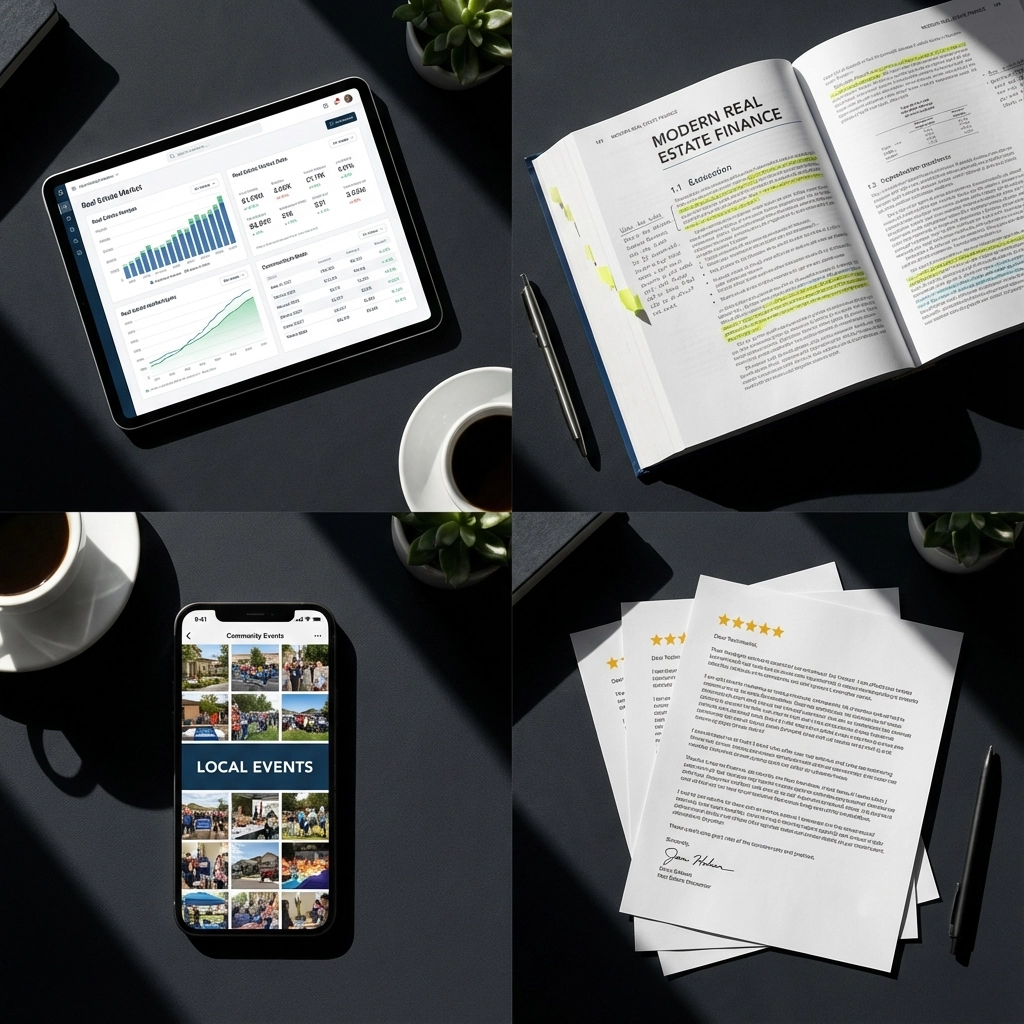
Your newsletter should consistently deliver value across four key areas. Think of these as the pillars supporting your entire content strategy:
Pillar 1: Market Intelligence (25% of your content)
- Local market statistics and trends
- Price movement analysis
- Inventory reports
- Seasonal market insights
Pillar 2: Educational Content (30% of your content)
- Home buying/selling tips
- Market process explanations
- Financial guidance
- Legal updates and changes
Pillar 3: Community Connection (25% of your content)
- Neighborhood spotlights
- Local business features
- Community events and news
- Resident success stories
Pillar 4: Social Proof (20% of your content)
- Recent sales and listings
- Client testimonials
- Before/after property transformations
- Market success stories
The 10-Minute Planning Session
Here's where the magic happens. Set aside 10 minutes once per month for this strategic planning session. You'll emerge with a complete content calendar that practically writes itself.
Step 1: Gather Your Data Sources (3 minutes)
Create a simple spreadsheet with these columns:
- Week of [Date]
- Market Data Source
- Educational Topic
- Community Focus
- Social Proof Element
Pro tip: Bookmark these essential data sources before your planning session:
- Your local MLS statistics dashboard
- City council meeting minutes and announcements
- Local newspaper event calendars
- Your CRM for recent transactions and testimonials
Step 2: Plot Your Monthly Market Story (4 minutes)
Every month tells a market story. Your job is to identify that narrative and break it into weekly chapters.
Example for March 2025:
- Week 1: "Spring Market Awakening – Inventory Surge Begins"
- Week 2: "Buyer Competition Heats Up – Multiple Offer Strategies"
- Week 3: "New Construction Spotlight – Emerging Neighborhoods"
- Week 4: "Interest Rate Impact – What Buyers Need to Know Now"
This overarching narrative gives your newsletter consistency and helps readers follow a logical progression throughout the month.
Step 3: Assign Content Buckets (2 minutes)
Now you'll quickly assign each pillar to specific weeks based on your market story:
| Week | Market Intelligence | Educational | Community | Social Proof |
|---|---|---|---|---|
| 1 | Spring inventory stats | First-time buyer tips | New restaurant opening | 3 March closings |
| 2 | Multiple offer trends | Bidding strategy guide | School district news | Testimonial video |
| 3 | New construction data | Construction loan basics | Neighborhood profile | Development photos |
| 4 | Rate impact analysis | Refinancing options | Community event preview | Success story feature |
Step 4: Create Your Content Templates (1 minute)
The final step is the secret sauce. You're not writing full articles: you're creating content templates that can be quickly populated with current information.
The Template Library That Does the Heavy Lifting
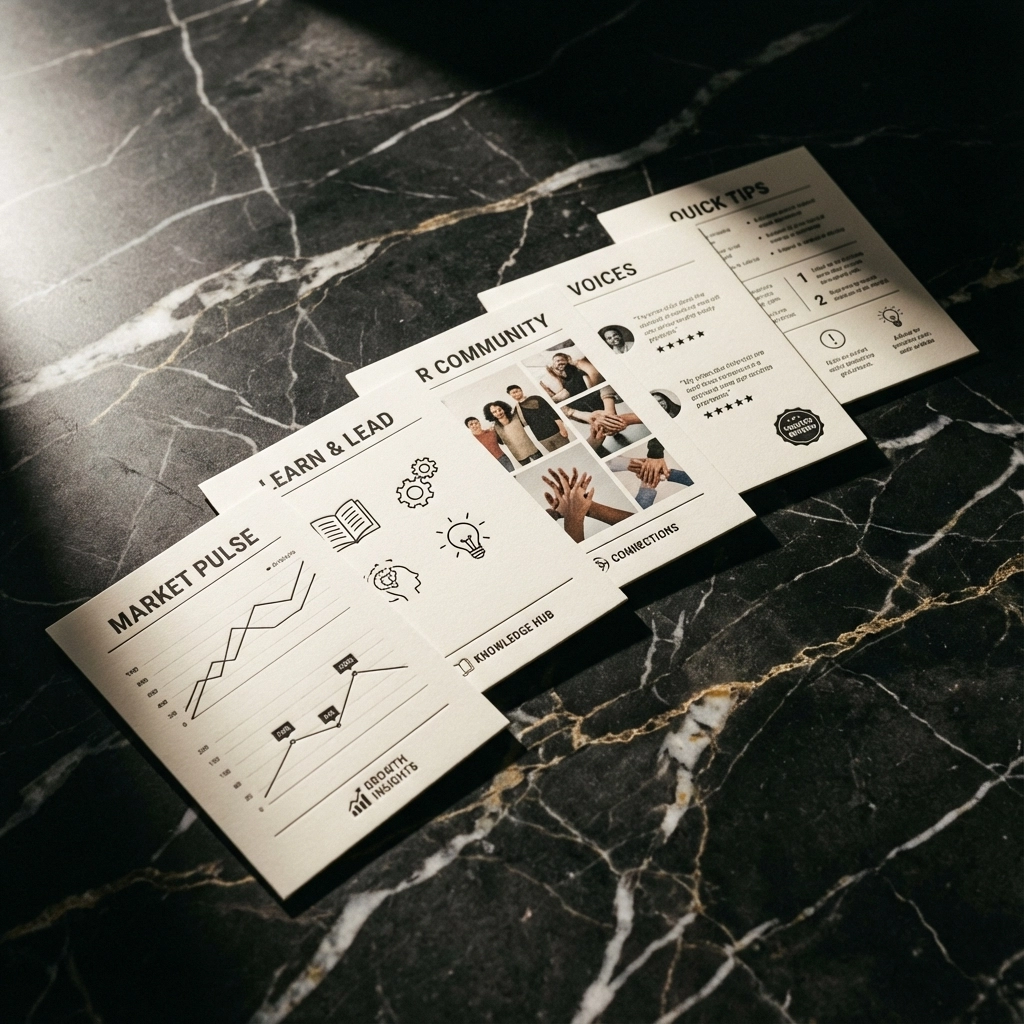
Instead of starting from scratch each week, you'll have proven templates that just need fresh data plugged in. Here are the five most effective templates:
Template 1: Market Snapshot
Opening: "This week in [Your City], the real estate market showed [trend/change]…"
Data section: 3-4 key statistics with brief explanations
Implication: What this means for buyers/sellers
Call-to-action: "Want to see how this affects your home value? Reply for a free analysis."
Template 2: Educational Deep-Dive
Hook: Start with a common misconception or frequently asked question
Explanation: Break down the process into 3-5 simple steps
Example: Real-world scenario or case study
Takeaway: One key action item for readers
Template 3: Community Spotlight
Introduction: Why you're featuring this topic/place/person
Details: 3-4 specific highlights or benefits
Connection: How this relates to local real estate
Engagement: Question or poll to encourage responses
Template 4: Success Story Format
Challenge: The original problem or goal
Process: How you helped navigate the situation
Result: Specific outcome achieved
Lesson: What other clients can learn from this experience
Template 5: Quick Tips Roundup
Theme: Seasonal or timely focus
Tips: 5-7 actionable pieces of advice
Resources: Links to helpful tools or additional information
Follow-up: Offer for personalized guidance
Advanced Automation Strategies
Once you've mastered the basic framework, these automation techniques will save you even more time:
Content Recycling System: Track your most-engaged-with content and schedule it for re-sharing 6 months later with updated data. High-performing educational content especially has excellent replay value.
Seasonal Content Banking: Create evergreen content for predictable seasonal topics (spring cleaning tips, holiday moving advice, tax season implications) that you can automatically deploy each year.
Data Integration Tools: Set up automatic pulls from your MLS, local government websites, and Google Alerts for your target neighborhoods. This creates a steady stream of fresh material without manual research.
Reader Response Triggers: Develop template responses for common reader questions and comments. This lets you quickly engage without crafting responses from scratch.
Common Framework Pitfalls (And How to Avoid Them)
Even with a solid framework, agents often stumble in these areas:
Mistake #1: Over-automation
While templates save time, your newsletter shouldn't feel robotic. Always include at least one personal observation or current event connection in each edition.
Mistake #2: Ignoring Local Context
National real estate trends are useful, but your readers care most about their immediate area. Always filter broader insights through your local market lens.
Mistake #3: Inconsistent Publishing
A framework only works if you stick to it. Set up calendar reminders and batch your writing sessions rather than scrambling each week.
Mistake #4: Skipping the Personal Touch
Include brief personal updates or insights in each newsletter. Readers subscribe to you, not just market information.
Measuring Your Framework's Success
Track these metrics to ensure your streamlined approach is working:
- Open rates: Should improve with consistent, valuable content
- Click-through rates: Monitor which content types generate the most engagement
- Reply rates: Personal responses indicate strong reader connection
- Referral generation: Quality newsletters typically increase word-of-mouth referrals by 15-20%

Scaling Your Content System
Once your framework is humming along, consider these expansion strategies:
Multi-Format Adaptation: Turn your newsletter content into social media posts, video scripts, and blog articles. One piece of research can fuel multiple content channels.
Client Segmentation: Create variations of your templates for different audience segments (first-time buyers, luxury clients, investors, etc.).
Team Delegation: If you work with assistants or team members, your templates make it easy to delegate content creation while maintaining your voice and quality standards.
Seasonal Specialization: Develop deeper template variations for your area's peak buying seasons, allowing for more targeted, relevant content when it matters most.
The reality is that successful real estate newsletters aren't about creative genius: they're about consistent value delivery. This framework gives you the structure to provide that value without the time drain.
Your 10-minute monthly planning session becomes the foundation for weeks of engaging, relevant content that keeps you top-of-mind with past, current, and future clients. The framework handles the strategy; you just add the current data and personal insights that make it uniquely yours.
Stop spending your Sunday evenings in content creation panic mode. Invest those 10 minutes once per month, and watch your newsletter become a powerful, efficient lead generation machine that practically runs itself.