
- You are here:
- Home »
- Author's Archive:
All posts by Greg Reed
Kedron Real Estate Agents
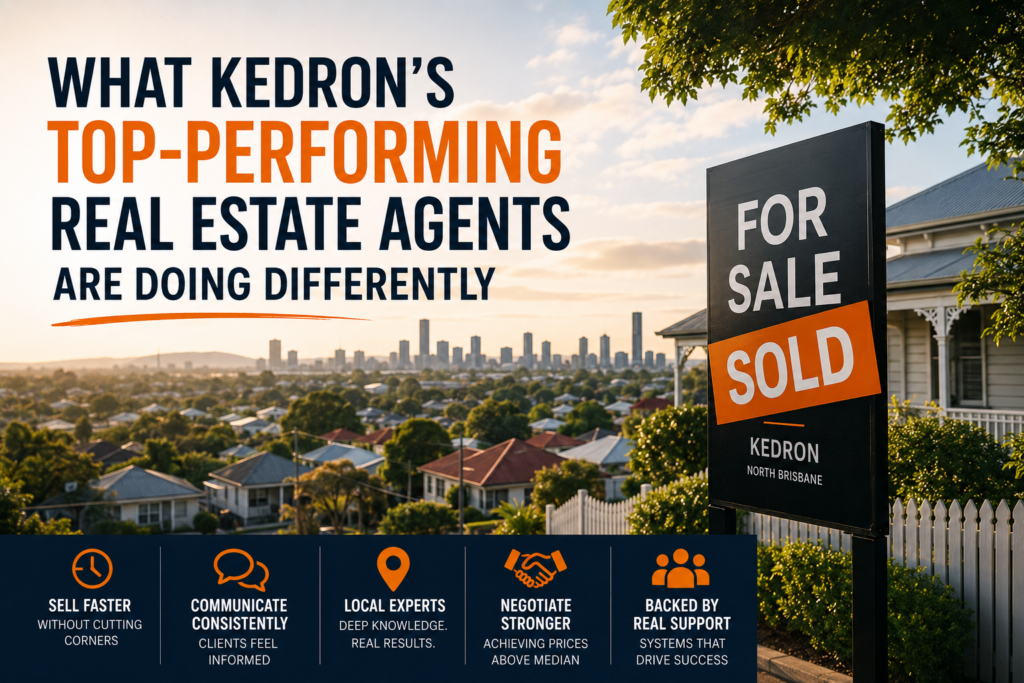
What Kedron Real Estate Agents Are Doing Differently
The property market has kept plenty of Kedron real estate agents busy over the past year — but not all of them are getting the same results. Some are selling faster, for stronger prices, and picking up repeat business and referrals along the way. So what’s actually different about the agents at the top of the Kedron market right now?
We looked at the highest-performing agents currently selling in Kedron, based on recent sales volume, median sale price, days on market, and verified client reviews. A clear pattern emerged — and it’s less about luck and more about specific habits, systems, and positioning.
What Separates a Top-Performing Agent in Kedron
Before the Kedron real estate agents profiles, it’s worth naming the traits that showed up again and again across the data and the reviews:
- Speed without cutting corners — the fastest-selling agents on this list moved properties in under two weeks, not by discounting, but by having a ready buyer pool and a tight marketing process from day one.
- Consistent communication — nearly every top agent’s reviews mention responsiveness and clarity as much as sale price. Clients remember how informed they felt, not just the number on the contract.
- A genuine local presence — the strongest performers aren’t spread thin across all of Brisbane; they have real depth of recent, comparable sales in Kedron and the surrounding northside suburbs.
- Negotiation that shows up in the numbers — several agents on this list consistently achieved sale prices well above the Kedron median, a sign of strong buyer competition and skilled deal management, not just a hot market carrying them.
Kedron’s Top 10 Agents Right Now
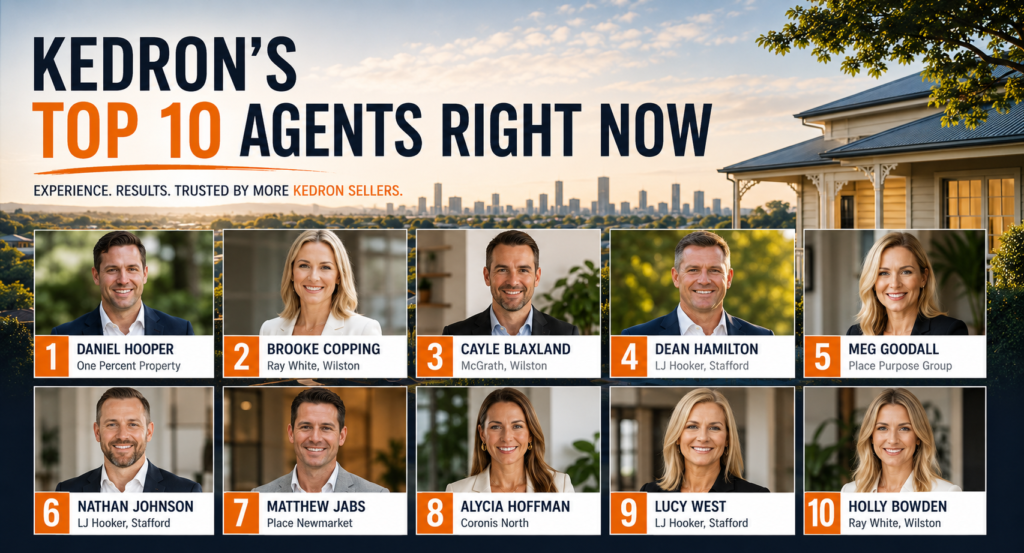
1. Daniel Hooper — One Percent Property, Kedron
Daniel leads the Kedron real estate agent market by volume, having sold 20 properties locally in the past year with a median of 12 days on market — well ahead of the suburb average. With a 5.0 rating across nearly 200 reviews, clients consistently point to his market knowledge and ability to keep the process smooth and low-stress, which is a big reason he’s earned repeat referrals across Kedron and neighbouring Bracken Ridge.
2. Brooke Copping — Ray White, Wilston
Brooke’s Kedron sales have achieved a median price of $1.58M, and her reviews consistently highlight a proactive, hands-on approach that clients say makes a genuine difference to the outcome, not just the experience.
3. Cayle Blaxland — McGrath, Wilston
Cayle’s recent Kedron sales carry the highest median price on this list at $1.72M, backed by a track record across Newmarket, Lutwyche, and Paddington. Clients frequently mention his communication and steady, strategic approach through negotiation.
4. Dean Hamilton — LJ Hooker, Stafford
Dean holds one of the strongest review counts in the area — 238 reviews at a full 5.0 rating — with a 14-day median time on market in Kedron, faster than most on this list. His reviews consistently point to deep local market knowledge as the standout factor in client outcomes.
5. Meg Goodall — Place Purpose Group
Meg’s Kedron sales sit at a $1.15M median, and clients regularly describe her as thorough and dedicated, with particular praise for how she manages the emotional side of a sale alongside the commercial side.
6. Nathan Johnson — LJ Hooker, Stafford
Nathan’s reviews specifically call out his depth of knowledge of the Kedron market, with clients noting he simplifies a process that can otherwise feel overwhelming, especially for first-time sellers.
7. Matthew Jabs — Place Newmarket
Matthew’s Kedron sales lead this list on price, with a $1.99M median — a track record that extends across Ashgrove and Wavell Heights. His reviews consistently mention an approachable style paired with strong results.
8. Alycia Hoffman — Coronis North
As Agency Director, Alycia’s reviews frequently cite her negotiation skill specifically, alongside consistent praise for her communication throughout the sale — a combination clients say directly shaped their final price.
9. Lucy West — LJ Hooker, Stafford
Lucy’s Kedron sales show a 14-day median on market against a $1.65M median price — a combination that points to strong buyer demand generation rather than one or the other alone. Her reviews consistently describe the process as seamless.
10. Holly Bowden — Ray White, Wilston
Holly’s client feedback consistently highlights how she manages the buying and selling process for clients across multiple northside suburbs, with genuine care for clients flagged repeatedly as a defining trait.
The Common Thread
Look past the individual numbers and a pattern shows up: none of these Kedron real estate agents are winning purely on price or purely on being “nice to deal with.” They’re winning on both — fast, well-negotiated results and a client experience people are willing to leave detailed, positive reviews about.
That combination doesn’t happen by accident. Behind almost every agent on this list is an office that’s investing in their systems, their marketing, and their support — the things that let an agent focus on the client and the negotiation instead of chasing admin or building a database from scratch.
It’s the same combination we look for — and back — in the agents who join in North Brisbane.

How to Create a Real Estate Newsletter in 5 Minutes (Easy Guide for New Agents)
You're a new agent. You've been told that real estate newsletters are essential for staying top-of-mind with leads. But every time you sit down to create one, you stare at a blank screen for 30 minutes, delete everything, and give up.
Sound familiar?
Here's the truth: You don't need to be a graphic designer or copywriting genius to create an effective real estate agent newsletter. You just need a simple system that works: and takes less time than your morning coffee run.
In this guide, I'll show you how to create a professional newsletter in 5 minutes or less using templates, curated content, and a few smart shortcuts. No fluff, no overwhelm: just a step-by-step process you can follow every single week.
Why Real Estate Newsletters Still Matter in 2026
Before we dive into the how, let's quickly address the why.
Email isn't dead. In fact, newsletters for realtors remain one of the highest-ROI marketing channels available. While social media algorithms decide who sees your posts, your newsletter lands directly in your leads' inboxes: on your terms.
Here's what a consistent newsletter does for you:
- Keeps you top-of-mind when leads are ready to buy or sell
- Positions you as the local market expert through valuable content
- Generates referrals from past clients who remember you
- Nurtures cold leads into warm conversations over time
- Builds trust through regular, helpful communication
The agents who win aren't necessarily the ones with the flashiest newsletters. They're the ones who show up consistently. And that's exactly what this 5-minute system helps you do.

The 5-Minute Newsletter Framework
Let's break this down into a repeatable process you can follow every week or month.
Step 1: Start With a Template (1 Minute)
Never start from scratch. Ever.
Choose a pre-designed template from one of these platforms:
- Canva – Free templates with drag-and-drop editing
- Mailchimp – Built-in newsletter templates for real estate
- Constant Contact – Industry-specific designs
- Beehiiv – Modern, clean templates for professionals
- Zillow Premier Agent – Real estate-focused options
Pick one template and stick with it. Your subscribers will recognize your brand, and you'll save hours of design time every single month.
Pro tip: Look for templates with these essential sections already built in: header/logo area, featured image spot, main content block, listings section, and footer with contact info.
Step 2: Add Your Essential Content (2-3 Minutes)
Now fill in the blanks. Here's what every effective real estate agent newsletter needs:
Subject Line
Make it local and specific. Skip "March Newsletter" and try:
- "Your [Suburb Name] Market Update: Prices Up 4% This Month"
- "3 New Listings Just Hit [Neighborhood]"
- "What Your Home is Worth Right Now in [Area]"
Main Content Block
Choose ONE of these quick-win content ideas (more on this below):
- Quick market statistics for your area
- Featured listing with high-quality photos
- Local market trend or insight
- Community event or neighborhood news
- Quick home tip or seasonal advice
Your Listings or Featured Properties
Include 2-3 current listings with:
- Eye-catching photo
- Address and price
- Brief description (one sentence)
- "View Details" button
Clear Call-to-Action
Tell readers what to do next:
- "Reply to this email with questions"
- "Schedule a free market analysis"
- "Forward this to someone looking to buy"
- "Click here to see all available properties"
Contact Information
Make it ridiculously easy to reach you:
- Phone number
- Email address
- Website link
- Social media handles
Step 3: Personalize for Your Audience (1 Minute)
If your email platform allows it, segment your list into groups like:
- First-time homebuyers – Send content about the buying process, financing tips, and starter home listings
- Sellers – Focus on market conditions, home staging tips, and recent sales in their area
- Past clients – Share referral incentives, home maintenance tips, and check-in messages
- Investors – Highlight investment properties, rental market data, and ROI calculations
If you don't have segmentation set up yet, don't stress. Send one general newsletter to everyone: it's better than sending nothing at all.

Step 4: Test and Send (1 Minute)
Before hitting send to your entire list:
- Send yourself a test email – Check how it looks on desktop and mobile
- Click every link – Make sure buttons and URLs work correctly
- Scan for typos – A quick read-through catches obvious mistakes
- Check the preview text – This shows up under the subject line in most inboxes
Then hit send and move on with your day.
Pro tip: Schedule your newsletter to send on the same day and time each week or month. Tuesday through Thursday mornings (8-10 AM) typically see the highest open rates for real estate emails.
5 Quick Content Ideas That Take Zero Time to Find
The biggest objection I hear: "But I don't know what to write about!"
Here are five content ideas you can execute in under 5 minutes:
1. Local Market Statistics
Pull data from your MLS or public sources like Zillow:
- Average sale price in your area
- Number of new listings this month
- Average days on market
- Buyer vs. seller market indicators
Format it as a quick snapshot with 3-4 bullet points.
2. Featured Listing
Showcase one property with:
- Three high-quality photos
- Key features (bedrooms, bathrooms, square footage)
- What makes it special
- Price and contact info
This takes 2 minutes if you already have the listing photos.
3. Community Spotlight
Share local news your subscribers care about:
- New restaurant or business opening
- Upcoming community event
- School district news
- Local development or infrastructure updates
Google "[Your Area] local news" and pull one interesting story.
4. Quick Home Tip
Share seasonal advice:
- "3 Ways to Prepare Your Home for Winter"
- "Should You List Before or After the Holidays?"
- "How to Stage Your Home for Maximum Offers"
Keep it to 3-5 bullet points max.
5. Market Insight or Prediction
Position yourself as the expert:
- "Why Now is a Great Time to Sell in [Area]"
- "What Rising Interest Rates Mean for Local Buyers"
- "The #1 Mistake Sellers Make in This Market"
Lead with your opinion, backed by one or two data points.

Consistency Beats Perfection Every Single Time
Here's the truth that new agents need to hear: Your first newsletter will probably feel awkward. Your design won't be perfect. You might not get the tone exactly right.
Send it anyway.
The agents generating consistent real estate leads for new agents through newsletters aren't the ones with the best design skills. They're the ones who show up every week or every month without fail.
Your subscribers aren't judging you on polish: they're judging you on value and reliability. If you consistently deliver helpful information, they'll remember you when it's time to buy or sell.
Set It and (Almost) Forget It: Automation Tips
Once you've created your first newsletter, save it as a template. Next time, you'll just swap out:
- The subject line
- The main content section
- The featured listings
- The date
Everything else stays the same.
Here's how to make it even easier:
- Create a content bank – Keep a running list of article ideas, stats, and tips you can pull from each month
- Batch your work – Spend one hour creating four newsletters at once, then schedule them in advance
- Repurpose content – Turn a newsletter article into a social media post, blog post, or video script
- Use AI tools – Platforms like ChatGPT can help you write quick market updates or home tips in seconds
The goal isn't to spend hours perfecting each newsletter. The goal is to stay in front of your audience consistently with minimal time investment.
Dominate Your Local Market With Consistent Content
Creating a real estate newsletter in 5 minutes is possible when you have the right system. But newsletters are just one piece of the puzzle when it comes to building your authority in your local area.
If you want to truly dominate your suburb or neighborhood, you need to show up everywhere your potential clients are looking: not just in their inbox. That means ranking on Google Maps, appearing in local search results, and becoming the go-to name in your area.
That's where a comprehensive local content strategy comes in. If you're serious about becoming the recognized expert in your market, learn how to dominate your local area with consistent, strategic content that puts you in front of buyers and sellers at exactly the right moment.
Your Next Steps
You now have everything you need to create your first newsletter in 5 minutes. Here's what to do right now:
- Choose a template platform (Canva is great for beginners)
- Select a template and customize it with your branding
- Pick ONE content idea from the list above
- Write your subject line and fill in your content
- Send yourself a test and hit send
That's it. Don't overthink it. Don't wait until it's perfect. Just send it.
Then do it again next week. And the week after that. Because in real estate, consistency isn't just important: it's everything.
Your future clients are waiting to hear from you. Give them a reason to remember your name.

The Google Map Pack Masterclass
How to Rank #1 on Google Maps in 2026
Here’s a stat that should make you sit up: 46% of all Google searches have local intent. And when someone searches for a service in their area, that three-pack of businesses sitting pretty at the top of Google Maps? That’s where the clicks, and the customers, go. This is why you need to rank #1 on Google maps 2026.
If you’re a local business owner (especially in competitive industries like real estate), ranking in the Google Map Pack isn’t optional anymore. It’s survival.
The rules have changed for 2026. The days of “set it and forget it” are dead. Google now rewards businesses that treat their Google Business Profile like a living, breathing asset, not a dusty digital business card.
Let’s break down exactly how to claim that #1 spot.
Understanding Google’s Three Core Ranking Pillars
Before you touch a single setting, you need to understand how Google decides who ranks where. It all comes down to three pillars: Relevance, Distance, and Prominence.

Relevance: Are You What They’re Looking For?
Google matches search queries to businesses based on how well your profile describes what you do. To rank #1 Google Maps 2026 is critical.
How to nail it:
- Choose a precise primary category. If you’re a buyer’s agent, select “Buyer’s Agent” not just “Real Estate Agency.” Specificity wins.
- Load your profile with services. Every service you offer should be listed with detailed descriptions.
- Use natural local keywords. Think “real estate agent in Paddington” not keyword-stuffed gibberish.
Pro tip: Audit your top three competitors. What categories are they using? What services do they list? Match or beat them.
Distance: Location, Location, Location
You can’t fake proximity. If someone searches “real estate agent near me” from Woolloongabba, Google will prioritise businesses close to that searcher.
What you can control:
- Ensure your address is 100% accurate and matches across every platform
- If you service multiple suburbs, your prominence signals can help you rank slightly further out
Prominence: How Well-Known Are You?
This is where the magic happens. Prominence is Google’s measure of how trusted and popular your business is. It’s influenced by:
- Review volume and sentiment
- NAP consistency (Name, Address, Phone) across the web
- Behavioural signals like clicks, calls, and direction requests
The more prominent you are, the more Google trusts you, and the higher you rank.
Optimising Your Google Business Profile (The 32% Factor)
Your Google Business Profile accounts for roughly 32% of your Map Pack ranking. It’s the single most powerful lever you can pull for local SEO in 2026. Make sure you rank #1 Google Maps 2026.
Here’s your optimisation checklist:
| Element | Action Required |
|---|---|
| Business Hours | Update accurately, this is now a major ranking factor |
| Photos | Add high-quality images weekly (properties, team, office) |
| Services | List every service with detailed descriptions |
| Attributes | Fill out all available attributes (wheelchair access, appointments, etc.) |
| Q&A Section | Proactively answer common questions |
| GBP Posts | Publish updates at least weekly |

The shift you need to make: Stop treating your GBP as a one-time setup. The businesses dominating local search in 2026 are updating their profiles weekly, new photos, fresh posts, answered questions.
For real estate agents, this means posting new listings, market updates, suburb insights, and client wins directly to your profile. Your GBP should be as active as your social media.
The Review Strategy That Actually Works
Reviews account for approximately 20% of your Map Pack ranking. But here’s what most businesses get wrong: it’s not about total review count anymore.
Review velocity is king.
Two reviews per month, consistently, will outrank a business that collected 50 reviews last year and then went quiet.
Building Sustainable Review Momentum
- Ask at the right moment. For real estate, that’s settlement day or after a successful auction, when emotions are high.
- Make it ridiculously easy. Send a direct link to your Google review page via SMS.
- Respond to every single review. Yes, even the good ones. Especially the good ones. This signals active engagement to Google.
- Don’t panic about the occasional negative. A thoughtful response to criticism can actually build trust.
The 2026 reality: Google is getting smarter at detecting fake or incentivised reviews. Focus on genuine feedback from real clients. Quality and consistency beat quantity.
On-Page SEO and Behavioural Signals
Your website anchors your Google Business Profile. If your site is weak, your Map Pack performance suffers.
Create Hyperlocal Content
Generic “we service Brisbane” pages won’t cut it. You need dedicated pages for each suburb you target.
For real estate agents, this means:
- Individual suburb profile pages with genuine local insights
- Market update content specific to each area
- Neighbourhood guides that showcase your local expertise
Avoid the trap: Don’t just swap out suburb names on templated pages. Google recognises this lazy approach. Each page needs unique, valuable content.

Optimise for Behavioural Signals
Google tracks what users do after they find your listing:
- Clicks to your website
- Calls directly from your profile
- Direction requests (the highest-intent signal)
How to maximise these signals:
- Add clear CTAs: “Call Now,” “Book a Free Appraisal,” “Get Directions”
- Ensure your phone number is clickable on mobile
- Make your address prominent and linked to maps
Cross-Platform Visibility: Beyond Google
Here’s what savvy local marketers know: Google isn’t the only game in town anymore.
Bing Places and ChatGPT
ChatGPT pulls local business data from Bing. If you’re not optimised there, you’re invisible to a growing segment of searchers using AI assistants.
Action step: Claim and optimise your Bing Places listing. It takes 15 minutes and could open up an entirely new discovery channel.
Apple Business Connect
For iPhone users (roughly half your potential clients), Apple Maps matters. Apple Business Connect lets you manage your listing across Maps, Siri, and Wallet.
Bonus: Apple’s “Showcases” feature lets you highlight offers and content: engagement signals that reinforce your brand prominence.
Your AI Visibility Score
This is the new metric for 2026: how often do AI tools like ChatGPT, Perplexity, and Google’s Gemini cite your business when answering local queries?
Consistent NAP data, strong reviews, and authoritative local content all feed into this emerging ranking factor.
The Citation Foundation
Your NAP consistency (Name, Address, Phone) across the web remains foundational.
Every directory, every social profile, every mention of your business should display identical information. One wrong digit in your phone number, one outdated address: these inconsistencies erode your prominence.
Priority citations for real estate agents:
- RateMyAgent
- RealEstate.com.au
- Domain
- Local business directories
- Industry association listings
Audit these quarterly. Fix any discrepancies immediately.
The Final Ranking Factor: Relentless Consistency
Here’s the truth that separates businesses that rank #1 from everyone else: consistency beats intensity.
A burst of activity followed by months of neglect won’t get you to the top. Google rewards sustained effort over time.
Your weekly Map Pack maintenance routine:
- Add 2-3 new photos to your GBP
- Publish at least one GBP post
- Request 1-2 reviews from recent clients
- Answer any new Q&A questions
- Check for and respond to new reviews
This isn’t glamorous work. But it’s the work that wins.
Ready to Dominate Your Local Area?
Ranking #1 on Google Maps in 2026 isn’t about tricks or hacks. It’s about treating your Google Business Profile as the powerful marketing asset it is: and committing to consistent, strategic optimisation.
The businesses that show up every week, add value, and actively manage their local presence are the ones claiming those top spots.
Want to own your suburb without the grind? Our Local Authority Maintenance service handles the heavy lifting: so you can focus on closing deals while we keep you visible.

Non-Competes for Real Estate Agencies Are Coming
Is This The Death For Real Estate Agencies?
Here’s the brutal truth: Non-Competes for Real Estate Agencies are coming. The Australian government’s 2027 law change to remove non-compete clauses from employment contracts could be a death warrant for every independent real estate principal who’s ever invested time, money, and energy into training the next generation of agents. Non-compete for real estate agencies could cripple their business Understand the risks, 2027 law changes, and how principals protect IP.
If you’re a real estate agency owner in Australia, you need to pay attention. Because what’s being proposed isn’t just a policy tweak, it’s a fundamental assault on the fabric of capitalism and the business protection laws that have allowed local agencies to thrive.
Let’s break down why non-compete removal threatens the very integrity of the real estate industry, and what you can do to protect yourself.
The Low Barrier to Entry Problem
The real estate industry has always had a low barrier to entry. Unlike becoming a doctor, lawyer, or accountant, getting your real estate licence doesn’t require years of university education or an MBA.
Here’s the pathway most agents take:
- Pay for an online course
- Pass your real estate certification
- Join an agency or go solo
- Start selling
That’s it. No formal apprenticeship. No years of supervised training. Just a certificate and a dream of getting rich through commission-only work.
The problem? 82% of new agents bail out in their first 12–18 months. The real estate agent turnover is staggering because most people don’t understand:
- The training gap between getting licensed and actually knowing how to sell
- The first pay gap, that terrifying stretch between starting and receiving consistent income
- The hard grind required to master the fundamentals

Think about it like this: Would a mechanic of 25 years find it hard to change a tyre? Of course not, they have the expertise advantage. But would you find it easy if you’d never done it before? The mechanics analogy applies perfectly to real estate. Learning by doing under proper mentorship is everything.
Why Training Is the Real Secret Recipe
Here’s where the teacher/mentor relationship becomes critical.
Every successful real estate principal has developed systems, processes, and know-how over years, sometimes decades, of trial and error. They’ve built:
- Client databases worth hundreds of thousands of dollars
- Vendor lists and buyer lists refined through countless transactions
- Prospecting data that gives their agency a competitive advantage
- Confidential information about local market patterns and pricing strategies
This is the agency’s business recipe. It’s their KFC 7 secret herbs and spices, the intellectual property (IP) that makes them successful.
But Non-Competes for Real Estate Agencies could blow all your hard work out the door.
When a principal takes on a new agent and offers coaching, onboarding, and skill development, they’re handing over trade secrets that took years to develop. They’re closing the gap for someone who otherwise would have no pathway into the industry.
The trainee opportunity is real. But so is the risk.
The Gollum Mindset: When Greed Takes Over
Here’s where the Roast Lamb metaphor comes in.
Imagine you’re struggling financially. Mortgages, school fees, family reliance, the pressure is real. Then someone offers you a trainee opportunity at their agency. They’ll teach you everything. They’ll give you leads, systems, and their proven processes.
You sign the employment contract. You agree to the terms. And within months, you’re making money, real money, for the first time in your life.
But then the greed mindset kicks in. The instant gratification mindset. The Gollum voice whispering: “I’m doing all the work. Why should I share anything? I know the recipe now…”

And suddenly, you’re cutting out the owner. You’re taking the recipe. You’re downloading the client database, the prospecting data, the vendor lists, and you’re setting up a competitor down the road.
This is IP theft. This is industrial espionage. This is data theft. This is what Non-Competes for Real Estate Agencies will do.
And if the government removes non-compete clauses from legally binding agreements? There will be no legal recourse to stop it.
The 2027 Law Change: A Death Warrant for Agency Owners
The government law proposal to remove restraint of trade provisions from employment contracts by 2027 is being sold as a worker protection measure.
But consider the real-world consequences for real estate:
- New agents can steal confidential information and set up in competition with zero consequences
- Years of mentorship and training period investment become worthless
- Principals lose all protection for their intellectual property (IP)
- Contract enforceability becomes meaningless
- The legal system can’t uphold breach of contract claims
If a non-compete in a contract that’s been agreed to by all parties isn’t enforceable, then nothing in that agreement is worth the paper it’s printed on. We might as well torch every legally binding agreement in the country.
This is communist thinking dressed up as worker rights. It’s saying: “No one should have anything more than the next person, and if you do, it’s legal for anyone to take it.”
The Shaolin Monk Standard: What Honour Looks Like
In Japanese business culture, the teacher praise is paramount. Students understand they are forever in student debt to teacher. Loyalty, integrity, gratitude, and respect come before everything.
The Shaolin monks don’t allow students to steal their kung fu traditions and set up competing training schools. A Shaolin Monk earns their master’s blessing before teaching others: and they honour the relationship by giving back to the temple.
You don’t see a Shaolin Monk accepting a better offer from “New York Monks” and jumping ship. That would produce watered-down training and destroy the brand protection that makes Shaolin mean something.
Brand protection and identity and brand symbiosis matter. Reputation signalling matters.
In real estate, the same principles should apply. The grass is greenest where you water it.

The Wild West Is Coming
If non-compete removal becomes law, the real estate industry will become the “wild west” again.
Here’s what we’ll see:
- More poaching of trained agents
- Increased unfair competition from former employees
- Community conflict as agencies fight over stolen territories
- Damaged reputation of real estate as trust account misuse and ethical conduct violations increase
- Employer fatigue: principals simply stop training anyone
The “fool me once, shame on you” reality will set in. Agencies will engage in knowledge hoarding, keeping knowledge within families, and refusing to offer recruitment pathways to outsiders.
Trainee opportunity? Gone.
Generational wealth transfer through merit? Replaced by generational loyalty only.
The Solution: Protect the Teachers
The law should protect employers, teachers, owners, and the fabric of honour that makes business work.
Here’s what should happen- stop Non-Competes for Real Estate Agencies:
- Watertight contracts with enforceable non-compete clauses
- Trial period provisions that allow null and void clauses only under specific circumstances
- A release form process requiring mutual agreement to exit restrictions
- Mandated minimum compensation of $100k compensation for proven breach of non-compete
- Increased penalty severity for IP theft and data theft
Business integrity in Australia depends on protecting the people who create jobs, pay tax revenue, and invest in the future.
Remember: Only a thief would create laws allowing thieves to steal.
Final Thought: Karma Is Watching
If you’re a new agent reading this, ask yourself: Who helped you close the gap?
Who gave you the trainee opportunity when everyone else closed the door? Who invested their time in your coaching and onboarding? Who handed you their business recipe and trusted you with their competitive advantage?
Gratitude to mentors isn’t optional. It’s the foundation of integrity in business and values-based business success.
Because here’s the truth about karma and fate opportunity: If you quietly prayed for an opportunity and it came when you needed it most: don’t spit in its face.
Honour. Loyalty. Integrity. Work ethic. Being grateful. Respect. Don’t let Non-Competes for Real Estate Agencies ruin this.
These aren’t just words. They’re the fabric of capitalism that makes everything work.
Ready to build a real estate career the right way: with honour, mentorship, and a clear pathway to success?
I match high performing agents with real estate agencies that grow careers. DM me

Local Authority Maintenance for Brisbane Real Estate Agents
Owning Your Suburb
Here’s a question that should keep every Brisbane real estate agent up at night: When a homeowner in Bulimba decides to sell, whose name pops into their head first? Local Authority Maintenance for Brisbane real estate agents to own their suburbs, rank locally, and attract high-intent sellers will get you on track.
But if it’s not yours, you’ve got a local authority problem.
In Brisbane’s competitive property market, being a “good agent” isn’t enough anymore. Sellers want the suburb specialist: the agent who knows why that pocket of Paddington consistently outperforms, who can explain the heritage overlay implications for Queenslanders, and who has a sold gallery that proves they dominate the local turf.
That kind of authority doesn’t happen by accident. It requires consistent, strategic local authority maintenance: the ongoing work that keeps you top-of-mind and top-of-search in your target suburbs.
Let’s break down exactly how to make that happen.
What Is Local Authority Maintenance?
Think of local authority maintenance as the regular upkeep your online presence needs to position you as the go-to agent in your area. Just like a Queenslander needs its stumps checked and weatherboards painted, your digital presence needs consistent attention to stay in peak condition.
This isn’t a one-and-done website build. It’s an ongoing strategy that includes:
- Monthly website tweaks to keep content fresh and conversion-optimised
- Suburb profiling that showcases your deep local knowledge
- Local SEO articles that capture search traffic from motivated sellers
When done right, you become the agent that Google recommends and locals trust. Let’s dive into each pillar.
Monthly Website Tweaks: Keeping Your Digital Shopfront Polished
Your website is working for you 24/7: but only if it’s current. Nothing screams “I’m not active in this market” louder than a sold gallery stuck in 2023 or suburb data from two years ago.

Sold Galleries That Showcase Momentum
Your recent sales are your most powerful credibility tool. Update your sold gallery monthly with:
- High-quality hero images of each property
- Sale prices (where appropriate) to demonstrate market knowledge
- Brief notes on the campaign: “Sold in 8 days” or “Multiple offers received”
- Suburb tags so visitors can filter by their area
Pro tip: Feature your best-performing suburbs prominently. If you’ve had three strong sales in New Farm this quarter, make sure that’s impossible to miss.
Instant Appraisal Landing Pages That Convert
Most agents have an appraisal page. Few have one that actually converts. Monthly optimisation should include:
- Testing headlines: “What’s Your Paddington Home Worth in 2026?” beats “Free Appraisal” every time
- Updating comparable sales data so the page feels current
- Streamlining the form: fewer fields mean more submissions
- Adding social proof: recent testimonials from sellers in that suburb
Suburb-Specific Landing Pages With Fresh Data
If you’re targeting Ascot, you need an Ascot page. And that page needs to be updated regularly with:
- Current median house and unit prices
- Days on market trends
- Recent notable sales
- Local insights only a true local would know
This isn’t just about SEO (though it helps enormously). It’s about proving to every visitor that you’re plugged into their market right now.
Suburb Profiling: Becoming the Neighbourhood Expert
Here’s where you separate yourself from every other agent with a database and a dream. Suburb profiling means creating deep, valuable content about the specific pockets you want to own.
Brisbane isn’t one market: it’s dozens of micro-markets, each with unique characteristics that sellers and buyers care deeply about.

New Farm: The Lifestyle Premium
New Farm commands some of Brisbane’s highest prices, and buyers expect agents who understand why. Your profiling should cover:
- The difference between river-facing and park-facing premiums
- Heritage considerations for the area’s iconic workers’ cottages
- The café culture and walkability factors that drive demand
- School catchment implications (hello, New Farm State School)
Paddington: Character and Charm
Paddington buyers are often trading up from apartments and want an agent who gets the Queenslander market:
- Renovation potential vs. move-in ready pricing dynamics
- The impact of aspect and elevation on value
- Given Rd vs. Latrobe Terrace micro-markets
- Council heritage overlays and what they mean for buyers
Bulimba: Family-Focused Favourites
Bulimba consistently attracts young professionals and growing families. Demonstrate your expertise with insights on:
- Oxford Street proximity premiums
- The Bulimba State School effect on property values
- Riverfront vs. village-side lifestyle differences
- Unit market trends for downsizers and investors
Ascot: Prestige and Privacy
Ascot demands a more refined touch. Your profiling here should address:
- The prestige pocket boundaries that matter to high-net-worth buyers
- Racing carnival seasonality and its quirky impact on inspections
- Architecturally significant properties and their unique marketing needs
- Privacy and security features that Ascot buyers prioritise
Pro tip: Don’t just write about these suburbs: interview locals, photograph hidden gems, and share insider knowledge that proves you walk these streets regularly.
Local SEO Articles: Capturing Search Traffic That Converts
When a Bulimba homeowner types “best time to sell in Brisbane 2026” into Google, your article should appear. This is where local SEO content becomes your secret weapon.
The key is creating articles that:
- Answer questions your target sellers are actually asking
- Include suburb-specific angles wherever possible
- Position you as the knowledgeable local expert
- Drive traffic back to your appraisal and listing pages
Article Ideas That Work for Brisbane Agents
Here are three proven content angles to add to your rotation:
1. “Brisbane’s 2026 Property Forecast: What Every Seller Needs to Know”
This captures broad search traffic while positioning you as a market commentator. Include:
- Interest rate predictions and their impact
- Infrastructure projects affecting Brisbane values
- Suburb-by-suburb outlook for your target areas
- A clear CTA to book an appraisal
2. “The Secret to Selling Your Queenslander for a Record Price”
This targets the specific property type that dominates inner Brisbane’s premium suburbs:
- Presentation tips that highlight character features
- Photography and styling advice for heritage homes
- Buyer psychology: what Queenslander buyers really want
- Case studies from your own sales (with permission)
3. “Why Bulimba Is the Ultimate Suburb for Young Professionals”
This buyer-focused content attracts eyeballs from people who’ll eventually become sellers:
- Lifestyle benefits backed by local knowledge
- Property entry points and growth trajectory
- Community features and hidden gems
- Your listing alerts CTA for Bulimba properties

Publishing Cadence That Builds Authority
One article won’t move the needle. Consistency is everything. Aim for:
- 2-4 local SEO articles per month minimum
- A mix of seller-focused and buyer-focused content
- Seasonal angles (spring selling, end-of-year market wrap)
- Evergreen suburb guides that can be refreshed annually
The Compound Effect of Consistency
Here’s what most agents miss: local authority builds over time.
The agent who’s been publishing suburb content for 18 months will always outrank the one who just started. The sold gallery with 40 properties tells a more powerful story than one with four.
This is why maintenance: the ongoing, consistent work: matters more than any single campaign or launch.
Six months from now, when a New Farm homeowner searches for “best real estate agent New Farm,” you want your name appearing because you’ve earned that position through relentless local focus.
Ready to Own Your Suburb?
Building and maintaining local authority takes time, expertise, and consistency. It’s the kind of work that compounds month after month, turning you from “another agent” into “the only agent” in your target suburbs.
If you’re ready to stop competing on price and start competing on authority, we can help.
Dominate your local area with a local authority maintenance strategy built specifically for Brisbane real estate agents.

Real Estate Leads for New Agents
Your Quick-Start Guide to Building Your First Pipeline
So you’ve got your license. You’ve picked your brokerage. You’re ready to close deals and build your empire.
But here’s the thing nobody tells you in real estate school: your license doesn’t come with clients attached.
If you’re a new agent wondering where your first leads will come from, you’re not alone. Every successful agent started exactly where you are right now, staring at an empty pipeline and wondering how to fill it.
The good news? Building your first lead pipeline doesn’t require a massive marketing budget or years of experience. It requires strategy, consistency, and a willingness to show up.
Let’s break down exactly how to generate real estate leads for new agents, starting today.
1. Identifying Your Sphere of Influence (SOI)
Here’s a truth bomb: your most valuable leads are already in your phone.
Your Sphere of Influence (SOI) includes everyone you already know, friends, family, former colleagues, neighbours, your gym buddy, your kid’s soccer coach, and yes, even that person you chat with at the coffee shop every Tuesday.
Most new agents make the mistake of thinking they need to find strangers to work with. But research shows your sphere of influence is worth approximately $10,000 over time. These are people who already trust you. They just need to know you’re in the game.
Here’s your action plan:
- Build your list. Write down at least 100 people you know. Yes, 100. Include everyone: even people you haven’t spoken to in years.
- Make the announcement personal. Don’t just blast a generic social media post. Call or text each person individually. Let them know you’ve started your real estate career.
- Ask the magic question: “Who do you know that might be looking to buy or sell in the next 6-12 months?” This is far more effective than simply saying “send me referrals.”
- Follow up with handwritten notes. In a digital world, a handwritten thank-you card stands out and shows genuine appreciation.

Pro tip: Your SOI isn’t a one-time contact list. It’s a relationship you nurture over months and years. The agents who consistently stay in touch with their sphere are the ones who get referrals on repeat.
2. The Power of Hyper-Local Content (Becoming the Local Expert)
Want to know the fastest way to stand out as a new agent? Own your local area.
While other agents are competing for attention across an entire city, you can dominate a specific suburb, neighbourhood, or community. This is called becoming a hyper-local expert, and it’s one of the most powerful real estate lead generation ideas available to you.
Think about it: when someone’s looking to buy or sell in a specific area, they want an agent who knows that area inside and out. Not someone who covers 50 suburbs and treats each one the same.
Here’s how to become the local expert:
- Create neighbourhood-specific content. Write about local schools, parks, restaurants, upcoming developments, and market trends. Share what makes the area special.
- Know your numbers. Track recent sales, average days on market, and price trends for your target area. Be the person with the data.
- Show up in the community. Attend local events, join community groups, volunteer, or coach a youth sports team. People are 100 times more likely to work with an agent they recognise around town.
- Door knock with value. Create a one-page neighbourhood market update showing recent sales. Offer free home valuations. Focus on being helpful, not salesy.
When you consistently show up as the expert in one area, you build recognition and trust: two things that turn into leads over time.
3. Setting Up a High-Value Real Estate Newsletter Early
Here’s something most new agents wait too long to do: start an email newsletter.
Email marketing remains one of the highest ROI marketing channels available. And the best part? You can start building your list from day one: through open houses, community events, your SOI, and social media.
A newsletter keeps you top of mind with potential clients. It positions you as a knowledgeable professional. And when someone on your list is ready to buy or sell, guess who they’ll think of first?

What to include in your real estate newsletter:
- Monthly market updates. Share local stats and trends in plain English. Help people understand what’s happening in the market.
- Success stories. Highlight recent wins (with client permission). Social proof builds credibility.
- Seasonal tips. Think home maintenance checklists, staging advice, or first-time buyer guides.
- Personal notes. Let your personality shine through. People connect with people, not robots.
Pro tip: Don’t overthink it. Your newsletter doesn’t need to be long or fancy. Consistency beats perfection. Start with once a month and build from there.
4. Leveraging Social Proof and Digital Authority
In today’s market, your online presence is your first impression.
Before someone calls you, they’re Googling you. They’re checking your social media. They’re reading reviews. If they can’t find you: or worse, if what they find is forgettable: you’ve lost the lead before you even knew it existed.
Building digital authority as a new agent doesn’t mean you need to become a social media influencer. It means showing up consistently, sharing valuable content, and letting people see the real you.
Here’s how to build your digital presence:
- Optimise your Google Business Profile. Make sure you show up when people search for agents in your area.
- Be active on social media. Share market tips, behind-the-scenes moments, local highlights, and client wins. Be helpful and authentic.
- Collect reviews and testimonials. After every positive interaction: even if it’s a consultation that didn’t lead to a sale: ask for a review. Social proof compounds over time.
- Invest in a professional website. Your brokerage website isn’t enough. A personal site that showcases your expertise and local knowledge sets you apart.
| Digital Authority Element | Why It Matters |
|---|---|
| Google Business Profile | Shows up in local searches |
| Social media presence | Builds familiarity and trust |
| Client reviews | Provides social proof |
| Personal website | Establishes professional credibility |

The hard truth: Most agent websites are generic and forgettable. They look like everyone else’s. If you want to attract leads online, you need to stand out.
Your Website Isn’t Broken. It’s Forgettable. Fix It Now!
Putting It All Together: Your Lead Generation Game Plan
Real estate agent lead generation isn’t about finding one magic tactic. It’s about building a system that works consistently over time.
Here’s your quick-start checklist:
- ✅ Build and contact your SOI list (aim for 100+ people)
- ✅ Choose a local area to focus on and start creating hyper-local content
- ✅ Set up your email newsletter and commit to a monthly schedule
- ✅ Optimise your online presence (Google, social media, website)
- ✅ Ask for reviews after every positive interaction
- ✅ Show up consistently: daily lead generation activities compound
Remember: Most agents give up after one or two contacts. The ones who succeed are the ones who follow up consistently and play the long game.
Want high performing agents? DM me here
You’ve got this. Your first pipeline starts with your first action. Take it today.
Local Authority Maintenance for Brisbane Coffee Roasters
Roasting Success in Your Local Area
The aroma of freshly roasted beans. The rhythmic hum of a Probat drum turning. The satisfying crack of beans reaching their perfect profile. You’ve mastered the craft of coffee roasting: but is your online presence working as hard as your roasting equipment? Local Authority Maintenance for Brisbane coffee roasters comes in to boost local SEO, attract cafés, and grow wholesale and retail sales.
Brisbane’s specialty coffee scene is thriving, and local roasters are at the heart of it. Yet here’s the challenge: being exceptional at roasting doesn’t automatically translate to being found online by the cafés, restaurants, and coffee enthusiasts actively searching for quality beans in your area.
That’s where Local Authority Maintenance comes in: a strategic, ongoing approach to establishing your roastery as the go-to source for specialty coffee in Brisbane’s key industrial and café-culture hubs.
Why Local Authority Matters for Brisbane Roasters
Consider this: when a café owner in West End searches for “wholesale coffee beans Brisbane,” where does your roastery appear? When a home barista in Newstead looks for “freshly roasted coffee near me,” are you showing up?
Local authority isn’t built overnight. It’s cultivated through consistent, strategic content and website optimisation that signals to search engines: and potential customers: that you’re the real deal.
The benefits are tangible:
- Increased wholesale inquiries from cafés, restaurants, and offices
- Higher retail traffic from coffee enthusiasts seeking quality beans
- Stronger brand recognition across Brisbane’s coffee community
- Sustainable organic growth that compounds over time
Let’s break down how a Local Authority Maintenance strategy works specifically for Brisbane coffee roasters.
Monthly Website Tweaks: Keeping Your Digital Storefront Fresh
Your website is your 24/7 shopfront. Just like you wouldn’t let green beans sit in storage indefinitely, you shouldn’t let your website go stale. Regular, targeted updates keep your site relevant, functional, and optimised for conversions.

Optimising Wholesale Inquiry Portals
For most roasteries, B2B relationships are the backbone of the business. Your wholesale inquiry portal needs to work flawlessly: and it needs to be easy to find.
Monthly optimisation tasks include:
- Streamlining form fields to reduce friction and increase completion rates
- Adding trust signals like client logos, testimonials, and certifications
- Testing page load speeds to ensure wholesale buyers aren’t bouncing
- Updating pricing structures and minimum order quantities
- Implementing clear CTAs that guide café owners toward inquiry submission
Pro tip: Consider adding a “Request a Sample” option alongside your wholesale inquiry form. It’s a low-commitment entry point that often converts to long-term accounts.
Showcasing New Crop Arrivals and Flavour Profiles
Coffee is seasonal, and your website should reflect that. Specialty coffee buyers want to know what’s fresh, what origin you’re featuring, and what tasting notes they can expect.
Regular updates should include:
- New single-origin arrivals with detailed farm and processing information
- Updated flavour profile cards for each roast offering
- Cupping notes and roast dates for transparency
- Brewing recommendations tailored to each bean
This not only serves your customers: it signals to search engines that your site is active, authoritative, and regularly updated with fresh content.
Streamlining Coffee Subscription Management
Subscriptions are a growth engine for modern roasteries. But clunky subscription portals lead to churn.
Focus areas for optimisation:
- Intuitive subscription management dashboards for customers
- Flexible delivery schedules and easy modification options
- Seamless payment processing with multiple options
- Automated notifications for upcoming deliveries and new offerings
A frictionless subscription experience turns one-time buyers into loyal, recurring customers.
Suburb Profiling: Establishing Authority in Brisbane’s Roasting Hubs
Brisbane’s coffee roasting scene isn’t evenly distributed. Certain suburbs have emerged as industrial and café-culture hotspots: and these are where you need to establish your digital presence.

Newstead: The Creative Coffee Hub
Newstead has transformed into a lifestyle and creative precinct, home to specialty cafés, design studios, and a coffee-savvy demographic. Roasters serving this area should emphasise:
- Artisan credentials and small-batch roasting
- Local café partnerships and collaborations
- Sustainability practices that resonate with conscious consumers
West End: The Original Coffee Culture Heartland
West End has been Brisbane’s bohemian heart for decades, and its café culture runs deep. Positioning your roastery here means:
- Emphasising craft and authenticity over mass production
- Highlighting ethical sourcing and direct trade relationships
- Connecting with the community through events and collaborations
Salisbury: The Industrial Backbone
Salisbury’s industrial zone is home to several serious roasting operations. If you’re based here, lean into:
- Production capacity and wholesale capabilities
- Equipment and facilities that demonstrate scale
- Logistics advantages for Brisbane-wide distribution
Geebung: The Northside Powerhouse
Geebung offers accessibility to Brisbane’s northern suburbs and beyond. Key positioning strategies include:
- Geographic convenience for northside cafés and businesses
- Quick turnaround times for fresh roasted beans
- Local delivery options and pickup availability
Each suburb profile should be reflected in dedicated landing pages, localised content, and Google Business Profile optimisation to capture suburb-specific searches.
Local SEO Articles: Content That Builds Authority
Strategic blog content isn’t just about filling pages: it’s about answering the questions your ideal customers are already asking. For Brisbane coffee roasters, that means creating content that positions you as the expert in the local specialty coffee scene.

Article Concept 1: “From Farm to Cup: How Brisbane Roasters are Changing the Coffee Scene”
This piece establishes your roastery within the broader narrative of Brisbane’s coffee evolution. It’s an opportunity to:
- Showcase your sourcing relationships and farm connections
- Highlight the journey beans take from origin to your roastery
- Position Brisbane as a serious player in the specialty coffee world
- Build backlinks from local food and lifestyle publications
Article Concept 2: “The Ultimate Guide to Wholesale Coffee for Brisbane Business Owners”
This is a direct play for B2B traffic. Café owners, restaurant managers, and office administrators searching for wholesale options will find this content invaluable.
Key sections to include:
- What to look for in a wholesale coffee partner
- Understanding roast profiles for different service styles
- Equipment support and training considerations
- Pricing structures and ordering logistics
Article Concept 3: “Why Freshly Roasted Brisbane Beans are a Game-Changer for Your Morning Routine”
This piece targets the retail consumer: the home barista who cares about quality and wants to support local roasters.
Effective angles include:
- The science behind freshness and flavour degradation
- How to identify a quality local roaster
- Storage tips to maintain peak flavour
- Brewing methods that highlight fresh beans
Pro tip: Each article should include internal links to your product pages, subscription options, and contact forms to drive conversions alongside authority building.
The Compound Effect of Consistent Local Authority Maintenance
Here’s what most roasters miss: local authority isn’t a one-time project. It’s an ongoing commitment that compounds over time.
Month one, you optimise your wholesale portal. Month two, you publish a suburb-focused landing page. Month three, you release a comprehensive guide targeting café owners. Each piece builds on the last, creating a web of content that establishes your roastery as the undisputed local authority.
The results?
- Higher rankings for valuable local search terms
- Increased organic traffic from qualified leads
- More wholesale inquiries from Brisbane businesses
- Stronger brand recognition across the specialty coffee community
Ready to Dominate Your Local Area?
You’ve perfected your roast profiles. You’ve invested in quality equipment. You’ve built relationships with farmers across the globe. Now it’s time to ensure Brisbane knows exactly who you are and what you offer.
Local Authority Maintenance is the strategic, ongoing approach that transforms your online presence from an afterthought into a genuine business asset.
Dominate your local area and let’s build something that works as hard as you do.

Local Authority Maintenance for Brisbane Interior Designers
Curating Interior Design Success in Your Local Market
Your designs tell stories. Every carefully curated room, every perfectly placed piece of furniture, every play of natural light through timber shutters: it all speaks to your creative vision. But here’s the thing: if your online presence isn’t telling that same story, you’re leaving dream clients on the table. Local Authority Maintenance for Brisbane interior designers helps boost local SEO, win suburb searches, and attract high-end clients.
Brisbane’s interior design scene is thriving. From the heritage Queenslanders of Paddington to the sleek riverfront apartments of Hamilton, homeowners are investing in spaces that reflect both luxury and our unique sub-tropical lifestyle. The question isn’t whether demand exists: it’s whether those high-intent clients can find you when they’re searching.
That’s where Local Authority Maintenance for Brisbane Interior Designers comes in. It’s not a one-time fix. It’s an ongoing strategy that positions your interior design business as the go-to expert in your target suburbs, month after month.
Let’s break down exactly how this works for Brisbane interior designers.
1. Monthly Website Tweaks: Your Digital Portfolio, Always Fresh
Think of your website as your showroom. Would you leave the same display up for years? Of course not. Your online presence deserves the same thoughtful curation you bring to your physical work.
Local Authority Maintenance keeps your website dynamic, relevant, and conversion-ready through strategic monthly updates.
Showcase Your Latest Brisbane Transformations
Your most recent projects are your most powerful selling tools. Each month, we focus on:
- Uploading high-resolution imagery of completed Brisbane projects with proper alt-text and local keywords
- Writing compelling project stories that highlight the client’s vision, your design process, and the final reveal
- Geo-tagging content to specific suburbs so search engines understand your service areas
- Before-and-after galleries that demonstrate the transformative power of professional interior design
Pro tip: A New Farm apartment renovation photographed beautifully and described with local context will rank for searches like “interior designer New Farm” far better than generic portfolio content.

Implement “Shop the Look” Interactive Features
Brisbane homeowners love discovering where to source unique pieces. Interactive features that allow visitors to explore your designs create engagement and position you as a connected industry insider.
Consider adding:
- Clickable hotspots on portfolio images linking to local suppliers and artisans
- Curated product roundups featuring Brisbane-based makers and boutiques
- Material libraries showcasing your preferred fabrics, finishes, and fixtures
This isn’t just about user experience: it’s about keeping visitors on your site longer, which signals quality to search engines.
Optimise Discovery Session Booking Flows with Local Authority Maintenance for Brisbane Interior Designers
High-intent clients: the ones ready to invest in professional design: need a frictionless path to booking. Monthly tweaks might include:
- Simplifying your booking form to capture essential information without overwhelming prospects
- Adding trust signals like testimonials, credentials, and QBCC licensing information near your call-to-action
- Testing different button placements and messaging to improve conversion rates
- Implementing calendar integrations for seamless appointment scheduling
Every small improvement compounds over time, turning your website into a client-generating machine.
2. Suburb Profiling: Own Your Territory
Brisbane isn’t one market: it’s dozens of micro-markets, each with distinct personalities, architectural styles, and client expectations. The designers who win are the ones who speak directly to specific suburbs.
Local Authority Maintenance builds your presence in the neighbourhoods where your ideal clients live.

Target High-End and Character-Filled Suburbs
For Brisbane interior designers, certain suburbs represent prime territory:
| Suburb | Character | Ideal Content Angle |
|---|---|---|
| New Farm | Heritage homes meets urban sophistication | Blending period features with contemporary luxury |
| Ascot | Prestige, elegance, established wealth | High-end renovations, timeless design |
| Paddington | Queenslander character, creative community | Sympathetic updates to heritage homes |
| Bulimba | Family-friendly, modern coastal style | Functional luxury for growing families |
| Hamilton | Riverfront living, contemporary apartments | Maximising views and natural light |
Each suburb profile includes:
- Dedicated landing pages optimised for “[suburb] interior designer” searches
- Local landmarks and lifestyle references that resonate with residents
- Project showcases from that specific area (or similar architectural styles)
- Neighbourhood-specific design tips that demonstrate your local expertise
Understanding Brisbane’s Regulatory Landscape
Here’s something that sets experienced Brisbane designers apart: knowledge of local building requirements.
Interior design work in Brisbane falls under QBCC licensing requirements, and understanding when council approval is needed gives you credibility. For instance:
- Cosmetic changes typically don’t require approval
- Structural modifications, plumbing, or electrical work do require proper permits
- Properties in Traditional Building Character Overlay zones (common in Paddington and New Farm) have specific requirements for renovations
Weaving this expertise into your suburb profiles positions you as the professional who knows Brisbane inside and out.
3. Local SEO Articles: Content That Attracts Dream Clients
Blogging isn’t dead: boring blogging is. Strategic local SEO articles attract organic traffic from homeowners actively researching design decisions.
Local Authority Maintenance for Brisbane Interior Designers delivers fresh, locally-focused content each month.
Article Ideas That Work for Brisbane Interior Designers
Here are three examples of high-performing content angles:
“Brisbane Interior Design Trends for 2026”
- Covers emerging colour palettes, materials, and styles gaining traction locally
- References Brisbane-specific factors like climate, lifestyle, and architectural heritage
- Positions you as a forward-thinking designer clients can trust
“How to Style Your Queenslander: A Modern Designer’s Guide”
- Speaks directly to owners of Brisbane’s most beloved home style
- Addresses common challenges: maintaining character while adding modern comfort
- Naturally targets long-tail searches from homeowners planning renovations
“The Best Local Artisans and Suppliers for Brisbane Home Decor”
- Showcases your industry connections and support for local makers
- Creates opportunities for collaboration and backlinks from featured businesses
- Provides genuine value to readers researching their projects

Why Local Content Outperforms Generic Advice
When a homeowner in Ascot searches “how to renovate a heritage home Brisbane,” they’re not looking for generic tips. They want:
- Local expertise from someone who understands Brisbane’s climate and architecture
- Relevant examples from similar properties in their area
- Practical guidance that accounts for local regulations and suppliers
Generic content can’t compete with locally-anchored expertise. And Google knows the difference.
4. The Compound Effect: Why Consistency Wins
Here’s the truth about local SEO: it’s a marathon, not a sprint.
One optimised blog post won’t transform your business. But twelve months of strategic content, regular website updates, and systematic suburb profiling? That builds genuine authority.
Consider the compound effect:
- Month 1-3: Foundation building: optimised pages, initial content, technical improvements
- Month 4-6: Traction gaining: rankings climbing, organic traffic increasing
- Month 7-9: Authority establishing: appearing for competitive suburb-specific searches
- Month 10-12: Market dominance: consistent lead flow from organic channels
The designers who commit to this process don’t just rank well: they become the obvious choice in their target suburbs.

Your Brisbane Interior Design Business Deserves to Be Found
You’ve spent years developing your eye, refining your craft, and building relationships with the best suppliers and tradespeople in Brisbane. Your work speaks for itself: when clients see it.
Local Authority Maintenance ensures they see it.
Through strategic monthly website updates, targeted suburb profiling, and locally-focused content creation, we position your interior design business exactly where your ideal clients are searching.
No more hoping for referrals. No more watching competitors with lesser portfolios rank above you. No more leaving your online presence to chance.
Ready to become the go-to interior designer in New Farm, Ascot, Paddington, or wherever your dream clients live?

Local Authority Maintenance for Brisbane Financial Planners
Building Wealth and Trust in Your Local Market
In financial planning, trust isn’t just important, it’s everything. Your clients are handing you the keys to their financial futures, their retirement dreams, and their family’s security. But here’s the question that keeps many Brisbane financial planners up at night: how do you build that trust before a prospect ever walks through your door? Local Authority Maintenance for Brisbane financial planners to build trust, rank locally, and attract high-value clients searching nearby.
The answer lies in your local digital presence. In a city where wealth management firms compete for the attention of professionals and families alike, maintaining consistent local authority online is the difference between being the trusted advisor and being overlooked entirely.
This is where Local Authority Maintenance comes in, a strategic, ongoing approach to keeping your digital presence sharp, relevant, and deeply connected to the Brisbane community you serve.
Why Local Authority Matters for Financial Planners
Consider this: when a Brisbane professional searches for “financial planner near me” or “wealth advisor Brisbane CBD,” they’re not just looking for credentials. They’re looking for signals of trust.
Your website, your Google Business Profile, and your local content all work together to answer one critical question: “Can I trust this person with my financial future?”
Unlike a one-time website build, local authority maintenance ensures your online presence:
- Stays current with industry changes and market conditions
- Reflects your expertise through fresh, relevant content
- Builds credibility in specific Brisbane suburbs where your ideal clients live and work
- Generates qualified leads from people actively seeking financial guidance
Let’s break down exactly how this works for Brisbane financial planners.

Monthly Website Tweaks: Keeping Your Trust Signals Strong
Your website isn’t a set-and-forget brochure, it’s a living representation of your practice. Monthly maintenance ensures it continues working hard for you.
Updating Trust Signals
Financial planning is a heavily regulated industry, and your clients know it. They’re looking for proof that you’re qualified, compliant, and credible. Monthly updates for Local Authority Maintenance for Brisbane financial planners should include:
- Industry certifications and memberships – Display your AFSL details, CFP designation, FPA membership, or SMSF Association credentials prominently
- Client testimonials and success stories – Fresh testimonials demonstrate ongoing client satisfaction and results
- Awards and recognition – If you’ve been featured in publications or received industry awards, make sure they’re visible
- Compliance updates – Ensure your Financial Services Guide (FSG) and privacy policies remain current
Pro tip: Rotate testimonials quarterly to keep them feeling fresh. A testimonial from 2019 doesn’t carry the same weight as one from last month.
Refreshing ‘Meet the Team’ Profiles
In financial planning, people buy people. Your prospects want to know who they’ll be working with, their qualifications, their philosophy, and yes, even their personality.
Monthly tweaks to your team profiles might include:
- Updated professional photos that reflect your current brand
- New qualifications or specialisations your team has acquired
- Personal touches like community involvement or interests that build rapport
- Recent client wins (with permission) that demonstrate expertise
Remember, a Brisbane family looking for retirement advice wants to feel like they’re working with a real person, not a faceless corporation.
Optimising Your ‘Book a Discovery Call’ Lead Magnet
Your discovery call is where relationships begin. But if your booking process is clunky, slow, or confusing, you’re losing prospects before they ever speak to you.
Monthly optimisation includes:
- Testing booking forms for mobile responsiveness and speed
- Streamlining the scheduling process with clear calendar integration
- Refining pre-call questionnaires to gather useful information without overwhelming prospects
- A/B testing call-to-action placement to maximise conversions
A seamless booking experience signals professionalism: exactly what your clients expect from someone managing their wealth.

Suburb Profiling: Establishing Authority Where Your Clients Live
Brisbane is a city of distinct neighbourhoods, each with its own character and clientele. For financial planners, suburb profiling means becoming the go-to advisor in the areas where your ideal clients live and work.
Brisbane CBD
The heart of Queensland’s business district, the CBD is home to professionals, executives, and business owners who need sophisticated wealth strategies. Your Local Authority Maintenance for Brisbane financial planners content should speak to:
- Executive remuneration planning and salary packaging
- Business succession planning for CBD-based enterprises
- Investment strategies for high-income professionals
Ascot
One of Brisbane’s most prestigious suburbs, Ascot attracts established families and retirees with significant assets. Content targeting Ascot residents might focus on:
- Estate planning and wealth transfer strategies
- Self-managed super funds (SMSFs) for property investment
- Retirement income optimisation for comfortable lifestyles
New Farm
A blend of young professionals, families, and affluent empty-nesters makes New Farm a diverse market. Consider content around:
- First-home buyer strategies and property investment
- Wealth creation for young professionals in their peak earning years
- Family financial planning including education savings and insurance
Indooroopilly
A family-friendly suburb with excellent schools, Indooroopilly attracts parents focused on their children’s futures. Relevant topics include:
- Education fund planning for private school and university costs
- Insurance and income protection for growing families
- Long-term wealth building strategies for suburban families
By creating dedicated content for each suburb, you signal to search engines: and more importantly, to prospects: that you understand their specific needs and circumstances.

Local SEO Articles: Content That Builds Authority
Consistent, locally-focused content is the engine that drives your authority. Here are three article concepts designed specifically for Brisbane financial planners:
“Securing Your Future: Why Local Financial Advice Matters for Brisbane Families”
This cornerstone piece addresses why working with a Brisbane-based advisor offers advantages over national call centres or robo-advisors. Cover topics like:
- Understanding Queensland-specific regulations and tax implications
- Face-to-face relationships and the value of personal service
- Local market knowledge that informs better investment decisions
- Community connections and referral networks
“Navigating the Brisbane Property Market: Financial Tips for First-Home Buyers”
With Brisbane’s property market continuing to attract attention, this article positions you as the expert guide for young buyers. Include:
- First Home Owner Grant eligibility in Queensland
- Stamp duty considerations and exemptions
- Balancing super contributions with saving for a deposit
- Working with local mortgage brokers and conveyancers
“Wealth Creation Strategies for Brisbane Professionals”
Target the ambitious professionals in suburbs like New Farm and the CBD with actionable wealth-building advice:
- Salary sacrifice strategies unique to Queensland employers
- Investment property considerations in Brisbane’s growth corridors
- Building a diversified portfolio while managing lifestyle costs
- Tax-effective structures for high-income earners
Each article should be optimised for local search terms, include suburb-specific references, and position your practice as the trusted local authority.

The Compound Effect of Consistent Maintenance
Just like the investment strategies you recommend to clients, local authority maintenance works through compounding. Each month builds on the last:
- Month one: Updated trust signals and fresh testimonials
- Month three: Suburb-specific landing pages ranking in local search
- Month six: A library of local SEO articles driving organic traffic
- Month twelve: Established authority that generates consistent, qualified leads
The financial planners who commit to this process don’t just survive in Brisbane’s competitive market: they thrive.
Your Next Step: Dominate Your Local Market
Brisbane families and professionals deserve a financial planner who understands their community, their challenges, and their aspirations. With consistent local authority maintenance, you become that trusted advisor: not just in person, but online where first impressions are formed.
Ready to build unshakeable local authority for your financial planning practice?
Local Authority Maintenance for Brisbane Coffee Shops
Brewing Up Influence in Your Local Area
There’s something magical about Brisbane’s coffee scene. The steam rising from a perfectly extracted espresso, the rich aroma of freshly roasted beans, the hum of conversation mixing with the gentle clatter of ceramic cups. But here’s the thing : your incredible flat white means nothing if locals can’t find you online. Local Authority Maintenance for Brisbane coffee shops to rank locally, attract nearby customers, and boost daily foot traffic to fix that problem.
In a city where specialty coffee shops seem to pop up on every corner, standing out requires more than just killer latte art. You need to become the go-to authority in your local area. And that’s exactly what Local Authority Maintenance delivers.
What Exactly is Local Authority Maintenance?
Think of Local Authority Maintenance for Brisbane Coffee Shops as your coffee shop’s ongoing digital reputation builder. It’s not a one-and-done website launch or a single blog post that gathers dust. It’s a consistent, strategic approach to keeping your online presence fresh, relevant, and hyper-local.
Consider this: when someone in Paddington searches “best coffee near me” at 7 AM, you want Google to confidently serve up your cafe. That happens through:
- Regular website updates that signal to search engines you’re active and relevant
- Suburb-specific content that establishes you as the local expert
- Targeted SEO articles that capture high-intent searches
It’s the difference between being just another cafe and being the cafe in your neighbourhood.

Monthly Website Tweaks: Keeping Your Digital Storefront Fresh
Your website is your 24/7 barista : always ready to welcome potential customers. But just like your physical space needs a regular clean and refresh, your website needs consistent attention to perform at its best.
Streamline Your ‘Order Ahead’ Features
The morning rush is real. Brisbane professionals are sprinting to catch the train, parents are doing school drop-off chaos, and everyone wants their caffeine hit fast. Here’s how to optimise:
- Simplify the ordering flow : reduce clicks between landing on your site and completing an order
- Feature your most popular morning orders prominently (that large oat flat white isn’t going to order itself)
- Add estimated pickup times so customers know exactly when to swing by
- Enable favourites and repeat orders for your regulars
Pro tip: Test your order-ahead feature during actual peak hours. What feels smooth at 2 PM might be frustrating at 7:30 AM when every second counts.
Update Seasonal Bean Origins and Tasting Notes
Coffee enthusiasts are a curious bunch. They want to know where their beans come from, what flavour notes to expect, and why your single-origin Ethiopian is worth the extra dollar.
Monthly updates should include:
- Current bean origins with storytelling about the farm or region
- Detailed tasting notes : think “bright citrus acidity with a honey finish” rather than just “smooth”
- Roast dates to showcase freshness
- Brewing recommendations for customers buying beans to take home
This kind of detail doesn’t just attract coffee nerds : it signals expertise and quality to everyone browsing your site.
Refresh Your ‘Cafe Vibe’ Gallery
Local Authority Maintenance for Brisbane Coffee Shops will tell you Instagram isn’t the only place for beautiful coffee shots. Your website gallery should make visitors feel what it’s like to spend a lazy Sunday morning at your place.
Update your gallery with:
- High-resolution latte art shots that showcase your baristas’ skills
- Interior design highlights : that exposed brick wall, the vintage furniture, the natural light flooding through windows
- Candid moments of customers enjoying their coffee (with permission, of course)
- Seasonal touches : iced drinks in summer, cosy vibes in winter
Remember: People don’t just buy coffee. They buy an experience. Your gallery sells that experience before they even walk through the door.

Suburb Profiling: Owning Your Local Coffee Scene
Brisbane is a city of villages, each with its own distinct personality. Your coffee shop isn’t just competing city-wide : you’re competing for hearts and minds in your specific neighbourhood. That’s where suburb profiling becomes your secret weapon.
West End: The Creative’s Caffeine Fix
West End is all about that artsy, alternative vibe. If your cafe is here, your content should speak to:
- Creative professionals working remotely from your tables
- Weekend market-goers looking for a post-browse pick-me-up
- Sustainability-conscious customers who care about ethical sourcing
- The brunch crowd seeking that perfect avo smash and long black combo
Your suburb profile content positions you as the heartbeat of West End’s creative community.
South Brisbane: Culture and Coffee Collide
With GOMA, QPAC, and the State Library all within walking distance, South Brisbane attracts a culturally curious crowd. Content opportunities include:
- Pre-theatre coffee stops for matinee audiences
- Student study spots with reliable WiFi and power outlets
- Tourist-friendly guides connecting your cafe to nearby attractions
- After-work wind-down for South Bank office workers
Paddington: Boutique Charm and Quality Beans
Paddington locals appreciate the finer things. They’re browsing antique stores, shopping at boutiques, and they expect their coffee to match that quality.
- Emphasise craft and artisanal approaches to roasting and brewing
- Highlight unique offerings that set you apart from chains
- Connect with the Given Terrace lifestyle of leisurely weekend mornings
Fortitude Valley: Where Coffee Meets Nightlife
The Valley has a younger, more energetic vibe. Your content here might focus on:
- Late-night coffee options for post-dinner crowds
- Weekend recovery brews (we’ve all been there)
- Music and events happening nearby
- The intersection of cafe culture and nightlife

Local SEO Articles: Capturing High-Intent Searches
Here’s where the magic really happens. Strategic blog content doesn’t just fill your website : it captures search traffic from people actively looking for what you offer.
“The Best Specialty Coffee Roasters in Brisbane”
This article positions your shop within the broader Brisbane coffee conversation. By creating comprehensive, genuinely helpful content about the local roasting scene (including your own roasters, if applicable), you:
- Attract coffee enthusiasts researching their options
- Build backlinks as others reference your authoritative guide
- Establish expertise that extends beyond your four walls
The key? Be genuinely helpful, not just promotional. Mention other quality roasters alongside your own story.
“Why Your Local Brisbane Coffee Shop is the Ultimate Productivity Hub”
Remote work isn’t going anywhere. This article speaks directly to freelancers, entrepreneurs, and work-from-home professionals seeking a change of scenery.
Cover topics like:
- WiFi reliability and speed (be honest!)
- Power outlet availability
- Noise levels at different times of day
- Food options for all-day working sessions
- The productivity benefits of ambient cafe noise
Pro tip: Include a subtle mention of your own cafe’s work-friendly features without making the whole article an advertisement.
“A Caffeine Lover’s Guide to Brisbane’s Best Hidden Gems”
Everyone loves discovering a hidden gem. This article taps into that explorer mentality while naturally including your own cafe as one of the treasures waiting to be found.
Focus on:
- Off-the-beaten-path locations
- Unique menu items you won’t find elsewhere
- The stories behind the cafes : including yours
- Insider tips that make readers feel like they’re getting exclusive information
Why Local Authority Maintenance Matters for Your Bottom Line
Let’s be real : this isn’t just about rankings and clicks. It’s about putting more customers in your seats and more coins in your till.
When you consistently maintain your local authority:
| Benefit | Impact |
|---|---|
| Higher local search rankings | More foot traffic from nearby searches |
| Fresh, relevant content | Better engagement and repeat visits |
| Suburb-specific positioning | Stronger community connection |
| Authoritative blog content | Long-term organic traffic growth |
Your competitors are out there right now, hoping their coffee speaks for itself. But you? You’re building a digital presence that works as hard as your baristas do.
Ready to Become Your Neighbourhood’s Go-To Coffee Destination?
Brisbane’s coffee lovers are searching right now. They’re looking for their new favourite spot, their reliable morning stop, their weekend brunch destination. The question is : will they find you?
Local Authority Maintenance ensures you’re not just visible but dominant in your local area. Fresh website content, strategic suburb profiling, and SEO-driven articles working together to make your coffee shop the obvious choice.
Dominate your local area ( because your perfect pour deserves perfect visibility.)