
- You are here:
- Home »
- video walkthroughs
Tag Archives for " video walkthroughs "

7 Best Real Estate Blog Ideas for Local Agents
You need the best real estate blog ideas for local agents to help searchers.
Did you know that over 95 percent of homebuyers start their search online before ever speaking to an agent?
People crave real, local insights that help them feel confident about where they might put down roots. A well crafted real estate blog can meet that demand by sharing local knowledge, genuine stories, and expert guidance that turn casual browsers into loyal clients ready to move forward.
Table of Contents
- 1. Create Suburb Guides That Attract Local Searches
- 2. Share Latest Market Updates And Price Trends
- 3. Publish Success Stories And Client Testimonials
- 4. Offer Home Buying And Selling Tips For Locals
- 5. Highlight Community Events And Local Businesses
- 6. Explain Real Estate Terms In Simple Language
- 7. Showcase Property Spotlights And Virtual Tours
Quick Summary
| Takeaway | Explanation |
|---|---|
| 1. Create detailed suburb guides | These guides attract local searches and position you as a neighborhood expert. Include demographics, schools, amenities, and unique local insights. |
| 2. Provide regular market updates | Keep your audience informed with accurate market data and trends. This builds credibility and positions you as a knowledgeable local authority. |
| 3. Showcase client success stories | Personal narratives from satisfied clients serve as powerful testimonials. They build trust and showcase your expertise in guiding buyers and sellers. |
| 4. Offer practical home buying tips | Providing actionable advice demystifies the real estate process. Help local buyers and sellers make informed decisions with clear guidance on market conditions. |
| 5. Highlight community events and local businesses | Showcasing local culture and happenings builds community connection. This positions you as a reliable resource for potential buyers seeking lifestyle insights. |
1. Create Suburb Guides That Attract Local Searches
Transform your real estate blog into a local buyer’s ultimate neighborhood resource by developing comprehensive suburb guides that showcase your expertise and attract targeted search traffic. by giving best real estate blog ideas for local agents.
When potential homebuyers start researching areas to live, they want more than just property listings. They crave deep local insights that help them understand the neighborhood vibe, amenities, and lifestyle potential.
According to real estate content strategies, creating detailed neighborhood profiles is a powerful way to connect with potential clients. These guides should go beyond surface level information and provide meaningful local context that helps buyers envision their life in the area.
What makes an exceptional suburb guide? Think like a local insider. Cover key elements such as:
- Neighbourhood demographics
- School district ratings
- Local transportation options
- Nearby parks and recreational facilities
- Shopping and dining scenes
- Community events and culture
By crafting these comprehensive guides, you position yourself as the go to local expert. Each suburb guide becomes a magnet for search traffic from people seriously considering moving to that specific area. The more detailed and genuine your content, the more likely you are to attract qualified leads who see you as a trusted local resource.
For maximum impact, include high quality photos, local maps, and even first hand insights about what makes each suburb unique. Your goal is to help potential buyers feel like they already know the neighborhood before they even schedule a viewing.
2. Share Latest Market Updates and Price Trends
Be the local real estate expert your community trusts by consistently sharing the best real estate blog ideas for local agents including professional market insights and price trend analysis. In a rapidly changing property landscape, potential buyers and sellers are hungry for accurate local market intelligence that helps them make informed decisions.
Providing professional analysis of current market conditions demonstrates your expertise and keeps your audience engaged. According to real estate SEO strategies, regular market updates position you as a thought leader and reliable information source in your local area. Best real estate blog ideas for local agents can cement your position. Here’s how
Why market updates matter:
- Build credibility with data driven insights
- Showcase your deep understanding of local property dynamics
- Attract potential clients seeking professional guidance
- Improve your website’s search engine visibility
To create compelling market updates, focus on presenting complex data in an easily digestible format. Break down median property prices, average days on market, sale price to list price ratios, and inventory levels. Include visual elements like graphs or charts to make the information more engaging and accessible.
Consider creating a monthly or quarterly market report that becomes a go to resource for local property enthusiasts. By consistently delivering valuable insights, you transform your blog from a simple listing platform into a trusted local real estate information hub that attracts and retains potential client interest.
3. Publish Success Stories and Client Testimonials
Turn your satisfied clients into your most powerful marketing tool by strategically showcasing their property journey and success stories. Client testimonials are pure gold in real estate marketing, offering authentic social proof that builds trust and credibility with potential buyers and sellers.
According to client success stories research, sharing genuine experiences from past clients can significantly influence potential customers. These narratives do more than just highlight your achievements they provide real world evidence of your expertise and commitment.
Key elements of compelling client stories:
- Personal transformation details
- Specific challenges overcome
- Emotional journey of buying or selling
- Tangible results achieved
- Genuine client quotes
When crafting these stories, focus on the human element. Do not just list transaction details. Illustrate how you helped clients navigate complex real estate challenges. Perhaps you assisted a first time homebuyer in finding their dream property or helped a family sell their home quickly during a challenging market. This is a must do best real estate blog ideas for local agents.
Consider incorporating multimedia elements like photos, video testimonials, or before and after images to make your stories more engaging. Professional yet personal storytelling transforms generic marketing content into powerful trust building narratives that resonate with potential clients searching for a reliable real estate partner.
4. Offer Home Buying and Selling Tips for Locals
Transform your blog into a go to resource for local homeowners and buyers by providing practical, actionable advice that demystifies the real estate process. By sharing insider tips and local market knowledge, you position yourself as a trusted advisor who genuinely helps community members navigate their property journeys.
According to local real estate marketing strategies, providing clear guidance can significantly improve your credibility and attract potential clients who are seeking professional insights.
Key tips to cover in your blog posts:
- First time buyer mortgage preparation
- Home staging techniques for sellers
- Understanding local property valuation trends
- Negotiation strategies for competitive markets
- Home inspection best practices
- Financial planning for real estate investments
Focus on breaking down complex real estate concepts into easy to understand language. For buyers, explain the step by step process of securing a mortgage, understanding local market conditions, and making competitive offers. For sellers, provide actionable advice on preparing their home for sale, pricing strategies, and maximizing property value.
Remember that your goal is not just to showcase your expertise but to genuinely help your local community make informed real estate decisions. By consistently delivering valuable, practical advice, you become more than just an agent you become a trusted local resource that people will turn to when they are ready to buy or sell a property.
5. Highlight Community Events and Local Businesses
Transform your real estate blog into a vibrant community hub by showcasing the unique local landscape that makes your neighborhood special. Prospective homebuyers do not just purchase a property they invest in a community and your blog can be their insider guide to understanding what makes your area truly remarkable.
According to community engagement research, highlighting local businesses and events positions you as more than just a real estate agent. You become a trusted community connector who understands the heartbeat of the neighborhood.
Content ideas for community spotlights:
- Annual local festivals and celebrations
- Profiles of family owned businesses
- New restaurant and shop openings
- Community improvement projects
- Local school and sports achievements
- Neighborhood volunteer opportunities
Think beyond traditional real estate content. Share stories that capture the spirit of your community. Interview local business owners, attend community events, and create content that shows potential buyers the lifestyle they could experience by moving to your area.
By consistently sharing authentic local insights, you build trust and credibility. Potential clients will see you as a knowledgeable local expert who offers more than just property listings. You become a valuable resource that helps people understand the true essence of living in your community.
6. Explain Real Estate Terms in Simple Language
Cut through the complexity of real estate jargon by creating content that transforms complicated industry terminology into clear, understandable language. Demystifying real estate speak helps potential buyers and sellers feel more confident and empowered in their property journey.
According to real estate SEO jargon insights, breaking down technical terms can significantly improve client understanding and trust. Most people feel overwhelmed by the technical language surrounding property transactions.
Terms to explain in your blog posts:
- Loan to value ratio
- Amortization schedule
- Earnest money deposit
- Title search
- Closing costs
- Contingency clauses
- Fixed versus adjustable rate mortgages
Create dedicated best real estate blog ideas for local agents or a recurring series that tackles one complex term at a time. Use real world examples and analogies that help people understand these concepts intuitively. For instance when explaining loan to value ratio, compare it to how a bank might assess risk when lending money for a car purchase.
By consistently translating complex real estate language into everyday terms, you position yourself as an approachable and trustworthy professional who genuinely wants to help clients understand the intricacies of property transactions. Your blog becomes a valuable educational resource that demystifies the real estate process.
7. Showcase Property Spotlights and Virtual Tours
Elevate your real estate blog by creating immersive property experiences that go far beyond traditional listings. Virtual tours and property spotlights transform passive browsing into an interactive journey that helps potential buyers emotionally connect with properties before they even step inside.
According to virtual tour insights, modern homebuyers expect more than static images. They want dynamic, engaging content that allows them to explore properties from the comfort of their own homes.
Key elements of compelling property content:
- High quality 360 degree virtual tours
- Detailed neighborhood context
- Professional photography
- Video walkthroughs
- Floor plan breakdowns
- Unique property storytelling
- Authentic property highlights
Create a consistent series like ‘Weekly Property Spotlight’ that gives readers an in depth look at unique homes in your local market. Go beyond square footage and list prices. Share the story behind each property. What makes this home special? What neighborhood amenities surround it? How might a specific type of buyer fall in love with this space?
By crafting narrative driven property content, you transform your blog from a simple listing platform into an engaging real estate storytelling hub that attracts and captivates potential buyers seeking their dream home.
Below is a comprehensive table summarizing the strategies discussed for transforming a real estate blog into a valuable resource by attracting local searches and engaging potential clients with various content approaches.
| Strategy | Implementation | Expected Results |
|---|---|---|
| Suburb Guides | Create detailed guides featuring demographics, schools, transport, etc. | Attracts targeted local search traffic and positions you as a local expert. |
| Market Updates | Share professional insights on price trends and market conditions. | Builds credibility, attracts potential clients, and enhances search visibility. |
| Client Success Stories | Showcase client journeys with testimonials and storytelling. | Builds trust, adds social proof, and demonstrates expertise. |
| Home Buying/Selling Tips | Provide practical advice on real estate processes and strategies. | Increases credibility and attracts clients seeking professional guidance. |
| Community Highlights | Feature local events and businesses to engage the community. | Builds trust and positions you as a community connector. |
| Simplifying Real Estate Terms | Explain complex jargon in simple language for better understanding. | Empowers clients and improves trust and understanding. |
| Property Spotlights & Virtual Tours | Use virtual tours and storytelling for immersive property experiences. | Attracts and captivates potential buyers with engaging content. |
Boost Your Local Real Estate Blog with Expert SEO Copywriting
Struggling to turn your best real estate blog ideas for local agents that truly attracts local buyers and sellers? This article highlights key challenges like creating detailed suburb guides, sharing market updates, and producing engaging client success stories. You want to be seen as the trusted local expert who simplifies real estate terms and showcases community spirit but may feel overwhelmed by how to get found on Google in your specific neighborhoods.
At Content Charlie, we understand that capturing suburb-level search traffic and crafting content that resonates emotionally are crucial for your success. Our specialized local SEO strategies and tailored real estate copywriting help you rank higher for the exact topics homebuyers are searching for. We write suburb guides that feel authentic, market updates that build credibility, and blog articles that inspire trust — all designed to turn visitors into ready-to-act clients.
Discover how our content solutions can transform your blog into the ultimate resource your community depends on.

Ready to dominate your local market with blog content that works? Visit Content Charlie to explore how our services can empower your real estate business today. Don’t wait until your competitors outrank you in neighborhood searches. Start crafting your local authority now with our proven approach. Also, learn more about our full range of SEO-driven copywriting services and how we help agents like you attract serious buyers and sellers.
Frequently Asked Questions
What types of content should I include in suburb guides for my real estate blog?
To create effective suburb guides, include key elements like demographics, school district ratings, local amenities, and community events. Focus on providing comprehensive, engaging insights that showcase what makes each area unique, helping potential homebuyers envision their future there.
How can I make market updates more engaging for my readers?
To make market updates engaging, present complex data in easy-to-understand formats, such as infographics or charts. Break down metrics like median property prices and inventory levels into clear visuals, and aim to publish these updates monthly or quarterly for consistent readership.
What elements should I highlight in client success stories?
When showcasing client success stories, focus on personal transformations, specific challenges overcome, and tangible results achieved. Include genuine quotes from clients and consider using multimedia elements like photos or videos to make these stories more relatable and engaging.
How can I provide home buying and selling tips that resonate with locals?
Offer practical, actionable tips tailored to your local market, such as advice on mortgage preparation or home staging techniques. Break complex concepts into easily understandable language to help local buyers and sellers feel empowered throughout their real estate journey.
What community events and local businesses should I feature in my blog?
Highlight annual festivals, local business profiles, and community improvement projects to showcase your area’s vibrant culture. Engaging with local stories and events helps position you as a trusted community expert, making your blog a go-to resource for potential clients.
How can I simplify real estate jargon for my audience?
To simplify real estate jargon, define complex terms in straightforward language and use real-world analogies for context. Consider creating a dedicated blog series that tackles one term at a time, helping readers build their understanding and confidence as they navigate the real estate process.
Recommended
- Why Use Blog Content: Essential Guide for Real Estate – Content Charlie
- 7 Essential Types of Real Estate Leads Agents Must Know – Content Charlie
- 7 Innovative Real Estate Newsletter Ideas for Agents – Content Charlie
- 7 Types of Real Estate Content Every Agent Should Use – Content Charlie
- 7 Content Curation Strategies Every Business Owner Needs – My Blog
- Best Blog Post Ideas for 2025: Inspiration for Marketers & Businesses

Lead Generation Workflow Real Estate: Step-by-Step Success
Lead Generation Workflow Real Estate is necessary for all real estate agents to understand.
Did you know that over 90 percent of home buyers begin their search online? In a crowded real estate market, getting high quality leads makes all the difference for agents who want lasting success. Understanding who your ideal client is and how to reach them not only shapes your strategy but also determines how much value you deliver. Discover the steps to turn curiosity into solid connections and grow your business.
Table of Contents
- Step 1: Define Your Ideal Client And Market Focus
- Step 2: Set Up Essential Lead Capture Channels
- Step 3: Develop Compelling Lead Magnets And Offers
- Step 4: Implement Automation For Lead Nurturing
- Step 5: Track Results And Optimise Your Workflow
Quick Summary
| Key Point | Explanation |
|---|---|
| 1. Define Your Ideal Client | Understand your target audience and their specific needs to tailor your marketing strategies effectively. |
| 2. Set Up Lead Capture Channels | Create multiple engagement points like a professional website and optimize Google Business Profile for better visibility. |
| 3. Develop Compelling Lead Magnets | Design valuable offers that address specific problems of your target market to increase lead capture rates. |
| 4. Implement Automated Lead Nurturing | Use segmented email campaigns to provide personalized communication, enhancing client engagement throughout their journey. |
| 5. Track Performance and Optimize | Regularly analyze KPIs to refine your lead generation strategies and improve overall effectiveness in conversions. |
Step 1: Define your ideal client and market focus
Successful real estate lead generation starts with knowing exactly who you want to serve. According to Dataconomy, building trust through targeted content marketing requires a crystal clear understanding of your target audience and locality.
Begin by mapping out your specific market segment. Are you focusing on first time homebuyers in suburban areas? Luxury property investors? Retirees looking to downsize? Your target client profile determines everything from your marketing strategy to the properties you showcase.
Create a detailed client persona that goes beyond basic demographics. Think about their motivations, challenges, and aspirations. A young professional might prioritize proximity to public transport and modern amenities. A growing family will likely want school districts and spacious layouts. Understanding these nuanced preferences helps you craft more compelling communications.
Here’s a comparison of common real estate client personas and their unique needs:
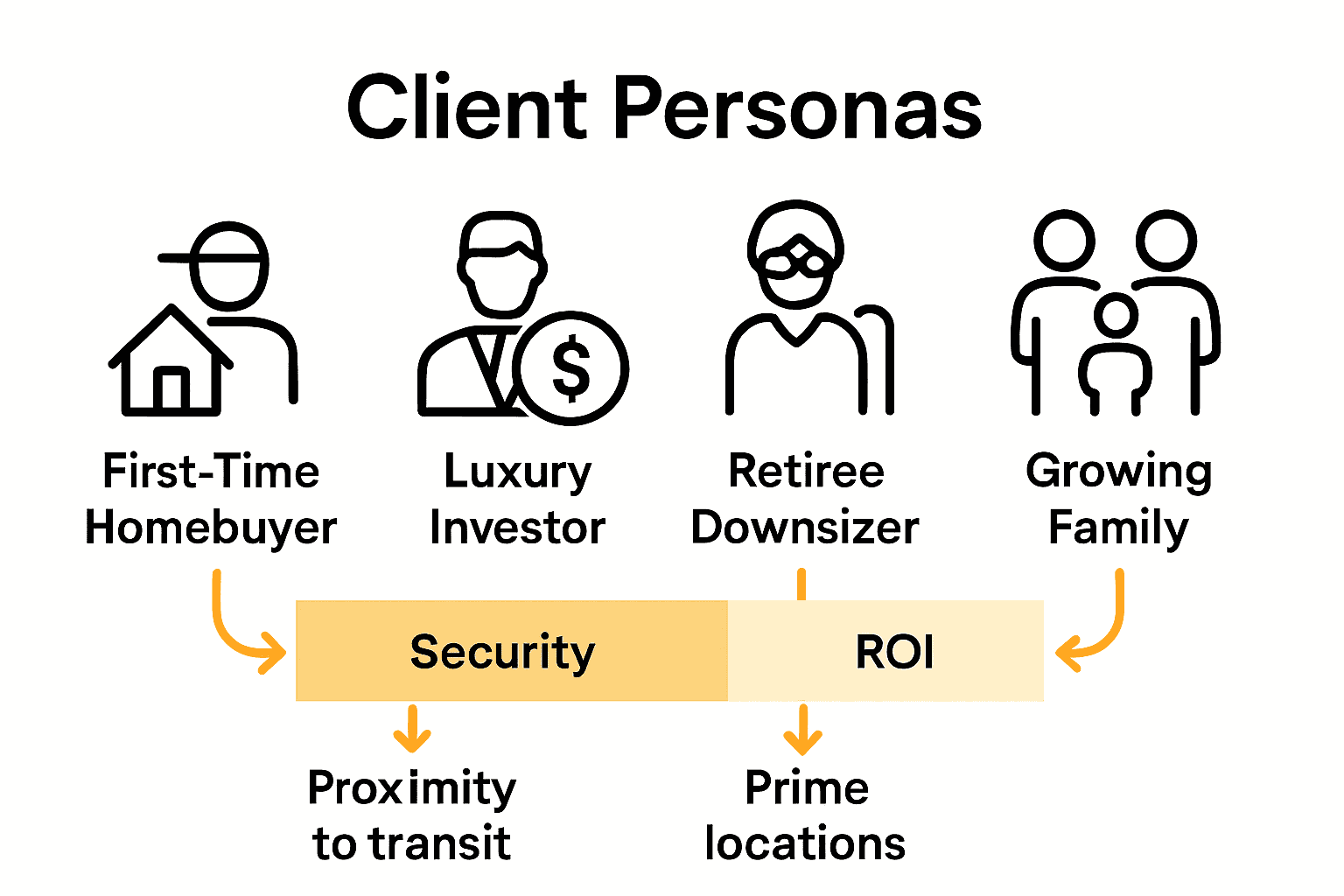
| Client Persona | Key Motivations | Top Priorities |
|---|---|---|
| First-Time Homebuyer | Security Affordability |
Proximity to transit Modern amenities |
| Luxury Investor | ROI Status |
Prime locations Exclusive properties |
| Retiree Downsizer | Simplicity Accessibility |
Walkability Low maintenance |
| Growing Family | Space Stability |
Schools Safe neighborhoods |
Research your local market thoroughly. Examine recent sales data, neighborhood trends, and economic indicators. This helps you identify not just who your ideal clients are but where they are most likely to be searching for properties.
Pro Tip: Use local real estate data platforms and government statistics to build a comprehensive market understanding.
Once you have defined your ideal client, everything from your website copy to your social media content can be strategically tailored to speak directly to their needs and desires. Your marketing becomes more precise powerful and effective.
Ready to move to the next step? You will now develop a targeted content strategy that speaks directly to your defined market segment.
Step 2: Set up essential lead capture channels
Your lead generation strategy hinges on creating multiple touchpoints where potential clients can discover and engage with your real estate services. According to Dataconomy, successful real estate agents integrate diverse channels like CRM systems email platforms and social media to maximize lead capture opportunities.
Start by establishing a robust online presence through a professional website with clear contact forms. Your website should not just showcase properties but actively invite interaction. Implement strategic call to action buttons that make it easy for visitors to request more information schedule viewings or download market reports.
Expand your digital reach by optimizing your Google Business Profile. Inman highlights the importance of creating a searchable profile that appears in local searches. Include high quality property images comprehensive business information and encourage client reviews to boost your credibility.
Consider innovative capture methods beyond traditional websites. QR codes on property signage mailers or business cards can instantly connect potential clients to your landing pages. Create engaging YouTube videos about local property markets neighborhood guides and client testimonials that provide value while subtly capturing viewer contact details.
Pro Tip: Always offer something of genuine value in exchange for contact information such as a free market analysis report or exclusive property listing guide.
Develop a comprehensive CRM system that tracks interactions across all channels. This allows you to nurture leads systematically and personalize your communication based on their specific interests and interactions.
Ready for the next step? You will now learn how to craft compelling content that attracts and converts these captured leads into potential clients.
Step 3: Develop compelling lead magnets and offers
Lead magnets are your secret weapon for transforming casual website visitors into potential clients. According to LinkedIn, high converting lead magnets in real estate include homebuyer guides free property valuation PDFs and local moving resources that provide genuine value to potential clients.
Design your lead magnets with laser focus on solving specific problems your target market experiences. A first time homebuyer might appreciate a comprehensive guide walking them through the purchasing process. Investors could be drawn to a detailed market analysis report showcasing neighborhood property value trends. The key is creating content so useful that people willingly exchange their contact information to access it.
Inman suggests innovative approaches like QR code mailers linking to exclusive reports such as “7 Secrets That Make Owning a Home Easier” or unsolicited video comparative market analyses. These unexpected value offerings can dramatically increase your lead capture rates.
Consider multiple formats for your lead magnets digital PDFs video walkthroughs webinar recordings interactive property valuation tools. Diversifying your offerings increases the likelihood of attracting different types of potential clients with varying content preferences.
Pro Tip: Ensure your lead magnet directly relates to the specific needs of your ideal client persona you developed in the previous step.
Track the performance of each lead magnet.
 Some will resonate more strongly than others and understanding these nuances helps you refine your approach continuously.
Ready for the next step? You will now learn how to create a systematic follow up process that converts these captured leads into actual clients.
Step 4: Implement automation for lead nurturing
Automation transforms how real estate agents manage and engage potential clients. According to Fran Funnel, effective lead nurturing requires strategic drip email campaigns precisely segmented by buyer personas ensuring consistent personalized communication throughout the client journey.
Start by designing targeted email workflows for different client segments. First time homebuyers will need educational content about purchasing processes. Investors require market trend analyses and investment property insights. Retirees might appreciate neighborhood lifestyle guides. Your automation should feel like a personalized conversation not a generic broadcast.
Zavops highlights the importance of multichannel automation beyond traditional email. Consider integrating SMS marketing which boasts significantly higher open rates and implementing click to call features on your website for immediate engagement.
Create a logical sequence of touchpoints that gradually build trust. Your first email might offer the free guide they downloaded. Follow ups could include neighborhood market reports community event invitations or personalized property recommendations based on their initial interaction.
Pro Tip: Set up triggered emails that respond instantly to specific lead actions like downloading a resource or clicking a particular link.
Track engagement metrics closely. Which emails get opened? What content generates the most clicks? Use these insights to continuously refine your automation strategy making each interaction more compelling than the last.
Ready for the next step? You will now learn how to convert these nurtured leads into actual client meetings and property transactions.
Step 5: Track results and optimise your workflow
Data drives success in real estate lead generation. According to Dataconomy, integrating comprehensive CRM systems allows agents to monitor lead interactions across multiple channels enabling precise performance tracking and strategic optimization.
Start by establishing key performance indicators specific to your lead generation workflow. Conversion rates cost per lead engagement levels and client acquisition metrics will be your north star. Track how many website visitors transform into actual leads and what percentage of those leads convert into signed clients.
ShareLoApp recommends analyzing performance across diverse channels. Examine metrics from content marketing social media advertising virtual tours and blog engagement. Which platforms generate the most qualified leads? Where are you seeing the highest return on investment?
Implement monthly review sessions where you deep dive into your analytics. Look beyond surface level numbers and understand the story behind the data. Are certain lead magnets performing better than others? Do specific email sequences generate more responses? Your workflow should be a living document constantly refined by real world performance.
Pro Tip: Create a dashboard that consolidates all your key metrics making it easy to spot trends and make rapid strategic adjustments.
Remember that optimization is an ongoing process. What works today might change tomorrow. Stay curious experiment regularly and be willing to pivot your approach based on solid data insights.
Ready for the final step? You will now learn how to continuously improve and scale your real estate lead generation strategy.
Elevate Your Real Estate Lead Generation with Content Charlie
The challenge of crafting a precise lead generation workflow that truly connects with your ideal client can feel overwhelming. This article highlights how defining client personas, creating compelling lead magnets, and automating nurturing processes are essential steps. Yet, without the right content strategy focused on local SEO and persuasive copywriting, even the best workflows may fail to capture and convert leads effectively.
At Content Charlie, we understand that your success depends on being discovered by motivated buyers and sellers right in your neighborhood. Our expertise lies in producing targeted real estate copy, suburb guides, and Google Business Profile content that ranks on Google and speaks directly to your defined market segment. Combine your strategic workflow with our high-converting content solutions to build trust, boost engagement, and turn prospects into clients.
Don’t let your leads slip away due to unclear messaging or poor local visibility. Visit Content Charlie now to start transforming your real estate marketing strategy with SEO-driven copy that gets found and brings results. Explore our services to find out how suburb-specific content and consistent blog articles can complement your lead generation pipeline. Take the next step toward dominating your market today.
Frequently Asked Questions
How can I define my ideal client in real estate lead generation?
To define your ideal client, create a detailed client persona that includes their motivations, challenges, and aspirations. Start by identifying specific segments like first-time homebuyers or luxury investors to tailor your marketing strategy effectively.
What are effective lead capture channels for real estate agents?
Effective lead capture channels include a professional website with clear contact forms and optimized Google Business Profiles. Ensure your website invites interaction, such as scheduling viewings, and utilize social media platforms for broader reach.
What types of lead magnets should I create for my real estate business?
Create lead magnets that address specific problems faced by your target market, like homebuyer guides or market analysis reports. Aim to make these resources so valuable that potential clients are willing to exchange their contact information for access.
How can I implement automation to nurture my real estate leads?
Implement automation by setting up targeted email workflows based on client segments, ensuring that each email delivers personalized content. Design touchpoints that gradually build trust and track engagement metrics to refine your approach continuously.
What key performance indicators should I track in my lead generation workflow?
Key performance indicators to track include conversion rates, cost per lead, and engagement levels. Regularly analyze these metrics to identify areas for improvement and refine your workflow based on real-world performance.
How often should I review my lead generation strategy for optimal results?
Conduct monthly review sessions to analyze your lead generation performance and uncover trends. By frequently evaluating your strategy, you can make timely adjustments, potentially improving efficiency and results by up to 30%.