
- You are here:
- Home »
- suburb-specific content
Tag Archives for " suburb-specific content "

Real Estate SEO Myths: Complete Guide for Agents
Did you know that over 90 percent of property searches begin online? For real estate agents, showing up on the first page of search results can mean the difference between a flood of leads and an empty inbox. Misunderstandings about Search Engine Optimization often keep agents from realizing their digital potential. Understanding what truly drives real estate SEO gives you a real edge in connecting with tomorrow’s buyers and sellers.
Table of Contents
- Defining Real Estate SEO and Common Myths
- Debunking Popular Real Estate SEO Beliefs
- Local SEO Myths for Australian Agents
- Truths About Google Rankings and Content
- Real-World Impact of Following SEO Myths
Key Takeaways
| Point | Details |
|---|---|
| Continuous SEO Effort | Real estate SEO is an ongoing process requiring regular updates and strategic monitoring for effective results. |
| Quality Over Quantity | Focusing on high-quality, relevant content is essential for improving search engine rankings, rather than just increasing keyword usage. |
| Local Optimization is Crucial | Hyper-targeted local SEO strategies, including unique content and optimized listings, significantly enhance visibility in competitive markets. |
| Understanding Realistic Expectations | SEO should not be viewed as a quick fix; agents must commit to long-term strategies to improve online visibility and client acquisition. |
Defining Real Estate SEO and Common Myths
Real estate Search Engine Optimization (SEO) is the strategic process of enhancing your online visibility to attract potential property buyers and sellers through organic search results. According to research from Zillow, SEO involves optimizing your website to improve its ranking in search engine results, ultimately driving more targeted traffic to your real estate business.
Many agents misunderstand SEO, believing it’s a simple one-time task with guaranteed immediate results. As insights from Breakthrough Broker reveal, SEO is actually a continuous process requiring regular updates and strategic monitoring. Common myths that can derail an agent’s digital strategy include:
- Believing more keywords automatically mean better rankings
- Assuming social media directly impacts search engine rankings
- Thinking SEO is a quick fix rather than an ongoing effort
Successful real estate SEO requires understanding that search engines prioritize high-quality, relevant content that genuinely helps potential clients. This means creating suburb guides, property market insights, and targeted local content that answers specific questions your audience might have. By focusing on providing value and maintaining consistent website optimization, you’ll gradually improve your online visibility and attract more qualified leads.
For a comprehensive breakdown of real estate SEO terminology, check out our guide on real estate SEO jargon to help you navigate this complex digital landscape.
Debunking Popular Real Estate SEO Beliefs
Real estate agents often fall prey to common misconceptions about Search Engine Optimization (SEO) that can significantly hinder their online marketing efforts. According to insights from Realty Ninja, one critical mistake is using identical listing descriptions across multiple platforms, which creates duplicate content and negatively impacts search rankings.
Beyond content uniqueness, many agents misunderstand the fundamental nature of SEO. As Breakthrough Broker explains, SEO is not a one-time task but a continuous process requiring consistent effort and strategic updates. Common myths that can derail your digital strategy include:
Here’s a breakdown of top real estate SEO myths versus the reality:
| SEO Myth | The Reality | Impact if Believed |
|---|---|---|
| More keywords mean better rankings | Quality and relevance matter more | Poor search performance |
| Social media directly improves rankings | Social signals have indirect effect only | Misallocated marketing focus |
| SEO is a quick, one-time fix | SEO is ongoing and requires updates | Loss of long-term visibility |
| Duplicate listings are harmless | Unique content is critical | Lowered search ranking |
| Location-specific keywords are unnecessary | Hyper-local terms boost local results | Missed local opportunities |
- Believing you can achieve instant search ranking improvements
- Assuming more keywords automatically mean better search results
- Thinking SEO is a set-it-and-forget-it marketing approach
To truly enhance your online visibility, you must develop a dynamic SEO strategy that focuses on creating unique, valuable content tailored to your local market. This means crafting original property descriptions, developing suburb-specific guides, and regularly updating your website with fresh, relevant information. By understanding how blogging can boost your real estate SEO, you’ll create a more robust and effective digital marketing approach that attracts potential clients and improves your search rankings over time.
Local SEO Myths for Australian Agents
Local Search Engine Optimization (SEO) is a critical strategy for real estate agents looking to dominate suburb-specific markets across Australia. According to Web Globals, many agents mistakenly believe that a generic online presence is sufficient to attract local clients. In reality, hyper-local optimization is key to standing out in competitive real estate markets.
Common misconceptions about local SEO can significantly hinder an agent’s digital marketing efforts. Locally.net.au highlights the importance of creating targeted local landing pages and maintaining consistent business listings across different platforms. Myths that can derail your local search strategy include:
- Assuming all online listings are equally effective
- Believing location-specific keywords are unnecessary
- Thinking social media followers automatically translate to local visibility
To truly excel in local SEO, agents must develop a hyper-targeted digital presence that speaks directly to specific suburbs and local communities. This means creating unique content for each area you serve, optimizing Google Business Profile listings, and understanding local market differentiation strategies that set you apart from competitors. By focusing on authentic, locally-relevant content and precise geographic targeting, you’ll improve your chances of appearing in crucial suburb-level searches and attracting potential clients in your specific real estate market.

Truths About Google Rankings and Content
Google Rankings are far more nuanced than most real estate agents realize. According to Realty Ninja, one critical mistake that can torpedo your search visibility is using duplicate content, such as recycling identical listing descriptions across multiple platforms. Search engines penalize websites that don’t offer unique, valuable information.
Breakthrough Broker emphasizes that SEO is a long-term strategy, not an overnight miracle. Agents often harbor unrealistic expectations about search rankings, believing they can achieve top positions through quick tricks. The truth is more complex:
- Rankings improve through consistent, high-quality content
- Unique property descriptions matter more than keyword stuffing
- Patience and strategic effort are essential for SEO success
To truly understand how to improve your digital presence, dive into the role of content in SEO and recognize that Google rewards websites providing genuine value to potential clients. This means crafting original suburb guides, detailed property insights, and locally targeted content that answers real questions your audience is asking. Your goal isn’t just to rank, but to become a trusted local authority that search engines and clients both respect.
Real-World Impact of Following SEO Myths
Believing in SEO misconceptions can have devastating consequences for real estate agents’ digital marketing efforts. According to Realty Ninja, minimal content is a critical error that directly impacts search engine visibility. Agents who skimp on comprehensive, unique content essentially render themselves invisible in the digital marketplace.
Breakthrough Broker highlights the long-term repercussions of treating SEO as a one-time task. The real-world consequences of following outdated SEO myths include:
- Dramatically reduced online visibility
- Lower client acquisition rates
- Missed opportunities in competitive markets
- Potential loss of potential commission income
To understand the true financial impact of SEO strategies, real estate professionals must recognize that digital marketing is an ongoing investment. Poor SEO practices don’t just limit your online presence they directly translate to fewer leads, fewer property viewings, and ultimately, less revenue. Your digital strategy needs to be as dynamic and adaptable as the real estate market itself – constantly evolving, always engaging, and strategically positioned to capture potential clients’ attention.
Break Free from Real Estate SEO Myths and Get Found Locally
If you are struggling with common SEO misconceptions like quick fixes or copy-pasting listing descriptions, you are not alone. The article highlights how ongoing, strategic local SEO and unique, relevant content make the difference between invisibility and becoming a trusted market leader. Without a clear, focused approach, your online presence will remain buried beneath competitors who understand how to win suburb-level searches.
Content Charlie specializes in crafting exactly the kind of high-quality, localized copy that Google and your clients crave. From detailed suburb guides to engaging property descriptions and optimized Google Business Profile content, we help real estate agents rise above SEO myths and shine in their communities.

Take control of your digital future today by partnering with Content Charlie. Visit us at Content Charlie now to unlock local SEO strategies that deliver real results and make your brand the first choice for buyers and sellers in your market.
Frequently Asked Questions
What is real estate SEO?
Real estate SEO is the process of optimizing a real estate website to improve its visibility in search engine results, attracting potential buyers and sellers through organic search traffic.
Is SEO a one-time task for real estate agents?
No, SEO is an ongoing process that requires continuous updates and regular monitoring to maintain and improve search rankings over time.
How important is unique content for real estate websites?
Unique content is critical as it helps avoid duplicate content penalties from search engines, improves search rankings, and provides genuine value to potential clients.
Can social media presence improve my real estate SEO results?
Social media can indirectly impact SEO results by driving traffic to your website and increasing brand visibility, but it does not directly influence search engine rankings.
Recommended
- Real Estate SEO Jargon Explained: Essential Guide – Content Charlie
- Real Estate Website Essentials: Complete Guide for Agents – Content Charlie
- Complete Guide to Copywriting in Real Estate – Content Charlie
- SEO for Real Estate Agencies: Simple Strategies to Grow Your Business
- Understanding SEO Best Practices for Your Business – My Blog

Lead Generation Workflow Real Estate: Step-by-Step Success
Lead Generation Workflow Real Estate is necessary for all real estate agents to understand.
Did you know that over 90 percent of home buyers begin their search online? In a crowded real estate market, getting high quality leads makes all the difference for agents who want lasting success. Understanding who your ideal client is and how to reach them not only shapes your strategy but also determines how much value you deliver. Discover the steps to turn curiosity into solid connections and grow your business.
Table of Contents
- Step 1: Define Your Ideal Client And Market Focus
- Step 2: Set Up Essential Lead Capture Channels
- Step 3: Develop Compelling Lead Magnets And Offers
- Step 4: Implement Automation For Lead Nurturing
- Step 5: Track Results And Optimise Your Workflow
Quick Summary
| Key Point | Explanation |
|---|---|
| 1. Define Your Ideal Client | Understand your target audience and their specific needs to tailor your marketing strategies effectively. |
| 2. Set Up Lead Capture Channels | Create multiple engagement points like a professional website and optimize Google Business Profile for better visibility. |
| 3. Develop Compelling Lead Magnets | Design valuable offers that address specific problems of your target market to increase lead capture rates. |
| 4. Implement Automated Lead Nurturing | Use segmented email campaigns to provide personalized communication, enhancing client engagement throughout their journey. |
| 5. Track Performance and Optimize | Regularly analyze KPIs to refine your lead generation strategies and improve overall effectiveness in conversions. |
Step 1: Define your ideal client and market focus
Successful real estate lead generation starts with knowing exactly who you want to serve. According to Dataconomy, building trust through targeted content marketing requires a crystal clear understanding of your target audience and locality.
Begin by mapping out your specific market segment. Are you focusing on first time homebuyers in suburban areas? Luxury property investors? Retirees looking to downsize? Your target client profile determines everything from your marketing strategy to the properties you showcase.
Create a detailed client persona that goes beyond basic demographics. Think about their motivations, challenges, and aspirations. A young professional might prioritize proximity to public transport and modern amenities. A growing family will likely want school districts and spacious layouts. Understanding these nuanced preferences helps you craft more compelling communications.
Here’s a comparison of common real estate client personas and their unique needs:
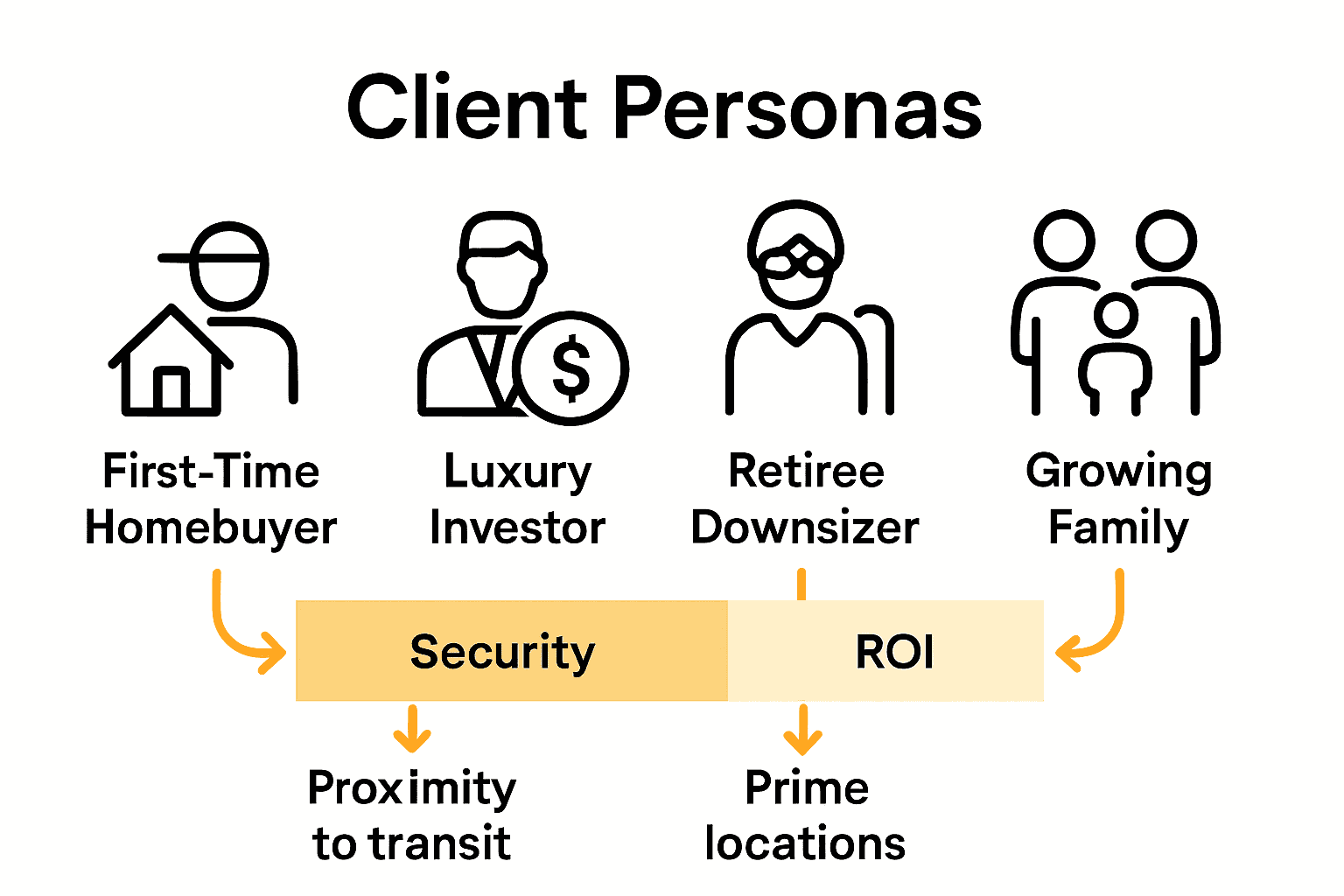
| Client Persona | Key Motivations | Top Priorities |
|---|---|---|
| First-Time Homebuyer | Security Affordability |
Proximity to transit Modern amenities |
| Luxury Investor | ROI Status |
Prime locations Exclusive properties |
| Retiree Downsizer | Simplicity Accessibility |
Walkability Low maintenance |
| Growing Family | Space Stability |
Schools Safe neighborhoods |
Research your local market thoroughly. Examine recent sales data, neighborhood trends, and economic indicators. This helps you identify not just who your ideal clients are but where they are most likely to be searching for properties.
Pro Tip: Use local real estate data platforms and government statistics to build a comprehensive market understanding.
Once you have defined your ideal client, everything from your website copy to your social media content can be strategically tailored to speak directly to their needs and desires. Your marketing becomes more precise powerful and effective.
Ready to move to the next step? You will now develop a targeted content strategy that speaks directly to your defined market segment.
Step 2: Set up essential lead capture channels
Your lead generation strategy hinges on creating multiple touchpoints where potential clients can discover and engage with your real estate services. According to Dataconomy, successful real estate agents integrate diverse channels like CRM systems email platforms and social media to maximize lead capture opportunities.
Start by establishing a robust online presence through a professional website with clear contact forms. Your website should not just showcase properties but actively invite interaction. Implement strategic call to action buttons that make it easy for visitors to request more information schedule viewings or download market reports.
Expand your digital reach by optimizing your Google Business Profile. Inman highlights the importance of creating a searchable profile that appears in local searches. Include high quality property images comprehensive business information and encourage client reviews to boost your credibility.
Consider innovative capture methods beyond traditional websites. QR codes on property signage mailers or business cards can instantly connect potential clients to your landing pages. Create engaging YouTube videos about local property markets neighborhood guides and client testimonials that provide value while subtly capturing viewer contact details.
Pro Tip: Always offer something of genuine value in exchange for contact information such as a free market analysis report or exclusive property listing guide.
Develop a comprehensive CRM system that tracks interactions across all channels. This allows you to nurture leads systematically and personalize your communication based on their specific interests and interactions.
Ready for the next step? You will now learn how to craft compelling content that attracts and converts these captured leads into potential clients.
Step 3: Develop compelling lead magnets and offers
Lead magnets are your secret weapon for transforming casual website visitors into potential clients. According to LinkedIn, high converting lead magnets in real estate include homebuyer guides free property valuation PDFs and local moving resources that provide genuine value to potential clients.
Design your lead magnets with laser focus on solving specific problems your target market experiences. A first time homebuyer might appreciate a comprehensive guide walking them through the purchasing process. Investors could be drawn to a detailed market analysis report showcasing neighborhood property value trends. The key is creating content so useful that people willingly exchange their contact information to access it.
Inman suggests innovative approaches like QR code mailers linking to exclusive reports such as “7 Secrets That Make Owning a Home Easier” or unsolicited video comparative market analyses. These unexpected value offerings can dramatically increase your lead capture rates.
Consider multiple formats for your lead magnets digital PDFs video walkthroughs webinar recordings interactive property valuation tools. Diversifying your offerings increases the likelihood of attracting different types of potential clients with varying content preferences.
Pro Tip: Ensure your lead magnet directly relates to the specific needs of your ideal client persona you developed in the previous step.
Track the performance of each lead magnet.
 Some will resonate more strongly than others and understanding these nuances helps you refine your approach continuously.
Ready for the next step? You will now learn how to create a systematic follow up process that converts these captured leads into actual clients.
Step 4: Implement automation for lead nurturing
Automation transforms how real estate agents manage and engage potential clients. According to Fran Funnel, effective lead nurturing requires strategic drip email campaigns precisely segmented by buyer personas ensuring consistent personalized communication throughout the client journey.
Start by designing targeted email workflows for different client segments. First time homebuyers will need educational content about purchasing processes. Investors require market trend analyses and investment property insights. Retirees might appreciate neighborhood lifestyle guides. Your automation should feel like a personalized conversation not a generic broadcast.
Zavops highlights the importance of multichannel automation beyond traditional email. Consider integrating SMS marketing which boasts significantly higher open rates and implementing click to call features on your website for immediate engagement.
Create a logical sequence of touchpoints that gradually build trust. Your first email might offer the free guide they downloaded. Follow ups could include neighborhood market reports community event invitations or personalized property recommendations based on their initial interaction.
Pro Tip: Set up triggered emails that respond instantly to specific lead actions like downloading a resource or clicking a particular link.
Track engagement metrics closely. Which emails get opened? What content generates the most clicks? Use these insights to continuously refine your automation strategy making each interaction more compelling than the last.
Ready for the next step? You will now learn how to convert these nurtured leads into actual client meetings and property transactions.
Step 5: Track results and optimise your workflow
Data drives success in real estate lead generation. According to Dataconomy, integrating comprehensive CRM systems allows agents to monitor lead interactions across multiple channels enabling precise performance tracking and strategic optimization.
Start by establishing key performance indicators specific to your lead generation workflow. Conversion rates cost per lead engagement levels and client acquisition metrics will be your north star. Track how many website visitors transform into actual leads and what percentage of those leads convert into signed clients.
ShareLoApp recommends analyzing performance across diverse channels. Examine metrics from content marketing social media advertising virtual tours and blog engagement. Which platforms generate the most qualified leads? Where are you seeing the highest return on investment?
Implement monthly review sessions where you deep dive into your analytics. Look beyond surface level numbers and understand the story behind the data. Are certain lead magnets performing better than others? Do specific email sequences generate more responses? Your workflow should be a living document constantly refined by real world performance.
Pro Tip: Create a dashboard that consolidates all your key metrics making it easy to spot trends and make rapid strategic adjustments.
Remember that optimization is an ongoing process. What works today might change tomorrow. Stay curious experiment regularly and be willing to pivot your approach based on solid data insights.
Ready for the final step? You will now learn how to continuously improve and scale your real estate lead generation strategy.
Elevate Your Real Estate Lead Generation with Content Charlie
The challenge of crafting a precise lead generation workflow that truly connects with your ideal client can feel overwhelming. This article highlights how defining client personas, creating compelling lead magnets, and automating nurturing processes are essential steps. Yet, without the right content strategy focused on local SEO and persuasive copywriting, even the best workflows may fail to capture and convert leads effectively.
At Content Charlie, we understand that your success depends on being discovered by motivated buyers and sellers right in your neighborhood. Our expertise lies in producing targeted real estate copy, suburb guides, and Google Business Profile content that ranks on Google and speaks directly to your defined market segment. Combine your strategic workflow with our high-converting content solutions to build trust, boost engagement, and turn prospects into clients.
Don’t let your leads slip away due to unclear messaging or poor local visibility. Visit Content Charlie now to start transforming your real estate marketing strategy with SEO-driven copy that gets found and brings results. Explore our services to find out how suburb-specific content and consistent blog articles can complement your lead generation pipeline. Take the next step toward dominating your market today.
Frequently Asked Questions
How can I define my ideal client in real estate lead generation?
To define your ideal client, create a detailed client persona that includes their motivations, challenges, and aspirations. Start by identifying specific segments like first-time homebuyers or luxury investors to tailor your marketing strategy effectively.
What are effective lead capture channels for real estate agents?
Effective lead capture channels include a professional website with clear contact forms and optimized Google Business Profiles. Ensure your website invites interaction, such as scheduling viewings, and utilize social media platforms for broader reach.
What types of lead magnets should I create for my real estate business?
Create lead magnets that address specific problems faced by your target market, like homebuyer guides or market analysis reports. Aim to make these resources so valuable that potential clients are willing to exchange their contact information for access.
How can I implement automation to nurture my real estate leads?
Implement automation by setting up targeted email workflows based on client segments, ensuring that each email delivers personalized content. Design touchpoints that gradually build trust and track engagement metrics to refine your approach continuously.
What key performance indicators should I track in my lead generation workflow?
Key performance indicators to track include conversion rates, cost per lead, and engagement levels. Regularly analyze these metrics to identify areas for improvement and refine your workflow based on real-world performance.
How often should I review my lead generation strategy for optimal results?
Conduct monthly review sessions to analyze your lead generation performance and uncover trends. By frequently evaluating your strategy, you can make timely adjustments, potentially improving efficiency and results by up to 30%.
Get the book that explains it all How To Generate Leads
Recommended

Understanding Why Local SEO Matters for Real Estate
Local SEO is changing the way home buyers and sellers connect with real estate agents in their own neighborhoods. And get this. 46% of all Google searches now have local intent, which means nearly half of online house-hunters are searching for answers right where they live. Most agents still focus only on broad search terms, but the agents who win clients today are the ones who master hyperlocal visibility and become the top choice just down the street.
Table of Contents
- Defining Local Seo And Its Importance In Real Estate
- The Impact Of Local Search On Consumer Behavior
- How Local Seo Enhances Online Visibility For Agents
- Key Components Of Effective Local Seo Strategies
- Real-World Examples Of Local Seo Success In Real Estate
Quick Summary
| Takeaway | Explanation |
|---|---|
| Optimize Your Google Business Profile | Ensure your profile has accurate information to improve local visibility. |
| Focus on Hyperlocal Content Creation | Develop content tailored to specific neighborhoods to engage local clients effectively. |
| Leverage Online Reviews for Credibility | Encourage clients to leave positive reviews to build trust in your services. |
| Use Location-Specific Keywords | Incorporate local keywords to enhance search rankings in targeted areas. |
| Maintain Consistency Across Platforms | Keep business information uniform on all online platforms to boost local SEO success. |
Defining Local SEO and Its Importance in Real Estate
Local SEO represents a strategic digital marketing approach specifically designed to help businesses increase their visibility in geographically targeted search results. For real estate professionals, this means optimizing online presence to attract potential clients within specific neighborhoods, suburbs, or regional areas.
What Exactly is Local SEO?
Local SEO goes beyond traditional search engine optimization by focusing on location-specific search signals. In real estate, this translates to helping potential buyers and sellers find your services when searching for property-related information in their immediate geographic area. Local SEO for real estate involves multiple tactics designed to improve your visibility in local search results.
Key components of local SEO for real estate include:
- Optimizing Google Business Profile with accurate business information
- Creating location-specific content targeting particular suburbs or neighborhoods
- Building local citations and consistent business information across online platforms
- Generating location-based reviews from satisfied clients
Why Local SEO Matters for Real Estate Professionals
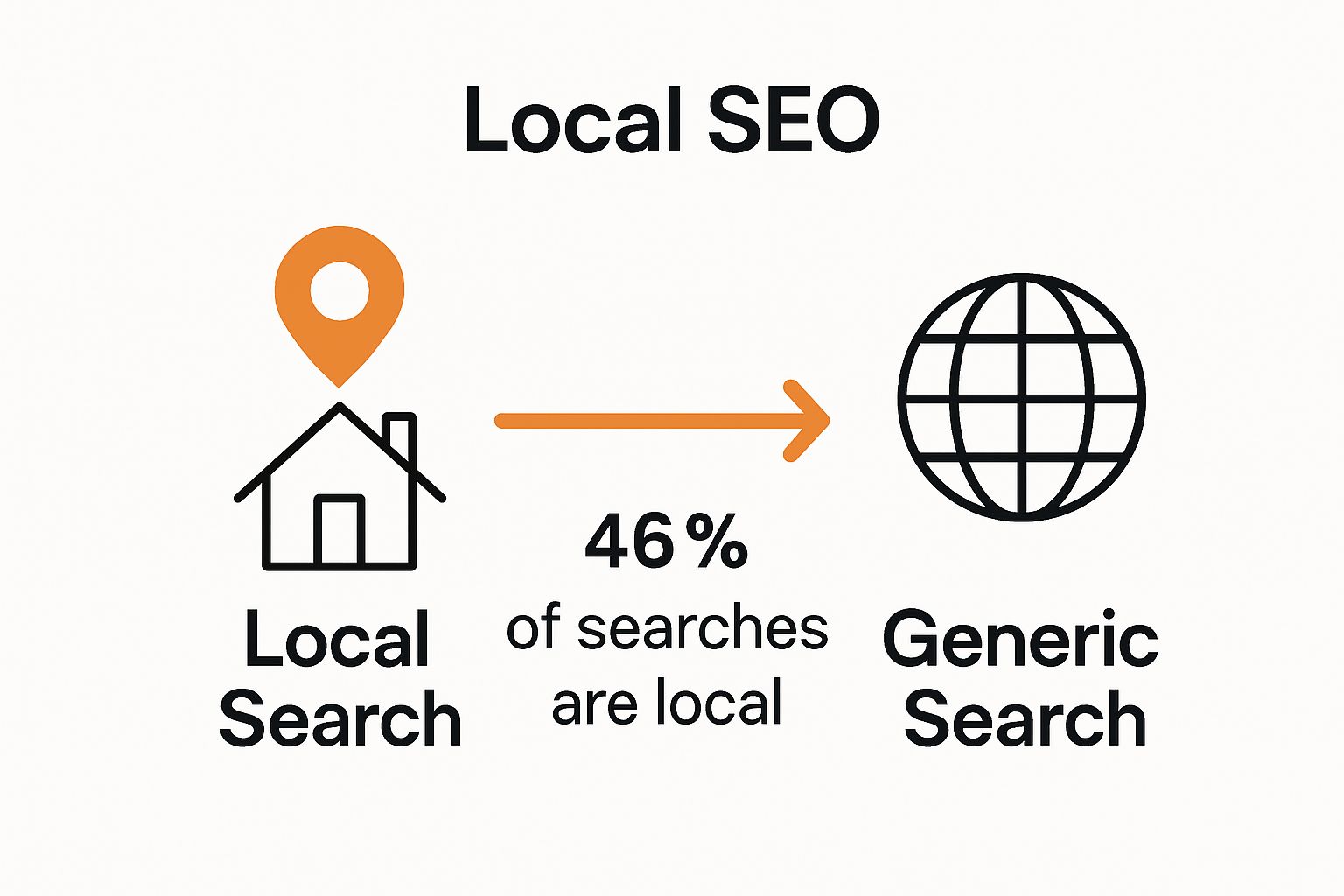
According to Google’s Local Search Ranking Factors Study, 46% of all Google searches have local intent, making local SEO critical for real estate agents seeking to capture targeted leads. By implementing strategic local SEO practices, agents can significantly improve their chances of appearing in “near me” searches and map pack results.
For real estate professionals, local SEO is not just about ranking higher in search results. It’s about establishing credibility, demonstrating local expertise, and connecting with potential clients who are actively searching for property services in specific areas. By focusing on hyperlocal optimization strategies, agents can differentiate themselves from competitors and become the go-to real estate expert in their target market.
The Impact of Local Search on Consumer Behavior
Local search has fundamentally transformed how consumers discover, evaluate, and interact with businesses, particularly in service-oriented industries like real estate. The digital landscape has shifted consumer expectations, making immediate, geographically relevant information a critical factor in decision-making processes.
Understanding Consumer Search Patterns
Modern consumers have become increasingly sophisticated in their search behaviors, preferring hyper-targeted results that provide precise, localized information. In real estate, this means potential buyers and sellers are not just searching for generic property listings, but seeking agents, market insights, and property details specific to their immediate neighborhood or suburb.
Key characteristics of local search consumer behavior include:
- Preference for immediate, location-specific results
- High reliance on mobile devices for quick information retrieval
- Strong emphasis on user-generated content and local reviews
- Expectation of personalized, contextually relevant search experiences
Trust and Credibility in Local Searches
According to research from the National Association of Realtors, 97% of homebuyers use the internet during their property search, demonstrating the profound impact of digital platforms on real estate consumer behavior. Local search results play a crucial role in establishing trust and credibility.
Consumers view businesses with strong local search presence as more legitimate and trustworthy. For real estate professionals, this means that appearing in local search results is not just about visibility, but about creating a perception of local expertise and reliability. By consistently delivering accurate, location-specific information, agents can build digital credibility that translates into real-world client relationships.
The evolution of local search has fundamentally reshaped how consumers make purchasing decisions, turning geographical relevance into a key differentiator in competitive markets like real estate.
This table highlights research-backed statistics and their implications for local SEO and real estate agents, helping illustrate the importance and impact of local search strategies.
| Statistic | Source | Significance for Real Estate Agents |
|---|---|---|
| 46% of Google searches have local intent | BrightLocal, Moz | Indicates nearly half of searchers want local information. |
| 97% of homebuyers use the internet to search | National Association of Realtors | Confirms the digital-first behavior of today’s clients. |
| 44% of local pack results get click-throughs | Moz | Highlights the value of optimizing for Google’s local map pack. |
| 87% of consumers read reviews for local business | BrightLocal | Underscores the role of reviews in consumer trust decisions. |
How Local SEO Enhances Online Visibility for Agents
Local SEO serves as a powerful digital strategy that transforms how real estate professionals attract and engage potential clients in an increasingly competitive online marketplace. By strategically optimizing digital presence, agents can significantly amplify their visibility and reach within specific geographic territories.
Strategic Digital Positioning
Effective local SEO enables real estate agents to position themselves precisely where potential clients are searching. This means appearing prominently in local search results, map listings, and location-based queries that directly target individuals seeking property services in specific suburbs or neighborhoods.
Key strategic advantages of local SEO for real estate agents include:
- Targeting hyperlocal search queries with precision
- Increasing organic visibility in geographic-specific searches
- Building credibility through location-based content and reviews
- Competing effectively against larger real estate agencies
Maximizing Digital Real Estate
Real estate agent visibility depends on understanding and leveraging digital platforms strategically. According to Moz’s Local Search Ranking Factors, Google’s local pack results receive approximately 44% of all click-through traffic, making local SEO optimization crucial for capturing potential client attention.
Successful local SEO implementation goes beyond simple keyword optimization. It requires a comprehensive approach that includes consistent business information across online platforms, generating location-specific content, managing online reviews, and creating a robust Google Business Profile that accurately represents an agent’s local expertise and service areas.
By mastering local SEO techniques, real estate professionals can transform their digital presence from passive online listings to dynamic, engaging platforms that actively attract and convert potential clients in their target markets.

Key Components of Effective Local SEO Strategies
Local SEO demands a multifaceted approach that goes beyond simple keyword optimization. Real estate professionals must develop a comprehensive strategy that integrates multiple digital marketing elements to establish strong local online presence and credibility.
Foundational Local SEO Elements
Successful local SEO strategies for real estate agents require precise, strategic implementation across multiple digital platforms. This means creating a cohesive online ecosystem that signals local expertise and geographic relevance to both search engines and potential clients.
Critical foundational elements include:
- Consistent business name, address, and phone number across all online platforms
- Comprehensive and accurate Google Business Profile optimization
- Location-specific website content highlighting neighborhood expertise
- Strategic use of local keywords reflecting specific suburban markets
Technical and Content Optimization
Local real estate marketing requires careful attention to technical details and content quality. According to Ahrefs’ Local SEO Guide, successful strategies integrate precise technical optimization with high-quality, location-specific content that demonstrates deep understanding of local property markets.
Real estate professionals must focus on creating rich, informative content that addresses specific local market conditions, neighborhood insights, and hyperlocal property trends. This approach not only improves search engine rankings but also establishes the agent as a trusted local expert who understands the nuanced dynamics of specific geographic areas.
By implementing a holistic local SEO strategy, real estate agents can transform their digital presence from generic online listings to powerful, targeted marketing platforms that directly connect with potential clients in their specific service areas.
To clarify the foundational elements and technical strategies essential for effective local SEO in real estate, the table below breaks down the core components and their descriptions.
| Local SEO Component | Description |
|---|---|
| Consistent Business Information | Ensure name, address, and phone number are the same across all online platforms. |
| Google Business Profile Optimization | Keep your Google Business Profile accurate and complete to enhance local search visibility. |
| Location-Specific Website Content | Develop content focused on specific neighborhoods or suburbs to demonstrate local expertise. |
| Strategic Use of Local Keywords | Incorporate geographic keywords relevant to your service area for better targeted search results. |
| High-Quality Local Content | Publish in-depth, informative articles reflecting local market conditions and trends. |
| Online Review Management | Actively generate and manage reviews from local clients to build trust and authority. |
Real-World Examples of Local SEO Success in Real Estate
Local SEO represents more than a theoretical concept for real estate professionals. It is a practical strategy that can dramatically transform digital marketing effectiveness, enabling agents to capture targeted leads and establish neighborhood expertise through strategic online positioning.
Hyperlocal Content Strategies
Successful local SEO implementation requires agents to develop content that speaks directly to specific community needs and interests. This means creating detailed, location-specific resources that demonstrate deep understanding of particular suburbs, market trends, and neighborhood dynamics.
Key characteristics of successful hyperlocal content include:
- Detailed neighborhood guides with insider perspectives
- Market analysis specific to individual suburbs or districts
- Local market trend reports with current property insights
- Localized case studies highlighting recent property transactions
Measurable Impact and Conversion Potential
Location-based hashtags can play a significant role in amplifying local visibility. According to BrightLocal’s Local Consumer Review Survey, 87% of consumers read online reviews for local businesses in 2022, underscoring the critical importance of generating localized, trustworthy digital content.
Real estate agents who successfully implement local SEO strategies can experience remarkable outcomes. By developing targeted content that addresses specific community needs, agents transform their digital presence from generic listings to powerful, hyper-relevant marketing platforms that directly connect with potential clients in their precise service areas.
Through strategic local SEO approaches, real estate professionals can effectively differentiate themselves in competitive markets, demonstrating not just property expertise, but genuine community understanding and connection.
Take Control of Local Search and Become the Go-To Real Estate Expert
Are you struggling to stand out in your local market? The article made it clear: real estate clients are looking for agents who not only show up in suburb-level searches but also demonstrate true neighborhood expertise. With buyers relying on hyperlocal searches and online reviews, missing out on local SEO for real estate means leaving valuable opportunities on the table. It is time to stop feeling invisible or overwhelmed by the competition. Let the pain of low visibility propel you toward a better solution.
Let Content Charlie transform your online presence. Gain immediate traction with suburb-specific content, property descriptions, and Google Business Profile optimization that puts you in front of motivated buyers and sellers. Visit Content Charlie today and discover how our copywriting and proven real estate agent visibility strategies can help you dominate your market. Book your free discovery call now and make sure you are the agent local clients remember.
Frequently Asked Questions
What is local SEO and why is it important for real estate?
Local SEO is a digital marketing strategy that helps real estate professionals optimize their online presence for geographically targeted searches. It is important because it increases visibility among potential clients actively searching for property services in their area. Focus on optimizing your Google Business Profile and creating location-specific content to enhance your local search presence.
How can I improve my local search rankings as a real estate agent?
To improve your local search rankings, ensure that your business name, address, and phone number are consistent across all online platforms. Additionally, optimize your website with local keywords and generate positive reviews from satisfied clients. Take these actions to see improvements in local search visibility within 60 days.
What role does online reviews play in local SEO for real estate?
Online reviews significantly impact local SEO as they enhance credibility and trust among potential clients. Actively encourage satisfied clients to leave reviews on your Google Business Profile and other platforms to boost your visibility and attract more leads. Aim to gather at least five to ten new reviews each month.
Why should I create location-specific content for my real estate website?
Creating location-specific content helps demonstrate your expertise in specific neighborhoods or suburbs, making your services more relevant to potential clients. This targeted approach improves your local search rankings and attracts clients looking for detailed information about their desired area. Develop at least one piece of location-focused content each month to maintain relevance.
How can local SEO help me stand out from larger real estate agencies?
Local SEO can help you differentiate yourself by highlighting your specialized knowledge of local markets and community needs. By focusing on hyperlocal optimization strategies and personalized content, you can build stronger connections with potential clients. Implement tailored marketing strategies to position yourself as the go-to local expert and increase client engagement in your target market.
What should I monitor to measure the success of my local SEO efforts?
To measure the success of your local SEO efforts, monitor key metrics such as website traffic from local searches, the number of leads generated, and your rankings in local search results. Tools like Google Analytics can help you track these metrics over time. Review your progress every month to adjust your strategies effectively.
Recommended
- local SEO for real estate Archives – Content Charlie
- Local SEO Archives – Content Charlie
- real estate SEO Archives – Content Charlie
- SEO for realtors Archives – Content Charlie