
- You are here:
- Home »
- structured data markup
Tag Archives for " structured data markup "

Real Estate SEO Tips to Boost Agent Visibility Online
Real Estate SEO Tips to boost an agent’s visability is a must learn to dominate their local markets.
Nearly 50 percent of home buyers begin their search online for a local agent. Standing out in those crucial local searches can make all the difference for real estate success. If your website is not optimized for targeted keywords, suburb-level content, or local business signals, potential clients may never find you. By focusing on the right strategies and tools, you can improve online visibility, attract more buyers and sellers, and establish a trusted local presence.
Quick Summary
| Key Point | Explanation |
|---|---|
| 1. Audit Your Website Thoroughly | Conduct a detailed website audit to identify issues affecting local SEO performance and ranking. Use diagnostic tools for analysis. |
| 2. Optimize Keywords Strategically | Incorporate location-specific and intent-driven keywords into key pages to enhance visibility among potential clients. |
| 3. Create In-Depth Suburb Guides | Develop comprehensive content about neighborhoods to position yourself as a local expert and attract targeted traffic. |
| 4. Enhance Google Business Profile | Regularly update your Google Business Profile with engaging content to improve your brand visibility and client engagement. |
| 5. Monitor and Adjust SEO Tactics | Continuously track performance metrics and refine your SEO strategy to stay competitive in the local real estate market. |
Table of Contents
- Step 1: Audit Your Website For Local SEO Readiness
- Step 2: Optimise Key Pages With Targeted Keywords
- Step 3: Enhance Suburb-Level Content To Attract Locals
- Step 4: Boost Authority With Google Business Profile Updates
- Step 5: Track Rankings And Refine Your SEO Strategy
Step 1: Audit Your Website for Local SEO Readiness
A comprehensive website audit is your roadmap to improving local search visibility and attracting more potential real estate clients. This critical first step will help you identify technical issues that could be preventing your website from ranking well in local search results.
Start by examining your website through multiple diagnostic tools. According to local SEO performance metrics, you want to assess key technical elements like site structure, mobile responsiveness, page loading speed, and metadata accuracy.
Use free tools like Google Analytics, Google Search Console, and PageSpeed Insights to benchmark your current performance. Look for specific issues such as:
Here’s a summary of essential website audit checkpoints for local SEO readiness:
| Audit Checklist Item | Why It Matters | Recommended Tools |
|---|---|---|
| Page Loading Speed | Improves user experience | Google PageSpeed Insights |
| Mobile Responsiveness | Enhances mobile user visibility | Google Search Console Mobile-Friendly Test |
| Site Structure | Supports page indexing | Screaming Frog Sitebulb |
| Metadata Accuracy | Boosts search relevance | Screaming Frog Google Search Console |
| Consistent NAP Information | Signals local trustworthiness | Manual Review Local SEO Tools |
| Internal Link Health | Improves crawlability | Ahrefs Site Audit Screaming Frog |
- Slow page load times
- Non mobile friendly design
- Broken internal links
- Missing or incorrect metadata
- Inconsistent business information across pages
Pay special attention to local signals that help search engines understand your geographic relevance. This means ensuring your business name, address, and phone number are consistent across all web pages. Include location specific keywords naturally in your content and metadata to signal your local market presence.
Pro Tip: Your website should clearly communicate which specific areas or suburbs you serve as a real estate agent.
After conducting your initial audit, prioritize fixing the most critical technical issues first. Each improvement incrementally boosts your local search potential and helps potential clients find you more easily online.
Step 2: Optimise Key Pages with Targeted Keywords
Keyword optimization transforms your real estate website from generic to geographically precise, helping potential clients find you faster and more effectively. Your goal is to strategically incorporate location specific and intent driven keywords that match exactly what local home buyers and sellers are searching online.
Start by researching hyper local keywords that reflect your specific market. According to on page optimization strategies, focus on phrases like ‘luxury homes in Broadbeach’ or ‘first time buyer properties in Gold Coast’ that capture precise geographic and buyer intent signals.
Target these keywords strategically across critical website pages:
- Homepage
- About page
- Neighborhood guide sections
- Individual property listings
- Service area description pages
Incorporate keywords naturally into your content. Avoid stuffing or awkward repetitions that sound unnatural. Your writing should flow smoothly while subtly signaling your local expertise and market knowledge.
Pro Tip: Create dedicated neighborhood guide pages that offer genuine value beyond basic keyword placement.
Implement structured data markup to help search engines understand your content better. As research suggests, using schema for real estate content like RealEstateAgent and Property can significantly improve your search visibility and help you earn featured snippet placements.
Remember that keyword optimization is an ongoing process. Regularly review and update your keywords to match evolving local search trends and buyer behaviors.
Step 3: Enhance Suburb-Level Content to Attract Locals
Creating suburb specific content transforms your real estate website into a powerful local attraction magnet. By developing in depth neighborhood guides and localized content, you position yourself as the go to local expert potential clients trust and search engines reward.
Start by crafting comprehensive neighborhood guides that go beyond basic property listings. Understanding why local SEO matters means providing genuine value through detailed community insights. Focus on creating content that answers real questions local buyers and sellers have about specific suburbs.
Key elements to include in your suburb level content:
- Detailed neighborhood demographics
- Local school information
- Community amenities and infrastructure
- Recent market trends and property values
- Upcoming development plans
- Unique neighborhood characteristics
Use rich multimedia to make your content more engaging. Incorporate interactive maps, high quality local images, and infographics that showcase the unique personality of each suburb. This approach not only improves user experience but also signals to search engines that your content is comprehensive and valuable.
Pro Tip: Update your neighborhood guides regularly to reflect current market conditions and local developments.
Research suggests that locally optimized content with specific details attracts more targeted traffic. By becoming the most authoritative source of hyperlocal information, you create a compelling reason for potential clients to choose you as their trusted real estate advisor.
Think of each suburb guide as a narrative that tells the story of the community. Your goal is to help potential buyers and sellers feel like they already know the neighborhood before they even visit a property.

Step 4: Boost Authority with Google Business Profile Updates
Your Google Business Profile is the digital front door to your real estate business. Optimizing this critical platform can transform how potential clients discover and perceive your professional brand online.
When it comes to Google Business Profile optimization, the goal is to create a comprehensive and engaging profile that showcases your local expertise. Research indicates that businesses with complete profiles can see up to 70% more visits and 50% more leads.
Key strategies for maximizing your profile:
- Upload professional high quality property and team photos
- Create video content like property tours and neighborhood guides
- Write a keyword rich description highlighting your local specialties
- Post weekly updates about new listings or market insights
- Enable direct messaging for potential client inquiries
- Encourage and respond to client reviews
Pro Tip: Profiles with over 100 genuine reviews can attract 360% more website visits.
Regularly update your profile with fresh content and accurate information. Think of it as a living digital portfolio that reflects your current market knowledge and professional achievements.
Consistent, strategic updates signal to both Google and potential clients that you are an active and engaged local real estate professional.
Your profile is not just a listing it is your digital reputation builder.
Step 5: Track Rankings and Refine Your SEO Strategy
Successful SEO is not a one time setup but an ongoing process of measurement, analysis, and strategic refinement. Your ability to track performance and adapt quickly will determine how effectively you compete in the local real estate market.
Understanding real estate SEO metrics starts with selecting the right tracking tools. Google Analytics and Search Console are your primary weapons for monitoring website performance and identifying opportunities for improvement.
Key metrics to consistently monitor:
- Organic search traffic
- Keyword rankings
- Website click through rates
- Time spent on property pages
- Conversion rates from local searches
- Google Business Profile insights
Conducting regular competitor analysis helps you identify content and optimization gaps. Look at what top performing local agents are doing and find ways to differentiate your approach.
Pro Tip: A strategic four month SEO campaign can potentially increase your Google Maps visibility by up to 450%.
Think of SEO tracking like real estate market analysis. Just as property values fluctuate, so do search rankings. Your goal is to stay agile and responsive to changing digital landscapes.
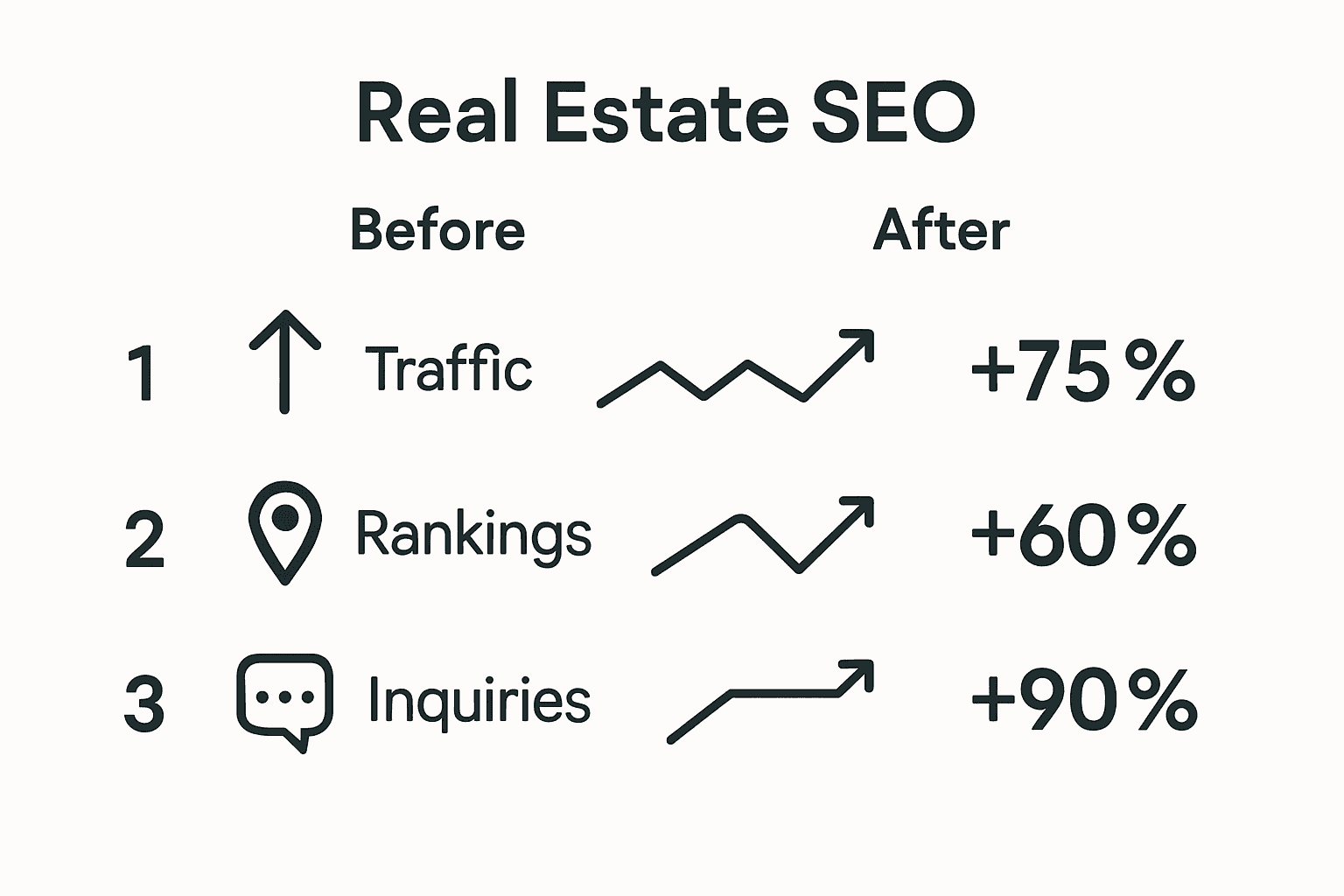
Remember that consistent small improvements compound over time. Every incremental optimization brings you closer to becoming the go to real estate expert in your local market.
Ready to Dominate Local Searches and Become the Go-To Agent?
Have you been frustrated by slow website traffic and low lead generation despite following every local SEO tip? This article highlights the real challenges real estate agents face today. Outdated suburb content. Inconsistent NAP details. Weak Google Business Profile optimization. All these hurdles can hold back your visibility and cost you high-value clients in your area. The truth is, knowing what needs to be done is only one part of the journey. Turning these strategies into real results for your agency is where the real edge begins.

Let Content Charlie turn your knowledge into top rankings and tangible leads. Our team crafts SEO-driven content and suburb guides that solve technical SEO issues and spotlight your expertise in every neighborhood you serve. Take the next step and make your business the first choice for buyers and sellers searching locally. Visit Content Charlie now and let us help elevate your online presence before your competitors catch up.
Frequently Asked Questions
How can I audit my website for local SEO readiness as a real estate agent?
To audit your website for local SEO readiness, assess key elements like page loading speed, mobile responsiveness, and metadata accuracy. Use tools like Google Analytics and PageSpeed Insights to identify issues and prioritize fixing the most critical ones within 30 days to improve your local search visibility.
What specific keywords should I target to optimize my real estate website?
Target hyper-local keywords that reflect your market, such as ‘luxury homes in [local area]’ or ‘homes for first-time buyers.’ Research and incorporate these keywords naturally on key pages like your homepage and neighborhood guides, adjusting your strategy every few months based on search trends.
How can I enhance suburb-level content to attract more local home buyers?
Enhance suburb-level content by creating in-depth neighborhood guides that include demographics, local schools, and market trends. Regularly update this content to reflect current information, aiming for a comprehensive guide that resonates with potential clients and showcases your expertise.
What are some effective strategies for optimizing my Google Business Profile?
To optimize your Google Business Profile, upload high-quality photos, create engaging video content, and post weekly updates about new listings. Ensure your profile is complete and fresh, which can increase your visits and leads by significantly more than 50% when updated regularly.
How often should I track and refine my real estate SEO strategy?
Track your SEO strategy continuously, evaluating key performance metrics at least monthly. Regularly analyze organic traffic and keyword rankings to identify improvement areas, and be prepared to make adjustments at least every four months for optimal visibility.
What content types can I use to boost my local authority and presence online?
Utilize various content types like detailed neighborhood guides, market trend reports, and high-quality images or videos. Focus on creating value-driven content that engages local clients, fostering trust and encouraging potential clients to view you as their leading real estate expert.
Recommended

Real Estate Website Essentials: Complete Guide for Agents
Having the right Real Estate Website Essentials will have you ahead of 99% of other real estate website, if you implement the steps below.
Nearly 97 percent of home buyers search online for properties before reaching out to an agent. Your real estate website is your strongest tool for attracting new clients and keeping your business visible. Building a platform that combines stunning visuals, seamless searches, and mobile-friendly design can set you apart in a crowded market, creating a smoother path from browsing to closed deals.
Key Takeaways
| Point | Details |
|---|---|
| Core Features | Effective real estate websites must include advanced property search tools, high-quality visual content, lead generation mechanisms, and trust signals to convert visitors into clients. |
| Local SEO Importance | Local SEO strategies are vital for enhancing visibility, involving consistent business citations, structured data markup, and geographic keyword targeting to attract potential clients within specific areas. |
| Lead Conversion Tools | Implementing technologies like IDX lead tracking, email drip campaigns, and behavior analytics can significantly improve lead capture and nurture strategies on real estate websites. |
| Accessibility Compliance | Ensuring websites meet digital accessibility standards is essential not only for legal compliance but also for fostering an inclusive experience for all potential clients. |
Table of Contents
- Defining Real Estate Website Essentials
- Core Features Every Real Estate Website Needs
- SEO Requirements For Local Real Estate Search
- Lead Generation And Conversion Strategies
- Legal Compliance And Accessibility Standards
- Common Website Mistakes To Avoid
Defining Real Estate Website Essentials
Your real estate website esentials are more than just a digital business card – it’s your 24/7 online sales representative that works harder than you ever could. According to AgentFire, successful agent websites combine professional visual branding with strategic digital tools that convert casual browsers into serious clients.
The core essentials of a powerful real estate website revolve around several critical features:
- Property Search Functionality: Advanced filters for location, price, and bedrooms
- Visual Content: High-quality property photos, virtual tours, neighborhood videos
- Lead Generation: Accessible contact forms, email capture mechanisms
- Trust Signals: Client testimonials, third-party reviews, professional credentials
Mobile performance isn’t just a bonus – it’s mandatory. According to PropertyEasy, your website must deliver a seamless experience across devices. This means lightning-fast loading times, stable layouts, and responsive design that adapts to smartphones, tablets, and desktops without losing visual appeal or functionality.
Beyond basic features, modern real estate websites leverage sophisticated tools like AI-powered content creation, visitor behavior analytics, and integrated CRM systems. These technologies transform your website from a passive information portal into an active lead-generation machine that works continuously to expand your client base and demonstrate your local market expertise.
Core Features Every Real Estate Website Needs
Building a high-performance real estate website requires more than just aesthetics – it demands strategic functionality that converts visitors into clients. According to AgentFire, successful websites blend professional design with advanced technological capabilities.
The foundational features every real estate website must include are:
- Advanced Property Search: Robust filtering by location, price, bedrooms, amenities
- Multimedia Showcase: High-resolution property images, 360-degree virtual tours
- Mobile Responsiveness: Seamless performance across smartphones, tablets, desktops
- Lead Capture Mechanisms: Strategic contact forms, email signup prompts
- Trust Signals: Client testimonials, professional credentials, third-party reviews
Conversion optimization goes beyond basic website elements. Modern websites integrate sophisticated tools like visitor behavior tracking, AI-powered content generation, and automated email drip campaigns. According to PropertyEasy, these technologies transform your digital presence from a static brochure into an active client acquisition engine.
The key is creating real estate website essentials that doesn’t just display properties, but provides an immersive, interactive experience that guides potential clients through their home-searching journey. This means fast loading times, intuitive navigation, compelling visual storytelling, and clear pathways to connect with you as a trusted local real estate professional.
Here’s a comparison of essential real estate website features:
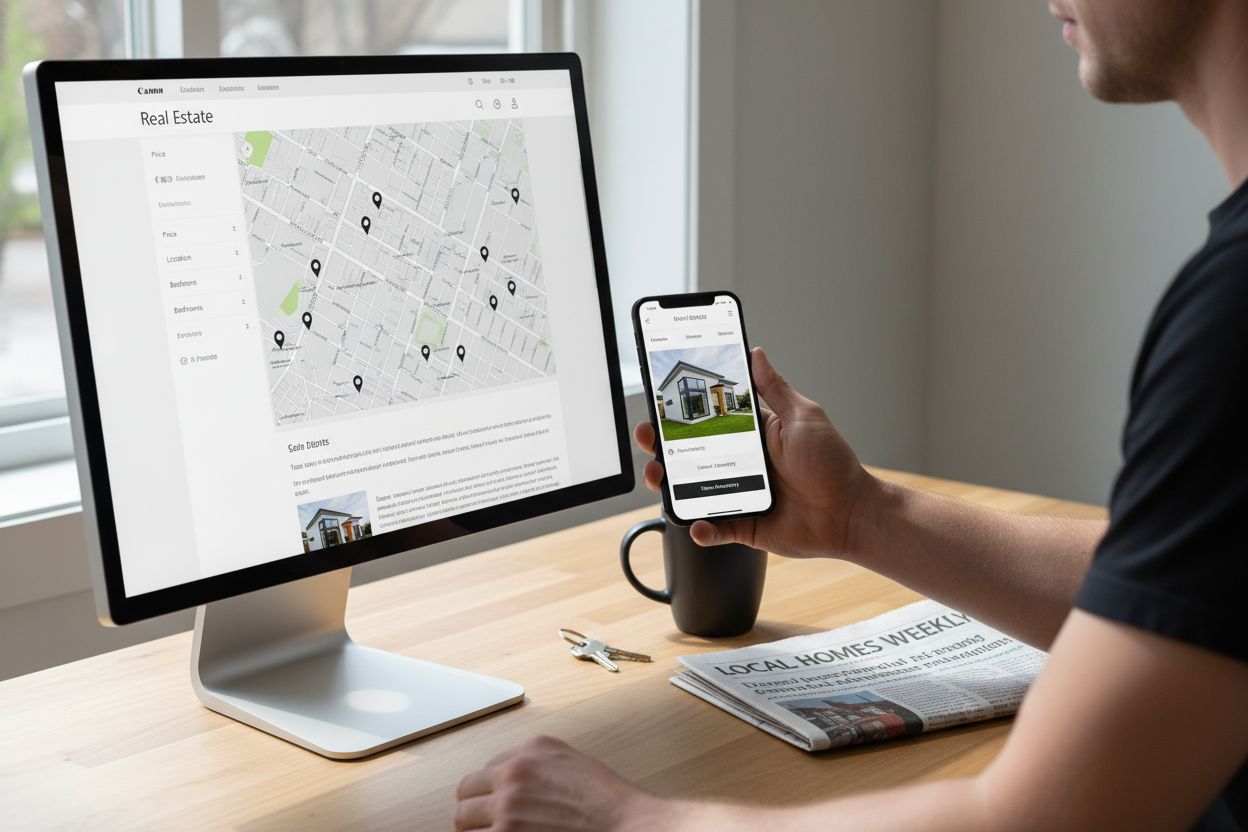
| Feature | Purpose | Examples |
|---|---|---|
| Property Search | Helps users find suitable listings | Advanced filters Map view |
| Visual Content | Boosts engagement and trust | High-res photos Virtual tours |
| Lead Generation | Captures potential client info | Contact forms Email signups |
| Trust Signals | Builds credibility | Testimonials Third-party reviews |
| Mobile Responsiveness | Ensures seamless device experience | Fast load Responsive layout |
| Behavior Analytics | Tracks and improves site performance | Visitor heatmaps Funnel tracking |
SEO Requirements for Local Real Estate Search
Local SEO is the secret weapon that transforms your real estate website from invisible to irresistible in search results. Understanding why local SEO matters begins with recognizing that potential clients search for properties and agents within specific geographic boundaries.
According to Search Engine Journal, successful local SEO for real estate professionals hinges on several critical strategies:
- Consistent Business Citations: Accurate listings across Google Business Profile and local directories
- Structured Data Markup: Implementing schema for RealEstateAgent, Offer, and Residence categories
- Hyper-Local Content: Creating neighborhood-specific pages and property guides
- Geographic Keyword Targeting: Incorporating location-specific terms naturally
The most effective local SEO approach goes beyond basic optimization. According to LSEO, modern real estate agents must develop content clusters that target specific neighborhoods, leverage social media channels for content distribution, and actively seek backlinks from local influencers and publications.
Your ultimate goal is to become the go-to digital resource for local property information.
This means creating content that answers specific local buyer questions, showcasing your deep understanding of neighborhood dynamics, and ensuring your website speaks directly to the unique needs of potential clients in your specific market area.
Lead Generation and Conversion Strategies
Transforming website visitors into potential clients requires a strategic approach that goes beyond simple contact forms. Types of real estate leads vary, and your digital strategy must be sophisticated enough to capture and nurture each unique visitor’s interest.
According to AgentFire, advanced lead generation technologies now offer powerful tools for real estate professionals:
- IDX Lead Tracking: Monitor visitor interactions and property interests
- Email Drip Campaigns: Automated, personalized communication sequences
- CRM Integration: Seamless contact management and follow-up tracking
- AI Content Generation: Dynamic, targeted messaging based on user behavior
- Behavior Analytics: Heat mapping and funnel tracking to optimize conversion paths
Visitor trust is the cornerstone of successful lead conversion. As PropertyEasy highlights, this means prominently featuring compelling testimonials, high-quality property visuals, and virtual tours that demonstrate your professionalism and local market expertise.
The most effective websites create a frictionless journey from initial curiosity to client engagement.
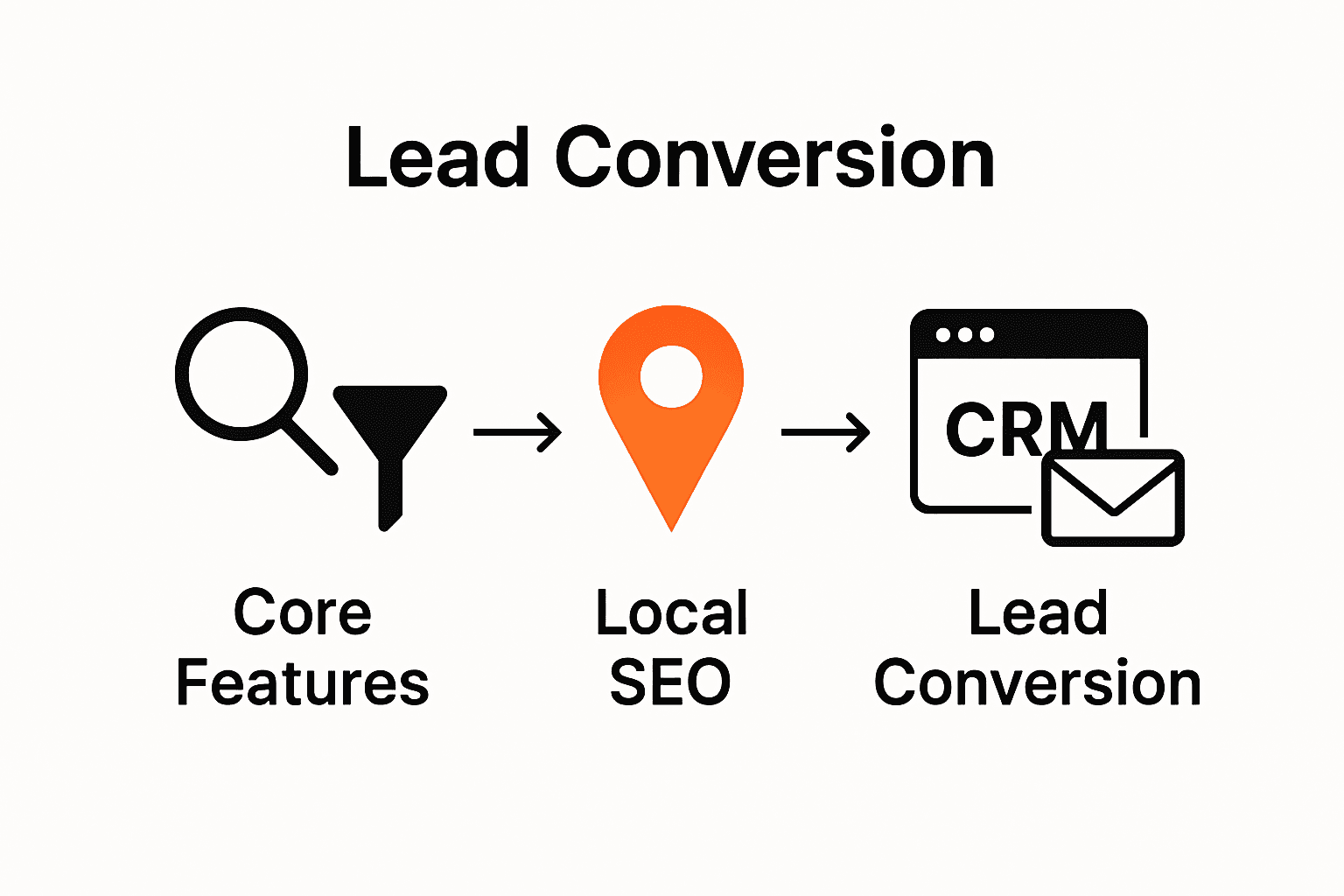 This means intuitive design, crystal-clear contact information, and strategic calls-to-action that guide potential clients exactly where they want to go – closer to finding their perfect property with your expert assistance.
Legal Compliance and Accessibility Standards
Digital accessibility is no longer optional for real estate websites – it’s a legal and ethical imperative. Ensuring your online platform is inclusive means creating an experience that welcomes every potential client, regardless of their physical abilities or technological constraints.
According to Wikipedia, the Web Content Accessibility Guidelines (WCAG) 2.2 provide a comprehensive framework for creating accessible digital experiences. These internationally recognized standards focus on four fundamental principles:
- Perceivable: Information must be presentable to users in ways they can perceive
- Operable: User interface and navigation must be functional for all users
- Understandable: Content and operation must be clear and comprehensible
- Robust: Content must be compatible with current and future assistive technologies
Real estate websites have unique challenges in meeting these standards. This means ensuring your property listings, contact forms, search functions, and multimedia content are fully navigable by screen readers, compatible with keyboard-only navigation, and designed with sufficient color contrast and text sizing.
Beyond technical compliance, accessible design demonstrates your commitment to inclusivity. It signals to potential clients that you value every individual’s experience, understand diverse user needs, and are committed to providing a welcoming, professional digital environment that respects and accommodates all users.
Common Website Mistakes to Avoid
Website design can make or break your real estate digital presence. One misstep could mean losing potential clients before they even understand what you offer. Lead generation ideas for real estate start with avoiding critical digital pitfalls that undermine your professional image.
According to Type North, the most common website mistakes that sabotage real estate professionals include:
- Mobile Unresponsiveness: Sites that don’t adapt to smartphone screens
- Cluttered Homepage: Overwhelming visitors with too much information
- Weak Calls-to-Action: Unclear or missing contact pathways
- Low-Quality Property Listings: Incomplete or unappealing property descriptions
- Slow Page Loading: Performance that frustrates potential clients
- Neglected Local SEO: Invisible in local property search results
Navigation complexity is another silent killer of user experience. Your website should feel intuitive, with clear menus, logical property search functions, and streamlined paths to contact you. Think of your website as a digital storefront – it should invite exploration, not create confusion.
The most successful real estate websites transform technical requirements into storytelling opportunities. This means creating a digital experience that’s not just functional, but engaging – where every pixel communicates your professionalism, local expertise, and commitment to helping clients find their dream property.
Ready to Transform Your Real Estate Website Into a Local Lead Magnet?
You read about the must-have features for a real estate website, but bringing those essentials to life is a challenge. Many agents struggle with weak property listings, missing trust signals, and a website that just does not show up when locals search for homes or advice. Without powerful copywriting and suburb-specific SEO, you risk falling behind competitors who connect with buyers and sellers right where they live.
At Content Charlie, we turn your knowledge into high-converting web pages, suburb guides, and blog posts that climb Google results. Our team specializes in conversion optimization and local SEO, giving your site mobile-first performance, powerful lead generation, and content that earns trust in your neighborhood. If you want to stand out as the top agent in your suburb, act now and let us create a real estate website that converts visitors into lifelong clients. Start growing your local visibility with Content Charlie today.
Frequently Asked Questions
What are the essential features of a real estate website?
The essential features of a real estate website include advanced property search functionality, high-quality visual content, lead generation tools, trust signals like testimonials, and mobile responsiveness to ensure accessibility across devices.
How can local SEO impact my real estate website’s visibility?
Local SEO helps improve your real estate website’s visibility by optimizing for specific geographic keywords, ensuring consistent business citations, and creating hyper-local content that resonates with local buyers, thereby attracting more relevant traffic to your site.
What strategies can I use for effective lead generation on my real estate website?
Effective lead generation strategies include implementing IDX lead tracking, using email drip campaigns for nurturing leads, integrating customer relationship management (CRM) systems, and deploying behavior analytics to understand visitor interactions and optimize conversions.
How can I ensure my real estate website is accessible to all users?
To ensure your real estate website is accessible, adhere to the Web Content Accessibility Guidelines (WCAG) by making information perceivable, operable, understandable, and robust, ensuring compatibility with assistive technologies and providing a user-friendly experience for individuals with disabilities.
Recommended
- 7 Types of Real Estate Content Every Agent Should Use – Content Charlie
- Greg Reed, Author at Content Charlie
- 7 Essential Social Media Tips for Agents – Content Charlie
- 7 Essential Types of Real Estate Leads Agents Must Know – Content Charlie
- SEO for Real Estate Agencies: Simple Strategies to Grow Your Business
- Website Design Guide for Builders: Create a Winning Website – ResponsiveWebsiteDesign

Role of Content in SEO: Everything You Need to Know
Did you know that over 70 percent of people start their property search online? Today, the Role of Content in SEO shapes more than just first impressions. It decides how visible and credible you are in the eyes of both clients and search engines. Understanding how content shapes modern SEO can put you ahead of your competition and ensure your expertise gets noticed where it matters most.
Key Takeaways
| Point | Details |
|---|---|
| Content Quality is Essential | High-quality content drives SEO rankings by demonstrating expertise and meeting user needs. |
| Diversify Content Types | Utilizing various content types, like suburb guides and market reports, enhances SEO and engages potential clients. |
| Focus on Local SEO | Developing hyperlocal content tailored to specific communities improves visibility and attracts relevant clients. |
| Avoid Common Pitfalls | Steer clear of mistakes like keyword stuffing and outdated information to maintain credibility and effectiveness in content marketing. |
Table of Contents
- Defining Content’s Role In Modern SEO
- Types Of SEO Content For Real Estate
- How Content Drives Search Rankings
- Local SEO: Content Strategies That Work
- Common Content Mistakes To Avoid
Defining Content’s Role in Modern SEO
In the rapidly evolving digital landscape, content is no longer just words on a page—it’s the strategic engine driving search engine optimization (SEO). Our comprehensive content marketing guide reveals how modern search algorithms prioritize content that genuinely serves user needs and demonstrates expertise.
According to research from Search Engine Journal, Google now considers content quality as a core ranking factor. The 2024 study highlights critical attributes that elevate content’s SEO performance:
- Relevance to user search intent
- Depth of information provided
- Semantic clarity and topical comprehensiveness
- User engagement signals
Recent academic research on Generative Search Engine Optimization reveals an even more sophisticated evaluation framework. This multi-dimensional approach moves beyond traditional metrics, analyzing content’s substantive impact through semantic influence. For real estate agents, this means creating hyperlocal, expertise-driven content that doesn’t just include keywords, but provides genuine value to potential property buyers and sellers.
The message is clear: exceptional content isn’t just recommended—it’s essential. Search engines now reward content that demonstrates authentic expertise, answers user questions comprehensively, and creates meaningful connections with the target audience.
Types of SEO Content for Real Estate
In the competitive world of real estate digital marketing, content diversity is your secret weapon for attracting potential buyers and sellers. Learn more about effective content strategies that can transform your online presence and drive targeted traffic.
Real estate professionals have several powerful content types at their disposal to boost SEO and engage potential clients:
- Suburb Guides: Comprehensive neighborhood profiles
- Property Market Reports: Local market trend analysis
- Client Success Stories: Testimonial and case study content
- Buyer and Seller Advice Blogs: Educational content addressing common questions
- Local Area Listings: Hyperlocal property insights
- Virtual Property Tours: Multimedia content with descriptive narratives
Each content type serves a unique purpose in your SEO strategy. Suburb guides, for instance, help you rank for hyperlocal search terms while providing immense value to potential clients researching specific areas. Property market reports establish you as a local market expert, attracting both search engine algorithms and potential clients seeking knowledgeable guidance.
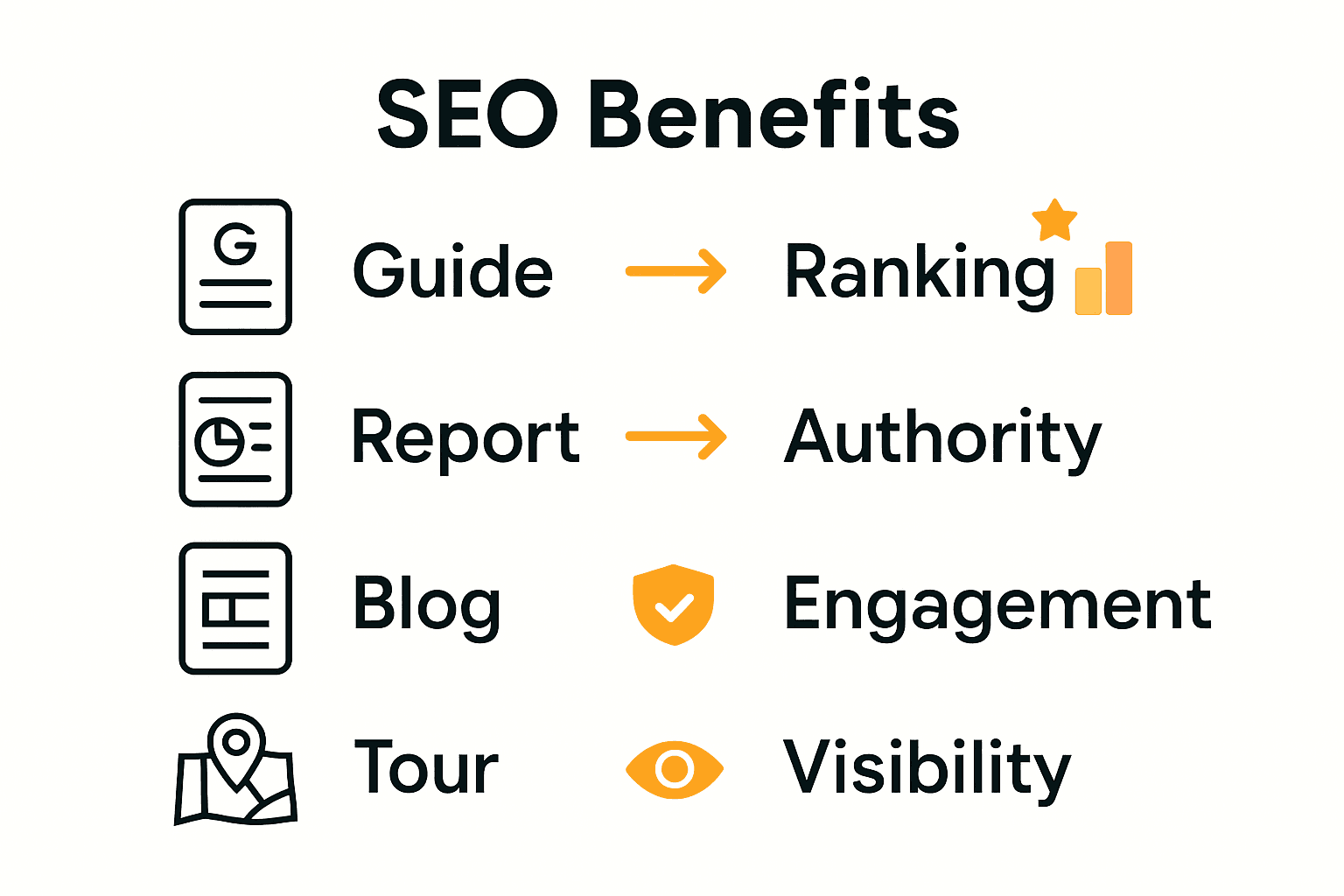
Here’s a summary of key real estate content types and their SEO advantages:
| Content Type | Main Purpose | SEO Benefit |
|---|---|---|
| Suburb Guides | Neighborhood profiles | Ranks for hyperlocal keywords |
| Property Market Reports | Market trend analysis | Boosts authority & trust |
| Client Success Stories | Showcase expertise | Enhances credibility & engagement |
| Buyer/Seller Advice Blogs | Inform & educate clients | Targets long-tail search queries |
| Local Area Listings | Property details by area | Improves local search visibility |
| Virtual Property Tours | Visual property showcasing | Increases time on site |
The key is creating content that balances informational depth with strategic keyword targeting. By diversifying your content approach, you’re not just improving SEO—you’re building a comprehensive digital resource that positions you as the go-to real estate authority in your local market.

How Content Drives Search Rankings
In the intricate world of search engine optimization, content quality is the ultimate determining factor for ranking success. Our comprehensive content marketing insights reveal the complex mechanisms by which exceptional content propels websites up search result pages.
According to research from Search Engine Journal, Google’s algorithms assess content through multiple critical lenses:
- Relevance to user search intent
- Comprehensiveness of information
- Semantic depth of topic coverage
- User engagement metrics
Recent academic findings highlight a sophisticated, multi-agent framework for evaluating content. This approach goes beyond traditional keyword matching, analyzing content’s substantive influence through semantic complexity. For real estate professionals, this means creating content that doesn’t just include keywords, but provides genuine, in-depth insights that demonstrate true expertise.
The search ranking process is now more nuanced than ever. Search engines prioritize content that not only answers user questions but does so with authority, clarity, and comprehensive understanding. By crafting content that truly serves user needs—whether it’s a detailed suburb guide, a market trend analysis, or a comprehensive property buying walkthrough—real estate agents can significantly improve their visibility and credibility in search results.
Local SEO: Content Strategies That Work
For real estate agents, local SEO is the lifeline of digital marketing success. Our comprehensive link building strategies can help you transform hyperlocal content into a powerful ranking tool that attracts potential clients right in your neighborhood.
According to research from Search Engine Journal, strategic content approaches can dramatically improve local visibility:
- Structured data markup for property listings
- Localized social media content with targeted hashtags
- Neighborhood-specific landing pages
- Google Business Profile optimization
- Geo-targeted blog content
The key to effective local SEO lies in creating content that speaks directly to your community’s unique characteristics. This means developing suburb guides that go beyond generic descriptions, sharing market insights specific to local neighborhoods, and demonstrating deep understanding of micro-market trends that matter to potential buyers and sellers.
Successful local content strategies aren’t about keyword stuffing—they’re about genuine connection. By crafting content that provides real value to your local audience, you’re not just improving search rankings, you’re establishing yourself as the go-to real estate expert in your specific market. Think hyperlocal, write with authenticity, and watch your local search visibility soar.
Common Content Mistakes to Avoid
In the competitive realm of real estate digital marketing, content missteps can dramatically undermine your SEO efforts. Learn about strategic content approaches that help you sidestep common pitfalls and maintain a strong online presence.
Real estate professionals frequently encounter content challenges that can hurt their search rankings and audience engagement:
- Keyword Stuffing: Overloading content with repetitive keywords
- Generic Content: Using bland, non-specific property descriptions
- Outdated Information: Failing to update market data and listings
- Inconsistent Publishing: Irregular content creation schedules
- Ignoring Local Context: Writing without hyperlocal insights
One of the most critical mistakes is treating content as a mere SEO checkbox rather than a genuine communication tool. Real estate content should tell a story, provide meaningful insights, and address potential clients’ specific needs and questions. This means moving beyond surface-level property descriptions to create narratives that showcase neighborhood character, market trends, and the unique value you bring as a local expert.
Successful content strategy requires consistent, thoughtful execution. By avoiding these common pitfalls and focusing on creating authentic, valuable content, real estate agents can transform their digital presence from forgettable to remarkable. Remember: great content isn’t just about ranking—it’s about building trust, demonstrating expertise, and connecting with your local community.
Transform Your SEO Content Into Real Results With Content Charlie
Are you frustrated that your efforts with suburb guides or market reports are not turning into higher local rankings or more real estate clients? This article makes it clear that in today’s market, generic or keyword-stuffed content will only hold you back. You need tailored writing that demonstrates authority, connects with your local audience, and keeps you ahead in suburb-level searches. At Content Charlie, we know your challenges and we solve them by crafting SEO-driven copy and engaging blog articles that give your business lasting visibility.
It is time to stop guessing and start attracting clients who are ready to take action. Work with specialists who help real estate agents and local businesses master local SEO and content strategy every single day. Visit Content Charlie now to discover how we can turn your content into the secret weapon for ranking, engagement, and trust. Start seeing more leads from Broadbeach to Burleigh today. Book a strategy call and get your business found before your competition does.
Frequently Asked Questions
What is the role of content in modern SEO?
Content plays a crucial role in modern SEO as it serves as the strategic engine driving search engine rankings. High-quality, relevant content that addresses user needs is prioritized by search algorithms, enhancing visibility and user engagement.
How can real estate professionals use content to improve their local SEO?
Real estate professionals can enhance their local SEO by creating hyperlocal content, such as suburb guides, neighborhood-specific landing pages, and localized blog posts. This approach ensures that content resonates with local audiences and ranks well in search results.
What types of content are effective for enhancing SEO in real estate marketing?
Effective content types for real estate marketing include suburb guides, property market reports, buyer and seller advice blogs, client success stories, local area listings, and virtual property tours. Each type serves distinct purposes, from providing local insights to establishing authority in the market.
What common mistakes should real estate professionals avoid when creating content for SEO?
Common mistakes to avoid include keyword stuffing, using generic or outdated content, having inconsistent publishing schedules, and ignoring local context. Instead, focus on creating authentic, insightful narratives that connect with your target audience.