
- You are here:
- Home »
- SEO best practices
Tag Archives for " SEO best practices "

Real Estate SEO in 2025: Complete Guide for Agents
Nearly 90 percent of homebuyers start their search online, yet only a fraction of real estate agents achieve top rankings in search results. With digital competition growing fast, staying visible means mastering more than basic website updates.
Cutting-edge real estate SEO in 2025 demands tailored local content, lightning-fast mobile experiences, and powerful tech integrations that connect agents with serious buyers and sellers—right when and where it matters most.
Table of Contents
- Defining Real Estate SEO for 2025
- Core SEO Trends Affecting Real Estate
- How AI and Voice Search Impact Rankings
- Local Search: Suburb-Level SEO Strategies
- Common Real Estate SEO Mistakes to Avoid
Key Takeaways
| Point | Details |
|---|---|
| Local SEO Importance | Hyperlocal content targeting specific neighborhoods is essential for enhancing local search visibility in real estate. |
| AI and Voice Search Adaptation | Real estate professionals must create content that aligns with AI technologies and conversational search patterns to stay competitive. |
| Mobile Optimization | Fast and responsive mobile sites are crucial to reduce bounce rates and improve search rankings. |
| Avoiding SEO Pitfalls | Agents should steer clear of common mistakes such as ignoring mobile responsiveness and duplicating content to maintain a strong digital presence. |
Defining Real Estate SEO for 2025
Real Estate SEO in 2025 is a sophisticated digital strategy that goes far beyond basic website optimization. According to research from The SEO Project, it involves strategic techniques designed to help property professionals rank higher in search engine results while attracting potential buyers and sellers through targeted online visibility.
The core of modern Real Estate SEO centers on three critical elements: local search optimization, mobile-friendly design, and high-quality content. As ZEO resources highlight, agents must adapt to evolving search engine algorithms and integrate AI-driven content strategies that enhance user experience. This means creating hyper-local content that speaks directly to specific neighborhood markets and leveraging technology to make property information instantly accessible.
Key characteristics of Real Estate SEO in 2025 include:
- Microsecond mobile page loading speeds
- Hyperlocal content targeting specific suburbs and neighborhoods
- Rich, schema-enabled property listings with comprehensive details
- Interactive mapping and virtual tour integrations
- Authentic, conversational content that answers specific buyer and seller questions
Successful real estate professionals recognize that SEO is no longer about keyword stuffing, but about creating genuine, valuable connections with potential clients through strategic digital presence. By understanding and implementing these advanced SEO techniques, agents can transform their online platforms from simple listing repositories into powerful lead generation machines.
Core SEO Trends Affecting Real Estate
The real estate digital landscape is rapidly transforming, with SEO becoming increasingly nuanced and sophisticated. Understanding real estate SEO metrics is crucial for agents looking to stay competitive. According to research from The SEO Project, key trends are dramatically reshaping how property professionals approach online visibility, with a growing emphasis on local search listings and organic search results over paid advertisements.
Emerging technological shifts are redefining SEO strategies. As ZEO resources highlight, the rise of voice search and AI-integrated search experiences are creating new challenges and opportunities for real estate professionals. Agents must now craft content that not only ranks well but also directly addresses user intent, providing comprehensive and immediately actionable information.
The most critical SEO trends for real estate professionals in 2025 include:
Here’s a comparison of critical 2025 real estate SEO trends and their practical impact:
| SEO Trend | Description | Impact on Real Estate Agents |
|---|---|---|
| Hyperlocal Content | Content targeting neighborhoods | Increases local search visibility |
| AI-Powered Search | AI matches search intent | Delivers more qualified buyer leads |
| Enhanced Mobile Experience | Fast, responsive mobile sites | Reduces bounce rate, boosts rankings |
| Multimedia Integration | Maps, virtual tours, videos | Engages visitors, increases dwell time |
| Strong Security Protocols | Robust HTTPS, privacy standards | Builds trust, improves search ranking |
- Hyperlocal content optimization
- AI-powered search intent matching
- Enhanced mobile user experience
- Robust online security protocols
- Seamless integration of multimedia content
Successful real estate SEO now requires a holistic approach that goes beyond traditional keyword strategies. By understanding these evolving trends and adapting quickly, agents can position themselves as digital-first professionals who can effectively connect with potential buyers and sellers in an increasingly competitive online marketplace.
How AI and Voice Search Impact Rankings
The integration of artificial intelligence and voice search is fundamentally transforming how real estate websites compete for top search rankings. Exploring AI article analysis techniques reveals the sophisticated ways search engines now evaluate content relevance and quality. According to research from ZEO, AI adoption in search engines is driving more personalized and accurate results, compelling real estate professionals to produce exceptionally high-quality, targeted content.
Voice search is revolutionizing how potential property buyers interact with online search platforms. Modern AI algorithms now prioritize conversational language and natural speech patterns, which means real estate content must evolve beyond traditional keyword optimization. As ZEO research indicates, users are increasingly using long-tail, conversational queries like “three-bedroom house near local schools” instead of fragmented search terms.
Key strategies for adapting to AI and voice search ranking criteria include:
- Creating content that answers specific user questions
- Implementing natural, conversational language
- Developing comprehensive, context-rich property descriptions
- Optimizing for featured snippets and direct answer boxes
- Ensuring mobile and voice search compatibility
Successful real estate professionals will recognize that AI-driven search is not just a technological trend, but a fundamental shift in how potential clients discover and interact with property information. By understanding and strategically adapting to these emerging search technologies, agents can position themselves at the forefront of digital real estate marketing.
Local Search: Suburb-Level SEO Strategies
Local SEO has become the cornerstone of digital visibility for real estate professionals in 2025. Understanding why local SEO matters reveals the critical importance of hyper-targeted online strategies. According to research from The SEO Project, optimizing for local search requires meticulous management of business listings, strategic review handling, and providing comprehensive information about properties and neighborhoods.
Suburb-level SEO demands a nuanced approach that goes beyond traditional keyword optimization. As ZEO resources highlight, successful strategies now involve creating geo-targeted content that speaks directly to specific local markets. This means developing rich, context-aware narratives about individual suburbs, their unique characteristics, property trends, and community dynamics.
Key suburb-level SEO strategies for real estate agents include:
- Creating hyperlocal content about specific neighborhood amenities
- Developing suburb-specific property market reports
- Optimizing Google Business Profile with precise local information
- Generating location-specific testimonials and case studies
- Engaging with local community events and online discussions
The most successful real estate professionals will treat suburb-level SEO as an opportunity to become digital neighborhood experts. By crafting content that provides genuine value and insights into local property landscapes, agents can transform their online presence from generic listings to authoritative local resources that potential buyers and sellers genuinely trust.
Common Real Estate SEO Mistakes to Avoid
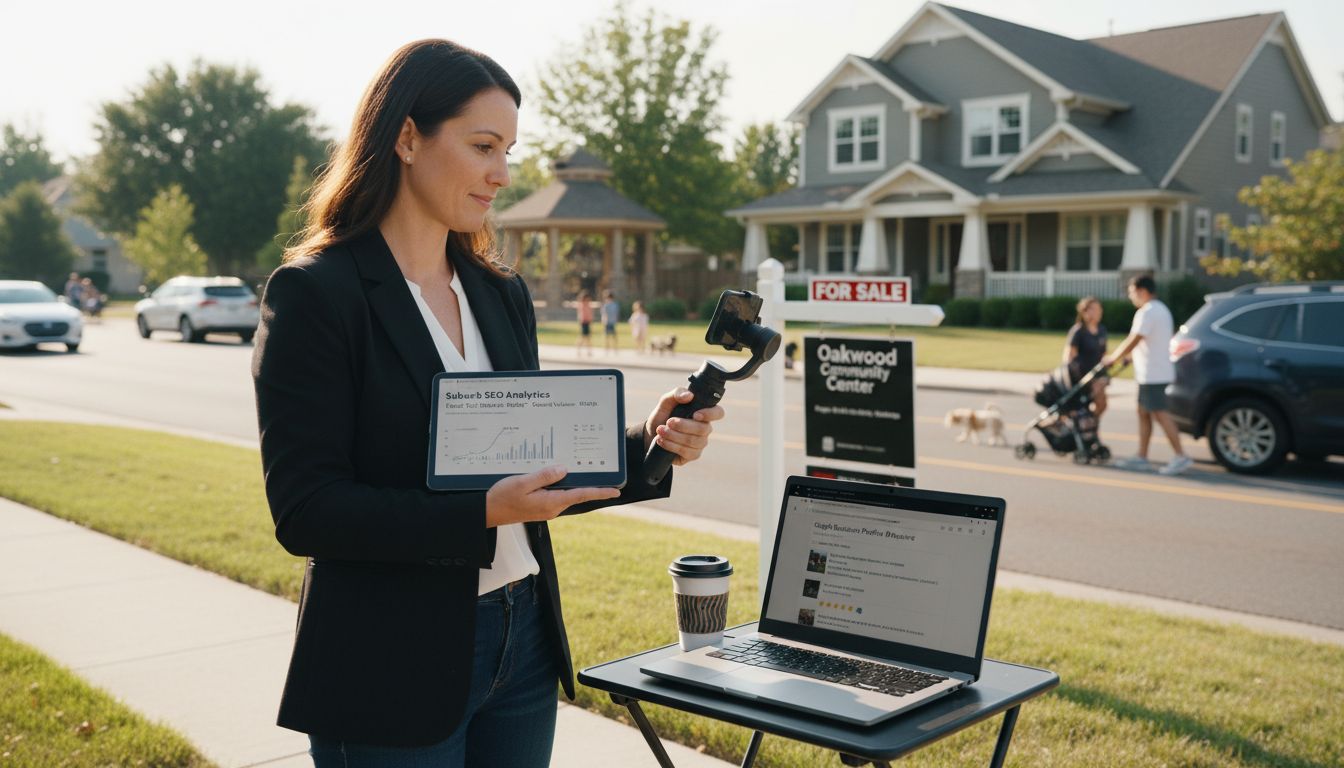
Boosting agent visibility online requires avoiding critical SEO pitfalls that can dramatically undermine digital performance. According to research from The SEO Project, real estate professionals frequently make mistakes that directly compromise their search rankings, including neglecting mobile optimization, overlooking local search strategies, and failing to secure websites with HTTPS protocols.
Duplicate content remains a significant challenge in real estate SEO. As ZEO resources highlight, search engines penalize websites that reproduce identical property descriptions or listing information across multiple pages. The most sophisticated algorithms now detect and downgrade content that lacks originality, compelling agents to develop unique, compelling narratives for each property listing.
The most common real estate SEO mistakes that agents must avoid include:
- Ignoring mobile responsiveness
- Using generic, non-localized content
- Neglecting website security protocols
- Publishing duplicate property descriptions
- Failing to update listings regularly
- Overlooking page loading speed
- Inconsistent NAP (Name, Address, Phone) information
Successful real estate professionals understand that SEO is an ongoing process of refinement and adaptation. By proactively addressing these common mistakes, agents can create a robust digital presence that not only attracts potential clients but also establishes credibility in an increasingly competitive online marketplace.
Elevate Your Real Estate SEO and Capture Local Leads in 2025
The article reveals that modern Real Estate SEO is all about mastering hyperlocal content, enhancing mobile experience, and leveraging AI to meet evolving search trends. If you find it challenging to create unique, suburb-focused content or struggle with optimizing your listings for voice search and mobile users, you are not alone. Many agents face these hurdles while trying to stand out in competitive neighborhoods and build genuine trust with potential buyers and sellers.
At Content Charlie, we understand that winning local searches from Broadbeach to Burleigh means having SEO-driven, engaging property descriptions, detailed suburb guides, and Google Business Profile content that truly connect with your audience. We help you overcome the common pitfalls like duplicate content and slow mobile pages with tailored strategies designed to boost your rankings and convert clicks into clients.
Ready to transform your digital presence into a powerful lead-generating machine?

Discover how our local SEO and real estate copywriting expertise can make your brand the trusted neighborhood choice. Visit Content Charlie today and explore our services that align perfectly with the latest 2025 SEO trends. Start attracting ready-to-act customers now with content that ranks, engages, and sells. Check out Content Charlie and learn the secrets to dominating your local market through effective SEO strategies tailored just for real estate professionals.
Frequently Asked Questions
What is Real Estate SEO in 2025?
Real Estate SEO in 2025 involves advanced digital strategies that help real estate professionals improve their search rankings and enhance online visibility through local search optimization, mobile-friendly designs, and high-quality content.
Why is local SEO important for real estate agents?
Local SEO is essential for real estate agents as it helps them target specific neighborhoods and markets, increasing their visibility to potential buyers and sellers actively searching for properties in those areas.
How do AI and voice search impact SEO for real estate websites?
AI and voice search enhance SEO by prioritizing content that uses natural language and answers specific user questions, requiring real estate professionals to create targeted and context-rich content that aligns with conversational queries.
What are common SEO mistakes real estate agents should avoid?
Common SEO mistakes include neglecting mobile responsiveness, using duplicate property descriptions, failing to secure websites with HTTPS, and not optimizing local search strategies, which can harm search rankings and online visibility.
Recommended

Real Estate SEO Myths: Complete Guide for Agents
Did you know that over 90 percent of property searches begin online? For real estate agents, showing up on the first page of search results can mean the difference between a flood of leads and an empty inbox. Misunderstandings about Search Engine Optimization often keep agents from realizing their digital potential. Understanding what truly drives real estate SEO gives you a real edge in connecting with tomorrow’s buyers and sellers.
Table of Contents
- Defining Real Estate SEO and Common Myths
- Debunking Popular Real Estate SEO Beliefs
- Local SEO Myths for Australian Agents
- Truths About Google Rankings and Content
- Real-World Impact of Following SEO Myths
Key Takeaways
| Point | Details |
|---|---|
| Continuous SEO Effort | Real estate SEO is an ongoing process requiring regular updates and strategic monitoring for effective results. |
| Quality Over Quantity | Focusing on high-quality, relevant content is essential for improving search engine rankings, rather than just increasing keyword usage. |
| Local Optimization is Crucial | Hyper-targeted local SEO strategies, including unique content and optimized listings, significantly enhance visibility in competitive markets. |
| Understanding Realistic Expectations | SEO should not be viewed as a quick fix; agents must commit to long-term strategies to improve online visibility and client acquisition. |
Defining Real Estate SEO and Common Myths
Real estate Search Engine Optimization (SEO) is the strategic process of enhancing your online visibility to attract potential property buyers and sellers through organic search results. According to research from Zillow, SEO involves optimizing your website to improve its ranking in search engine results, ultimately driving more targeted traffic to your real estate business.
Many agents misunderstand SEO, believing it’s a simple one-time task with guaranteed immediate results. As insights from Breakthrough Broker reveal, SEO is actually a continuous process requiring regular updates and strategic monitoring. Common myths that can derail an agent’s digital strategy include:
- Believing more keywords automatically mean better rankings
- Assuming social media directly impacts search engine rankings
- Thinking SEO is a quick fix rather than an ongoing effort
Successful real estate SEO requires understanding that search engines prioritize high-quality, relevant content that genuinely helps potential clients. This means creating suburb guides, property market insights, and targeted local content that answers specific questions your audience might have. By focusing on providing value and maintaining consistent website optimization, you’ll gradually improve your online visibility and attract more qualified leads.
For a comprehensive breakdown of real estate SEO terminology, check out our guide on real estate SEO jargon to help you navigate this complex digital landscape.
Debunking Popular Real Estate SEO Beliefs
Real estate agents often fall prey to common misconceptions about Search Engine Optimization (SEO) that can significantly hinder their online marketing efforts. According to insights from Realty Ninja, one critical mistake is using identical listing descriptions across multiple platforms, which creates duplicate content and negatively impacts search rankings.
Beyond content uniqueness, many agents misunderstand the fundamental nature of SEO. As Breakthrough Broker explains, SEO is not a one-time task but a continuous process requiring consistent effort and strategic updates. Common myths that can derail your digital strategy include:
Here’s a breakdown of top real estate SEO myths versus the reality:
| SEO Myth | The Reality | Impact if Believed |
|---|---|---|
| More keywords mean better rankings | Quality and relevance matter more | Poor search performance |
| Social media directly improves rankings | Social signals have indirect effect only | Misallocated marketing focus |
| SEO is a quick, one-time fix | SEO is ongoing and requires updates | Loss of long-term visibility |
| Duplicate listings are harmless | Unique content is critical | Lowered search ranking |
| Location-specific keywords are unnecessary | Hyper-local terms boost local results | Missed local opportunities |
- Believing you can achieve instant search ranking improvements
- Assuming more keywords automatically mean better search results
- Thinking SEO is a set-it-and-forget-it marketing approach
To truly enhance your online visibility, you must develop a dynamic SEO strategy that focuses on creating unique, valuable content tailored to your local market. This means crafting original property descriptions, developing suburb-specific guides, and regularly updating your website with fresh, relevant information. By understanding how blogging can boost your real estate SEO, you’ll create a more robust and effective digital marketing approach that attracts potential clients and improves your search rankings over time.
Local SEO Myths for Australian Agents
Local Search Engine Optimization (SEO) is a critical strategy for real estate agents looking to dominate suburb-specific markets across Australia. According to Web Globals, many agents mistakenly believe that a generic online presence is sufficient to attract local clients. In reality, hyper-local optimization is key to standing out in competitive real estate markets.
Common misconceptions about local SEO can significantly hinder an agent’s digital marketing efforts. Locally.net.au highlights the importance of creating targeted local landing pages and maintaining consistent business listings across different platforms. Myths that can derail your local search strategy include:
- Assuming all online listings are equally effective
- Believing location-specific keywords are unnecessary
- Thinking social media followers automatically translate to local visibility
To truly excel in local SEO, agents must develop a hyper-targeted digital presence that speaks directly to specific suburbs and local communities. This means creating unique content for each area you serve, optimizing Google Business Profile listings, and understanding local market differentiation strategies that set you apart from competitors. By focusing on authentic, locally-relevant content and precise geographic targeting, you’ll improve your chances of appearing in crucial suburb-level searches and attracting potential clients in your specific real estate market.

Truths About Google Rankings and Content
Google Rankings are far more nuanced than most real estate agents realize. According to Realty Ninja, one critical mistake that can torpedo your search visibility is using duplicate content, such as recycling identical listing descriptions across multiple platforms. Search engines penalize websites that don’t offer unique, valuable information.
Breakthrough Broker emphasizes that SEO is a long-term strategy, not an overnight miracle. Agents often harbor unrealistic expectations about search rankings, believing they can achieve top positions through quick tricks. The truth is more complex:
- Rankings improve through consistent, high-quality content
- Unique property descriptions matter more than keyword stuffing
- Patience and strategic effort are essential for SEO success
To truly understand how to improve your digital presence, dive into the role of content in SEO and recognize that Google rewards websites providing genuine value to potential clients. This means crafting original suburb guides, detailed property insights, and locally targeted content that answers real questions your audience is asking. Your goal isn’t just to rank, but to become a trusted local authority that search engines and clients both respect.
Real-World Impact of Following SEO Myths
Believing in SEO misconceptions can have devastating consequences for real estate agents’ digital marketing efforts. According to Realty Ninja, minimal content is a critical error that directly impacts search engine visibility. Agents who skimp on comprehensive, unique content essentially render themselves invisible in the digital marketplace.
Breakthrough Broker highlights the long-term repercussions of treating SEO as a one-time task. The real-world consequences of following outdated SEO myths include:
- Dramatically reduced online visibility
- Lower client acquisition rates
- Missed opportunities in competitive markets
- Potential loss of potential commission income
To understand the true financial impact of SEO strategies, real estate professionals must recognize that digital marketing is an ongoing investment. Poor SEO practices don’t just limit your online presence they directly translate to fewer leads, fewer property viewings, and ultimately, less revenue. Your digital strategy needs to be as dynamic and adaptable as the real estate market itself – constantly evolving, always engaging, and strategically positioned to capture potential clients’ attention.
Break Free from Real Estate SEO Myths and Get Found Locally
If you are struggling with common SEO misconceptions like quick fixes or copy-pasting listing descriptions, you are not alone. The article highlights how ongoing, strategic local SEO and unique, relevant content make the difference between invisibility and becoming a trusted market leader. Without a clear, focused approach, your online presence will remain buried beneath competitors who understand how to win suburb-level searches.
Content Charlie specializes in crafting exactly the kind of high-quality, localized copy that Google and your clients crave. From detailed suburb guides to engaging property descriptions and optimized Google Business Profile content, we help real estate agents rise above SEO myths and shine in their communities.
Take control of your digital future today by partnering with Content Charlie. Visit us at Content Charlie now to unlock local SEO strategies that deliver real results and make your brand the first choice for buyers and sellers in your market.
Frequently Asked Questions
What is real estate SEO?
Real estate SEO is the process of optimizing a real estate website to improve its visibility in search engine results, attracting potential buyers and sellers through organic search traffic.
Is SEO a one-time task for real estate agents?
No, SEO is an ongoing process that requires continuous updates and regular monitoring to maintain and improve search rankings over time.
How important is unique content for real estate websites?
Unique content is critical as it helps avoid duplicate content penalties from search engines, improves search rankings, and provides genuine value to potential clients.
Can social media presence improve my real estate SEO results?
Social media can indirectly impact SEO results by driving traffic to your website and increasing brand visibility, but it does not directly influence search engine rankings.
Recommended
- Real Estate SEO Jargon Explained: Essential Guide – Content Charlie
- Real Estate Website Essentials: Complete Guide for Agents – Content Charlie
- Complete Guide to Copywriting in Real Estate – Content Charlie
- SEO for Real Estate Agencies: Simple Strategies to Grow Your Business
- Understanding SEO Best Practices for Your Business – My Blog

Real Estate SEO Jargon Explained: Essential Guide
Real Estate SEO Jargon can be confusing. In this article we’ll explain the basics to get you sorted.
Only about 5.7 percent of websites reach Google’s top 10 rankings within their first year, which leaves many real estate agents wondering how to stand out online. Understanding the world of real estate SEO can make the difference between languishing on page five or popping up when local clients search for listings. Grasping the true meaning behind common SEO terms helps agents sidestep costly mistakes and build digital strategies that actually connect with buyers and sellers.
Table of Contents
- Defining Real Estate SEO Jargon And Misconceptions
- Key Categories Of SEO Terms In Property Marketing
- Essential On-Page And Off-Page SEO Vocabulary
- How Agents Apply SEO Jargon In Practice
- Common Jargon Mistakes And What To Avoid
Key Takeaways
| Point | Details |
|---|---|
| Understanding SEO’s Importance | Real estate SEO is critical for enhancing online visibility, with only 5.7% of websites achieving top Google rankings in a year. |
| Implementing Key Strategies | Effective SEO requires targeted actions such as location-specific content, mobile optimization, and consistent content updates. |
| Mastering On-Page and Off-Page SEO | Both on-page and off-page SEO strategies are essential for improving search rankings and establishing credibility. |
| Avoiding Common Mistakes | Agents should ensure accuracy in Google Business Profile management and select a balanced domain name to enhance online presence. |
Defining Real Estate SEO Jargon and Misconceptions
Search Engine Optimization (SEO) represents the strategic process of enhancing website visibility and ranking within search engine results. Real estate SEO focuses specifically on helping property professionals increase their online presence and attract potential clients through targeted digital strategies. According to research from Kent University, only 5.7% of websites successfully reach top 10 Google rankings within a year, highlighting the critical importance of understanding SEO fundamentals.
In the competitive real estate landscape, SEO isn’t just about keywords – it’s about creating a comprehensive digital strategy that connects agents with potential buyers and sellers. Strategic domain name selection plays a crucial role in this process, making websites more discoverable and memorable. Understanding Real Estate SEO Metrics Explained can provide deeper insights into measuring and improving your online performance.
Common SEO misconceptions can significantly hinder a real estate professional’s online marketing efforts. Many agents mistakenly believe that simply having a website guarantees visibility, when in reality, targeted optimization is required. Key SEO strategies for real estate professionals include:
- Creating location-specific content
- Optimizing website loading speeds
- Developing mobile-responsive designs
- Generating high-quality, relevant backlinks
- Consistently updating website content
By demystifying SEO jargon and implementing strategic techniques, real estate agents can transform their digital presence and attract more potential clients through improved search engine rankings.
Key Categories of SEO Terms in Property Marketing
Keyword optimization is the foundational pillar of effective real estate digital marketing strategies. According to research from Kent University, SEO success hinges on making content as relevant as possible, which includes strategic use of tags, page titles, categories, and carefully selected keywords. In the competitive real estate landscape, understanding these critical SEO categories can dramatically improve online visibility.
The primary categories of SEO terms in property marketing can be broken down into several key areas. Keyword optimization techniques play a crucial role in helping real estate professionals target specific search queries. These categories typically include:
- Domain Keywords: Incorporating location-specific or property-type terms
- On-Page SEO: Optimizing page titles, meta descriptions, and content
- Local SEO: Targeting geographically relevant search terms
- Technical SEO: Improving website performance and crawlability
- Content SEO: Creating valuable, search-engine-friendly property descriptions
Research indicates that strategic keyword incorporation can be particularly powerful in real estate digital marketing. As noted in domain name optimization studies, keywords like ‘homes’, ‘realty’, ‘properties’, or location-specific terms can directly target common search queries, making your online presence more discoverable and attractive to potential clients. By mastering these SEO categories, real estate professionals can significantly enhance their digital marketing effectiveness and attract more qualified leads.

Essential On-Page and Off-Page SEO Vocabulary
Understanding the critical vocabulary of Search Engine Optimization (SEO) is fundamental for real estate professionals seeking to enhance their digital marketing strategies. According to research from Kent University, SEO optimization involves making content as relevant as possible through strategic use of tags, page titles, categories, and carefully selected keywords.
On-Page SEO terminology focuses on elements directly within your website that can be optimized. On-page optimization techniques encompass critical elements such as:
- Meta Descriptions: Concise page summaries
- Title Tags: Webpage headline text
- Header Tags (H1, H2): Content structure indicators
- Internal Linking: Connecting related website pages
- Keyword Density: Frequency of target search terms
Off-Page SEO terminology, conversely, refers to external factors that influence your website’s search rankings. These include backlink quality, social media mentions, and domain authority. Just as domain name optimization studies suggest using keywords like ‘homes’ or ‘properties’ to target specific search queries, off-page strategies help establish your website’s credibility and relevance in the broader digital ecosystem.
By mastering both on-page and off-page SEO vocabularies, real estate professionals can create a comprehensive digital strategy that improves search engine visibility and attracts more potential clients.
Here’s a summary of essential on-page vs. off-page SEO terms in real estate:
| SEO Aspect | On-Page SEO | Off-Page SEO |
|---|---|---|
| Focus Areas | Content quality Meta tags Internal linking |
Backlinks Social mentions Domain authority |
| Key Elements | Title tags Header tags Keyword density |
Referring domains Google My Business Online reviews |
| Primary Goal | Improve website relevance | Build website credibility |
| Control Level | Full (by website owner) | Partial (influenced by others) |
How Agents Apply SEO Jargon in Practice
In the competitive real estate market, digital marketing strategies have become essential for agents looking to stand out. According to digital marketing research, strategic online presence can dramatically improve an agent’s ability to attract potential clients and close sales. Digital marketing insights reveal that successful real estate professionals leverage SEO techniques to increase their visibility and credibility.
Practical application of SEO jargon requires a strategic approach to online presence. Agents must pay careful attention to critical elements like:
- Google Business Profile (GBP) Optimization: Ensuring 100% consistency in Name, Address, and Phone (NAP) details
- Local Keyword Targeting: Using location-specific search terms
- Content Localization: Creating neighborhood-specific property descriptions
- Backlink Building: Establishing credibility through quality external references
- Mobile-Friendly Website Design: Ensuring seamless user experience across devices
One of the most crucial practical applications involves domain name strategy. As research indicates, a strategic domain name can significantly boost a real estate business’s online presence, making it easier for potential buyers and sellers to find and trust an agent. By understanding and implementing these SEO techniques, real estate professionals can transform their digital marketing approach from generic to highly targeted, ultimately increasing their chances of connecting with potential clients in an increasingly competitive market.
Common Jargon Mistakes and What to Avoid
In the intricate world of real estate digital marketing, SEO terminology can become a minefield of potential missteps. Keyword research strategies reveal that agents often fall into common traps that can significantly diminish their online visibility and credibility.
One of the most critical areas for avoiding mistakes is Google Business Profile (GBP) management. According to digital marketing research, common GBP errors can substantially impact an agent’s online reputation. These mistakes include:
- Using a P.O. box instead of a physical address
- Leaving business hours incomplete or inaccurate
- Uploading low-resolution or generic stock photos
- Neglecting to respond to customer reviews
- Skipping the Q&A section entirely
Another significant pitfall involves domain name selection. Experts caution that agents must strike a delicate balance between keyword relevance and brand identity. A domain name that’s too generic risks blending into the background, while an overly specific name can artificially limit business potential. By carefully navigating these linguistic nuances, real estate professionals can create a robust online presence that speaks directly to potential clients while maintaining a strong, distinctive brand identity.
Master Real Estate SEO Jargon with Content Charlie
Struggling to turn confusing real estate SEO jargon into actionable results for your business Is your goal to attract more local clients and boost your Google rankings with clear and effective digital marketing strategies The article highlights key challenges like optimizing your Google Business Profile and selecting the right domain keywords all crucial for standing out online
At Content Charlie, we specialize in crafting SEO-driven copy that speaks directly to local buyers and sellers. From creating compelling Google Business Profile content to writing suburb guides and property descriptions focused on keyword optimization, we turn complex SEO concepts into real results for your agency. Take control of your online presence now and avoid common pitfalls that hold agents back.
Ready to rise above the competition and dominate local search Results Visit Content Charlie today for tailored real estate SEO solutions designed to get you found and chosen by clients actively looking in your market. Don’t let SEO jargon keep you stuck when expert help is just a click away.
Frequently Asked Questions
What is Real Estate SEO?
Real Estate SEO refers to the strategic process of enhancing the online visibility and ranking of real estate websites within search engine results. It focuses on attracting potential clients through targeted digital strategies.
Why is keyword optimization important in real estate SEO?
Keyword optimization is critical because it helps real estate professionals target specific search queries relevant to their services. Incorporating location-specific or property-type keywords can make your online presence more discoverable to potential clients.
What are some essential on-page SEO techniques for real estate professionals?
Essential on-page SEO techniques include optimizing meta descriptions, title tags, header tags, internal linking, and maintaining an appropriate keyword density throughout the website content.
How can agents improve their Google Business Profile for better SEO?
Agents can improve their Google Business Profile by ensuring consistency in their Name, Address, and Phone (NAP) details, providing accurate business hours, uploading high-quality images, responding to customer reviews, and using the Q&A section to engage with potential clients.
Recommended

Role of Content in SEO: Everything You Need to Know
Did you know that over 70 percent of people start their property search online? Today, the Role of Content in SEO shapes more than just first impressions. It decides how visible and credible you are in the eyes of both clients and search engines. Understanding how content shapes modern SEO can put you ahead of your competition and ensure your expertise gets noticed where it matters most.
Key Takeaways
| Point | Details |
|---|---|
| Content Quality is Essential | High-quality content drives SEO rankings by demonstrating expertise and meeting user needs. |
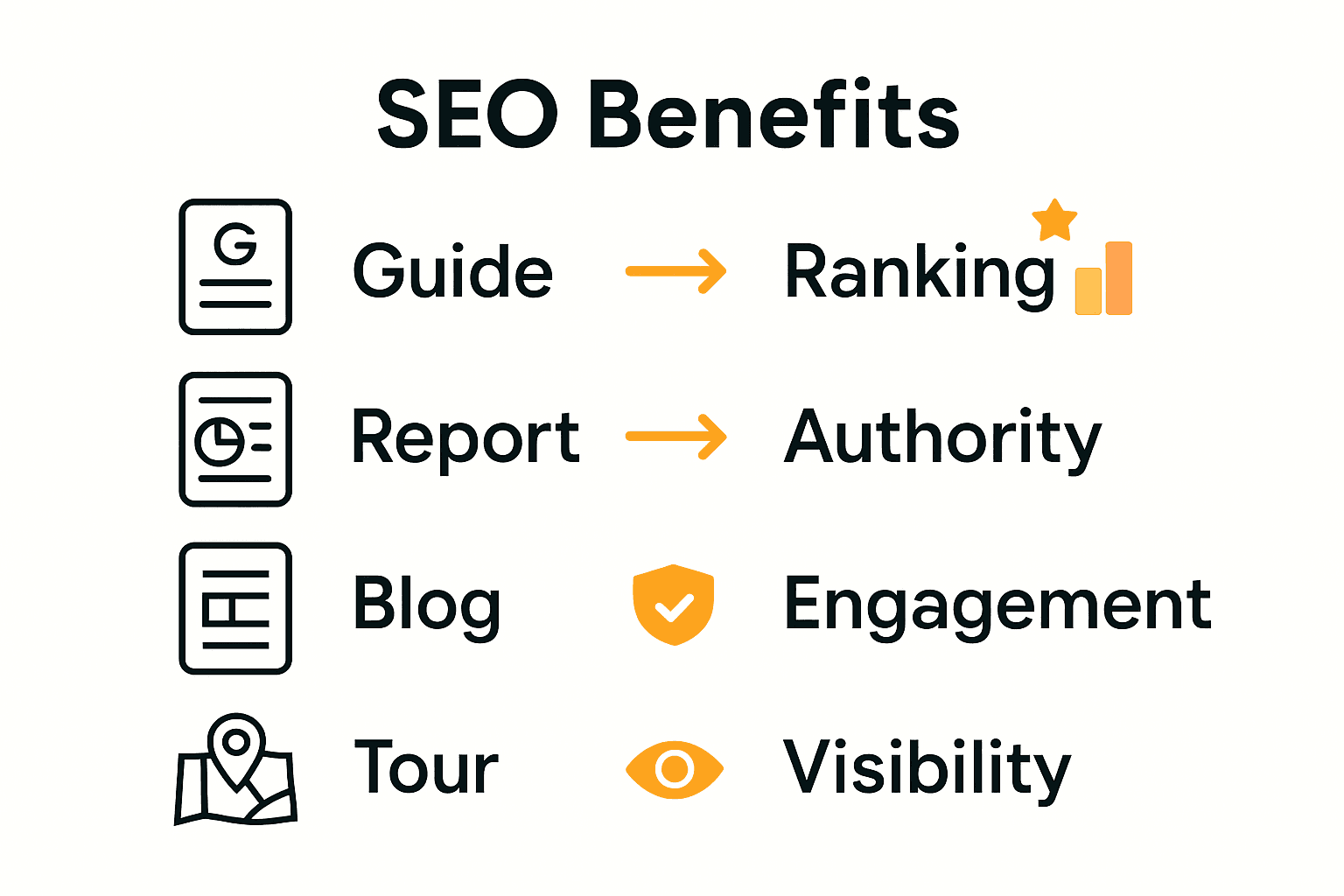
| Diversify Content Types | Utilizing various content types, like suburb guides and market reports, enhances SEO and engages potential clients. |
| Focus on Local SEO | Developing hyperlocal content tailored to specific communities improves visibility and attracts relevant clients. |
| Avoid Common Pitfalls | Steer clear of mistakes like keyword stuffing and outdated information to maintain credibility and effectiveness in content marketing. |
Table of Contents
- Defining Content’s Role In Modern SEO
- Types Of SEO Content For Real Estate
- How Content Drives Search Rankings
- Local SEO: Content Strategies That Work
- Common Content Mistakes To Avoid
Defining Content’s Role in Modern SEO
In the rapidly evolving digital landscape, content is no longer just words on a page—it’s the strategic engine driving search engine optimization (SEO). Our comprehensive content marketing guide reveals how modern search algorithms prioritize content that genuinely serves user needs and demonstrates expertise.
According to research from Search Engine Journal, Google now considers content quality as a core ranking factor. The 2024 study highlights critical attributes that elevate content’s SEO performance:
- Relevance to user search intent
- Depth of information provided
- Semantic clarity and topical comprehensiveness
- User engagement signals
Recent academic research on Generative Search Engine Optimization reveals an even more sophisticated evaluation framework. This multi-dimensional approach moves beyond traditional metrics, analyzing content’s substantive impact through semantic influence. For real estate agents, this means creating hyperlocal, expertise-driven content that doesn’t just include keywords, but provides genuine value to potential property buyers and sellers.
The message is clear: exceptional content isn’t just recommended—it’s essential. Search engines now reward content that demonstrates authentic expertise, answers user questions comprehensively, and creates meaningful connections with the target audience.
Types of SEO Content for Real Estate
In the competitive world of real estate digital marketing, content diversity is your secret weapon for attracting potential buyers and sellers. Learn more about effective content strategies that can transform your online presence and drive targeted traffic.
Real estate professionals have several powerful content types at their disposal to boost SEO and engage potential clients:
- Suburb Guides: Comprehensive neighborhood profiles
- Property Market Reports: Local market trend analysis
- Client Success Stories: Testimonial and case study content
- Buyer and Seller Advice Blogs: Educational content addressing common questions
- Local Area Listings: Hyperlocal property insights
- Virtual Property Tours: Multimedia content with descriptive narratives
Each content type serves a unique purpose in your SEO strategy. Suburb guides, for instance, help you rank for hyperlocal search terms while providing immense value to potential clients researching specific areas. Property market reports establish you as a local market expert, attracting both search engine algorithms and potential clients seeking knowledgeable guidance.
Here’s a summary of key real estate content types and their SEO advantages:
| Content Type | Main Purpose | SEO Benefit |
|---|---|---|
| Suburb Guides | Neighborhood profiles | Ranks for hyperlocal keywords |
| Property Market Reports | Market trend analysis | Boosts authority & trust |
| Client Success Stories | Showcase expertise | Enhances credibility & engagement |
| Buyer/Seller Advice Blogs | Inform & educate clients | Targets long-tail search queries |
| Local Area Listings | Property details by area | Improves local search visibility |
| Virtual Property Tours | Visual property showcasing | Increases time on site |
The key is creating content that balances informational depth with strategic keyword targeting. By diversifying your content approach, you’re not just improving SEO—you’re building a comprehensive digital resource that positions you as the go-to real estate authority in your local market.

How Content Drives Search Rankings
In the intricate world of search engine optimization, content quality is the ultimate determining factor for ranking success. Our comprehensive content marketing insights reveal the complex mechanisms by which exceptional content propels websites up search result pages.
According to research from Search Engine Journal, Google’s algorithms assess content through multiple critical lenses:
- Relevance to user search intent
- Comprehensiveness of information
- Semantic depth of topic coverage
- User engagement metrics
Recent academic findings highlight a sophisticated, multi-agent framework for evaluating content. This approach goes beyond traditional keyword matching, analyzing content’s substantive influence through semantic complexity. For real estate professionals, this means creating content that doesn’t just include keywords, but provides genuine, in-depth insights that demonstrate true expertise.
The search ranking process is now more nuanced than ever. Search engines prioritize content that not only answers user questions but does so with authority, clarity, and comprehensive understanding. By crafting content that truly serves user needs—whether it’s a detailed suburb guide, a market trend analysis, or a comprehensive property buying walkthrough—real estate agents can significantly improve their visibility and credibility in search results.
Local SEO: Content Strategies That Work
For real estate agents, local SEO is the lifeline of digital marketing success. Our comprehensive link building strategies can help you transform hyperlocal content into a powerful ranking tool that attracts potential clients right in your neighborhood.
According to research from Search Engine Journal, strategic content approaches can dramatically improve local visibility:
- Structured data markup for property listings
- Localized social media content with targeted hashtags
- Neighborhood-specific landing pages
- Google Business Profile optimization
- Geo-targeted blog content
The key to effective local SEO lies in creating content that speaks directly to your community’s unique characteristics. This means developing suburb guides that go beyond generic descriptions, sharing market insights specific to local neighborhoods, and demonstrating deep understanding of micro-market trends that matter to potential buyers and sellers.
Successful local content strategies aren’t about keyword stuffing—they’re about genuine connection. By crafting content that provides real value to your local audience, you’re not just improving search rankings, you’re establishing yourself as the go-to real estate expert in your specific market. Think hyperlocal, write with authenticity, and watch your local search visibility soar.
Common Content Mistakes to Avoid
In the competitive realm of real estate digital marketing, content missteps can dramatically undermine your SEO efforts. Learn about strategic content approaches that help you sidestep common pitfalls and maintain a strong online presence.
Real estate professionals frequently encounter content challenges that can hurt their search rankings and audience engagement:
- Keyword Stuffing: Overloading content with repetitive keywords
- Generic Content: Using bland, non-specific property descriptions
- Outdated Information: Failing to update market data and listings
- Inconsistent Publishing: Irregular content creation schedules
- Ignoring Local Context: Writing without hyperlocal insights
One of the most critical mistakes is treating content as a mere SEO checkbox rather than a genuine communication tool. Real estate content should tell a story, provide meaningful insights, and address potential clients’ specific needs and questions. This means moving beyond surface-level property descriptions to create narratives that showcase neighborhood character, market trends, and the unique value you bring as a local expert.
Successful content strategy requires consistent, thoughtful execution. By avoiding these common pitfalls and focusing on creating authentic, valuable content, real estate agents can transform their digital presence from forgettable to remarkable. Remember: great content isn’t just about ranking—it’s about building trust, demonstrating expertise, and connecting with your local community.
Transform Your SEO Content Into Real Results With Content Charlie
Are you frustrated that your efforts with suburb guides or market reports are not turning into higher local rankings or more real estate clients? This article makes it clear that in today’s market, generic or keyword-stuffed content will only hold you back. You need tailored writing that demonstrates authority, connects with your local audience, and keeps you ahead in suburb-level searches. At Content Charlie, we know your challenges and we solve them by crafting SEO-driven copy and engaging blog articles that give your business lasting visibility.
It is time to stop guessing and start attracting clients who are ready to take action. Work with specialists who help real estate agents and local businesses master local SEO and content strategy every single day. Visit Content Charlie now to discover how we can turn your content into the secret weapon for ranking, engagement, and trust. Start seeing more leads from Broadbeach to Burleigh today. Book a strategy call and get your business found before your competition does.
Frequently Asked Questions
What is the role of content in modern SEO?
Content plays a crucial role in modern SEO as it serves as the strategic engine driving search engine rankings. High-quality, relevant content that addresses user needs is prioritized by search algorithms, enhancing visibility and user engagement.
How can real estate professionals use content to improve their local SEO?
Real estate professionals can enhance their local SEO by creating hyperlocal content, such as suburb guides, neighborhood-specific landing pages, and localized blog posts. This approach ensures that content resonates with local audiences and ranks well in search results.
What types of content are effective for enhancing SEO in real estate marketing?
Effective content types for real estate marketing include suburb guides, property market reports, buyer and seller advice blogs, client success stories, local area listings, and virtual property tours. Each type serves distinct purposes, from providing local insights to establishing authority in the market.
What common mistakes should real estate professionals avoid when creating content for SEO?
Common mistakes to avoid include keyword stuffing, using generic or outdated content, having inconsistent publishing schedules, and ignoring local context. Instead, focus on creating authentic, insightful narratives that connect with your target audience.