
- You are here:
- Home »
- relationship marketing real estate
Tag Archives for " relationship marketing real estate "
7 Real Estate Newsletter Content Mistakes To Avoid
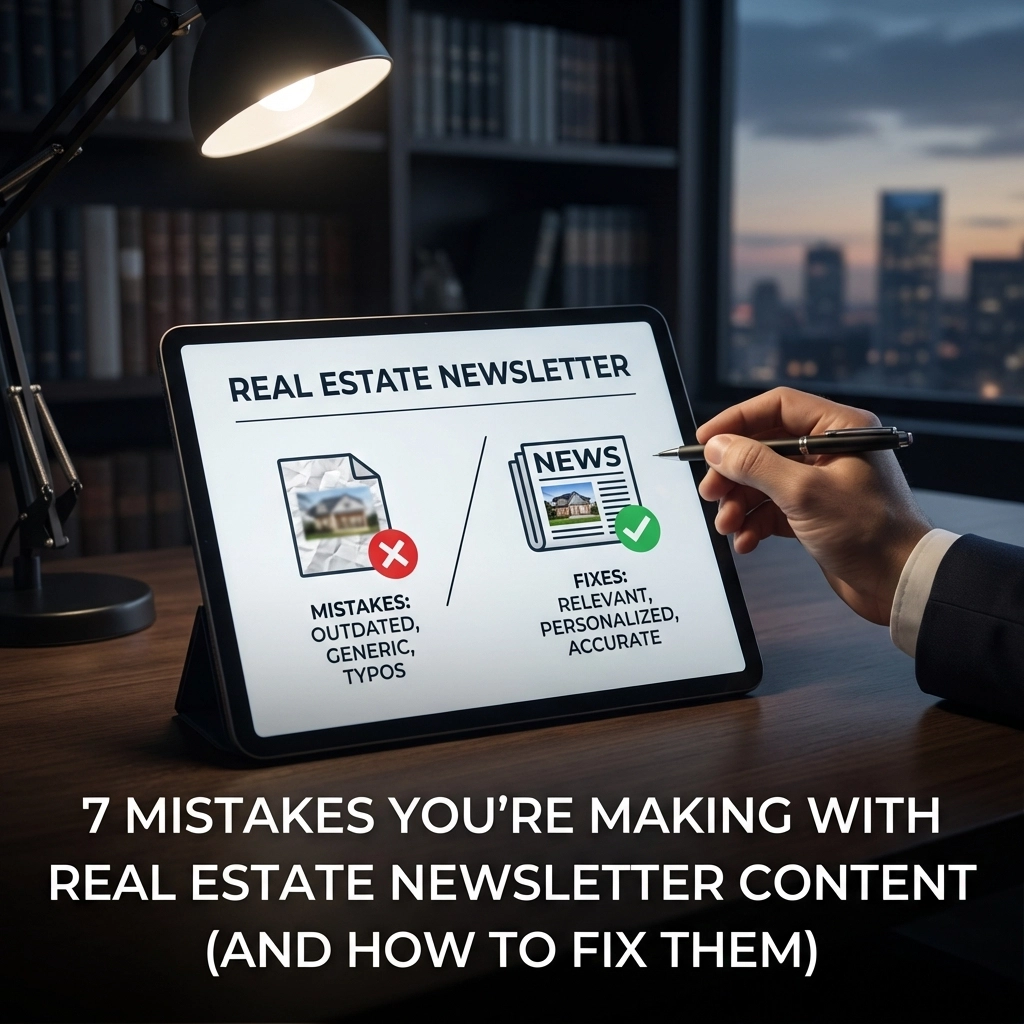
You’re sending newsletters religiously, but your phone isn’t ringing. Your open rates are dismal, and your unsubscribe rate keeps climbing. Sound familiar? Hmm you are committing the deadly real estate newsletter content mistakes!
Here’s the hard truth: most real estate agents are sabotaging their own newsletter success without even realizing it. You’re not alone: studies show that 73% of real estate professionals struggle with email marketing effectiveness, despite newsletters being one of the highest ROI marketing channels available.
The good news? These mistakes are completely fixable once you know what to look for. Let’s dive into the seven most common newsletter blunders that are costing you leads, and more importantly, how to turn things around starting today.
Real Estate Newsletter Content Mistakes #1: Sending Newsletters Without a Clear Purpose
The Problem: You’re treating your newsletter like a digital junk drawer, stuffing it with random property updates, market stats, and whatever content you found online that week.
Every newsletter you send should answer this question: “What specific action do I want my readers to take after reading this?” Without a clear purpose, your newsletter becomes noise in an already crowded inbox.
The Fix:
• Define a single primary goal for each newsletter edition
• Choose from these proven purposes:
- Generate seller leads (neighborhood market reports)
- Attract buyer inquiries (new listing showcases)
- Nurture past clients (home maintenance tips)
- Position yourself as the local expert (community news + insights)
• Craft every section around supporting that primary goal
• Include only content that moves readers toward your desired action
Pro Tip: Create a content calendar mapping each newsletter to a specific business objective. January might focus on seller leads with market forecasts, while March targets buyers with spring inventory updates.

Mistake #2: Inconsistent Sending Schedules That Confuse Your Audience
The Problem: You send three newsletters in one week when you’re motivated, then disappear for two months when business gets busy.
Inconsistency kills trust and engagement. Your subscribers forget who you are, and worse, they move on to agents who stay consistently visible in their inbox.
The Fix:
• Choose a realistic frequency you can maintain long-term:
- Weekly: High engagement but requires significant content
- Bi-weekly: Sweet spot for most agents
- Monthly: Minimum viable frequency for staying relevant
• Set a specific day and time (e.g., “First Tuesday of every month at 10 AM”)
• Batch create content during slow periods to maintain consistency during busy times
• Use scheduling tools to automate delivery and maintain your rhythm
Reality Check: It’s better to send a quality monthly newsletter consistently than to send sporadic weekly ones that fizzle out after two months.
Mistake #3: Treating All Subscribers the Same Way
The Problem: You’re sending the same generic content to first-time homebuyers, luxury sellers, and past clients from 2018.
This one-size-fits-all approach creates irrelevant content that feels impersonal and drives unsubscribes. Different people need different information at different stages of their real estate journey.
The Fix:
• Segment your list by these key categories:
- Active buyers (currently searching)
- Potential sellers (showed interest but haven’t listed)
- Past clients (closed transactions 1+ years ago)
- Sphere of influence (friends, family, professional contacts)
- Geographic focus (specific neighborhoods or price ranges)
• Create targeted content streams:
- Buyers get market trends and new listings
- Sellers receive neighborhood sales data and staging tips
- Past clients get home maintenance advice and referral requests
• Use simple tagging systems in your email platform to automate segmentation

Mistake #4: Generic Branding That Makes You Forgettable
The Problem: Your newsletter looks like it came from “[email protected]” with stock photos and templated content that could be from any agent in any city.
Real estate is a relationship business. Generic newsletters build zero relationships and position you as just another interchangeable service provider.
The Fix:
• Send from your personal name and professional email address
• Include your professional headshot in every newsletter
• Write in your authentic voice: if you’re naturally funny, be funny; if you’re data-driven, lead with statistics
• Share local insights only you would know:
- Which coffee shop just opened on Main Street
- Why traffic patterns changed after the new school was built
- Personal observations from your recent neighborhood walks
• Include your unique value proposition in your signature and bio sections
Example: Instead of “Market Update for January,” try “Why I’m Telling My Seller Clients to List Now (And You Should Know This Too)”
Mistake #5: Mobile-Unfriendly Formatting That Drives Readers Away
The Problem: Your newsletter looks perfect on your desktop but turns into an unreadable mess on smartphones: where 68% of emails are actually opened.
Poor mobile formatting is an instant credibility killer. Readers will unsubscribe rather than squint at tiny text or struggle with broken layouts.
The Fix:
• Use single-column layouts that stack naturally on mobile devices
• Keep subject lines under 50 characters for full mobile display
• Make buttons at least 44 pixels tall for easy thumb tapping
• Test every newsletter on your own phone before sending
• Use larger fonts (minimum 14px for body text)
• Optimize images to load quickly on mobile connections
Mobile-First Checklist:
- ✓ Can you read everything without zooming?
- ✓ Are links and buttons easily tappable?
- ✓ Do images display properly and load quickly?
- ✓ Is the most important information visible without scrolling?

Mistake #6: Weak Subject Lines That Get Ignored
The Problem: You’re using boring, generic subject lines like “Monthly Newsletter” or “Market Update” that blend into the sea of promotional emails.
Your subject line is your only chance to grab attention in a crowded inbox. If it doesn’t spark curiosity or promise value, your newsletter dies before it’s even opened.
The Fix:
• Create urgency without being sleazy:
- “3 homes sold on your street this week”
- “Interest rates dropped: here’s what it means for you”
• Use numbers and specifics:
- “7 staging mistakes that cost sellers $30K”
- “How Sarah saved $15,000 on her home purchase”
• Ask compelling questions:
- “Is your home worth more than you think?”
- “Ready to sell before spring rush?”
• Preview text optimization: Write the first 35-50 characters of your newsletter to complement your subject line, as this appears in email previews
A/B Testing Tip: Try sending the same newsletter with two different subject lines to small segments, then use the winner for your full list.
Mistake #7: Confusing Calls-to-Action That Lead Nowhere
The Problem: Your newsletter either has no clear next step, or it’s buried under vague language like “Contact me for more information.”
Every newsletter should guide readers toward a specific action. Confused readers take no action, and leads slip away to competitors with clearer messaging.
The Fix:
• Include one primary call-to-action per newsletter that’s impossible to miss
• Make benefits crystal clear:
- Instead of: “Schedule a consultation”
- Try: “Get your free home value report (takes 2 minutes)”
• Test every link before sending: broken links kill conversions instantly
• Use action-oriented language:
- “Download your buyer’s guide”
- “See what your neighbor’s home sold for”
- “Get pre-approved in 24 hours”
• Create landing pages specific to your newsletter campaigns rather than sending everyone to your generic website
Link Strategy: Each newsletter should have one main call-to-action button/link, plus 2-3 secondary options for different reader interests.
Your Next Steps: Turning These Fixes Into Results
Now that you know what’s been sabotaging your newsletter success, here’s your action plan:
Week 1: Audit your last three newsletters against these seven mistakes
Week 2: Choose your primary fix (start with purpose and consistency)
Week 3: Segment your list and plan targeted content
Week 4: Implement mobile optimization and test on multiple devices
Remember: you don’t need to fix everything at once. Pick the mistake that resonates most with your current struggles and focus there first. Small improvements compound over time into significant results.
The agents who master newsletter marketing don’t just stay top-of-mind: they become the obvious choice when their subscribers are ready to buy or sell. Your inbox success starts with eliminating these seven mistakes, one fix at a time.
Ready to transform your newsletter from a lead-killer into a lead-generator? Start with mistake #1 and work your way through the list. Your future clients are waiting in their inboxes: make sure your newsletter gives them a reason to reach out.
Real Estate Leads Vs Social Media Followers
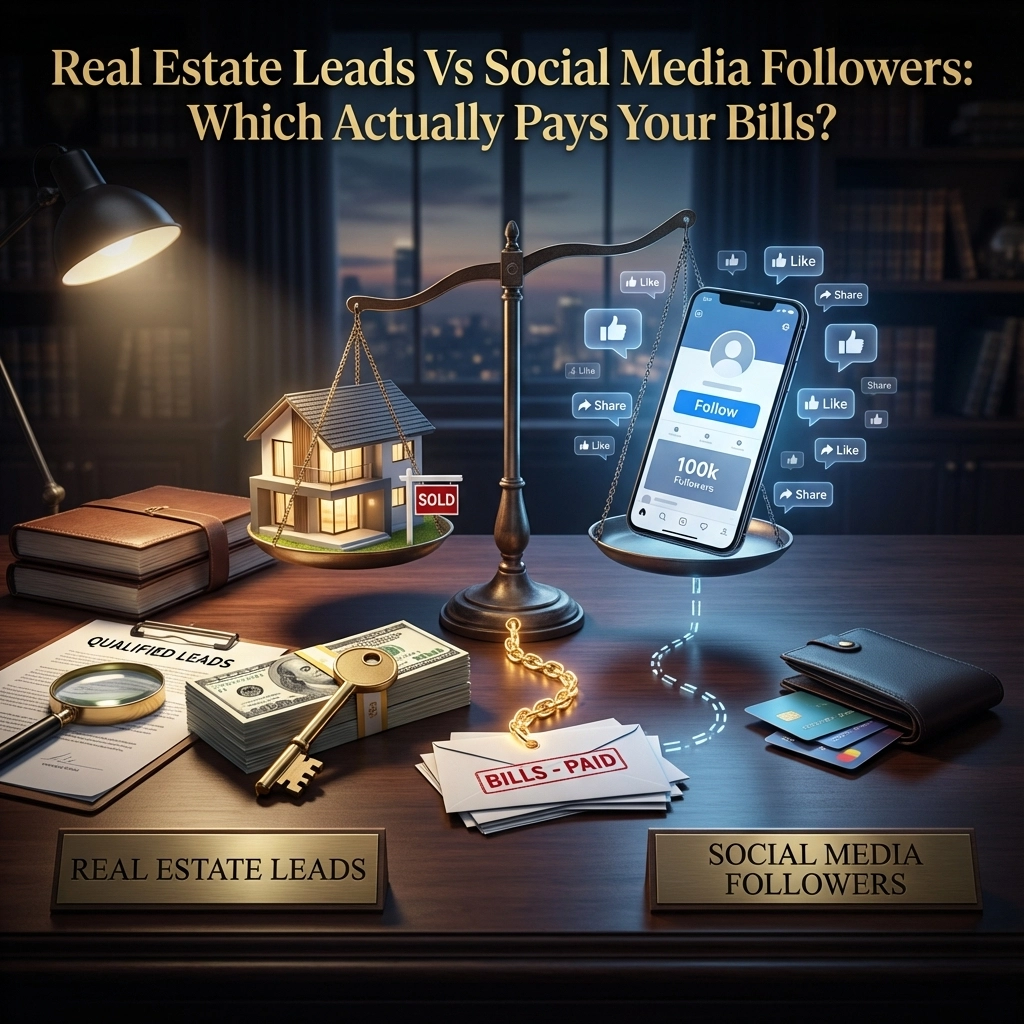
Real Estate Leads Vs Social Media Followers – which one can you actually banks on?
You’ve got 10,000 Instagram followers, your LinkedIn connections are growing daily, and your TikTok videos are getting decent engagement. But here’s the million-dollar question: How much commission have those followers actually put in your pocket this month?
If you’re like most real estate agents, the answer might be uncomfortably close to zero. While you’ve been obsessing over follower counts and engagement rates, your competition has been quietly building systems that convert social media attention into actual paychecks.
Let’s cut through the social media noise and examine what really pays your bills in real estate.
The Harsh Truth About Follower Counts
Followers don’t pay your mortgage. Closed deals do.
You can have 50,000 followers and still struggle to make rent, or you can have 500 highly engaged connections that generate six figures annually. The difference isn’t in the numbers: it’s in understanding what those numbers actually mean for your bottom line.
Research reveals that 90% of realtors get zero leads from social media despite spending countless hours creating content and chasing followers. Why? Because they’re playing the wrong game entirely.
In the Real Estate Leads Vs Social Media Followers scenario, Consider these two scenarios:
• Agent A: 15,000 Instagram followers, posts daily, high engagement, zero closed deals from social media this year
• Agent B: 2,500 carefully cultivated connections, strategic content, 12 deals closed directly from social media referrals
Agent B understands something crucial: quality trumps quantity every single time.

Why Leads Are Your Real Revenue Drivers
A lead represents someone with genuine interest in buying, selling, or working with you. A follower might just enjoy your home staging photos. Here’s the fundamental difference:
A lead has demonstrated intent. A follower has demonstrated attention.
Intent converts to commission checks. Attention might convert to likes.
The numbers back this up. According to industry surveys, social media generates more quality leads than any other tech tool when used strategically. But notice the key word: leads, not followers.
What Makes a Lead Valuable
Quality leads share these characteristics:
• Immediate or near-term buying/selling timeline
• Pre-qualified financial capacity
• Clear geographic focus in your market
• Demonstrated engagement with your expertise
• Contact information willingly provided
A follower who comments “Nice house!” on your listings might boost your ego, but a follower who messages you asking about market conditions in their neighborhood? That’s a lead worth pursuing.
The Hidden Power of Strategic Social Media Followers
Here’s where it gets interesting: Social media followers become incredibly valuable when you understand their conversion potential.
Research shows that 10-15% of people visible on your social media are moving within the next 12 months. Even more importantly, 100% of your social media connections have referral potential because everyone knows someone who’s thinking about buying or selling real estate.
This means your 2,000 followers could realistically generate:
• 200-300 potential direct clients (10-15% moving soon)
• 2,000 referral opportunities (100% referral potential)
• Ongoing brand awareness that keeps you top-of-mind
But here’s the catch: this only works if you’re treating your followers as potential business partners, not just an audience for your content.

The 5 Fatal Mistakes Killing Your Conversion Rate
Most agents sabotage their own social media ROI by making these critical errors:
1. Posting for Views Instead of Clients
You share beautiful property photos because they get likes, but you never explain why someone should work with you specifically. Vanity metrics feel good but don’t pay bills.
2. Sharing Facts Without Context
Posting “The market is hot!” tells your followers nothing actionable. Explaining “Here’s what this hot market means for your specific situation and timeline” positions you as their advisor.
3. Treating Social Media Like a Billboard
One-way broadcasting creates followers, not relationships. Two-way conversations create clients.
4. Ignoring the 80/20 Rule
Successful agents spend 80% of their social media effort on relationship building and 20% on promotion. Most agents flip this ratio and wonder why nobody calls.
5. No Clear Conversion Path
Your followers want to work with you, but you’ve made it impossible. No clear contact information, no obvious next steps, no compelling reason to choose you over their current agent.
The Strategic Approach: Converting Followers into Revenue
Smart agents treat social media followers as the top of their sales funnel, not the end goal. Here’s how to build a system that actually generates income:
Create Content That Demonstrates Expertise
Instead of posting random property photos, share content that showcases your knowledge:
• Market analysis specific to your area
• Behind-the-scenes insights from recent deals
• Solutions to common buyer/seller problems
• Predictions and trends affecting local real estate
Use Built-In Business Tools
Most platforms offer conversion tools that many agents ignore:
• Instagram lead forms and contact buttons
• LinkedIn message templates and connection requests
• Facebook business pages with clear calls-to-action
• TikTok business profiles with website links
Develop a Content Calendar That Nurtures Relationships
Plan content that moves followers through your funnel:
• Monday: Market updates and analysis
• Wednesday: Success stories and testimonials
• Friday: Behind-the-scenes and personal branding
• Weekend: Community events and local insights

The ROI Formula: Measuring What Actually Matters
Stop tracking vanity metrics and start measuring revenue-generating activities:
Metrics That Matter:
• Direct messages and inquiries generated
• Contact information captured through social media
• Referrals attributed to social media connections
• Closed deals with social media touchpoints
• Pipeline value from social media leads
Metrics That Don’t Matter (For Your Bank Account):
• Total follower count
• Post engagement rates
• Story views
• General website traffic from social media
Track this simple formula monthly: Social Media Time Invested ÷ Deals Closed from Social Media = Your True ROI per Hour
Building Your Lead Generation System
Transform your social media from a time-waster into a money-maker with this systematic approach:
Phase 1: Audit Your Current Approach (Week 1)
• Review your last 30 posts: How many included a clear call-to-action?
• Check your direct messages: How many inquiries did you receive and follow up on?
• Analyze your contact database: How many new contacts came from social media?
Phase 2: Optimize Your Profiles (Week 2)
• Professional headshots and branding across all platforms
• Clear bio explaining your expertise and service area
• Contact information prominently displayed
• Links to your website and listing pages
Phase 3: Content Strategy Implementation (Week 3-4)
• Create content pillars focused on expertise, not entertainment
• Develop templates for consistent posting
• Set up systems for responding to engagement quickly
• Create lead magnets (market reports, buyer guides) for contact capture
The Bottom Line: Quality Over Quantity Every Time
Real estate leads pay your bills. Social media followers are simply one tool for generating those leads.
The agents who succeed understand that social media is a lead generation channel, not a popularity contest. They focus on building relationships with potential clients and referral sources, not accumulating meaningless follower counts.
Your goal shouldn’t be to have the most followers in your market. Your goal should be to have the most engaged, valuable network that consistently generates opportunities for your business.
Stop chasing followers. Start building relationships. Your bank account will thank you.
The question isn’t whether you should focus on leads or followers: it’s whether you’re using your followers strategically to generate the leads that actually pay your bills. Master that distinction, and you’ll never worry about your next commission check again.