
- You are here:
- Home »
- real estate reviews
Tag Archives for " real estate reviews "

7 Powerful Real Estate Content Strategies for Local Agents
Over 90 percent of homebuyers start their property search online, putting digital strategies at the heart of real estate success. Standing out means more than just having listings—it requires skillful use of local SEO, eye catching visuals, and authentic client stories. By focusing on proven tactics that connect with local buyers, you can grow your reputation and attract the right clients in a crowded market.
Table of Contents
- 1. Identify Local SEO Keywords That Attract Homebuyers
- 2. Craft Suburb Guides to Build Trust and Visibility
- 3. Write Compelling Property Descriptions That Convert
- 4. Optimize Google Business Profile Content for Searches
- 5. Publish Consistent Blog Articles to Show Expertise
- 6. Leverage Client Testimonials for Local Credibility
- 7. Use Visual Content to Make Listings Stand Out
Quick Summary
| Takeaway | Explanation |
|---|---|
| 1. Focus on Local SEO Keywords | Identify specific search terms like neighborhood names to attract homebuyers actively searching online. |
| 2. Create Detailed Suburb Guides | Develop comprehensive guides about neighborhoods to establish trust and position yourself as a local expert. |
| 3. Write Engaging Property Descriptions | Use storytelling and emotional language in property descriptions to create connections with potential buyers. |
| 4. Optimize Google Business Profile | Fill out and regularly update your Google Business Profile to enhance your visibility in local searches. |
| 5. Publish Consistent Blog Content | Regularly post relevant blogs to showcase expertise and connect with potential clients in your market. |
1. Identify Local SEO Keywords That Attract Homebuyers
Successful real estate marketing starts with understanding what potential homebuyers are actually searching for online. Local SEO keywords are your secret weapon to connecting with ready buyers in specific neighborhoods and markets.
When researching keywords, think like a homebuyer searching for properties. Understanding why local SEO matters begins with mapping out precise location based search terms that reflect genuine buyer intent. According to research, location specific keywords like “homes for sale in [City]” can dramatically improve your search visibility.
Strategic Keyword Research Approach:
- Focus on neighborhood specific searches
- Include city and suburb names
- Incorporate property type descriptors
- Add transactional search terms
For instance, instead of generic terms like “real estate,” target phrases such as “3 bedroom homes in Broadbeach” or “waterfront properties Gold Coast.” These specific keywords signal exactly what potential buyers want and help search engines match your content with relevant searches.
To implement this strategy, use free tools like Google Keyword Planner or SEMrush to discover search volume and competition for local real estate keywords. Track which terms potential buyers use most frequently and integrate them naturally into your website content, blog posts, and property descriptions.
Remember that local keyword optimization is not about stuffing terms randomly. The goal is creating authentic, valuable content that genuinely answers homebuyers questions while strategically incorporating location based search terms.
2. Craft Suburb Guides to Build Trust and Visibility
Potential homebuyers are hungry for insider knowledge about neighborhoods where they might invest their future. Creating comprehensive suburb guides transforms you from a simple real estate agent into a local market expert.
Local neighborhood spotlights are powerful tools for establishing your credibility and attracting targeted traffic. According to research, writing detailed neighborhood breakdowns and answering local questions can significantly enhance your reputation within a geographical area.
Key Elements of Compelling Suburb Guides:
- Detailed neighbourhood demographic information
- Local amenities and infrastructure
- Property value trends
- School district ratings
- Community lifestyle insights
Your suburb guide should read like an insider’s manual for potential homebuyers. Go beyond basic statistics and create narrative rich content that helps people imagine living in the area. Discuss local coffee shops, upcoming development projects, community events, and unique neighborhood characteristics that make each suburb special.
To maximize impact, update these guides regularly with fresh market insights, seasonal real estate trends, and emerging local developments. This approach not only improves your SEO but positions you as the go to local real estate expert who truly understands the nuanced character of each neighborhood.
Remember that authentic, valuable content speaks directly to your audience’s curiosity and need for local understanding. Your suburb guides are more than marketing materials they are community resources that build genuine trust.
3. Write Compelling Property Descriptions That Convert
Your property description is more than just a list of features it is your digital sales pitch that can transform casual browsers into serious buyers. Crafting descriptions that spark imagination and emotional connection requires strategic storytelling.
Complete guide to copywriting in real estate reveals that successful property descriptions go beyond basic specifications. According to research, incorporating location specific keywords naturally within your content can significantly improve search engine rankings and attract potential clients.
Key Components of Magnetic Property Descriptions:
- Create a narrative that sells a lifestyle
- Highlight unique property features
- Use sensory and emotional language
- Include specific neighborhood context
- Optimize for local search keywords
Instead of writing dry statements like “3 bedroom house with garage,” paint a vivid picture. For example: “Imagine morning coffee on your sun drenched balcony overlooking Broadbeach parklands the perfect sanctuary for professionals seeking coastal tranquility.”
When writing descriptions, think about what makes a property special. Does it have a stunning view? Proximity to top schools? Recent renovations? These details transform generic listings into compelling stories that resonate with potential buyers.
Remember that great property descriptions are a blend of strategic SEO and emotional storytelling. Your goal is to help potential buyers visualize themselves living in the space not just reading about its technical specifications.
4. Optimize Google Business Profile Content for Searches
Your Google Business Profile is the digital front door to your real estate brand a powerful tool that can attract or repel potential clients within seconds. Mastering this platform is not just about filling out basic information it is about creating a compelling digital presence that stands out in local searches.
Google Business Profile optimization requires strategic thinking and consistent effort. According to research, regularly posting and adding high quality visual content can dramatically improve your visibility in Google Search and Maps.
Strategic Profile Optimization Tactics:
- Complete every profile section thoroughly
- Add professional headshots and team photos
- Include recent property listing images
- Update business hours and contact information
- Respond to all client reviews promptly
Think of your Google Business Profile as a 24/7 digital marketing representative. Professional photos showing your team, office environment, and recent successful property sales create trust and credibility. Potential clients want to see the human side of your real estate business.
Consistent updates are crucial. Share recent property achievements, local market insights, and community events. Each post increases your chances of appearing in local search results and demonstrates your active engagement with the local real estate market.
Remember that authenticity wins. Your profile should reflect your unique brand personality while providing clear, valuable information that helps potential clients understand why they should choose you as their real estate agent.
5. Publish Consistent Blog Articles to Show Expertise
Blogs are not just content they are your digital megaphone for establishing credibility and attracting potential clients. Consistent publishing transforms you from a simple real estate agent into a trusted local market expert.
Consistent blogging requires strategic planning and genuine insights. According to research, publishing local content like neighborhood guides and market updates helps build audience connection and demonstrates deep understanding of your real estate landscape.
Strategic Blog Content Approaches:
- Create hyper local market analysis
- Share seasonal real estate trends
- Offer neighborhood buying guides
- Highlight community development stories
- Answer common buyer questions
Your blog should feel like a conversation with potential clients. Instead of generic market reports, craft narratives that help readers visualize living in specific neighborhoods. For example, write articles like “Top 5 Family Friendly Suburbs in Gold Coast” or “What First Time Buyers Need to Know About Broadbeach Real Estate”.
Consistency matters more than perfection. Aim to publish 1 2 high quality articles monthly that provide genuine value. Track which topics generate the most engagement and double down on content that resonates with your audience.
Remember that your blog is a living portfolio showcasing your local expertise. Each article is an opportunity to build trust and position yourself as the go to real estate professional in your market.
6. Leverage Client Testimonials for Local Credibility
Testimonials are the secret weapon of successful real estate agents transforming satisfied clients into powerful marketing advocates. These personal stories can speak volumes about your expertise in ways no traditional advertisement ever could.
Real estate client engagement requires strategic approach to gathering and showcasing client experiences. According to research, proactively soliciting reviews and displaying positive testimonials can significantly build trust and credibility in your local market.
Strategic Testimonial Collection Tactics:
- Request feedback immediately after successful transactions
- Create multiple testimonial collection channels
- Feature diverse client stories
- Include specific transaction details
- Display testimonials across multiple platforms
When collecting testimonials, go beyond generic praise. Encourage clients to share specific details about their experience working with you. A testimonial like “John helped us find our dream home in Broadbeach within our budget” is far more compelling than “John is a great agent.”
Spread your testimonials strategically across your website, Google Business Profile, social media platforms and printed marketing materials. Video testimonials can be especially powerful providing authentic visual proof of your professional success.
Remember that potential clients want social proof. Your testimonials are not just reviews they are powerful narratives that demonstrate your ability to deliver exceptional real estate experiences.
7. Use Visual Content to Make Listings Stand Out
Visual storytelling transforms ordinary property listings into compelling narratives that capture potential buyers imagination. In a digital world saturated with real estate content, high quality visual assets are your secret weapon for standing out.
Types of real estate content every agent should use reveals the power of strategic visual marketing. According to research, incorporating videos like virtual tours and lifestyle showcases can significantly boost engagement and help potential clients connect emotionally with properties.
Powerful Visual Content Strategies:
- Produce professional property photography
- Create immersive video property tours
- Share lifestyle neighborhood context videos
- Design visually appealing market update graphics
- Highlight unique property features through visual storytelling
Think beyond standard listing photos. A walkthrough video showing morning light streaming through kitchen windows or a drone shot capturing a homes proximity to local parks can transform a simple listing into an experience. Professional photography that captures a propertys best angles tells a story far more effectively than text descriptions.
Consider creating diverse visual content that goes beyond individual listings. Market trend infographics, neighborhood lifestyle reels, and behind the scenes glimpses of your real estate process can build trust and showcase your expertise.
Remember that great visual content does more than display a property it invites potential buyers to imagine their future life in that space.
Below is a comprehensive table summarizing the strategies discussed in the article for enhancing real estate marketing using Local SEO, content creation, and client engagement.
| Strategy | Implementation | Expected Results |
|---|---|---|
| Local SEO Keyword Identification | Focus on neighborhood-specific searches, city names, property types, and transactional terms. Use tools like Google Keyword Planner. | Improved search visibility and increased webpage relevance for potential buyers. |
| Crafting Suburb Guides | Include demographics, amenities, property trends, and lifestyle insights. Regularly update guides. | Enhanced local credibility and attraction of targeted traffic. |
| Property Descriptions | Use storytelling, highlight unique features, and include sensory and emotional language. Optimize with local keywords. | Conversion of casual browsers to serious buyers. |
| Google Business Profile Optimization | Complete profile details, add high-quality images, update frequently, and respond to reviews. | Increased visibility in searches and stronger client engagement. |
| Consistent Blogging | Publish regular articles on local market analysis, trends, and buying guides. | Establishment as a local expert and stronger connection with potential clients. |
| Leveraging Client Testimonials | Collect detailed feedback, feature diverse stories, and display across platforms. | Increased trustworthiness and credibility in the local market. |
| Visual Content Usage | Incorporate professional photos, videos, and infographics. Highlight property features. | Enhanced listing appeal and emotional connection with potential buyers. |
Unlock the Full Potential of Your Local Real Estate Content
Struggling to stand out in a crowded market and connect with local homebuyers can be frustrating. This article highlights crucial strategies like targeted local SEO keywords, compelling suburb guides, and authentic property descriptions that resonate with buyers. If you want to overcome challenges such as low search visibility and weak buyer engagement, focusing on authentic content tailored to your neighborhood is key. Content Charlie specializes in creating SEO-driven real estate copy that ranks highly for specific locality searches and builds trust through valuable insights.
Elevate your listings and neighborhood expertise with our help. From crafting engaging suburb guides to writing magnetic property descriptions and optimizing your Google Business Profile content, we make sure your brand connects with ready-to-act buyers in your area. Don’t let your marketing fall flat when you can dominate your local market and become the trusted agent buyers choose.
Ready to transform your real estate content into a powerful client magnet now
Visit Content Charlie to discover how our tailored local SEO strategies and high-converting copywriting can put you ahead of competitors in neighborhoods like Broadbeach and beyond. Take the first step to getting found and closing more deals today.
Frequently Asked Questions
How can I identify local SEO keywords that attract homebuyers?
To identify local SEO keywords, focus on neighborhood-specific searches and include city names, property types, and transactional terms. Conduct keyword research using free tools to discover popular local search phrases and integrate them naturally into your website and listings.
What should I include in suburb guides to engage potential homebuyers?
Suburb guides should include detailed demographics, local amenities, property value trends, and community lifestyle insights. Create engaging content that helps buyers visualize life in the area to build trust and position yourself as a local expert.
How can I write compelling property descriptions that convert?
Write property descriptions that tell a story, highlighting unique features and using sensory language to evoke emotions. Aim to incorporate localized keywords and provide specific neighborhood context to enhance search visibility and buyer connection.
What are effective strategies for optimizing my Google Business Profile?
Optimize your Google Business Profile by completing all sections thoroughly, adding professional photos, and posting updates regularly. Engage with client reviews to improve visibility and showcase your real estate brand’s personality.
How often should I publish blog articles to establish expertise in my local market?
Aim to publish 1-2 high-quality blog articles each month to showcase your local knowledge and market insights. Consistency helps engage your audience and positions you as a trusted professional in your field.
How can I use visual content to enhance my property listings?
Util high-quality visuals such as professional photography and immersive video tours to create compelling property listings. Highlight unique features and the surrounding neighborhood through varied visual content, helping potential buyers imagine themselves in the space.
Recommended
- 7 Types of Real Estate Content Every Agent Should Use – Content Charlie
- 7 Best Real Estate Blog Ideas for Local Agents – Content Charlie
- 7 Essential Types of Real Estate Leads Agents Must Know – Content Charlie
- Why Use Blog Content: Essential Guide for Real Estate – Content Charlie
- SEO for Real Estate Agencies: Simple Strategies to Grow Your Business

Real Estate SEO Tips to Boost Agent Visibility Online
Real Estate SEO Tips to boost an agent’s visability is a must learn to dominate their local markets.
Nearly 50 percent of home buyers begin their search online for a local agent. Standing out in those crucial local searches can make all the difference for real estate success. If your website is not optimized for targeted keywords, suburb-level content, or local business signals, potential clients may never find you. By focusing on the right strategies and tools, you can improve online visibility, attract more buyers and sellers, and establish a trusted local presence.
Quick Summary
| Key Point | Explanation |
|---|---|
| 1. Audit Your Website Thoroughly | Conduct a detailed website audit to identify issues affecting local SEO performance and ranking. Use diagnostic tools for analysis. |
| 2. Optimize Keywords Strategically | Incorporate location-specific and intent-driven keywords into key pages to enhance visibility among potential clients. |
| 3. Create In-Depth Suburb Guides | Develop comprehensive content about neighborhoods to position yourself as a local expert and attract targeted traffic. |
| 4. Enhance Google Business Profile | Regularly update your Google Business Profile with engaging content to improve your brand visibility and client engagement. |
| 5. Monitor and Adjust SEO Tactics | Continuously track performance metrics and refine your SEO strategy to stay competitive in the local real estate market. |
Table of Contents
- Step 1: Audit Your Website For Local SEO Readiness
- Step 2: Optimise Key Pages With Targeted Keywords
- Step 3: Enhance Suburb-Level Content To Attract Locals
- Step 4: Boost Authority With Google Business Profile Updates
- Step 5: Track Rankings And Refine Your SEO Strategy
Step 1: Audit Your Website for Local SEO Readiness
A comprehensive website audit is your roadmap to improving local search visibility and attracting more potential real estate clients. This critical first step will help you identify technical issues that could be preventing your website from ranking well in local search results.
Start by examining your website through multiple diagnostic tools. According to local SEO performance metrics, you want to assess key technical elements like site structure, mobile responsiveness, page loading speed, and metadata accuracy.
Use free tools like Google Analytics, Google Search Console, and PageSpeed Insights to benchmark your current performance. Look for specific issues such as:
Here’s a summary of essential website audit checkpoints for local SEO readiness:
| Audit Checklist Item | Why It Matters | Recommended Tools |
|---|---|---|
| Page Loading Speed | Improves user experience | Google PageSpeed Insights |
| Mobile Responsiveness | Enhances mobile user visibility | Google Search Console Mobile-Friendly Test |
| Site Structure | Supports page indexing | Screaming Frog Sitebulb |
| Metadata Accuracy | Boosts search relevance | Screaming Frog Google Search Console |
| Consistent NAP Information | Signals local trustworthiness | Manual Review Local SEO Tools |
| Internal Link Health | Improves crawlability | Ahrefs Site Audit Screaming Frog |
- Slow page load times
- Non mobile friendly design
- Broken internal links
- Missing or incorrect metadata
- Inconsistent business information across pages
Pay special attention to local signals that help search engines understand your geographic relevance. This means ensuring your business name, address, and phone number are consistent across all web pages. Include location specific keywords naturally in your content and metadata to signal your local market presence.
Pro Tip: Your website should clearly communicate which specific areas or suburbs you serve as a real estate agent.
After conducting your initial audit, prioritize fixing the most critical technical issues first. Each improvement incrementally boosts your local search potential and helps potential clients find you more easily online.
Step 2: Optimise Key Pages with Targeted Keywords
Keyword optimization transforms your real estate website from generic to geographically precise, helping potential clients find you faster and more effectively. Your goal is to strategically incorporate location specific and intent driven keywords that match exactly what local home buyers and sellers are searching online.
Start by researching hyper local keywords that reflect your specific market. According to on page optimization strategies, focus on phrases like ‘luxury homes in Broadbeach’ or ‘first time buyer properties in Gold Coast’ that capture precise geographic and buyer intent signals.
Target these keywords strategically across critical website pages:
- Homepage
- About page
- Neighborhood guide sections
- Individual property listings
- Service area description pages
Incorporate keywords naturally into your content. Avoid stuffing or awkward repetitions that sound unnatural. Your writing should flow smoothly while subtly signaling your local expertise and market knowledge.
Pro Tip: Create dedicated neighborhood guide pages that offer genuine value beyond basic keyword placement.
Implement structured data markup to help search engines understand your content better. As research suggests, using schema for real estate content like RealEstateAgent and Property can significantly improve your search visibility and help you earn featured snippet placements.
Remember that keyword optimization is an ongoing process. Regularly review and update your keywords to match evolving local search trends and buyer behaviors.
Step 3: Enhance Suburb-Level Content to Attract Locals
Creating suburb specific content transforms your real estate website into a powerful local attraction magnet. By developing in depth neighborhood guides and localized content, you position yourself as the go to local expert potential clients trust and search engines reward.
Start by crafting comprehensive neighborhood guides that go beyond basic property listings. Understanding why local SEO matters means providing genuine value through detailed community insights. Focus on creating content that answers real questions local buyers and sellers have about specific suburbs.
Key elements to include in your suburb level content:
- Detailed neighborhood demographics
- Local school information
- Community amenities and infrastructure
- Recent market trends and property values
- Upcoming development plans
- Unique neighborhood characteristics
Use rich multimedia to make your content more engaging. Incorporate interactive maps, high quality local images, and infographics that showcase the unique personality of each suburb. This approach not only improves user experience but also signals to search engines that your content is comprehensive and valuable.
Pro Tip: Update your neighborhood guides regularly to reflect current market conditions and local developments.
Research suggests that locally optimized content with specific details attracts more targeted traffic. By becoming the most authoritative source of hyperlocal information, you create a compelling reason for potential clients to choose you as their trusted real estate advisor.
Think of each suburb guide as a narrative that tells the story of the community. Your goal is to help potential buyers and sellers feel like they already know the neighborhood before they even visit a property.

Step 4: Boost Authority with Google Business Profile Updates
Your Google Business Profile is the digital front door to your real estate business. Optimizing this critical platform can transform how potential clients discover and perceive your professional brand online.
When it comes to Google Business Profile optimization, the goal is to create a comprehensive and engaging profile that showcases your local expertise. Research indicates that businesses with complete profiles can see up to 70% more visits and 50% more leads.
Key strategies for maximizing your profile:
- Upload professional high quality property and team photos
- Create video content like property tours and neighborhood guides
- Write a keyword rich description highlighting your local specialties
- Post weekly updates about new listings or market insights
- Enable direct messaging for potential client inquiries
- Encourage and respond to client reviews
Pro Tip: Profiles with over 100 genuine reviews can attract 360% more website visits.
Regularly update your profile with fresh content and accurate information. Think of it as a living digital portfolio that reflects your current market knowledge and professional achievements.
Consistent, strategic updates signal to both Google and potential clients that you are an active and engaged local real estate professional.
Your profile is not just a listing it is your digital reputation builder.
Step 5: Track Rankings and Refine Your SEO Strategy
Successful SEO is not a one time setup but an ongoing process of measurement, analysis, and strategic refinement. Your ability to track performance and adapt quickly will determine how effectively you compete in the local real estate market.
Understanding real estate SEO metrics starts with selecting the right tracking tools. Google Analytics and Search Console are your primary weapons for monitoring website performance and identifying opportunities for improvement.
Key metrics to consistently monitor:
- Organic search traffic
- Keyword rankings
- Website click through rates
- Time spent on property pages
- Conversion rates from local searches
- Google Business Profile insights
Conducting regular competitor analysis helps you identify content and optimization gaps. Look at what top performing local agents are doing and find ways to differentiate your approach.
Pro Tip: A strategic four month SEO campaign can potentially increase your Google Maps visibility by up to 450%.
Think of SEO tracking like real estate market analysis. Just as property values fluctuate, so do search rankings. Your goal is to stay agile and responsive to changing digital landscapes.
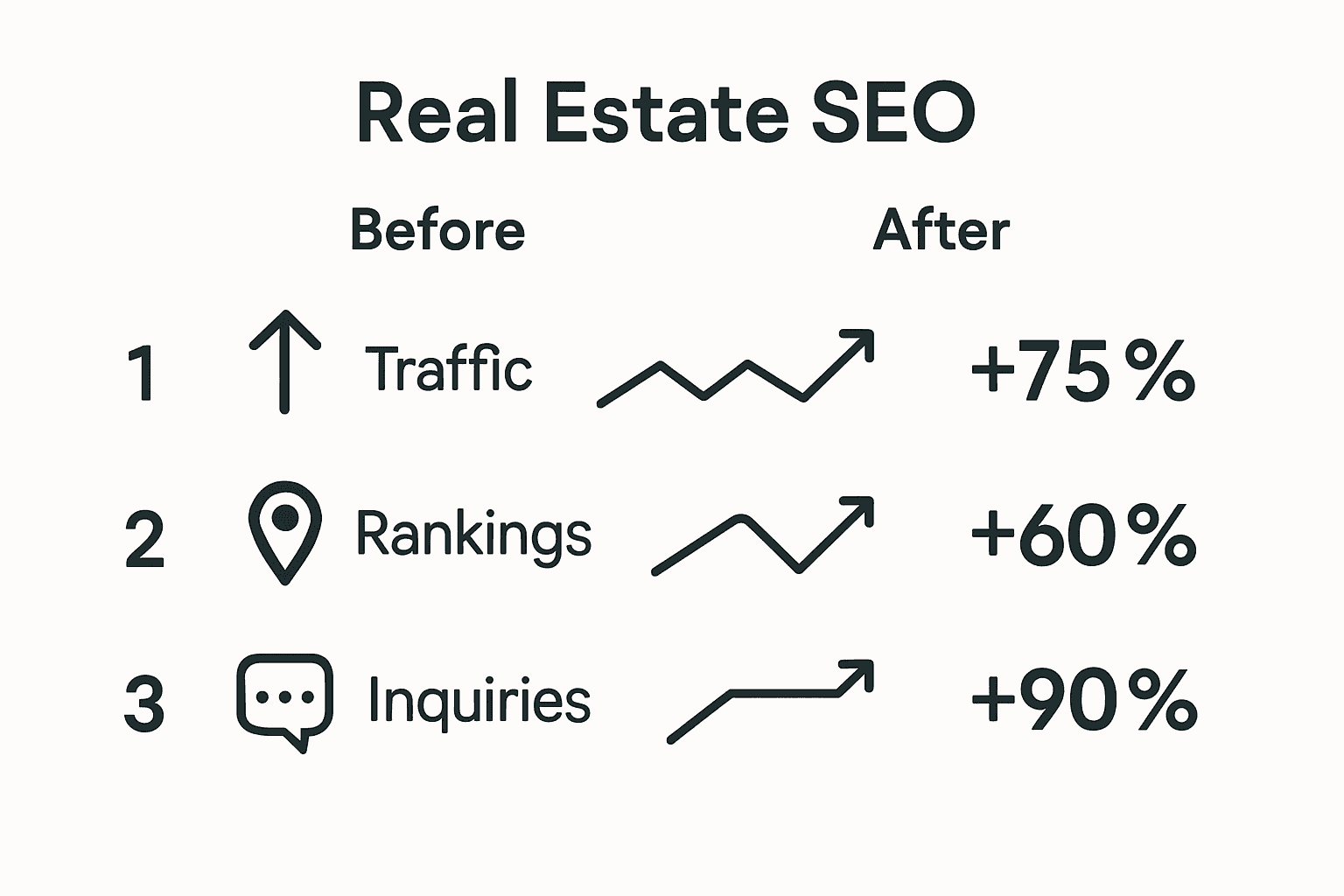
Remember that consistent small improvements compound over time. Every incremental optimization brings you closer to becoming the go to real estate expert in your local market.
Ready to Dominate Local Searches and Become the Go-To Agent?
Have you been frustrated by slow website traffic and low lead generation despite following every local SEO tip? This article highlights the real challenges real estate agents face today. Outdated suburb content. Inconsistent NAP details. Weak Google Business Profile optimization. All these hurdles can hold back your visibility and cost you high-value clients in your area. The truth is, knowing what needs to be done is only one part of the journey. Turning these strategies into real results for your agency is where the real edge begins.
Let Content Charlie turn your knowledge into top rankings and tangible leads. Our team crafts SEO-driven content and suburb guides that solve technical SEO issues and spotlight your expertise in every neighborhood you serve. Take the next step and make your business the first choice for buyers and sellers searching locally. Visit Content Charlie now and let us help elevate your online presence before your competitors catch up.
Frequently Asked Questions
How can I audit my website for local SEO readiness as a real estate agent?
To audit your website for local SEO readiness, assess key elements like page loading speed, mobile responsiveness, and metadata accuracy. Use tools like Google Analytics and PageSpeed Insights to identify issues and prioritize fixing the most critical ones within 30 days to improve your local search visibility.
What specific keywords should I target to optimize my real estate website?
Target hyper-local keywords that reflect your market, such as ‘luxury homes in [local area]’ or ‘homes for first-time buyers.’ Research and incorporate these keywords naturally on key pages like your homepage and neighborhood guides, adjusting your strategy every few months based on search trends.
How can I enhance suburb-level content to attract more local home buyers?
Enhance suburb-level content by creating in-depth neighborhood guides that include demographics, local schools, and market trends. Regularly update this content to reflect current information, aiming for a comprehensive guide that resonates with potential clients and showcases your expertise.
What are some effective strategies for optimizing my Google Business Profile?
To optimize your Google Business Profile, upload high-quality photos, create engaging video content, and post weekly updates about new listings. Ensure your profile is complete and fresh, which can increase your visits and leads by significantly more than 50% when updated regularly.
How often should I track and refine my real estate SEO strategy?
Track your SEO strategy continuously, evaluating key performance metrics at least monthly. Regularly analyze organic traffic and keyword rankings to identify improvement areas, and be prepared to make adjustments at least every four months for optimal visibility.
What content types can I use to boost my local authority and presence online?
Utilize various content types like detailed neighborhood guides, market trend reports, and high-quality images or videos. Focus on creating value-driven content that engages local clients, fostering trust and encouraging potential clients to view you as their leading real estate expert.