
- You are here:
- Home »
- real estate lead generation
Tag Archives for " real estate lead generation "

Google Business Profile Neglection
How Google Business Profile Neglection Will Kill Your Business
Here’s a question that might sting a little: When was the last time you actually logged into your Google Business Profile?
If you’re a real estate agent and you can’t remember, you’re not alone. But here’s the problem: while you’ve been busy chasing listings and closing deals, potential clients have been searching “real estate agent near me” and finding your competitors instead.
Your Google Business Profile (GBP) isn’t just a digital business card. It’s often the first impression someone gets of you before they ever visit your website or pick up the phone. And if that first impression screams “outdated” or “inactive,” you’re losing leads without even knowing it.
Let’s break down exactly why your Google Business Profile neglection is costing you business: and how to fix it fast.
Why Your Google Business Profile Actually Matters
Think about how you search for local services. You Google it, right? Your potential clients do the same thing.
When someone searches for a real estate agent in your area, Google pulls up a map pack showing local options. Your GBP determines whether you show up there: and more importantly, whether someone clicks on your listing or scrolls past it.
Consider these facts:
- 46% of all Google searches have local intent
- 76% of people who search for something nearby visit a business within 24 hours
- Businesses with complete GBP listings are 2.7 times more likely to be considered reputable
For real estate agents, this is massive. Buyers and sellers often start their agent search with a quick Google lookup. If your profile looks abandoned, they’ll assume your business is too.

The Three Ways You’re Sabotaging Your Own Visibility
Let’s get specific about what’s going wrong with your profile: and why it matters.
1. No Regular Updates (The “Set It and Forget It” Trap)
You created your GBP years ago, filled in the basics, and haven’t touched it since. Sound familiar?
Google rewards active profiles. When you regularly post updates, add photos, and respond to reviews, Google interprets this as a sign that your business is legitimate and engaged. Profiles that sit dormant get pushed down in search results.
Here’s what happens when you don’t update:
- Your listing appears stale compared to competitors posting weekly
- Google may flag your business as potentially closed or inactive
- Customers see outdated photos and assume you’re not current with the market
- You miss opportunities to showcase recent sales, open houses, or market insights
Real estate is a relationship business. If your online presence looks neglected, potential clients will wonder if you’ll neglect them too.
2. Weak Descriptions (Your Elevator Pitch Is Failing)
Your business description is prime real estate (pun intended). It’s your chance to tell Google: and potential clients: exactly who you are and why they should choose you.
Yet most agents either leave this blank or write something generic like: “Full-service real estate agent helping buyers and sellers.”
That tells people nothing. It doesn’t differentiate you from the 50 other agents in your market.
A weak description fails because:
- It doesn’t include relevant keywords that help you rank for specific searches
- It doesn’t communicate your unique value proposition
- It doesn’t speak to your ideal client’s needs or concerns
- It reads like every other agent’s profile
Compare that generic description to this: “Helping first-time homebuyers navigate Brisbane’s competitive market since 2018. Specialising in inner-city apartments and family homes in the northern suburbs. Known for patient guidance, honest pricing advice, and weekend availability.”
See the difference? The second version tells you who they serve, where they work, how long they’ve been doing it, and what makes them different.

3. Missed Lead Opportunities (Money Left on the Table)
Your GBP isn’t just for visibility: it’s a lead generation tool. But if you’re not using its features properly, you’re leaving money on the table.
Here’s what you’re probably missing:
- Q&A section: Potential clients ask questions here. If they go unanswered, you look unresponsive: and someone else might answer them for you (not always accurately).
- Reviews without responses: Every review: positive or negative: deserves a reply. It shows you’re engaged and care about client feedback.
- Service listings: You can list specific services like buyer representation, property valuations, investment consulting, etc. These help you show up for more specific searches.
- Posts and updates: You can share open house announcements, market updates, new listings, and sold properties directly on your profile.
- Photos of your work: Not just your headshot: show properties you’ve sold, happy clients (with permission), your team, and local area highlights.
Each of these features is a touchpoint that could convert a searcher into a lead. If you’re ignoring them, your competitors aren’t.
How to Fix Your Profile This Week
Good news: turning around a neglected GBP doesn’t require hours of work. It requires consistency over time. Here’s your action plan.
Step 1: Audit Your Foundation (30 Minutes)
Start by fixing the basics:
| Element | What to Check |
|---|---|
| Business name | Use your actual name: no keyword stuffing like “Best Brisbane Real Estate Agent” |
| Address and phone | Ensure these match your website and other directories exactly |
| Hours | Update your availability, including holiday hours |
| Categories | Select “Real Estate Agent” as primary; add relevant secondary categories |
| Website link | Point to a relevant landing page, not just your homepage |
Pro tip: Google and random users can suggest edits to your profile. Check for unwanted changes weekly.
Step 2: Rewrite Your Description (15 Minutes)
Craft a description that includes:
- What you do and who you serve
- Your area of specialty (geographic and property types)
- How long you’ve been in business
- What makes you different from other agents
Keep it natural. Don’t stuff keywords awkwardly: write for humans first, search engines second.

Step 3: Add Visual Proof (20 Minutes)
Upload fresh photos that show you’re active and credible:
- Professional headshot
- Recent sold properties (exterior and interior shots)
- Open house events
- Local neighbourhood highlights
- Behind-the-scenes moments (staging, client meetings, etc.)
Avoid stock photos. Authenticity builds trust.
Step 4: Respond to Every Review
Go through your existing reviews and respond to each one: even the positive ones.
For positive reviews: Thank them specifically and mention something personal from the transaction.
For negative reviews: Stay calm, acknowledge their concern, and offer to discuss offline.
This shows potential clients you’re engaged and professional.
Step 5: Pre-Answer Common Questions
Use the Q&A section proactively. Add and answer questions yourself:
- “What areas do you cover?”
- “Do you work with first-time buyers?”
- “What are your fees?”
- “How quickly can you list my property?”
This removes friction for potential clients and positions you as helpful and transparent.
Your Weekly Maintenance Routine (30 Minutes)
Once you’ve fixed the foundations, maintain momentum with this simple weekly routine:
Every week:
- Check for profile edits and fix inaccuracies
- Reply to new reviews
- Post one update (market insight, new listing, sold property, or tip)
- Add 2-3 fresh photos
- Answer any new questions in the Q&A section
Monthly:
- Review your services list and update as needed
- Check competitor profiles to see what they’re doing well
- Refresh seasonal photos
- Update your description if your focus areas have changed

The Bottom Line
Your Google Business Profile is working for you 24/7: or it’s working against you. There’s no neutral ground.
A neglected profile tells potential clients you’re inactive, outdated, or worse: not serious about your business. An optimised, regularly updated profile tells them you’re engaged, professional, and ready to help.
The difference between agents who dominate local search and those who don’t isn’t perfection. It’s consistency.
Start this week. Fix your foundations, rewrite that weak description, and commit to 30 minutes of maintenance each week. Within a month, you’ll see the difference in your visibility: and your inbox.
Your next lead is already searching. Make sure they find you. Fix the problem

7 Real Estate Newsletter Content Mistakes To Avoid
You’re sending newsletters religiously, but your phone isn’t ringing. Your open rates are dismal, and your unsubscribe rate keeps climbing. Sound familiar? Hmm you are committing the deadly real estate newsletter content mistakes!
Here’s the hard truth: most real estate agents are sabotaging their own newsletter success without even realizing it. You’re not alone: studies show that 73% of real estate professionals struggle with email marketing effectiveness, despite newsletters being one of the highest ROI marketing channels available.
The good news? These mistakes are completely fixable once you know what to look for. Let’s dive into the seven most common newsletter blunders that are costing you leads, and more importantly, how to turn things around starting today.
Real Estate Newsletter Content Mistakes #1: Sending Newsletters Without a Clear Purpose
The Problem: You’re treating your newsletter like a digital junk drawer, stuffing it with random property updates, market stats, and whatever content you found online that week.
Every newsletter you send should answer this question: “What specific action do I want my readers to take after reading this?” Without a clear purpose, your newsletter becomes noise in an already crowded inbox.
The Fix:
• Define a single primary goal for each newsletter edition
• Choose from these proven purposes:
- Generate seller leads (neighborhood market reports)
- Attract buyer inquiries (new listing showcases)
- Nurture past clients (home maintenance tips)
- Position yourself as the local expert (community news + insights)
• Craft every section around supporting that primary goal
• Include only content that moves readers toward your desired action
Pro Tip: Create a content calendar mapping each newsletter to a specific business objective. January might focus on seller leads with market forecasts, while March targets buyers with spring inventory updates.

Mistake #2: Inconsistent Sending Schedules That Confuse Your Audience
The Problem: You send three newsletters in one week when you’re motivated, then disappear for two months when business gets busy.
Inconsistency kills trust and engagement. Your subscribers forget who you are, and worse, they move on to agents who stay consistently visible in their inbox.
The Fix:
• Choose a realistic frequency you can maintain long-term:
- Weekly: High engagement but requires significant content
- Bi-weekly: Sweet spot for most agents
- Monthly: Minimum viable frequency for staying relevant
• Set a specific day and time (e.g., “First Tuesday of every month at 10 AM”)
• Batch create content during slow periods to maintain consistency during busy times
• Use scheduling tools to automate delivery and maintain your rhythm
Reality Check: It’s better to send a quality monthly newsletter consistently than to send sporadic weekly ones that fizzle out after two months.
Mistake #3: Treating All Subscribers the Same Way
The Problem: You’re sending the same generic content to first-time homebuyers, luxury sellers, and past clients from 2018.
This one-size-fits-all approach creates irrelevant content that feels impersonal and drives unsubscribes. Different people need different information at different stages of their real estate journey.
The Fix:
• Segment your list by these key categories:
- Active buyers (currently searching)
- Potential sellers (showed interest but haven’t listed)
- Past clients (closed transactions 1+ years ago)
- Sphere of influence (friends, family, professional contacts)
- Geographic focus (specific neighborhoods or price ranges)
• Create targeted content streams:
- Buyers get market trends and new listings
- Sellers receive neighborhood sales data and staging tips
- Past clients get home maintenance advice and referral requests
• Use simple tagging systems in your email platform to automate segmentation

Mistake #4: Generic Branding That Makes You Forgettable
The Problem: Your newsletter looks like it came from “[email protected]” with stock photos and templated content that could be from any agent in any city.
Real estate is a relationship business. Generic newsletters build zero relationships and position you as just another interchangeable service provider.
The Fix:
• Send from your personal name and professional email address
• Include your professional headshot in every newsletter
• Write in your authentic voice: if you’re naturally funny, be funny; if you’re data-driven, lead with statistics
• Share local insights only you would know:
- Which coffee shop just opened on Main Street
- Why traffic patterns changed after the new school was built
- Personal observations from your recent neighborhood walks
• Include your unique value proposition in your signature and bio sections
Example: Instead of “Market Update for January,” try “Why I’m Telling My Seller Clients to List Now (And You Should Know This Too)”
Mistake #5: Mobile-Unfriendly Formatting That Drives Readers Away
The Problem: Your newsletter looks perfect on your desktop but turns into an unreadable mess on smartphones: where 68% of emails are actually opened.
Poor mobile formatting is an instant credibility killer. Readers will unsubscribe rather than squint at tiny text or struggle with broken layouts.
The Fix:
• Use single-column layouts that stack naturally on mobile devices
• Keep subject lines under 50 characters for full mobile display
• Make buttons at least 44 pixels tall for easy thumb tapping
• Test every newsletter on your own phone before sending
• Use larger fonts (minimum 14px for body text)
• Optimize images to load quickly on mobile connections
Mobile-First Checklist:
- ✓ Can you read everything without zooming?
- ✓ Are links and buttons easily tappable?
- ✓ Do images display properly and load quickly?
- ✓ Is the most important information visible without scrolling?

Mistake #6: Weak Subject Lines That Get Ignored
The Problem: You’re using boring, generic subject lines like “Monthly Newsletter” or “Market Update” that blend into the sea of promotional emails.
Your subject line is your only chance to grab attention in a crowded inbox. If it doesn’t spark curiosity or promise value, your newsletter dies before it’s even opened.
The Fix:
• Create urgency without being sleazy:
- “3 homes sold on your street this week”
- “Interest rates dropped: here’s what it means for you”
• Use numbers and specifics:
- “7 staging mistakes that cost sellers $30K”
- “How Sarah saved $15,000 on her home purchase”
• Ask compelling questions:
- “Is your home worth more than you think?”
- “Ready to sell before spring rush?”
• Preview text optimization: Write the first 35-50 characters of your newsletter to complement your subject line, as this appears in email previews
A/B Testing Tip: Try sending the same newsletter with two different subject lines to small segments, then use the winner for your full list.
Mistake #7: Confusing Calls-to-Action That Lead Nowhere
The Problem: Your newsletter either has no clear next step, or it’s buried under vague language like “Contact me for more information.”
Every newsletter should guide readers toward a specific action. Confused readers take no action, and leads slip away to competitors with clearer messaging.
The Fix:
• Include one primary call-to-action per newsletter that’s impossible to miss
• Make benefits crystal clear:
- Instead of: “Schedule a consultation”
- Try: “Get your free home value report (takes 2 minutes)”
• Test every link before sending: broken links kill conversions instantly
• Use action-oriented language:
- “Download your buyer’s guide”
- “See what your neighbor’s home sold for”
- “Get pre-approved in 24 hours”
• Create landing pages specific to your newsletter campaigns rather than sending everyone to your generic website
Link Strategy: Each newsletter should have one main call-to-action button/link, plus 2-3 secondary options for different reader interests.
Your Next Steps: Turning These Fixes Into Results
Now that you know what’s been sabotaging your newsletter success, here’s your action plan:
Week 1: Audit your last three newsletters against these seven mistakes
Week 2: Choose your primary fix (start with purpose and consistency)
Week 3: Segment your list and plan targeted content
Week 4: Implement mobile optimization and test on multiple devices
Remember: you don’t need to fix everything at once. Pick the mistake that resonates most with your current struggles and focus there first. Small improvements compound over time into significant results.
The agents who master newsletter marketing don’t just stay top-of-mind: they become the obvious choice when their subscribers are ready to buy or sell. Your inbox success starts with eliminating these seven mistakes, one fix at a time.
Ready to transform your newsletter from a lead-killer into a lead-generator? Start with mistake #1 and work your way through the list. Your future clients are waiting in their inboxes: make sure your newsletter gives them a reason to reach out.

The Ultimate Guide to Real Estate Agent Lead Generation: Everything You Need to Succeed in 2026
Real estate agent lead generation has fundamentally changed. 28% of agents prioritize selling more homes, 19% focus on increasing referrals, and 14% want to generate more leads: but most are using outdated strategies that worked five years ago.
The agents crushing it in 2026 aren’t relying on a single magic bullet. They’re building integrated systems that combine digital presence, personal relationships, and AI efficiency to create consistent lead flow month after month.
Whether you’re a new agent struggling to get your first listing or a veteran looking to scale, this guide breaks down exactly what’s working right now.
Digital Real Estate Agent Lead Generation: Your 24/7 Sales Machine
Website & SEO Optimization
Your website needs to work harder than ever. Neighborhood-specific landing pages are absolutely crushing it right now. Create dedicated pages for each area you serve, packed with local market data, school information, and community highlights.
Here’s what converts:
• Weekly market update blogs featuring price trends and neighborhood spotlights
• IDX-integrated home search that captures visitor information before showing full details
• Downloadable buyer/seller guides in exchange for email addresses
• Live chat functionality for real-time engagement
• Virtual tour galleries of past listings to showcase your marketing skills

Optimize for “near me” searches by including service areas prominently throughout your site. Retargeting pixels keep you top-of-mind with visitors who didn’t convert immediately.
Social Media Marketing That Actually Converts
Stop posting random listing photos and start building a content system. High-quality photos and virtual tours are just the baseline: you need strategic variety.
Content that generates leads:
• Speed tours of new listings (60-second Instagram Reels)
• Before-and-after transformation stories
• Client testimonial videos
• Live Q&A sessions about buying/selling processes
• Behind-the-scenes content that builds personal connection
Targeted Facebook and Instagram ads reach people actively searching for homes in specific areas. But here’s the key: don’t just promote listings. Promote your expertise with market reports, neighborhood guides, and first-time buyer workshops.
Email & CRM Automation
Automated drip campaigns are non-negotiable in 2026. Set up sequences based on specific interests: buyers get different content than sellers or investors.
High-performing email campaigns:
• Segmentation by life stage: downsizing, first-time buying, investment opportunities
• Lead scoring that prioritizes follow-up with most engaged prospects
• Anniversary emails on past clients’ home purchase dates
• Personalized video greetings for birthdays and holidays
• Market condition alerts when prices drop in their areas of interest
Your CRM should automatically track engagement and trigger the next touchpoint. If someone opens three emails about investment properties, they get added to your investor nurture sequence.

Paid Advertising: High-Intent Prospects
Google Ads capture prospects at the exact moment they express interest. These high-intent keywords reach potential clients actively searching for solutions, making them incredibly valuable leads with measurable ROI; essential in real estate agent lead generation 2026.
Focus on:
• Local buying/selling keywords (“homes for sale in [city]”)
• Problem-solving searches (“how to sell house fast”)
• Neighborhood-specific queries (“[neighborhood] real estate agent”)
Facebook lead generation ads work best when targeting specific demographics in your farm area with compelling property showcases or exclusive market reports.
AI-Enhanced Real Estate Lead Generation: The Competitive Advantage
AI predictive analytics identify homeowners most likely to sell based on life events, equity position, expired listings, and current market conditions. This isn’t science fiction: it’s happening right now.
AI tools that generate real leads:
• 24/7 chatbots that qualify leads, answer questions, and schedule appointments
• AI-powered content creation for personalized property descriptions and social media posts
• Voice assistants for follow-up calls that handle initial qualification
• Predictive lead scoring analyzing behavioral patterns across your database
• AI-generated virtual staging transforming empty rooms into furnished showcases
AI-powered video personalization automatically inserts prospect names and property details into marketing videos. Imagine sending a personalized video tour of a property with the prospect’s name in the opening frame.

Traditional Networking: Still Essential in 2026
Digital doesn’t replace relationships: it amplifies them. In-person events where agents, investors, and wholesalers connect remain gold mines for quality leads.
High-ROI networking opportunities:
• Local meetups and conferences (Inman Connect, NAR Conference)
• Community events like home expos and charity fundraisers
• Neighborhood coffee meetups discussing market trends
• Builder partnerships for new construction referrals
• Facebook and LinkedIn groups where agents share leads and insights
Even with digital advancement, offline networking builds genuine relationships that lead to consistent referrals. The key is strategic follow-up that moves online connections into real business.
Direct Outreach: Proactive Real EstateLead Generation
With accurate contact data, you can reach potential sellers before they list their homes. This proactive approach consistently generates exclusive leads that competitors never see.
Effective outreach strategies:
• Calling or texting homeowners in high-activity neighborhoods
• Personalized emails to owners thinking about selling
• Direct mail campaigns to areas with recent sale activity
• Social media messaging to expired listing owners
• Video messages for warm introductions
The key is providing immediate value: market updates, neighborhood insights, or exclusive off-market opportunities: rather than generic sales pitches.

Follow-Up: Converting Contacts to Clients
Meeting people is step one. Following up turns connections into actual business. Most agents fail here because they lack a systematic approach to nurturing relationships over time.
High-converting follow-up tactics:
• Quick texts or emails within 24 hours of meeting someone
• Value-driven content sharing useful resources and market updates
• Scheduled check-ins that can lead to deals, partnerships, or referrals
• CRM-based automation maintaining consistent touchpoints
• Engagement-based prioritization focusing energy on most responsive prospects
Pro tip: Track every interaction in your CRM and set automatic reminders for follow-up. The fortune is in the follow-up, but only if you actually do it consistently.
Your 2026 Action Plan
Start with one strategy from each category rather than trying to implement everything at once. Pick the tactics that align with your strengths and market conditions.
Week 1-2: Set up basic CRM automation and create neighborhood-specific landing pages
Week 3-4: Launch one social media campaign and implement website chat functionality
Week 5-6: Begin direct outreach in your target neighborhoods
Week 7-8: Add AI tools for lead qualification and content creation
Track everything. What gets measured gets improved. Your lead generation system should produce predictable results that you can scale month after month.
The agents dominating 2026 aren’t using secret tactics: they’re executing proven strategies with systematic consistency. Your competition is still posting random listing photos on social media while you’re building a lead generation machine that works around the clock.


Real Estate Leads for New Agents: Fix These 7 Mistakes
Starting your real estate career feels like drinking from a fire hose. You’re juggling contracts, learning the market, and trying to build a client base from scratch. Real Estate Leads for New Agents is critical but here’s the harsh truth: 95% of new agents fail within their first five years, and the biggest reason isn’t lack of market knowledge: it’s poor lead generation.
If you’re struggling to fill your pipeline or wondering why your phone isn’t ringing, you’re probably making one (or several) of these critical mistakes. The good news? Each mistake has a quick fix that can transform your business within weeks.
Let’s dive into the seven deadliest lead generation mistakes new agents make: and exactly how to fix them.
Mistake #1: Treating Lead Generation as Optional
The Problem: Many new agents spend 80% of their time on everything except lead generation. They perfect their listing presentations, organize their CRM, and attend every training session: but neglect the one activity that actually brings in business.
Why This Kills Your Business: Without consistent lead generation, you’re essentially running a business with no customers. You might close a deal or two from referrals, but you’ll never build sustainable income.
The Quick Fix:
• Block 2-3 hours daily for prospecting activities – Treat this time as non-negotiable as showing up to a listing appointment
• Track your daily prospecting numbers – Set goals for calls made, emails sent, or social media interactions
• Start with just 20 calls per day – This manageable number builds the habit without overwhelming you
• Use the “No Prospecting, No Breakfast” rule – Don’t eat breakfast until you’ve completed your prospecting block

Mistake #2: Chasing Leads Instead of Attracting Them
The Problem: Real Estate Leads for New Agents often approach prospects like hunters tracking prey: sliding into DMs, cold-calling with generic scripts, or knocking on doors with pushy sales pitches. This positions you as just another salesperson instead of a trusted advisor.
Why This Fails: People have built-in radar for desperation. When you chase leads aggressively, prospects immediately put up their defenses because they sense you need the sale more than they need your help.
The Quick Fix:
• Become the local market expert – Share weekly market updates, neighborhood insights, and recent sales data
• Create valuable content consistently – Post helpful tips about buying/selling, not just your listings
• Use social proof strategically – Share client success stories and testimonials regularly
• Position yourself as the advisor – Ask questions about their goals before pitching your services
• Build a personal brand – People buy from people they know, like, and trust
Pro Tip: Instead of asking “Are you thinking about buying or selling?” try “What’s your biggest concern about the current market?” This opens conversations without triggering sales resistance.
Mistake #3: Over-Relying on Friends and Family
The Problem: Your warm network gives you an initial boost, but it has finite boundaries. Agents who plateau at 5-10 deals annually typically never learned to generate business beyond their immediate relationships.
Why This Limits Growth: Your friends and family circle might support you with one or two transactions, but they can’t sustain a thriving business. Plus, mixing business with personal relationships can create awkward situations.
The Quick Fix:
• Expand your network systematically – Join local business groups, attend community events, and volunteer for causes you care about
• Use existing clients to meet new people – Ask satisfied clients to introduce you to their friends, neighbors, and coworkers
• Target specific neighborhoods – Become the go-to agent for 2-3 specific areas rather than trying to cover the entire city
• Leverage online platforms – Use Facebook groups, LinkedIn, and Instagram to connect with potential clients beyond your immediate circle
• Create a referral system – Develop relationships with mortgage brokers, home inspectors, and contractors who can send business your way
Mistake #4: Responding Too Slowly to Inquiries
The Problem: In today’s digital world, leads contact multiple agents simultaneously on platforms like Zillow, Realtor.com, and Facebook. If you’re not responding within minutes, you’re likely already out of the running. That would be a Real Estate Leads for New Agents mistake.
Why Speed Matters: Studies show that leads contacted within 5 minutes are 21 times more likely to convert than those contacted after 30 minutes. Your competition isn’t sleeping: they’re responding faster than you.
The Quick Fix:
• Set up instant notifications – Enable push notifications for all lead sources on your phone
• Use auto-responders – Send immediate acknowledgment emails with your contact information
• Create response templates – Have pre-written texts and emails ready to customize quickly
• Designate specific response hours – If you can’t respond 24/7, set clear expectations about when leads will hear back
• Use a CRM with automation – Tools like Follow Up Boss or Chime can help you respond faster

Response Time Benchmarks:
• Online inquiries: Under 5 minutes
• Phone calls: Same day
• Social media messages: Within 1 hour
• Email inquiries: Within 2 hours
Mistake #5: Generic, Inconsistent Follow-Up
The Problem: Most agents follow up once or twice with generic “just checking in” messages, then give up. Others send the same templated email to every lead regardless of their specific situation or timeline.
Why This Wastes Opportunities: 80% of sales require 5-12 follow-up attempts, but most agents quit after 2-3 contacts. Generic messages also show prospects that you’re not paying attention to their specific needs.
The Quick Fix:
• Create a 6-8 touch follow-up sequence – Use a mix of calls, texts, emails, and handwritten notes
• Personalize every message – Reference their specific property interests, timeline, or concerns
• Add value with each contact – Share relevant market data, new listings, or helpful resources
• Segment leads by temperature – Hot leads need daily follow-up; warm leads need weekly contact; cold leads get monthly touches
• Use different contact methods – Some people prefer texts, others email: test what works for each lead
Sample Follow-Up Sequence:
• Day 1: Phone call + personalized email
• Day 3: Text with relevant listing or market update
• Week 2: Email with neighborhood market report
• Week 4: Handwritten note with local market insights
• Month 2: Phone call to check in on timeline
• Month 3: Email with new inventory updates
Mistake #6: Leading with Sales Pitches Instead of Value
The Problem: New agents often jump straight into “I can help you buy or sell” mode without understanding the prospect’s situation or providing any upfront value. This approach triggers immediate sales resistance.
Why This Backfires: Modern consumers are bombarded with sales messages. They’ve learned to ignore anything that sounds like a pitch. Instead, they respond to agents who demonstrate expertise and helpfulness before asking for business.
The Quick Fix:f
• Lead with market insights – Start conversations by sharing relevant local market trends
• Become a resource first – Offer helpful information before asking about their plans
• Ask diagnostic questions – Understand their situation before proposing solutions
• Share success stories – Use case studies that relate to their specific circumstances
• Provide free consultations – Offer no-pressure market evaluations or buyer consultations

Value-First Scripts:
• Instead of: “Are you looking to buy or sell?”
• Try: “I noticed you were looking at homes in [neighborhood]. I’ve sold 15 properties there this year and can share some insights about what’s happening in that market.”
Mistake #7: Using Only One Contact Method
The Problem: Many agents try calling three times, can’t reach the prospect, and abandon the lead. They don’t realize that people have different communication preferences and might prefer text, email, or social media messages.
Why This Misses Opportunities: Only 2% of sales happen on the first contact, and different people prefer different communication channels. By limiting yourself to one method, you’re missing chances to connect.
The Quick Fix:
• Try multiple channels – Phone, text, email, social media messages, handwritten notes
• Pay attention to response patterns – If they always respond to texts but never answer calls, use more texts
• Respect their preferred method – Don’t force phone conversations if they prefer email
• Use social media strategically – Connect on Facebook or Instagram to stay top-of-mind
• Send physical mail occasionally – Handwritten notes stand out in a digital world
Multi-Channel Contact Strategy:
• Week 1: Phone call, email, text
• Week 2: Social media connection, follow-up email
• Week 3: Handwritten note, phone call
• Month 2: Email with market update, text check-in
Turning These Fixes Into Your Lead Generation System
The difference between struggling agents and successful ones isn’t talent or market conditions: it’s having systems that consistently generate and nurture leads. Here’s how to implement these fixes:
Week 1-2: Focus on response time and consistency
Week 3-4: Develop your value-first messaging
Month 2: Create multi-channel follow-up sequences
Month 3: Build your personal brand and expertise positioning
Remember, consistency beats intensity. It’s better to make 20 calls daily for a month than to make 100 calls one day and none for the next week.
The agents who thrive in this business aren’t necessarily the smartest or most charismatic: they’re the ones who consistently apply these fundamentals while their competition makes the same mistakes over and over.
Which of these mistakes are you making? Pick one fix and implement it this week. Your future self (and your bank account) will thank you.

Real Estate Leads Vs Social Media Followers
Real Estate Leads Vs Social Media Followers – which one can you actually banks on?
You’ve got 10,000 Instagram followers, your LinkedIn connections are growing daily, and your TikTok videos are getting decent engagement. But here’s the million-dollar question: How much commission have those followers actually put in your pocket this month?
If you’re like most real estate agents, the answer might be uncomfortably close to zero. While you’ve been obsessing over follower counts and engagement rates, your competition has been quietly building systems that convert social media attention into actual paychecks.
Let’s cut through the social media noise and examine what really pays your bills in real estate.
The Harsh Truth About Follower Counts
Followers don’t pay your mortgage. Closed deals do.
You can have 50,000 followers and still struggle to make rent, or you can have 500 highly engaged connections that generate six figures annually. The difference isn’t in the numbers: it’s in understanding what those numbers actually mean for your bottom line.
Research reveals that 90% of realtors get zero leads from social media despite spending countless hours creating content and chasing followers. Why? Because they’re playing the wrong game entirely.
In the Real Estate Leads Vs Social Media Followers scenario, Consider these two scenarios:
• Agent A: 15,000 Instagram followers, posts daily, high engagement, zero closed deals from social media this year
• Agent B: 2,500 carefully cultivated connections, strategic content, 12 deals closed directly from social media referrals
Agent B understands something crucial: quality trumps quantity every single time.

Why Leads Are Your Real Revenue Drivers
A lead represents someone with genuine interest in buying, selling, or working with you. A follower might just enjoy your home staging photos. Here’s the fundamental difference:
A lead has demonstrated intent. A follower has demonstrated attention.
Intent converts to commission checks. Attention might convert to likes.
The numbers back this up. According to industry surveys, social media generates more quality leads than any other tech tool when used strategically. But notice the key word: leads, not followers.
What Makes a Lead Valuable
Quality leads share these characteristics:
• Immediate or near-term buying/selling timeline
• Pre-qualified financial capacity
• Clear geographic focus in your market
• Demonstrated engagement with your expertise
• Contact information willingly provided
A follower who comments “Nice house!” on your listings might boost your ego, but a follower who messages you asking about market conditions in their neighborhood? That’s a lead worth pursuing.
The Hidden Power of Strategic Social Media Followers
Here’s where it gets interesting: Social media followers become incredibly valuable when you understand their conversion potential.
Research shows that 10-15% of people visible on your social media are moving within the next 12 months. Even more importantly, 100% of your social media connections have referral potential because everyone knows someone who’s thinking about buying or selling real estate.
This means your 2,000 followers could realistically generate:
• 200-300 potential direct clients (10-15% moving soon)
• 2,000 referral opportunities (100% referral potential)
• Ongoing brand awareness that keeps you top-of-mind
But here’s the catch: this only works if you’re treating your followers as potential business partners, not just an audience for your content.

The 5 Fatal Mistakes Killing Your Conversion Rate
Most agents sabotage their own social media ROI by making these critical errors:
1. Posting for Views Instead of Clients
You share beautiful property photos because they get likes, but you never explain why someone should work with you specifically. Vanity metrics feel good but don’t pay bills.
2. Sharing Facts Without Context
Posting “The market is hot!” tells your followers nothing actionable. Explaining “Here’s what this hot market means for your specific situation and timeline” positions you as their advisor.
3. Treating Social Media Like a Billboard
One-way broadcasting creates followers, not relationships. Two-way conversations create clients.
4. Ignoring the 80/20 Rule
Successful agents spend 80% of their social media effort on relationship building and 20% on promotion. Most agents flip this ratio and wonder why nobody calls.
5. No Clear Conversion Path
Your followers want to work with you, but you’ve made it impossible. No clear contact information, no obvious next steps, no compelling reason to choose you over their current agent.
The Strategic Approach: Converting Followers into Revenue
Smart agents treat social media followers as the top of their sales funnel, not the end goal. Here’s how to build a system that actually generates income:
Create Content That Demonstrates Expertise
Instead of posting random property photos, share content that showcases your knowledge:
• Market analysis specific to your area
• Behind-the-scenes insights from recent deals
• Solutions to common buyer/seller problems
• Predictions and trends affecting local real estate
Use Built-In Business Tools
Most platforms offer conversion tools that many agents ignore:
• Instagram lead forms and contact buttons
• LinkedIn message templates and connection requests
• Facebook business pages with clear calls-to-action
• TikTok business profiles with website links
Develop a Content Calendar That Nurtures Relationships
Plan content that moves followers through your funnel:
• Monday: Market updates and analysis
• Wednesday: Success stories and testimonials
• Friday: Behind-the-scenes and personal branding
• Weekend: Community events and local insights

The ROI Formula: Measuring What Actually Matters
Stop tracking vanity metrics and start measuring revenue-generating activities:
Metrics That Matter:
• Direct messages and inquiries generated
• Contact information captured through social media
• Referrals attributed to social media connections
• Closed deals with social media touchpoints
• Pipeline value from social media leads
Metrics That Don’t Matter (For Your Bank Account):
• Total follower count
• Post engagement rates
• Story views
• General website traffic from social media
Track this simple formula monthly: Social Media Time Invested ÷ Deals Closed from Social Media = Your True ROI per Hour
Building Your Lead Generation System
Transform your social media from a time-waster into a money-maker with this systematic approach:
Phase 1: Audit Your Current Approach (Week 1)
• Review your last 30 posts: How many included a clear call-to-action?
• Check your direct messages: How many inquiries did you receive and follow up on?
• Analyze your contact database: How many new contacts came from social media?
Phase 2: Optimize Your Profiles (Week 2)
• Professional headshots and branding across all platforms
• Clear bio explaining your expertise and service area
• Contact information prominently displayed
• Links to your website and listing pages
Phase 3: Content Strategy Implementation (Week 3-4)
• Create content pillars focused on expertise, not entertainment
• Develop templates for consistent posting
• Set up systems for responding to engagement quickly
• Create lead magnets (market reports, buyer guides) for contact capture
The Bottom Line: Quality Over Quantity Every Time
Real estate leads pay your bills. Social media followers are simply one tool for generating those leads.
The agents who succeed understand that social media is a lead generation channel, not a popularity contest. They focus on building relationships with potential clients and referral sources, not accumulating meaningless follower counts.
Your goal shouldn’t be to have the most followers in your market. Your goal should be to have the most engaged, valuable network that consistently generates opportunities for your business.
Stop chasing followers. Start building relationships. Your bank account will thank you.
The question isn’t whether you should focus on leads or followers: it’s whether you’re using your followers strategically to generate the leads that actually pay your bills. Master that distinction, and you’ll never worry about your next commission check again.

Real Estate SEO Tips to Boost Local Rankings Fast
Real Estate SEO Tips to Boost Local Rankings Fast will get you at the top of search. But how do you do this. Let me explain below.
Did you know that over 95 percent of home buyers begin their search online? Competition for local property listings is fierce, and showing up in the right place at the right time makes all the difference. To reach serious buyers and stand out in your area, you need a real estate SEO approach tailored to your market. The right steps can help you connect with more clients and grow your business faster.
Quick Summary
| Key Point | Explanation |
|---|---|
| 1. Conduct Local Keyword Research | Identify location-specific long tail keywords to attract buyers. Use Google Keyword Planner for better targeting. |
| 2. Optimize Website Structure | Ensure a clear and logical site hierarchy for SEO. Structure listings by categories like location or property type to enhance user experience. |
| 3. Create Engaging Suburb Content | Develop detailed suburb guides that cover local features and narratives. Tailor content to answer potential buyers’ questions. |
| 4. Enhance Google Business Profile | Keep your profile updated with accurate information and engaging visuals. Regular content updates help improve local search visibility. |
| 5. Monitor and Adjust SEO Performance | Track key metrics using Google Analytics. Refine your strategies based on data to stay competitive in search rankings. |
Table of Contents
- Step 1: Research Local Keywords That Attract Buyers
- Step 2: Optimise Website Structure For Faster Results
- Step 3: Create High-Quality, Suburb-Focused Content
- Step 4: Enhance Google Business Profile For Local Impact
- Step 5: Monitor Performance And Refine SEO Strategies
Step 1: Research Local Keywords That Attract Buyers
Keyword research is your secret weapon for attracting potential home buyers through targeted local search results. You will learn how to uncover location specific search terms that connect directly with your target market.
Start by thinking like a local home buyer. What specific phrases would someone type when searching for property in your area? According to research from local audience targeting, creating content tailored to local audiences helps build search authority.
Use Google Keyword Planner and local real estate search tools to discover neighborhood specific long tail keywords. These are detailed phrases with lower search volume but higher buyer intent. For example instead of “homes for sale”, target “3 bedroom homes for sale in Broadbeach Waters” or “affordable family homes near Gold Coast schools”.
Dig into hyper local search terms that reflect real buyer motivations. Look for keywords combining location details with specific property characteristics:
- Neighborhood name + property type
- Local school district + home features
- Suburb name + buyer demographic (“first time buyer homes”)
Pro Tip: Local long tail keywords with specific details signal higher purchase intent and help you rank faster in search results.
Remember that local keyword research is an ongoing process. Update your keyword strategy regularly as neighborhood markets shift and new development trends emerge.
In the next step, you will learn how to strategically integrate these local keywords into your website content to boost your search rankings.
Step 2: Optimise Website Structure for Faster Results
Website structure is the foundation of your real estate SEO strategy. You will learn how to create a technical framework that helps search engines understand and rank your content quickly and effectively.
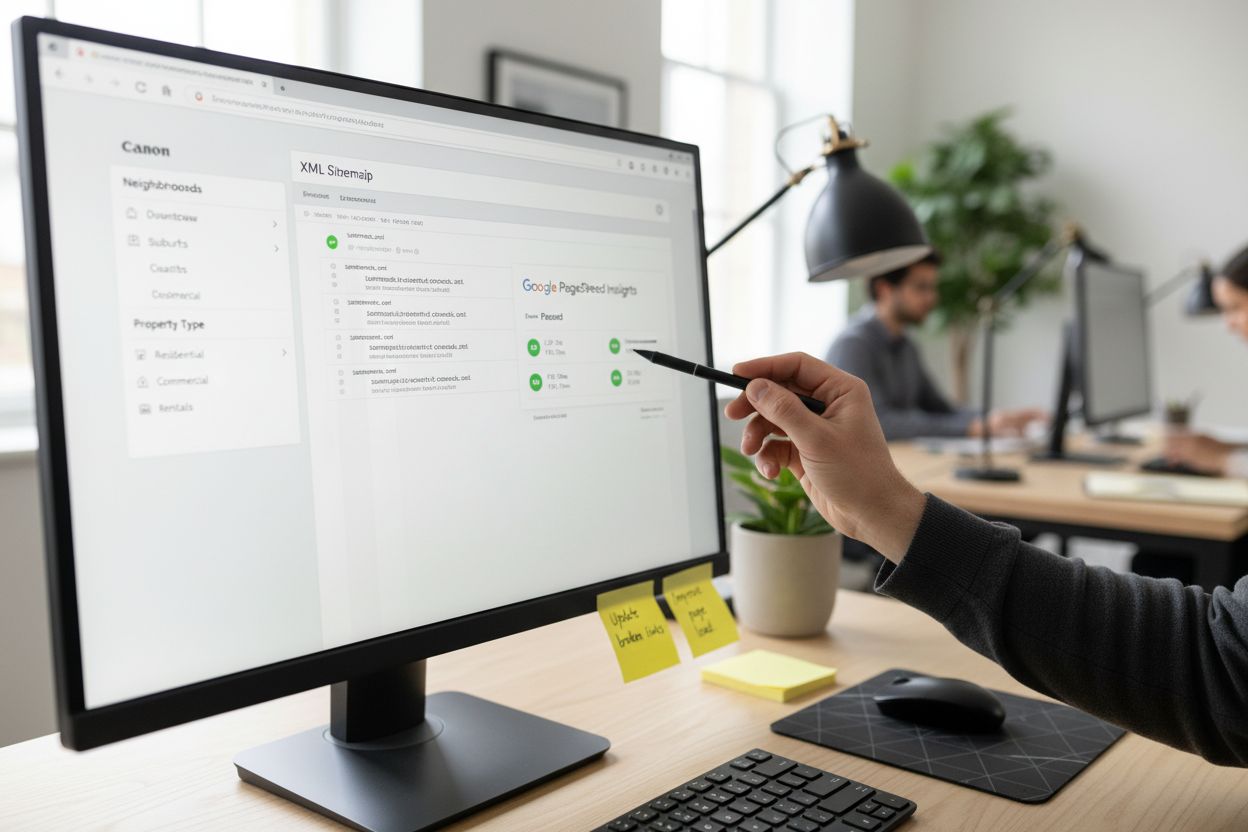
According to research from Search Engine Journal, conducting an SEO audit is critical for identifying areas of improvement in site structure. Start by examining your website’s core technical elements like XML sitemaps, robots.txt, page titles, headings, alt tags, and URL structures.
Focus on creating a logical and intuitive website hierarchy. Group your property listings and content into clear categories. For real estate websites, this might mean organizing by property type, location, price range, or buyer demographic. Ensure that each page is no more than three clicks away from your homepage.
Improving site performance is crucial for SEO success. As research from Promodo indicates, Core Web Vitals play a significant role in search rankings. Pay attention to:
- Largest Contentful Paint (LCP): Aim for load times under 2.5 seconds
- Interaction to Next Paint (INP): Ensure quick page responsiveness
- Cumulative Layout Shift (CLS): Maintain visual stability during page load
Pro Tip: Use Google PageSpeed Insights to diagnose and fix performance issues that could hurt your search rankings.
Check and fix broken links regularly. A seamless user experience signals to search engines that your website is well maintained and trustworthy. Use tools like Screaming Frog or Google Search Console to identify and resolve any link issues.
In the next step, you will learn how to create high quality content that complements your optimized website structure.
Step 3: Create High-Quality, Suburb-Focused Content
Creating suburb-focused content is your pathway to connecting with local home buyers and establishing your real estate expertise. You will learn how to craft compelling neighborhood content that attracts and engages your target audience.
Start by understanding the unique characteristics of each suburb you are targeting. Go beyond basic property listings and create in depth content that provides real value to potential buyers. Learn from the 7 types of real estate content every agent should use to diversify your approach.
Develop comprehensive suburb guides that showcase local amenities, school districts, community highlights, and property market trends. Think like a buyer and answer questions they would naturally ask. What makes this neighborhood special? What are the best local cafes? How are property values changing?
Incorporate storytelling into your content. Instead of just listing facts, create narratives that help potential buyers imagine living in the neighborhood. Share stories about local community events, recent development projects, or interesting historical facts about the area.
Your content should cover multiple formats to keep readers engaged:
- Neighborhood market reports
- Local school and infrastructure insights
- Community event calendars
- Property investment potential
- Local business and lifestyle highlights
Pro Tip: Use high quality local images and maps to make your content more visually appealing and informative.
Consistently update your content to reflect current market conditions and local changes.
This signals to search engines that your website provides current and relevant information.
In the next step, you will learn how to optimize your content for local search engine rankings.
Step 4: Enhance Google Business Profile for Local Impact
Your Google Business Profile is a powerful tool for attracting local real estate clients and improving your search visibility. You will learn how to optimize this critical digital asset to stand out in local search results.
According to research from TopOnSeek, optimizing your Google Business Profile requires careful attention to multiple elements. Start by ensuring your Google Business Profile optimization includes completely accurate NAPW details (Name, Address, Phone, Website).
Complete every section of your profile with precise and engaging information. Upload high quality professional photos of your real estate team, office, and recent property listings. Include virtual tour videos and images that showcase your local market expertise. The more comprehensive and visually appealing your profile, the more potential clients will trust your brand.
Regularly update your profile with fresh content. Post about recent property sales, market insights, community events, and local real estate trends. These updates signal to Google that your business is active and relevant.
Key elements to focus on include:
Here’s a comparison of key actions for optimizing your Google Business Profile:
| Profile Element | Best Practices | SEO Impact |
|---|---|---|
| NAPW Details | Use accurate business name Address matches website Correct phone and website |
Ensures local trust Improves ranking signals |
| Images & Videos | Upload professional photos Share virtual tour videos |
Boosts engagement Increases client trust |
| Business Category & Description | Choose most relevant category Craft detailed service description |
Better local visibility Attracts target audience |
| Reviews & Responses | Encourage client reviews Reply promptly and professionally |
Demonstrates credibility Builds reputation |
| Content Updates | Post local property news Share market trends Highlight community events |
Signals business activity Keeps profile relevant |
| Service Area Info | Specify neighborhoods List all serviced suburbs |
Targets right audience Improves search accuracy |
- Accurate business category
- Detailed service descriptions
- High resolution images
- Client reviews and responses
- Current contact information
- Local service area specifics
Pro Tip: Respond to all client reviews professionally and quickly to demonstrate excellent customer service.
Verify your business location and maintain consistent information across all online platforms.
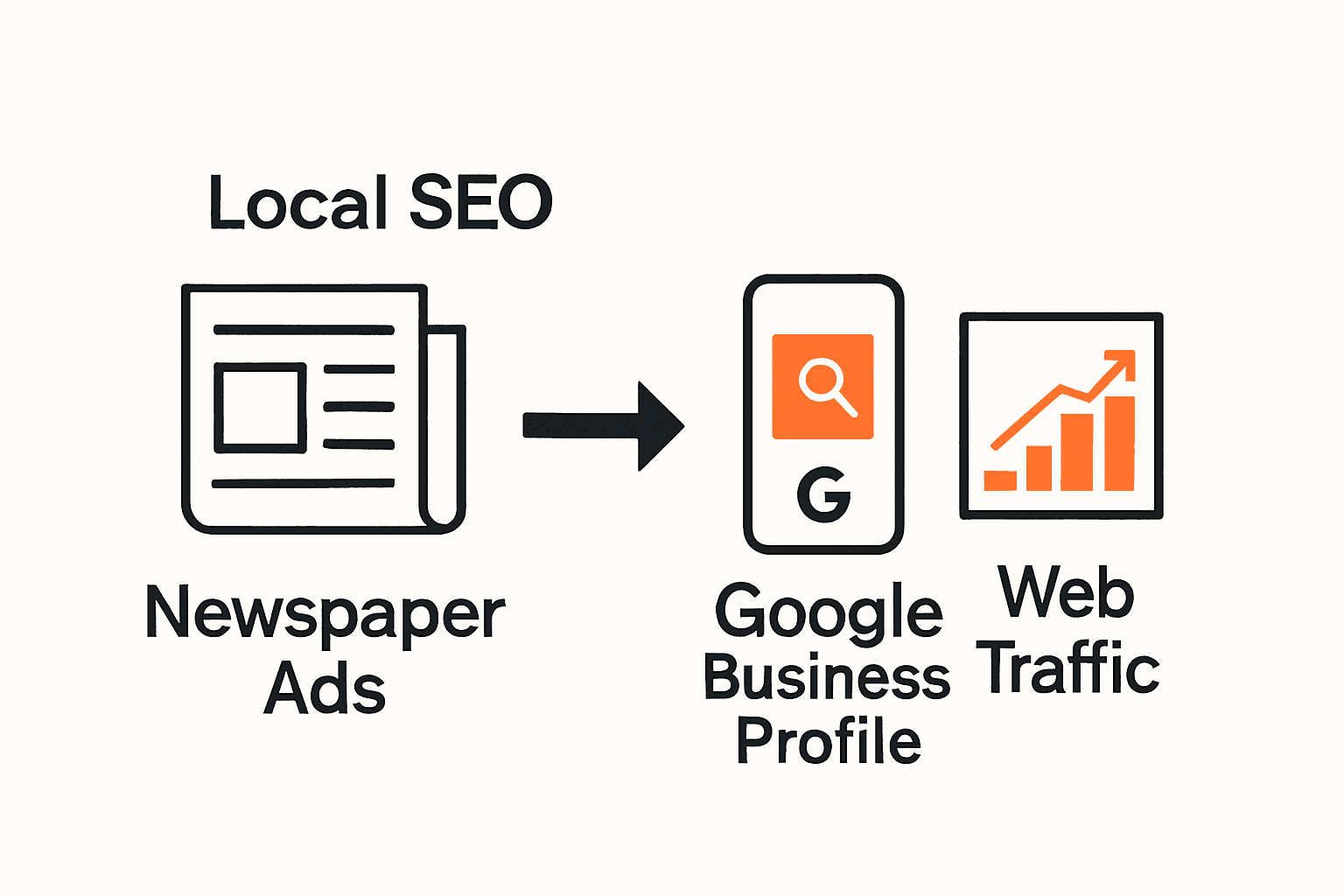 Inconsistent details can confuse potential clients and harm your local search rankings.
In the next step, you will learn advanced techniques for building local backlinks and increasing your online authority.
Step 5: Monitor Performance and Refine SEO Strategies
Constant monitoring and strategic refinement are the keys to maintaining strong local search rankings for your real estate business. You will learn how to track your SEO performance and make data driven improvements that keep you ahead of the competition.
Start by setting up comprehensive tracking using Google Analytics 4 and Search Console. Learn from the key performance indicators that matter most for real estate websites. According to research from Search Engine Journal, these tools help you understand critical metrics like website traffic, user behavior, and search ranking performance.
Focus on analyzing specific metrics that impact your real estate SEO strategy:
- Organic search traffic volume
- User engagement time
- Bounce rates for property listing pages
- Conversion rates from search to contact form submissions
- Top performing keywords and landing pages
- Mobile versus desktop user interactions
Conduct a monthly SEO audit to identify areas for improvement. Look for opportunities to enhance page speed, fix broken links, and optimize content based on user behavior patterns. Pay special attention to mobile friendliness and page load times.
Pro Tip: Set up custom dashboards in Google Analytics to track real estate specific metrics more efficiently.
Remember that SEO is an ongoing process. What works today might need adjustment tomorrow. Stay flexible and willing to experiment with new strategies based on your performance data.
In the final step, you will learn how to integrate these insights into a comprehensive local SEO approach for your real estate business.
Ready to Outrank Your Local Real Estate Rivals?
Struggling to turn neighborhood SEO tips into real results? Whether you feel stuck researching keywords that are not bringing buyers or frustrated by average Google rankings, you are not alone. This article showed that real estate agents need suburb-focused content, smart website structure, and a strong Google Business Profile to win local customers. But connecting all these steps can be complex and time-consuming.
Stop losing clients to competitors who appear first in local searches. At Content Charlie, we do the heavy lifting for you. Let us help you rank for targeted keywords, write suburb guides that attract the right buyers, and manage your SEO updates in line with the best practices covered here. Visit Content Charlie now and discover how easy it is to boost your local profile, capture more leads, and become the go-to real estate expert in your area. Start getting found by the customers who are searching for you today.
Frequently Asked Questions
How can I perform local keyword research for my real estate business?
Start by thinking like a home buyer and use tools to identify location-specific search terms that reflect buyer intent. Focus on long-tail keywords like “3 bedroom homes for sale in [Neighborhood]” to attract targeted traffic. Assess and adjust your keyword list regularly to match market trends.
What is the best website structure for improving real estate SEO?
A logical website structure is essential for SEO success. Group your property listings by type, location, and price range to ensure each page is easily accessible within three clicks from your homepage.
How can I create high-quality content to attract local home buyers?
Focus on developing comprehensive content that highlights suburb characteristics, local amenities, and market trends. Use engaging formats such as neighborhood guides and storytelling to connect with your audience. Update your content consistently to reflect current market conditions.
What elements should I include to optimize my Google Business Profile?
Ensure your profile has accurate NAPW details and engaging images of your team and properties. Regularly update your profile with posts about recent sales and local events to keep it active and relevant in search results.
How do I monitor my SEO performance and make improvements?
Set up tracking tools to analyze your website’s organic traffic, user engagement, and conversion rates. Conduct monthly audits to identify areas for enhancement, focusing on mobile friendliness and page speed to ensure optimal user experience.
What specific actions can I take to enhance my local search rankings in real estate?
Utilize long-tail keywords in your content, optimize your website structure, and improve your Google Business Profile. Additionally, create suburb-focused content and regularly assess your performance metrics to refine your strategies for better rankings.
Recommended

Real Estate Website Essentials: Complete Guide for Agents
Having the right Real Estate Website Essentials will have you ahead of 99% of other real estate website, if you implement the steps below.
Nearly 97 percent of home buyers search online for properties before reaching out to an agent. Your real estate website is your strongest tool for attracting new clients and keeping your business visible. Building a platform that combines stunning visuals, seamless searches, and mobile-friendly design can set you apart in a crowded market, creating a smoother path from browsing to closed deals.
Key Takeaways
| Point | Details |
|---|---|
| Core Features | Effective real estate websites must include advanced property search tools, high-quality visual content, lead generation mechanisms, and trust signals to convert visitors into clients. |
| Local SEO Importance | Local SEO strategies are vital for enhancing visibility, involving consistent business citations, structured data markup, and geographic keyword targeting to attract potential clients within specific areas. |
| Lead Conversion Tools | Implementing technologies like IDX lead tracking, email drip campaigns, and behavior analytics can significantly improve lead capture and nurture strategies on real estate websites. |
| Accessibility Compliance | Ensuring websites meet digital accessibility standards is essential not only for legal compliance but also for fostering an inclusive experience for all potential clients. |
Table of Contents
- Defining Real Estate Website Essentials
- Core Features Every Real Estate Website Needs
- SEO Requirements For Local Real Estate Search
- Lead Generation And Conversion Strategies
- Legal Compliance And Accessibility Standards
- Common Website Mistakes To Avoid
Defining Real Estate Website Essentials
Your real estate website esentials are more than just a digital business card – it’s your 24/7 online sales representative that works harder than you ever could. According to AgentFire, successful agent websites combine professional visual branding with strategic digital tools that convert casual browsers into serious clients.
The core essentials of a powerful real estate website revolve around several critical features:
- Property Search Functionality: Advanced filters for location, price, and bedrooms
- Visual Content: High-quality property photos, virtual tours, neighborhood videos
- Lead Generation: Accessible contact forms, email capture mechanisms
- Trust Signals: Client testimonials, third-party reviews, professional credentials
Mobile performance isn’t just a bonus – it’s mandatory. According to PropertyEasy, your website must deliver a seamless experience across devices. This means lightning-fast loading times, stable layouts, and responsive design that adapts to smartphones, tablets, and desktops without losing visual appeal or functionality.
Beyond basic features, modern real estate websites leverage sophisticated tools like AI-powered content creation, visitor behavior analytics, and integrated CRM systems. These technologies transform your website from a passive information portal into an active lead-generation machine that works continuously to expand your client base and demonstrate your local market expertise.
Core Features Every Real Estate Website Needs
Building a high-performance real estate website requires more than just aesthetics – it demands strategic functionality that converts visitors into clients. According to AgentFire, successful websites blend professional design with advanced technological capabilities.
The foundational features every real estate website must include are:
- Advanced Property Search: Robust filtering by location, price, bedrooms, amenities
- Multimedia Showcase: High-resolution property images, 360-degree virtual tours
- Mobile Responsiveness: Seamless performance across smartphones, tablets, desktops
- Lead Capture Mechanisms: Strategic contact forms, email signup prompts
- Trust Signals: Client testimonials, professional credentials, third-party reviews
Conversion optimization goes beyond basic website elements. Modern websites integrate sophisticated tools like visitor behavior tracking, AI-powered content generation, and automated email drip campaigns. According to PropertyEasy, these technologies transform your digital presence from a static brochure into an active client acquisition engine.
The key is creating real estate website essentials that doesn’t just display properties, but provides an immersive, interactive experience that guides potential clients through their home-searching journey. This means fast loading times, intuitive navigation, compelling visual storytelling, and clear pathways to connect with you as a trusted local real estate professional.
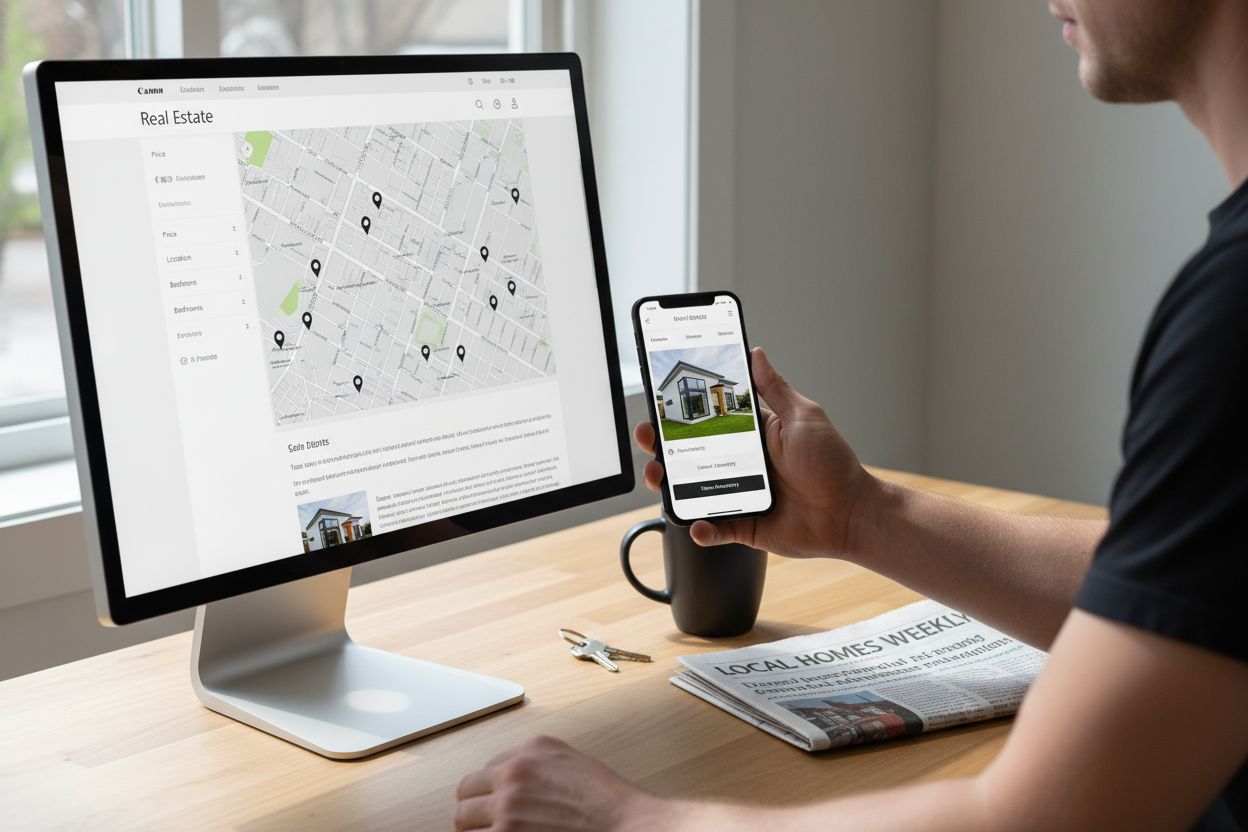
Here’s a comparison of essential real estate website features:
| Feature | Purpose | Examples |
|---|---|---|
| Property Search | Helps users find suitable listings | Advanced filters Map view |
| Visual Content | Boosts engagement and trust | High-res photos Virtual tours |
| Lead Generation | Captures potential client info | Contact forms Email signups |
| Trust Signals | Builds credibility | Testimonials Third-party reviews |
| Mobile Responsiveness | Ensures seamless device experience | Fast load Responsive layout |
| Behavior Analytics | Tracks and improves site performance | Visitor heatmaps Funnel tracking |
SEO Requirements for Local Real Estate Search
Local SEO is the secret weapon that transforms your real estate website from invisible to irresistible in search results. Understanding why local SEO matters begins with recognizing that potential clients search for properties and agents within specific geographic boundaries.
According to Search Engine Journal, successful local SEO for real estate professionals hinges on several critical strategies:
- Consistent Business Citations: Accurate listings across Google Business Profile and local directories
- Structured Data Markup: Implementing schema for RealEstateAgent, Offer, and Residence categories
- Hyper-Local Content: Creating neighborhood-specific pages and property guides
- Geographic Keyword Targeting: Incorporating location-specific terms naturally
The most effective local SEO approach goes beyond basic optimization. According to LSEO, modern real estate agents must develop content clusters that target specific neighborhoods, leverage social media channels for content distribution, and actively seek backlinks from local influencers and publications.
Your ultimate goal is to become the go-to digital resource for local property information.
This means creating content that answers specific local buyer questions, showcasing your deep understanding of neighborhood dynamics, and ensuring your website speaks directly to the unique needs of potential clients in your specific market area.
Lead Generation and Conversion Strategies
Transforming website visitors into potential clients requires a strategic approach that goes beyond simple contact forms. Types of real estate leads vary, and your digital strategy must be sophisticated enough to capture and nurture each unique visitor’s interest.
According to AgentFire, advanced lead generation technologies now offer powerful tools for real estate professionals:
- IDX Lead Tracking: Monitor visitor interactions and property interests
- Email Drip Campaigns: Automated, personalized communication sequences
- CRM Integration: Seamless contact management and follow-up tracking
- AI Content Generation: Dynamic, targeted messaging based on user behavior
- Behavior Analytics: Heat mapping and funnel tracking to optimize conversion paths
Visitor trust is the cornerstone of successful lead conversion. As PropertyEasy highlights, this means prominently featuring compelling testimonials, high-quality property visuals, and virtual tours that demonstrate your professionalism and local market expertise.
The most effective websites create a frictionless journey from initial curiosity to client engagement.
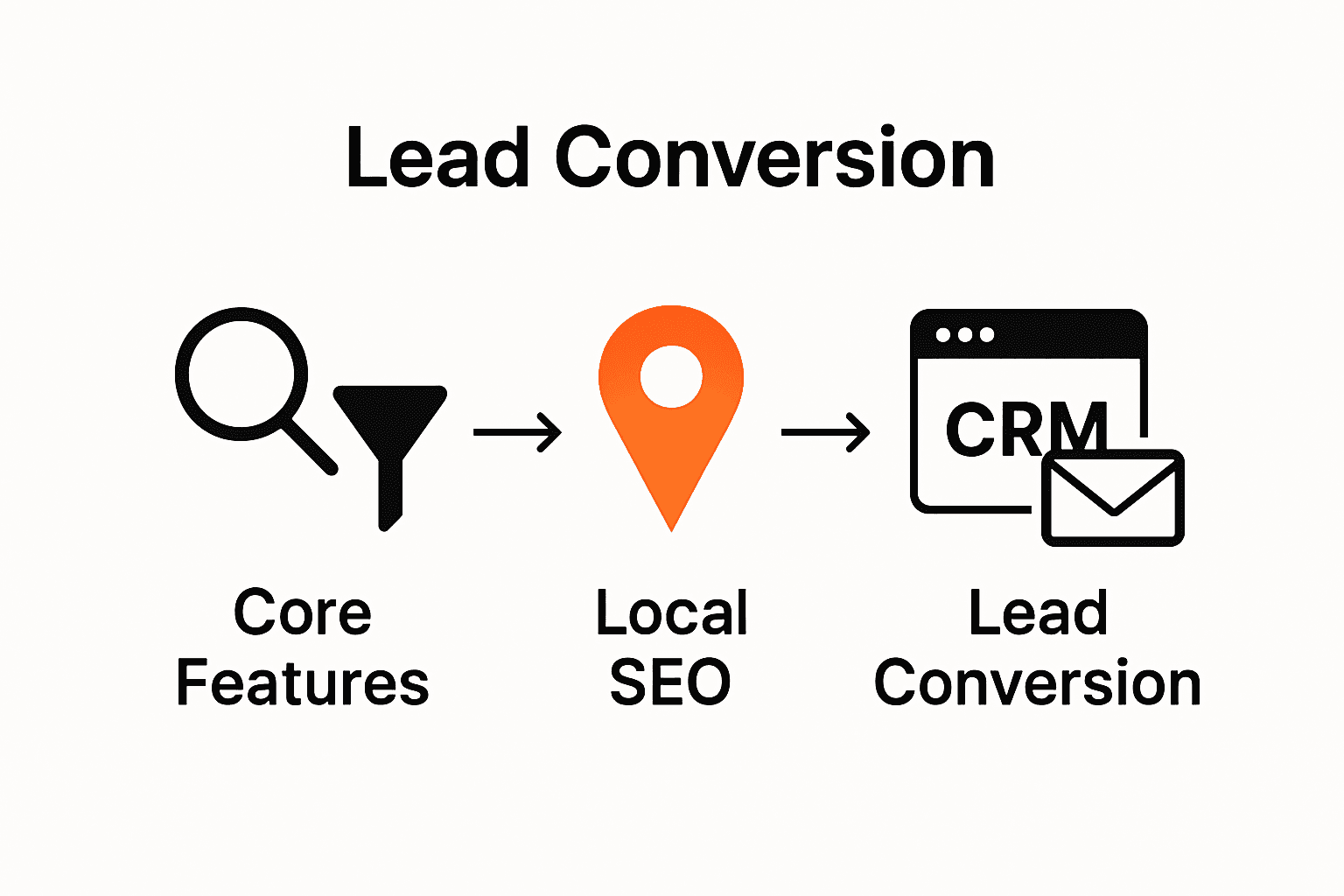 This means intuitive design, crystal-clear contact information, and strategic calls-to-action that guide potential clients exactly where they want to go – closer to finding their perfect property with your expert assistance.
Legal Compliance and Accessibility Standards
Digital accessibility is no longer optional for real estate websites – it’s a legal and ethical imperative. Ensuring your online platform is inclusive means creating an experience that welcomes every potential client, regardless of their physical abilities or technological constraints.
According to Wikipedia, the Web Content Accessibility Guidelines (WCAG) 2.2 provide a comprehensive framework for creating accessible digital experiences. These internationally recognized standards focus on four fundamental principles:
- Perceivable: Information must be presentable to users in ways they can perceive
- Operable: User interface and navigation must be functional for all users
- Understandable: Content and operation must be clear and comprehensible
- Robust: Content must be compatible with current and future assistive technologies
Real estate websites have unique challenges in meeting these standards. This means ensuring your property listings, contact forms, search functions, and multimedia content are fully navigable by screen readers, compatible with keyboard-only navigation, and designed with sufficient color contrast and text sizing.
Beyond technical compliance, accessible design demonstrates your commitment to inclusivity. It signals to potential clients that you value every individual’s experience, understand diverse user needs, and are committed to providing a welcoming, professional digital environment that respects and accommodates all users.
Common Website Mistakes to Avoid
Website design can make or break your real estate digital presence. One misstep could mean losing potential clients before they even understand what you offer. Lead generation ideas for real estate start with avoiding critical digital pitfalls that undermine your professional image.
According to Type North, the most common website mistakes that sabotage real estate professionals include:
- Mobile Unresponsiveness: Sites that don’t adapt to smartphone screens
- Cluttered Homepage: Overwhelming visitors with too much information
- Weak Calls-to-Action: Unclear or missing contact pathways
- Low-Quality Property Listings: Incomplete or unappealing property descriptions
- Slow Page Loading: Performance that frustrates potential clients
- Neglected Local SEO: Invisible in local property search results
Navigation complexity is another silent killer of user experience. Your website should feel intuitive, with clear menus, logical property search functions, and streamlined paths to contact you. Think of your website as a digital storefront – it should invite exploration, not create confusion.
The most successful real estate websites transform technical requirements into storytelling opportunities. This means creating a digital experience that’s not just functional, but engaging – where every pixel communicates your professionalism, local expertise, and commitment to helping clients find their dream property.
Ready to Transform Your Real Estate Website Into a Local Lead Magnet?
You read about the must-have features for a real estate website, but bringing those essentials to life is a challenge. Many agents struggle with weak property listings, missing trust signals, and a website that just does not show up when locals search for homes or advice. Without powerful copywriting and suburb-specific SEO, you risk falling behind competitors who connect with buyers and sellers right where they live.
At Content Charlie, we turn your knowledge into high-converting web pages, suburb guides, and blog posts that climb Google results. Our team specializes in conversion optimization and local SEO, giving your site mobile-first performance, powerful lead generation, and content that earns trust in your neighborhood. If you want to stand out as the top agent in your suburb, act now and let us create a real estate website that converts visitors into lifelong clients. Start growing your local visibility with Content Charlie today.
Frequently Asked Questions
What are the essential features of a real estate website?
The essential features of a real estate website include advanced property search functionality, high-quality visual content, lead generation tools, trust signals like testimonials, and mobile responsiveness to ensure accessibility across devices.
How can local SEO impact my real estate website’s visibility?
Local SEO helps improve your real estate website’s visibility by optimizing for specific geographic keywords, ensuring consistent business citations, and creating hyper-local content that resonates with local buyers, thereby attracting more relevant traffic to your site.
What strategies can I use for effective lead generation on my real estate website?
Effective lead generation strategies include implementing IDX lead tracking, using email drip campaigns for nurturing leads, integrating customer relationship management (CRM) systems, and deploying behavior analytics to understand visitor interactions and optimize conversions.
How can I ensure my real estate website is accessible to all users?
To ensure your real estate website is accessible, adhere to the Web Content Accessibility Guidelines (WCAG) by making information perceivable, operable, understandable, and robust, ensuring compatibility with assistive technologies and providing a user-friendly experience for individuals with disabilities.
Recommended
- 7 Types of Real Estate Content Every Agent Should Use – Content Charlie
- Greg Reed, Author at Content Charlie
- 7 Essential Social Media Tips for Agents – Content Charlie
- 7 Essential Types of Real Estate Leads Agents Must Know – Content Charlie
- SEO for Real Estate Agencies: Simple Strategies to Grow Your Business
- Website Design Guide for Builders: Create a Winning Website – ResponsiveWebsiteDesign

7 Essential Types of Real Estate Leads Agents Must Know
Did you know that nearly 64 percent of home sellers choose their agent based on a referral or personal connection? In the fast-paced world of real estate, finding leads who actually trust you can make all the difference. Whether you want to stand out in your market or build a reliable client base, mastering several lead generation strategies opens the door to genuine relationships, stronger reputations, and more closed deals.
Quick Summary
| Takeaway | Explanation |
|---|---|
| 1. Build trust through referral leads | Past clients can become your most effective marketing tool by recommending you to others. |
| 2. Optimize your online presence | Use SEO and targeted content to attract potential buyers actively searching for properties. |
| 3. Maximize open house effectiveness | Treat open houses as lead generation events by engaging visitors and providing valuable information. |
| 4. Utilize social media for connections | Share local market insights and engage authentically to cultivate leads through social platforms. |
| 5. Leverage community relationships | Participate in local events and initiatives to position yourself as a trusted community resource, generating genuine leads. |
Table of Contents
- Referral Leads: Building Trust With Past Clients
- Online Leads: Attracting Buyers From Search Engines
- Open House Leads: Engaging Local Home Seekers
- Social Media Leads: Connecting With Digital Audiences
- Direct Mail Leads: Reaching Interested Local Residents
- FSBO And Expired Listing Leads: Spotting Hidden Opportunities
- Network And Community Leads: Leveraging Local Relationships
1. Referral Leads: Building Trust with Past Clients
Referral leads represent the gold standard of real estate prospecting. These leads come from people who already know, trust, and recommend you based on previous positive experiences.
When past clients become your brand ambassadors, they transform your business from a transactional service into a trusted relationship network. Successful referral strategies turn satisfied homebuyers and sellers into your most powerful marketing tool. Their personal recommendations carry significantly more weight than any advertisement because they emerge from genuine experience.
To cultivate referral leads effectively, you need a systematic approach that keeps you connected with past clients long after the sale closes. Start by creating a robust follow up system that provides ongoing value. This means sending personalized property market updates, birthday cards, home maintenance tips, and occasional check in messages that demonstrate you care about their long term investment.
Your referral generation strategy should include:
- Maintaining a detailed client database with contact information
- Sending quarterly neighborhood market reports
- Creating memorable post sale experiences
- Offering homeowner appreciation events
- Providing resources that extend beyond the initial transaction
Professional real estate agents understand that each successful client interaction becomes a potential future referral. By consistently delivering exceptional service and staying top of mind, you transform one sale into multiple future opportunities. Learn more about generating quality real estate leads and turning your past clients into your most reliable lead source.
Remember: In real estate, your reputation travels faster and further than any marketing campaign. Nurture your relationships, and the referrals will follow.
2. Online Leads: Attracting Buyers from Search Engines
Online leads represent the modern frontier of real estate prospecting where potential clients find you through strategic digital presence. These leads arrive through search engines when buyers are actively hunting for properties or real estate guidance.
Search engine optimization transforms your online visibility into a powerful lead generation machine. By understanding how potential clients search for properties and real estate services online, you can position yourself precisely where they are looking. This means creating content that answers their specific questions, speaks to their needs, and appears prominently in local search results.
To capture online leads effectively, you need a multifaceted digital strategy. Your approach should combine website optimization, content marketing, and targeted local search tactics. This means developing suburb specific property guides, creating informative blog posts about local market trends, and ensuring your Google Business Profile is completely filled out with accurate information.
Your online lead generation strategy should include:
- Building a mobile friendly website
- Creating location specific content
- Optimizing for local search keywords
- Developing comprehensive property listings
- Maintaining active social media profiles
Professional agents understand that online leads require immediate and personalized attention. When someone finds you through a search engine, they expect quick responsiveness and expert knowledge. Explore advanced lead generation ideas for real estate professionals to stay ahead of the competition and turn digital interactions into successful client relationships.
Remember: In the digital age, your online presence is your most powerful prospecting tool. Make every search count.
3. Open House Leads: Engaging Local Home Seekers
Open house events represent a powerful face to face opportunity for real estate agents to connect directly with potential buyers and sellers. These in person interactions transform generic property listings into personal experiences that spark genuine interest and connection.
Strategic open house management goes far beyond simply unlocking a property and waiting for visitors. Successful agents treat these events as sophisticated lead generation platforms where every interaction is an opportunity to build relationships and showcase professional expertise. Your approach should combine meticulous property presentation with proactive engagement techniques that make potential buyers feel welcomed and informed.
To maximize open house lead generation, you need a comprehensive strategy that starts before the event and continues well after visitors leave. This means creating compelling marketing materials, preparing the property to look its absolute best, and developing a systematic approach to capturing visitor information and follow up communication.
Your open house lead generation strategy should include:
- Creating professional property marketing materials
- Preparing a detailed sign in process
- Training staff on engagement techniques
- Developing immediate follow up protocols
- Capturing detailed visitor contact information
Professional agents recognize that open houses are more than just property showings. They are opportunities to demonstrate market knowledge, build trust, and create memorable experiences. Discover innovative strategies for hosting successful open houses that transform casual visitors into serious potential clients.
Remember: In real estate, personal connection trumps digital distance. Make every open house an opportunity to showcase your professionalism and expertise.
4. Social Media Leads: Connecting with Digital Audiences
Social media leads represent a dynamic and increasingly critical channel for real estate professionals to connect with potential clients. These digital platforms transform traditional networking into an interactive landscape where engagement happens instantly and globally.
Strategic social media marketing goes beyond posting property listings. Successful agents understand that social platforms are relationship building ecosystems where trust professional expertise and local market knowledge can be authentically demonstrated. Your social media presence should tell a compelling story about your understanding of local real estate trends neighborhood insights and client success experiences.
To generate quality social media leads, you need a targeted approach that combines consistent content creation visual storytelling and genuine audience interaction. This means sharing valuable local market information creating video tours of properties posting neighborhood spotlight features and responding promptly to comments and inquiries.
Your social media lead generation strategy should include:
- Creating consistent professional content
- Utilizing platform specific features like Instagram stories
- Sharing local market insights and trends
- Showcasing client success stories
- Engaging authentically with community conversations
Professional agents recognize that social media is not just about broadcasting information but creating meaningful connections. Explore advanced social media strategies for real estate professionals that transform digital interactions into genuine client relationships.
Remember: In the digital age your social media presence is your virtual storefront. Make every post count.
5. Direct Mail Leads: Reaching Interested Local Residents
Direct mail leads represent a targeted and personal approach to real estate marketing that cuts through digital noise. These physical communications provide a tangible connection with potential clients in specific neighborhoods or market segments.
Strategic direct mail marketing transforms traditional mailbox interactions into sophisticated lead generation opportunities. Successful agents understand that direct mail is not about volume but precision targeting. Your mail campaigns should speak directly to specific homeowner demographics including potential sellers neighborhood specific property value insights and tailored market information.
To generate quality direct mail leads, you need a data driven approach that combines precise targeting compelling design and valuable content. This means segmenting your mailing lists creating personalized communication pieces and providing genuine value beyond typical real estate advertising. Your direct mail pieces should feel like a helpful resource rather than a sales pitch.
Your direct mail lead generation strategy should include:
- Developing neighborhood specific market reports
- Creating visually appealing professional design
- Segmenting mailing lists by property type and potential interest
- Including clear call to action elements
- Tracking response rates and campaign performance
Professional agents recognize that direct mail requires thoughtful strategy and consistent execution. Explore innovative marketing techniques for real estate professionals that transform traditional communication methods into lead generation powerhouses.
Remember: In real estate marketing personal touch still matters. Make every piece of mail an opportunity to demonstrate your expertise.
6. FSBO and Expired Listing Leads: Spotting Hidden Opportunities
FSBO (For Sale By Owner) and expired listing leads represent unique opportunities for strategic real estate agents who understand the challenges homeowners face when trying to sell independently. These leads are often overlooked but can be incredibly valuable when approached with empathy and professional expertise.
Strategic lead conversion in this segment requires understanding the underlying motivations of homeowners who have either attempted to sell independently or struggled with previous listing attempts. Most FSBO sellers are not rejecting professional help they are simply seeking a more cost effective and controlled selling process. Expired listing owners are typically frustrated with their previous marketing efforts and open to a fresh professional perspective.
To successfully approach FSBO and expired listing leads, you need a nuanced strategy that demonstrates your value proposition. This means preparing targeted communication that addresses their specific pain points shows market expertise and offers a clear path to successful property sale. Your approach should combine market data professional insights and a consultative mindset.
Your FSBO and expired listing lead strategy should include:
- Developing personalized market analysis reports
- Creating compassionate outreach communication
- Offering free property valuation consultations
- Demonstrating proven marketing capabilities
- Highlighting your local market expertise
Professional agents recognize that these leads require a delicate balance of empathy and expertise. Explore advanced lead generation tactics for real estate professionals that transform challenging leads into successful client relationships.
Remember: Every rejected listing and independent sale attempt is an opportunity for the right agent with the right approach.
7. Network and Community Leads: Leveraging Local Relationships
Network and community leads represent the most authentic and sustainable form of lead generation in real estate. These leads emerge from genuine relationships professional connections and active community involvement that position you as a trusted local expert.
Strategic relationship building transforms traditional networking from transactional interactions into a comprehensive lead generation ecosystem. Successful agents understand that community leads are not just about collecting business cards but creating meaningful connections that demonstrate your commitment to the local area. Your network becomes a living referral system that continuously generates high quality leads through trust and reputation.
To cultivate network and community leads effectively, you need a multifaceted approach that goes beyond traditional professional networking. This means engaging with local business associations participating in community events supporting local initiatives and creating genuine value for your professional and personal network. Your goal is to become more than just a real estate agent you become a community resource.
Your network and community lead generation strategy should include:
- Joining local business and professional associations
- Sponsoring community events and youth programs
- Creating valuable local market content
- Supporting local charities and initiatives
- Building relationships with complementary professionals
Professional agents recognize that community leadership is the most powerful lead generation tool. Explore advanced strategies for community engagement that transform your professional network into a robust lead generation machine.
Remember: In real estate your reputation travels further than any advertisement. Invest in relationships and the leads will follow.
Below is a comprehensive table summarizing key lead generation strategies for real estate professionals as discussed in the article.
| Strategy | Implementation | Expected Results |
|---|---|---|
| Referral Leads | Maintain client database; Send updates, cards, and tips; Host appreciation events. | Build trust; Turn clients into brand ambassadors; Generate reliable referrals. |
| Online Leads | Optimize website; Create location-specific content; Use social media. | Improve visibility; Attract active buyers; Convert searches into leads. |
| Open House Leads | Prepare property; Create marketing materials; Follow-up with visitors. | Engage local buyers; Build relationships; Create memorable experiences. |
| Social Media Leads | Consistent content creation; Use platform features; Engage with community. | Showcase expertise; Connect with audiences; Drive digital interactions. |
| Direct Mail Leads | Targeted mailing lists; Design appealing content; Track response rates. | Reach local residents; Provide tangible connections; Demonstrate expertise. |
| FSBO & Expired Leads | Personalized outreach; Offer valuations; Highlight marketing skills. | Convert challenging leads; Build trust; Provide professional solutions. |
| Network & Community Leads | Join local associations; Sponsor events; Support local initiatives. | Leverage local connections; Establish as a trusted expert; Foster sustainable leads. |
Make Every Real Estate Lead Work for You—Amplify Your Results with Content Charlie
Are you struggling to turn online leads into loyal clients or watching valuable referral opportunities slip through the cracks? The article highlights just how challenging it can be to attract and convert the seven essential types of real estate leads. You know each lead source—referrals, search visibility, open house traffic, and social media engagement—demands its own strategy. But without the right local content and SEO approach, you could disappear from the search results when it matters most.
At Content Charlie, we bridge that gap. We create suburb-focused guides, persuasive web copy, and lead-generation-optimized blog content that help real estate agents dominate in local Google results. Imagine your Google Business Profile appearing at the top of searches or your open house invites getting more clicks. Paired with proven social media content strategies, our tailored copy ensures you capture every potential client searching in your area.
Ready to build lasting trust and capture more local leads before your competitors do? Visit Content Charlie now to see how our custom real estate copywriting can help you become the first choice for home buyers and sellers. Get started today while local demand is highest.
Frequently Asked Questions
What are referral leads in real estate?
Referral leads are potential clients generated through recommendations from past clients who trust you based on their previous positive experiences. Build strong relationships by following up with past clients and providing them with market updates and helpful resources to encourage more referrals.
How can I attract online leads through my website?
You can attract online leads by optimizing your website for search engines, ensuring it’s mobile-friendly, and creating content that answers potential clients’ questions. Focus on local search keywords and develop relevant property guides to enhance your chances of visibility in search results.
What strategies should I use for successful open houses?
To ensure successful open houses, create engaging marketing materials and actively interact with visitors to make them feel welcomed. Prepare a sign-in process to capture visitor information and follow up with them after the event to nurture potential leads.
How can social media help me generate real estate leads?
Social media can generate leads by showcasing your expertise and engaging with your audience through valuable content and interactions. Create consistent, professional posts that feature local market insights, client success stories, and property tours to build trust and attract followers.
What should I include in my direct mail campaigns for real estate?
In your direct mail campaigns, include neighborhood-specific market reports and visually appealing designs that resonate with your target audience. Segment your mailing lists to tailor your messages based on homeowner demographics and ensure each piece feels like a helpful resource rather than a sales pitch.
How do I approach FSBO and expired listing leads effectively?
To effectively approach FSBO and expired listing leads, develop a compassionate outreach strategy that addresses their specific challenges. Provide personalized market analysis and offer free consultations to demonstrate your expertise and show them the value of professional assistance.
Recommended
- lead generation ideas for real estate Archives – Content Charlie
- lead generation real estate Archives – Content Charlie
- Greg Reed, Author at Content Charlie
- 7 Types of Real Estate Content Every Agent Should Use – Content Charlie
- SEO for Real Estate Agencies: Simple Strategies to Grow Your Business
- 7 Essential Types of Real Estate Signs to Consider –

Why Use Blog Content: Essential Guide for Real Estate
Nearly 80 percent of homebuyers start their search online, yet most real estate agents miss out by only sharing property listings. Modern buyers crave local market insights, unique neighborhood details, and personal stories that help them make smarter decisions. Strong blog content positions you as a trusted expert, builds credibility, and turns curious visitors into loyal clients who see you as their go-to resource in the community.
Key Takeaways
| Point | Details |
|---|---|
| Strategic Importance of Blogging | Real estate blogging serves as a vital channel for establishing trust and authority through valuable local insights and market analyses. |
| Diverse Content Types | Utilizing various content strategies, such as market trend reports and neighborhood guides, enhances engagement and showcases expertise. |
| Boosting Local SEO | Blogging improves digital visibility by targeting hyperlocal search queries, thus enhancing relevance and attracting potential clients. |
| Building Trust Through Authenticity | Consistent and relatable content that addresses client concerns helps establish you as a genuine advisor in the real estate journey. |
Table of Contents
- Defining Blog Content And Its Role
- Types Of Blog Content For Real Estate Agents
- How Blog Content Boosts Local Seo Rankings
- Building Trust And Authority With Blog Content
- Common Pitfalls When Using Blog Content
Defining Blog Content and Its Role
Blog content represents a strategic digital communication channel where real estate professionals share valuable insights, market analyses, and local property information to engage potential clients. Real estate blogging goes far beyond simple property listings – it’s about creating a comprehensive narrative that positions you as a local market expert.
According to Agent Ascension, blogging plays a crucial role by providing critical local market insights such as:
- Current property trends
- Pricing dynamics
- Market demand fluctuations
- Seasonal behavior patterns
These data-driven posts help establish your blog as an authoritative resource, building significant trust and credibility with potential clients. Search Engine Journal reinforces this perspective, highlighting that real estate blogs offer additional opportunities to target relevant keywords and showcase hyperlocal expertise.
At its core, blog content serves multiple strategic purposes for real estate professionals. It’s not just about information transmission – it’s about creating a compelling digital presence that demonstrates your deep understanding of local neighborhoods, market nuances, and client needs. By consistently producing high-quality, informative content, you transform your online platform from a simple listings site into a valuable community resource that attracts, educates, and ultimately converts potential buyers and sellers.
Pro Tip: Focus on creating content that answers real questions your potential clients are asking – about neighborhoods, market conditions, buying/selling processes, and local lifestyle insights.
Types of Blog Content for Real Estate Agents
Real estate agents have multiple blog content strategies to connect with potential clients and showcase their expertise. These content types range from informative market analyses to engaging personal storytelling, each serving a unique purpose in building trust and attracting potential buyers and sellers.
Here are the primary types of blog content real estate professionals can leverage:
Here’s a comparison of popular real estate blog content types and their primary benefits:
| Content Type | Key Focus | Main Benefit |
|---|---|---|
| Market Trend Reports | Data analysis Trends |
Establishes authority |
| Neighborhood Guides | Local insights Amenities |
Demonstrates hyperlocal expertise |
| Buyer Journey Stories | Personal narrative Emotion |
Builds trust and relatability |
| Process Explanations | Step-by-step Education |
Simplifies complex topics |
| Local Business Features | Community connections | Strengthens local relevance |
- Market Trend Reports: Detailed analyses of local property market conditions, price movements, and investment opportunities
- Neighborhood Guides: Comprehensive overviews of specific suburbs, highlighting local amenities, schools, lifestyle, and community features
Storytelling and Informative Content
Personal narrative blogs offer another powerful approach. Buyer journey stories that walk readers through successful property purchases, renovation challenges, or first-time homeowner experiences create emotional connections. These posts humanize your brand and demonstrate your understanding of client experiences.
Read our guide on content ideas for agents to explore more innovative ways of crafting compelling real estate blog content. By diversifying your content strategy, you transform your blog from a simple information platform into an engaging resource that potential clients will actively seek out and trust.

How Blog Content Boosts Local SEO Rankings
Local SEO represents a critical strategy for real estate agents looking to dominate neighborhood-specific search results. Blog content acts as a powerful mechanism for improving your digital visibility, allowing you to target hyperlocal search queries and demonstrate expertise in specific geographical areas.
Search Engine Journal highlights that publishing targeted neighborhood content can significantly enhance search engine relevance. By crafting blog posts that cover rich local details, agents can strategically incorporate valuable keywords and information such as:
- Neighborhood walkability scores
- Local school district information
- Cost of living comparisons
- Restaurant and amenity highlights
- Interviews with local business owners
Strategic Keyword Integration
Effective blog content goes beyond simple keyword stuffing. It’s about creating genuine, informative narratives that naturally incorporate location-specific terms. When you consistently produce high-quality, geographically targeted content, search engines recognize your website as a authoritative local resource.
Pro Strategy: Focus on creating in-depth, authentic content that answers real questions potential clients have about specific neighborhoods. This approach not only improves your SEO rankings but also establishes you as a trusted local market expert who truly understands the nuanced landscape of your service area.
Building Trust and Authority With Blog Content
Trust and authority are the cornerstones of successful real estate marketing, and blog content provides a powerful platform for establishing these critical qualities. By consistently sharing valuable, transparent, and insightful information, real estate agents can transform their online presence from a simple transactional platform into a trusted resource for potential clients.
Demonstrating Expertise Through Content
Building authority requires more than just listing properties. Your blog becomes a strategic tool to showcase:
- Deep local market knowledge
- Understanding of complex real estate processes
- Genuine commitment to client education
- Transparent insights into market trends
- Personal approach to client relationships
Learn more about building community trust and how consistent, high-quality content can position you as the go-to local real estate expert. The key is creating content that goes beyond surface-level information and provides genuine value.
Successful blog content connects with readers on an emotional and intellectual level. By addressing potential client concerns, explaining complex processes in simple terms, and sharing real-world insights, you demonstrate that you’re not just selling properties – you’re a trusted advisor who genuinely cares about helping clients navigate their real estate journey.
Pro Tip: Authenticity is your greatest asset. Share personal experiences, client success stories, and behind-the-scenes insights that humanize your brand and make potential clients feel like they already know and trust you before the first conversation.
Common Pitfalls When Using Blog Content
Real estate blog content can quickly become ineffective when agents fall into common strategic traps. Understanding these potential missteps is crucial for creating a blog that genuinely attracts and engages potential clients, rather than becoming another forgettable online resource.
Critical Mistakes to Avoid
Real estate professionals often encounter several recurring blog content challenges:
- Inconsistent Posting: Sporadic content publication that fails to build momentum or reader expectations
- Generic, Uninspired Writing: Bland posts that could apply to any location or agent
- Overly Sales-Driven Content: Aggressive marketing language that turns readers away
- Neglecting Local Specifics: Missing opportunities to showcase neighborhood expertise
- Poor SEO Optimization: Content that doesn’t strategically target relevant search terms
Learn more about compounding content strategies that can help you avoid these common pitfalls. The most successful real estate blogs create a narrative that feels personal, informative, and genuinely helpful.
The key is understanding that blog content is not about pushing immediate sales, but about building long-term relationships.
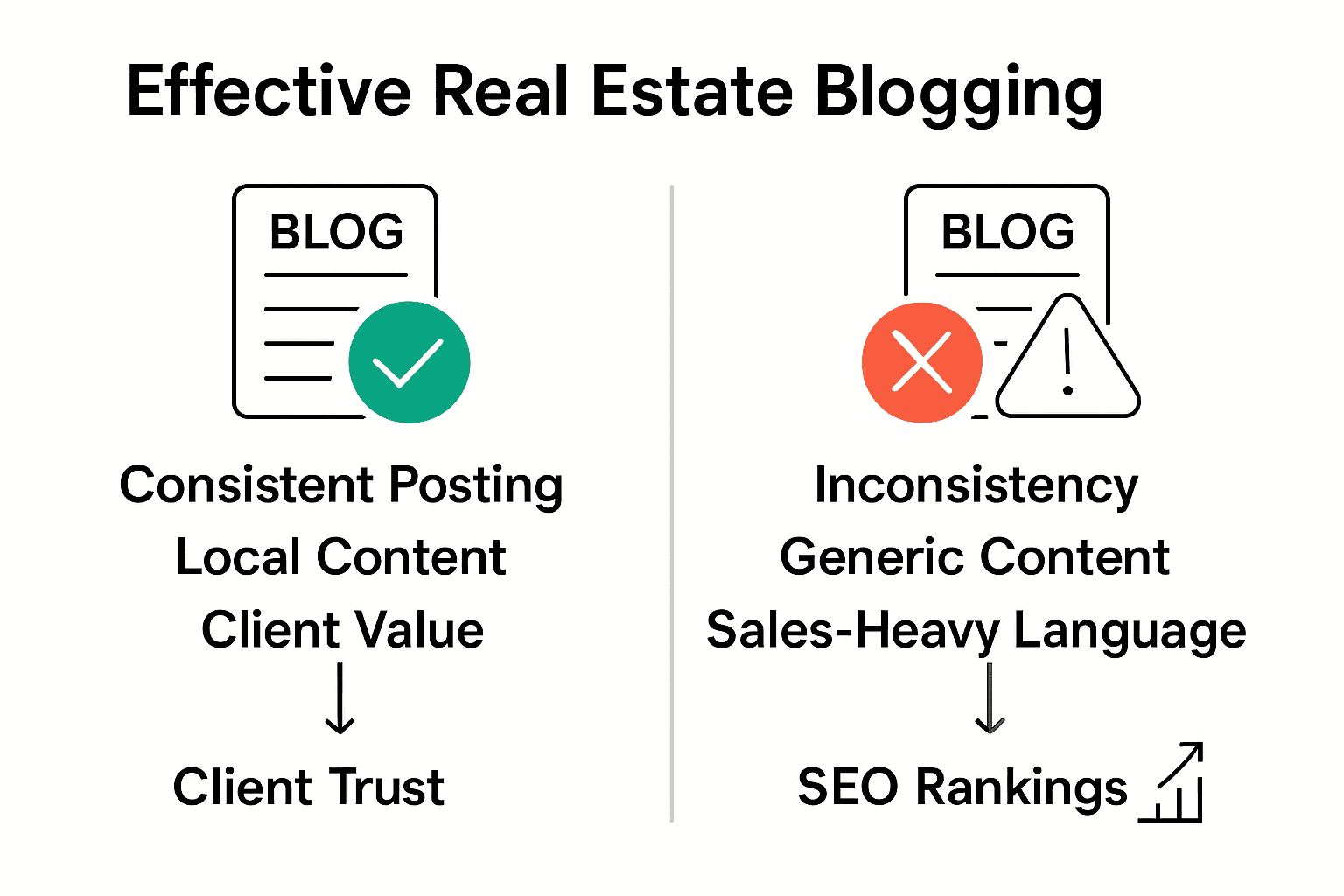 Potential clients want insights, understanding, and a sense that you truly know and care about their real estate journey. By focusing on education, transparency, and genuine value, you transform your blog from a potential liability into a powerful client attraction tool.
Pro Tip: Think of your blog as a conversation, not a billboard. Write as if you’re speaking directly to a client, addressing their real concerns, fears, and aspirations in the real estate process.
Turn Your Blog into a Real Estate Magnet — Let Content Charlie Guide You
Are you frustrated by your blog getting lost in the crowd or failing to connect with local buyers and sellers? The article highlighted how crucial it is to produce expert, neighborhood-focused content that goes beyond listings. Many agents struggle to build trust and authority online or waste hours publishing posts that do not move the needle for local SEO. If you recognize the challenges of inconsistent content, lack of local relevance, or missing out on suburb-level Google searches, you are not alone.
Start attracting ready-to-act clients sooner with Content Charlie. We specialize in local SEO-driven copywriting for real estate agents who want to get found first by local buyers and sellers. From suburb guides and blog articles that showcase your expertise to high-converting web pages that turn readers into leads, our tailored approach ensures your digital presence grabs attention and builds genuine community trust. Do not wait for your competition to dominate local searches while you fall behind. Visit Content Charlie to amplify your authority and become the go-to agent in your neighborhood now.
Frequently Asked Questions
What is the role of blog content for real estate professionals?
Blog content serves as a strategic channel for real estate professionals to share insights, market analyses, and local property information, establishing them as local market experts and building trust with potential clients.
How does blog content enhance local SEO rankings for real estate agents?
Blog content enhances local SEO by targeting hyperlocal keywords and providing valuable information about specific neighborhoods, which improves search engine relevance and visibility in neighborhood-specific queries.
What types of blog content can real estate agents create to engage clients?
Real estate agents can create various content types, including market trend reports, neighborhood guides, personal client stories, process explanations, and local business features, each serving to build trust and demonstrate expertise.
How can real estate professionals avoid common pitfalls when creating blog content?
To avoid pitfalls, real estate professionals should maintain consistent posting schedules, focus on unique and localized content, avoid overly sales-driven language, and ensure their content is optimized for relevant SEO keywords.
Recommended
- Understanding Why Blogging Boosts SEO for Real Estate – Content Charlie
- blog publishing Archives – Content Charlie
- content publishing Archives – Content Charlie
- blogging Archives – Content Charlie
- SEO for Real Estate Agencies: Simple Strategies to Grow Your Business
- 7 Content Curation Strategies Every Business Owner Needs – My Blog

7 Types of Real Estate Content Every Agent Should Use
There are 7 Types of Real Estate Content that really move the need for a real estate agents website. Do these and see your traffic grow.
Did you know that nearly 90% of home buyers research local agents and neighborhoods online before making a move? In a market where first impressions happen through screens, valuable content is your most powerful tool. From in-depth suburb guides to stories of real client success, the right materials position you as the trusted local expert buyers and sellers are searching for. Stand out by sharing knowledge that makes every visit to your website or profile more meaningful.
Quick Summary
| Takeaway | Explanation |
|---|---|
| 1. Create suburb guides for local expertise | Develop comprehensive neighborhood guides to establish yourself as a trusted local authority and improve search visibility. |
| 2. Write compelling property descriptions | Use vivid storytelling and strategic language to create emotional connections with potential buyers in your property listings. |
| 3. Optimize your agent profile for trust | Transform your online profile into a personal brand storyteller that highlights your expertise and community connections. |
| 4. Produce blog articles to answer client questions | Create educational content that addresses common client questions and positions you as a go-to resource in real estate. |
| 5. Showcase client testimonials and case studies | Leverage specific success stories and measurable outcomes to build credibility and demonstrate your ability to solve real estate challenges. |
Table of Contents
- Suburb Guides That Showcase Local Expertise
- Property Listings With Compelling Descriptions
- Agent Profile Pages That Build Trust
- Blog Articles Answering Buyer And Seller Questions
- Google Business Profile Posts To Attract Locals
- Market Update Reports That Demonstrate Authority
- Client Testimonials And Case Studies For Social Proof
1. Suburb Guides That Showcase Local Expertise
Real estate agents who want to stand out need more than just property listings. Suburb guides are powerful tools that transform you from a simple property seller to a neighborhood authority.
These comprehensive neighbourhood spotlights go far beyond basic information. They are Types of Real Estate Content that are essential. According to research from ThinkProp, creating detailed community guides helps agents establish themselves as trusted local experts while simultaneously boosting their search engine visibility through location specific keywords.
When you craft a suburb guide, you’re essentially creating a narrative about community living that potential buyers find irresistible. Your guide should cover critical elements that help buyers understand the neighborhood’s unique character:
• Local school performance and ratings
• Demographic insights
• Nearby amenities and recreational spaces
• Historical background of the area
• Upcoming community events
• Local business ecosystem
The magic happens when you blend data with storytelling. Instead of just listing facts, paint a picture of what life looks like in that specific suburb. Show readers why this neighbourhood is more than just a collection of streets and houses.
Pro tip: Leverage neighborhood spotlights as evergreen content that continues attracting potential clients month after month. By creating comprehensive guides, you’re not just selling properties you’re selling lifestyles and community experiences.
Remember: Buyers aren’t just purchasing a home. They’re investing in a community. Your suburb guide can be the bridge that helps them make that emotional connection.
2. Property Listings With Compelling Descriptions
Property descriptions are more than just a list of rooms and square meters. They are Types of Real Estate Content that your digital sales pitch that can transform a casual browser into an excited potential buyer.
According to research from Media Junkie, effective property listings require strategic storytelling that goes beyond basic information. Your goal is to create an immersive narrative that helps potential buyers imagine themselves living in the space.
Crafting a standout property listing involves several key elements:
• Write an attention grabbing headline
• Use vivid sensory language
• Highlight unique property features
• Create an emotional connection
• Include strategic location keywords
Innovate Estate suggests integrating location specific keywords naturally to improve search visibility. This means moving beyond generic descriptions and painting a picture of lifestyle and potential.
Your description should answer the key questions buyers are asking: What makes this property special? How will it improve my life? What opportunities does this home offer?
Consider this example transformation. Instead of “3 bedroom house with kitchen”, write “Sun drenched Paddington charmer featuring a gourmet kitchen perfect for weekend entertaining with stunning city glimpses from the master balcony”.
Property listings are your opportunity to be creative. Each word should work hard to capture imagination and generate genuine interest.
Pro tip: Always write as if you are speaking directly to your ideal buyer. Authenticity sells more effectively than generic marketing speak.
3. Agent Profile Pages That Build Trust
Your online profile is more than a digital business card. It is your personal brand storyteller that can make or break potential client connections. Don’t miss this Types of Real Estate Content.
In the digital real estate landscape, clients want to work with agents they feel they know and trust. Your profile page is your opportunity to transform from an anonymous professional into a relatable human with expertise and personality.
Key elements of a trust building profile include:
• Professional yet approachable headshot
• Clear statement of your professional philosophy
• Specific local market expertise
• Personal background that shows community connection
• Authentic client testimonials
• Verifiable professional credentials
Think of your profile as a narrative that answers the critical question: Why should someone choose you as their real estate agent? Your story needs to be genuine transparent and focused on the value you bring to clients.
Consider sharing specific details that demonstrate your local knowledge. Maybe you grew up in the neighborhood. Perhaps you understand the local market nuances better than anyone else. These personal touches transform you from a generic agent to a trusted neighborhood expert.
Real estate client engagement starts with showing who you are beyond your professional achievements. Your profile should feel like a conversation not a resume.
Remember: People do business with people they like and trust. Your profile is your first chance to make that critical human connection. Make every word count.
4. Blog Articles Answering Buyer and Seller Questions
Potential clients are searching for answers long before they contact an agent. These Types of Real Estate Content in the form of Blog articles that directly address their burning questions can transform you from a stranger into a trusted resource.
According to research from Illustrarch, producing educational content helps demystify complex real estate processes while simultaneously building trust and demonstrating professional expertise.
Effective blog articles should focus on solving real problems:
• First time buyer guides
• Mortgage financing explained
• Local market trend analysis
• Step by step selling processes
• Investment property strategies
• Neighborhood transition insights
• Financing options breakdown
Your blog is not just content. It is a strategic tool that positions you as the go to local expert. Think about the questions clients ask you repeatedly. Those conversations are goldmines for potential article topics.
For example instead of writing a generic article about home buying write something like “7 Hidden Costs First Time Buyers Always Forget” or “How to Save $10000 on Your First Home Purchase in Brisbane”.
Buyer needs vary widely but great content speaks directly to their specific concerns. Your goal is to answer questions before they even ask them.
Pro tip: Track the questions you receive most frequently from clients. Those are your most valuable content inspiration sources. Each article should provide clear actionable advice that helps readers feel more confident about their real estate journey.
5. Google Business Profile Posts to Attract Locals
Your Google Business Profile is not just a digital placeholder. It is your local digital storefront that can attract potential clients with strategic posting.
According to research from Nativo, regularly updating your profile with engaging content can dramatically increase your local visibility and drive critical user actions like website visits and direct inquiries. Don’t forget these Types of Real Estate Content.
Effective Google Business Profile posting requires a strategic approach:
• Share recent property listings
• Post local market updates
• Highlight community events
• Showcase client success stories
• Feature neighborhood insights
• Provide quick real estate tips
• Include high quality professional images
Think of these posts as mini marketing moments. Each post is an opportunity to demonstrate your local expertise and connect with potential clients who are actively searching for real estate guidance.
Your content should be concise visual and action oriented. Instead of lengthy descriptions use crisp compelling language that makes people want to learn more. A post about a new listing might read “Stunning 3 bedroom Paddington home just listed. Open house this Saturday” with an attractive property image.
Google Business Profile optimization is about consistency and value. Post at least weekly to keep your profile dynamic and interesting. Use a mix of professional insights local knowledge and genuine personality.
Pro tip: Always include a clear call to action. Whether its “Book a consultation” or “View full listing” make it easy for potential clients to take the next step.
6. Market Update Reports That Demonstrate Authority
Market update reports are your opportunity to prove you are the local real estate expert clients want to work with. These strategic Types of Real Estate Content transform raw data into compelling insights that position you as a trusted advisor.
Clients are hungry for information that helps them make smart property decisions. Your market update reports should go beyond simple statistics and tell a story about local real estate trends.
Critical elements of an authoritative market report include:
• Median property price movements
• Days on market trends
• Suburb specific performance analysis
• Buyer demand indicators
• Comparative sales data
• Emerging neighborhood opportunities
• Potential investment signals
Do not just present numbers. Contextualize them. Explain what these trends mean for buyers sellers and investors. For instance instead of saying “Prices increased by 3%” explain “This 3% increase suggests growing buyer confidence in our local market”.
Your reports should feel like a conversation with a trusted advisor not a boring spreadsheet. Use clear visuals infographics and plain language that makes complex information accessible.
Attract real estate clients through reports that provide genuine value. Think about answering the questions your clients are asking: What is happening in the market? Where are the opportunities? What should I know before buying or selling?
Pro tip: Distribute these reports through multiple channels email newsletter social media and your website to maximize their reach and impact.
7. Client Testimonials and Case Studies for Social Proof
Potential clients do not just want to hear how great you are. They want proof that you can solve their specific real estate challenges. Testimonials and case studies are your secret weapon for building trust and credibility.
Research from Law Crust Business reveals that detailed testimonials can drive up to 20% more inquiries. These are not just random quotes they are strategic storytelling tools that demonstrate your expertise.
Crafting compelling social proof requires a structured approach:
• Include specific client challenges
• Highlight unique solution strategies
• Showcase measurable results
• Use authentic client voices
• Add visual elements
• Provide quantifiable outcomes
• Share transformation stories
A powerful case study is not about bragging. It is about showing how you solved a real problem. For example instead of saying “We sold a house” write “We helped the Smith family sell their 4 bedroom home in Paddington 27% faster than market average and $50000 above asking price”.
Visuals make these stories come alive. Before and after photos property transformation images and client reaction shots can turn a good testimonial into an extraordinary one.
Real estate social media posts become significantly more engaging when they incorporate these authentic client stories. Your goal is to help potential clients see themselves in these success narratives.
Pro tip: Always get written permission from clients and make testimonials as specific and detailed as possible. Generic praise does not build trust specific success stories do.
Below is a comprehensive table summarizing the key strategies and elements in real estate marketing discussed in the article.
| Strategy | Implementation | Expected Results |
|---|---|---|
| Suburb Guides | Create narratives about community living with details like school ratings, demographics, and local events. | Establishes agents as local experts and improves search visibility. |
| Property Listings | Use strategic storytelling with vivid language and location-specific keywords. | Transforms browsers into excited potential buyers. |
| Agent Profile Pages | Include headshots, personal philosophy, local expertise, and client testimonials. | Builds trust by showcasing personality and expertise. |
| Blog Articles | Focus on solving real buyer/seller problems, like financing and market trends. | Positions agents as trusted resources and helps demystify real estate processes. |
| Google Business Profile | Regularly update with listings, market updates, and client stories. | Increases local visibility and drives inquiries. |
| Market Update Reports | Contextualize data to provide insights on trends and opportunities. | Demonstrates authority and helps clients make informed decisions. |
| Client Testimonials | Use stories with specific challenges and measurable results. | Builds credibility and encourages potential clients to engage. |
Make Your Real Estate Content Work Harder For You
Are you struggling to stand out in a crowded real estate market? If your suburb guides, property listings, or Google Business Profile posts are not turning leads into loyal clients, you are not alone. The article showed how crucial local expertise, trust-building, and strategic SEO are to attracting buyers and sellers. Yet, creating the right content takes time, skill, and a deep understanding of what actually motivates your audience to take action.
Let Content Charlie turn your words into your most powerful asset. Our team specializes in SEO-driven copywriting and suburb SEO content that not only ranks high but also speaks directly to local buyers and sellers. If you want property descriptions that invite connection, suburb guides that build authority, or Google Business Profile content ready to convert, we deliver results. Visit Content Charlie now and see how custom real estate content can help you get noticed and get chosen before your competition does.
Frequently Asked Questions
What types of real estate content should I create as an agent?
To effectively establish your authority, create suburb guides, compelling property listings, engaging agent profile pages, informative blog articles, Google Business Profile posts, in-depth market update reports, and client testimonials. Prioritize content that addresses the needs and questions of potential buyers and sellers.
How can suburb guides enhance my real estate strategy?
Suburb guides allow you to showcase your local expertise, establishing you as an authority. Start by compiling detailed information on schools, demographics, and local amenities within 30–60 days to attract potential buyers.
What should I include in effective property listings?
Effective property listings need attention-grabbing headlines and vivid descriptions that highlight unique features. Focus on crafting an emotional connection; for instance, describe a property’s garden as a “tranquil retreat for family gatherings” to engage potential buyers.
How can I ensure my blog addresses buyer and seller concerns?
Identify common questions from your clients and create blog articles that provide clear, actionable answers. For instance, a blog titled “7 Hidden Costs First-Time Buyers Always Forget” can directly help clients navigate the market.
Why are client testimonials important for my real estate content?
Client testimonials provide social proof that demonstrates your ability to solve clients’ real estate challenges. Gather specific stories showing measurable outcomes, like “achieved a sale 20% over asking price,” to build trust and credibility with prospective clients.
How do I create effective Google Business Profile posts?
Engaging Google Business Profile posts should include recent property listings, local market updates, and community events. Commit to posting at least weekly to keep your content fresh and encourage direct inquiries from potential clients.
Recommended
- email marketing tactics Archives – Content Charlie
- lead generation ideas for real estate Archives – Content Charlie
- lead generation real estate Archives – Content Charlie
- real estate email marketing Archives – Content Charlie
- SEO for Real Estate Agencies: Simple Strategies to Grow Your Business
- 7 Content Curation Strategies Every Business Owner Needs – My Blog