
- You are here:
- Home »
- real estate authority building
Tag Archives for " real estate authority building "

Local Authority Maintenance for Brisbane Real Estate Agents
Owning Your Suburb
Here’s a question that should keep every Brisbane real estate agent up at night: When a homeowner in Bulimba decides to sell, whose name pops into their head first? Local Authority Maintenance for Brisbane real estate agents to own their suburbs, rank locally, and attract high-intent sellers will get you on track.
But if it’s not yours, you’ve got a local authority problem.
In Brisbane’s competitive property market, being a “good agent” isn’t enough anymore. Sellers want the suburb specialist: the agent who knows why that pocket of Paddington consistently outperforms, who can explain the heritage overlay implications for Queenslanders, and who has a sold gallery that proves they dominate the local turf.
That kind of authority doesn’t happen by accident. It requires consistent, strategic local authority maintenance: the ongoing work that keeps you top-of-mind and top-of-search in your target suburbs.
Let’s break down exactly how to make that happen.
What Is Local Authority Maintenance?
Think of local authority maintenance as the regular upkeep your online presence needs to position you as the go-to agent in your area. Just like a Queenslander needs its stumps checked and weatherboards painted, your digital presence needs consistent attention to stay in peak condition.
This isn’t a one-and-done website build. It’s an ongoing strategy that includes:
- Monthly website tweaks to keep content fresh and conversion-optimised
- Suburb profiling that showcases your deep local knowledge
- Local SEO articles that capture search traffic from motivated sellers
When done right, you become the agent that Google recommends and locals trust. Let’s dive into each pillar.
Monthly Website Tweaks: Keeping Your Digital Shopfront Polished
Your website is working for you 24/7: but only if it’s current. Nothing screams “I’m not active in this market” louder than a sold gallery stuck in 2023 or suburb data from two years ago.

Sold Galleries That Showcase Momentum
Your recent sales are your most powerful credibility tool. Update your sold gallery monthly with:
- High-quality hero images of each property
- Sale prices (where appropriate) to demonstrate market knowledge
- Brief notes on the campaign: “Sold in 8 days” or “Multiple offers received”
- Suburb tags so visitors can filter by their area
Pro tip: Feature your best-performing suburbs prominently. If you’ve had three strong sales in New Farm this quarter, make sure that’s impossible to miss.
Instant Appraisal Landing Pages That Convert
Most agents have an appraisal page. Few have one that actually converts. Monthly optimisation should include:
- Testing headlines: “What’s Your Paddington Home Worth in 2026?” beats “Free Appraisal” every time
- Updating comparable sales data so the page feels current
- Streamlining the form: fewer fields mean more submissions
- Adding social proof: recent testimonials from sellers in that suburb
Suburb-Specific Landing Pages With Fresh Data
If you’re targeting Ascot, you need an Ascot page. And that page needs to be updated regularly with:
- Current median house and unit prices
- Days on market trends
- Recent notable sales
- Local insights only a true local would know
This isn’t just about SEO (though it helps enormously). It’s about proving to every visitor that you’re plugged into their market right now.
Suburb Profiling: Becoming the Neighbourhood Expert
Here’s where you separate yourself from every other agent with a database and a dream. Suburb profiling means creating deep, valuable content about the specific pockets you want to own.
Brisbane isn’t one market: it’s dozens of micro-markets, each with unique characteristics that sellers and buyers care deeply about.

New Farm: The Lifestyle Premium
New Farm commands some of Brisbane’s highest prices, and buyers expect agents who understand why. Your profiling should cover:
- The difference between river-facing and park-facing premiums
- Heritage considerations for the area’s iconic workers’ cottages
- The café culture and walkability factors that drive demand
- School catchment implications (hello, New Farm State School)
Paddington: Character and Charm
Paddington buyers are often trading up from apartments and want an agent who gets the Queenslander market:
- Renovation potential vs. move-in ready pricing dynamics
- The impact of aspect and elevation on value
- Given Rd vs. Latrobe Terrace micro-markets
- Council heritage overlays and what they mean for buyers
Bulimba: Family-Focused Favourites
Bulimba consistently attracts young professionals and growing families. Demonstrate your expertise with insights on:
- Oxford Street proximity premiums
- The Bulimba State School effect on property values
- Riverfront vs. village-side lifestyle differences
- Unit market trends for downsizers and investors
Ascot: Prestige and Privacy
Ascot demands a more refined touch. Your profiling here should address:
- The prestige pocket boundaries that matter to high-net-worth buyers
- Racing carnival seasonality and its quirky impact on inspections
- Architecturally significant properties and their unique marketing needs
- Privacy and security features that Ascot buyers prioritise
Pro tip: Don’t just write about these suburbs: interview locals, photograph hidden gems, and share insider knowledge that proves you walk these streets regularly.
Local SEO Articles: Capturing Search Traffic That Converts
When a Bulimba homeowner types “best time to sell in Brisbane 2026” into Google, your article should appear. This is where local SEO content becomes your secret weapon.
The key is creating articles that:
- Answer questions your target sellers are actually asking
- Include suburb-specific angles wherever possible
- Position you as the knowledgeable local expert
- Drive traffic back to your appraisal and listing pages
Article Ideas That Work for Brisbane Agents
Here are three proven content angles to add to your rotation:
1. “Brisbane’s 2026 Property Forecast: What Every Seller Needs to Know”
This captures broad search traffic while positioning you as a market commentator. Include:
- Interest rate predictions and their impact
- Infrastructure projects affecting Brisbane values
- Suburb-by-suburb outlook for your target areas
- A clear CTA to book an appraisal
2. “The Secret to Selling Your Queenslander for a Record Price”
This targets the specific property type that dominates inner Brisbane’s premium suburbs:
- Presentation tips that highlight character features
- Photography and styling advice for heritage homes
- Buyer psychology: what Queenslander buyers really want
- Case studies from your own sales (with permission)
3. “Why Bulimba Is the Ultimate Suburb for Young Professionals”
This buyer-focused content attracts eyeballs from people who’ll eventually become sellers:
- Lifestyle benefits backed by local knowledge
- Property entry points and growth trajectory
- Community features and hidden gems
- Your listing alerts CTA for Bulimba properties

Publishing Cadence That Builds Authority
One article won’t move the needle. Consistency is everything. Aim for:
- 2-4 local SEO articles per month minimum
- A mix of seller-focused and buyer-focused content
- Seasonal angles (spring selling, end-of-year market wrap)
- Evergreen suburb guides that can be refreshed annually
The Compound Effect of Consistency
Here’s what most agents miss: local authority builds over time.
The agent who’s been publishing suburb content for 18 months will always outrank the one who just started. The sold gallery with 40 properties tells a more powerful story than one with four.
This is why maintenance: the ongoing, consistent work: matters more than any single campaign or launch.
Six months from now, when a New Farm homeowner searches for “best real estate agent New Farm,” you want your name appearing because you’ve earned that position through relentless local focus.
Ready to Own Your Suburb?
Building and maintaining local authority takes time, expertise, and consistency. It’s the kind of work that compounds month after month, turning you from “another agent” into “the only agent” in your target suburbs.
If you’re ready to stop competing on price and start competing on authority, we can help.
Dominate your local area with a local authority maintenance strategy built specifically for Brisbane real estate agents.

Real Estate Leads Vs Social Media Followers
Real Estate Leads Vs Social Media Followers – which one can you actually banks on?
You’ve got 10,000 Instagram followers, your LinkedIn connections are growing daily, and your TikTok videos are getting decent engagement. But here’s the million-dollar question: How much commission have those followers actually put in your pocket this month?
If you’re like most real estate agents, the answer might be uncomfortably close to zero. While you’ve been obsessing over follower counts and engagement rates, your competition has been quietly building systems that convert social media attention into actual paychecks.
Let’s cut through the social media noise and examine what really pays your bills in real estate.
The Harsh Truth About Follower Counts
Followers don’t pay your mortgage. Closed deals do.
You can have 50,000 followers and still struggle to make rent, or you can have 500 highly engaged connections that generate six figures annually. The difference isn’t in the numbers: it’s in understanding what those numbers actually mean for your bottom line.
Research reveals that 90% of realtors get zero leads from social media despite spending countless hours creating content and chasing followers. Why? Because they’re playing the wrong game entirely.
In the Real Estate Leads Vs Social Media Followers scenario, Consider these two scenarios:
• Agent A: 15,000 Instagram followers, posts daily, high engagement, zero closed deals from social media this year
• Agent B: 2,500 carefully cultivated connections, strategic content, 12 deals closed directly from social media referrals
Agent B understands something crucial: quality trumps quantity every single time.

Why Leads Are Your Real Revenue Drivers
A lead represents someone with genuine interest in buying, selling, or working with you. A follower might just enjoy your home staging photos. Here’s the fundamental difference:
A lead has demonstrated intent. A follower has demonstrated attention.
Intent converts to commission checks. Attention might convert to likes.
The numbers back this up. According to industry surveys, social media generates more quality leads than any other tech tool when used strategically. But notice the key word: leads, not followers.
What Makes a Lead Valuable
Quality leads share these characteristics:
• Immediate or near-term buying/selling timeline
• Pre-qualified financial capacity
• Clear geographic focus in your market
• Demonstrated engagement with your expertise
• Contact information willingly provided
A follower who comments “Nice house!” on your listings might boost your ego, but a follower who messages you asking about market conditions in their neighborhood? That’s a lead worth pursuing.
The Hidden Power of Strategic Social Media Followers
Here’s where it gets interesting: Social media followers become incredibly valuable when you understand their conversion potential.
Research shows that 10-15% of people visible on your social media are moving within the next 12 months. Even more importantly, 100% of your social media connections have referral potential because everyone knows someone who’s thinking about buying or selling real estate.
This means your 2,000 followers could realistically generate:
• 200-300 potential direct clients (10-15% moving soon)
• 2,000 referral opportunities (100% referral potential)
• Ongoing brand awareness that keeps you top-of-mind
But here’s the catch: this only works if you’re treating your followers as potential business partners, not just an audience for your content.

The 5 Fatal Mistakes Killing Your Conversion Rate
Most agents sabotage their own social media ROI by making these critical errors:
1. Posting for Views Instead of Clients
You share beautiful property photos because they get likes, but you never explain why someone should work with you specifically. Vanity metrics feel good but don’t pay bills.
2. Sharing Facts Without Context
Posting “The market is hot!” tells your followers nothing actionable. Explaining “Here’s what this hot market means for your specific situation and timeline” positions you as their advisor.
3. Treating Social Media Like a Billboard
One-way broadcasting creates followers, not relationships. Two-way conversations create clients.
4. Ignoring the 80/20 Rule
Successful agents spend 80% of their social media effort on relationship building and 20% on promotion. Most agents flip this ratio and wonder why nobody calls.
5. No Clear Conversion Path
Your followers want to work with you, but you’ve made it impossible. No clear contact information, no obvious next steps, no compelling reason to choose you over their current agent.
The Strategic Approach: Converting Followers into Revenue
Smart agents treat social media followers as the top of their sales funnel, not the end goal. Here’s how to build a system that actually generates income:
Create Content That Demonstrates Expertise
Instead of posting random property photos, share content that showcases your knowledge:
• Market analysis specific to your area
• Behind-the-scenes insights from recent deals
• Solutions to common buyer/seller problems
• Predictions and trends affecting local real estate
Use Built-In Business Tools
Most platforms offer conversion tools that many agents ignore:
• Instagram lead forms and contact buttons
• LinkedIn message templates and connection requests
• Facebook business pages with clear calls-to-action
• TikTok business profiles with website links
Develop a Content Calendar That Nurtures Relationships
Plan content that moves followers through your funnel:
• Monday: Market updates and analysis
• Wednesday: Success stories and testimonials
• Friday: Behind-the-scenes and personal branding
• Weekend: Community events and local insights

The ROI Formula: Measuring What Actually Matters
Stop tracking vanity metrics and start measuring revenue-generating activities:
Metrics That Matter:
• Direct messages and inquiries generated
• Contact information captured through social media
• Referrals attributed to social media connections
• Closed deals with social media touchpoints
• Pipeline value from social media leads
Metrics That Don’t Matter (For Your Bank Account):
• Total follower count
• Post engagement rates
• Story views
• General website traffic from social media
Track this simple formula monthly: Social Media Time Invested ÷ Deals Closed from Social Media = Your True ROI per Hour
Building Your Lead Generation System
Transform your social media from a time-waster into a money-maker with this systematic approach:
Phase 1: Audit Your Current Approach (Week 1)
• Review your last 30 posts: How many included a clear call-to-action?
• Check your direct messages: How many inquiries did you receive and follow up on?
• Analyze your contact database: How many new contacts came from social media?
Phase 2: Optimize Your Profiles (Week 2)
• Professional headshots and branding across all platforms
• Clear bio explaining your expertise and service area
• Contact information prominently displayed
• Links to your website and listing pages
Phase 3: Content Strategy Implementation (Week 3-4)
• Create content pillars focused on expertise, not entertainment
• Develop templates for consistent posting
• Set up systems for responding to engagement quickly
• Create lead magnets (market reports, buyer guides) for contact capture
The Bottom Line: Quality Over Quantity Every Time
Real estate leads pay your bills. Social media followers are simply one tool for generating those leads.
The agents who succeed understand that social media is a lead generation channel, not a popularity contest. They focus on building relationships with potential clients and referral sources, not accumulating meaningless follower counts.
Your goal shouldn’t be to have the most followers in your market. Your goal should be to have the most engaged, valuable network that consistently generates opportunities for your business.
Stop chasing followers. Start building relationships. Your bank account will thank you.
The question isn’t whether you should focus on leads or followers: it’s whether you’re using your followers strategically to generate the leads that actually pay your bills. Master that distinction, and you’ll never worry about your next commission check again.

Role of Blogs in Real Estate SEO: Complete Guide
Role of Blogs in Real Estate SEO is crucial if you want to attract more customers. Let me explain.
Over 70 percent of home buyers now begin their search online, making a strong digital presence more important than ever for real estate professionals. Quality blogs do more than share property listings, they offer valuable insights into neighborhoods, market trends, and investment tips. By providing information that answers real questions from buyers and sellers, blogs help agents stand out, build authority, and create real connections with their community.
Table of Contents
- Defining Blogs In Real Estate SEO
- Types Of Real Estate Blog Content
- How Blog Articles Drive SEO Results
- Maximizing Local SEO With Blogging
- Common Blogging Mistakes To Avoid
Key Takeaways
| Point | Details |
|---|---|
| Empower Clients with Quality Content | Blogs should focus on providing valuable information on market trends, investment strategies, and local community insights to attract and retain potential clients. |
| Diversify Content for Engagement | Utilize various content types, such as neighborhood guides and market analyses, to appeal to different audience segments and enhance SEO. |
| Leverage Local SEO Strategies | Create hyper-targeted content relevant to local markets to improve search rankings and position as a neighborhood expert. |
| Avoid Common Blogging Pitfalls | Maintain consistent posting schedules and prioritize quality over quantity to enhance the blog’s effectiveness and digital presence. |
Defining Blogs in Real Estate SEO
Blogs in the real estate industry are strategic online platforms where agents and firms publish valuable content to enhance digital visibility and engage potential clients. According to research from Understanding Why Blogging Boosts SEO, these digital resources serve multiple critical functions beyond traditional marketing.
Role of Blogs in Real Estate SEO, blogs function as educational tools that provide authentic insights into housing markets, property investment strategies, and local neighborhood dynamics. Unlike spam blogs designed purely to manipulate search rankings, legitimate real estate blogs focus on delivering quality information that attracts and retains client interest. Research indicates these platforms help establish professional credibility and demonstrate an agent’s market expertise.
Key characteristics of effective real estate blogs include:
- Informative market trend analysis
- Localized property insights
- Neighborhood and community information
- Investment strategy guidance
- Transparent market commentary
By consistently publishing relevant, high-quality content, real estate professionals transform blogs from simple web pages into powerful SEO assets that improve search engine rankings and build meaningful connections with potential buyers and sellers.
Types of Real Estate Blog Content
Role of Blogs in Real Estate SEO content represents a strategic approach to digital marketing that goes far beyond simple property listings. Why Use Blog Content demonstrates that successful real estate blogs leverage diverse content types to engage potential clients and showcase professional expertise.
According to research, real estate blogs can effectively cover multiple content categories that appeal to different audience segments. These typically include neighborhood guides, market trend reports, homebuyer and seller tutorials, and hyperlocal insights. As sources indicate, the most compelling blogs blend informative content like current market conditions, neighborhood histories, and practical home buying/selling process explanations.
Key types of real estate blog content include:
Here’s a comparison of key real estate blog content types and their primary SEO benefits:
| Content Type | Example Topics | Main SEO Benefits |
|---|---|---|
| Neighborhood Profiles | Local amenities School districts Community features |
Increases local keyword usage Establishes area expertise |
| Market Trend Reports | Housing prices Economic updates Sales analysis |
Attracts investment-focused searches Shows market knowledge |
| Buyer/Seller Guides | Home buying steps First-time seller tips |
Targets high-intent queries Builds trust and authority |
| Investment Strategies | Rental ROI tips Property flips Tax guidance |
Draws in investors Targets niche keywords |
| Community/Lifestyle Features | Local events Restaurant spotlights Resident interviews |
Engages local readers Encourages sharing and backlinks |
- Neighbourhood profile articles
- Market trend and economic analysis reports
- First-time homebuyer guides
- Investment property strategy posts
- Local community and lifestyle features
- Property maintenance and home improvement tips
- Real estate myth debunking articles
By strategically diversifying content, real estate professionals can create engaging blogs that not only improve SEO rankings but also establish credibility, build trust, and demonstrate deep understanding of local real estate landscapes.

How Blog Articles Drive SEO Results
Blog articles are powerful engines for improving real estate website search engine rankings, functioning as strategic tools that signal relevance and expertise to search algorithms. Google SEO techniques highlight the critical role of consistent, high-quality content in enhancing online visibility and attracting potential clients.
According to research, regularly updated blog content provides multiple SEO benefits. These articles incorporate targeted keywords, directly address user queries, and establish the author’s industry authority. By creating content that speaks directly to potential buyers’ and sellers’ interests, real estate professionals can significantly improve their website’s organic search performance and lead generation potential.
Key SEO advantages of blog articles include:
- Increasing website crawl frequency
- Expanding keyword targeting opportunities
- Creating internal linking structures
- Generating fresh, relevant content
- Demonstrating local market expertise
- Improving website domain authority
- Attracting high-quality backlinks
By strategically developing blog content that combines local insights, market trends, and practical advice, real estate professionals can transform their websites from static listings into dynamic, search-engine-friendly platforms that consistently attract and engage potential clients.
Maximizing Local SEO With Blogging
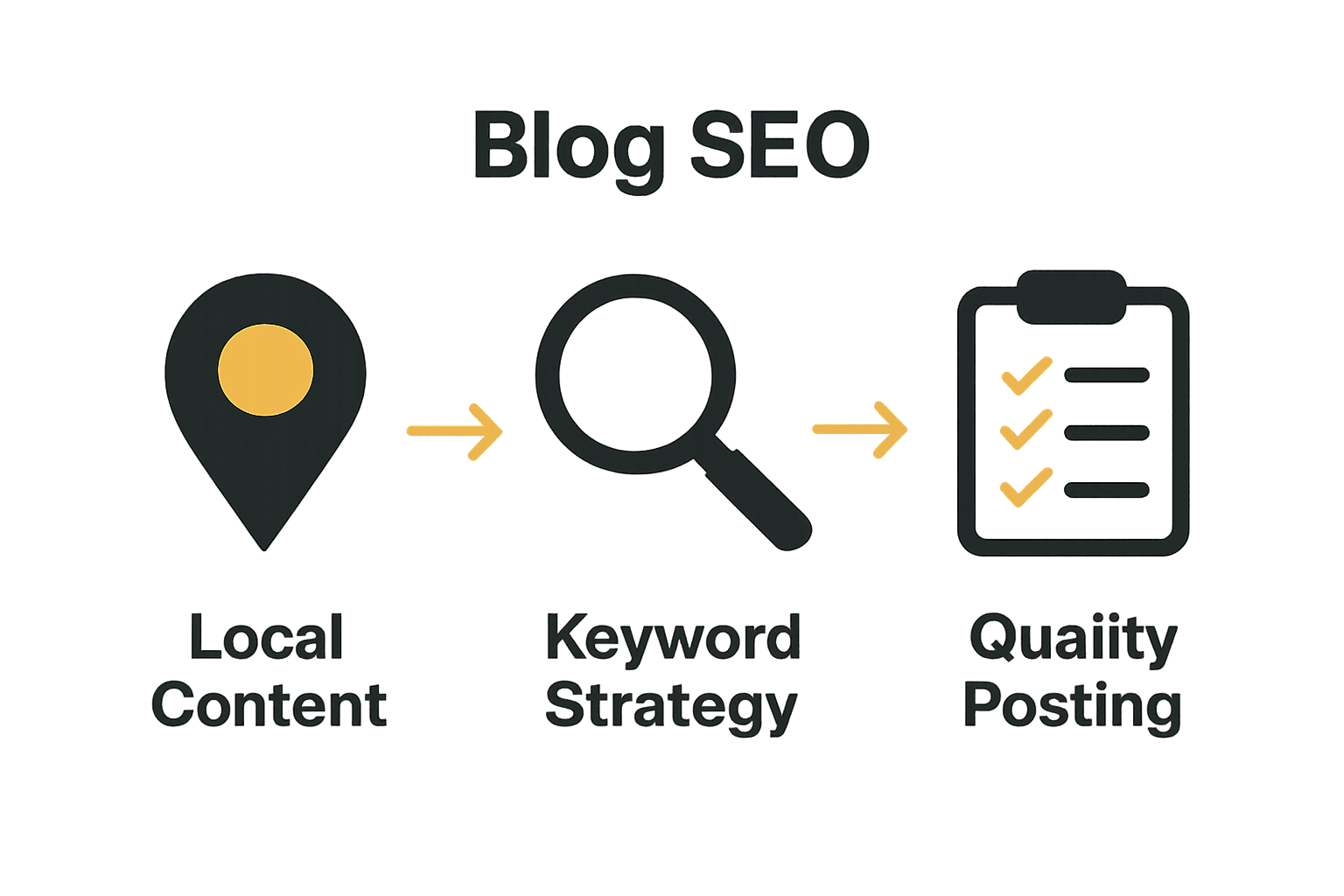
Local SEO represents a critical strategy for real estate professionals seeking to dominate neighborhood-specific search results. Keyword Strategy plays a pivotal role in crafting content that resonates with local audiences and search engine algorithms.
Research demonstrates that successful local SEO blogs go beyond generic property listings by creating hyper-targeted content that speaks directly to community interests. By developing articles that highlight neighborhood events, market trends, and local lifestyle insights, real estate professionals can position themselves as authoritative local experts who understand the nuanced dynamics of specific areas.
Key strategies for maximizing local SEO through blogging include:
- Writing detailed neighborhood profile articles
- Covering local real estate market trends
- Highlighting community events and developments
- Sharing insights about local schools and infrastructure
- Creating location-specific buying and selling guides
- Discussing upcoming local development projects
- Featuring interviews with community leaders
Through strategic, locally-focused content, real estate professionals can transform their blogs into powerful SEO tools that not only improve search rankings but also establish deep connections with potential clients in their specific geographic markets.
Common Blogging Mistakes to Avoid
Real estate professionals often stumble into predictable blogging pitfalls that can significantly undermine their digital marketing efforts. Blogging Consistency is crucial in avoiding these common traps that can derail an otherwise promising content strategy.
Research highlights several critical mistakes that can diminish a blog’s effectiveness and search engine performance. These missteps include inconsistent posting schedules, creating generic content that lacks local specificity, and prioritizing quantity over quality. Real estate bloggers frequently fail to understand that successful content requires a strategic approach that balances informative writing with targeted, audience-specific insights.
Key blogging mistakes to avoid include:
- Irregular or infrequent posting schedules
- Neglecting local market and neighborhood-specific content
- Using generic, non-targeted keywords
- Failing to proofread and edit content
- Ignoring audience engagement and comments
- Overlooking the importance of visual content
- Writing overly sales-focused articles
- Neglecting to update older blog posts
By recognizing and addressing these common pitfalls, real estate professionals can transform their blogs from ineffective digital noise into powerful, engaging platforms that attract, inform, and convert potential clients.
Unlock the Full Power of Real Estate Blogging for SEO Success
If you are struggling with inconsistent posting or generic content that fails to capture your local market, you are not alone. Role of Blogs in Real Estate SEO is critical for success.
As the article points out, real estate blogs thrive when they combine targeted neighborhood insights, market trend analysis, and buyer-focused guides. These are exactly the challenges Content Charlie helps you overcome with tailored, SEO-driven blog content designed to establish your credibility and boost your search rankings across your local areas.
Don’t let common blogging mistakes hold your real estate business back. Take action now to transform your website into a dynamic platform that attracts ready-to-act clients with focused local SEO strategies and compelling copywriting. Discover how our expert team crafts property descriptions, suburb guides, and continuous blog articles that build trust and drive leads. Visit Content Charlie and explore how local SEO & real estate copywriting can help your business stand out in search results and the minds of local buyers and sellers.
Frequently Asked Questions
What is the purpose of blogging in real estate SEO?
Blogging in real estate SEO serves to enhance digital visibility, engage potential clients, and establish professional credibility by providing valuable insights and information about the housing market and local neighborhoods.
How does blog content improve SEO for real estate websites?
Blog content improves SEO by incorporating targeted keywords, increasing website crawl frequency, creating internal linking structures, and generating fresh, relevant content that appeals to both search engines and users.
What types of content are most effective for real estate blogs?
Effective real estate blog content includes neighborhood profiles, market trend reports, homebuyer and seller guides, investment strategies, and community lifestyle features, each aimed at attracting different audience segments.
What common mistakes should be avoided when blogging for real estate SEO?
Common mistakes include inconsistent posting schedules, creating generic content, neglecting local specifics, using non-targeted keywords, and failing to engage with the audience. It’s important to focus on quality and relevance to maximize the blog’s effectiveness.
Recommended

Real Estate SEO Tips to Boost Local Rankings Fast
Real Estate SEO Tips to Boost Local Rankings Fast will get you at the top of search. But how do you do this. Let me explain below.
Did you know that over 95 percent of home buyers begin their search online? Competition for local property listings is fierce, and showing up in the right place at the right time makes all the difference. To reach serious buyers and stand out in your area, you need a real estate SEO approach tailored to your market. The right steps can help you connect with more clients and grow your business faster.
Quick Summary
| Key Point | Explanation |
|---|---|
| 1. Conduct Local Keyword Research | Identify location-specific long tail keywords to attract buyers. Use Google Keyword Planner for better targeting. |
| 2. Optimize Website Structure | Ensure a clear and logical site hierarchy for SEO. Structure listings by categories like location or property type to enhance user experience. |
| 3. Create Engaging Suburb Content | Develop detailed suburb guides that cover local features and narratives. Tailor content to answer potential buyers’ questions. |
| 4. Enhance Google Business Profile | Keep your profile updated with accurate information and engaging visuals. Regular content updates help improve local search visibility. |
| 5. Monitor and Adjust SEO Performance | Track key metrics using Google Analytics. Refine your strategies based on data to stay competitive in search rankings. |
Table of Contents
- Step 1: Research Local Keywords That Attract Buyers
- Step 2: Optimise Website Structure For Faster Results
- Step 3: Create High-Quality, Suburb-Focused Content
- Step 4: Enhance Google Business Profile For Local Impact
- Step 5: Monitor Performance And Refine SEO Strategies
Step 1: Research Local Keywords That Attract Buyers
Keyword research is your secret weapon for attracting potential home buyers through targeted local search results. You will learn how to uncover location specific search terms that connect directly with your target market.
Start by thinking like a local home buyer. What specific phrases would someone type when searching for property in your area? According to research from local audience targeting, creating content tailored to local audiences helps build search authority.
Use Google Keyword Planner and local real estate search tools to discover neighborhood specific long tail keywords. These are detailed phrases with lower search volume but higher buyer intent. For example instead of “homes for sale”, target “3 bedroom homes for sale in Broadbeach Waters” or “affordable family homes near Gold Coast schools”.
Dig into hyper local search terms that reflect real buyer motivations. Look for keywords combining location details with specific property characteristics:
- Neighborhood name + property type
- Local school district + home features
- Suburb name + buyer demographic (“first time buyer homes”)
Pro Tip: Local long tail keywords with specific details signal higher purchase intent and help you rank faster in search results.
Remember that local keyword research is an ongoing process. Update your keyword strategy regularly as neighborhood markets shift and new development trends emerge.
In the next step, you will learn how to strategically integrate these local keywords into your website content to boost your search rankings.
Step 2: Optimise Website Structure for Faster Results
Website structure is the foundation of your real estate SEO strategy. You will learn how to create a technical framework that helps search engines understand and rank your content quickly and effectively.
According to research from Search Engine Journal, conducting an SEO audit is critical for identifying areas of improvement in site structure. Start by examining your website’s core technical elements like XML sitemaps, robots.txt, page titles, headings, alt tags, and URL structures.
Focus on creating a logical and intuitive website hierarchy. Group your property listings and content into clear categories. For real estate websites, this might mean organizing by property type, location, price range, or buyer demographic. Ensure that each page is no more than three clicks away from your homepage.
Improving site performance is crucial for SEO success. As research from Promodo indicates, Core Web Vitals play a significant role in search rankings. Pay attention to:
- Largest Contentful Paint (LCP): Aim for load times under 2.5 seconds
- Interaction to Next Paint (INP): Ensure quick page responsiveness
- Cumulative Layout Shift (CLS): Maintain visual stability during page load
Pro Tip: Use Google PageSpeed Insights to diagnose and fix performance issues that could hurt your search rankings.
Check and fix broken links regularly. A seamless user experience signals to search engines that your website is well maintained and trustworthy. Use tools like Screaming Frog or Google Search Console to identify and resolve any link issues.

In the next step, you will learn how to create high quality content that complements your optimized website structure.
Step 3: Create High-Quality, Suburb-Focused Content
Creating suburb-focused content is your pathway to connecting with local home buyers and establishing your real estate expertise. You will learn how to craft compelling neighborhood content that attracts and engages your target audience.
Start by understanding the unique characteristics of each suburb you are targeting. Go beyond basic property listings and create in depth content that provides real value to potential buyers. Learn from the 7 types of real estate content every agent should use to diversify your approach.
Develop comprehensive suburb guides that showcase local amenities, school districts, community highlights, and property market trends. Think like a buyer and answer questions they would naturally ask. What makes this neighborhood special? What are the best local cafes? How are property values changing?
Incorporate storytelling into your content. Instead of just listing facts, create narratives that help potential buyers imagine living in the neighborhood. Share stories about local community events, recent development projects, or interesting historical facts about the area.
Your content should cover multiple formats to keep readers engaged:
- Neighborhood market reports
- Local school and infrastructure insights
- Community event calendars
- Property investment potential
- Local business and lifestyle highlights
Pro Tip: Use high quality local images and maps to make your content more visually appealing and informative.
Consistently update your content to reflect current market conditions and local changes.
This signals to search engines that your website provides current and relevant information.
In the next step, you will learn how to optimize your content for local search engine rankings.
Step 4: Enhance Google Business Profile for Local Impact
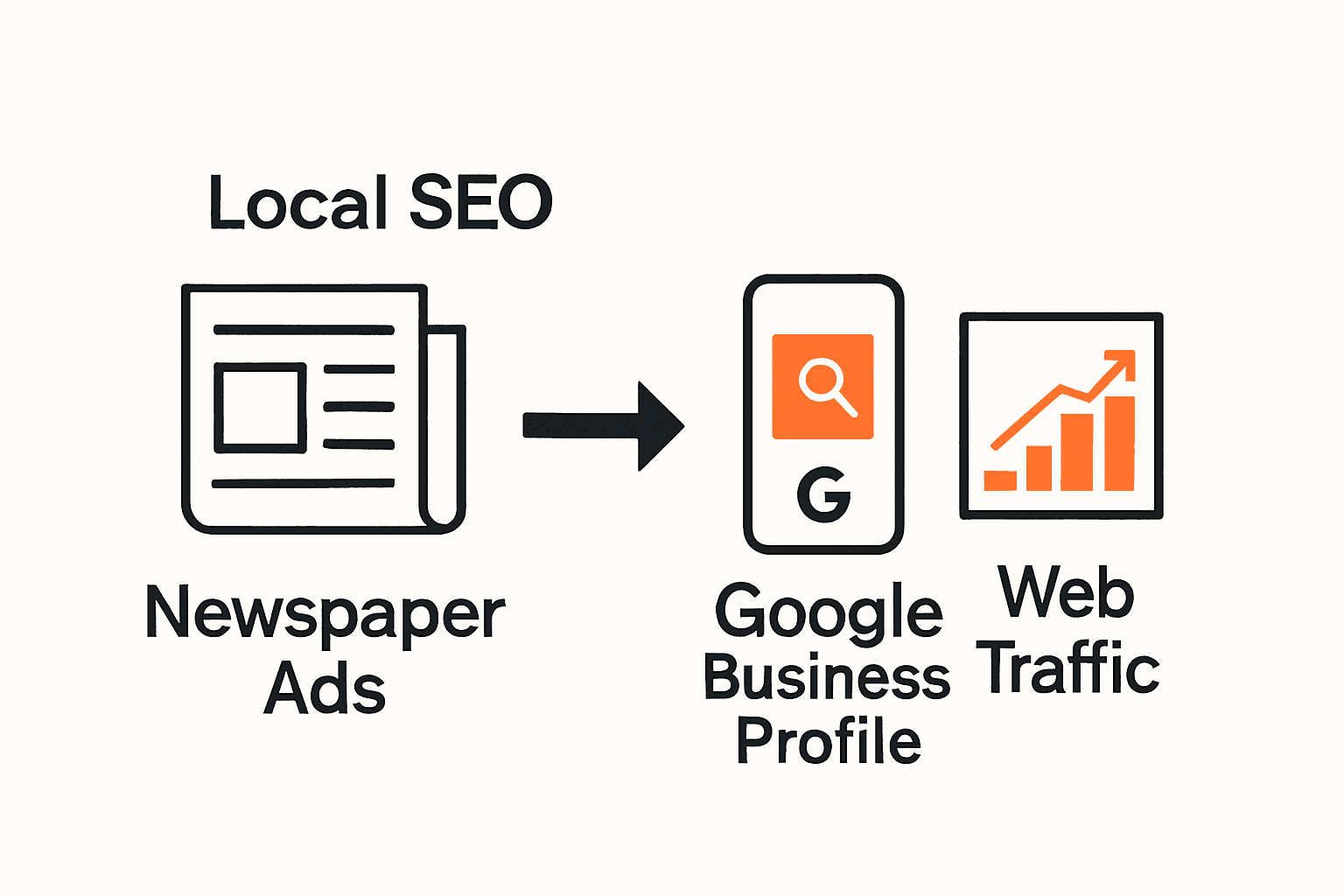
Your Google Business Profile is a powerful tool for attracting local real estate clients and improving your search visibility. You will learn how to optimize this critical digital asset to stand out in local search results.
According to research from TopOnSeek, optimizing your Google Business Profile requires careful attention to multiple elements. Start by ensuring your Google Business Profile optimization includes completely accurate NAPW details (Name, Address, Phone, Website).
Complete every section of your profile with precise and engaging information. Upload high quality professional photos of your real estate team, office, and recent property listings. Include virtual tour videos and images that showcase your local market expertise. The more comprehensive and visually appealing your profile, the more potential clients will trust your brand.
Regularly update your profile with fresh content. Post about recent property sales, market insights, community events, and local real estate trends. These updates signal to Google that your business is active and relevant.
Key elements to focus on include:
Here’s a comparison of key actions for optimizing your Google Business Profile:
| Profile Element | Best Practices | SEO Impact |
|---|---|---|
| NAPW Details | Use accurate business name Address matches website Correct phone and website |
Ensures local trust Improves ranking signals |
| Images & Videos | Upload professional photos Share virtual tour videos |
Boosts engagement Increases client trust |
| Business Category & Description | Choose most relevant category Craft detailed service description |
Better local visibility Attracts target audience |
| Reviews & Responses | Encourage client reviews Reply promptly and professionally |
Demonstrates credibility Builds reputation |
| Content Updates | Post local property news Share market trends Highlight community events |
Signals business activity Keeps profile relevant |
| Service Area Info | Specify neighborhoods List all serviced suburbs |
Targets right audience Improves search accuracy |
- Accurate business category
- Detailed service descriptions
- High resolution images
- Client reviews and responses
- Current contact information
- Local service area specifics
Pro Tip: Respond to all client reviews professionally and quickly to demonstrate excellent customer service.
Verify your business location and maintain consistent information across all online platforms.
 Inconsistent details can confuse potential clients and harm your local search rankings.
In the next step, you will learn advanced techniques for building local backlinks and increasing your online authority.
Step 5: Monitor Performance and Refine SEO Strategies
Constant monitoring and strategic refinement are the keys to maintaining strong local search rankings for your real estate business. You will learn how to track your SEO performance and make data driven improvements that keep you ahead of the competition.
Start by setting up comprehensive tracking using Google Analytics 4 and Search Console. Learn from the key performance indicators that matter most for real estate websites. According to research from Search Engine Journal, these tools help you understand critical metrics like website traffic, user behavior, and search ranking performance.
Focus on analyzing specific metrics that impact your real estate SEO strategy:
- Organic search traffic volume
- User engagement time
- Bounce rates for property listing pages
- Conversion rates from search to contact form submissions
- Top performing keywords and landing pages
- Mobile versus desktop user interactions
Conduct a monthly SEO audit to identify areas for improvement. Look for opportunities to enhance page speed, fix broken links, and optimize content based on user behavior patterns. Pay special attention to mobile friendliness and page load times.
Pro Tip: Set up custom dashboards in Google Analytics to track real estate specific metrics more efficiently.
Remember that SEO is an ongoing process. What works today might need adjustment tomorrow. Stay flexible and willing to experiment with new strategies based on your performance data.
In the final step, you will learn how to integrate these insights into a comprehensive local SEO approach for your real estate business.
Ready to Outrank Your Local Real Estate Rivals?
Struggling to turn neighborhood SEO tips into real results? Whether you feel stuck researching keywords that are not bringing buyers or frustrated by average Google rankings, you are not alone. This article showed that real estate agents need suburb-focused content, smart website structure, and a strong Google Business Profile to win local customers. But connecting all these steps can be complex and time-consuming.
Stop losing clients to competitors who appear first in local searches. At Content Charlie, we do the heavy lifting for you. Let us help you rank for targeted keywords, write suburb guides that attract the right buyers, and manage your SEO updates in line with the best practices covered here. Visit Content Charlie now and discover how easy it is to boost your local profile, capture more leads, and become the go-to real estate expert in your area. Start getting found by the customers who are searching for you today.
Frequently Asked Questions
How can I perform local keyword research for my real estate business?
Start by thinking like a home buyer and use tools to identify location-specific search terms that reflect buyer intent. Focus on long-tail keywords like “3 bedroom homes for sale in [Neighborhood]” to attract targeted traffic. Assess and adjust your keyword list regularly to match market trends.
What is the best website structure for improving real estate SEO?
A logical website structure is essential for SEO success. Group your property listings by type, location, and price range to ensure each page is easily accessible within three clicks from your homepage.
How can I create high-quality content to attract local home buyers?
Focus on developing comprehensive content that highlights suburb characteristics, local amenities, and market trends. Use engaging formats such as neighborhood guides and storytelling to connect with your audience. Update your content consistently to reflect current market conditions.
What elements should I include to optimize my Google Business Profile?
Ensure your profile has accurate NAPW details and engaging images of your team and properties. Regularly update your profile with posts about recent sales and local events to keep it active and relevant in search results.
How do I monitor my SEO performance and make improvements?
Set up tracking tools to analyze your website’s organic traffic, user engagement, and conversion rates. Conduct monthly audits to identify areas for enhancement, focusing on mobile friendliness and page speed to ensure optimal user experience.
What specific actions can I take to enhance my local search rankings in real estate?
Utilize long-tail keywords in your content, optimize your website structure, and improve your Google Business Profile. Additionally, create suburb-focused content and regularly assess your performance metrics to refine your strategies for better rankings.
Recommended

Real Estate Website Essentials: Complete Guide for Agents
Having the right Real Estate Website Essentials will have you ahead of 99% of other real estate website, if you implement the steps below.
Nearly 97 percent of home buyers search online for properties before reaching out to an agent. Your real estate website is your strongest tool for attracting new clients and keeping your business visible. Building a platform that combines stunning visuals, seamless searches, and mobile-friendly design can set you apart in a crowded market, creating a smoother path from browsing to closed deals.
Key Takeaways
| Point | Details |
|---|---|
| Core Features | Effective real estate websites must include advanced property search tools, high-quality visual content, lead generation mechanisms, and trust signals to convert visitors into clients. |
| Local SEO Importance | Local SEO strategies are vital for enhancing visibility, involving consistent business citations, structured data markup, and geographic keyword targeting to attract potential clients within specific areas. |
| Lead Conversion Tools | Implementing technologies like IDX lead tracking, email drip campaigns, and behavior analytics can significantly improve lead capture and nurture strategies on real estate websites. |
| Accessibility Compliance | Ensuring websites meet digital accessibility standards is essential not only for legal compliance but also for fostering an inclusive experience for all potential clients. |
Table of Contents
- Defining Real Estate Website Essentials
- Core Features Every Real Estate Website Needs
- SEO Requirements For Local Real Estate Search
- Lead Generation And Conversion Strategies
- Legal Compliance And Accessibility Standards
- Common Website Mistakes To Avoid
Defining Real Estate Website Essentials
Your real estate website esentials are more than just a digital business card – it’s your 24/7 online sales representative that works harder than you ever could. According to AgentFire, successful agent websites combine professional visual branding with strategic digital tools that convert casual browsers into serious clients.
The core essentials of a powerful real estate website revolve around several critical features:
- Property Search Functionality: Advanced filters for location, price, and bedrooms
- Visual Content: High-quality property photos, virtual tours, neighborhood videos
- Lead Generation: Accessible contact forms, email capture mechanisms
- Trust Signals: Client testimonials, third-party reviews, professional credentials
Mobile performance isn’t just a bonus – it’s mandatory. According to PropertyEasy, your website must deliver a seamless experience across devices. This means lightning-fast loading times, stable layouts, and responsive design that adapts to smartphones, tablets, and desktops without losing visual appeal or functionality.
Beyond basic features, modern real estate websites leverage sophisticated tools like AI-powered content creation, visitor behavior analytics, and integrated CRM systems. These technologies transform your website from a passive information portal into an active lead-generation machine that works continuously to expand your client base and demonstrate your local market expertise.
Core Features Every Real Estate Website Needs
Building a high-performance real estate website requires more than just aesthetics – it demands strategic functionality that converts visitors into clients. According to AgentFire, successful websites blend professional design with advanced technological capabilities.
The foundational features every real estate website must include are:
- Advanced Property Search: Robust filtering by location, price, bedrooms, amenities
- Multimedia Showcase: High-resolution property images, 360-degree virtual tours
- Mobile Responsiveness: Seamless performance across smartphones, tablets, desktops
- Lead Capture Mechanisms: Strategic contact forms, email signup prompts
- Trust Signals: Client testimonials, professional credentials, third-party reviews
Conversion optimization goes beyond basic website elements. Modern websites integrate sophisticated tools like visitor behavior tracking, AI-powered content generation, and automated email drip campaigns. According to PropertyEasy, these technologies transform your digital presence from a static brochure into an active client acquisition engine.
The key is creating real estate website essentials that doesn’t just display properties, but provides an immersive, interactive experience that guides potential clients through their home-searching journey. This means fast loading times, intuitive navigation, compelling visual storytelling, and clear pathways to connect with you as a trusted local real estate professional.
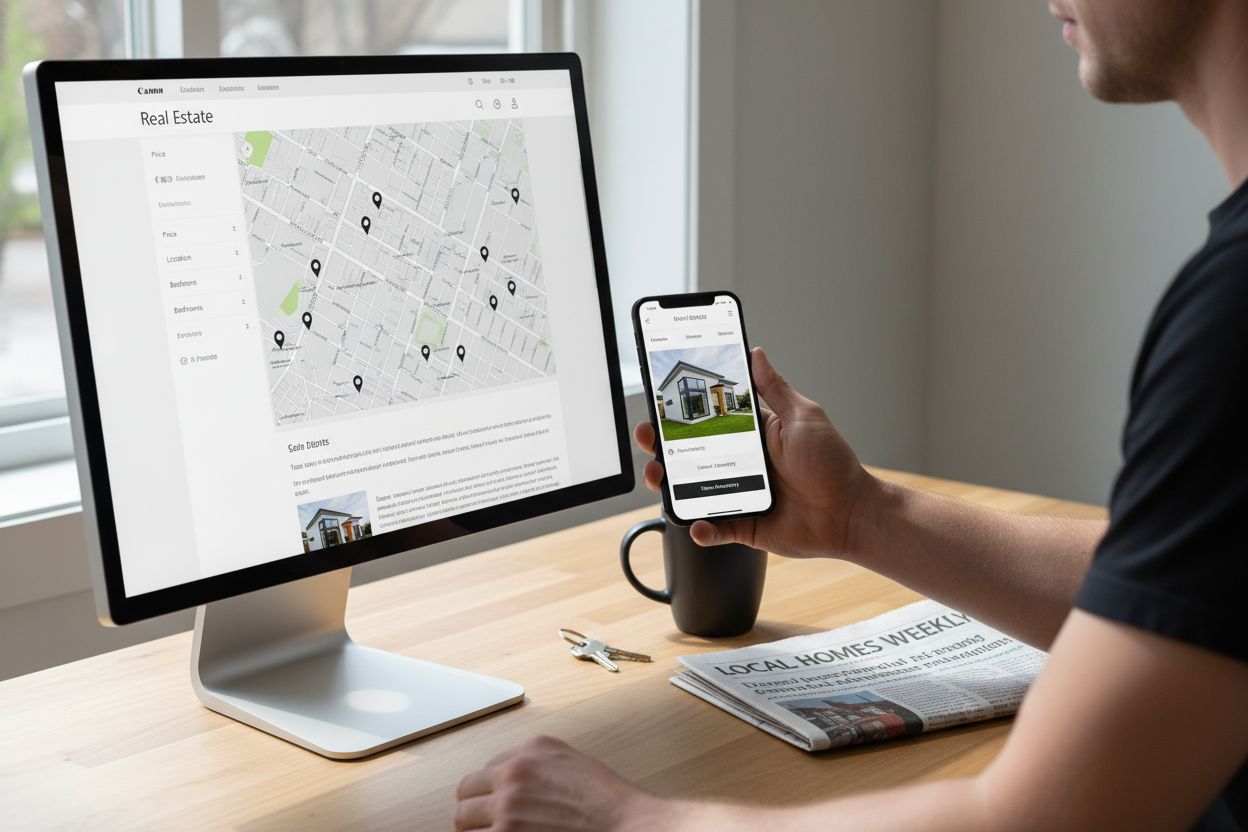
Here’s a comparison of essential real estate website features:
| Feature | Purpose | Examples |
|---|---|---|
| Property Search | Helps users find suitable listings | Advanced filters Map view |
| Visual Content | Boosts engagement and trust | High-res photos Virtual tours |
| Lead Generation | Captures potential client info | Contact forms Email signups |
| Trust Signals | Builds credibility | Testimonials Third-party reviews |
| Mobile Responsiveness | Ensures seamless device experience | Fast load Responsive layout |
| Behavior Analytics | Tracks and improves site performance | Visitor heatmaps Funnel tracking |
SEO Requirements for Local Real Estate Search
Local SEO is the secret weapon that transforms your real estate website from invisible to irresistible in search results. Understanding why local SEO matters begins with recognizing that potential clients search for properties and agents within specific geographic boundaries.
According to Search Engine Journal, successful local SEO for real estate professionals hinges on several critical strategies:
- Consistent Business Citations: Accurate listings across Google Business Profile and local directories
- Structured Data Markup: Implementing schema for RealEstateAgent, Offer, and Residence categories
- Hyper-Local Content: Creating neighborhood-specific pages and property guides
- Geographic Keyword Targeting: Incorporating location-specific terms naturally
The most effective local SEO approach goes beyond basic optimization. According to LSEO, modern real estate agents must develop content clusters that target specific neighborhoods, leverage social media channels for content distribution, and actively seek backlinks from local influencers and publications.
Your ultimate goal is to become the go-to digital resource for local property information.
This means creating content that answers specific local buyer questions, showcasing your deep understanding of neighborhood dynamics, and ensuring your website speaks directly to the unique needs of potential clients in your specific market area.
Lead Generation and Conversion Strategies
Transforming website visitors into potential clients requires a strategic approach that goes beyond simple contact forms. Types of real estate leads vary, and your digital strategy must be sophisticated enough to capture and nurture each unique visitor’s interest.
According to AgentFire, advanced lead generation technologies now offer powerful tools for real estate professionals:
- IDX Lead Tracking: Monitor visitor interactions and property interests
- Email Drip Campaigns: Automated, personalized communication sequences
- CRM Integration: Seamless contact management and follow-up tracking
- AI Content Generation: Dynamic, targeted messaging based on user behavior
- Behavior Analytics: Heat mapping and funnel tracking to optimize conversion paths
Visitor trust is the cornerstone of successful lead conversion. As PropertyEasy highlights, this means prominently featuring compelling testimonials, high-quality property visuals, and virtual tours that demonstrate your professionalism and local market expertise.
The most effective websites create a frictionless journey from initial curiosity to client engagement.
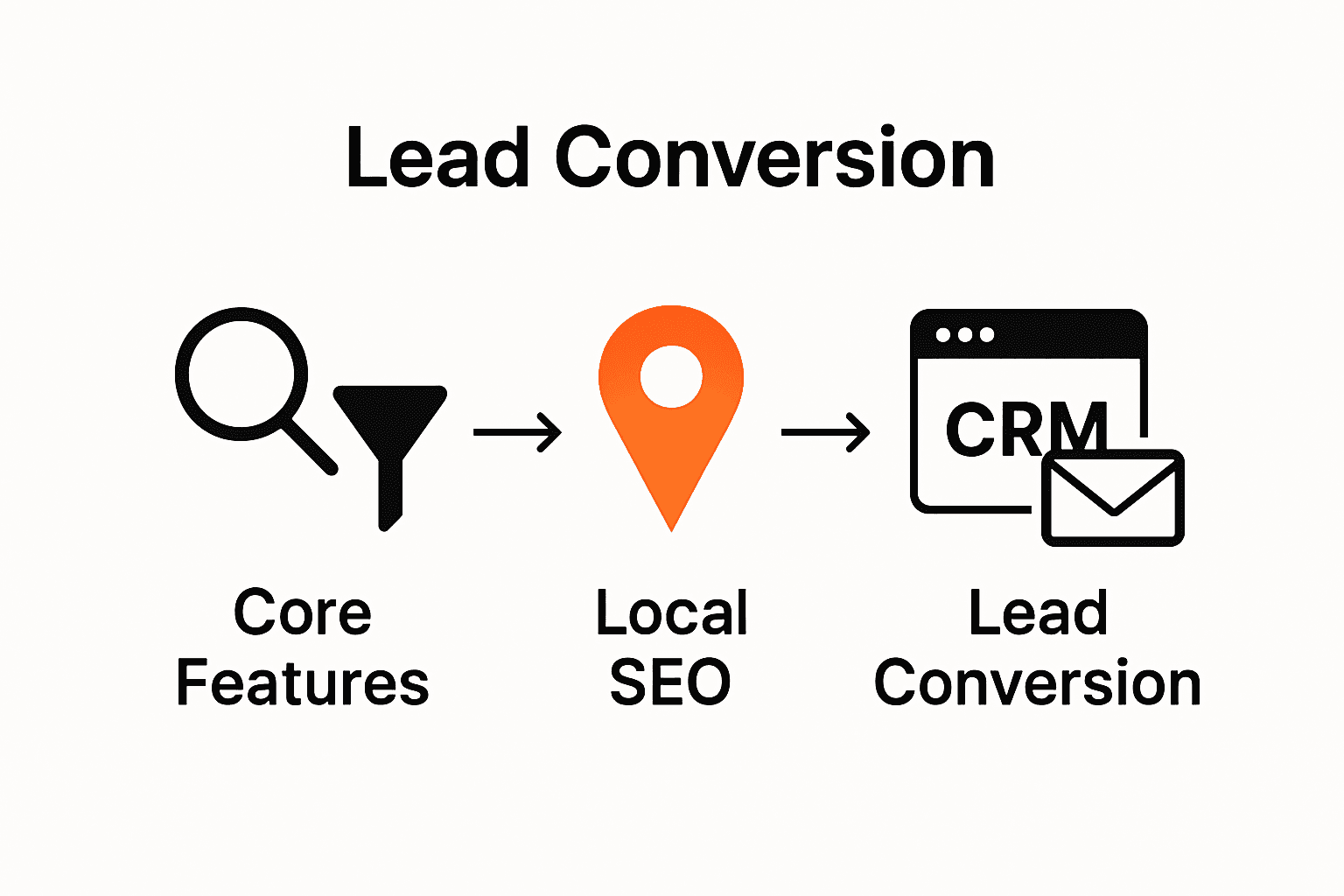 This means intuitive design, crystal-clear contact information, and strategic calls-to-action that guide potential clients exactly where they want to go – closer to finding their perfect property with your expert assistance.
Legal Compliance and Accessibility Standards
Digital accessibility is no longer optional for real estate websites – it’s a legal and ethical imperative. Ensuring your online platform is inclusive means creating an experience that welcomes every potential client, regardless of their physical abilities or technological constraints.
According to Wikipedia, the Web Content Accessibility Guidelines (WCAG) 2.2 provide a comprehensive framework for creating accessible digital experiences. These internationally recognized standards focus on four fundamental principles:
- Perceivable: Information must be presentable to users in ways they can perceive
- Operable: User interface and navigation must be functional for all users
- Understandable: Content and operation must be clear and comprehensible
- Robust: Content must be compatible with current and future assistive technologies
Real estate websites have unique challenges in meeting these standards. This means ensuring your property listings, contact forms, search functions, and multimedia content are fully navigable by screen readers, compatible with keyboard-only navigation, and designed with sufficient color contrast and text sizing.
Beyond technical compliance, accessible design demonstrates your commitment to inclusivity. It signals to potential clients that you value every individual’s experience, understand diverse user needs, and are committed to providing a welcoming, professional digital environment that respects and accommodates all users.
Common Website Mistakes to Avoid
Website design can make or break your real estate digital presence. One misstep could mean losing potential clients before they even understand what you offer. Lead generation ideas for real estate start with avoiding critical digital pitfalls that undermine your professional image.
According to Type North, the most common website mistakes that sabotage real estate professionals include:
- Mobile Unresponsiveness: Sites that don’t adapt to smartphone screens
- Cluttered Homepage: Overwhelming visitors with too much information
- Weak Calls-to-Action: Unclear or missing contact pathways
- Low-Quality Property Listings: Incomplete or unappealing property descriptions
- Slow Page Loading: Performance that frustrates potential clients
- Neglected Local SEO: Invisible in local property search results
Navigation complexity is another silent killer of user experience. Your website should feel intuitive, with clear menus, logical property search functions, and streamlined paths to contact you. Think of your website as a digital storefront – it should invite exploration, not create confusion.
The most successful real estate websites transform technical requirements into storytelling opportunities. This means creating a digital experience that’s not just functional, but engaging – where every pixel communicates your professionalism, local expertise, and commitment to helping clients find their dream property.
Ready to Transform Your Real Estate Website Into a Local Lead Magnet?
You read about the must-have features for a real estate website, but bringing those essentials to life is a challenge. Many agents struggle with weak property listings, missing trust signals, and a website that just does not show up when locals search for homes or advice. Without powerful copywriting and suburb-specific SEO, you risk falling behind competitors who connect with buyers and sellers right where they live.
At Content Charlie, we turn your knowledge into high-converting web pages, suburb guides, and blog posts that climb Google results. Our team specializes in conversion optimization and local SEO, giving your site mobile-first performance, powerful lead generation, and content that earns trust in your neighborhood. If you want to stand out as the top agent in your suburb, act now and let us create a real estate website that converts visitors into lifelong clients. Start growing your local visibility with Content Charlie today.
Frequently Asked Questions
What are the essential features of a real estate website?
The essential features of a real estate website include advanced property search functionality, high-quality visual content, lead generation tools, trust signals like testimonials, and mobile responsiveness to ensure accessibility across devices.
How can local SEO impact my real estate website’s visibility?
Local SEO helps improve your real estate website’s visibility by optimizing for specific geographic keywords, ensuring consistent business citations, and creating hyper-local content that resonates with local buyers, thereby attracting more relevant traffic to your site.
What strategies can I use for effective lead generation on my real estate website?
Effective lead generation strategies include implementing IDX lead tracking, using email drip campaigns for nurturing leads, integrating customer relationship management (CRM) systems, and deploying behavior analytics to understand visitor interactions and optimize conversions.
How can I ensure my real estate website is accessible to all users?
To ensure your real estate website is accessible, adhere to the Web Content Accessibility Guidelines (WCAG) by making information perceivable, operable, understandable, and robust, ensuring compatibility with assistive technologies and providing a user-friendly experience for individuals with disabilities.
Recommended
- 7 Types of Real Estate Content Every Agent Should Use – Content Charlie
- Greg Reed, Author at Content Charlie
- 7 Essential Social Media Tips for Agents – Content Charlie
- 7 Essential Types of Real Estate Leads Agents Must Know – Content Charlie
- SEO for Real Estate Agencies: Simple Strategies to Grow Your Business
- Website Design Guide for Builders: Create a Winning Website – ResponsiveWebsiteDesign

Role of Content in SEO: Everything You Need to Know
Did you know that over 70 percent of people start their property search online? Today, the Role of Content in SEO shapes more than just first impressions. It decides how visible and credible you are in the eyes of both clients and search engines. Understanding how content shapes modern SEO can put you ahead of your competition and ensure your expertise gets noticed where it matters most.
Key Takeaways
| Point | Details |
|---|---|
| Content Quality is Essential | High-quality content drives SEO rankings by demonstrating expertise and meeting user needs. |
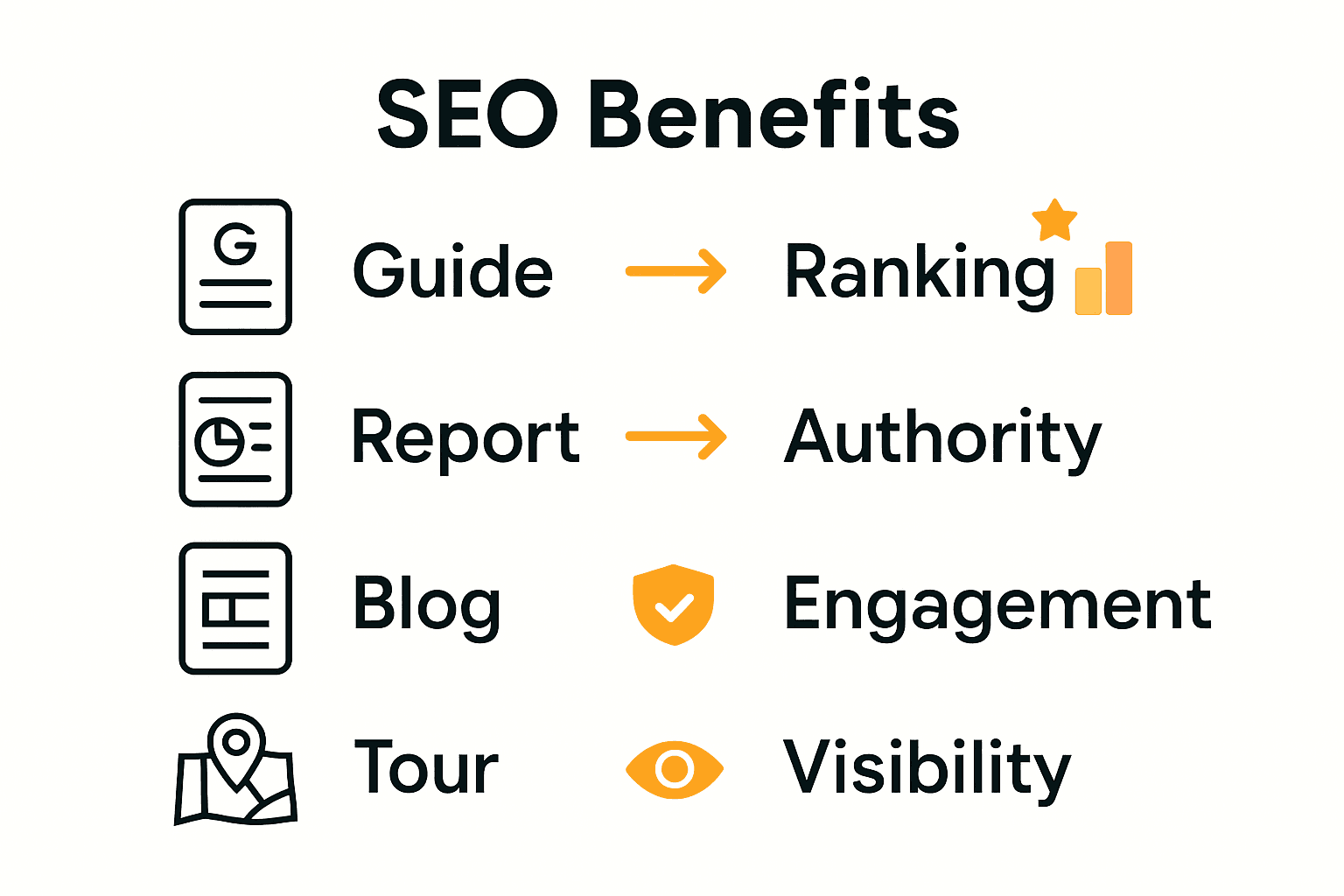
| Diversify Content Types | Utilizing various content types, like suburb guides and market reports, enhances SEO and engages potential clients. |
| Focus on Local SEO | Developing hyperlocal content tailored to specific communities improves visibility and attracts relevant clients. |
| Avoid Common Pitfalls | Steer clear of mistakes like keyword stuffing and outdated information to maintain credibility and effectiveness in content marketing. |
Table of Contents
- Defining Content’s Role In Modern SEO
- Types Of SEO Content For Real Estate
- How Content Drives Search Rankings
- Local SEO: Content Strategies That Work
- Common Content Mistakes To Avoid
Defining Content’s Role in Modern SEO
In the rapidly evolving digital landscape, content is no longer just words on a page—it’s the strategic engine driving search engine optimization (SEO). Our comprehensive content marketing guide reveals how modern search algorithms prioritize content that genuinely serves user needs and demonstrates expertise.
According to research from Search Engine Journal, Google now considers content quality as a core ranking factor. The 2024 study highlights critical attributes that elevate content’s SEO performance:
- Relevance to user search intent
- Depth of information provided
- Semantic clarity and topical comprehensiveness
- User engagement signals
Recent academic research on Generative Search Engine Optimization reveals an even more sophisticated evaluation framework. This multi-dimensional approach moves beyond traditional metrics, analyzing content’s substantive impact through semantic influence. For real estate agents, this means creating hyperlocal, expertise-driven content that doesn’t just include keywords, but provides genuine value to potential property buyers and sellers.
The message is clear: exceptional content isn’t just recommended—it’s essential. Search engines now reward content that demonstrates authentic expertise, answers user questions comprehensively, and creates meaningful connections with the target audience.
Types of SEO Content for Real Estate
In the competitive world of real estate digital marketing, content diversity is your secret weapon for attracting potential buyers and sellers. Learn more about effective content strategies that can transform your online presence and drive targeted traffic.
Real estate professionals have several powerful content types at their disposal to boost SEO and engage potential clients:
- Suburb Guides: Comprehensive neighborhood profiles
- Property Market Reports: Local market trend analysis
- Client Success Stories: Testimonial and case study content
- Buyer and Seller Advice Blogs: Educational content addressing common questions
- Local Area Listings: Hyperlocal property insights
- Virtual Property Tours: Multimedia content with descriptive narratives
Each content type serves a unique purpose in your SEO strategy. Suburb guides, for instance, help you rank for hyperlocal search terms while providing immense value to potential clients researching specific areas. Property market reports establish you as a local market expert, attracting both search engine algorithms and potential clients seeking knowledgeable guidance.
Here’s a summary of key real estate content types and their SEO advantages:
| Content Type | Main Purpose | SEO Benefit |
|---|---|---|
| Suburb Guides | Neighborhood profiles | Ranks for hyperlocal keywords |
| Property Market Reports | Market trend analysis | Boosts authority & trust |
| Client Success Stories | Showcase expertise | Enhances credibility & engagement |
| Buyer/Seller Advice Blogs | Inform & educate clients | Targets long-tail search queries |
| Local Area Listings | Property details by area | Improves local search visibility |
| Virtual Property Tours | Visual property showcasing | Increases time on site |
The key is creating content that balances informational depth with strategic keyword targeting. By diversifying your content approach, you’re not just improving SEO—you’re building a comprehensive digital resource that positions you as the go-to real estate authority in your local market.

How Content Drives Search Rankings
In the intricate world of search engine optimization, content quality is the ultimate determining factor for ranking success. Our comprehensive content marketing insights reveal the complex mechanisms by which exceptional content propels websites up search result pages.
According to research from Search Engine Journal, Google’s algorithms assess content through multiple critical lenses:
- Relevance to user search intent
- Comprehensiveness of information
- Semantic depth of topic coverage
- User engagement metrics
Recent academic findings highlight a sophisticated, multi-agent framework for evaluating content. This approach goes beyond traditional keyword matching, analyzing content’s substantive influence through semantic complexity. For real estate professionals, this means creating content that doesn’t just include keywords, but provides genuine, in-depth insights that demonstrate true expertise.
The search ranking process is now more nuanced than ever. Search engines prioritize content that not only answers user questions but does so with authority, clarity, and comprehensive understanding. By crafting content that truly serves user needs—whether it’s a detailed suburb guide, a market trend analysis, or a comprehensive property buying walkthrough—real estate agents can significantly improve their visibility and credibility in search results.
Local SEO: Content Strategies That Work
For real estate agents, local SEO is the lifeline of digital marketing success. Our comprehensive link building strategies can help you transform hyperlocal content into a powerful ranking tool that attracts potential clients right in your neighborhood.
According to research from Search Engine Journal, strategic content approaches can dramatically improve local visibility:
- Structured data markup for property listings
- Localized social media content with targeted hashtags
- Neighborhood-specific landing pages
- Google Business Profile optimization
- Geo-targeted blog content
The key to effective local SEO lies in creating content that speaks directly to your community’s unique characteristics. This means developing suburb guides that go beyond generic descriptions, sharing market insights specific to local neighborhoods, and demonstrating deep understanding of micro-market trends that matter to potential buyers and sellers.
Successful local content strategies aren’t about keyword stuffing—they’re about genuine connection. By crafting content that provides real value to your local audience, you’re not just improving search rankings, you’re establishing yourself as the go-to real estate expert in your specific market. Think hyperlocal, write with authenticity, and watch your local search visibility soar.
Common Content Mistakes to Avoid
In the competitive realm of real estate digital marketing, content missteps can dramatically undermine your SEO efforts. Learn about strategic content approaches that help you sidestep common pitfalls and maintain a strong online presence.
Real estate professionals frequently encounter content challenges that can hurt their search rankings and audience engagement:
- Keyword Stuffing: Overloading content with repetitive keywords
- Generic Content: Using bland, non-specific property descriptions
- Outdated Information: Failing to update market data and listings
- Inconsistent Publishing: Irregular content creation schedules
- Ignoring Local Context: Writing without hyperlocal insights
One of the most critical mistakes is treating content as a mere SEO checkbox rather than a genuine communication tool. Real estate content should tell a story, provide meaningful insights, and address potential clients’ specific needs and questions. This means moving beyond surface-level property descriptions to create narratives that showcase neighborhood character, market trends, and the unique value you bring as a local expert.
Successful content strategy requires consistent, thoughtful execution. By avoiding these common pitfalls and focusing on creating authentic, valuable content, real estate agents can transform their digital presence from forgettable to remarkable. Remember: great content isn’t just about ranking—it’s about building trust, demonstrating expertise, and connecting with your local community.
Transform Your SEO Content Into Real Results With Content Charlie
Are you frustrated that your efforts with suburb guides or market reports are not turning into higher local rankings or more real estate clients? This article makes it clear that in today’s market, generic or keyword-stuffed content will only hold you back. You need tailored writing that demonstrates authority, connects with your local audience, and keeps you ahead in suburb-level searches. At Content Charlie, we know your challenges and we solve them by crafting SEO-driven copy and engaging blog articles that give your business lasting visibility.
It is time to stop guessing and start attracting clients who are ready to take action. Work with specialists who help real estate agents and local businesses master local SEO and content strategy every single day. Visit Content Charlie now to discover how we can turn your content into the secret weapon for ranking, engagement, and trust. Start seeing more leads from Broadbeach to Burleigh today. Book a strategy call and get your business found before your competition does.
Frequently Asked Questions
What is the role of content in modern SEO?
Content plays a crucial role in modern SEO as it serves as the strategic engine driving search engine rankings. High-quality, relevant content that addresses user needs is prioritized by search algorithms, enhancing visibility and user engagement.
How can real estate professionals use content to improve their local SEO?
Real estate professionals can enhance their local SEO by creating hyperlocal content, such as suburb guides, neighborhood-specific landing pages, and localized blog posts. This approach ensures that content resonates with local audiences and ranks well in search results.
What types of content are effective for enhancing SEO in real estate marketing?
Effective content types for real estate marketing include suburb guides, property market reports, buyer and seller advice blogs, client success stories, local area listings, and virtual property tours. Each type serves distinct purposes, from providing local insights to establishing authority in the market.
What common mistakes should real estate professionals avoid when creating content for SEO?
Common mistakes to avoid include keyword stuffing, using generic or outdated content, having inconsistent publishing schedules, and ignoring local context. Instead, focus on creating authentic, insightful narratives that connect with your target audience.
Recommended

Why Use Blog Content: Essential Guide for Real Estate
Nearly 80 percent of homebuyers start their search online, yet most real estate agents miss out by only sharing property listings. Modern buyers crave local market insights, unique neighborhood details, and personal stories that help them make smarter decisions. Strong blog content positions you as a trusted expert, builds credibility, and turns curious visitors into loyal clients who see you as their go-to resource in the community.
Key Takeaways
| Point | Details |
|---|---|
| Strategic Importance of Blogging | Real estate blogging serves as a vital channel for establishing trust and authority through valuable local insights and market analyses. |
| Diverse Content Types | Utilizing various content strategies, such as market trend reports and neighborhood guides, enhances engagement and showcases expertise. |
| Boosting Local SEO | Blogging improves digital visibility by targeting hyperlocal search queries, thus enhancing relevance and attracting potential clients. |
| Building Trust Through Authenticity | Consistent and relatable content that addresses client concerns helps establish you as a genuine advisor in the real estate journey. |
Table of Contents
- Defining Blog Content And Its Role
- Types Of Blog Content For Real Estate Agents
- How Blog Content Boosts Local Seo Rankings
- Building Trust And Authority With Blog Content
- Common Pitfalls When Using Blog Content
Defining Blog Content and Its Role
Blog content represents a strategic digital communication channel where real estate professionals share valuable insights, market analyses, and local property information to engage potential clients. Real estate blogging goes far beyond simple property listings – it’s about creating a comprehensive narrative that positions you as a local market expert.
According to Agent Ascension, blogging plays a crucial role by providing critical local market insights such as:
- Current property trends
- Pricing dynamics
- Market demand fluctuations
- Seasonal behavior patterns
These data-driven posts help establish your blog as an authoritative resource, building significant trust and credibility with potential clients. Search Engine Journal reinforces this perspective, highlighting that real estate blogs offer additional opportunities to target relevant keywords and showcase hyperlocal expertise.
At its core, blog content serves multiple strategic purposes for real estate professionals. It’s not just about information transmission – it’s about creating a compelling digital presence that demonstrates your deep understanding of local neighborhoods, market nuances, and client needs. By consistently producing high-quality, informative content, you transform your online platform from a simple listings site into a valuable community resource that attracts, educates, and ultimately converts potential buyers and sellers.
Pro Tip: Focus on creating content that answers real questions your potential clients are asking – about neighborhoods, market conditions, buying/selling processes, and local lifestyle insights.
Types of Blog Content for Real Estate Agents
Real estate agents have multiple blog content strategies to connect with potential clients and showcase their expertise. These content types range from informative market analyses to engaging personal storytelling, each serving a unique purpose in building trust and attracting potential buyers and sellers.
Here are the primary types of blog content real estate professionals can leverage:
Here’s a comparison of popular real estate blog content types and their primary benefits:
| Content Type | Key Focus | Main Benefit |
|---|---|---|
| Market Trend Reports | Data analysis Trends |
Establishes authority |
| Neighborhood Guides | Local insights Amenities |
Demonstrates hyperlocal expertise |
| Buyer Journey Stories | Personal narrative Emotion |
Builds trust and relatability |
| Process Explanations | Step-by-step Education |
Simplifies complex topics |
| Local Business Features | Community connections | Strengthens local relevance |
- Market Trend Reports: Detailed analyses of local property market conditions, price movements, and investment opportunities
- Neighborhood Guides: Comprehensive overviews of specific suburbs, highlighting local amenities, schools, lifestyle, and community features
Storytelling and Informative Content
Personal narrative blogs offer another powerful approach. Buyer journey stories that walk readers through successful property purchases, renovation challenges, or first-time homeowner experiences create emotional connections. These posts humanize your brand and demonstrate your understanding of client experiences.
Read our guide on content ideas for agents to explore more innovative ways of crafting compelling real estate blog content. By diversifying your content strategy, you transform your blog from a simple information platform into an engaging resource that potential clients will actively seek out and trust.

How Blog Content Boosts Local SEO Rankings
Local SEO represents a critical strategy for real estate agents looking to dominate neighborhood-specific search results. Blog content acts as a powerful mechanism for improving your digital visibility, allowing you to target hyperlocal search queries and demonstrate expertise in specific geographical areas.
Search Engine Journal highlights that publishing targeted neighborhood content can significantly enhance search engine relevance. By crafting blog posts that cover rich local details, agents can strategically incorporate valuable keywords and information such as:
- Neighborhood walkability scores
- Local school district information
- Cost of living comparisons
- Restaurant and amenity highlights
- Interviews with local business owners
Strategic Keyword Integration
Effective blog content goes beyond simple keyword stuffing. It’s about creating genuine, informative narratives that naturally incorporate location-specific terms. When you consistently produce high-quality, geographically targeted content, search engines recognize your website as a authoritative local resource.
Pro Strategy: Focus on creating in-depth, authentic content that answers real questions potential clients have about specific neighborhoods. This approach not only improves your SEO rankings but also establishes you as a trusted local market expert who truly understands the nuanced landscape of your service area.
Building Trust and Authority With Blog Content
Trust and authority are the cornerstones of successful real estate marketing, and blog content provides a powerful platform for establishing these critical qualities. By consistently sharing valuable, transparent, and insightful information, real estate agents can transform their online presence from a simple transactional platform into a trusted resource for potential clients.
Demonstrating Expertise Through Content
Building authority requires more than just listing properties. Your blog becomes a strategic tool to showcase:
- Deep local market knowledge
- Understanding of complex real estate processes
- Genuine commitment to client education
- Transparent insights into market trends
- Personal approach to client relationships
Learn more about building community trust and how consistent, high-quality content can position you as the go-to local real estate expert. The key is creating content that goes beyond surface-level information and provides genuine value.
Successful blog content connects with readers on an emotional and intellectual level. By addressing potential client concerns, explaining complex processes in simple terms, and sharing real-world insights, you demonstrate that you’re not just selling properties – you’re a trusted advisor who genuinely cares about helping clients navigate their real estate journey.
Pro Tip: Authenticity is your greatest asset. Share personal experiences, client success stories, and behind-the-scenes insights that humanize your brand and make potential clients feel like they already know and trust you before the first conversation.
Common Pitfalls When Using Blog Content
Real estate blog content can quickly become ineffective when agents fall into common strategic traps. Understanding these potential missteps is crucial for creating a blog that genuinely attracts and engages potential clients, rather than becoming another forgettable online resource.
Critical Mistakes to Avoid
Real estate professionals often encounter several recurring blog content challenges:
- Inconsistent Posting: Sporadic content publication that fails to build momentum or reader expectations
- Generic, Uninspired Writing: Bland posts that could apply to any location or agent
- Overly Sales-Driven Content: Aggressive marketing language that turns readers away
- Neglecting Local Specifics: Missing opportunities to showcase neighborhood expertise
- Poor SEO Optimization: Content that doesn’t strategically target relevant search terms
Learn more about compounding content strategies that can help you avoid these common pitfalls. The most successful real estate blogs create a narrative that feels personal, informative, and genuinely helpful.
The key is understanding that blog content is not about pushing immediate sales, but about building long-term relationships.
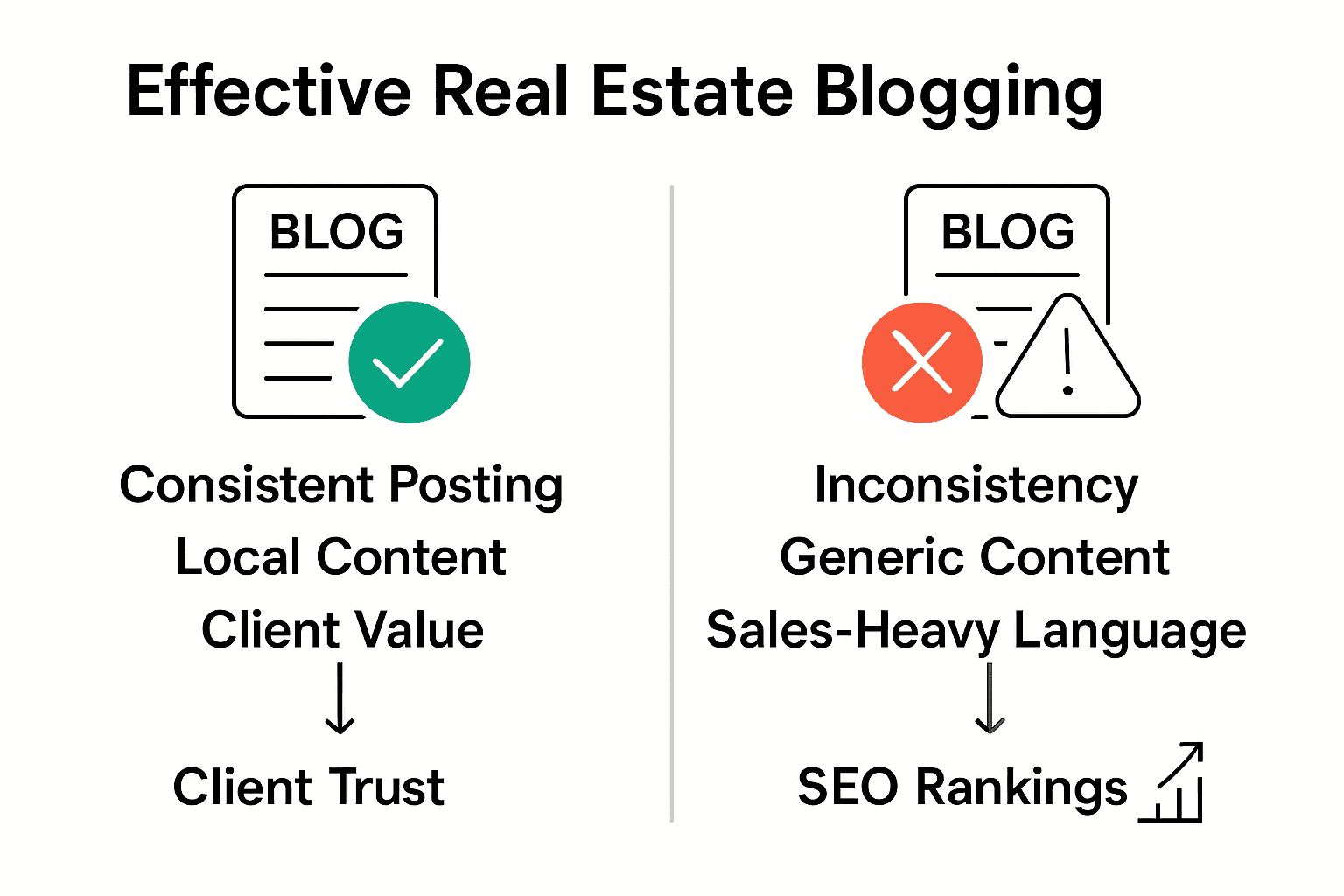 Potential clients want insights, understanding, and a sense that you truly know and care about their real estate journey. By focusing on education, transparency, and genuine value, you transform your blog from a potential liability into a powerful client attraction tool.
Pro Tip: Think of your blog as a conversation, not a billboard. Write as if you’re speaking directly to a client, addressing their real concerns, fears, and aspirations in the real estate process.
Turn Your Blog into a Real Estate Magnet — Let Content Charlie Guide You
Are you frustrated by your blog getting lost in the crowd or failing to connect with local buyers and sellers? The article highlighted how crucial it is to produce expert, neighborhood-focused content that goes beyond listings. Many agents struggle to build trust and authority online or waste hours publishing posts that do not move the needle for local SEO. If you recognize the challenges of inconsistent content, lack of local relevance, or missing out on suburb-level Google searches, you are not alone.
Start attracting ready-to-act clients sooner with Content Charlie. We specialize in local SEO-driven copywriting for real estate agents who want to get found first by local buyers and sellers. From suburb guides and blog articles that showcase your expertise to high-converting web pages that turn readers into leads, our tailored approach ensures your digital presence grabs attention and builds genuine community trust. Do not wait for your competition to dominate local searches while you fall behind. Visit Content Charlie to amplify your authority and become the go-to agent in your neighborhood now.
Frequently Asked Questions
What is the role of blog content for real estate professionals?
Blog content serves as a strategic channel for real estate professionals to share insights, market analyses, and local property information, establishing them as local market experts and building trust with potential clients.
How does blog content enhance local SEO rankings for real estate agents?
Blog content enhances local SEO by targeting hyperlocal keywords and providing valuable information about specific neighborhoods, which improves search engine relevance and visibility in neighborhood-specific queries.
What types of blog content can real estate agents create to engage clients?
Real estate agents can create various content types, including market trend reports, neighborhood guides, personal client stories, process explanations, and local business features, each serving to build trust and demonstrate expertise.
How can real estate professionals avoid common pitfalls when creating blog content?
To avoid pitfalls, real estate professionals should maintain consistent posting schedules, focus on unique and localized content, avoid overly sales-driven language, and ensure their content is optimized for relevant SEO keywords.
Recommended
- Understanding Why Blogging Boosts SEO for Real Estate – Content Charlie
- blog publishing Archives – Content Charlie
- content publishing Archives – Content Charlie
- blogging Archives – Content Charlie
- SEO for Real Estate Agencies: Simple Strategies to Grow Your Business
- 7 Content Curation Strategies Every Business Owner Needs – My Blog

7 Types of Real Estate Content Every Agent Should Use
There are 7 Types of Real Estate Content that really move the need for a real estate agents website. Do these and see your traffic grow.
Did you know that nearly 90% of home buyers research local agents and neighborhoods online before making a move? In a market where first impressions happen through screens, valuable content is your most powerful tool. From in-depth suburb guides to stories of real client success, the right materials position you as the trusted local expert buyers and sellers are searching for. Stand out by sharing knowledge that makes every visit to your website or profile more meaningful.
Quick Summary
| Takeaway | Explanation |
|---|---|
| 1. Create suburb guides for local expertise | Develop comprehensive neighborhood guides to establish yourself as a trusted local authority and improve search visibility. |
| 2. Write compelling property descriptions | Use vivid storytelling and strategic language to create emotional connections with potential buyers in your property listings. |
| 3. Optimize your agent profile for trust | Transform your online profile into a personal brand storyteller that highlights your expertise and community connections. |
| 4. Produce blog articles to answer client questions | Create educational content that addresses common client questions and positions you as a go-to resource in real estate. |
| 5. Showcase client testimonials and case studies | Leverage specific success stories and measurable outcomes to build credibility and demonstrate your ability to solve real estate challenges. |
Table of Contents
- Suburb Guides That Showcase Local Expertise
- Property Listings With Compelling Descriptions
- Agent Profile Pages That Build Trust
- Blog Articles Answering Buyer And Seller Questions
- Google Business Profile Posts To Attract Locals
- Market Update Reports That Demonstrate Authority
- Client Testimonials And Case Studies For Social Proof
1. Suburb Guides That Showcase Local Expertise
Real estate agents who want to stand out need more than just property listings. Suburb guides are powerful tools that transform you from a simple property seller to a neighborhood authority.
These comprehensive neighbourhood spotlights go far beyond basic information. They are Types of Real Estate Content that are essential. According to research from ThinkProp, creating detailed community guides helps agents establish themselves as trusted local experts while simultaneously boosting their search engine visibility through location specific keywords.
When you craft a suburb guide, you’re essentially creating a narrative about community living that potential buyers find irresistible. Your guide should cover critical elements that help buyers understand the neighborhood’s unique character:
• Local school performance and ratings
• Demographic insights
• Nearby amenities and recreational spaces
• Historical background of the area
• Upcoming community events
• Local business ecosystem
The magic happens when you blend data with storytelling. Instead of just listing facts, paint a picture of what life looks like in that specific suburb. Show readers why this neighbourhood is more than just a collection of streets and houses.
Pro tip: Leverage neighborhood spotlights as evergreen content that continues attracting potential clients month after month. By creating comprehensive guides, you’re not just selling properties you’re selling lifestyles and community experiences.
Remember: Buyers aren’t just purchasing a home. They’re investing in a community. Your suburb guide can be the bridge that helps them make that emotional connection.
2. Property Listings With Compelling Descriptions
Property descriptions are more than just a list of rooms and square meters. They are Types of Real Estate Content that your digital sales pitch that can transform a casual browser into an excited potential buyer.
According to research from Media Junkie, effective property listings require strategic storytelling that goes beyond basic information. Your goal is to create an immersive narrative that helps potential buyers imagine themselves living in the space.
Crafting a standout property listing involves several key elements:
• Write an attention grabbing headline
• Use vivid sensory language
• Highlight unique property features
• Create an emotional connection
• Include strategic location keywords
Innovate Estate suggests integrating location specific keywords naturally to improve search visibility. This means moving beyond generic descriptions and painting a picture of lifestyle and potential.
Your description should answer the key questions buyers are asking: What makes this property special? How will it improve my life? What opportunities does this home offer?
Consider this example transformation. Instead of “3 bedroom house with kitchen”, write “Sun drenched Paddington charmer featuring a gourmet kitchen perfect for weekend entertaining with stunning city glimpses from the master balcony”.
Property listings are your opportunity to be creative. Each word should work hard to capture imagination and generate genuine interest.
Pro tip: Always write as if you are speaking directly to your ideal buyer. Authenticity sells more effectively than generic marketing speak.
3. Agent Profile Pages That Build Trust
Your online profile is more than a digital business card. It is your personal brand storyteller that can make or break potential client connections. Don’t miss this Types of Real Estate Content.
In the digital real estate landscape, clients want to work with agents they feel they know and trust. Your profile page is your opportunity to transform from an anonymous professional into a relatable human with expertise and personality.
Key elements of a trust building profile include:
• Professional yet approachable headshot
• Clear statement of your professional philosophy
• Specific local market expertise
• Personal background that shows community connection
• Authentic client testimonials
• Verifiable professional credentials
Think of your profile as a narrative that answers the critical question: Why should someone choose you as their real estate agent? Your story needs to be genuine transparent and focused on the value you bring to clients.
Consider sharing specific details that demonstrate your local knowledge. Maybe you grew up in the neighborhood. Perhaps you understand the local market nuances better than anyone else. These personal touches transform you from a generic agent to a trusted neighborhood expert.
Real estate client engagement starts with showing who you are beyond your professional achievements. Your profile should feel like a conversation not a resume.
Remember: People do business with people they like and trust. Your profile is your first chance to make that critical human connection. Make every word count.
4. Blog Articles Answering Buyer and Seller Questions
Potential clients are searching for answers long before they contact an agent. These Types of Real Estate Content in the form of Blog articles that directly address their burning questions can transform you from a stranger into a trusted resource.
According to research from Illustrarch, producing educational content helps demystify complex real estate processes while simultaneously building trust and demonstrating professional expertise.
Effective blog articles should focus on solving real problems:
• First time buyer guides
• Mortgage financing explained
• Local market trend analysis
• Step by step selling processes
• Investment property strategies
• Neighborhood transition insights
• Financing options breakdown
Your blog is not just content. It is a strategic tool that positions you as the go to local expert. Think about the questions clients ask you repeatedly. Those conversations are goldmines for potential article topics.
For example instead of writing a generic article about home buying write something like “7 Hidden Costs First Time Buyers Always Forget” or “How to Save $10000 on Your First Home Purchase in Brisbane”.
Buyer needs vary widely but great content speaks directly to their specific concerns. Your goal is to answer questions before they even ask them.
Pro tip: Track the questions you receive most frequently from clients. Those are your most valuable content inspiration sources. Each article should provide clear actionable advice that helps readers feel more confident about their real estate journey.
5. Google Business Profile Posts to Attract Locals
Your Google Business Profile is not just a digital placeholder. It is your local digital storefront that can attract potential clients with strategic posting.
According to research from Nativo, regularly updating your profile with engaging content can dramatically increase your local visibility and drive critical user actions like website visits and direct inquiries. Don’t forget these Types of Real Estate Content.
Effective Google Business Profile posting requires a strategic approach:
• Share recent property listings
• Post local market updates
• Highlight community events
• Showcase client success stories
• Feature neighborhood insights
• Provide quick real estate tips
• Include high quality professional images
Think of these posts as mini marketing moments. Each post is an opportunity to demonstrate your local expertise and connect with potential clients who are actively searching for real estate guidance.
Your content should be concise visual and action oriented. Instead of lengthy descriptions use crisp compelling language that makes people want to learn more. A post about a new listing might read “Stunning 3 bedroom Paddington home just listed. Open house this Saturday” with an attractive property image.
Google Business Profile optimization is about consistency and value. Post at least weekly to keep your profile dynamic and interesting. Use a mix of professional insights local knowledge and genuine personality.
Pro tip: Always include a clear call to action. Whether its “Book a consultation” or “View full listing” make it easy for potential clients to take the next step.
6. Market Update Reports That Demonstrate Authority
Market update reports are your opportunity to prove you are the local real estate expert clients want to work with. These strategic Types of Real Estate Content transform raw data into compelling insights that position you as a trusted advisor.
Clients are hungry for information that helps them make smart property decisions. Your market update reports should go beyond simple statistics and tell a story about local real estate trends.
Critical elements of an authoritative market report include:
• Median property price movements
• Days on market trends
• Suburb specific performance analysis
• Buyer demand indicators
• Comparative sales data
• Emerging neighborhood opportunities
• Potential investment signals
Do not just present numbers. Contextualize them. Explain what these trends mean for buyers sellers and investors. For instance instead of saying “Prices increased by 3%” explain “This 3% increase suggests growing buyer confidence in our local market”.
Your reports should feel like a conversation with a trusted advisor not a boring spreadsheet. Use clear visuals infographics and plain language that makes complex information accessible.
Attract real estate clients through reports that provide genuine value. Think about answering the questions your clients are asking: What is happening in the market? Where are the opportunities? What should I know before buying or selling?
Pro tip: Distribute these reports through multiple channels email newsletter social media and your website to maximize their reach and impact.
7. Client Testimonials and Case Studies for Social Proof
Potential clients do not just want to hear how great you are. They want proof that you can solve their specific real estate challenges. Testimonials and case studies are your secret weapon for building trust and credibility.
Research from Law Crust Business reveals that detailed testimonials can drive up to 20% more inquiries. These are not just random quotes they are strategic storytelling tools that demonstrate your expertise.
Crafting compelling social proof requires a structured approach:
• Include specific client challenges
• Highlight unique solution strategies
• Showcase measurable results
• Use authentic client voices
• Add visual elements
• Provide quantifiable outcomes
• Share transformation stories
A powerful case study is not about bragging. It is about showing how you solved a real problem. For example instead of saying “We sold a house” write “We helped the Smith family sell their 4 bedroom home in Paddington 27% faster than market average and $50000 above asking price”.
Visuals make these stories come alive. Before and after photos property transformation images and client reaction shots can turn a good testimonial into an extraordinary one.
Real estate social media posts become significantly more engaging when they incorporate these authentic client stories. Your goal is to help potential clients see themselves in these success narratives.
Pro tip: Always get written permission from clients and make testimonials as specific and detailed as possible. Generic praise does not build trust specific success stories do.
Below is a comprehensive table summarizing the key strategies and elements in real estate marketing discussed in the article.
| Strategy | Implementation | Expected Results |
|---|---|---|
| Suburb Guides | Create narratives about community living with details like school ratings, demographics, and local events. | Establishes agents as local experts and improves search visibility. |
| Property Listings | Use strategic storytelling with vivid language and location-specific keywords. | Transforms browsers into excited potential buyers. |
| Agent Profile Pages | Include headshots, personal philosophy, local expertise, and client testimonials. | Builds trust by showcasing personality and expertise. |
| Blog Articles | Focus on solving real buyer/seller problems, like financing and market trends. | Positions agents as trusted resources and helps demystify real estate processes. |
| Google Business Profile | Regularly update with listings, market updates, and client stories. | Increases local visibility and drives inquiries. |
| Market Update Reports | Contextualize data to provide insights on trends and opportunities. | Demonstrates authority and helps clients make informed decisions. |
| Client Testimonials | Use stories with specific challenges and measurable results. | Builds credibility and encourages potential clients to engage. |
Make Your Real Estate Content Work Harder For You
Are you struggling to stand out in a crowded real estate market? If your suburb guides, property listings, or Google Business Profile posts are not turning leads into loyal clients, you are not alone. The article showed how crucial local expertise, trust-building, and strategic SEO are to attracting buyers and sellers. Yet, creating the right content takes time, skill, and a deep understanding of what actually motivates your audience to take action.
Let Content Charlie turn your words into your most powerful asset. Our team specializes in SEO-driven copywriting and suburb SEO content that not only ranks high but also speaks directly to local buyers and sellers. If you want property descriptions that invite connection, suburb guides that build authority, or Google Business Profile content ready to convert, we deliver results. Visit Content Charlie now and see how custom real estate content can help you get noticed and get chosen before your competition does.
Frequently Asked Questions
What types of real estate content should I create as an agent?
To effectively establish your authority, create suburb guides, compelling property listings, engaging agent profile pages, informative blog articles, Google Business Profile posts, in-depth market update reports, and client testimonials. Prioritize content that addresses the needs and questions of potential buyers and sellers.
How can suburb guides enhance my real estate strategy?
Suburb guides allow you to showcase your local expertise, establishing you as an authority. Start by compiling detailed information on schools, demographics, and local amenities within 30–60 days to attract potential buyers.
What should I include in effective property listings?
Effective property listings need attention-grabbing headlines and vivid descriptions that highlight unique features. Focus on crafting an emotional connection; for instance, describe a property’s garden as a “tranquil retreat for family gatherings” to engage potential buyers.
How can I ensure my blog addresses buyer and seller concerns?
Identify common questions from your clients and create blog articles that provide clear, actionable answers. For instance, a blog titled “7 Hidden Costs First-Time Buyers Always Forget” can directly help clients navigate the market.
Why are client testimonials important for my real estate content?
Client testimonials provide social proof that demonstrates your ability to solve clients’ real estate challenges. Gather specific stories showing measurable outcomes, like “achieved a sale 20% over asking price,” to build trust and credibility with prospective clients.
How do I create effective Google Business Profile posts?
Engaging Google Business Profile posts should include recent property listings, local market updates, and community events. Commit to posting at least weekly to keep your content fresh and encourage direct inquiries from potential clients.
Recommended
- email marketing tactics Archives – Content Charlie
- lead generation ideas for real estate Archives – Content Charlie
- lead generation real estate Archives – Content Charlie
- real estate email marketing Archives – Content Charlie
- SEO for Real Estate Agencies: Simple Strategies to Grow Your Business
- 7 Content Curation Strategies Every Business Owner Needs – My Blog