
- You are here:
- Home »
- property values
Tag Archives for " property values "

Real Estate SEO Tips to Boost Agent Visibility Online
Real Estate SEO Tips to boost an agent’s visability is a must learn to dominate their local markets.
Nearly 50 percent of home buyers begin their search online for a local agent. Standing out in those crucial local searches can make all the difference for real estate success. If your website is not optimized for targeted keywords, suburb-level content, or local business signals, potential clients may never find you. By focusing on the right strategies and tools, you can improve online visibility, attract more buyers and sellers, and establish a trusted local presence.
Quick Summary
| Key Point | Explanation |
|---|---|
| 1. Audit Your Website Thoroughly | Conduct a detailed website audit to identify issues affecting local SEO performance and ranking. Use diagnostic tools for analysis. |
| 2. Optimize Keywords Strategically | Incorporate location-specific and intent-driven keywords into key pages to enhance visibility among potential clients. |
| 3. Create In-Depth Suburb Guides | Develop comprehensive content about neighborhoods to position yourself as a local expert and attract targeted traffic. |
| 4. Enhance Google Business Profile | Regularly update your Google Business Profile with engaging content to improve your brand visibility and client engagement. |
| 5. Monitor and Adjust SEO Tactics | Continuously track performance metrics and refine your SEO strategy to stay competitive in the local real estate market. |
Table of Contents
- Step 1: Audit Your Website For Local SEO Readiness
- Step 2: Optimise Key Pages With Targeted Keywords
- Step 3: Enhance Suburb-Level Content To Attract Locals
- Step 4: Boost Authority With Google Business Profile Updates
- Step 5: Track Rankings And Refine Your SEO Strategy
Step 1: Audit Your Website for Local SEO Readiness
A comprehensive website audit is your roadmap to improving local search visibility and attracting more potential real estate clients. This critical first step will help you identify technical issues that could be preventing your website from ranking well in local search results.
Start by examining your website through multiple diagnostic tools. According to local SEO performance metrics, you want to assess key technical elements like site structure, mobile responsiveness, page loading speed, and metadata accuracy.
Use free tools like Google Analytics, Google Search Console, and PageSpeed Insights to benchmark your current performance. Look for specific issues such as:
Here’s a summary of essential website audit checkpoints for local SEO readiness:
| Audit Checklist Item | Why It Matters | Recommended Tools |
|---|---|---|
| Page Loading Speed | Improves user experience | Google PageSpeed Insights |
| Mobile Responsiveness | Enhances mobile user visibility | Google Search Console Mobile-Friendly Test |
| Site Structure | Supports page indexing | Screaming Frog Sitebulb |
| Metadata Accuracy | Boosts search relevance | Screaming Frog Google Search Console |
| Consistent NAP Information | Signals local trustworthiness | Manual Review Local SEO Tools |
| Internal Link Health | Improves crawlability | Ahrefs Site Audit Screaming Frog |
- Slow page load times
- Non mobile friendly design
- Broken internal links
- Missing or incorrect metadata
- Inconsistent business information across pages
Pay special attention to local signals that help search engines understand your geographic relevance. This means ensuring your business name, address, and phone number are consistent across all web pages. Include location specific keywords naturally in your content and metadata to signal your local market presence.
Pro Tip: Your website should clearly communicate which specific areas or suburbs you serve as a real estate agent.
After conducting your initial audit, prioritize fixing the most critical technical issues first. Each improvement incrementally boosts your local search potential and helps potential clients find you more easily online.
Step 2: Optimise Key Pages with Targeted Keywords
Keyword optimization transforms your real estate website from generic to geographically precise, helping potential clients find you faster and more effectively. Your goal is to strategically incorporate location specific and intent driven keywords that match exactly what local home buyers and sellers are searching online.
Start by researching hyper local keywords that reflect your specific market. According to on page optimization strategies, focus on phrases like ‘luxury homes in Broadbeach’ or ‘first time buyer properties in Gold Coast’ that capture precise geographic and buyer intent signals.
Target these keywords strategically across critical website pages:
- Homepage
- About page
- Neighborhood guide sections
- Individual property listings
- Service area description pages
Incorporate keywords naturally into your content. Avoid stuffing or awkward repetitions that sound unnatural. Your writing should flow smoothly while subtly signaling your local expertise and market knowledge.
Pro Tip: Create dedicated neighborhood guide pages that offer genuine value beyond basic keyword placement.
Implement structured data markup to help search engines understand your content better. As research suggests, using schema for real estate content like RealEstateAgent and Property can significantly improve your search visibility and help you earn featured snippet placements.
Remember that keyword optimization is an ongoing process. Regularly review and update your keywords to match evolving local search trends and buyer behaviors.
Step 3: Enhance Suburb-Level Content to Attract Locals
Creating suburb specific content transforms your real estate website into a powerful local attraction magnet. By developing in depth neighborhood guides and localized content, you position yourself as the go to local expert potential clients trust and search engines reward.
Start by crafting comprehensive neighborhood guides that go beyond basic property listings. Understanding why local SEO matters means providing genuine value through detailed community insights. Focus on creating content that answers real questions local buyers and sellers have about specific suburbs.
Key elements to include in your suburb level content:
- Detailed neighborhood demographics
- Local school information
- Community amenities and infrastructure
- Recent market trends and property values
- Upcoming development plans
- Unique neighborhood characteristics
Use rich multimedia to make your content more engaging. Incorporate interactive maps, high quality local images, and infographics that showcase the unique personality of each suburb. This approach not only improves user experience but also signals to search engines that your content is comprehensive and valuable.
Pro Tip: Update your neighborhood guides regularly to reflect current market conditions and local developments.
Research suggests that locally optimized content with specific details attracts more targeted traffic. By becoming the most authoritative source of hyperlocal information, you create a compelling reason for potential clients to choose you as their trusted real estate advisor.
Think of each suburb guide as a narrative that tells the story of the community. Your goal is to help potential buyers and sellers feel like they already know the neighborhood before they even visit a property.

Step 4: Boost Authority with Google Business Profile Updates
Your Google Business Profile is the digital front door to your real estate business. Optimizing this critical platform can transform how potential clients discover and perceive your professional brand online.
When it comes to Google Business Profile optimization, the goal is to create a comprehensive and engaging profile that showcases your local expertise. Research indicates that businesses with complete profiles can see up to 70% more visits and 50% more leads.
Key strategies for maximizing your profile:
- Upload professional high quality property and team photos
- Create video content like property tours and neighborhood guides
- Write a keyword rich description highlighting your local specialties
- Post weekly updates about new listings or market insights
- Enable direct messaging for potential client inquiries
- Encourage and respond to client reviews
Pro Tip: Profiles with over 100 genuine reviews can attract 360% more website visits.
Regularly update your profile with fresh content and accurate information. Think of it as a living digital portfolio that reflects your current market knowledge and professional achievements.
Consistent, strategic updates signal to both Google and potential clients that you are an active and engaged local real estate professional.
Your profile is not just a listing it is your digital reputation builder.
Step 5: Track Rankings and Refine Your SEO Strategy
Successful SEO is not a one time setup but an ongoing process of measurement, analysis, and strategic refinement. Your ability to track performance and adapt quickly will determine how effectively you compete in the local real estate market.
Understanding real estate SEO metrics starts with selecting the right tracking tools. Google Analytics and Search Console are your primary weapons for monitoring website performance and identifying opportunities for improvement.
Key metrics to consistently monitor:
- Organic search traffic
- Keyword rankings
- Website click through rates
- Time spent on property pages
- Conversion rates from local searches
- Google Business Profile insights
Conducting regular competitor analysis helps you identify content and optimization gaps. Look at what top performing local agents are doing and find ways to differentiate your approach.
Pro Tip: A strategic four month SEO campaign can potentially increase your Google Maps visibility by up to 450%.
Think of SEO tracking like real estate market analysis. Just as property values fluctuate, so do search rankings. Your goal is to stay agile and responsive to changing digital landscapes.
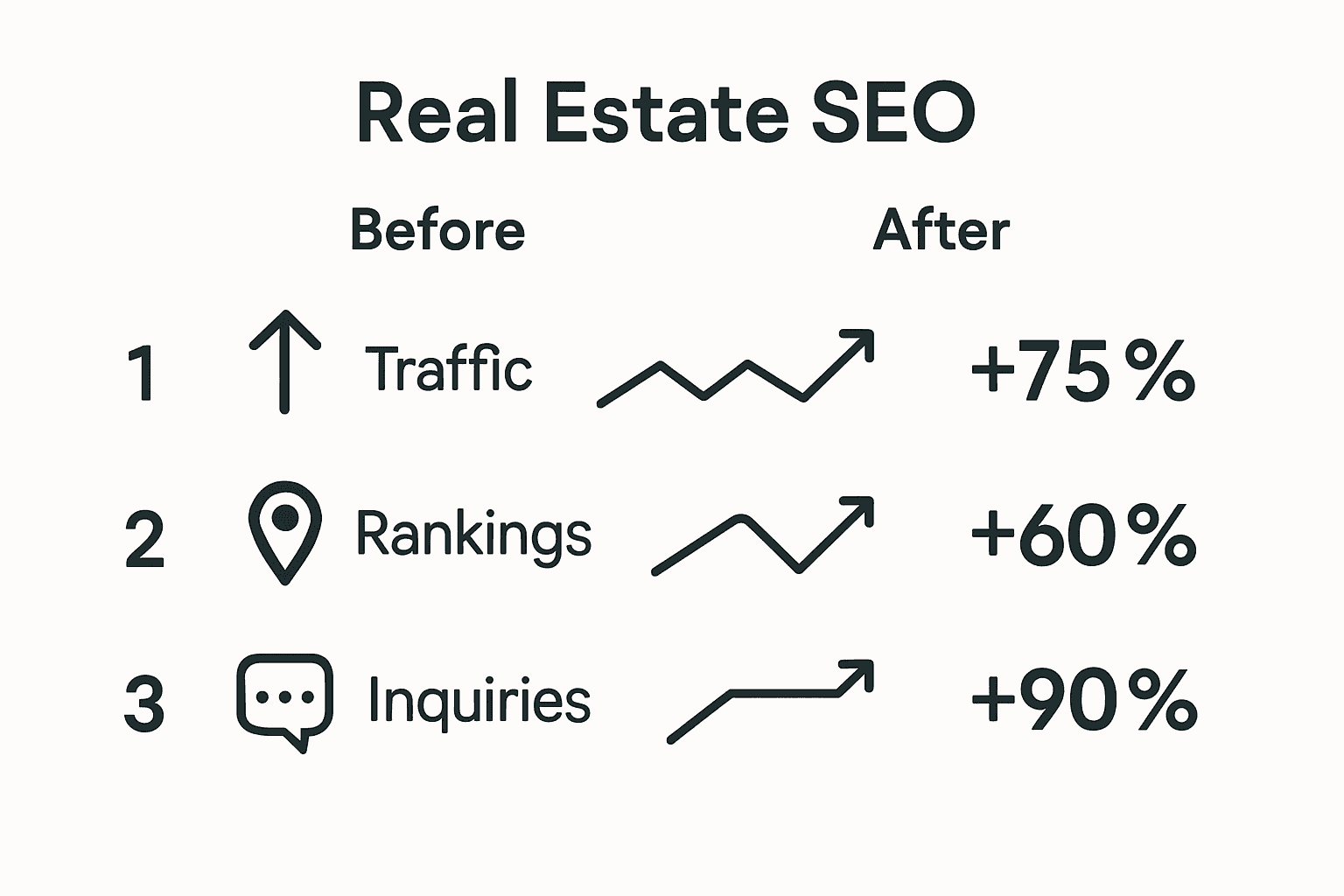
Remember that consistent small improvements compound over time. Every incremental optimization brings you closer to becoming the go to real estate expert in your local market.
Ready to Dominate Local Searches and Become the Go-To Agent?
Have you been frustrated by slow website traffic and low lead generation despite following every local SEO tip? This article highlights the real challenges real estate agents face today. Outdated suburb content. Inconsistent NAP details. Weak Google Business Profile optimization. All these hurdles can hold back your visibility and cost you high-value clients in your area. The truth is, knowing what needs to be done is only one part of the journey. Turning these strategies into real results for your agency is where the real edge begins.

Let Content Charlie turn your knowledge into top rankings and tangible leads. Our team crafts SEO-driven content and suburb guides that solve technical SEO issues and spotlight your expertise in every neighborhood you serve. Take the next step and make your business the first choice for buyers and sellers searching locally. Visit Content Charlie now and let us help elevate your online presence before your competitors catch up.
Frequently Asked Questions
How can I audit my website for local SEO readiness as a real estate agent?
To audit your website for local SEO readiness, assess key elements like page loading speed, mobile responsiveness, and metadata accuracy. Use tools like Google Analytics and PageSpeed Insights to identify issues and prioritize fixing the most critical ones within 30 days to improve your local search visibility.
What specific keywords should I target to optimize my real estate website?
Target hyper-local keywords that reflect your market, such as ‘luxury homes in [local area]’ or ‘homes for first-time buyers.’ Research and incorporate these keywords naturally on key pages like your homepage and neighborhood guides, adjusting your strategy every few months based on search trends.
How can I enhance suburb-level content to attract more local home buyers?
Enhance suburb-level content by creating in-depth neighborhood guides that include demographics, local schools, and market trends. Regularly update this content to reflect current information, aiming for a comprehensive guide that resonates with potential clients and showcases your expertise.
What are some effective strategies for optimizing my Google Business Profile?
To optimize your Google Business Profile, upload high-quality photos, create engaging video content, and post weekly updates about new listings. Ensure your profile is complete and fresh, which can increase your visits and leads by significantly more than 50% when updated regularly.
How often should I track and refine my real estate SEO strategy?
Track your SEO strategy continuously, evaluating key performance metrics at least monthly. Regularly analyze organic traffic and keyword rankings to identify improvement areas, and be prepared to make adjustments at least every four months for optimal visibility.
What content types can I use to boost my local authority and presence online?
Utilize various content types like detailed neighborhood guides, market trend reports, and high-quality images or videos. Focus on creating value-driven content that engages local clients, fostering trust and encouraging potential clients to view you as their leading real estate expert.
Recommended

Real Estate SEO Tips to Boost Local Rankings Fast
Real Estate SEO Tips to Boost Local Rankings Fast will get you at the top of search. But how do you do this. Let me explain below.
Did you know that over 95 percent of home buyers begin their search online? Competition for local property listings is fierce, and showing up in the right place at the right time makes all the difference. To reach serious buyers and stand out in your area, you need a real estate SEO approach tailored to your market. The right steps can help you connect with more clients and grow your business faster.
Quick Summary
| Key Point | Explanation |
|---|---|
| 1. Conduct Local Keyword Research | Identify location-specific long tail keywords to attract buyers. Use Google Keyword Planner for better targeting. |
| 2. Optimize Website Structure | Ensure a clear and logical site hierarchy for SEO. Structure listings by categories like location or property type to enhance user experience. |
| 3. Create Engaging Suburb Content | Develop detailed suburb guides that cover local features and narratives. Tailor content to answer potential buyers’ questions. |
| 4. Enhance Google Business Profile | Keep your profile updated with accurate information and engaging visuals. Regular content updates help improve local search visibility. |
| 5. Monitor and Adjust SEO Performance | Track key metrics using Google Analytics. Refine your strategies based on data to stay competitive in search rankings. |
Table of Contents
- Step 1: Research Local Keywords That Attract Buyers
- Step 2: Optimise Website Structure For Faster Results
- Step 3: Create High-Quality, Suburb-Focused Content
- Step 4: Enhance Google Business Profile For Local Impact
- Step 5: Monitor Performance And Refine SEO Strategies
Step 1: Research Local Keywords That Attract Buyers
Keyword research is your secret weapon for attracting potential home buyers through targeted local search results. You will learn how to uncover location specific search terms that connect directly with your target market.
Start by thinking like a local home buyer. What specific phrases would someone type when searching for property in your area? According to research from local audience targeting, creating content tailored to local audiences helps build search authority.
Use Google Keyword Planner and local real estate search tools to discover neighborhood specific long tail keywords. These are detailed phrases with lower search volume but higher buyer intent. For example instead of “homes for sale”, target “3 bedroom homes for sale in Broadbeach Waters” or “affordable family homes near Gold Coast schools”.
Dig into hyper local search terms that reflect real buyer motivations. Look for keywords combining location details with specific property characteristics:
- Neighborhood name + property type
- Local school district + home features
- Suburb name + buyer demographic (“first time buyer homes”)
Pro Tip: Local long tail keywords with specific details signal higher purchase intent and help you rank faster in search results.
Remember that local keyword research is an ongoing process. Update your keyword strategy regularly as neighborhood markets shift and new development trends emerge.
In the next step, you will learn how to strategically integrate these local keywords into your website content to boost your search rankings.
Step 2: Optimise Website Structure for Faster Results
Website structure is the foundation of your real estate SEO strategy. You will learn how to create a technical framework that helps search engines understand and rank your content quickly and effectively.
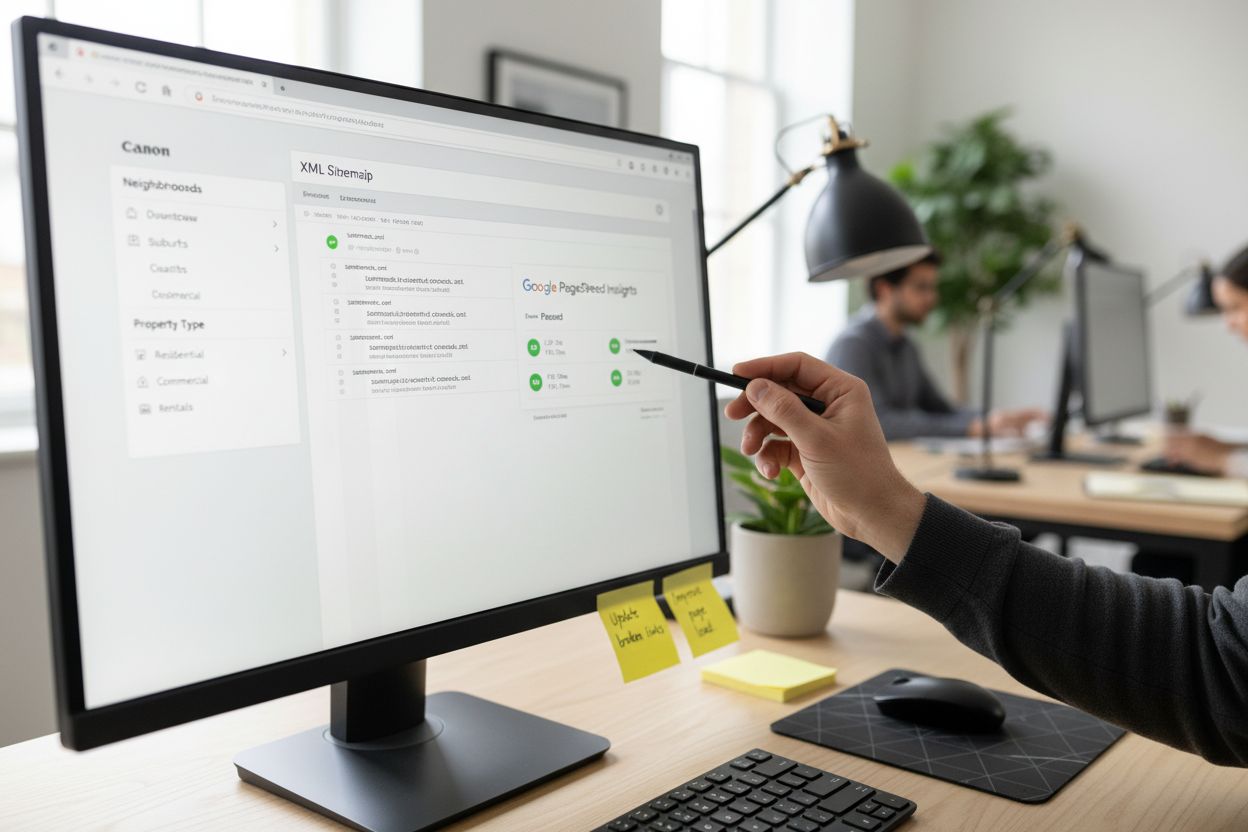
According to research from Search Engine Journal, conducting an SEO audit is critical for identifying areas of improvement in site structure. Start by examining your website’s core technical elements like XML sitemaps, robots.txt, page titles, headings, alt tags, and URL structures.
Focus on creating a logical and intuitive website hierarchy. Group your property listings and content into clear categories. For real estate websites, this might mean organizing by property type, location, price range, or buyer demographic. Ensure that each page is no more than three clicks away from your homepage.
Improving site performance is crucial for SEO success. As research from Promodo indicates, Core Web Vitals play a significant role in search rankings. Pay attention to:
- Largest Contentful Paint (LCP): Aim for load times under 2.5 seconds
- Interaction to Next Paint (INP): Ensure quick page responsiveness
- Cumulative Layout Shift (CLS): Maintain visual stability during page load
Pro Tip: Use Google PageSpeed Insights to diagnose and fix performance issues that could hurt your search rankings.
Check and fix broken links regularly. A seamless user experience signals to search engines that your website is well maintained and trustworthy. Use tools like Screaming Frog or Google Search Console to identify and resolve any link issues.
In the next step, you will learn how to create high quality content that complements your optimized website structure.
Step 3: Create High-Quality, Suburb-Focused Content
Creating suburb-focused content is your pathway to connecting with local home buyers and establishing your real estate expertise. You will learn how to craft compelling neighborhood content that attracts and engages your target audience.
Start by understanding the unique characteristics of each suburb you are targeting. Go beyond basic property listings and create in depth content that provides real value to potential buyers. Learn from the 7 types of real estate content every agent should use to diversify your approach.
Develop comprehensive suburb guides that showcase local amenities, school districts, community highlights, and property market trends. Think like a buyer and answer questions they would naturally ask. What makes this neighborhood special? What are the best local cafes? How are property values changing?
Incorporate storytelling into your content. Instead of just listing facts, create narratives that help potential buyers imagine living in the neighborhood. Share stories about local community events, recent development projects, or interesting historical facts about the area.
Your content should cover multiple formats to keep readers engaged:
- Neighborhood market reports
- Local school and infrastructure insights
- Community event calendars
- Property investment potential
- Local business and lifestyle highlights
Pro Tip: Use high quality local images and maps to make your content more visually appealing and informative.
Consistently update your content to reflect current market conditions and local changes.
This signals to search engines that your website provides current and relevant information.
In the next step, you will learn how to optimize your content for local search engine rankings.
Step 4: Enhance Google Business Profile for Local Impact
Your Google Business Profile is a powerful tool for attracting local real estate clients and improving your search visibility. You will learn how to optimize this critical digital asset to stand out in local search results.
According to research from TopOnSeek, optimizing your Google Business Profile requires careful attention to multiple elements. Start by ensuring your Google Business Profile optimization includes completely accurate NAPW details (Name, Address, Phone, Website).
Complete every section of your profile with precise and engaging information. Upload high quality professional photos of your real estate team, office, and recent property listings. Include virtual tour videos and images that showcase your local market expertise. The more comprehensive and visually appealing your profile, the more potential clients will trust your brand.
Regularly update your profile with fresh content. Post about recent property sales, market insights, community events, and local real estate trends. These updates signal to Google that your business is active and relevant.
Key elements to focus on include:
Here’s a comparison of key actions for optimizing your Google Business Profile:
| Profile Element | Best Practices | SEO Impact |
|---|---|---|
| NAPW Details | Use accurate business name Address matches website Correct phone and website |
Ensures local trust Improves ranking signals |
| Images & Videos | Upload professional photos Share virtual tour videos |
Boosts engagement Increases client trust |
| Business Category & Description | Choose most relevant category Craft detailed service description |
Better local visibility Attracts target audience |
| Reviews & Responses | Encourage client reviews Reply promptly and professionally |
Demonstrates credibility Builds reputation |
| Content Updates | Post local property news Share market trends Highlight community events |
Signals business activity Keeps profile relevant |
| Service Area Info | Specify neighborhoods List all serviced suburbs |
Targets right audience Improves search accuracy |
- Accurate business category
- Detailed service descriptions
- High resolution images
- Client reviews and responses
- Current contact information
- Local service area specifics
Pro Tip: Respond to all client reviews professionally and quickly to demonstrate excellent customer service.
Verify your business location and maintain consistent information across all online platforms.
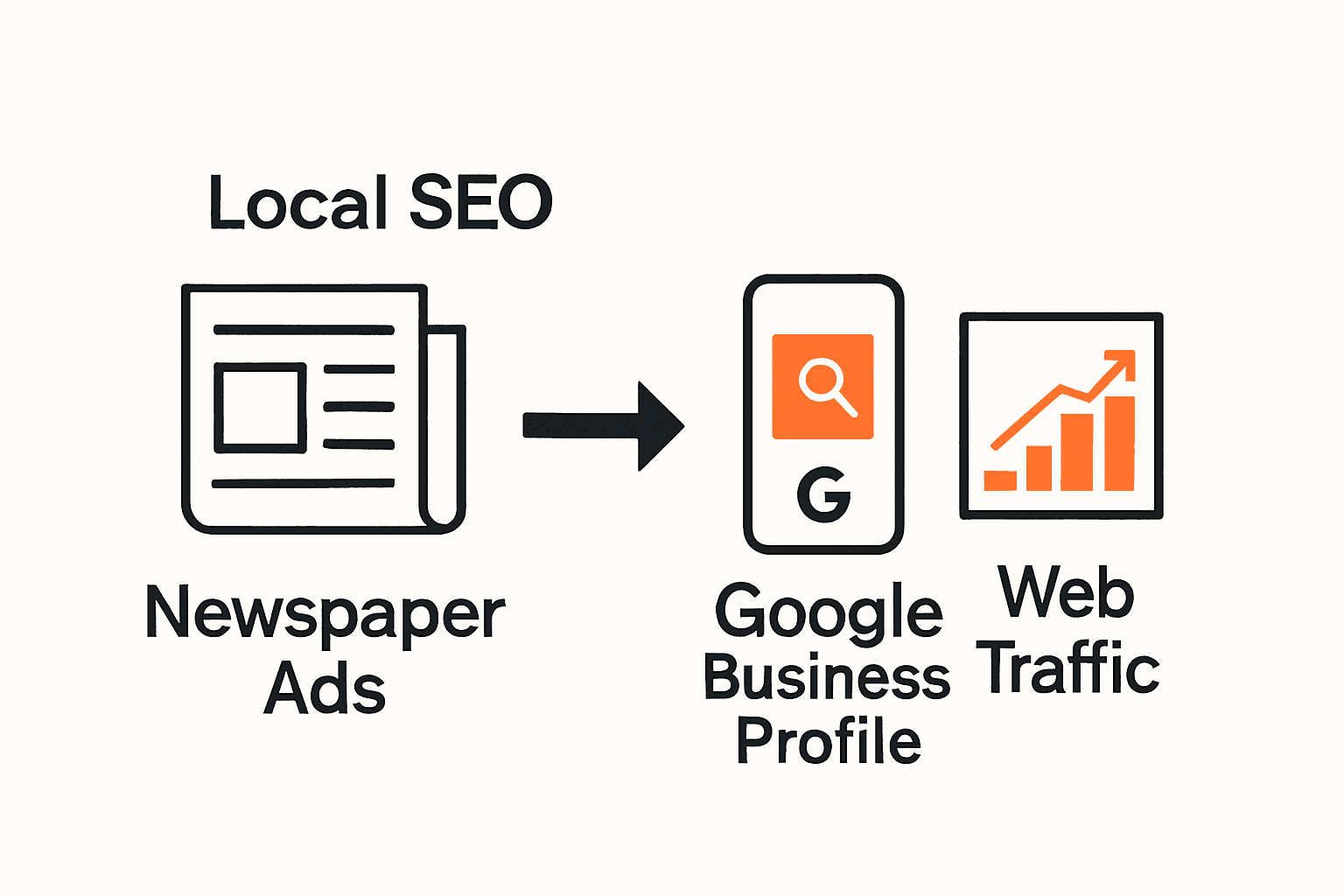 Inconsistent details can confuse potential clients and harm your local search rankings.
In the next step, you will learn advanced techniques for building local backlinks and increasing your online authority.
Step 5: Monitor Performance and Refine SEO Strategies
Constant monitoring and strategic refinement are the keys to maintaining strong local search rankings for your real estate business. You will learn how to track your SEO performance and make data driven improvements that keep you ahead of the competition.
Start by setting up comprehensive tracking using Google Analytics 4 and Search Console. Learn from the key performance indicators that matter most for real estate websites. According to research from Search Engine Journal, these tools help you understand critical metrics like website traffic, user behavior, and search ranking performance.
Focus on analyzing specific metrics that impact your real estate SEO strategy:
- Organic search traffic volume
- User engagement time
- Bounce rates for property listing pages
- Conversion rates from search to contact form submissions
- Top performing keywords and landing pages
- Mobile versus desktop user interactions
Conduct a monthly SEO audit to identify areas for improvement. Look for opportunities to enhance page speed, fix broken links, and optimize content based on user behavior patterns. Pay special attention to mobile friendliness and page load times.
Pro Tip: Set up custom dashboards in Google Analytics to track real estate specific metrics more efficiently.
Remember that SEO is an ongoing process. What works today might need adjustment tomorrow. Stay flexible and willing to experiment with new strategies based on your performance data.
In the final step, you will learn how to integrate these insights into a comprehensive local SEO approach for your real estate business.
Ready to Outrank Your Local Real Estate Rivals?
Struggling to turn neighborhood SEO tips into real results? Whether you feel stuck researching keywords that are not bringing buyers or frustrated by average Google rankings, you are not alone. This article showed that real estate agents need suburb-focused content, smart website structure, and a strong Google Business Profile to win local customers. But connecting all these steps can be complex and time-consuming.
Stop losing clients to competitors who appear first in local searches. At Content Charlie, we do the heavy lifting for you. Let us help you rank for targeted keywords, write suburb guides that attract the right buyers, and manage your SEO updates in line with the best practices covered here. Visit Content Charlie now and discover how easy it is to boost your local profile, capture more leads, and become the go-to real estate expert in your area. Start getting found by the customers who are searching for you today.
Frequently Asked Questions
How can I perform local keyword research for my real estate business?
Start by thinking like a home buyer and use tools to identify location-specific search terms that reflect buyer intent. Focus on long-tail keywords like “3 bedroom homes for sale in [Neighborhood]” to attract targeted traffic. Assess and adjust your keyword list regularly to match market trends.
What is the best website structure for improving real estate SEO?
A logical website structure is essential for SEO success. Group your property listings by type, location, and price range to ensure each page is easily accessible within three clicks from your homepage.
How can I create high-quality content to attract local home buyers?
Focus on developing comprehensive content that highlights suburb characteristics, local amenities, and market trends. Use engaging formats such as neighborhood guides and storytelling to connect with your audience. Update your content consistently to reflect current market conditions.
What elements should I include to optimize my Google Business Profile?
Ensure your profile has accurate NAPW details and engaging images of your team and properties. Regularly update your profile with posts about recent sales and local events to keep it active and relevant in search results.
How do I monitor my SEO performance and make improvements?
Set up tracking tools to analyze your website’s organic traffic, user engagement, and conversion rates. Conduct monthly audits to identify areas for enhancement, focusing on mobile friendliness and page speed to ensure optimal user experience.
What specific actions can I take to enhance my local search rankings in real estate?
Utilize long-tail keywords in your content, optimize your website structure, and improve your Google Business Profile. Additionally, create suburb-focused content and regularly assess your performance metrics to refine your strategies for better rankings.