
- You are here:
- Home »
- long-tail keywords
Tag Archives for " long-tail keywords "

Real Estate SEO in 2025: Complete Guide for Agents
Nearly 90 percent of homebuyers start their search online, yet only a fraction of real estate agents achieve top rankings in search results. With digital competition growing fast, staying visible means mastering more than basic website updates.
Cutting-edge real estate SEO in 2025 demands tailored local content, lightning-fast mobile experiences, and powerful tech integrations that connect agents with serious buyers and sellers—right when and where it matters most.
Table of Contents
- Defining Real Estate SEO for 2025
- Core SEO Trends Affecting Real Estate
- How AI and Voice Search Impact Rankings
- Local Search: Suburb-Level SEO Strategies
- Common Real Estate SEO Mistakes to Avoid
Key Takeaways
| Point | Details |
|---|---|
| Local SEO Importance | Hyperlocal content targeting specific neighborhoods is essential for enhancing local search visibility in real estate. |
| AI and Voice Search Adaptation | Real estate professionals must create content that aligns with AI technologies and conversational search patterns to stay competitive. |
| Mobile Optimization | Fast and responsive mobile sites are crucial to reduce bounce rates and improve search rankings. |
| Avoiding SEO Pitfalls | Agents should steer clear of common mistakes such as ignoring mobile responsiveness and duplicating content to maintain a strong digital presence. |
Defining Real Estate SEO for 2025
Real Estate SEO in 2025 is a sophisticated digital strategy that goes far beyond basic website optimization. According to research from The SEO Project, it involves strategic techniques designed to help property professionals rank higher in search engine results while attracting potential buyers and sellers through targeted online visibility.
The core of modern Real Estate SEO centers on three critical elements: local search optimization, mobile-friendly design, and high-quality content. As ZEO resources highlight, agents must adapt to evolving search engine algorithms and integrate AI-driven content strategies that enhance user experience. This means creating hyper-local content that speaks directly to specific neighborhood markets and leveraging technology to make property information instantly accessible.
Key characteristics of Real Estate SEO in 2025 include:
- Microsecond mobile page loading speeds
- Hyperlocal content targeting specific suburbs and neighborhoods
- Rich, schema-enabled property listings with comprehensive details
- Interactive mapping and virtual tour integrations
- Authentic, conversational content that answers specific buyer and seller questions
Successful real estate professionals recognize that SEO is no longer about keyword stuffing, but about creating genuine, valuable connections with potential clients through strategic digital presence. By understanding and implementing these advanced SEO techniques, agents can transform their online platforms from simple listing repositories into powerful lead generation machines.
Core SEO Trends Affecting Real Estate
The real estate digital landscape is rapidly transforming, with SEO becoming increasingly nuanced and sophisticated. Understanding real estate SEO metrics is crucial for agents looking to stay competitive. According to research from The SEO Project, key trends are dramatically reshaping how property professionals approach online visibility, with a growing emphasis on local search listings and organic search results over paid advertisements.
Emerging technological shifts are redefining SEO strategies. As ZEO resources highlight, the rise of voice search and AI-integrated search experiences are creating new challenges and opportunities for real estate professionals. Agents must now craft content that not only ranks well but also directly addresses user intent, providing comprehensive and immediately actionable information.
The most critical SEO trends for real estate professionals in 2025 include:
Here’s a comparison of critical 2025 real estate SEO trends and their practical impact:
| SEO Trend | Description | Impact on Real Estate Agents |
|---|---|---|
| Hyperlocal Content | Content targeting neighborhoods | Increases local search visibility |
| AI-Powered Search | AI matches search intent | Delivers more qualified buyer leads |
| Enhanced Mobile Experience | Fast, responsive mobile sites | Reduces bounce rate, boosts rankings |
| Multimedia Integration | Maps, virtual tours, videos | Engages visitors, increases dwell time |
| Strong Security Protocols | Robust HTTPS, privacy standards | Builds trust, improves search ranking |
- Hyperlocal content optimization
- AI-powered search intent matching
- Enhanced mobile user experience
- Robust online security protocols
- Seamless integration of multimedia content
Successful real estate SEO now requires a holistic approach that goes beyond traditional keyword strategies. By understanding these evolving trends and adapting quickly, agents can position themselves as digital-first professionals who can effectively connect with potential buyers and sellers in an increasingly competitive online marketplace.
How AI and Voice Search Impact Rankings
The integration of artificial intelligence and voice search is fundamentally transforming how real estate websites compete for top search rankings. Exploring AI article analysis techniques reveals the sophisticated ways search engines now evaluate content relevance and quality. According to research from ZEO, AI adoption in search engines is driving more personalized and accurate results, compelling real estate professionals to produce exceptionally high-quality, targeted content.
Voice search is revolutionizing how potential property buyers interact with online search platforms. Modern AI algorithms now prioritize conversational language and natural speech patterns, which means real estate content must evolve beyond traditional keyword optimization. As ZEO research indicates, users are increasingly using long-tail, conversational queries like “three-bedroom house near local schools” instead of fragmented search terms.
Key strategies for adapting to AI and voice search ranking criteria include:
- Creating content that answers specific user questions
- Implementing natural, conversational language
- Developing comprehensive, context-rich property descriptions
- Optimizing for featured snippets and direct answer boxes
- Ensuring mobile and voice search compatibility
Successful real estate professionals will recognize that AI-driven search is not just a technological trend, but a fundamental shift in how potential clients discover and interact with property information. By understanding and strategically adapting to these emerging search technologies, agents can position themselves at the forefront of digital real estate marketing.
Local Search: Suburb-Level SEO Strategies
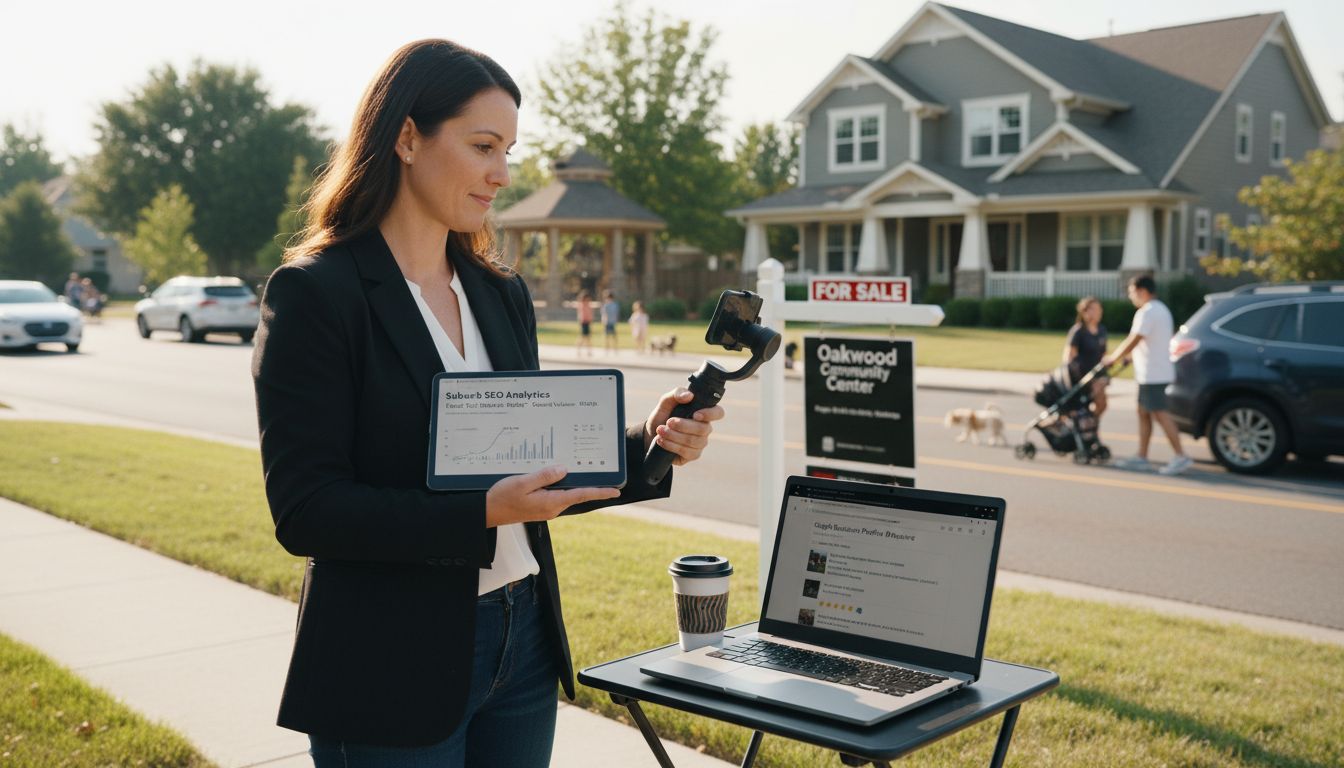
Local SEO has become the cornerstone of digital visibility for real estate professionals in 2025. Understanding why local SEO matters reveals the critical importance of hyper-targeted online strategies. According to research from The SEO Project, optimizing for local search requires meticulous management of business listings, strategic review handling, and providing comprehensive information about properties and neighborhoods.
Suburb-level SEO demands a nuanced approach that goes beyond traditional keyword optimization. As ZEO resources highlight, successful strategies now involve creating geo-targeted content that speaks directly to specific local markets. This means developing rich, context-aware narratives about individual suburbs, their unique characteristics, property trends, and community dynamics.
Key suburb-level SEO strategies for real estate agents include:
- Creating hyperlocal content about specific neighborhood amenities
- Developing suburb-specific property market reports
- Optimizing Google Business Profile with precise local information
- Generating location-specific testimonials and case studies
- Engaging with local community events and online discussions
The most successful real estate professionals will treat suburb-level SEO as an opportunity to become digital neighborhood experts. By crafting content that provides genuine value and insights into local property landscapes, agents can transform their online presence from generic listings to authoritative local resources that potential buyers and sellers genuinely trust.
Common Real Estate SEO Mistakes to Avoid
Boosting agent visibility online requires avoiding critical SEO pitfalls that can dramatically undermine digital performance. According to research from The SEO Project, real estate professionals frequently make mistakes that directly compromise their search rankings, including neglecting mobile optimization, overlooking local search strategies, and failing to secure websites with HTTPS protocols.
Duplicate content remains a significant challenge in real estate SEO. As ZEO resources highlight, search engines penalize websites that reproduce identical property descriptions or listing information across multiple pages. The most sophisticated algorithms now detect and downgrade content that lacks originality, compelling agents to develop unique, compelling narratives for each property listing.
The most common real estate SEO mistakes that agents must avoid include:
- Ignoring mobile responsiveness
- Using generic, non-localized content
- Neglecting website security protocols
- Publishing duplicate property descriptions
- Failing to update listings regularly
- Overlooking page loading speed
- Inconsistent NAP (Name, Address, Phone) information
Successful real estate professionals understand that SEO is an ongoing process of refinement and adaptation. By proactively addressing these common mistakes, agents can create a robust digital presence that not only attracts potential clients but also establishes credibility in an increasingly competitive online marketplace.
Elevate Your Real Estate SEO and Capture Local Leads in 2025
The article reveals that modern Real Estate SEO is all about mastering hyperlocal content, enhancing mobile experience, and leveraging AI to meet evolving search trends. If you find it challenging to create unique, suburb-focused content or struggle with optimizing your listings for voice search and mobile users, you are not alone. Many agents face these hurdles while trying to stand out in competitive neighborhoods and build genuine trust with potential buyers and sellers.
At Content Charlie, we understand that winning local searches from Broadbeach to Burleigh means having SEO-driven, engaging property descriptions, detailed suburb guides, and Google Business Profile content that truly connect with your audience. We help you overcome the common pitfalls like duplicate content and slow mobile pages with tailored strategies designed to boost your rankings and convert clicks into clients.
Ready to transform your digital presence into a powerful lead-generating machine?

Discover how our local SEO and real estate copywriting expertise can make your brand the trusted neighborhood choice. Visit Content Charlie today and explore our services that align perfectly with the latest 2025 SEO trends. Start attracting ready-to-act customers now with content that ranks, engages, and sells. Check out Content Charlie and learn the secrets to dominating your local market through effective SEO strategies tailored just for real estate professionals.
Frequently Asked Questions
What is Real Estate SEO in 2025?
Real Estate SEO in 2025 involves advanced digital strategies that help real estate professionals improve their search rankings and enhance online visibility through local search optimization, mobile-friendly designs, and high-quality content.
Why is local SEO important for real estate agents?
Local SEO is essential for real estate agents as it helps them target specific neighborhoods and markets, increasing their visibility to potential buyers and sellers actively searching for properties in those areas.
How do AI and voice search impact SEO for real estate websites?
AI and voice search enhance SEO by prioritizing content that uses natural language and answers specific user questions, requiring real estate professionals to create targeted and context-rich content that aligns with conversational queries.
What are common SEO mistakes real estate agents should avoid?
Common SEO mistakes include neglecting mobile responsiveness, using duplicate property descriptions, failing to secure websites with HTTPS, and not optimizing local search strategies, which can harm search rankings and online visibility.
Recommended

Real Estate SEO Tips to Boost Local Rankings Fast
Real Estate SEO Tips to Boost Local Rankings Fast will get you at the top of search. But how do you do this. Let me explain below.
Did you know that over 95 percent of home buyers begin their search online? Competition for local property listings is fierce, and showing up in the right place at the right time makes all the difference. To reach serious buyers and stand out in your area, you need a real estate SEO approach tailored to your market. The right steps can help you connect with more clients and grow your business faster.
Quick Summary
| Key Point | Explanation |
|---|---|
| 1. Conduct Local Keyword Research | Identify location-specific long tail keywords to attract buyers. Use Google Keyword Planner for better targeting. |
| 2. Optimize Website Structure | Ensure a clear and logical site hierarchy for SEO. Structure listings by categories like location or property type to enhance user experience. |
| 3. Create Engaging Suburb Content | Develop detailed suburb guides that cover local features and narratives. Tailor content to answer potential buyers’ questions. |
| 4. Enhance Google Business Profile | Keep your profile updated with accurate information and engaging visuals. Regular content updates help improve local search visibility. |
| 5. Monitor and Adjust SEO Performance | Track key metrics using Google Analytics. Refine your strategies based on data to stay competitive in search rankings. |
Table of Contents
- Step 1: Research Local Keywords That Attract Buyers
- Step 2: Optimise Website Structure For Faster Results
- Step 3: Create High-Quality, Suburb-Focused Content
- Step 4: Enhance Google Business Profile For Local Impact
- Step 5: Monitor Performance And Refine SEO Strategies
Step 1: Research Local Keywords That Attract Buyers
Keyword research is your secret weapon for attracting potential home buyers through targeted local search results. You will learn how to uncover location specific search terms that connect directly with your target market.
Start by thinking like a local home buyer. What specific phrases would someone type when searching for property in your area? According to research from local audience targeting, creating content tailored to local audiences helps build search authority.
Use Google Keyword Planner and local real estate search tools to discover neighborhood specific long tail keywords. These are detailed phrases with lower search volume but higher buyer intent. For example instead of “homes for sale”, target “3 bedroom homes for sale in Broadbeach Waters” or “affordable family homes near Gold Coast schools”.
Dig into hyper local search terms that reflect real buyer motivations. Look for keywords combining location details with specific property characteristics:
- Neighborhood name + property type
- Local school district + home features
- Suburb name + buyer demographic (“first time buyer homes”)
Pro Tip: Local long tail keywords with specific details signal higher purchase intent and help you rank faster in search results.
Remember that local keyword research is an ongoing process. Update your keyword strategy regularly as neighborhood markets shift and new development trends emerge.
In the next step, you will learn how to strategically integrate these local keywords into your website content to boost your search rankings.
Step 2: Optimise Website Structure for Faster Results
Website structure is the foundation of your real estate SEO strategy. You will learn how to create a technical framework that helps search engines understand and rank your content quickly and effectively.
According to research from Search Engine Journal, conducting an SEO audit is critical for identifying areas of improvement in site structure. Start by examining your website’s core technical elements like XML sitemaps, robots.txt, page titles, headings, alt tags, and URL structures.
Focus on creating a logical and intuitive website hierarchy. Group your property listings and content into clear categories. For real estate websites, this might mean organizing by property type, location, price range, or buyer demographic. Ensure that each page is no more than three clicks away from your homepage.
Improving site performance is crucial for SEO success. As research from Promodo indicates, Core Web Vitals play a significant role in search rankings. Pay attention to:
- Largest Contentful Paint (LCP): Aim for load times under 2.5 seconds
- Interaction to Next Paint (INP): Ensure quick page responsiveness
- Cumulative Layout Shift (CLS): Maintain visual stability during page load
Pro Tip: Use Google PageSpeed Insights to diagnose and fix performance issues that could hurt your search rankings.
Check and fix broken links regularly. A seamless user experience signals to search engines that your website is well maintained and trustworthy. Use tools like Screaming Frog or Google Search Console to identify and resolve any link issues.

In the next step, you will learn how to create high quality content that complements your optimized website structure.
Step 3: Create High-Quality, Suburb-Focused Content
Creating suburb-focused content is your pathway to connecting with local home buyers and establishing your real estate expertise. You will learn how to craft compelling neighborhood content that attracts and engages your target audience.
Start by understanding the unique characteristics of each suburb you are targeting. Go beyond basic property listings and create in depth content that provides real value to potential buyers. Learn from the 7 types of real estate content every agent should use to diversify your approach.
Develop comprehensive suburb guides that showcase local amenities, school districts, community highlights, and property market trends. Think like a buyer and answer questions they would naturally ask. What makes this neighborhood special? What are the best local cafes? How are property values changing?
Incorporate storytelling into your content. Instead of just listing facts, create narratives that help potential buyers imagine living in the neighborhood. Share stories about local community events, recent development projects, or interesting historical facts about the area.
Your content should cover multiple formats to keep readers engaged:
- Neighborhood market reports
- Local school and infrastructure insights
- Community event calendars
- Property investment potential
- Local business and lifestyle highlights
Pro Tip: Use high quality local images and maps to make your content more visually appealing and informative.
Consistently update your content to reflect current market conditions and local changes.
This signals to search engines that your website provides current and relevant information.
In the next step, you will learn how to optimize your content for local search engine rankings.
Step 4: Enhance Google Business Profile for Local Impact
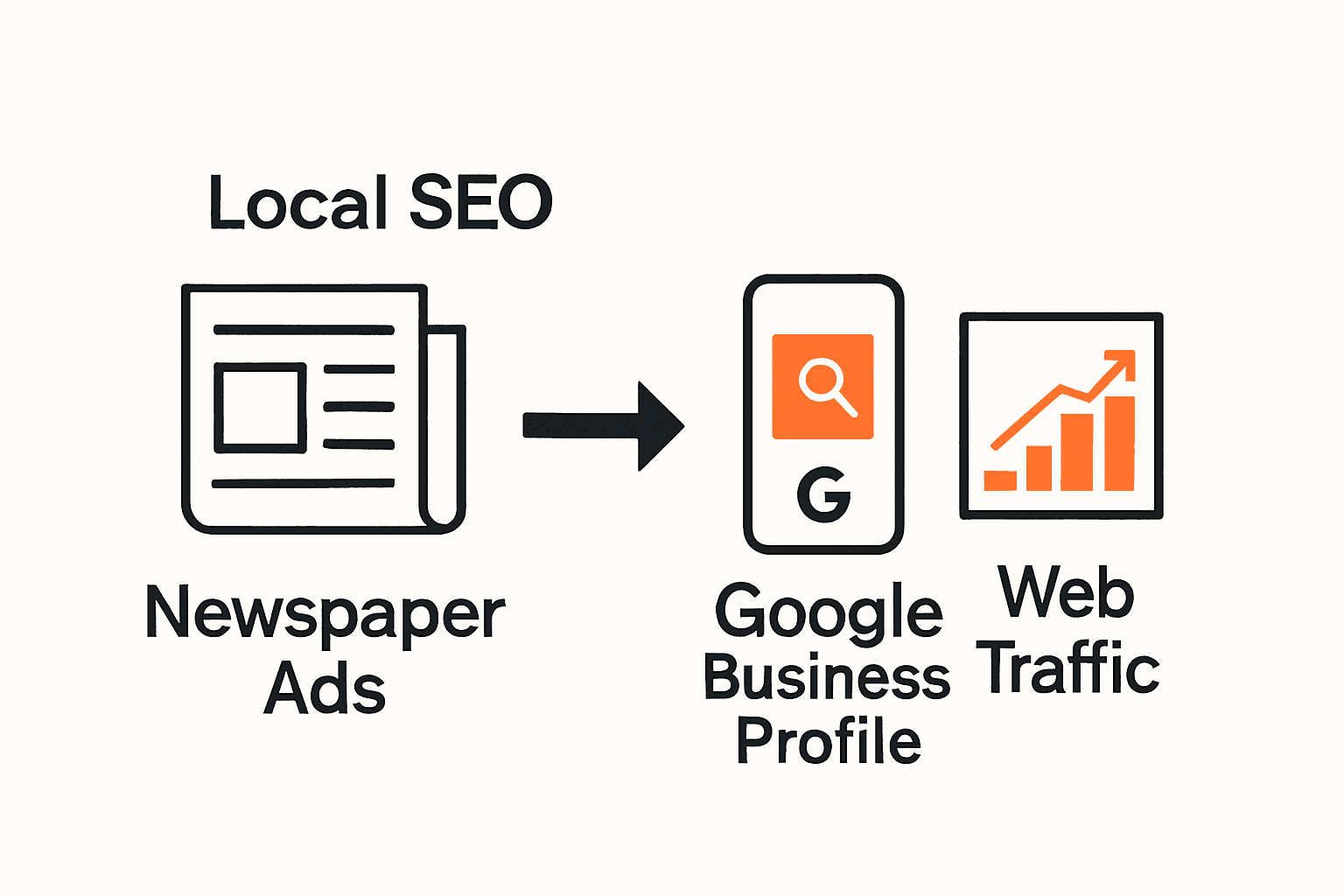
Your Google Business Profile is a powerful tool for attracting local real estate clients and improving your search visibility. You will learn how to optimize this critical digital asset to stand out in local search results.
According to research from TopOnSeek, optimizing your Google Business Profile requires careful attention to multiple elements. Start by ensuring your Google Business Profile optimization includes completely accurate NAPW details (Name, Address, Phone, Website).
Complete every section of your profile with precise and engaging information. Upload high quality professional photos of your real estate team, office, and recent property listings. Include virtual tour videos and images that showcase your local market expertise. The more comprehensive and visually appealing your profile, the more potential clients will trust your brand.
Regularly update your profile with fresh content. Post about recent property sales, market insights, community events, and local real estate trends. These updates signal to Google that your business is active and relevant.
Key elements to focus on include:
Here’s a comparison of key actions for optimizing your Google Business Profile:
| Profile Element | Best Practices | SEO Impact |
|---|---|---|
| NAPW Details | Use accurate business name Address matches website Correct phone and website |
Ensures local trust Improves ranking signals |
| Images & Videos | Upload professional photos Share virtual tour videos |
Boosts engagement Increases client trust |
| Business Category & Description | Choose most relevant category Craft detailed service description |
Better local visibility Attracts target audience |
| Reviews & Responses | Encourage client reviews Reply promptly and professionally |
Demonstrates credibility Builds reputation |
| Content Updates | Post local property news Share market trends Highlight community events |
Signals business activity Keeps profile relevant |
| Service Area Info | Specify neighborhoods List all serviced suburbs |
Targets right audience Improves search accuracy |
- Accurate business category
- Detailed service descriptions
- High resolution images
- Client reviews and responses
- Current contact information
- Local service area specifics
Pro Tip: Respond to all client reviews professionally and quickly to demonstrate excellent customer service.
Verify your business location and maintain consistent information across all online platforms.
 Inconsistent details can confuse potential clients and harm your local search rankings.
In the next step, you will learn advanced techniques for building local backlinks and increasing your online authority.
Step 5: Monitor Performance and Refine SEO Strategies
Constant monitoring and strategic refinement are the keys to maintaining strong local search rankings for your real estate business. You will learn how to track your SEO performance and make data driven improvements that keep you ahead of the competition.
Start by setting up comprehensive tracking using Google Analytics 4 and Search Console. Learn from the key performance indicators that matter most for real estate websites. According to research from Search Engine Journal, these tools help you understand critical metrics like website traffic, user behavior, and search ranking performance.
Focus on analyzing specific metrics that impact your real estate SEO strategy:
- Organic search traffic volume
- User engagement time
- Bounce rates for property listing pages
- Conversion rates from search to contact form submissions
- Top performing keywords and landing pages
- Mobile versus desktop user interactions
Conduct a monthly SEO audit to identify areas for improvement. Look for opportunities to enhance page speed, fix broken links, and optimize content based on user behavior patterns. Pay special attention to mobile friendliness and page load times.
Pro Tip: Set up custom dashboards in Google Analytics to track real estate specific metrics more efficiently.
Remember that SEO is an ongoing process. What works today might need adjustment tomorrow. Stay flexible and willing to experiment with new strategies based on your performance data.
In the final step, you will learn how to integrate these insights into a comprehensive local SEO approach for your real estate business.
Ready to Outrank Your Local Real Estate Rivals?
Struggling to turn neighborhood SEO tips into real results? Whether you feel stuck researching keywords that are not bringing buyers or frustrated by average Google rankings, you are not alone. This article showed that real estate agents need suburb-focused content, smart website structure, and a strong Google Business Profile to win local customers. But connecting all these steps can be complex and time-consuming.
Stop losing clients to competitors who appear first in local searches. At Content Charlie, we do the heavy lifting for you. Let us help you rank for targeted keywords, write suburb guides that attract the right buyers, and manage your SEO updates in line with the best practices covered here. Visit Content Charlie now and discover how easy it is to boost your local profile, capture more leads, and become the go-to real estate expert in your area. Start getting found by the customers who are searching for you today.
Frequently Asked Questions
How can I perform local keyword research for my real estate business?
Start by thinking like a home buyer and use tools to identify location-specific search terms that reflect buyer intent. Focus on long-tail keywords like “3 bedroom homes for sale in [Neighborhood]” to attract targeted traffic. Assess and adjust your keyword list regularly to match market trends.
What is the best website structure for improving real estate SEO?
A logical website structure is essential for SEO success. Group your property listings by type, location, and price range to ensure each page is easily accessible within three clicks from your homepage.
How can I create high-quality content to attract local home buyers?
Focus on developing comprehensive content that highlights suburb characteristics, local amenities, and market trends. Use engaging formats such as neighborhood guides and storytelling to connect with your audience. Update your content consistently to reflect current market conditions.
What elements should I include to optimize my Google Business Profile?
Ensure your profile has accurate NAPW details and engaging images of your team and properties. Regularly update your profile with posts about recent sales and local events to keep it active and relevant in search results.
How do I monitor my SEO performance and make improvements?
Set up tracking tools to analyze your website’s organic traffic, user engagement, and conversion rates. Conduct monthly audits to identify areas for enhancement, focusing on mobile friendliness and page speed to ensure optimal user experience.
What specific actions can I take to enhance my local search rankings in real estate?
Utilize long-tail keywords in your content, optimize your website structure, and improve your Google Business Profile. Additionally, create suburb-focused content and regularly assess your performance metrics to refine your strategies for better rankings.
Recommended

Content Creation Process Guide for Real Estate SEO Success
Ok. Your now you need it but how to do Content Creation Process Guide for Real Estate SEO? Let me expand for you.
Did you know over 90 percent of home buyers now start their search online? Standing out in digital real estate has never been more vital. With so many listings and guides available, your content must be more than just informative. Developing a step by step strategy helps you reach the right people, build trust, and turn clicks into real clients by matching your expertise to what home seekers really need.
Quick Summary
| Key Point | Explanation |
|---|---|
| 1. Define clear content objectives | Establish specific goals to align your content strategy with audience needs and market authority. |
| 2. Conduct targeted keyword research | Identify and utilize local SEO keywords that resonate with your target audience’s search behavior. |
| 3. Create a strategic content calendar | Organize and schedule content based on local market trends to maintain engagement and relevance. |
| 4. Craft SEO-optimized, engaging content | Develop valuable content that integrates keywords while prioritizing reader experience and solutions. |
| 5. Regularly review and refine content | Conduct quarterly audits to ensure content remains accurate, relevant, and aligned with current market trends. |
Table of Contents
- Step 1: Define Content Objectives And Target Audience
- Step 2: Research Local Seo Keywords And Topics
- Step 3: Plan A Content Calendar For Property Niches
- Step 4: Craft Seo-Optimized Content With Conversion Focus
- Step 5: Review And Refine Content For Quality And Accuracy
- Step 6: Measure Performance And Update As Needed
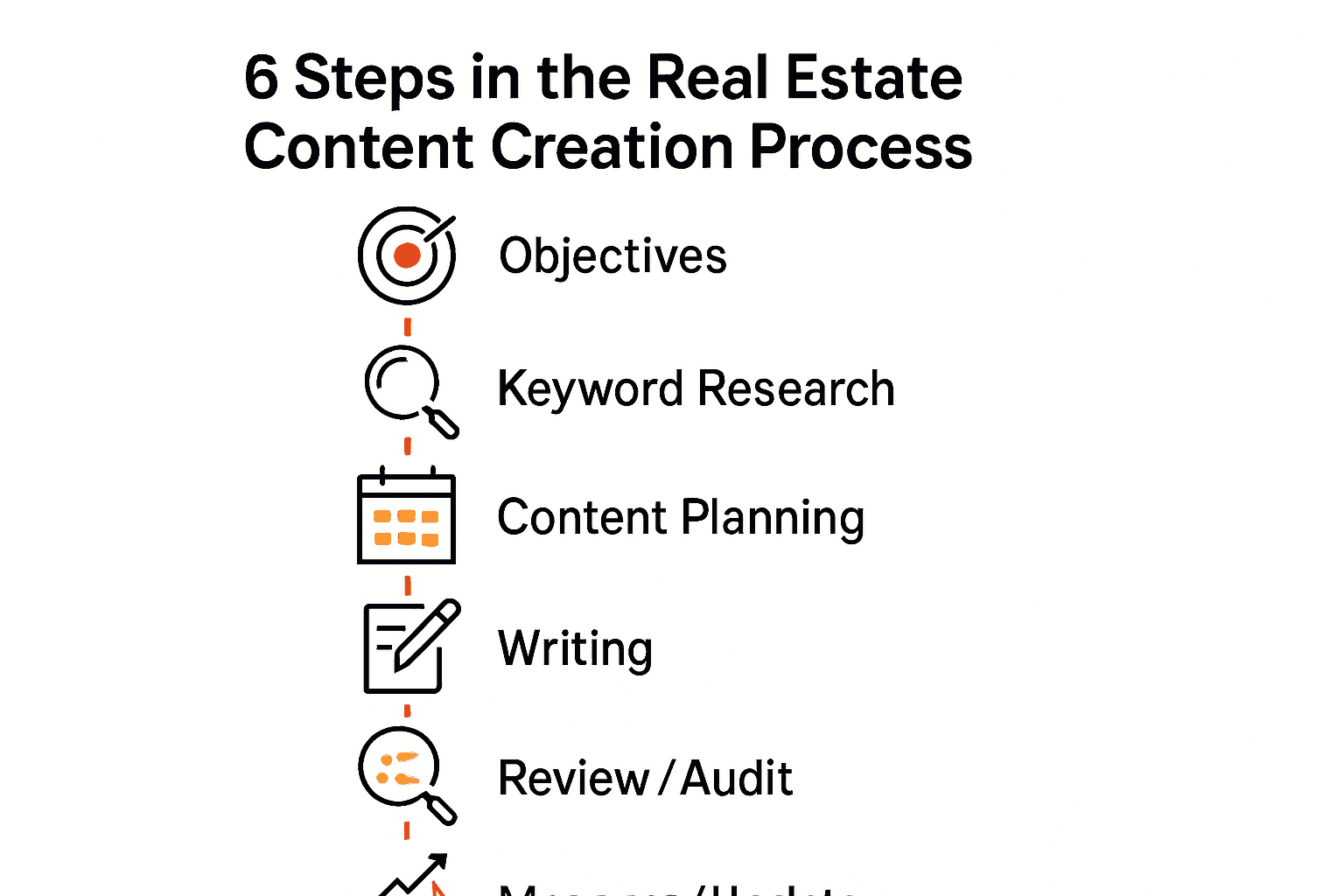
Step 1: Define content objectives and target audience
Your Content Creation Process Guide for Real Estate SEO starts with crystal clear objectives and a deep understanding of who you are actually talking to. Think of this step like mapping out a journey before hitting the road. Without knowing your destination and the passengers, you will likely end up somewhere random and unsatisfied.
Start by asking yourself some fundamental questions. What do you want your content to achieve? For real estate professionals, this might mean generating qualified leads, establishing local market authority, or attracting specific buyer segments like first-time homeowners or property investors. According to research from Sell.do, effective content strategies align closely with Google’s E-E-A-T principles, which means demonstrating expertise, experience, authoritativeness, and trustworthiness.
To nail down your target audience, create detailed personas. Who are they? Young professionals seeking starter homes? Retirees looking to downsize? Investors hunting for development opportunities? Each group needs different messaging, search terms, and content approaches. Research their demographics, pain points, aspirations, and online behavior.
Pro Tip: Don’t just guess. Use real data from your past clients, local market reports, and analytics to build accurate audience personas.
Once you understand your objectives and audience, you are ready to craft content that speaks directly to their needs and search intentions. This targeted approach will help you create more relevant, engaging material that actually converts.
Up next? Keyword research that connects your objectives with your audience’s search behavior.
Step 2: Research local SEO keywords and topics
Now that you understand your content objectives and target audience, it is time to dig into the research that will make your real estate content discoverable. Local SEO keyword research is like being a detective who knows exactly where to look for hidden treasure. Learn more about why local SEO matters for real estate agents.
Start by thinking like your potential clients. What would they type into Google when searching for real estate services in your area? Content Creation Process Guide for Real Estate SEO must be a strategic part of your tinking.
These search terms might include neighborhood names, property types, buyer specific phrases like “first home buyer” or investor terms like “property investment opportunities”. Your goal is to uncover the exact language your target audience uses.
Use free tools to expand your keyword universe. Google Keyword Planner, SEMrush, and Ahrefs can reveal search volumes and related terms. Pay special attention to long tail keywords that are specific and less competitive. For instance instead of just “Brisbane property” you might target “affordable 2 bedroom apartments in West End Brisbane”.
Pro Tip: Local keywords are gold. Always include suburb names location descriptors and property specific terms that reflect how locals actually search.
Dont just collect keywords randomly. Group them strategically based on user intent. Some keywords indicate someone wanting to buy right now. Others suggest research mode. Understanding these nuances helps you create precisely targeted content that speaks directly to where a potential client is in their property journey.
Up next? Transforming those keywords into a content plan that attracts and converts your ideal real estate clients.
Step 3: Plan a content calendar for property niches
With your keywords researched and audience defined, it is time to map out a strategic content roadmap that keeps your real estate marketing consistently engaging. According to research, a 12-month content calendar synchronized with local real estate trends can dramatically improve your lead generation and audience engagement learn more about creating effective social media calendars.
Start by understanding the seasonal rhythm of your local property market. Spring might highlight new listings and garden home features. Summer could focus on waterfront properties or vacation investments. Autumn might explore family home relocations near school districts. Winter could cover investment strategies and year end property assessments.
Create content themes that align with these seasonal shifts. A young professional audience might want different content compared to retiree investors. Break down your calendar into quarterly focus areas. Each quarter should have a mix of educational content, market insights, neighborhood spotlights, and direct lead generation pieces.
Pro Tip: Plan 3-4 months ahead. This gives you breathing room to adjust for market changes while maintaining a consistent publishing schedule.
Organize your content ideas in a spreadsheet or project management tool.
 Track publication dates, content types, target keywords, and potential promotional channels. Remember that flexibility is key. While planning is crucial, be ready to pivot when unexpected market opportunities or local events arise.
Up next? CraftingContent Creation Process Guide for Real Estate SEO compelling content that transforms your strategic calendar into actual engaging real estate resources.
Step 4: Craft SEO-optimized content with conversion focus
With your content calendar ready, it is time to transform those strategic plans into compelling real estate content that both Google and potential clients will love. Content Creation Process Guide for Real Estate SEO is not just about keywords but creating genuinely helpful resources learn more about on page optimization strategies.
According to research, successful real estate content typically runs around 2000 words and focuses intensely on providing rich human-centered information. Your goal is to answer every possible question a potential buyer or seller might have. Think comprehensive neighborhood guides, deep-dive market analysis reports, and step by step tutorials that showcase your expertise.
Embrace strategic keyword placement. Weave your target keywords naturally into titles, headings, image alt tags and throughout the content. But here is the critical part avoid keyword stuffing. Your writing must sound conversational and authentic. Google rewards content that genuinely helps readers solve problems.
Pro Tip: Always prioritize reader experience over search engine tricks. Useful content that genuinely helps people will naturally rank better.
Include visual elements that support conversion. High quality property images, infographics showing market trends, and clear call to action buttons can dramatically increase engagement. Use internal links strategically to guide readers through your content ecosystem and showcase your comprehensive local real estate knowledge.
Up next? Implementing technical SEO elements that make your content discoverable and user friendly.
Step 5: Review and refine content for quality and accuracy
Content Creation Process Guide for Real Estate SEO. It is an ongoing process of refinement and improvement. According to research from real estate SEO experts, learn more about maintaining content quality with AI tools, regular content reviews are essential to staying relevant and competitive.
According to research from Sell.do, maintaining E-E-A-T (Experience, Expertise, Authoritativeness, and Trustworthiness) is critical in real estate content. This means quarterly SEO audits are not just recommended they are necessary. Focus on checking several key areas: performance metrics, content freshness, local relevancy, meta data accuracy, and internal linking strategy.
Start by reviewing your existing content through a critical lens. Are your neighborhood guides still accurate? Do your market trend articles reflect the current real estate landscape? Update statistics, refresh property information, and ensure all local references are current. Remove or update any outdated information that could mislead potential clients.
Pro Tip: Set calendar reminders for quarterly content reviews. Consistency is key in maintaining high quality SEO content.
Pay special attention to seasonal content. A summer property investment guide from two years ago might need significant updates to remain valuable. Check your analytics to see which pieces are still driving traffic and which might need a complete overhaul. Remember that Google rewards fresh, accurate, and genuinely helpful content.
Up next? Implementing a systematic approach to ongoing content management and optimization.
Step 6: Measure performance and update as needed
You have crafted and refined your real estate content. Now comes the critical part measuring what works and what needs improvement. According to research from LinkedIn, real estate SEO success demands continuous tracking and strategic refinement learn more about performance measurement tools.
Start by setting up comprehensive tracking in Google Analytics and Google Search Console. These tools will reveal crucial insights about your content performance. What keywords are driving traffic? Which articles are generating leads? Look beyond basic metrics. Analyze engagement rates, bounce rates, and time spent on page to understand how your audience truly interacts with your content.
Conduct quarterly performance audits. Compare your content against current market trends and competitor strategies. Are your keyword rankings improving? Are you capturing the right audience segments? Be prepared to pivot quickly. A neighborhood guide that worked six months ago might need complete reconstruction based on current market dynamics.
Pro Tip: Create a performance dashboard that tracks key metrics monthly. Consistency in monitoring helps you spot trends faster.
Dont just collect data. Transform insights into actionable content updates. If a particular property investment article is attracting significant traffic but low conversion rates, investigate why. Perhaps the call to action needs refinement or the content requires more specific local market insights. Treat your content as a living document that evolves with your audience needs.
Up next? Building a sustainable real estate content strategy that grows with your business.
Here’s a summary of each key step in a real estate content strategy:
| Step | Main Focus | Key Actions |
|---|---|---|
| 1. Define Objectives & Audience | Set goals Identify target groups |
Build personas Analyze data |
| 2. Keyword & Topic Research | Uncover search terms | Use tools (Google, SEMrush) Group by intent |
| 3. Content Calendar Planning | Schedule & theme content | Align with seasons Organize by audience |
| 4. SEO-Optimized Content | Write Engage & convert |
Use keywords Add visuals & CTAs |
| 5. Review & Refine | Quality assurance | Audit quarterly Update & optimize |
| 6. Measure & Update | Track performance | Analyze metrics Adjust strategy |
Struggling to Turn Real Estate Content Into Actual Leads?
If you have ever mapped out buyer personas, spent ages on keyword lists, or tried to keep your real estate blog fresh and still wondered why your content is not driving real results, you are not alone. Many real estate professionals get stuck bridging the gap between well-structured content strategies and the kind of suburb-specific copy that actually brings in qualified leads. The article you just read highlights common pain points, from scattered keyword research to the challenge of maintaining accurate local information, and the need to keep content relevant and authoritative for both Google and real buyers and sellers.
You do not have to navigate the content creation process alone. At Content Charlie, we help you transform every step of your real estate SEO strategy into a simple, results-driven system. Whether you want expert guidance on building a content calendar, writing suburb guides, or optimizing for local search, our team will save you hours while positioning you ahead of your competition. Move from theory to action—visit Content Charlie and let us help you create search-ready content that turns readers into new business. Ready to update your approach? Start with us now and give your content the edge it deserves.
Frequently Asked Questions
What are the key objectives I should define for my real estate content creation?
To ensure your content effectively supports your business, start by setting clear objectives like generating leads, establishing market authority, or attracting specific buyer segments. Assess your past performance data to refine these goals and align them with your target audience’s needs.
How do I conduct keyword research specifically for real estate SEO?
Begin by thinking like your potential clients and brainstorm relevant search terms they might use. Utilize tools to identify these keywords, focusing on long-tail phrases that reflect specific local and property-related queries.
What steps should I take to create a content calendar for my real estate marketing?
Map out a calendar by understanding the seasonal rhythms of your local property market and organizing content themes that resonate with your audience. Plan at least 3-4 months ahead to adapt to any market changes while ensuring a consistent publishing schedule.
How can I ensure my real estate content is SEO-optimized and engaging?
Incorporate strategic keyword placement throughout your content and avoid keyword stuffing to maintain a natural tone. Aim for comprehensive material that answers common questions and includes engaging visuals and clear calls to action to enhance user experience.
Why is it important to regularly review and update my real estate content?
Regularly reviewing your content ensures it remains accurate and aligned with current market trends, which is crucial for maintaining trust with your audience. Schedule quarterly audits to assess performance metrics and refresh outdated information, keeping your content valuable and relevant.
What metrics should I track to measure the performance of my real estate SEO content?
Focus on metrics like traffic from specific keywords, engagement rates, bounce rates, and conversion rates to gauge content effectiveness. Set up a performance dashboard and conduct quarterly reviews to adapt your strategy based on these insights.
Recommended
- Why Use Blog Content: Essential Guide for Real Estate – Content Charlie
- Role of Content in SEO: Everything You Need to Know – Content Charlie
- 7 Types of Real Estate Content Every Agent Should Use – Content Charlie
- consistent content creation Archives – Content Charlie
- SEO for Real Estate Agencies: Simple Strategies to Grow Your Business

Role of Content in SEO: Everything You Need to Know
Did you know that over 70 percent of people start their property search online? Today, the Role of Content in SEO shapes more than just first impressions. It decides how visible and credible you are in the eyes of both clients and search engines. Understanding how content shapes modern SEO can put you ahead of your competition and ensure your expertise gets noticed where it matters most.
Key Takeaways
| Point | Details |
|---|---|
| Content Quality is Essential | High-quality content drives SEO rankings by demonstrating expertise and meeting user needs. |
| Diversify Content Types | Utilizing various content types, like suburb guides and market reports, enhances SEO and engages potential clients. |
| Focus on Local SEO | Developing hyperlocal content tailored to specific communities improves visibility and attracts relevant clients. |
| Avoid Common Pitfalls | Steer clear of mistakes like keyword stuffing and outdated information to maintain credibility and effectiveness in content marketing. |
Table of Contents
- Defining Content’s Role In Modern SEO
- Types Of SEO Content For Real Estate
- How Content Drives Search Rankings
- Local SEO: Content Strategies That Work
- Common Content Mistakes To Avoid
Defining Content’s Role in Modern SEO
In the rapidly evolving digital landscape, content is no longer just words on a page—it’s the strategic engine driving search engine optimization (SEO). Our comprehensive content marketing guide reveals how modern search algorithms prioritize content that genuinely serves user needs and demonstrates expertise.
According to research from Search Engine Journal, Google now considers content quality as a core ranking factor. The 2024 study highlights critical attributes that elevate content’s SEO performance:
- Relevance to user search intent
- Depth of information provided
- Semantic clarity and topical comprehensiveness
- User engagement signals
Recent academic research on Generative Search Engine Optimization reveals an even more sophisticated evaluation framework. This multi-dimensional approach moves beyond traditional metrics, analyzing content’s substantive impact through semantic influence. For real estate agents, this means creating hyperlocal, expertise-driven content that doesn’t just include keywords, but provides genuine value to potential property buyers and sellers.
The message is clear: exceptional content isn’t just recommended—it’s essential. Search engines now reward content that demonstrates authentic expertise, answers user questions comprehensively, and creates meaningful connections with the target audience.
Types of SEO Content for Real Estate
In the competitive world of real estate digital marketing, content diversity is your secret weapon for attracting potential buyers and sellers. Learn more about effective content strategies that can transform your online presence and drive targeted traffic.
Real estate professionals have several powerful content types at their disposal to boost SEO and engage potential clients:
- Suburb Guides: Comprehensive neighborhood profiles
- Property Market Reports: Local market trend analysis
- Client Success Stories: Testimonial and case study content
- Buyer and Seller Advice Blogs: Educational content addressing common questions
- Local Area Listings: Hyperlocal property insights
- Virtual Property Tours: Multimedia content with descriptive narratives
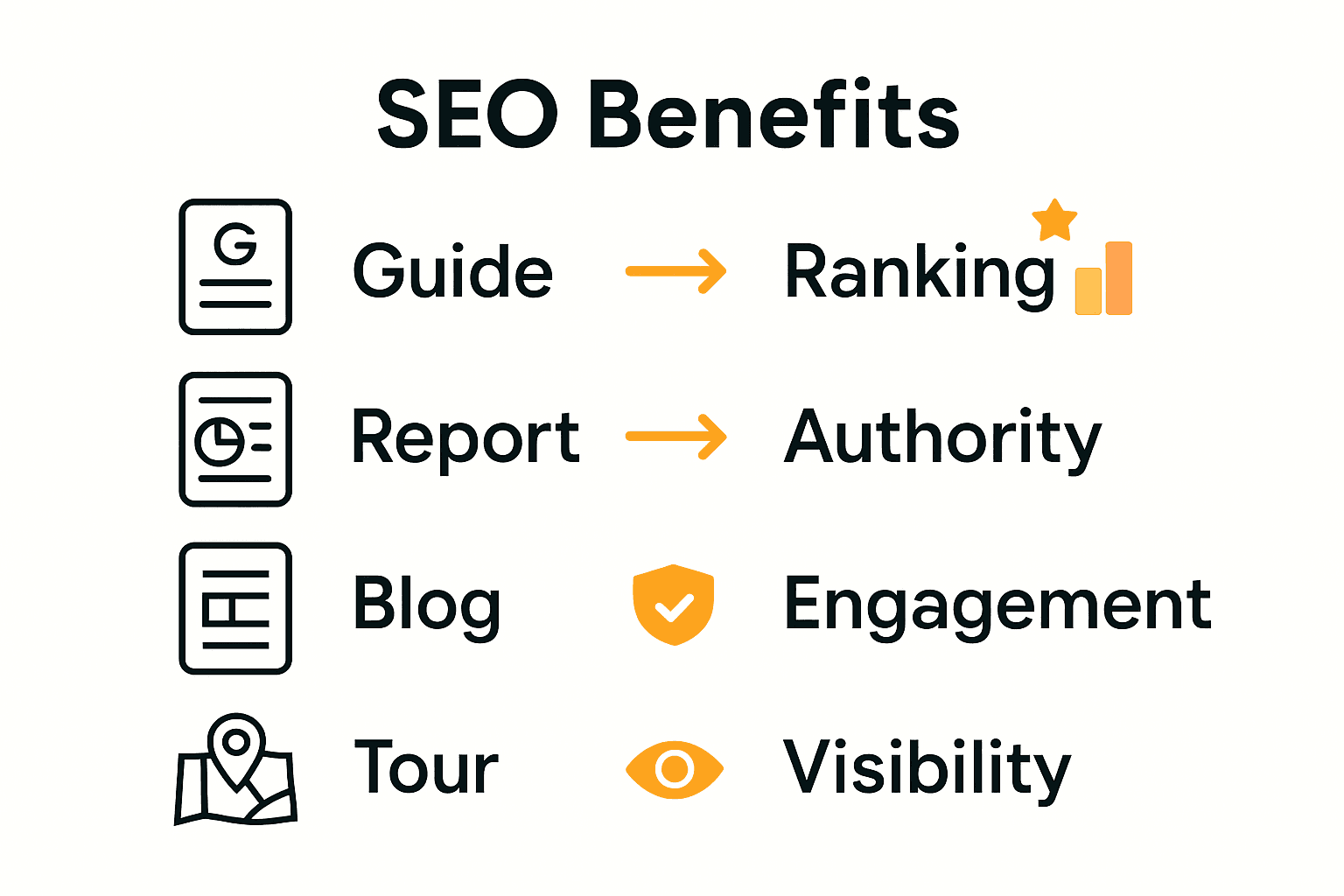
Each content type serves a unique purpose in your SEO strategy. Suburb guides, for instance, help you rank for hyperlocal search terms while providing immense value to potential clients researching specific areas. Property market reports establish you as a local market expert, attracting both search engine algorithms and potential clients seeking knowledgeable guidance.
Here’s a summary of key real estate content types and their SEO advantages:
| Content Type | Main Purpose | SEO Benefit |
|---|---|---|
| Suburb Guides | Neighborhood profiles | Ranks for hyperlocal keywords |
| Property Market Reports | Market trend analysis | Boosts authority & trust |
| Client Success Stories | Showcase expertise | Enhances credibility & engagement |
| Buyer/Seller Advice Blogs | Inform & educate clients | Targets long-tail search queries |
| Local Area Listings | Property details by area | Improves local search visibility |
| Virtual Property Tours | Visual property showcasing | Increases time on site |
The key is creating content that balances informational depth with strategic keyword targeting. By diversifying your content approach, you’re not just improving SEO—you’re building a comprehensive digital resource that positions you as the go-to real estate authority in your local market.

How Content Drives Search Rankings
In the intricate world of search engine optimization, content quality is the ultimate determining factor for ranking success. Our comprehensive content marketing insights reveal the complex mechanisms by which exceptional content propels websites up search result pages.
According to research from Search Engine Journal, Google’s algorithms assess content through multiple critical lenses:
- Relevance to user search intent
- Comprehensiveness of information
- Semantic depth of topic coverage
- User engagement metrics
Recent academic findings highlight a sophisticated, multi-agent framework for evaluating content. This approach goes beyond traditional keyword matching, analyzing content’s substantive influence through semantic complexity. For real estate professionals, this means creating content that doesn’t just include keywords, but provides genuine, in-depth insights that demonstrate true expertise.
The search ranking process is now more nuanced than ever. Search engines prioritize content that not only answers user questions but does so with authority, clarity, and comprehensive understanding. By crafting content that truly serves user needs—whether it’s a detailed suburb guide, a market trend analysis, or a comprehensive property buying walkthrough—real estate agents can significantly improve their visibility and credibility in search results.
Local SEO: Content Strategies That Work
For real estate agents, local SEO is the lifeline of digital marketing success. Our comprehensive link building strategies can help you transform hyperlocal content into a powerful ranking tool that attracts potential clients right in your neighborhood.
According to research from Search Engine Journal, strategic content approaches can dramatically improve local visibility:
- Structured data markup for property listings
- Localized social media content with targeted hashtags
- Neighborhood-specific landing pages
- Google Business Profile optimization
- Geo-targeted blog content
The key to effective local SEO lies in creating content that speaks directly to your community’s unique characteristics. This means developing suburb guides that go beyond generic descriptions, sharing market insights specific to local neighborhoods, and demonstrating deep understanding of micro-market trends that matter to potential buyers and sellers.
Successful local content strategies aren’t about keyword stuffing—they’re about genuine connection. By crafting content that provides real value to your local audience, you’re not just improving search rankings, you’re establishing yourself as the go-to real estate expert in your specific market. Think hyperlocal, write with authenticity, and watch your local search visibility soar.
Common Content Mistakes to Avoid
In the competitive realm of real estate digital marketing, content missteps can dramatically undermine your SEO efforts. Learn about strategic content approaches that help you sidestep common pitfalls and maintain a strong online presence.
Real estate professionals frequently encounter content challenges that can hurt their search rankings and audience engagement:
- Keyword Stuffing: Overloading content with repetitive keywords
- Generic Content: Using bland, non-specific property descriptions
- Outdated Information: Failing to update market data and listings
- Inconsistent Publishing: Irregular content creation schedules
- Ignoring Local Context: Writing without hyperlocal insights
One of the most critical mistakes is treating content as a mere SEO checkbox rather than a genuine communication tool. Real estate content should tell a story, provide meaningful insights, and address potential clients’ specific needs and questions. This means moving beyond surface-level property descriptions to create narratives that showcase neighborhood character, market trends, and the unique value you bring as a local expert.
Successful content strategy requires consistent, thoughtful execution. By avoiding these common pitfalls and focusing on creating authentic, valuable content, real estate agents can transform their digital presence from forgettable to remarkable. Remember: great content isn’t just about ranking—it’s about building trust, demonstrating expertise, and connecting with your local community.
Transform Your SEO Content Into Real Results With Content Charlie
Are you frustrated that your efforts with suburb guides or market reports are not turning into higher local rankings or more real estate clients? This article makes it clear that in today’s market, generic or keyword-stuffed content will only hold you back. You need tailored writing that demonstrates authority, connects with your local audience, and keeps you ahead in suburb-level searches. At Content Charlie, we know your challenges and we solve them by crafting SEO-driven copy and engaging blog articles that give your business lasting visibility.
It is time to stop guessing and start attracting clients who are ready to take action. Work with specialists who help real estate agents and local businesses master local SEO and content strategy every single day. Visit Content Charlie now to discover how we can turn your content into the secret weapon for ranking, engagement, and trust. Start seeing more leads from Broadbeach to Burleigh today. Book a strategy call and get your business found before your competition does.
Frequently Asked Questions
What is the role of content in modern SEO?
Content plays a crucial role in modern SEO as it serves as the strategic engine driving search engine rankings. High-quality, relevant content that addresses user needs is prioritized by search algorithms, enhancing visibility and user engagement.
How can real estate professionals use content to improve their local SEO?
Real estate professionals can enhance their local SEO by creating hyperlocal content, such as suburb guides, neighborhood-specific landing pages, and localized blog posts. This approach ensures that content resonates with local audiences and ranks well in search results.
What types of content are effective for enhancing SEO in real estate marketing?
Effective content types for real estate marketing include suburb guides, property market reports, buyer and seller advice blogs, client success stories, local area listings, and virtual property tours. Each type serves distinct purposes, from providing local insights to establishing authority in the market.
What common mistakes should real estate professionals avoid when creating content for SEO?
Common mistakes to avoid include keyword stuffing, using generic or outdated content, having inconsistent publishing schedules, and ignoring local context. Instead, focus on creating authentic, insightful narratives that connect with your target audience.
Recommended

Understanding Why Blogging Boosts SEO for Real Estate
SEO can feel overwhelming for real estate agents who want their websites to attract real clients. Most believe you have to master every algorithm and tech trick out there. We need to understand why blogging boosts seo.
Yet the surprising truth is that consistent blogging alone can make your website up to 4 times more effective at reaching qualified leads. That flips the script on what really drives online success.
Table of Contents
- The Basics Of Seo And Blogging
- How Blogging Improves Website Authority
- The Role Of Keywords And Content Strategy
- Engagement And Audience Connection Through Blogging
- Long-Term Benefits Of Consistent Blogging
Quick Summary
| Takeaway | Explanation |
|---|---|
| Create relevant content consistently | Regularly publishing blogs increases website visibility and attracts qualified leads. |
| Focus on strategic keyword integration | Use long-tail keywords tailored to specific client needs to enhance searchability. |
| Build website authority through quality | High-quality, informative content establishes trust and credibility with search engines and clients. |
| Engage with your audience genuinely | Personal insights and addressing client concerns help build a loyal readership and community trust. |
| Invest in long-term blogging | A consistent blogging strategy creates lasting digital resources that continue to attract traffic over time. |
The Basics of SEO and Blogging
Search Engine Optimization (SEO) represents a strategic approach that helps websites become more visible and attractive to search engines like Google.
For real estate professionals, blogging serves as a powerful mechanism to enhance online presence and attract potential clients through targeted content.
Google’s search documentation emphasizes that quality content helps search engines discover, crawl, and understand website information effectively.
Understanding SEO Fundamentals
At its core, SEO involves optimizing digital content to rank higher in search engine results pages (SERPs). For real estate agents, this means creating content that answers potential clients’ questions about property markets, neighborhoods, buying strategies, and local real estate trends.
The goal is not just attracting website visitors but drawing qualified leads who are genuinely interested in real estate services.
How Blogging Supports SEO Strategy
Blogs provide multiple advantages for SEO performance. They allow real estate professionals to:
- Generate fresh, relevant content consistently
- Target specific keywords related to local property markets
- Demonstrate professional expertise and market knowledge
- Create opportunities for internal and external linking
By publishing regular, high-quality content that addresses client interests and local real estate dynamics, agents can signal to search engines that their website is an authoritative and valuable resource. Learn more about content marketing strategies that can elevate your real estate business’s online visibility.
Successful SEO through blogging requires understanding audience needs, researching relevant keywords, and delivering informative content that provides genuine value to potential property buyers and sellers.
How Blogging Improves Website Authority
Website authority represents a critical metric determining how search engines perceive the credibility and relevance of a digital platform.
For real estate professionals, building this authority through strategic blogging can significantly enhance online visibility and attract potential clients. Moz’s Domain Authority research highlights that websites with consistent, high-quality content tend to rank higher in search engine results.
The Role of Content Quality and Consistency
Blogs serve as a powerful mechanism for establishing expertise and trustworthiness in the real estate market. By producing informative, original content that addresses specific client questions and concerns, agents can demonstrate deep understanding of local property landscapes.
Consistent publishing signals to search engines that a website is active, relevant, and committed to providing valuable insights.
Building Credibility Through Strategic Content
Website authority is not just about quantity but the strategic depth of content. Real estate professionals can enhance their digital credibility by:
- Creating in-depth neighborhood guides
- Analyzing local market trends
- Sharing expert insights on property investment
- Addressing common client questions and challenges
These approaches transform a blog from a simple webpage into a comprehensive resource that search engines recognize as authoritative.
Explore strategies for boosting Google rankings to further understand how strategic content can elevate your online presence.
By consistently delivering valuable, targeted content, real estate agents can systematically build website authority that attracts both search engine algorithms and potential clients seeking genuine expertise.
To clarify how strategic blogging impacts website authority in real estate, the table below breaks down the key characteristics of quality content versus consistency and explains how each contributes to higher search engine rankings.
| Characteristic | Impact on SEO | How It Builds Authority |
|---|---|---|
| Content Quality | Elevates site in search rankings | Signals expertise and trustworthiness |
| Content Consistency | Encourages regular site crawling by search engines | Shows site is active and relevant |
| In-depth Market Analysis | Targets client needs and search intent | Demonstrates knowledge of local trends |
| Addressing Client Questions | Attracts targeted traffic | Builds reputation as a resource |
| Originality | Reduces competition with duplicate content | Distinguishes the agent |
| s voice |

The Role of Keywords and Content Strategy
Keywords represent the critical bridge connecting potential real estate clients with relevant online content.
Developing a sophisticated content strategy that integrates targeted keywords naturally can transform a blog from a simple collection of posts into a powerful lead generation tool.
Moz’s SEO guide emphasizes that strategic keyword selection enables websites to appear precisely where potential clients are searching.
Understanding Keyword Relevance in Real Estate
For real estate professionals, keyword strategy goes beyond generic terms like “houses for sale.” Successful content marketing requires understanding the nuanced search behaviors of local property seekers.
This means identifying long-tail keywords that reflect specific client intentions, such as “three-bedroom homes in Brisbane waterfront” or “investment properties near Gold Coast beaches.”
Crafting a Strategic Content Approach
Effective keyword integration demands a comprehensive approach that considers multiple factors:
- Identifying local search patterns
- Matching keywords with specific client needs
- Creating content that genuinely answers user questions
- Balancing keyword density with natural, engaging writing
Real estate agents must think beyond simple keyword placement and focus on developing content that provides genuine value and directly addresses potential client queries. Learn more about content marketing strategies that can help refine your approach to digital visibility.
By understanding and implementing a sophisticated keyword strategy, real estate professionals can create content that not only ranks well in search results but also meaningfully connects with potential buyers and sellers seeking expert guidance.
Engagement and Audience Connection Through Blogging
Blogging transcends traditional marketing by creating meaningful connections between real estate professionals and potential clients. Authentic, valuable content transforms a website from a mere digital brochure into an interactive platform for community engagement.
Sprout Social’s research on social media engagement highlights how consistent, relevant content encourages deeper audience interactions.
Building Trust Through Personalized Content
Successful real estate blogs go beyond property listings by sharing insights that demonstrate genuine understanding of client needs. This approach involves crafting narratives that speak directly to potential buyers’ and sellers’ challenges, fears, and aspirations.
By addressing specific local market nuances, real estate agents can position themselves as trusted neighborhood experts rather than simply transactional service providers.
Strategies for Meaningful Audience Interaction
Engagement requires a multifaceted approach that encourages reader participation and builds community trust:
- Creating content that answers specific client questions
- Sharing personal insights about local neighborhood developments
- Providing actionable advice for property investors
- Responding promptly to comments and reader inquiries
Learn more about building writing connections to enhance your digital communication strategy. Real estate professionals who consistently deliver value through their blogs can transform casual website visitors into loyal followers and potential long-term clients, ultimately driving both SEO performance and business growth.
This table summarizes various approaches real estate professionals can use to foster engagement and build audience connection through blogging, highlighting the focus of each strategy and the main benefit it delivers.
| Engagement Strategy | Focus | Main Benefit |
|---|---|---|
| Answering Client Questions | Addressing specific local concerns | Builds trust and authority |
| Sharing Neighborhood Insights | Providing personal perspectives | Demonstrates local expertise |
| Offering Actionable Advice | Giving investment or buying tips | Positions agent as a problem-solver |
| Responding to Comments/Inquiries | Interactive communication | Encourages repeat visits and loyalty |
| Sharing Market Developments | Real-time updates and market trends | Keeps content fresh and relevant |
Long-Term Benefits of Consistent Blogging
Consistent blogging represents a strategic investment in digital marketing that compounds value over time for real estate professionals.
Unlike traditional advertising that provides temporary visibility, blog content creates a lasting digital footprint that continually attracts potential clients.
HubSpot research demonstrates that companies prioritizing blogging experience significantly higher return on investment through sustained web traffic and lead generation.
Compounding Content Value
Each blog post functions as a permanent asset in a real estate agent’s digital portfolio.
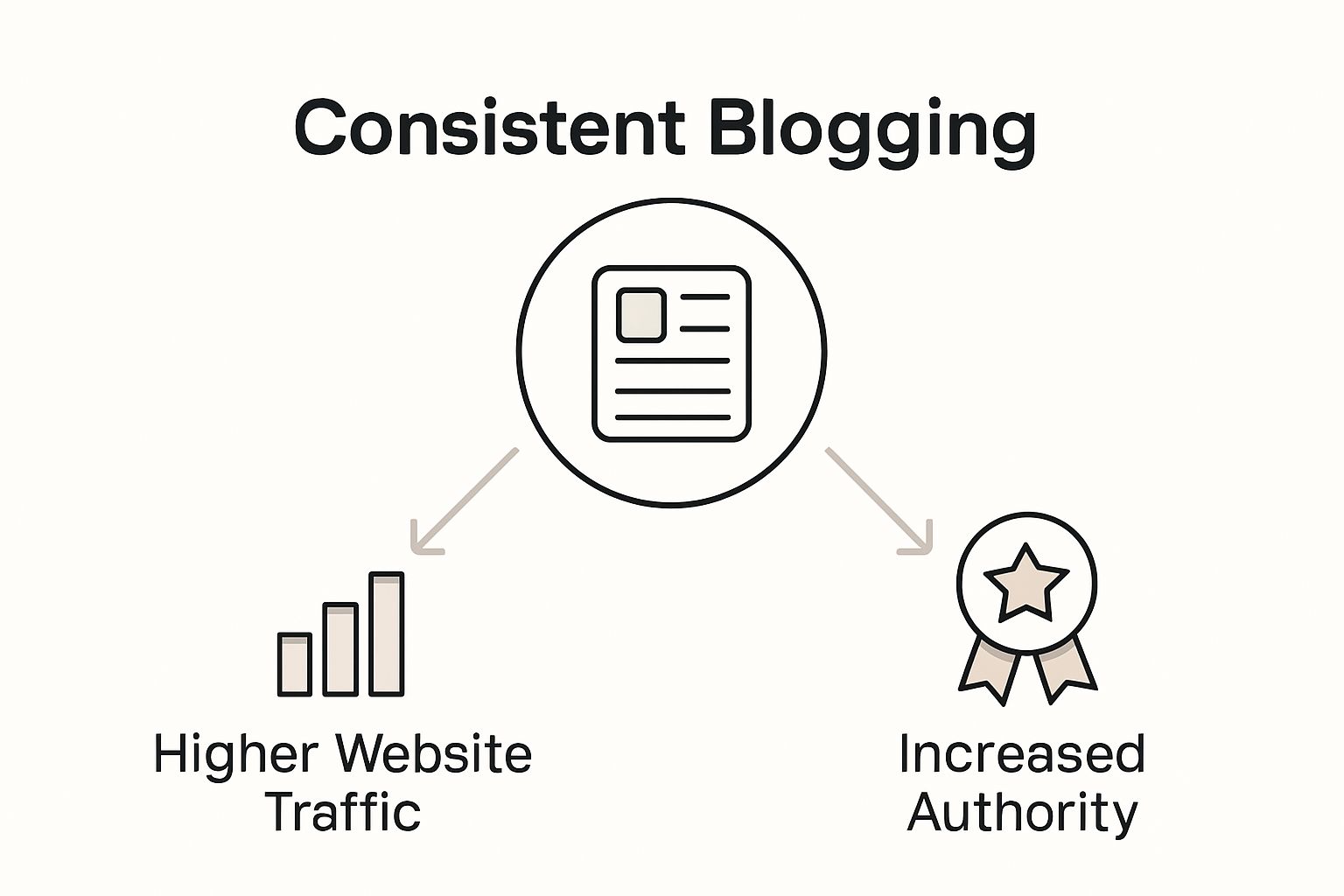 Evergreen content addressing timeless topics like first-time homebuyer guidance, neighborhood insights, or investment strategies continues generating organic traffic months and even years after initial publication.
This approach transforms blogs from ephemeral marketing materials into enduring resources that consistently showcase professional expertise.
Strategic Long-Term Positioning
Consistent blogging offers multiple strategic advantages for real estate professionals:
- Building a comprehensive digital knowledge base
- Establishing credibility as a local market expert
- Creating searchable content that attracts targeted leads
- Developing a repository of shareable professional insights
Explore strategies for professional branding to understand how consistent content creation elevates your digital presence.
By treating blogging as a long-term commitment rather than a sporadic marketing tactic, real estate agents can systematically build an authoritative online platform that attracts and retains potential client interest.
Ready to See Your Real Estate Brand Rise Above the Competition?
Feeling frustrated because your blog posts are not attracting serious home buyers or sellers? You invest time creating content but struggle to stand out in suburb-level searches.
As this article explains, consistent, SEO-focused blogging builds website authority, fuels Google rankings, and keeps your audience coming back for up-to-date real estate insights.
But crafting this kind of content takes expertise, strategy, and a deep understanding of what local clients are searching for.
At Content Charlie, we transform your real estate marketing with copywriting that gets you found by your ideal clients. Discover how our proven content marketing strategies and focus on local SEO turn your blog into a powerful lead magnet. Stop letting your competitors win those clicks. Reach out now to start building trust, capturing suburb searches, and growing your authority in every neighborhood you serve. Visit Content Charlie today and make your next move the one that dominates your market.
Frequently Asked Questions
How does blogging improve SEO for real estate websites?
Blogging improves SEO for real estate websites by generating fresh, relevant content that search engines prioritize. To enhance your SEO, publish at least one high-quality blog post each week that addresses local market trends or client questions.
What types of content should real estate blogs include to boost SEO?
Real estate blogs should include in-depth neighborhood guides, market analyses, and expert insights to engage potential clients. Aim to create content that directly addresses common client concerns, ensuring each piece has targeted keywords relevant to your audience.
How often should I publish blog posts to see SEO results?
To see noticeable improvements in SEO, aim to publish blog posts consistently, ideally once a week or every two weeks. Regular updates signal to search engines that your site is active, which can lead to higher rankings.
What are long-tail keywords, and why are they important for real estate blogging?
Long-tail keywords are specific phrases that potential clients use when searching online, like “investment properties near beaches.” Integrate these into your blog content to attract highly targeted traffic and meet the specific needs of your audience.
How can I measure the impact of my blogging on SEO performance?
You can measure the impact of blogging on SEO performance through metrics like organic traffic, keyword rankings, and engagement rates. Track these metrics monthly to evaluate the effectiveness of your blog content and adjust your strategy accordingly.
What actions can I take to ensure my blog content is valuable to clients?
To ensure your blog content is valuable, focus on addressing client questions and providing solutions based on local market insights. Engage with your audience by inviting comments and responding promptly to create a sense of community.
Recommended
- real estate marketing Archives – Content Charlie
- real estate SEO Archives – Content Charlie
- social media tips for real estate Archives – Content Charlie
- real estate social media strategy Archives – Content Charlie
- SEO for Real Estate Agencies: Simple Strategies to Grow Your Business
- Understanding SEO Best Practices for Your Business – My Blog