
- You are here:
- Home »
- location-specific keywords
Tag Archives for " location-specific keywords "

7 Powerful Real Estate Content Strategies for Local Agents
Over 90 percent of homebuyers start their property search online, putting digital strategies at the heart of real estate success. Standing out means more than just having listings—it requires skillful use of local SEO, eye catching visuals, and authentic client stories. By focusing on proven tactics that connect with local buyers, you can grow your reputation and attract the right clients in a crowded market.
Table of Contents
- 1. Identify Local SEO Keywords That Attract Homebuyers
- 2. Craft Suburb Guides to Build Trust and Visibility
- 3. Write Compelling Property Descriptions That Convert
- 4. Optimize Google Business Profile Content for Searches
- 5. Publish Consistent Blog Articles to Show Expertise
- 6. Leverage Client Testimonials for Local Credibility
- 7. Use Visual Content to Make Listings Stand Out
Quick Summary
| Takeaway | Explanation |
|---|---|
| 1. Focus on Local SEO Keywords | Identify specific search terms like neighborhood names to attract homebuyers actively searching online. |
| 2. Create Detailed Suburb Guides | Develop comprehensive guides about neighborhoods to establish trust and position yourself as a local expert. |
| 3. Write Engaging Property Descriptions | Use storytelling and emotional language in property descriptions to create connections with potential buyers. |
| 4. Optimize Google Business Profile | Fill out and regularly update your Google Business Profile to enhance your visibility in local searches. |
| 5. Publish Consistent Blog Content | Regularly post relevant blogs to showcase expertise and connect with potential clients in your market. |
1. Identify Local SEO Keywords That Attract Homebuyers
Successful real estate marketing starts with understanding what potential homebuyers are actually searching for online. Local SEO keywords are your secret weapon to connecting with ready buyers in specific neighborhoods and markets.
When researching keywords, think like a homebuyer searching for properties. Understanding why local SEO matters begins with mapping out precise location based search terms that reflect genuine buyer intent. According to research, location specific keywords like “homes for sale in [City]” can dramatically improve your search visibility.
Strategic Keyword Research Approach:
- Focus on neighborhood specific searches
- Include city and suburb names
- Incorporate property type descriptors
- Add transactional search terms
For instance, instead of generic terms like “real estate,” target phrases such as “3 bedroom homes in Broadbeach” or “waterfront properties Gold Coast.” These specific keywords signal exactly what potential buyers want and help search engines match your content with relevant searches.
To implement this strategy, use free tools like Google Keyword Planner or SEMrush to discover search volume and competition for local real estate keywords. Track which terms potential buyers use most frequently and integrate them naturally into your website content, blog posts, and property descriptions.
Remember that local keyword optimization is not about stuffing terms randomly. The goal is creating authentic, valuable content that genuinely answers homebuyers questions while strategically incorporating location based search terms.
2. Craft Suburb Guides to Build Trust and Visibility
Potential homebuyers are hungry for insider knowledge about neighborhoods where they might invest their future. Creating comprehensive suburb guides transforms you from a simple real estate agent into a local market expert.
Local neighborhood spotlights are powerful tools for establishing your credibility and attracting targeted traffic. According to research, writing detailed neighborhood breakdowns and answering local questions can significantly enhance your reputation within a geographical area.
Key Elements of Compelling Suburb Guides:
- Detailed neighbourhood demographic information
- Local amenities and infrastructure
- Property value trends
- School district ratings
- Community lifestyle insights
Your suburb guide should read like an insider’s manual for potential homebuyers. Go beyond basic statistics and create narrative rich content that helps people imagine living in the area. Discuss local coffee shops, upcoming development projects, community events, and unique neighborhood characteristics that make each suburb special.
To maximize impact, update these guides regularly with fresh market insights, seasonal real estate trends, and emerging local developments. This approach not only improves your SEO but positions you as the go to local real estate expert who truly understands the nuanced character of each neighborhood.
Remember that authentic, valuable content speaks directly to your audience’s curiosity and need for local understanding. Your suburb guides are more than marketing materials they are community resources that build genuine trust.
3. Write Compelling Property Descriptions That Convert
Your property description is more than just a list of features it is your digital sales pitch that can transform casual browsers into serious buyers. Crafting descriptions that spark imagination and emotional connection requires strategic storytelling.
Complete guide to copywriting in real estate reveals that successful property descriptions go beyond basic specifications. According to research, incorporating location specific keywords naturally within your content can significantly improve search engine rankings and attract potential clients.
Key Components of Magnetic Property Descriptions:
- Create a narrative that sells a lifestyle
- Highlight unique property features
- Use sensory and emotional language
- Include specific neighborhood context
- Optimize for local search keywords
Instead of writing dry statements like “3 bedroom house with garage,” paint a vivid picture. For example: “Imagine morning coffee on your sun drenched balcony overlooking Broadbeach parklands the perfect sanctuary for professionals seeking coastal tranquility.”
When writing descriptions, think about what makes a property special. Does it have a stunning view? Proximity to top schools? Recent renovations? These details transform generic listings into compelling stories that resonate with potential buyers.
Remember that great property descriptions are a blend of strategic SEO and emotional storytelling. Your goal is to help potential buyers visualize themselves living in the space not just reading about its technical specifications.
4. Optimize Google Business Profile Content for Searches
Your Google Business Profile is the digital front door to your real estate brand a powerful tool that can attract or repel potential clients within seconds. Mastering this platform is not just about filling out basic information it is about creating a compelling digital presence that stands out in local searches.
Google Business Profile optimization requires strategic thinking and consistent effort. According to research, regularly posting and adding high quality visual content can dramatically improve your visibility in Google Search and Maps.
Strategic Profile Optimization Tactics:
- Complete every profile section thoroughly
- Add professional headshots and team photos
- Include recent property listing images
- Update business hours and contact information
- Respond to all client reviews promptly
Think of your Google Business Profile as a 24/7 digital marketing representative. Professional photos showing your team, office environment, and recent successful property sales create trust and credibility. Potential clients want to see the human side of your real estate business.
Consistent updates are crucial. Share recent property achievements, local market insights, and community events. Each post increases your chances of appearing in local search results and demonstrates your active engagement with the local real estate market.
Remember that authenticity wins. Your profile should reflect your unique brand personality while providing clear, valuable information that helps potential clients understand why they should choose you as their real estate agent.
5. Publish Consistent Blog Articles to Show Expertise
Blogs are not just content they are your digital megaphone for establishing credibility and attracting potential clients. Consistent publishing transforms you from a simple real estate agent into a trusted local market expert.
Consistent blogging requires strategic planning and genuine insights. According to research, publishing local content like neighborhood guides and market updates helps build audience connection and demonstrates deep understanding of your real estate landscape.
Strategic Blog Content Approaches:
- Create hyper local market analysis
- Share seasonal real estate trends
- Offer neighborhood buying guides
- Highlight community development stories
- Answer common buyer questions
Your blog should feel like a conversation with potential clients. Instead of generic market reports, craft narratives that help readers visualize living in specific neighborhoods. For example, write articles like “Top 5 Family Friendly Suburbs in Gold Coast” or “What First Time Buyers Need to Know About Broadbeach Real Estate”.
Consistency matters more than perfection. Aim to publish 1 2 high quality articles monthly that provide genuine value. Track which topics generate the most engagement and double down on content that resonates with your audience.
Remember that your blog is a living portfolio showcasing your local expertise. Each article is an opportunity to build trust and position yourself as the go to real estate professional in your market.
6. Leverage Client Testimonials for Local Credibility
Testimonials are the secret weapon of successful real estate agents transforming satisfied clients into powerful marketing advocates. These personal stories can speak volumes about your expertise in ways no traditional advertisement ever could.
Real estate client engagement requires strategic approach to gathering and showcasing client experiences. According to research, proactively soliciting reviews and displaying positive testimonials can significantly build trust and credibility in your local market.
Strategic Testimonial Collection Tactics:
- Request feedback immediately after successful transactions
- Create multiple testimonial collection channels
- Feature diverse client stories
- Include specific transaction details
- Display testimonials across multiple platforms
When collecting testimonials, go beyond generic praise. Encourage clients to share specific details about their experience working with you. A testimonial like “John helped us find our dream home in Broadbeach within our budget” is far more compelling than “John is a great agent.”
Spread your testimonials strategically across your website, Google Business Profile, social media platforms and printed marketing materials. Video testimonials can be especially powerful providing authentic visual proof of your professional success.
Remember that potential clients want social proof. Your testimonials are not just reviews they are powerful narratives that demonstrate your ability to deliver exceptional real estate experiences.
7. Use Visual Content to Make Listings Stand Out
Visual storytelling transforms ordinary property listings into compelling narratives that capture potential buyers imagination. In a digital world saturated with real estate content, high quality visual assets are your secret weapon for standing out.
Types of real estate content every agent should use reveals the power of strategic visual marketing. According to research, incorporating videos like virtual tours and lifestyle showcases can significantly boost engagement and help potential clients connect emotionally with properties.
Powerful Visual Content Strategies:
- Produce professional property photography
- Create immersive video property tours
- Share lifestyle neighborhood context videos
- Design visually appealing market update graphics
- Highlight unique property features through visual storytelling
Think beyond standard listing photos. A walkthrough video showing morning light streaming through kitchen windows or a drone shot capturing a homes proximity to local parks can transform a simple listing into an experience. Professional photography that captures a propertys best angles tells a story far more effectively than text descriptions.
Consider creating diverse visual content that goes beyond individual listings. Market trend infographics, neighborhood lifestyle reels, and behind the scenes glimpses of your real estate process can build trust and showcase your expertise.
Remember that great visual content does more than display a property it invites potential buyers to imagine their future life in that space.
Below is a comprehensive table summarizing the strategies discussed in the article for enhancing real estate marketing using Local SEO, content creation, and client engagement.
| Strategy | Implementation | Expected Results |
|---|---|---|
| Local SEO Keyword Identification | Focus on neighborhood-specific searches, city names, property types, and transactional terms. Use tools like Google Keyword Planner. | Improved search visibility and increased webpage relevance for potential buyers. |
| Crafting Suburb Guides | Include demographics, amenities, property trends, and lifestyle insights. Regularly update guides. | Enhanced local credibility and attraction of targeted traffic. |
| Property Descriptions | Use storytelling, highlight unique features, and include sensory and emotional language. Optimize with local keywords. | Conversion of casual browsers to serious buyers. |
| Google Business Profile Optimization | Complete profile details, add high-quality images, update frequently, and respond to reviews. | Increased visibility in searches and stronger client engagement. |
| Consistent Blogging | Publish regular articles on local market analysis, trends, and buying guides. | Establishment as a local expert and stronger connection with potential clients. |
| Leveraging Client Testimonials | Collect detailed feedback, feature diverse stories, and display across platforms. | Increased trustworthiness and credibility in the local market. |
| Visual Content Usage | Incorporate professional photos, videos, and infographics. Highlight property features. | Enhanced listing appeal and emotional connection with potential buyers. |
Unlock the Full Potential of Your Local Real Estate Content
Struggling to stand out in a crowded market and connect with local homebuyers can be frustrating. This article highlights crucial strategies like targeted local SEO keywords, compelling suburb guides, and authentic property descriptions that resonate with buyers. If you want to overcome challenges such as low search visibility and weak buyer engagement, focusing on authentic content tailored to your neighborhood is key. Content Charlie specializes in creating SEO-driven real estate copy that ranks highly for specific locality searches and builds trust through valuable insights.
Elevate your listings and neighborhood expertise with our help. From crafting engaging suburb guides to writing magnetic property descriptions and optimizing your Google Business Profile content, we make sure your brand connects with ready-to-act buyers in your area. Don’t let your marketing fall flat when you can dominate your local market and become the trusted agent buyers choose.
Ready to transform your real estate content into a powerful client magnet now

Visit Content Charlie to discover how our tailored local SEO strategies and high-converting copywriting can put you ahead of competitors in neighborhoods like Broadbeach and beyond. Take the first step to getting found and closing more deals today.
Frequently Asked Questions
How can I identify local SEO keywords that attract homebuyers?
To identify local SEO keywords, focus on neighborhood-specific searches and include city names, property types, and transactional terms. Conduct keyword research using free tools to discover popular local search phrases and integrate them naturally into your website and listings.
What should I include in suburb guides to engage potential homebuyers?
Suburb guides should include detailed demographics, local amenities, property value trends, and community lifestyle insights. Create engaging content that helps buyers visualize life in the area to build trust and position yourself as a local expert.
How can I write compelling property descriptions that convert?
Write property descriptions that tell a story, highlighting unique features and using sensory language to evoke emotions. Aim to incorporate localized keywords and provide specific neighborhood context to enhance search visibility and buyer connection.
What are effective strategies for optimizing my Google Business Profile?
Optimize your Google Business Profile by completing all sections thoroughly, adding professional photos, and posting updates regularly. Engage with client reviews to improve visibility and showcase your real estate brand’s personality.
How often should I publish blog articles to establish expertise in my local market?
Aim to publish 1-2 high-quality blog articles each month to showcase your local knowledge and market insights. Consistency helps engage your audience and positions you as a trusted professional in your field.
How can I use visual content to enhance my property listings?
Util high-quality visuals such as professional photography and immersive video tours to create compelling property listings. Highlight unique features and the surrounding neighborhood through varied visual content, helping potential buyers imagine themselves in the space.
Recommended
- 7 Types of Real Estate Content Every Agent Should Use – Content Charlie
- 7 Best Real Estate Blog Ideas for Local Agents – Content Charlie
- 7 Essential Types of Real Estate Leads Agents Must Know – Content Charlie
- Why Use Blog Content: Essential Guide for Real Estate – Content Charlie
- SEO for Real Estate Agencies: Simple Strategies to Grow Your Business

Real Estate SEO Myths: Complete Guide for Agents
Did you know that over 90 percent of property searches begin online? For real estate agents, showing up on the first page of search results can mean the difference between a flood of leads and an empty inbox. Misunderstandings about Search Engine Optimization often keep agents from realizing their digital potential. Understanding what truly drives real estate SEO gives you a real edge in connecting with tomorrow’s buyers and sellers.
Table of Contents
- Defining Real Estate SEO and Common Myths
- Debunking Popular Real Estate SEO Beliefs
- Local SEO Myths for Australian Agents
- Truths About Google Rankings and Content
- Real-World Impact of Following SEO Myths
Key Takeaways
| Point | Details |
|---|---|
| Continuous SEO Effort | Real estate SEO is an ongoing process requiring regular updates and strategic monitoring for effective results. |
| Quality Over Quantity | Focusing on high-quality, relevant content is essential for improving search engine rankings, rather than just increasing keyword usage. |
| Local Optimization is Crucial | Hyper-targeted local SEO strategies, including unique content and optimized listings, significantly enhance visibility in competitive markets. |
| Understanding Realistic Expectations | SEO should not be viewed as a quick fix; agents must commit to long-term strategies to improve online visibility and client acquisition. |
Defining Real Estate SEO and Common Myths
Real estate Search Engine Optimization (SEO) is the strategic process of enhancing your online visibility to attract potential property buyers and sellers through organic search results. According to research from Zillow, SEO involves optimizing your website to improve its ranking in search engine results, ultimately driving more targeted traffic to your real estate business.
Many agents misunderstand SEO, believing it’s a simple one-time task with guaranteed immediate results. As insights from Breakthrough Broker reveal, SEO is actually a continuous process requiring regular updates and strategic monitoring. Common myths that can derail an agent’s digital strategy include:
- Believing more keywords automatically mean better rankings
- Assuming social media directly impacts search engine rankings
- Thinking SEO is a quick fix rather than an ongoing effort
Successful real estate SEO requires understanding that search engines prioritize high-quality, relevant content that genuinely helps potential clients. This means creating suburb guides, property market insights, and targeted local content that answers specific questions your audience might have. By focusing on providing value and maintaining consistent website optimization, you’ll gradually improve your online visibility and attract more qualified leads.
For a comprehensive breakdown of real estate SEO terminology, check out our guide on real estate SEO jargon to help you navigate this complex digital landscape.
Debunking Popular Real Estate SEO Beliefs
Real estate agents often fall prey to common misconceptions about Search Engine Optimization (SEO) that can significantly hinder their online marketing efforts. According to insights from Realty Ninja, one critical mistake is using identical listing descriptions across multiple platforms, which creates duplicate content and negatively impacts search rankings.
Beyond content uniqueness, many agents misunderstand the fundamental nature of SEO. As Breakthrough Broker explains, SEO is not a one-time task but a continuous process requiring consistent effort and strategic updates. Common myths that can derail your digital strategy include:
Here’s a breakdown of top real estate SEO myths versus the reality:
| SEO Myth | The Reality | Impact if Believed |
|---|---|---|
| More keywords mean better rankings | Quality and relevance matter more | Poor search performance |
| Social media directly improves rankings | Social signals have indirect effect only | Misallocated marketing focus |
| SEO is a quick, one-time fix | SEO is ongoing and requires updates | Loss of long-term visibility |
| Duplicate listings are harmless | Unique content is critical | Lowered search ranking |
| Location-specific keywords are unnecessary | Hyper-local terms boost local results | Missed local opportunities |
- Believing you can achieve instant search ranking improvements
- Assuming more keywords automatically mean better search results
- Thinking SEO is a set-it-and-forget-it marketing approach
To truly enhance your online visibility, you must develop a dynamic SEO strategy that focuses on creating unique, valuable content tailored to your local market. This means crafting original property descriptions, developing suburb-specific guides, and regularly updating your website with fresh, relevant information. By understanding how blogging can boost your real estate SEO, you’ll create a more robust and effective digital marketing approach that attracts potential clients and improves your search rankings over time.
Local SEO Myths for Australian Agents
Local Search Engine Optimization (SEO) is a critical strategy for real estate agents looking to dominate suburb-specific markets across Australia. According to Web Globals, many agents mistakenly believe that a generic online presence is sufficient to attract local clients. In reality, hyper-local optimization is key to standing out in competitive real estate markets.
Common misconceptions about local SEO can significantly hinder an agent’s digital marketing efforts. Locally.net.au highlights the importance of creating targeted local landing pages and maintaining consistent business listings across different platforms. Myths that can derail your local search strategy include:
- Assuming all online listings are equally effective
- Believing location-specific keywords are unnecessary
- Thinking social media followers automatically translate to local visibility
To truly excel in local SEO, agents must develop a hyper-targeted digital presence that speaks directly to specific suburbs and local communities. This means creating unique content for each area you serve, optimizing Google Business Profile listings, and understanding local market differentiation strategies that set you apart from competitors. By focusing on authentic, locally-relevant content and precise geographic targeting, you’ll improve your chances of appearing in crucial suburb-level searches and attracting potential clients in your specific real estate market.

Truths About Google Rankings and Content
Google Rankings are far more nuanced than most real estate agents realize. According to Realty Ninja, one critical mistake that can torpedo your search visibility is using duplicate content, such as recycling identical listing descriptions across multiple platforms. Search engines penalize websites that don’t offer unique, valuable information.
Breakthrough Broker emphasizes that SEO is a long-term strategy, not an overnight miracle. Agents often harbor unrealistic expectations about search rankings, believing they can achieve top positions through quick tricks. The truth is more complex:
- Rankings improve through consistent, high-quality content
- Unique property descriptions matter more than keyword stuffing
- Patience and strategic effort are essential for SEO success
To truly understand how to improve your digital presence, dive into the role of content in SEO and recognize that Google rewards websites providing genuine value to potential clients. This means crafting original suburb guides, detailed property insights, and locally targeted content that answers real questions your audience is asking. Your goal isn’t just to rank, but to become a trusted local authority that search engines and clients both respect.
Real-World Impact of Following SEO Myths
Believing in SEO misconceptions can have devastating consequences for real estate agents’ digital marketing efforts. According to Realty Ninja, minimal content is a critical error that directly impacts search engine visibility. Agents who skimp on comprehensive, unique content essentially render themselves invisible in the digital marketplace.
Breakthrough Broker highlights the long-term repercussions of treating SEO as a one-time task. The real-world consequences of following outdated SEO myths include:
- Dramatically reduced online visibility
- Lower client acquisition rates
- Missed opportunities in competitive markets
- Potential loss of potential commission income
To understand the true financial impact of SEO strategies, real estate professionals must recognize that digital marketing is an ongoing investment. Poor SEO practices don’t just limit your online presence they directly translate to fewer leads, fewer property viewings, and ultimately, less revenue. Your digital strategy needs to be as dynamic and adaptable as the real estate market itself – constantly evolving, always engaging, and strategically positioned to capture potential clients’ attention.
Break Free from Real Estate SEO Myths and Get Found Locally
If you are struggling with common SEO misconceptions like quick fixes or copy-pasting listing descriptions, you are not alone. The article highlights how ongoing, strategic local SEO and unique, relevant content make the difference between invisibility and becoming a trusted market leader. Without a clear, focused approach, your online presence will remain buried beneath competitors who understand how to win suburb-level searches.
Content Charlie specializes in crafting exactly the kind of high-quality, localized copy that Google and your clients crave. From detailed suburb guides to engaging property descriptions and optimized Google Business Profile content, we help real estate agents rise above SEO myths and shine in their communities.
Take control of your digital future today by partnering with Content Charlie. Visit us at Content Charlie now to unlock local SEO strategies that deliver real results and make your brand the first choice for buyers and sellers in your market.
Frequently Asked Questions
What is real estate SEO?
Real estate SEO is the process of optimizing a real estate website to improve its visibility in search engine results, attracting potential buyers and sellers through organic search traffic.
Is SEO a one-time task for real estate agents?
No, SEO is an ongoing process that requires continuous updates and regular monitoring to maintain and improve search rankings over time.
How important is unique content for real estate websites?
Unique content is critical as it helps avoid duplicate content penalties from search engines, improves search rankings, and provides genuine value to potential clients.
Can social media presence improve my real estate SEO results?
Social media can indirectly impact SEO results by driving traffic to your website and increasing brand visibility, but it does not directly influence search engine rankings.
Recommended
- Real Estate SEO Jargon Explained: Essential Guide – Content Charlie
- Real Estate Website Essentials: Complete Guide for Agents – Content Charlie
- Complete Guide to Copywriting in Real Estate – Content Charlie
- SEO for Real Estate Agencies: Simple Strategies to Grow Your Business
- Understanding SEO Best Practices for Your Business – My Blog

Real Estate SEO Jargon Explained: Essential Guide
Real Estate SEO Jargon can be confusing. In this article we’ll explain the basics to get you sorted.
Only about 5.7 percent of websites reach Google’s top 10 rankings within their first year, which leaves many real estate agents wondering how to stand out online. Understanding the world of real estate SEO can make the difference between languishing on page five or popping up when local clients search for listings. Grasping the true meaning behind common SEO terms helps agents sidestep costly mistakes and build digital strategies that actually connect with buyers and sellers.
Table of Contents
- Defining Real Estate SEO Jargon And Misconceptions
- Key Categories Of SEO Terms In Property Marketing
- Essential On-Page And Off-Page SEO Vocabulary
- How Agents Apply SEO Jargon In Practice
- Common Jargon Mistakes And What To Avoid
Key Takeaways
| Point | Details |
|---|---|
| Understanding SEO’s Importance | Real estate SEO is critical for enhancing online visibility, with only 5.7% of websites achieving top Google rankings in a year. |
| Implementing Key Strategies | Effective SEO requires targeted actions such as location-specific content, mobile optimization, and consistent content updates. |
| Mastering On-Page and Off-Page SEO | Both on-page and off-page SEO strategies are essential for improving search rankings and establishing credibility. |
| Avoiding Common Mistakes | Agents should ensure accuracy in Google Business Profile management and select a balanced domain name to enhance online presence. |
Defining Real Estate SEO Jargon and Misconceptions
Search Engine Optimization (SEO) represents the strategic process of enhancing website visibility and ranking within search engine results. Real estate SEO focuses specifically on helping property professionals increase their online presence and attract potential clients through targeted digital strategies. According to research from Kent University, only 5.7% of websites successfully reach top 10 Google rankings within a year, highlighting the critical importance of understanding SEO fundamentals.
In the competitive real estate landscape, SEO isn’t just about keywords – it’s about creating a comprehensive digital strategy that connects agents with potential buyers and sellers. Strategic domain name selection plays a crucial role in this process, making websites more discoverable and memorable. Understanding Real Estate SEO Metrics Explained can provide deeper insights into measuring and improving your online performance.
Common SEO misconceptions can significantly hinder a real estate professional’s online marketing efforts. Many agents mistakenly believe that simply having a website guarantees visibility, when in reality, targeted optimization is required. Key SEO strategies for real estate professionals include:
- Creating location-specific content
- Optimizing website loading speeds
- Developing mobile-responsive designs
- Generating high-quality, relevant backlinks
- Consistently updating website content
By demystifying SEO jargon and implementing strategic techniques, real estate agents can transform their digital presence and attract more potential clients through improved search engine rankings.
Key Categories of SEO Terms in Property Marketing
Keyword optimization is the foundational pillar of effective real estate digital marketing strategies. According to research from Kent University, SEO success hinges on making content as relevant as possible, which includes strategic use of tags, page titles, categories, and carefully selected keywords. In the competitive real estate landscape, understanding these critical SEO categories can dramatically improve online visibility.
The primary categories of SEO terms in property marketing can be broken down into several key areas. Keyword optimization techniques play a crucial role in helping real estate professionals target specific search queries. These categories typically include:
- Domain Keywords: Incorporating location-specific or property-type terms
- On-Page SEO: Optimizing page titles, meta descriptions, and content
- Local SEO: Targeting geographically relevant search terms
- Technical SEO: Improving website performance and crawlability
- Content SEO: Creating valuable, search-engine-friendly property descriptions
Research indicates that strategic keyword incorporation can be particularly powerful in real estate digital marketing. As noted in domain name optimization studies, keywords like ‘homes’, ‘realty’, ‘properties’, or location-specific terms can directly target common search queries, making your online presence more discoverable and attractive to potential clients. By mastering these SEO categories, real estate professionals can significantly enhance their digital marketing effectiveness and attract more qualified leads.

Essential On-Page and Off-Page SEO Vocabulary
Understanding the critical vocabulary of Search Engine Optimization (SEO) is fundamental for real estate professionals seeking to enhance their digital marketing strategies. According to research from Kent University, SEO optimization involves making content as relevant as possible through strategic use of tags, page titles, categories, and carefully selected keywords.
On-Page SEO terminology focuses on elements directly within your website that can be optimized. On-page optimization techniques encompass critical elements such as:
- Meta Descriptions: Concise page summaries
- Title Tags: Webpage headline text
- Header Tags (H1, H2): Content structure indicators
- Internal Linking: Connecting related website pages
- Keyword Density: Frequency of target search terms
Off-Page SEO terminology, conversely, refers to external factors that influence your website’s search rankings. These include backlink quality, social media mentions, and domain authority. Just as domain name optimization studies suggest using keywords like ‘homes’ or ‘properties’ to target specific search queries, off-page strategies help establish your website’s credibility and relevance in the broader digital ecosystem.
By mastering both on-page and off-page SEO vocabularies, real estate professionals can create a comprehensive digital strategy that improves search engine visibility and attracts more potential clients.
Here’s a summary of essential on-page vs. off-page SEO terms in real estate:
| SEO Aspect | On-Page SEO | Off-Page SEO |
|---|---|---|
| Focus Areas | Content quality Meta tags Internal linking |
Backlinks Social mentions Domain authority |
| Key Elements | Title tags Header tags Keyword density |
Referring domains Google My Business Online reviews |
| Primary Goal | Improve website relevance | Build website credibility |
| Control Level | Full (by website owner) | Partial (influenced by others) |
How Agents Apply SEO Jargon in Practice
In the competitive real estate market, digital marketing strategies have become essential for agents looking to stand out. According to digital marketing research, strategic online presence can dramatically improve an agent’s ability to attract potential clients and close sales. Digital marketing insights reveal that successful real estate professionals leverage SEO techniques to increase their visibility and credibility.
Practical application of SEO jargon requires a strategic approach to online presence. Agents must pay careful attention to critical elements like:
- Google Business Profile (GBP) Optimization: Ensuring 100% consistency in Name, Address, and Phone (NAP) details
- Local Keyword Targeting: Using location-specific search terms
- Content Localization: Creating neighborhood-specific property descriptions
- Backlink Building: Establishing credibility through quality external references
- Mobile-Friendly Website Design: Ensuring seamless user experience across devices
One of the most crucial practical applications involves domain name strategy. As research indicates, a strategic domain name can significantly boost a real estate business’s online presence, making it easier for potential buyers and sellers to find and trust an agent. By understanding and implementing these SEO techniques, real estate professionals can transform their digital marketing approach from generic to highly targeted, ultimately increasing their chances of connecting with potential clients in an increasingly competitive market.
Common Jargon Mistakes and What to Avoid
In the intricate world of real estate digital marketing, SEO terminology can become a minefield of potential missteps. Keyword research strategies reveal that agents often fall into common traps that can significantly diminish their online visibility and credibility.
One of the most critical areas for avoiding mistakes is Google Business Profile (GBP) management. According to digital marketing research, common GBP errors can substantially impact an agent’s online reputation. These mistakes include:
- Using a P.O. box instead of a physical address
- Leaving business hours incomplete or inaccurate
- Uploading low-resolution or generic stock photos
- Neglecting to respond to customer reviews
- Skipping the Q&A section entirely
Another significant pitfall involves domain name selection. Experts caution that agents must strike a delicate balance between keyword relevance and brand identity. A domain name that’s too generic risks blending into the background, while an overly specific name can artificially limit business potential. By carefully navigating these linguistic nuances, real estate professionals can create a robust online presence that speaks directly to potential clients while maintaining a strong, distinctive brand identity.
Master Real Estate SEO Jargon with Content Charlie
Struggling to turn confusing real estate SEO jargon into actionable results for your business Is your goal to attract more local clients and boost your Google rankings with clear and effective digital marketing strategies The article highlights key challenges like optimizing your Google Business Profile and selecting the right domain keywords all crucial for standing out online
At Content Charlie, we specialize in crafting SEO-driven copy that speaks directly to local buyers and sellers. From creating compelling Google Business Profile content to writing suburb guides and property descriptions focused on keyword optimization, we turn complex SEO concepts into real results for your agency. Take control of your online presence now and avoid common pitfalls that hold agents back.
Ready to rise above the competition and dominate local search Results Visit Content Charlie today for tailored real estate SEO solutions designed to get you found and chosen by clients actively looking in your market. Don’t let SEO jargon keep you stuck when expert help is just a click away.
Frequently Asked Questions
What is Real Estate SEO?
Real Estate SEO refers to the strategic process of enhancing the online visibility and ranking of real estate websites within search engine results. It focuses on attracting potential clients through targeted digital strategies.
Why is keyword optimization important in real estate SEO?
Keyword optimization is critical because it helps real estate professionals target specific search queries relevant to their services. Incorporating location-specific or property-type keywords can make your online presence more discoverable to potential clients.
What are some essential on-page SEO techniques for real estate professionals?
Essential on-page SEO techniques include optimizing meta descriptions, title tags, header tags, internal linking, and maintaining an appropriate keyword density throughout the website content.
How can agents improve their Google Business Profile for better SEO?
Agents can improve their Google Business Profile by ensuring consistency in their Name, Address, and Phone (NAP) details, providing accurate business hours, uploading high-quality images, responding to customer reviews, and using the Q&A section to engage with potential clients.
Recommended

Real Estate SEO Tips to Boost Agent Visibility Online
Real Estate SEO Tips to boost an agent’s visability is a must learn to dominate their local markets.
Nearly 50 percent of home buyers begin their search online for a local agent. Standing out in those crucial local searches can make all the difference for real estate success. If your website is not optimized for targeted keywords, suburb-level content, or local business signals, potential clients may never find you. By focusing on the right strategies and tools, you can improve online visibility, attract more buyers and sellers, and establish a trusted local presence.
Quick Summary
| Key Point | Explanation |
|---|---|
| 1. Audit Your Website Thoroughly | Conduct a detailed website audit to identify issues affecting local SEO performance and ranking. Use diagnostic tools for analysis. |
| 2. Optimize Keywords Strategically | Incorporate location-specific and intent-driven keywords into key pages to enhance visibility among potential clients. |
| 3. Create In-Depth Suburb Guides | Develop comprehensive content about neighborhoods to position yourself as a local expert and attract targeted traffic. |
| 4. Enhance Google Business Profile | Regularly update your Google Business Profile with engaging content to improve your brand visibility and client engagement. |
| 5. Monitor and Adjust SEO Tactics | Continuously track performance metrics and refine your SEO strategy to stay competitive in the local real estate market. |
Table of Contents
- Step 1: Audit Your Website For Local SEO Readiness
- Step 2: Optimise Key Pages With Targeted Keywords
- Step 3: Enhance Suburb-Level Content To Attract Locals
- Step 4: Boost Authority With Google Business Profile Updates
- Step 5: Track Rankings And Refine Your SEO Strategy
Step 1: Audit Your Website for Local SEO Readiness
A comprehensive website audit is your roadmap to improving local search visibility and attracting more potential real estate clients. This critical first step will help you identify technical issues that could be preventing your website from ranking well in local search results.
Start by examining your website through multiple diagnostic tools. According to local SEO performance metrics, you want to assess key technical elements like site structure, mobile responsiveness, page loading speed, and metadata accuracy.
Use free tools like Google Analytics, Google Search Console, and PageSpeed Insights to benchmark your current performance. Look for specific issues such as:
Here’s a summary of essential website audit checkpoints for local SEO readiness:
| Audit Checklist Item | Why It Matters | Recommended Tools |
|---|---|---|
| Page Loading Speed | Improves user experience | Google PageSpeed Insights |
| Mobile Responsiveness | Enhances mobile user visibility | Google Search Console Mobile-Friendly Test |
| Site Structure | Supports page indexing | Screaming Frog Sitebulb |
| Metadata Accuracy | Boosts search relevance | Screaming Frog Google Search Console |
| Consistent NAP Information | Signals local trustworthiness | Manual Review Local SEO Tools |
| Internal Link Health | Improves crawlability | Ahrefs Site Audit Screaming Frog |
- Slow page load times
- Non mobile friendly design
- Broken internal links
- Missing or incorrect metadata
- Inconsistent business information across pages
Pay special attention to local signals that help search engines understand your geographic relevance. This means ensuring your business name, address, and phone number are consistent across all web pages. Include location specific keywords naturally in your content and metadata to signal your local market presence.
Pro Tip: Your website should clearly communicate which specific areas or suburbs you serve as a real estate agent.
After conducting your initial audit, prioritize fixing the most critical technical issues first. Each improvement incrementally boosts your local search potential and helps potential clients find you more easily online.
Step 2: Optimise Key Pages with Targeted Keywords
Keyword optimization transforms your real estate website from generic to geographically precise, helping potential clients find you faster and more effectively. Your goal is to strategically incorporate location specific and intent driven keywords that match exactly what local home buyers and sellers are searching online.
Start by researching hyper local keywords that reflect your specific market. According to on page optimization strategies, focus on phrases like ‘luxury homes in Broadbeach’ or ‘first time buyer properties in Gold Coast’ that capture precise geographic and buyer intent signals.
Target these keywords strategically across critical website pages:
- Homepage
- About page
- Neighborhood guide sections
- Individual property listings
- Service area description pages
Incorporate keywords naturally into your content. Avoid stuffing or awkward repetitions that sound unnatural. Your writing should flow smoothly while subtly signaling your local expertise and market knowledge.
Pro Tip: Create dedicated neighborhood guide pages that offer genuine value beyond basic keyword placement.
Implement structured data markup to help search engines understand your content better. As research suggests, using schema for real estate content like RealEstateAgent and Property can significantly improve your search visibility and help you earn featured snippet placements.
Remember that keyword optimization is an ongoing process. Regularly review and update your keywords to match evolving local search trends and buyer behaviors.
Step 3: Enhance Suburb-Level Content to Attract Locals
Creating suburb specific content transforms your real estate website into a powerful local attraction magnet. By developing in depth neighborhood guides and localized content, you position yourself as the go to local expert potential clients trust and search engines reward.
Start by crafting comprehensive neighborhood guides that go beyond basic property listings. Understanding why local SEO matters means providing genuine value through detailed community insights. Focus on creating content that answers real questions local buyers and sellers have about specific suburbs.
Key elements to include in your suburb level content:
- Detailed neighborhood demographics
- Local school information
- Community amenities and infrastructure
- Recent market trends and property values
- Upcoming development plans
- Unique neighborhood characteristics
Use rich multimedia to make your content more engaging. Incorporate interactive maps, high quality local images, and infographics that showcase the unique personality of each suburb. This approach not only improves user experience but also signals to search engines that your content is comprehensive and valuable.
Pro Tip: Update your neighborhood guides regularly to reflect current market conditions and local developments.
Research suggests that locally optimized content with specific details attracts more targeted traffic. By becoming the most authoritative source of hyperlocal information, you create a compelling reason for potential clients to choose you as their trusted real estate advisor.
Think of each suburb guide as a narrative that tells the story of the community. Your goal is to help potential buyers and sellers feel like they already know the neighborhood before they even visit a property.

Step 4: Boost Authority with Google Business Profile Updates
Your Google Business Profile is the digital front door to your real estate business. Optimizing this critical platform can transform how potential clients discover and perceive your professional brand online.
When it comes to Google Business Profile optimization, the goal is to create a comprehensive and engaging profile that showcases your local expertise. Research indicates that businesses with complete profiles can see up to 70% more visits and 50% more leads.
Key strategies for maximizing your profile:
- Upload professional high quality property and team photos
- Create video content like property tours and neighborhood guides
- Write a keyword rich description highlighting your local specialties
- Post weekly updates about new listings or market insights
- Enable direct messaging for potential client inquiries
- Encourage and respond to client reviews
Pro Tip: Profiles with over 100 genuine reviews can attract 360% more website visits.
Regularly update your profile with fresh content and accurate information. Think of it as a living digital portfolio that reflects your current market knowledge and professional achievements.
Consistent, strategic updates signal to both Google and potential clients that you are an active and engaged local real estate professional.
Your profile is not just a listing it is your digital reputation builder.
Step 5: Track Rankings and Refine Your SEO Strategy
Successful SEO is not a one time setup but an ongoing process of measurement, analysis, and strategic refinement. Your ability to track performance and adapt quickly will determine how effectively you compete in the local real estate market.
Understanding real estate SEO metrics starts with selecting the right tracking tools. Google Analytics and Search Console are your primary weapons for monitoring website performance and identifying opportunities for improvement.
Key metrics to consistently monitor:
- Organic search traffic
- Keyword rankings
- Website click through rates
- Time spent on property pages
- Conversion rates from local searches
- Google Business Profile insights
Conducting regular competitor analysis helps you identify content and optimization gaps. Look at what top performing local agents are doing and find ways to differentiate your approach.
Pro Tip: A strategic four month SEO campaign can potentially increase your Google Maps visibility by up to 450%.
Think of SEO tracking like real estate market analysis. Just as property values fluctuate, so do search rankings. Your goal is to stay agile and responsive to changing digital landscapes.
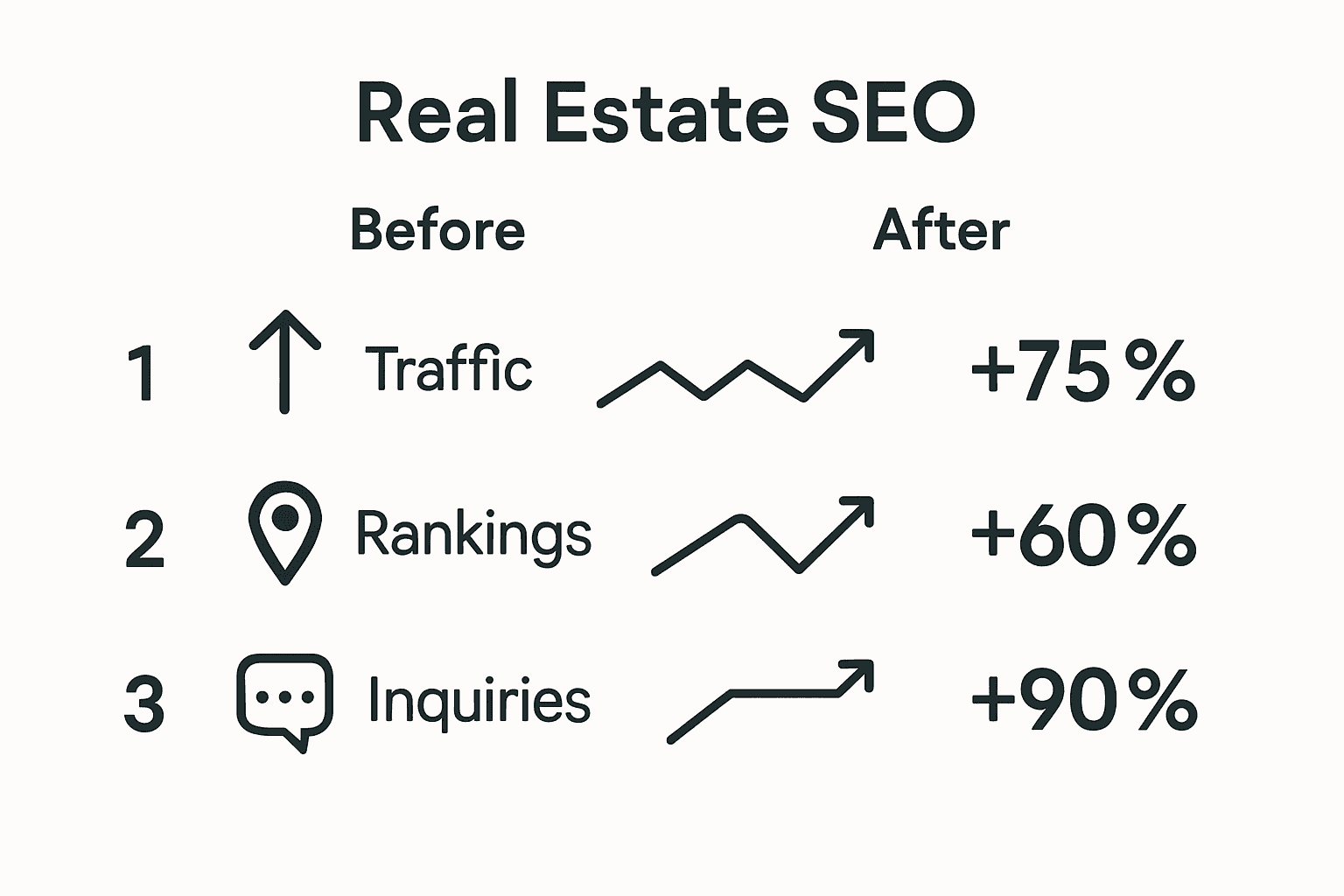
Remember that consistent small improvements compound over time. Every incremental optimization brings you closer to becoming the go to real estate expert in your local market.
Ready to Dominate Local Searches and Become the Go-To Agent?
Have you been frustrated by slow website traffic and low lead generation despite following every local SEO tip? This article highlights the real challenges real estate agents face today. Outdated suburb content. Inconsistent NAP details. Weak Google Business Profile optimization. All these hurdles can hold back your visibility and cost you high-value clients in your area. The truth is, knowing what needs to be done is only one part of the journey. Turning these strategies into real results for your agency is where the real edge begins.
Let Content Charlie turn your knowledge into top rankings and tangible leads. Our team crafts SEO-driven content and suburb guides that solve technical SEO issues and spotlight your expertise in every neighborhood you serve. Take the next step and make your business the first choice for buyers and sellers searching locally. Visit Content Charlie now and let us help elevate your online presence before your competitors catch up.
Frequently Asked Questions
How can I audit my website for local SEO readiness as a real estate agent?
To audit your website for local SEO readiness, assess key elements like page loading speed, mobile responsiveness, and metadata accuracy. Use tools like Google Analytics and PageSpeed Insights to identify issues and prioritize fixing the most critical ones within 30 days to improve your local search visibility.
What specific keywords should I target to optimize my real estate website?
Target hyper-local keywords that reflect your market, such as ‘luxury homes in [local area]’ or ‘homes for first-time buyers.’ Research and incorporate these keywords naturally on key pages like your homepage and neighborhood guides, adjusting your strategy every few months based on search trends.
How can I enhance suburb-level content to attract more local home buyers?
Enhance suburb-level content by creating in-depth neighborhood guides that include demographics, local schools, and market trends. Regularly update this content to reflect current information, aiming for a comprehensive guide that resonates with potential clients and showcases your expertise.
What are some effective strategies for optimizing my Google Business Profile?
To optimize your Google Business Profile, upload high-quality photos, create engaging video content, and post weekly updates about new listings. Ensure your profile is complete and fresh, which can increase your visits and leads by significantly more than 50% when updated regularly.
How often should I track and refine my real estate SEO strategy?
Track your SEO strategy continuously, evaluating key performance metrics at least monthly. Regularly analyze organic traffic and keyword rankings to identify improvement areas, and be prepared to make adjustments at least every four months for optimal visibility.
What content types can I use to boost my local authority and presence online?
Utilize various content types like detailed neighborhood guides, market trend reports, and high-quality images or videos. Focus on creating value-driven content that engages local clients, fostering trust and encouraging potential clients to view you as their leading real estate expert.
Recommended

Real Estate SEO Tips to Boost Local Rankings Fast
Real Estate SEO Tips to Boost Local Rankings Fast will get you at the top of search. But how do you do this. Let me explain below.
Did you know that over 95 percent of home buyers begin their search online? Competition for local property listings is fierce, and showing up in the right place at the right time makes all the difference. To reach serious buyers and stand out in your area, you need a real estate SEO approach tailored to your market. The right steps can help you connect with more clients and grow your business faster.
Quick Summary
| Key Point | Explanation |
|---|---|
| 1. Conduct Local Keyword Research | Identify location-specific long tail keywords to attract buyers. Use Google Keyword Planner for better targeting. |
| 2. Optimize Website Structure | Ensure a clear and logical site hierarchy for SEO. Structure listings by categories like location or property type to enhance user experience. |
| 3. Create Engaging Suburb Content | Develop detailed suburb guides that cover local features and narratives. Tailor content to answer potential buyers’ questions. |
| 4. Enhance Google Business Profile | Keep your profile updated with accurate information and engaging visuals. Regular content updates help improve local search visibility. |
| 5. Monitor and Adjust SEO Performance | Track key metrics using Google Analytics. Refine your strategies based on data to stay competitive in search rankings. |
Table of Contents
- Step 1: Research Local Keywords That Attract Buyers
- Step 2: Optimise Website Structure For Faster Results
- Step 3: Create High-Quality, Suburb-Focused Content
- Step 4: Enhance Google Business Profile For Local Impact
- Step 5: Monitor Performance And Refine SEO Strategies
Step 1: Research Local Keywords That Attract Buyers
Keyword research is your secret weapon for attracting potential home buyers through targeted local search results. You will learn how to uncover location specific search terms that connect directly with your target market.
Start by thinking like a local home buyer. What specific phrases would someone type when searching for property in your area? According to research from local audience targeting, creating content tailored to local audiences helps build search authority.
Use Google Keyword Planner and local real estate search tools to discover neighborhood specific long tail keywords. These are detailed phrases with lower search volume but higher buyer intent. For example instead of “homes for sale”, target “3 bedroom homes for sale in Broadbeach Waters” or “affordable family homes near Gold Coast schools”.
Dig into hyper local search terms that reflect real buyer motivations. Look for keywords combining location details with specific property characteristics:
- Neighborhood name + property type
- Local school district + home features
- Suburb name + buyer demographic (“first time buyer homes”)
Pro Tip: Local long tail keywords with specific details signal higher purchase intent and help you rank faster in search results.
Remember that local keyword research is an ongoing process. Update your keyword strategy regularly as neighborhood markets shift and new development trends emerge.
In the next step, you will learn how to strategically integrate these local keywords into your website content to boost your search rankings.
Step 2: Optimise Website Structure for Faster Results
Website structure is the foundation of your real estate SEO strategy. You will learn how to create a technical framework that helps search engines understand and rank your content quickly and effectively.
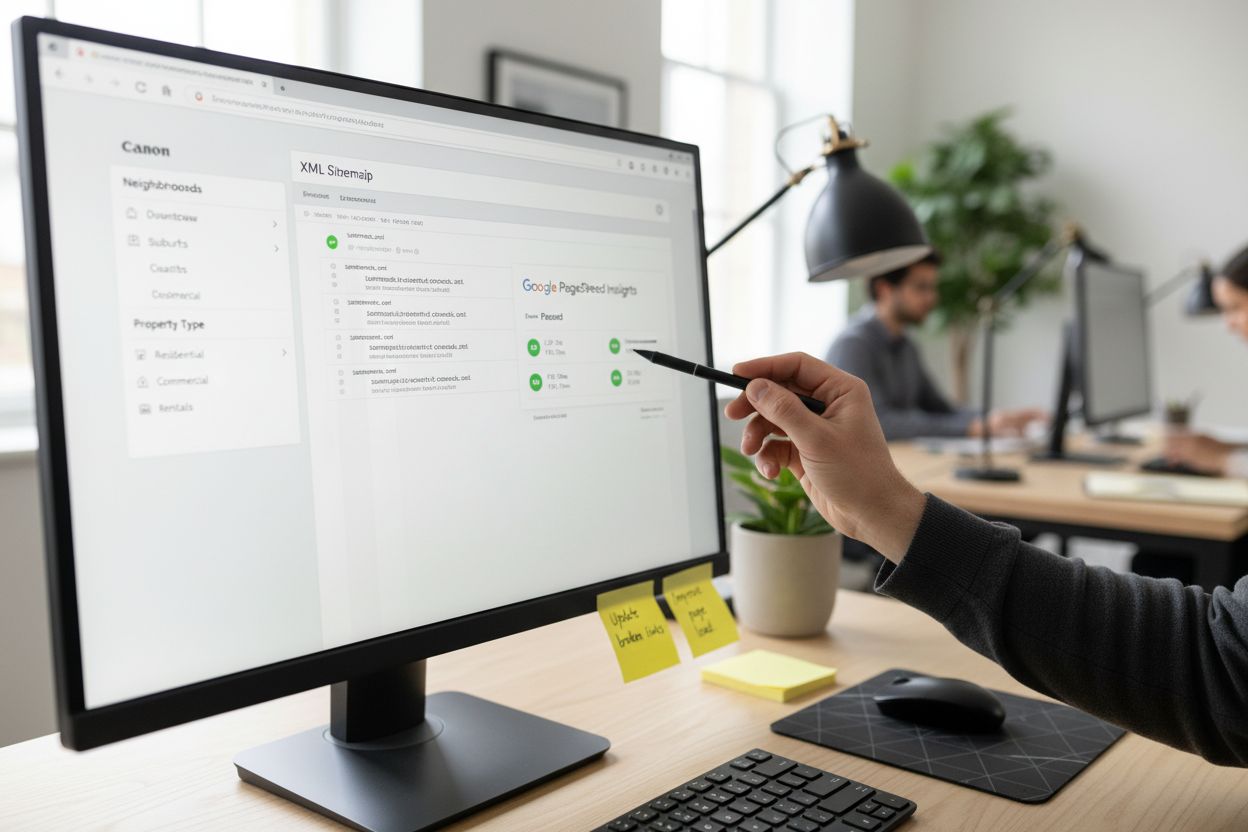
According to research from Search Engine Journal, conducting an SEO audit is critical for identifying areas of improvement in site structure. Start by examining your website’s core technical elements like XML sitemaps, robots.txt, page titles, headings, alt tags, and URL structures.
Focus on creating a logical and intuitive website hierarchy. Group your property listings and content into clear categories. For real estate websites, this might mean organizing by property type, location, price range, or buyer demographic. Ensure that each page is no more than three clicks away from your homepage.
Improving site performance is crucial for SEO success. As research from Promodo indicates, Core Web Vitals play a significant role in search rankings. Pay attention to:
- Largest Contentful Paint (LCP): Aim for load times under 2.5 seconds
- Interaction to Next Paint (INP): Ensure quick page responsiveness
- Cumulative Layout Shift (CLS): Maintain visual stability during page load
Pro Tip: Use Google PageSpeed Insights to diagnose and fix performance issues that could hurt your search rankings.
Check and fix broken links regularly. A seamless user experience signals to search engines that your website is well maintained and trustworthy. Use tools like Screaming Frog or Google Search Console to identify and resolve any link issues.
In the next step, you will learn how to create high quality content that complements your optimized website structure.
Step 3: Create High-Quality, Suburb-Focused Content
Creating suburb-focused content is your pathway to connecting with local home buyers and establishing your real estate expertise. You will learn how to craft compelling neighborhood content that attracts and engages your target audience.
Start by understanding the unique characteristics of each suburb you are targeting. Go beyond basic property listings and create in depth content that provides real value to potential buyers. Learn from the 7 types of real estate content every agent should use to diversify your approach.
Develop comprehensive suburb guides that showcase local amenities, school districts, community highlights, and property market trends. Think like a buyer and answer questions they would naturally ask. What makes this neighborhood special? What are the best local cafes? How are property values changing?
Incorporate storytelling into your content. Instead of just listing facts, create narratives that help potential buyers imagine living in the neighborhood. Share stories about local community events, recent development projects, or interesting historical facts about the area.
Your content should cover multiple formats to keep readers engaged:
- Neighborhood market reports
- Local school and infrastructure insights
- Community event calendars
- Property investment potential
- Local business and lifestyle highlights
Pro Tip: Use high quality local images and maps to make your content more visually appealing and informative.
Consistently update your content to reflect current market conditions and local changes.
This signals to search engines that your website provides current and relevant information.
In the next step, you will learn how to optimize your content for local search engine rankings.
Step 4: Enhance Google Business Profile for Local Impact
Your Google Business Profile is a powerful tool for attracting local real estate clients and improving your search visibility. You will learn how to optimize this critical digital asset to stand out in local search results.
According to research from TopOnSeek, optimizing your Google Business Profile requires careful attention to multiple elements. Start by ensuring your Google Business Profile optimization includes completely accurate NAPW details (Name, Address, Phone, Website).
Complete every section of your profile with precise and engaging information. Upload high quality professional photos of your real estate team, office, and recent property listings. Include virtual tour videos and images that showcase your local market expertise. The more comprehensive and visually appealing your profile, the more potential clients will trust your brand.
Regularly update your profile with fresh content. Post about recent property sales, market insights, community events, and local real estate trends. These updates signal to Google that your business is active and relevant.
Key elements to focus on include:
Here’s a comparison of key actions for optimizing your Google Business Profile:
| Profile Element | Best Practices | SEO Impact |
|---|---|---|
| NAPW Details | Use accurate business name Address matches website Correct phone and website |
Ensures local trust Improves ranking signals |
| Images & Videos | Upload professional photos Share virtual tour videos |
Boosts engagement Increases client trust |
| Business Category & Description | Choose most relevant category Craft detailed service description |
Better local visibility Attracts target audience |
| Reviews & Responses | Encourage client reviews Reply promptly and professionally |
Demonstrates credibility Builds reputation |
| Content Updates | Post local property news Share market trends Highlight community events |
Signals business activity Keeps profile relevant |
| Service Area Info | Specify neighborhoods List all serviced suburbs |
Targets right audience Improves search accuracy |
- Accurate business category
- Detailed service descriptions
- High resolution images
- Client reviews and responses
- Current contact information
- Local service area specifics
Pro Tip: Respond to all client reviews professionally and quickly to demonstrate excellent customer service.
Verify your business location and maintain consistent information across all online platforms.
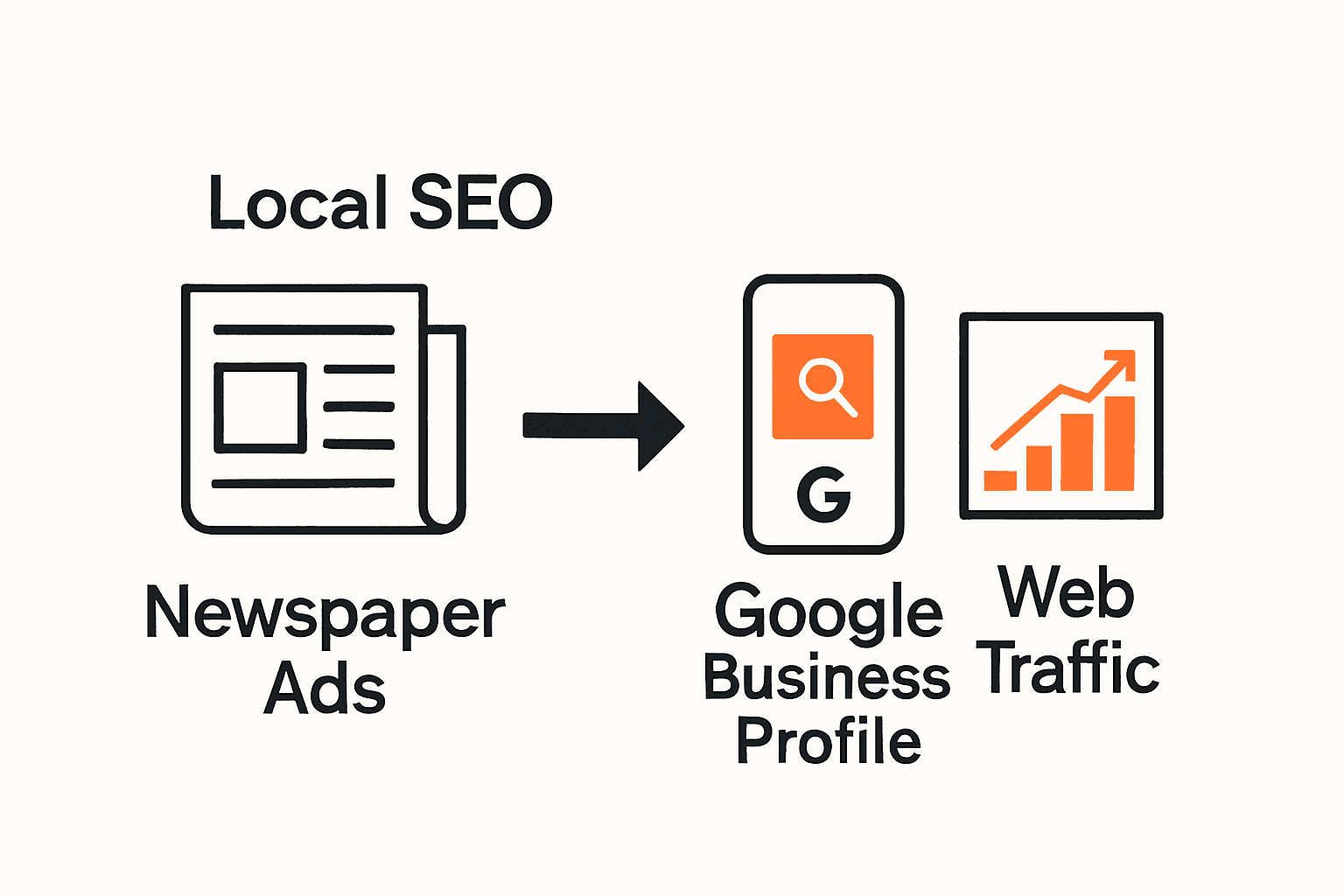 Inconsistent details can confuse potential clients and harm your local search rankings.
In the next step, you will learn advanced techniques for building local backlinks and increasing your online authority.
Step 5: Monitor Performance and Refine SEO Strategies
Constant monitoring and strategic refinement are the keys to maintaining strong local search rankings for your real estate business. You will learn how to track your SEO performance and make data driven improvements that keep you ahead of the competition.
Start by setting up comprehensive tracking using Google Analytics 4 and Search Console. Learn from the key performance indicators that matter most for real estate websites. According to research from Search Engine Journal, these tools help you understand critical metrics like website traffic, user behavior, and search ranking performance.
Focus on analyzing specific metrics that impact your real estate SEO strategy:
- Organic search traffic volume
- User engagement time
- Bounce rates for property listing pages
- Conversion rates from search to contact form submissions
- Top performing keywords and landing pages
- Mobile versus desktop user interactions
Conduct a monthly SEO audit to identify areas for improvement. Look for opportunities to enhance page speed, fix broken links, and optimize content based on user behavior patterns. Pay special attention to mobile friendliness and page load times.
Pro Tip: Set up custom dashboards in Google Analytics to track real estate specific metrics more efficiently.
Remember that SEO is an ongoing process. What works today might need adjustment tomorrow. Stay flexible and willing to experiment with new strategies based on your performance data.
In the final step, you will learn how to integrate these insights into a comprehensive local SEO approach for your real estate business.
Ready to Outrank Your Local Real Estate Rivals?
Struggling to turn neighborhood SEO tips into real results? Whether you feel stuck researching keywords that are not bringing buyers or frustrated by average Google rankings, you are not alone. This article showed that real estate agents need suburb-focused content, smart website structure, and a strong Google Business Profile to win local customers. But connecting all these steps can be complex and time-consuming.
Stop losing clients to competitors who appear first in local searches. At Content Charlie, we do the heavy lifting for you. Let us help you rank for targeted keywords, write suburb guides that attract the right buyers, and manage your SEO updates in line with the best practices covered here. Visit Content Charlie now and discover how easy it is to boost your local profile, capture more leads, and become the go-to real estate expert in your area. Start getting found by the customers who are searching for you today.
Frequently Asked Questions
How can I perform local keyword research for my real estate business?
Start by thinking like a home buyer and use tools to identify location-specific search terms that reflect buyer intent. Focus on long-tail keywords like “3 bedroom homes for sale in [Neighborhood]” to attract targeted traffic. Assess and adjust your keyword list regularly to match market trends.
What is the best website structure for improving real estate SEO?
A logical website structure is essential for SEO success. Group your property listings by type, location, and price range to ensure each page is easily accessible within three clicks from your homepage.
How can I create high-quality content to attract local home buyers?
Focus on developing comprehensive content that highlights suburb characteristics, local amenities, and market trends. Use engaging formats such as neighborhood guides and storytelling to connect with your audience. Update your content consistently to reflect current market conditions.
What elements should I include to optimize my Google Business Profile?
Ensure your profile has accurate NAPW details and engaging images of your team and properties. Regularly update your profile with posts about recent sales and local events to keep it active and relevant in search results.
How do I monitor my SEO performance and make improvements?
Set up tracking tools to analyze your website’s organic traffic, user engagement, and conversion rates. Conduct monthly audits to identify areas for enhancement, focusing on mobile friendliness and page speed to ensure optimal user experience.
What specific actions can I take to enhance my local search rankings in real estate?
Utilize long-tail keywords in your content, optimize your website structure, and improve your Google Business Profile. Additionally, create suburb-focused content and regularly assess your performance metrics to refine your strategies for better rankings.
Recommended

Real Estate Website Essentials: Complete Guide for Agents
Having the right Real Estate Website Essentials will have you ahead of 99% of other real estate website, if you implement the steps below.
Nearly 97 percent of home buyers search online for properties before reaching out to an agent. Your real estate website is your strongest tool for attracting new clients and keeping your business visible. Building a platform that combines stunning visuals, seamless searches, and mobile-friendly design can set you apart in a crowded market, creating a smoother path from browsing to closed deals.
Key Takeaways
| Point | Details |
|---|---|
| Core Features | Effective real estate websites must include advanced property search tools, high-quality visual content, lead generation mechanisms, and trust signals to convert visitors into clients. |
| Local SEO Importance | Local SEO strategies are vital for enhancing visibility, involving consistent business citations, structured data markup, and geographic keyword targeting to attract potential clients within specific areas. |
| Lead Conversion Tools | Implementing technologies like IDX lead tracking, email drip campaigns, and behavior analytics can significantly improve lead capture and nurture strategies on real estate websites. |
| Accessibility Compliance | Ensuring websites meet digital accessibility standards is essential not only for legal compliance but also for fostering an inclusive experience for all potential clients. |
Table of Contents
- Defining Real Estate Website Essentials
- Core Features Every Real Estate Website Needs
- SEO Requirements For Local Real Estate Search
- Lead Generation And Conversion Strategies
- Legal Compliance And Accessibility Standards
- Common Website Mistakes To Avoid
Defining Real Estate Website Essentials
Your real estate website esentials are more than just a digital business card – it’s your 24/7 online sales representative that works harder than you ever could. According to AgentFire, successful agent websites combine professional visual branding with strategic digital tools that convert casual browsers into serious clients.
The core essentials of a powerful real estate website revolve around several critical features:
- Property Search Functionality: Advanced filters for location, price, and bedrooms
- Visual Content: High-quality property photos, virtual tours, neighborhood videos
- Lead Generation: Accessible contact forms, email capture mechanisms
- Trust Signals: Client testimonials, third-party reviews, professional credentials
Mobile performance isn’t just a bonus – it’s mandatory. According to PropertyEasy, your website must deliver a seamless experience across devices. This means lightning-fast loading times, stable layouts, and responsive design that adapts to smartphones, tablets, and desktops without losing visual appeal or functionality.
Beyond basic features, modern real estate websites leverage sophisticated tools like AI-powered content creation, visitor behavior analytics, and integrated CRM systems. These technologies transform your website from a passive information portal into an active lead-generation machine that works continuously to expand your client base and demonstrate your local market expertise.
Core Features Every Real Estate Website Needs
Building a high-performance real estate website requires more than just aesthetics – it demands strategic functionality that converts visitors into clients. According to AgentFire, successful websites blend professional design with advanced technological capabilities.
The foundational features every real estate website must include are:
- Advanced Property Search: Robust filtering by location, price, bedrooms, amenities
- Multimedia Showcase: High-resolution property images, 360-degree virtual tours
- Mobile Responsiveness: Seamless performance across smartphones, tablets, desktops
- Lead Capture Mechanisms: Strategic contact forms, email signup prompts
- Trust Signals: Client testimonials, professional credentials, third-party reviews
Conversion optimization goes beyond basic website elements. Modern websites integrate sophisticated tools like visitor behavior tracking, AI-powered content generation, and automated email drip campaigns. According to PropertyEasy, these technologies transform your digital presence from a static brochure into an active client acquisition engine.
The key is creating real estate website essentials that doesn’t just display properties, but provides an immersive, interactive experience that guides potential clients through their home-searching journey. This means fast loading times, intuitive navigation, compelling visual storytelling, and clear pathways to connect with you as a trusted local real estate professional.
Here’s a comparison of essential real estate website features:
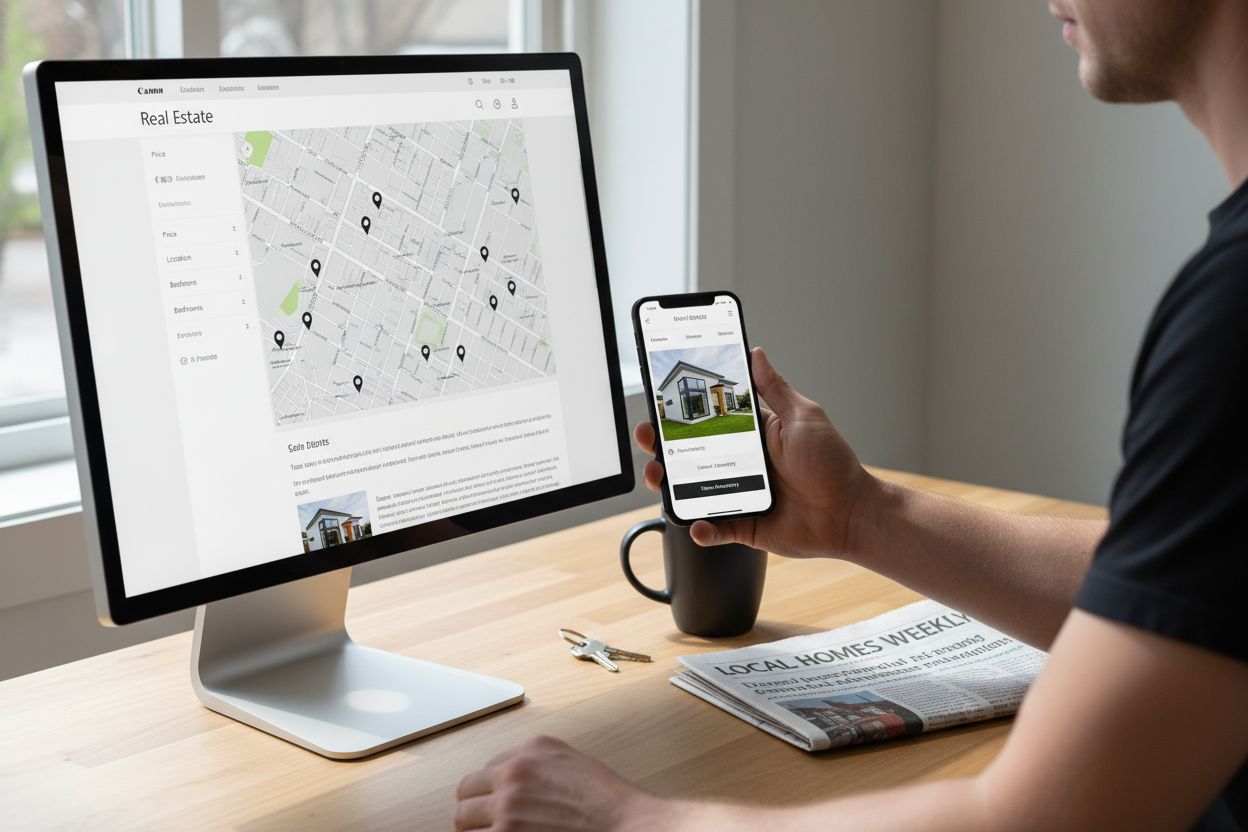
| Feature | Purpose | Examples |
|---|---|---|
| Property Search | Helps users find suitable listings | Advanced filters Map view |
| Visual Content | Boosts engagement and trust | High-res photos Virtual tours |
| Lead Generation | Captures potential client info | Contact forms Email signups |
| Trust Signals | Builds credibility | Testimonials Third-party reviews |
| Mobile Responsiveness | Ensures seamless device experience | Fast load Responsive layout |
| Behavior Analytics | Tracks and improves site performance | Visitor heatmaps Funnel tracking |
SEO Requirements for Local Real Estate Search
Local SEO is the secret weapon that transforms your real estate website from invisible to irresistible in search results. Understanding why local SEO matters begins with recognizing that potential clients search for properties and agents within specific geographic boundaries.
According to Search Engine Journal, successful local SEO for real estate professionals hinges on several critical strategies:
- Consistent Business Citations: Accurate listings across Google Business Profile and local directories
- Structured Data Markup: Implementing schema for RealEstateAgent, Offer, and Residence categories
- Hyper-Local Content: Creating neighborhood-specific pages and property guides
- Geographic Keyword Targeting: Incorporating location-specific terms naturally
The most effective local SEO approach goes beyond basic optimization. According to LSEO, modern real estate agents must develop content clusters that target specific neighborhoods, leverage social media channels for content distribution, and actively seek backlinks from local influencers and publications.
Your ultimate goal is to become the go-to digital resource for local property information.
This means creating content that answers specific local buyer questions, showcasing your deep understanding of neighborhood dynamics, and ensuring your website speaks directly to the unique needs of potential clients in your specific market area.
Lead Generation and Conversion Strategies
Transforming website visitors into potential clients requires a strategic approach that goes beyond simple contact forms. Types of real estate leads vary, and your digital strategy must be sophisticated enough to capture and nurture each unique visitor’s interest.
According to AgentFire, advanced lead generation technologies now offer powerful tools for real estate professionals:
- IDX Lead Tracking: Monitor visitor interactions and property interests
- Email Drip Campaigns: Automated, personalized communication sequences
- CRM Integration: Seamless contact management and follow-up tracking
- AI Content Generation: Dynamic, targeted messaging based on user behavior
- Behavior Analytics: Heat mapping and funnel tracking to optimize conversion paths
Visitor trust is the cornerstone of successful lead conversion. As PropertyEasy highlights, this means prominently featuring compelling testimonials, high-quality property visuals, and virtual tours that demonstrate your professionalism and local market expertise.
The most effective websites create a frictionless journey from initial curiosity to client engagement.
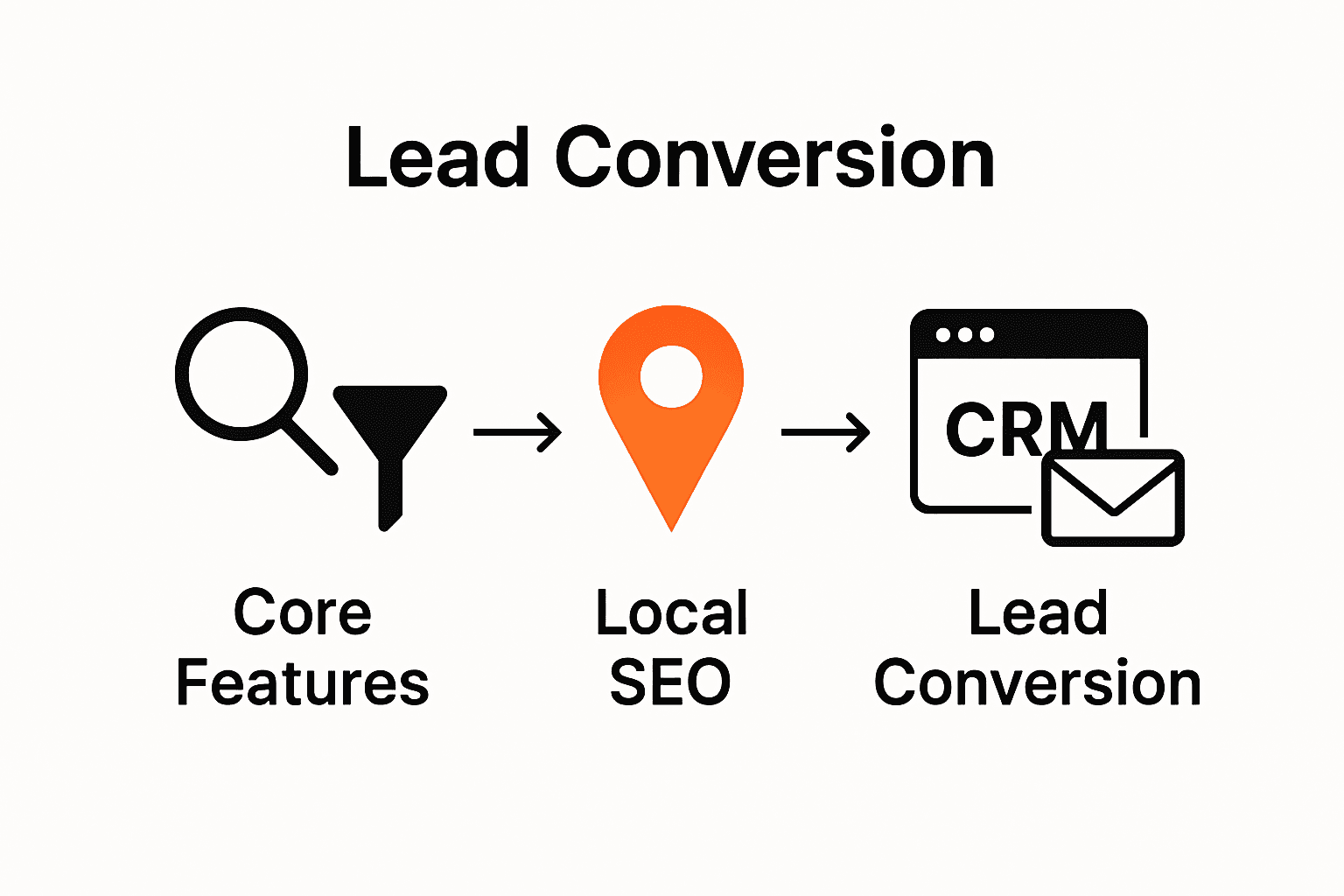 This means intuitive design, crystal-clear contact information, and strategic calls-to-action that guide potential clients exactly where they want to go – closer to finding their perfect property with your expert assistance.
Legal Compliance and Accessibility Standards
Digital accessibility is no longer optional for real estate websites – it’s a legal and ethical imperative. Ensuring your online platform is inclusive means creating an experience that welcomes every potential client, regardless of their physical abilities or technological constraints.
According to Wikipedia, the Web Content Accessibility Guidelines (WCAG) 2.2 provide a comprehensive framework for creating accessible digital experiences. These internationally recognized standards focus on four fundamental principles:
- Perceivable: Information must be presentable to users in ways they can perceive
- Operable: User interface and navigation must be functional for all users
- Understandable: Content and operation must be clear and comprehensible
- Robust: Content must be compatible with current and future assistive technologies
Real estate websites have unique challenges in meeting these standards. This means ensuring your property listings, contact forms, search functions, and multimedia content are fully navigable by screen readers, compatible with keyboard-only navigation, and designed with sufficient color contrast and text sizing.
Beyond technical compliance, accessible design demonstrates your commitment to inclusivity. It signals to potential clients that you value every individual’s experience, understand diverse user needs, and are committed to providing a welcoming, professional digital environment that respects and accommodates all users.
Common Website Mistakes to Avoid
Website design can make or break your real estate digital presence. One misstep could mean losing potential clients before they even understand what you offer. Lead generation ideas for real estate start with avoiding critical digital pitfalls that undermine your professional image.
According to Type North, the most common website mistakes that sabotage real estate professionals include:
- Mobile Unresponsiveness: Sites that don’t adapt to smartphone screens
- Cluttered Homepage: Overwhelming visitors with too much information
- Weak Calls-to-Action: Unclear or missing contact pathways
- Low-Quality Property Listings: Incomplete or unappealing property descriptions
- Slow Page Loading: Performance that frustrates potential clients
- Neglected Local SEO: Invisible in local property search results
Navigation complexity is another silent killer of user experience. Your website should feel intuitive, with clear menus, logical property search functions, and streamlined paths to contact you. Think of your website as a digital storefront – it should invite exploration, not create confusion.
The most successful real estate websites transform technical requirements into storytelling opportunities. This means creating a digital experience that’s not just functional, but engaging – where every pixel communicates your professionalism, local expertise, and commitment to helping clients find their dream property.
Ready to Transform Your Real Estate Website Into a Local Lead Magnet?
You read about the must-have features for a real estate website, but bringing those essentials to life is a challenge. Many agents struggle with weak property listings, missing trust signals, and a website that just does not show up when locals search for homes or advice. Without powerful copywriting and suburb-specific SEO, you risk falling behind competitors who connect with buyers and sellers right where they live.
At Content Charlie, we turn your knowledge into high-converting web pages, suburb guides, and blog posts that climb Google results. Our team specializes in conversion optimization and local SEO, giving your site mobile-first performance, powerful lead generation, and content that earns trust in your neighborhood. If you want to stand out as the top agent in your suburb, act now and let us create a real estate website that converts visitors into lifelong clients. Start growing your local visibility with Content Charlie today.
Frequently Asked Questions
What are the essential features of a real estate website?
The essential features of a real estate website include advanced property search functionality, high-quality visual content, lead generation tools, trust signals like testimonials, and mobile responsiveness to ensure accessibility across devices.
How can local SEO impact my real estate website’s visibility?
Local SEO helps improve your real estate website’s visibility by optimizing for specific geographic keywords, ensuring consistent business citations, and creating hyper-local content that resonates with local buyers, thereby attracting more relevant traffic to your site.
What strategies can I use for effective lead generation on my real estate website?
Effective lead generation strategies include implementing IDX lead tracking, using email drip campaigns for nurturing leads, integrating customer relationship management (CRM) systems, and deploying behavior analytics to understand visitor interactions and optimize conversions.
How can I ensure my real estate website is accessible to all users?
To ensure your real estate website is accessible, adhere to the Web Content Accessibility Guidelines (WCAG) by making information perceivable, operable, understandable, and robust, ensuring compatibility with assistive technologies and providing a user-friendly experience for individuals with disabilities.
Recommended
- 7 Types of Real Estate Content Every Agent Should Use – Content Charlie
- Greg Reed, Author at Content Charlie
- 7 Essential Social Media Tips for Agents – Content Charlie
- 7 Essential Types of Real Estate Leads Agents Must Know – Content Charlie
- SEO for Real Estate Agencies: Simple Strategies to Grow Your Business
- Website Design Guide for Builders: Create a Winning Website – ResponsiveWebsiteDesign

7 Types of Real Estate Content Every Agent Should Use
There are 7 Types of Real Estate Content that really move the need for a real estate agents website. Do these and see your traffic grow.
Did you know that nearly 90% of home buyers research local agents and neighborhoods online before making a move? In a market where first impressions happen through screens, valuable content is your most powerful tool. From in-depth suburb guides to stories of real client success, the right materials position you as the trusted local expert buyers and sellers are searching for. Stand out by sharing knowledge that makes every visit to your website or profile more meaningful.
Quick Summary
| Takeaway | Explanation |
|---|---|
| 1. Create suburb guides for local expertise | Develop comprehensive neighborhood guides to establish yourself as a trusted local authority and improve search visibility. |
| 2. Write compelling property descriptions | Use vivid storytelling and strategic language to create emotional connections with potential buyers in your property listings. |
| 3. Optimize your agent profile for trust | Transform your online profile into a personal brand storyteller that highlights your expertise and community connections. |
| 4. Produce blog articles to answer client questions | Create educational content that addresses common client questions and positions you as a go-to resource in real estate. |
| 5. Showcase client testimonials and case studies | Leverage specific success stories and measurable outcomes to build credibility and demonstrate your ability to solve real estate challenges. |
Table of Contents
- Suburb Guides That Showcase Local Expertise
- Property Listings With Compelling Descriptions
- Agent Profile Pages That Build Trust
- Blog Articles Answering Buyer And Seller Questions
- Google Business Profile Posts To Attract Locals
- Market Update Reports That Demonstrate Authority
- Client Testimonials And Case Studies For Social Proof
1. Suburb Guides That Showcase Local Expertise
Real estate agents who want to stand out need more than just property listings. Suburb guides are powerful tools that transform you from a simple property seller to a neighborhood authority.
These comprehensive neighbourhood spotlights go far beyond basic information. They are Types of Real Estate Content that are essential. According to research from ThinkProp, creating detailed community guides helps agents establish themselves as trusted local experts while simultaneously boosting their search engine visibility through location specific keywords.
When you craft a suburb guide, you’re essentially creating a narrative about community living that potential buyers find irresistible. Your guide should cover critical elements that help buyers understand the neighborhood’s unique character:
• Local school performance and ratings
• Demographic insights
• Nearby amenities and recreational spaces
• Historical background of the area
• Upcoming community events
• Local business ecosystem
The magic happens when you blend data with storytelling. Instead of just listing facts, paint a picture of what life looks like in that specific suburb. Show readers why this neighbourhood is more than just a collection of streets and houses.
Pro tip: Leverage neighborhood spotlights as evergreen content that continues attracting potential clients month after month. By creating comprehensive guides, you’re not just selling properties you’re selling lifestyles and community experiences.
Remember: Buyers aren’t just purchasing a home. They’re investing in a community. Your suburb guide can be the bridge that helps them make that emotional connection.
2. Property Listings With Compelling Descriptions
Property descriptions are more than just a list of rooms and square meters. They are Types of Real Estate Content that your digital sales pitch that can transform a casual browser into an excited potential buyer.
According to research from Media Junkie, effective property listings require strategic storytelling that goes beyond basic information. Your goal is to create an immersive narrative that helps potential buyers imagine themselves living in the space.
Crafting a standout property listing involves several key elements:
• Write an attention grabbing headline
• Use vivid sensory language
• Highlight unique property features
• Create an emotional connection
• Include strategic location keywords
Innovate Estate suggests integrating location specific keywords naturally to improve search visibility. This means moving beyond generic descriptions and painting a picture of lifestyle and potential.
Your description should answer the key questions buyers are asking: What makes this property special? How will it improve my life? What opportunities does this home offer?
Consider this example transformation. Instead of “3 bedroom house with kitchen”, write “Sun drenched Paddington charmer featuring a gourmet kitchen perfect for weekend entertaining with stunning city glimpses from the master balcony”.
Property listings are your opportunity to be creative. Each word should work hard to capture imagination and generate genuine interest.
Pro tip: Always write as if you are speaking directly to your ideal buyer. Authenticity sells more effectively than generic marketing speak.
3. Agent Profile Pages That Build Trust
Your online profile is more than a digital business card. It is your personal brand storyteller that can make or break potential client connections. Don’t miss this Types of Real Estate Content.
In the digital real estate landscape, clients want to work with agents they feel they know and trust. Your profile page is your opportunity to transform from an anonymous professional into a relatable human with expertise and personality.
Key elements of a trust building profile include:
• Professional yet approachable headshot
• Clear statement of your professional philosophy
• Specific local market expertise
• Personal background that shows community connection
• Authentic client testimonials
• Verifiable professional credentials
Think of your profile as a narrative that answers the critical question: Why should someone choose you as their real estate agent? Your story needs to be genuine transparent and focused on the value you bring to clients.
Consider sharing specific details that demonstrate your local knowledge. Maybe you grew up in the neighborhood. Perhaps you understand the local market nuances better than anyone else. These personal touches transform you from a generic agent to a trusted neighborhood expert.
Real estate client engagement starts with showing who you are beyond your professional achievements. Your profile should feel like a conversation not a resume.
Remember: People do business with people they like and trust. Your profile is your first chance to make that critical human connection. Make every word count.
4. Blog Articles Answering Buyer and Seller Questions
Potential clients are searching for answers long before they contact an agent. These Types of Real Estate Content in the form of Blog articles that directly address their burning questions can transform you from a stranger into a trusted resource.
According to research from Illustrarch, producing educational content helps demystify complex real estate processes while simultaneously building trust and demonstrating professional expertise.
Effective blog articles should focus on solving real problems:
• First time buyer guides
• Mortgage financing explained
• Local market trend analysis
• Step by step selling processes
• Investment property strategies
• Neighborhood transition insights
• Financing options breakdown
Your blog is not just content. It is a strategic tool that positions you as the go to local expert. Think about the questions clients ask you repeatedly. Those conversations are goldmines for potential article topics.
For example instead of writing a generic article about home buying write something like “7 Hidden Costs First Time Buyers Always Forget” or “How to Save $10000 on Your First Home Purchase in Brisbane”.
Buyer needs vary widely but great content speaks directly to their specific concerns. Your goal is to answer questions before they even ask them.
Pro tip: Track the questions you receive most frequently from clients. Those are your most valuable content inspiration sources. Each article should provide clear actionable advice that helps readers feel more confident about their real estate journey.
5. Google Business Profile Posts to Attract Locals
Your Google Business Profile is not just a digital placeholder. It is your local digital storefront that can attract potential clients with strategic posting.
According to research from Nativo, regularly updating your profile with engaging content can dramatically increase your local visibility and drive critical user actions like website visits and direct inquiries. Don’t forget these Types of Real Estate Content.
Effective Google Business Profile posting requires a strategic approach:
• Share recent property listings
• Post local market updates
• Highlight community events
• Showcase client success stories
• Feature neighborhood insights
• Provide quick real estate tips
• Include high quality professional images
Think of these posts as mini marketing moments. Each post is an opportunity to demonstrate your local expertise and connect with potential clients who are actively searching for real estate guidance.
Your content should be concise visual and action oriented. Instead of lengthy descriptions use crisp compelling language that makes people want to learn more. A post about a new listing might read “Stunning 3 bedroom Paddington home just listed. Open house this Saturday” with an attractive property image.
Google Business Profile optimization is about consistency and value. Post at least weekly to keep your profile dynamic and interesting. Use a mix of professional insights local knowledge and genuine personality.
Pro tip: Always include a clear call to action. Whether its “Book a consultation” or “View full listing” make it easy for potential clients to take the next step.
6. Market Update Reports That Demonstrate Authority
Market update reports are your opportunity to prove you are the local real estate expert clients want to work with. These strategic Types of Real Estate Content transform raw data into compelling insights that position you as a trusted advisor.
Clients are hungry for information that helps them make smart property decisions. Your market update reports should go beyond simple statistics and tell a story about local real estate trends.
Critical elements of an authoritative market report include:
• Median property price movements
• Days on market trends
• Suburb specific performance analysis
• Buyer demand indicators
• Comparative sales data
• Emerging neighborhood opportunities
• Potential investment signals
Do not just present numbers. Contextualize them. Explain what these trends mean for buyers sellers and investors. For instance instead of saying “Prices increased by 3%” explain “This 3% increase suggests growing buyer confidence in our local market”.
Your reports should feel like a conversation with a trusted advisor not a boring spreadsheet. Use clear visuals infographics and plain language that makes complex information accessible.
Attract real estate clients through reports that provide genuine value. Think about answering the questions your clients are asking: What is happening in the market? Where are the opportunities? What should I know before buying or selling?
Pro tip: Distribute these reports through multiple channels email newsletter social media and your website to maximize their reach and impact.
7. Client Testimonials and Case Studies for Social Proof
Potential clients do not just want to hear how great you are. They want proof that you can solve their specific real estate challenges. Testimonials and case studies are your secret weapon for building trust and credibility.
Research from Law Crust Business reveals that detailed testimonials can drive up to 20% more inquiries. These are not just random quotes they are strategic storytelling tools that demonstrate your expertise.
Crafting compelling social proof requires a structured approach:
• Include specific client challenges
• Highlight unique solution strategies
• Showcase measurable results
• Use authentic client voices
• Add visual elements
• Provide quantifiable outcomes
• Share transformation stories
A powerful case study is not about bragging. It is about showing how you solved a real problem. For example instead of saying “We sold a house” write “We helped the Smith family sell their 4 bedroom home in Paddington 27% faster than market average and $50000 above asking price”.
Visuals make these stories come alive. Before and after photos property transformation images and client reaction shots can turn a good testimonial into an extraordinary one.
Real estate social media posts become significantly more engaging when they incorporate these authentic client stories. Your goal is to help potential clients see themselves in these success narratives.
Pro tip: Always get written permission from clients and make testimonials as specific and detailed as possible. Generic praise does not build trust specific success stories do.
Below is a comprehensive table summarizing the key strategies and elements in real estate marketing discussed in the article.
| Strategy | Implementation | Expected Results |
|---|---|---|
| Suburb Guides | Create narratives about community living with details like school ratings, demographics, and local events. | Establishes agents as local experts and improves search visibility. |
| Property Listings | Use strategic storytelling with vivid language and location-specific keywords. | Transforms browsers into excited potential buyers. |
| Agent Profile Pages | Include headshots, personal philosophy, local expertise, and client testimonials. | Builds trust by showcasing personality and expertise. |
| Blog Articles | Focus on solving real buyer/seller problems, like financing and market trends. | Positions agents as trusted resources and helps demystify real estate processes. |
| Google Business Profile | Regularly update with listings, market updates, and client stories. | Increases local visibility and drives inquiries. |
| Market Update Reports | Contextualize data to provide insights on trends and opportunities. | Demonstrates authority and helps clients make informed decisions. |
| Client Testimonials | Use stories with specific challenges and measurable results. | Builds credibility and encourages potential clients to engage. |
Make Your Real Estate Content Work Harder For You
Are you struggling to stand out in a crowded real estate market? If your suburb guides, property listings, or Google Business Profile posts are not turning leads into loyal clients, you are not alone. The article showed how crucial local expertise, trust-building, and strategic SEO are to attracting buyers and sellers. Yet, creating the right content takes time, skill, and a deep understanding of what actually motivates your audience to take action.
Let Content Charlie turn your words into your most powerful asset. Our team specializes in SEO-driven copywriting and suburb SEO content that not only ranks high but also speaks directly to local buyers and sellers. If you want property descriptions that invite connection, suburb guides that build authority, or Google Business Profile content ready to convert, we deliver results. Visit Content Charlie now and see how custom real estate content can help you get noticed and get chosen before your competition does.
Frequently Asked Questions
What types of real estate content should I create as an agent?
To effectively establish your authority, create suburb guides, compelling property listings, engaging agent profile pages, informative blog articles, Google Business Profile posts, in-depth market update reports, and client testimonials. Prioritize content that addresses the needs and questions of potential buyers and sellers.
How can suburb guides enhance my real estate strategy?
Suburb guides allow you to showcase your local expertise, establishing you as an authority. Start by compiling detailed information on schools, demographics, and local amenities within 30–60 days to attract potential buyers.
What should I include in effective property listings?
Effective property listings need attention-grabbing headlines and vivid descriptions that highlight unique features. Focus on crafting an emotional connection; for instance, describe a property’s garden as a “tranquil retreat for family gatherings” to engage potential buyers.
How can I ensure my blog addresses buyer and seller concerns?
Identify common questions from your clients and create blog articles that provide clear, actionable answers. For instance, a blog titled “7 Hidden Costs First-Time Buyers Always Forget” can directly help clients navigate the market.
Why are client testimonials important for my real estate content?
Client testimonials provide social proof that demonstrates your ability to solve clients’ real estate challenges. Gather specific stories showing measurable outcomes, like “achieved a sale 20% over asking price,” to build trust and credibility with prospective clients.
How do I create effective Google Business Profile posts?
Engaging Google Business Profile posts should include recent property listings, local market updates, and community events. Commit to posting at least weekly to keep your content fresh and encourage direct inquiries from potential clients.
Recommended
- email marketing tactics Archives – Content Charlie
- lead generation ideas for real estate Archives – Content Charlie
- lead generation real estate Archives – Content Charlie
- real estate email marketing Archives – Content Charlie
- SEO for Real Estate Agencies: Simple Strategies to Grow Your Business
- 7 Content Curation Strategies Every Business Owner Needs – My Blog

Understanding Why Local SEO Matters for Real Estate
Local SEO is changing the way home buyers and sellers connect with real estate agents in their own neighborhoods. And get this. 46% of all Google searches now have local intent, which means nearly half of online house-hunters are searching for answers right where they live. Most agents still focus only on broad search terms, but the agents who win clients today are the ones who master hyperlocal visibility and become the top choice just down the street.
Table of Contents
- Defining Local Seo And Its Importance In Real Estate
- The Impact Of Local Search On Consumer Behavior
- How Local Seo Enhances Online Visibility For Agents
- Key Components Of Effective Local Seo Strategies
- Real-World Examples Of Local Seo Success In Real Estate
Quick Summary
| Takeaway | Explanation |
|---|---|
| Optimize Your Google Business Profile | Ensure your profile has accurate information to improve local visibility. |
| Focus on Hyperlocal Content Creation | Develop content tailored to specific neighborhoods to engage local clients effectively. |
| Leverage Online Reviews for Credibility | Encourage clients to leave positive reviews to build trust in your services. |
| Use Location-Specific Keywords | Incorporate local keywords to enhance search rankings in targeted areas. |
| Maintain Consistency Across Platforms | Keep business information uniform on all online platforms to boost local SEO success. |
Defining Local SEO and Its Importance in Real Estate
Local SEO represents a strategic digital marketing approach specifically designed to help businesses increase their visibility in geographically targeted search results. For real estate professionals, this means optimizing online presence to attract potential clients within specific neighborhoods, suburbs, or regional areas.
What Exactly is Local SEO?
Local SEO goes beyond traditional search engine optimization by focusing on location-specific search signals. In real estate, this translates to helping potential buyers and sellers find your services when searching for property-related information in their immediate geographic area. Local SEO for real estate involves multiple tactics designed to improve your visibility in local search results.
Key components of local SEO for real estate include:
- Optimizing Google Business Profile with accurate business information
- Creating location-specific content targeting particular suburbs or neighborhoods
- Building local citations and consistent business information across online platforms
- Generating location-based reviews from satisfied clients
Why Local SEO Matters for Real Estate Professionals
According to Google’s Local Search Ranking Factors Study, 46% of all Google searches have local intent, making local SEO critical for real estate agents seeking to capture targeted leads. By implementing strategic local SEO practices, agents can significantly improve their chances of appearing in “near me” searches and map pack results.
For real estate professionals, local SEO is not just about ranking higher in search results. It’s about establishing credibility, demonstrating local expertise, and connecting with potential clients who are actively searching for property services in specific areas. By focusing on hyperlocal optimization strategies, agents can differentiate themselves from competitors and become the go-to real estate expert in their target market.
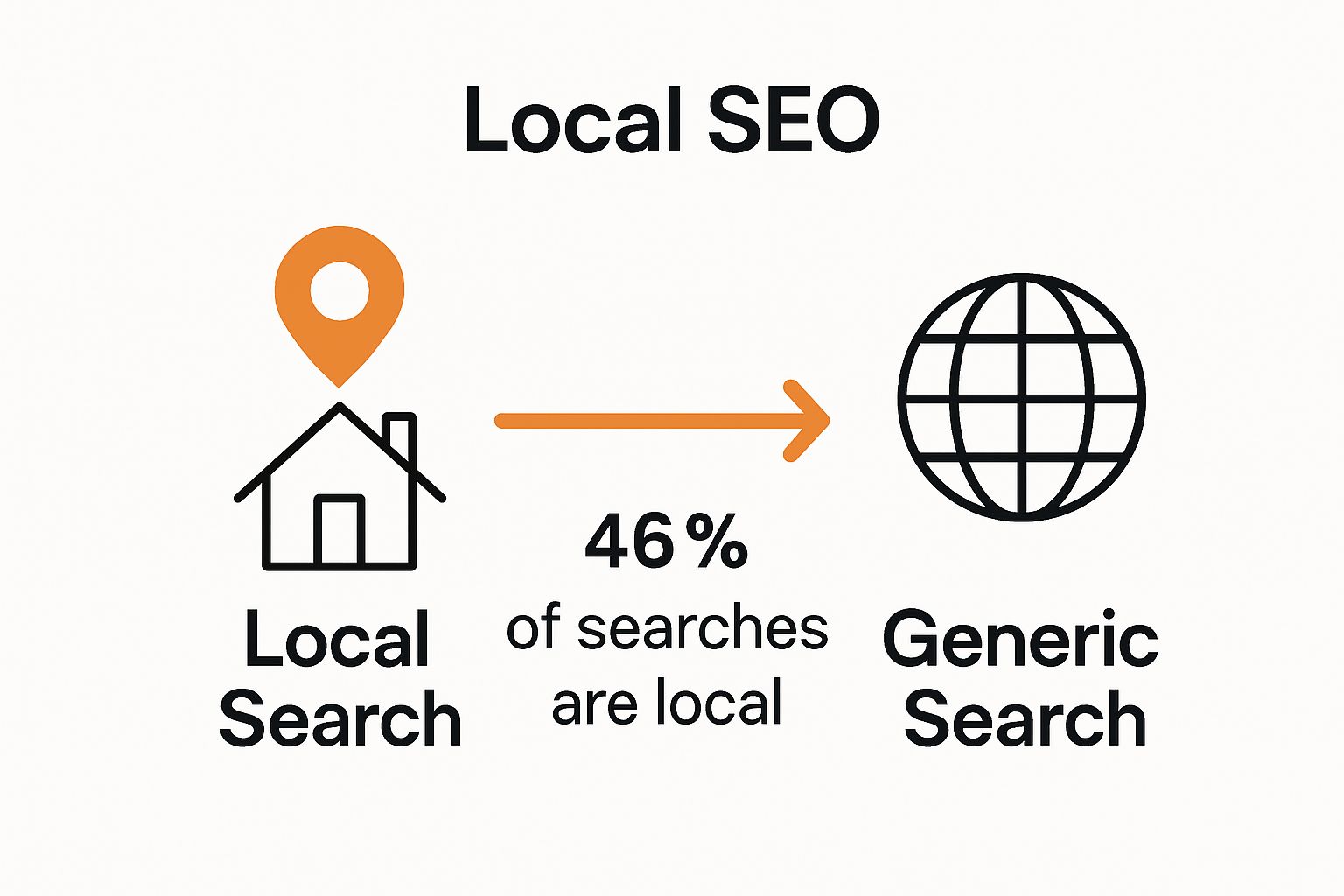
The Impact of Local Search on Consumer Behavior
Local search has fundamentally transformed how consumers discover, evaluate, and interact with businesses, particularly in service-oriented industries like real estate. The digital landscape has shifted consumer expectations, making immediate, geographically relevant information a critical factor in decision-making processes.
Understanding Consumer Search Patterns
Modern consumers have become increasingly sophisticated in their search behaviors, preferring hyper-targeted results that provide precise, localized information. In real estate, this means potential buyers and sellers are not just searching for generic property listings, but seeking agents, market insights, and property details specific to their immediate neighborhood or suburb.
Key characteristics of local search consumer behavior include:
- Preference for immediate, location-specific results
- High reliance on mobile devices for quick information retrieval
- Strong emphasis on user-generated content and local reviews
- Expectation of personalized, contextually relevant search experiences
Trust and Credibility in Local Searches
According to research from the National Association of Realtors, 97% of homebuyers use the internet during their property search, demonstrating the profound impact of digital platforms on real estate consumer behavior. Local search results play a crucial role in establishing trust and credibility.
Consumers view businesses with strong local search presence as more legitimate and trustworthy. For real estate professionals, this means that appearing in local search results is not just about visibility, but about creating a perception of local expertise and reliability. By consistently delivering accurate, location-specific information, agents can build digital credibility that translates into real-world client relationships.
The evolution of local search has fundamentally reshaped how consumers make purchasing decisions, turning geographical relevance into a key differentiator in competitive markets like real estate.
This table highlights research-backed statistics and their implications for local SEO and real estate agents, helping illustrate the importance and impact of local search strategies.
| Statistic | Source | Significance for Real Estate Agents |
|---|---|---|
| 46% of Google searches have local intent | BrightLocal, Moz | Indicates nearly half of searchers want local information. |
| 97% of homebuyers use the internet to search | National Association of Realtors | Confirms the digital-first behavior of today’s clients. |
| 44% of local pack results get click-throughs | Moz | Highlights the value of optimizing for Google’s local map pack. |
| 87% of consumers read reviews for local business | BrightLocal | Underscores the role of reviews in consumer trust decisions. |
How Local SEO Enhances Online Visibility for Agents
Local SEO serves as a powerful digital strategy that transforms how real estate professionals attract and engage potential clients in an increasingly competitive online marketplace. By strategically optimizing digital presence, agents can significantly amplify their visibility and reach within specific geographic territories.
Strategic Digital Positioning
Effective local SEO enables real estate agents to position themselves precisely where potential clients are searching. This means appearing prominently in local search results, map listings, and location-based queries that directly target individuals seeking property services in specific suburbs or neighborhoods.
Key strategic advantages of local SEO for real estate agents include:
- Targeting hyperlocal search queries with precision
- Increasing organic visibility in geographic-specific searches
- Building credibility through location-based content and reviews
- Competing effectively against larger real estate agencies
Maximizing Digital Real Estate
Real estate agent visibility depends on understanding and leveraging digital platforms strategically. According to Moz’s Local Search Ranking Factors, Google’s local pack results receive approximately 44% of all click-through traffic, making local SEO optimization crucial for capturing potential client attention.
Successful local SEO implementation goes beyond simple keyword optimization. It requires a comprehensive approach that includes consistent business information across online platforms, generating location-specific content, managing online reviews, and creating a robust Google Business Profile that accurately represents an agent’s local expertise and service areas.
By mastering local SEO techniques, real estate professionals can transform their digital presence from passive online listings to dynamic, engaging platforms that actively attract and convert potential clients in their target markets.

Key Components of Effective Local SEO Strategies
Local SEO demands a multifaceted approach that goes beyond simple keyword optimization. Real estate professionals must develop a comprehensive strategy that integrates multiple digital marketing elements to establish strong local online presence and credibility.
Foundational Local SEO Elements
Successful local SEO strategies for real estate agents require precise, strategic implementation across multiple digital platforms. This means creating a cohesive online ecosystem that signals local expertise and geographic relevance to both search engines and potential clients.
Critical foundational elements include:
- Consistent business name, address, and phone number across all online platforms
- Comprehensive and accurate Google Business Profile optimization
- Location-specific website content highlighting neighborhood expertise
- Strategic use of local keywords reflecting specific suburban markets
Technical and Content Optimization
Local real estate marketing requires careful attention to technical details and content quality. According to Ahrefs’ Local SEO Guide, successful strategies integrate precise technical optimization with high-quality, location-specific content that demonstrates deep understanding of local property markets.
Real estate professionals must focus on creating rich, informative content that addresses specific local market conditions, neighborhood insights, and hyperlocal property trends. This approach not only improves search engine rankings but also establishes the agent as a trusted local expert who understands the nuanced dynamics of specific geographic areas.
By implementing a holistic local SEO strategy, real estate agents can transform their digital presence from generic online listings to powerful, targeted marketing platforms that directly connect with potential clients in their specific service areas.
To clarify the foundational elements and technical strategies essential for effective local SEO in real estate, the table below breaks down the core components and their descriptions.
| Local SEO Component | Description |
|---|---|
| Consistent Business Information | Ensure name, address, and phone number are the same across all online platforms. |
| Google Business Profile Optimization | Keep your Google Business Profile accurate and complete to enhance local search visibility. |
| Location-Specific Website Content | Develop content focused on specific neighborhoods or suburbs to demonstrate local expertise. |
| Strategic Use of Local Keywords | Incorporate geographic keywords relevant to your service area for better targeted search results. |
| High-Quality Local Content | Publish in-depth, informative articles reflecting local market conditions and trends. |
| Online Review Management | Actively generate and manage reviews from local clients to build trust and authority. |
Real-World Examples of Local SEO Success in Real Estate
Local SEO represents more than a theoretical concept for real estate professionals. It is a practical strategy that can dramatically transform digital marketing effectiveness, enabling agents to capture targeted leads and establish neighborhood expertise through strategic online positioning.
Hyperlocal Content Strategies
Successful local SEO implementation requires agents to develop content that speaks directly to specific community needs and interests. This means creating detailed, location-specific resources that demonstrate deep understanding of particular suburbs, market trends, and neighborhood dynamics.
Key characteristics of successful hyperlocal content include:
- Detailed neighborhood guides with insider perspectives
- Market analysis specific to individual suburbs or districts
- Local market trend reports with current property insights
- Localized case studies highlighting recent property transactions
Measurable Impact and Conversion Potential
Location-based hashtags can play a significant role in amplifying local visibility. According to BrightLocal’s Local Consumer Review Survey, 87% of consumers read online reviews for local businesses in 2022, underscoring the critical importance of generating localized, trustworthy digital content.
Real estate agents who successfully implement local SEO strategies can experience remarkable outcomes. By developing targeted content that addresses specific community needs, agents transform their digital presence from generic listings to powerful, hyper-relevant marketing platforms that directly connect with potential clients in their precise service areas.
Through strategic local SEO approaches, real estate professionals can effectively differentiate themselves in competitive markets, demonstrating not just property expertise, but genuine community understanding and connection.
Take Control of Local Search and Become the Go-To Real Estate Expert
Are you struggling to stand out in your local market? The article made it clear: real estate clients are looking for agents who not only show up in suburb-level searches but also demonstrate true neighborhood expertise. With buyers relying on hyperlocal searches and online reviews, missing out on local SEO for real estate means leaving valuable opportunities on the table. It is time to stop feeling invisible or overwhelmed by the competition. Let the pain of low visibility propel you toward a better solution.
Let Content Charlie transform your online presence. Gain immediate traction with suburb-specific content, property descriptions, and Google Business Profile optimization that puts you in front of motivated buyers and sellers. Visit Content Charlie today and discover how our copywriting and proven real estate agent visibility strategies can help you dominate your market. Book your free discovery call now and make sure you are the agent local clients remember.
Frequently Asked Questions
What is local SEO and why is it important for real estate?
Local SEO is a digital marketing strategy that helps real estate professionals optimize their online presence for geographically targeted searches. It is important because it increases visibility among potential clients actively searching for property services in their area. Focus on optimizing your Google Business Profile and creating location-specific content to enhance your local search presence.
How can I improve my local search rankings as a real estate agent?
To improve your local search rankings, ensure that your business name, address, and phone number are consistent across all online platforms. Additionally, optimize your website with local keywords and generate positive reviews from satisfied clients. Take these actions to see improvements in local search visibility within 60 days.
What role does online reviews play in local SEO for real estate?
Online reviews significantly impact local SEO as they enhance credibility and trust among potential clients. Actively encourage satisfied clients to leave reviews on your Google Business Profile and other platforms to boost your visibility and attract more leads. Aim to gather at least five to ten new reviews each month.
Why should I create location-specific content for my real estate website?
Creating location-specific content helps demonstrate your expertise in specific neighborhoods or suburbs, making your services more relevant to potential clients. This targeted approach improves your local search rankings and attracts clients looking for detailed information about their desired area. Develop at least one piece of location-focused content each month to maintain relevance.
How can local SEO help me stand out from larger real estate agencies?
Local SEO can help you differentiate yourself by highlighting your specialized knowledge of local markets and community needs. By focusing on hyperlocal optimization strategies and personalized content, you can build stronger connections with potential clients. Implement tailored marketing strategies to position yourself as the go-to local expert and increase client engagement in your target market.
What should I monitor to measure the success of my local SEO efforts?
To measure the success of your local SEO efforts, monitor key metrics such as website traffic from local searches, the number of leads generated, and your rankings in local search results. Tools like Google Analytics can help you track these metrics over time. Review your progress every month to adjust your strategies effectively.
Recommended
- local SEO for real estate Archives – Content Charlie
- Local SEO Archives – Content Charlie
- real estate SEO Archives – Content Charlie
- SEO for realtors Archives – Content Charlie