
- You are here:
- Home »
- hyper-local content
Tag Archives for " hyper-local content "

7 Powerful Real Estate Content Strategies for Local Agents
Over 90 percent of homebuyers start their property search online, putting digital strategies at the heart of real estate success. Standing out means more than just having listings—it requires skillful use of local SEO, eye catching visuals, and authentic client stories. By focusing on proven tactics that connect with local buyers, you can grow your reputation and attract the right clients in a crowded market.
Table of Contents
- 1. Identify Local SEO Keywords That Attract Homebuyers
- 2. Craft Suburb Guides to Build Trust and Visibility
- 3. Write Compelling Property Descriptions That Convert
- 4. Optimize Google Business Profile Content for Searches
- 5. Publish Consistent Blog Articles to Show Expertise
- 6. Leverage Client Testimonials for Local Credibility
- 7. Use Visual Content to Make Listings Stand Out
Quick Summary
| Takeaway | Explanation |
|---|---|
| 1. Focus on Local SEO Keywords | Identify specific search terms like neighborhood names to attract homebuyers actively searching online. |
| 2. Create Detailed Suburb Guides | Develop comprehensive guides about neighborhoods to establish trust and position yourself as a local expert. |
| 3. Write Engaging Property Descriptions | Use storytelling and emotional language in property descriptions to create connections with potential buyers. |
| 4. Optimize Google Business Profile | Fill out and regularly update your Google Business Profile to enhance your visibility in local searches. |
| 5. Publish Consistent Blog Content | Regularly post relevant blogs to showcase expertise and connect with potential clients in your market. |
1. Identify Local SEO Keywords That Attract Homebuyers
Successful real estate marketing starts with understanding what potential homebuyers are actually searching for online. Local SEO keywords are your secret weapon to connecting with ready buyers in specific neighborhoods and markets.
When researching keywords, think like a homebuyer searching for properties. Understanding why local SEO matters begins with mapping out precise location based search terms that reflect genuine buyer intent. According to research, location specific keywords like “homes for sale in [City]” can dramatically improve your search visibility.
Strategic Keyword Research Approach:
- Focus on neighborhood specific searches
- Include city and suburb names
- Incorporate property type descriptors
- Add transactional search terms
For instance, instead of generic terms like “real estate,” target phrases such as “3 bedroom homes in Broadbeach” or “waterfront properties Gold Coast.” These specific keywords signal exactly what potential buyers want and help search engines match your content with relevant searches.
To implement this strategy, use free tools like Google Keyword Planner or SEMrush to discover search volume and competition for local real estate keywords. Track which terms potential buyers use most frequently and integrate them naturally into your website content, blog posts, and property descriptions.
Remember that local keyword optimization is not about stuffing terms randomly. The goal is creating authentic, valuable content that genuinely answers homebuyers questions while strategically incorporating location based search terms.
2. Craft Suburb Guides to Build Trust and Visibility
Potential homebuyers are hungry for insider knowledge about neighborhoods where they might invest their future. Creating comprehensive suburb guides transforms you from a simple real estate agent into a local market expert.
Local neighborhood spotlights are powerful tools for establishing your credibility and attracting targeted traffic. According to research, writing detailed neighborhood breakdowns and answering local questions can significantly enhance your reputation within a geographical area.
Key Elements of Compelling Suburb Guides:
- Detailed neighbourhood demographic information
- Local amenities and infrastructure
- Property value trends
- School district ratings
- Community lifestyle insights
Your suburb guide should read like an insider’s manual for potential homebuyers. Go beyond basic statistics and create narrative rich content that helps people imagine living in the area. Discuss local coffee shops, upcoming development projects, community events, and unique neighborhood characteristics that make each suburb special.
To maximize impact, update these guides regularly with fresh market insights, seasonal real estate trends, and emerging local developments. This approach not only improves your SEO but positions you as the go to local real estate expert who truly understands the nuanced character of each neighborhood.
Remember that authentic, valuable content speaks directly to your audience’s curiosity and need for local understanding. Your suburb guides are more than marketing materials they are community resources that build genuine trust.
3. Write Compelling Property Descriptions That Convert
Your property description is more than just a list of features it is your digital sales pitch that can transform casual browsers into serious buyers. Crafting descriptions that spark imagination and emotional connection requires strategic storytelling.
Complete guide to copywriting in real estate reveals that successful property descriptions go beyond basic specifications. According to research, incorporating location specific keywords naturally within your content can significantly improve search engine rankings and attract potential clients.
Key Components of Magnetic Property Descriptions:
- Create a narrative that sells a lifestyle
- Highlight unique property features
- Use sensory and emotional language
- Include specific neighborhood context
- Optimize for local search keywords
Instead of writing dry statements like “3 bedroom house with garage,” paint a vivid picture. For example: “Imagine morning coffee on your sun drenched balcony overlooking Broadbeach parklands the perfect sanctuary for professionals seeking coastal tranquility.”
When writing descriptions, think about what makes a property special. Does it have a stunning view? Proximity to top schools? Recent renovations? These details transform generic listings into compelling stories that resonate with potential buyers.
Remember that great property descriptions are a blend of strategic SEO and emotional storytelling. Your goal is to help potential buyers visualize themselves living in the space not just reading about its technical specifications.
4. Optimize Google Business Profile Content for Searches
Your Google Business Profile is the digital front door to your real estate brand a powerful tool that can attract or repel potential clients within seconds. Mastering this platform is not just about filling out basic information it is about creating a compelling digital presence that stands out in local searches.
Google Business Profile optimization requires strategic thinking and consistent effort. According to research, regularly posting and adding high quality visual content can dramatically improve your visibility in Google Search and Maps.
Strategic Profile Optimization Tactics:
- Complete every profile section thoroughly
- Add professional headshots and team photos
- Include recent property listing images
- Update business hours and contact information
- Respond to all client reviews promptly
Think of your Google Business Profile as a 24/7 digital marketing representative. Professional photos showing your team, office environment, and recent successful property sales create trust and credibility. Potential clients want to see the human side of your real estate business.
Consistent updates are crucial. Share recent property achievements, local market insights, and community events. Each post increases your chances of appearing in local search results and demonstrates your active engagement with the local real estate market.
Remember that authenticity wins. Your profile should reflect your unique brand personality while providing clear, valuable information that helps potential clients understand why they should choose you as their real estate agent.
5. Publish Consistent Blog Articles to Show Expertise
Blogs are not just content they are your digital megaphone for establishing credibility and attracting potential clients. Consistent publishing transforms you from a simple real estate agent into a trusted local market expert.
Consistent blogging requires strategic planning and genuine insights. According to research, publishing local content like neighborhood guides and market updates helps build audience connection and demonstrates deep understanding of your real estate landscape.
Strategic Blog Content Approaches:
- Create hyper local market analysis
- Share seasonal real estate trends
- Offer neighborhood buying guides
- Highlight community development stories
- Answer common buyer questions
Your blog should feel like a conversation with potential clients. Instead of generic market reports, craft narratives that help readers visualize living in specific neighborhoods. For example, write articles like “Top 5 Family Friendly Suburbs in Gold Coast” or “What First Time Buyers Need to Know About Broadbeach Real Estate”.
Consistency matters more than perfection. Aim to publish 1 2 high quality articles monthly that provide genuine value. Track which topics generate the most engagement and double down on content that resonates with your audience.
Remember that your blog is a living portfolio showcasing your local expertise. Each article is an opportunity to build trust and position yourself as the go to real estate professional in your market.
6. Leverage Client Testimonials for Local Credibility
Testimonials are the secret weapon of successful real estate agents transforming satisfied clients into powerful marketing advocates. These personal stories can speak volumes about your expertise in ways no traditional advertisement ever could.
Real estate client engagement requires strategic approach to gathering and showcasing client experiences. According to research, proactively soliciting reviews and displaying positive testimonials can significantly build trust and credibility in your local market.
Strategic Testimonial Collection Tactics:
- Request feedback immediately after successful transactions
- Create multiple testimonial collection channels
- Feature diverse client stories
- Include specific transaction details
- Display testimonials across multiple platforms
When collecting testimonials, go beyond generic praise. Encourage clients to share specific details about their experience working with you. A testimonial like “John helped us find our dream home in Broadbeach within our budget” is far more compelling than “John is a great agent.”
Spread your testimonials strategically across your website, Google Business Profile, social media platforms and printed marketing materials. Video testimonials can be especially powerful providing authentic visual proof of your professional success.
Remember that potential clients want social proof. Your testimonials are not just reviews they are powerful narratives that demonstrate your ability to deliver exceptional real estate experiences.
7. Use Visual Content to Make Listings Stand Out
Visual storytelling transforms ordinary property listings into compelling narratives that capture potential buyers imagination. In a digital world saturated with real estate content, high quality visual assets are your secret weapon for standing out.
Types of real estate content every agent should use reveals the power of strategic visual marketing. According to research, incorporating videos like virtual tours and lifestyle showcases can significantly boost engagement and help potential clients connect emotionally with properties.
Powerful Visual Content Strategies:
- Produce professional property photography
- Create immersive video property tours
- Share lifestyle neighborhood context videos
- Design visually appealing market update graphics
- Highlight unique property features through visual storytelling
Think beyond standard listing photos. A walkthrough video showing morning light streaming through kitchen windows or a drone shot capturing a homes proximity to local parks can transform a simple listing into an experience. Professional photography that captures a propertys best angles tells a story far more effectively than text descriptions.
Consider creating diverse visual content that goes beyond individual listings. Market trend infographics, neighborhood lifestyle reels, and behind the scenes glimpses of your real estate process can build trust and showcase your expertise.
Remember that great visual content does more than display a property it invites potential buyers to imagine their future life in that space.
Below is a comprehensive table summarizing the strategies discussed in the article for enhancing real estate marketing using Local SEO, content creation, and client engagement.
| Strategy | Implementation | Expected Results |
|---|---|---|
| Local SEO Keyword Identification | Focus on neighborhood-specific searches, city names, property types, and transactional terms. Use tools like Google Keyword Planner. | Improved search visibility and increased webpage relevance for potential buyers. |
| Crafting Suburb Guides | Include demographics, amenities, property trends, and lifestyle insights. Regularly update guides. | Enhanced local credibility and attraction of targeted traffic. |
| Property Descriptions | Use storytelling, highlight unique features, and include sensory and emotional language. Optimize with local keywords. | Conversion of casual browsers to serious buyers. |
| Google Business Profile Optimization | Complete profile details, add high-quality images, update frequently, and respond to reviews. | Increased visibility in searches and stronger client engagement. |
| Consistent Blogging | Publish regular articles on local market analysis, trends, and buying guides. | Establishment as a local expert and stronger connection with potential clients. |
| Leveraging Client Testimonials | Collect detailed feedback, feature diverse stories, and display across platforms. | Increased trustworthiness and credibility in the local market. |
| Visual Content Usage | Incorporate professional photos, videos, and infographics. Highlight property features. | Enhanced listing appeal and emotional connection with potential buyers. |
Unlock the Full Potential of Your Local Real Estate Content
Struggling to stand out in a crowded market and connect with local homebuyers can be frustrating. This article highlights crucial strategies like targeted local SEO keywords, compelling suburb guides, and authentic property descriptions that resonate with buyers. If you want to overcome challenges such as low search visibility and weak buyer engagement, focusing on authentic content tailored to your neighborhood is key. Content Charlie specializes in creating SEO-driven real estate copy that ranks highly for specific locality searches and builds trust through valuable insights.
Elevate your listings and neighborhood expertise with our help. From crafting engaging suburb guides to writing magnetic property descriptions and optimizing your Google Business Profile content, we make sure your brand connects with ready-to-act buyers in your area. Don’t let your marketing fall flat when you can dominate your local market and become the trusted agent buyers choose.
Ready to transform your real estate content into a powerful client magnet now

Visit Content Charlie to discover how our tailored local SEO strategies and high-converting copywriting can put you ahead of competitors in neighborhoods like Broadbeach and beyond. Take the first step to getting found and closing more deals today.
Frequently Asked Questions
How can I identify local SEO keywords that attract homebuyers?
To identify local SEO keywords, focus on neighborhood-specific searches and include city names, property types, and transactional terms. Conduct keyword research using free tools to discover popular local search phrases and integrate them naturally into your website and listings.
What should I include in suburb guides to engage potential homebuyers?
Suburb guides should include detailed demographics, local amenities, property value trends, and community lifestyle insights. Create engaging content that helps buyers visualize life in the area to build trust and position yourself as a local expert.
How can I write compelling property descriptions that convert?
Write property descriptions that tell a story, highlighting unique features and using sensory language to evoke emotions. Aim to incorporate localized keywords and provide specific neighborhood context to enhance search visibility and buyer connection.
What are effective strategies for optimizing my Google Business Profile?
Optimize your Google Business Profile by completing all sections thoroughly, adding professional photos, and posting updates regularly. Engage with client reviews to improve visibility and showcase your real estate brand’s personality.
How often should I publish blog articles to establish expertise in my local market?
Aim to publish 1-2 high-quality blog articles each month to showcase your local knowledge and market insights. Consistency helps engage your audience and positions you as a trusted professional in your field.
How can I use visual content to enhance my property listings?
Util high-quality visuals such as professional photography and immersive video tours to create compelling property listings. Highlight unique features and the surrounding neighborhood through varied visual content, helping potential buyers imagine themselves in the space.
Recommended
- 7 Types of Real Estate Content Every Agent Should Use – Content Charlie
- 7 Best Real Estate Blog Ideas for Local Agents – Content Charlie
- 7 Essential Types of Real Estate Leads Agents Must Know – Content Charlie
- Why Use Blog Content: Essential Guide for Real Estate – Content Charlie
- SEO for Real Estate Agencies: Simple Strategies to Grow Your Business

Real Estate Website Essentials: Complete Guide for Agents
Having the right Real Estate Website Essentials will have you ahead of 99% of other real estate website, if you implement the steps below.
Nearly 97 percent of home buyers search online for properties before reaching out to an agent. Your real estate website is your strongest tool for attracting new clients and keeping your business visible. Building a platform that combines stunning visuals, seamless searches, and mobile-friendly design can set you apart in a crowded market, creating a smoother path from browsing to closed deals.
Key Takeaways
| Point | Details |
|---|---|
| Core Features | Effective real estate websites must include advanced property search tools, high-quality visual content, lead generation mechanisms, and trust signals to convert visitors into clients. |
| Local SEO Importance | Local SEO strategies are vital for enhancing visibility, involving consistent business citations, structured data markup, and geographic keyword targeting to attract potential clients within specific areas. |
| Lead Conversion Tools | Implementing technologies like IDX lead tracking, email drip campaigns, and behavior analytics can significantly improve lead capture and nurture strategies on real estate websites. |
| Accessibility Compliance | Ensuring websites meet digital accessibility standards is essential not only for legal compliance but also for fostering an inclusive experience for all potential clients. |
Table of Contents
- Defining Real Estate Website Essentials
- Core Features Every Real Estate Website Needs
- SEO Requirements For Local Real Estate Search
- Lead Generation And Conversion Strategies
- Legal Compliance And Accessibility Standards
- Common Website Mistakes To Avoid
Defining Real Estate Website Essentials
Your real estate website esentials are more than just a digital business card – it’s your 24/7 online sales representative that works harder than you ever could. According to AgentFire, successful agent websites combine professional visual branding with strategic digital tools that convert casual browsers into serious clients.
The core essentials of a powerful real estate website revolve around several critical features:
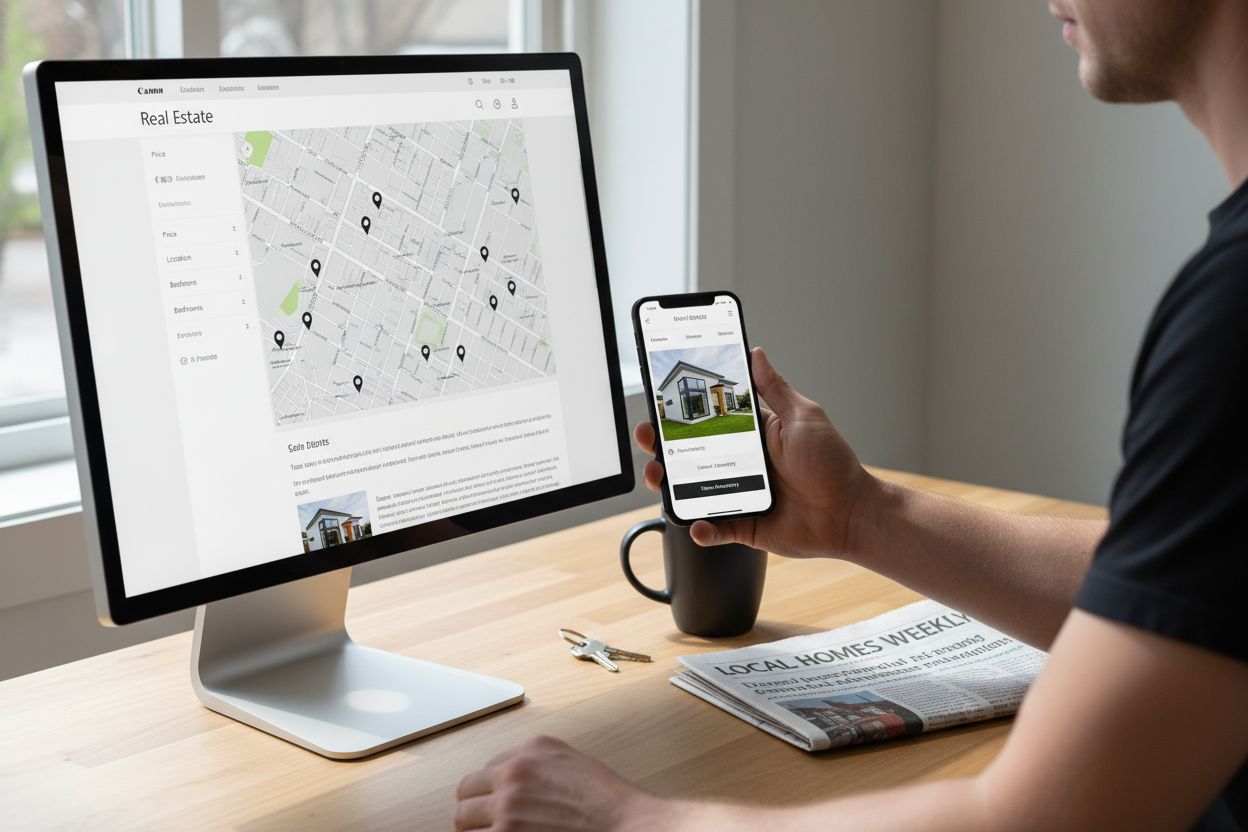
- Property Search Functionality: Advanced filters for location, price, and bedrooms
- Visual Content: High-quality property photos, virtual tours, neighborhood videos
- Lead Generation: Accessible contact forms, email capture mechanisms
- Trust Signals: Client testimonials, third-party reviews, professional credentials
Mobile performance isn’t just a bonus – it’s mandatory. According to PropertyEasy, your website must deliver a seamless experience across devices. This means lightning-fast loading times, stable layouts, and responsive design that adapts to smartphones, tablets, and desktops without losing visual appeal or functionality.
Beyond basic features, modern real estate websites leverage sophisticated tools like AI-powered content creation, visitor behavior analytics, and integrated CRM systems. These technologies transform your website from a passive information portal into an active lead-generation machine that works continuously to expand your client base and demonstrate your local market expertise.
Core Features Every Real Estate Website Needs
Building a high-performance real estate website requires more than just aesthetics – it demands strategic functionality that converts visitors into clients. According to AgentFire, successful websites blend professional design with advanced technological capabilities.
The foundational features every real estate website must include are:
- Advanced Property Search: Robust filtering by location, price, bedrooms, amenities
- Multimedia Showcase: High-resolution property images, 360-degree virtual tours
- Mobile Responsiveness: Seamless performance across smartphones, tablets, desktops
- Lead Capture Mechanisms: Strategic contact forms, email signup prompts
- Trust Signals: Client testimonials, professional credentials, third-party reviews
Conversion optimization goes beyond basic website elements. Modern websites integrate sophisticated tools like visitor behavior tracking, AI-powered content generation, and automated email drip campaigns. According to PropertyEasy, these technologies transform your digital presence from a static brochure into an active client acquisition engine.
The key is creating real estate website essentials that doesn’t just display properties, but provides an immersive, interactive experience that guides potential clients through their home-searching journey. This means fast loading times, intuitive navigation, compelling visual storytelling, and clear pathways to connect with you as a trusted local real estate professional.
Here’s a comparison of essential real estate website features:
| Feature | Purpose | Examples |
|---|---|---|
| Property Search | Helps users find suitable listings | Advanced filters Map view |
| Visual Content | Boosts engagement and trust | High-res photos Virtual tours |
| Lead Generation | Captures potential client info | Contact forms Email signups |
| Trust Signals | Builds credibility | Testimonials Third-party reviews |
| Mobile Responsiveness | Ensures seamless device experience | Fast load Responsive layout |
| Behavior Analytics | Tracks and improves site performance | Visitor heatmaps Funnel tracking |
SEO Requirements for Local Real Estate Search
Local SEO is the secret weapon that transforms your real estate website from invisible to irresistible in search results. Understanding why local SEO matters begins with recognizing that potential clients search for properties and agents within specific geographic boundaries.
According to Search Engine Journal, successful local SEO for real estate professionals hinges on several critical strategies:
- Consistent Business Citations: Accurate listings across Google Business Profile and local directories
- Structured Data Markup: Implementing schema for RealEstateAgent, Offer, and Residence categories
- Hyper-Local Content: Creating neighborhood-specific pages and property guides
- Geographic Keyword Targeting: Incorporating location-specific terms naturally
The most effective local SEO approach goes beyond basic optimization. According to LSEO, modern real estate agents must develop content clusters that target specific neighborhoods, leverage social media channels for content distribution, and actively seek backlinks from local influencers and publications.
Your ultimate goal is to become the go-to digital resource for local property information.
This means creating content that answers specific local buyer questions, showcasing your deep understanding of neighborhood dynamics, and ensuring your website speaks directly to the unique needs of potential clients in your specific market area.
Lead Generation and Conversion Strategies
Transforming website visitors into potential clients requires a strategic approach that goes beyond simple contact forms. Types of real estate leads vary, and your digital strategy must be sophisticated enough to capture and nurture each unique visitor’s interest.
According to AgentFire, advanced lead generation technologies now offer powerful tools for real estate professionals:
- IDX Lead Tracking: Monitor visitor interactions and property interests
- Email Drip Campaigns: Automated, personalized communication sequences
- CRM Integration: Seamless contact management and follow-up tracking
- AI Content Generation: Dynamic, targeted messaging based on user behavior
- Behavior Analytics: Heat mapping and funnel tracking to optimize conversion paths
Visitor trust is the cornerstone of successful lead conversion. As PropertyEasy highlights, this means prominently featuring compelling testimonials, high-quality property visuals, and virtual tours that demonstrate your professionalism and local market expertise.
The most effective websites create a frictionless journey from initial curiosity to client engagement.
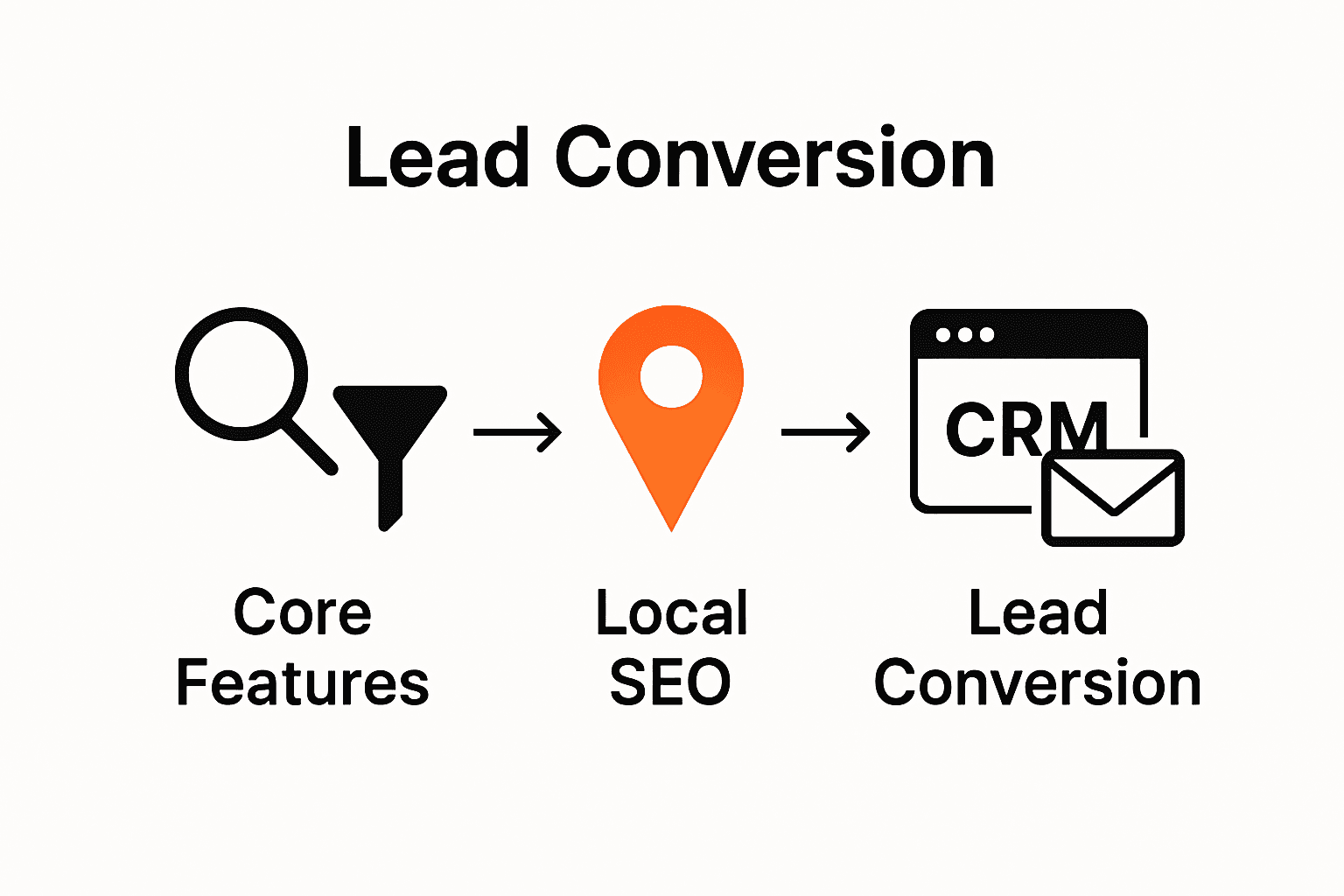 This means intuitive design, crystal-clear contact information, and strategic calls-to-action that guide potential clients exactly where they want to go – closer to finding their perfect property with your expert assistance.
Legal Compliance and Accessibility Standards
Digital accessibility is no longer optional for real estate websites – it’s a legal and ethical imperative. Ensuring your online platform is inclusive means creating an experience that welcomes every potential client, regardless of their physical abilities or technological constraints.
According to Wikipedia, the Web Content Accessibility Guidelines (WCAG) 2.2 provide a comprehensive framework for creating accessible digital experiences. These internationally recognized standards focus on four fundamental principles:
- Perceivable: Information must be presentable to users in ways they can perceive
- Operable: User interface and navigation must be functional for all users
- Understandable: Content and operation must be clear and comprehensible
- Robust: Content must be compatible with current and future assistive technologies
Real estate websites have unique challenges in meeting these standards. This means ensuring your property listings, contact forms, search functions, and multimedia content are fully navigable by screen readers, compatible with keyboard-only navigation, and designed with sufficient color contrast and text sizing.
Beyond technical compliance, accessible design demonstrates your commitment to inclusivity. It signals to potential clients that you value every individual’s experience, understand diverse user needs, and are committed to providing a welcoming, professional digital environment that respects and accommodates all users.
Common Website Mistakes to Avoid
Website design can make or break your real estate digital presence. One misstep could mean losing potential clients before they even understand what you offer. Lead generation ideas for real estate start with avoiding critical digital pitfalls that undermine your professional image.
According to Type North, the most common website mistakes that sabotage real estate professionals include:
- Mobile Unresponsiveness: Sites that don’t adapt to smartphone screens
- Cluttered Homepage: Overwhelming visitors with too much information
- Weak Calls-to-Action: Unclear or missing contact pathways
- Low-Quality Property Listings: Incomplete or unappealing property descriptions
- Slow Page Loading: Performance that frustrates potential clients
- Neglected Local SEO: Invisible in local property search results
Navigation complexity is another silent killer of user experience. Your website should feel intuitive, with clear menus, logical property search functions, and streamlined paths to contact you. Think of your website as a digital storefront – it should invite exploration, not create confusion.
The most successful real estate websites transform technical requirements into storytelling opportunities. This means creating a digital experience that’s not just functional, but engaging – where every pixel communicates your professionalism, local expertise, and commitment to helping clients find their dream property.
Ready to Transform Your Real Estate Website Into a Local Lead Magnet?
You read about the must-have features for a real estate website, but bringing those essentials to life is a challenge. Many agents struggle with weak property listings, missing trust signals, and a website that just does not show up when locals search for homes or advice. Without powerful copywriting and suburb-specific SEO, you risk falling behind competitors who connect with buyers and sellers right where they live.
At Content Charlie, we turn your knowledge into high-converting web pages, suburb guides, and blog posts that climb Google results. Our team specializes in conversion optimization and local SEO, giving your site mobile-first performance, powerful lead generation, and content that earns trust in your neighborhood. If you want to stand out as the top agent in your suburb, act now and let us create a real estate website that converts visitors into lifelong clients. Start growing your local visibility with Content Charlie today.
Frequently Asked Questions
What are the essential features of a real estate website?
The essential features of a real estate website include advanced property search functionality, high-quality visual content, lead generation tools, trust signals like testimonials, and mobile responsiveness to ensure accessibility across devices.
How can local SEO impact my real estate website’s visibility?
Local SEO helps improve your real estate website’s visibility by optimizing for specific geographic keywords, ensuring consistent business citations, and creating hyper-local content that resonates with local buyers, thereby attracting more relevant traffic to your site.
What strategies can I use for effective lead generation on my real estate website?
Effective lead generation strategies include implementing IDX lead tracking, using email drip campaigns for nurturing leads, integrating customer relationship management (CRM) systems, and deploying behavior analytics to understand visitor interactions and optimize conversions.
How can I ensure my real estate website is accessible to all users?
To ensure your real estate website is accessible, adhere to the Web Content Accessibility Guidelines (WCAG) by making information perceivable, operable, understandable, and robust, ensuring compatibility with assistive technologies and providing a user-friendly experience for individuals with disabilities.
Recommended
- 7 Types of Real Estate Content Every Agent Should Use – Content Charlie
- Greg Reed, Author at Content Charlie
- 7 Essential Social Media Tips for Agents – Content Charlie
- 7 Essential Types of Real Estate Leads Agents Must Know – Content Charlie
- SEO for Real Estate Agencies: Simple Strategies to Grow Your Business
- Website Design Guide for Builders: Create a Winning Website – ResponsiveWebsiteDesign