
- You are here:
- Home »
- domain authority
Tag Archives for " domain authority "

Real Estate SERPs Explained: The Complete Guide
If you’re confused about Real Estate SERPs, we don’t blame you. But we’ve got you covered in this article/
Did you know that over 85 percent of home buyers start their search online before contacting an agent? For real estate professionals, that first impression on a search engine results page can mean the difference between winning new business or getting overlooked. With changing algorithms and an explosion of interactive features, understanding the layers of real estate SERPs is crucial for agents who want to stand out and capture qualified leads before their competitors do.
Table of Contents
- Defining Real Estate SERPs And Common Misconceptions
- Types Of SERP Features In Real Estate Searches
- How Real Estate SERPs Work For Agents
- Key Ranking Factors And Local SEO Strategies
- Common Mistakes Agents Make With SERPs
Key Takeaways
| Point | Details |
|---|---|
| Real Estate SERPs Are Competitive | SERPs represent critical digital arenas where visibility is essential for attracting clients, going beyond simple keyword optimization. |
| Emphasis on SERP Features | Rich SERP features like knowledge panels and video results enhance user engagement and should be strategically targeted by real estate agents. |
| Local SEO is Crucial | Real estate professionals must focus on local SEO tactics, including optimized Google Business Profiles and high-quality, localized content to drive visibility. |
| Avoid Common SERP Mistakes | Agents should proactively address optimization errors such as neglecting mobile experience and structured data to improve search performance effectively. |
Defining Real Estate SERPs and Common Misconceptions
A search engine results page (SERP) represents the digital storefront for real estate professionals seeking online visibility. Search Engine Results Pages (SERPs) are the web pages displayed by search engines in response to a user’s specific query, presenting a curated list of ranked results. According to research on search engine mechanics, these pages display a complex mix of organic listings, paid advertisements, local business profiles, and increasingly sophisticated AI-driven features.
For real estate agents, SERPs are more than just a list of links. They’re a competitive battleground where visibility can make or break your online presence. Organic rankings aren’t a guaranteed ticket to increased traffic anymore. As recent studies indicate, AI-driven features like knowledge panels and overview boxes can significantly reduce traditional listing visibility. Potential clients might find summarized information directly on the search page, potentially bypassing individual agent websites.
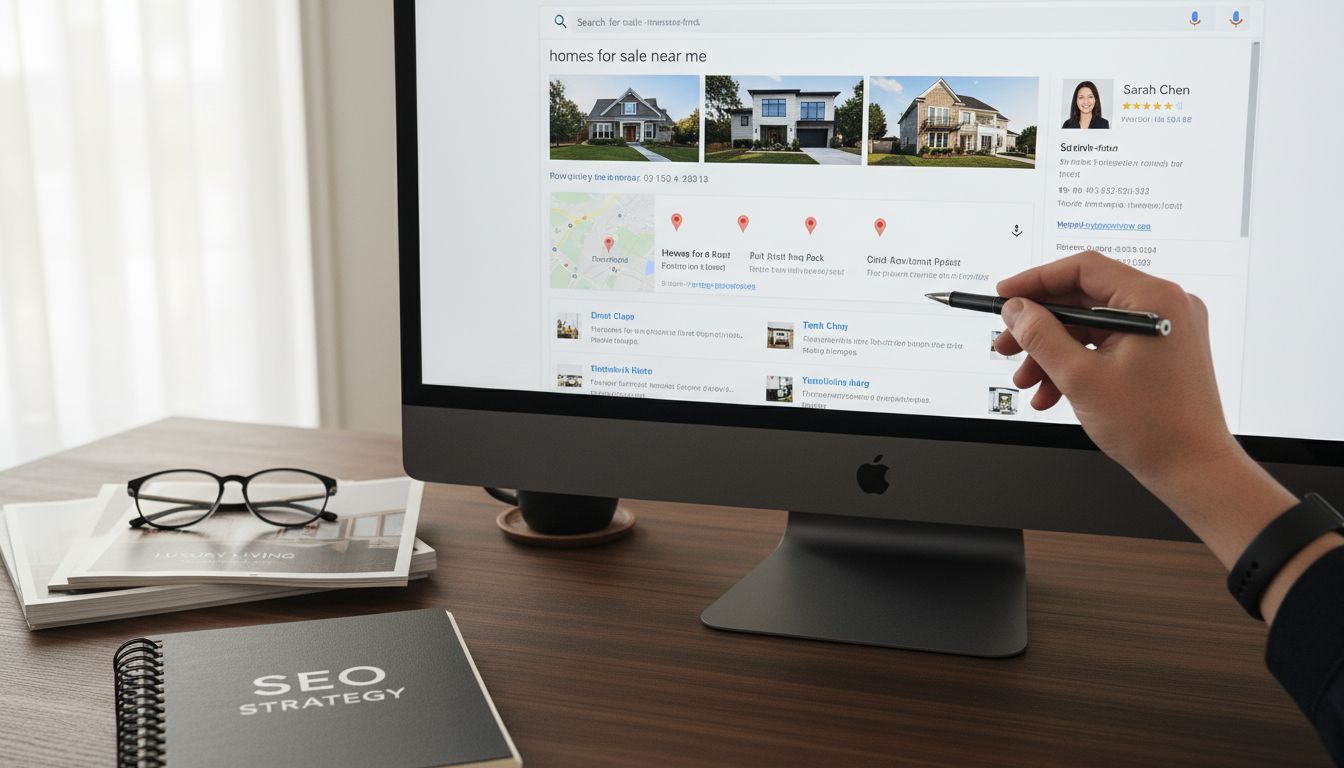
The anatomy of a real estate SERP typically includes several key components:
- Organic property listings
- Google Business Profile snippets
- Local map pack results
- Paid advertisement spaces
- Rich snippets with property details
Understanding these elements is crucial for real estate professionals looking to improve their online strategy.
 While understanding local SEO matters for real estate, mastering SERP dynamics goes beyond simple keyword optimization. It requires a nuanced approach that considers user intent, local search behavior, and the evolving landscape of search engine technologies.
Types of SERP Features in Real Estate Searches
Real estate search results have evolved far beyond simple blue links. SERP features now provide rich, interactive experiences that help potential buyers and sellers quickly access critical information. According to research on search engine results, modern search pages include a variety of specialized features designed to enhance user experience and information accessibility.
The most prominent SERP features in real estate searches include:
Here’s a summary of the most common real estate SERP features and their primary benefits:
| SERP Feature | Description | Key Benefit |
|---|---|---|
| Featured Snippets | Quick answers from web pages | Higher visibility above links |
| Local Pack Results | Maps & contact info | Directs clients to nearby agents |
| Image Carousels | Property and area photos | Attracts visual interest instantly |
| Video Results | Property tours & intros | Boosts engagement and trust |
| Knowledge Panels | Agency or agent profiles | Authority and quick info access |
- Featured Snippets: Concise answers extracted directly from web pages
- Local Pack Results: Maps and contact information for nearby real estate agents
- Image Carousels: Visual representations of properties and neighborhoods
- Video Results: Virtual property tours and agent introduction clips
- Knowledge Panels: Detailed information about real estate agencies and top agents
These dynamic search features transform how potential clients discover and interact with real estate professionals. When searching for properties or agents, users can now access crucial information without clicking through multiple websites. For instance, a local map pack can instantly show nearby properties, agent contact details, and quick review snippets.
Understanding real estate SEO metrics becomes crucial in navigating this complex digital landscape, where visibility means more than just ranking first – it means providing the most relevant and engaging information possible.
Most critically, real estate professionals must recognize that these SERP features are not just decorative elements. They represent sophisticated search algorithms designed to match user intent with the most relevant information. Strategically optimizing content to appear in these features can significantly boost visibility, credibility, and potential client engagement.
How Real Estate SERPs Work for Agents
Search engine results pages represent a critical digital ecosystem where real estate agents can strategically position themselves to attract potential clients. SERP optimization is no longer about simple keyword placement, but about creating comprehensive, engaging content that search engines recognize as valuable. According to research on SERP strategies, agents can significantly enhance their visibility by understanding and strategically targeting specific search features.
Agents can expand their SERP presence through several key strategies:
- Creating rich multimedia content including property videos and virtual tours
- Developing locally-focused blog posts and neighborhood guides
- Optimizing Google Business Profile with current, accurate information
- Generating client testimonials and reviews
- Producing high-quality, informative property descriptions
Multimedia content plays a particularly powerful role in SERP visibility. Real estate SEO tips can dramatically boost agent visibility online, especially when agents incorporate diverse content formats. Research indicates that videos, image galleries, and interactive property maps can activate additional SERP features, providing potential clients with more engaging and comprehensive search experiences.
Ultimately, successful SERP performance requires real estate agents to think beyond traditional marketing approaches. It’s about creating a holistic digital presence that provides genuine value, answers potential client questions, and demonstrates local expertise. By consistently producing high-quality, relevant content and strategically optimizing their online profiles, agents can transform search engine results pages from simple listings into powerful client attraction tools.
Key Ranking Factors and Local SEO Strategies
Search engine rankings for real estate professionals are driven by a complex interplay of strategic elements that go far beyond simple keyword placement. According to research on search engine optimization, the most critical ranking factors revolve around relevance, authority, and delivering an exceptional user experience for potential clients searching for property information.
Key ranking factors for real estate agents include:
- Google My Business optimization
- Consistent local business citations
- High-quality, location-specific content
- Mobile-friendly website design
- Authentic client reviews and testimonials
- Local backlink acquisition
- Schema markup for property listings
Local SEO strategies require a nuanced approach that goes deeper than traditional marketing techniques. Exploring local search ranking factors reveals that search engines prioritize businesses providing genuine value to their local community. This means creating content that speaks directly to local market conditions, neighborhood insights, and hyperlocal property trends.
Successful real estate professionals understand that SERP rankings are not just about technical optimization, but about building a comprehensive digital presence that demonstrates expertise, trustworthiness, and deep local knowledge. By consistently producing high-quality, location-specific content and maintaining an active, engaging online profile, agents can significantly improve their visibility and attract more potential clients through search engine results.
Common Mistakes Agents Make With SERPs
The digital real estate landscape is unforgiving, and SERP optimization requires precision that many agents overlook. Numerous real estate professionals inadvertently sabotage their online visibility through critical strategic errors that can dramatically reduce their search engine performance and potential client engagement.
The most significant mistakes agents consistently make include:
- Neglecting structured data implementation
- Ignoring mobile user experience
- Inconsistent local business citations
- Producing generic, non-localized content
- Failing to manage online reviews
- Overlooking page loading speed
- Minimal multimedia content integration
According to research, one of the most detrimental oversights is failing to implement structured data, which prevents listings from appearing in rich snippets and advanced SERP features. Understanding real estate SEO jargon becomes crucial in navigating these technical nuances. Mobile optimization represents another critical area where agents frequently fall short. Search engines now prioritize mobile-friendly experiences, meaning websites that don’t adapt to smartphone and tablet displays will be systematically pushed down in rankings.
Successful real estate professionals recognize that SERP visibility is not a passive achievement but an active, strategic process. By addressing these common mistakes proactively, agents can transform their digital presence from invisible to irresistible, ensuring they capture potential clients’ attention in an increasingly competitive online marketplace.
Master Your Real Estate SERPs and Get Found Locally
Navigating the complexities of real estate SERPs can feel overwhelming, especially when competing for attention in local searches. The article highlights critical challenges like optimizing for featured snippets, local pack results, and the importance of structured data to stand out. You want more than just rankings — you need visibility that drives action from buyers and sellers searching for homes in your area.
At Content Charlie, we understand these exact pain points. We specialize in crafting targeted local SEO content tailored for tight suburban markets. Whether you need property descriptions, Google Business Profile content, or engaging suburb guides, our expert copywriting boosts your chances of appearing in those valuable SERP features and converting clicks into clients.
Ready to rise above the noise and show up where it counts now?

Discover how our proven local SEO strategies can turn SERP complexities into client connections. Visit Content Charlie today and start dominating your local real estate search landscape with copy that ranks and converts. Explore our solutions crafted to enhance your presence with real estate SEO tips and understanding real estate SEO metrics that deliver measurable results.
Frequently Asked Questions
What are real estate SERPs?
Search Engine Results Pages (SERPs) for real estate are web pages shown by search engines that display various listings, advertisements, and other features relevant to real estate queries. These pages help users find property information and real estate professionals in their area.
How can real estate agents optimize their SERP presence?
Real estate agents can optimize their SERP presence by creating rich multimedia content (like videos and virtual tours), developing locally-focused blog posts, optimizing their Google Business Profile, generating client testimonials, and producing high-quality property descriptions.
What are the key features of real estate SERPs?
Key features of real estate SERPs include organic property listings, local map pack results, Google Business Profile snippets, paid advertisements, and rich snippets that provide details about properties. These features enhance user experience and improve visibility for agents.
What common mistakes do real estate agents make with SERPs?
Common mistakes include neglecting structured data, ignoring mobile user experience, having inconsistent local business citations, producing generic content, failing to manage online reviews, and not integrating multimedia content effectively.
Recommended

Real Estate SEO Jargon Explained: Essential Guide
Real Estate SEO Jargon can be confusing. In this article we’ll explain the basics to get you sorted.
Only about 5.7 percent of websites reach Google’s top 10 rankings within their first year, which leaves many real estate agents wondering how to stand out online. Understanding the world of real estate SEO can make the difference between languishing on page five or popping up when local clients search for listings. Grasping the true meaning behind common SEO terms helps agents sidestep costly mistakes and build digital strategies that actually connect with buyers and sellers.
Table of Contents
- Defining Real Estate SEO Jargon And Misconceptions
- Key Categories Of SEO Terms In Property Marketing
- Essential On-Page And Off-Page SEO Vocabulary
- How Agents Apply SEO Jargon In Practice
- Common Jargon Mistakes And What To Avoid
Key Takeaways
| Point | Details |
|---|---|
| Understanding SEO’s Importance | Real estate SEO is critical for enhancing online visibility, with only 5.7% of websites achieving top Google rankings in a year. |
| Implementing Key Strategies | Effective SEO requires targeted actions such as location-specific content, mobile optimization, and consistent content updates. |
| Mastering On-Page and Off-Page SEO | Both on-page and off-page SEO strategies are essential for improving search rankings and establishing credibility. |
| Avoiding Common Mistakes | Agents should ensure accuracy in Google Business Profile management and select a balanced domain name to enhance online presence. |
Defining Real Estate SEO Jargon and Misconceptions
Search Engine Optimization (SEO) represents the strategic process of enhancing website visibility and ranking within search engine results. Real estate SEO focuses specifically on helping property professionals increase their online presence and attract potential clients through targeted digital strategies. According to research from Kent University, only 5.7% of websites successfully reach top 10 Google rankings within a year, highlighting the critical importance of understanding SEO fundamentals.
In the competitive real estate landscape, SEO isn’t just about keywords – it’s about creating a comprehensive digital strategy that connects agents with potential buyers and sellers. Strategic domain name selection plays a crucial role in this process, making websites more discoverable and memorable. Understanding Real Estate SEO Metrics Explained can provide deeper insights into measuring and improving your online performance.
Common SEO misconceptions can significantly hinder a real estate professional’s online marketing efforts. Many agents mistakenly believe that simply having a website guarantees visibility, when in reality, targeted optimization is required. Key SEO strategies for real estate professionals include:
- Creating location-specific content
- Optimizing website loading speeds
- Developing mobile-responsive designs
- Generating high-quality, relevant backlinks
- Consistently updating website content
By demystifying SEO jargon and implementing strategic techniques, real estate agents can transform their digital presence and attract more potential clients through improved search engine rankings.
Key Categories of SEO Terms in Property Marketing
Keyword optimization is the foundational pillar of effective real estate digital marketing strategies. According to research from Kent University, SEO success hinges on making content as relevant as possible, which includes strategic use of tags, page titles, categories, and carefully selected keywords. In the competitive real estate landscape, understanding these critical SEO categories can dramatically improve online visibility.
The primary categories of SEO terms in property marketing can be broken down into several key areas. Keyword optimization techniques play a crucial role in helping real estate professionals target specific search queries. These categories typically include:
- Domain Keywords: Incorporating location-specific or property-type terms
- On-Page SEO: Optimizing page titles, meta descriptions, and content
- Local SEO: Targeting geographically relevant search terms
- Technical SEO: Improving website performance and crawlability
- Content SEO: Creating valuable, search-engine-friendly property descriptions
Research indicates that strategic keyword incorporation can be particularly powerful in real estate digital marketing. As noted in domain name optimization studies, keywords like ‘homes’, ‘realty’, ‘properties’, or location-specific terms can directly target common search queries, making your online presence more discoverable and attractive to potential clients. By mastering these SEO categories, real estate professionals can significantly enhance their digital marketing effectiveness and attract more qualified leads.

Essential On-Page and Off-Page SEO Vocabulary
Understanding the critical vocabulary of Search Engine Optimization (SEO) is fundamental for real estate professionals seeking to enhance their digital marketing strategies. According to research from Kent University, SEO optimization involves making content as relevant as possible through strategic use of tags, page titles, categories, and carefully selected keywords.
On-Page SEO terminology focuses on elements directly within your website that can be optimized. On-page optimization techniques encompass critical elements such as:
- Meta Descriptions: Concise page summaries
- Title Tags: Webpage headline text
- Header Tags (H1, H2): Content structure indicators
- Internal Linking: Connecting related website pages
- Keyword Density: Frequency of target search terms
Off-Page SEO terminology, conversely, refers to external factors that influence your website’s search rankings. These include backlink quality, social media mentions, and domain authority. Just as domain name optimization studies suggest using keywords like ‘homes’ or ‘properties’ to target specific search queries, off-page strategies help establish your website’s credibility and relevance in the broader digital ecosystem.
By mastering both on-page and off-page SEO vocabularies, real estate professionals can create a comprehensive digital strategy that improves search engine visibility and attracts more potential clients.
Here’s a summary of essential on-page vs. off-page SEO terms in real estate:
| SEO Aspect | On-Page SEO | Off-Page SEO |
|---|---|---|
| Focus Areas | Content quality Meta tags Internal linking |
Backlinks Social mentions Domain authority |
| Key Elements | Title tags Header tags Keyword density |
Referring domains Google My Business Online reviews |
| Primary Goal | Improve website relevance | Build website credibility |
| Control Level | Full (by website owner) | Partial (influenced by others) |
How Agents Apply SEO Jargon in Practice
In the competitive real estate market, digital marketing strategies have become essential for agents looking to stand out. According to digital marketing research, strategic online presence can dramatically improve an agent’s ability to attract potential clients and close sales. Digital marketing insights reveal that successful real estate professionals leverage SEO techniques to increase their visibility and credibility.
Practical application of SEO jargon requires a strategic approach to online presence. Agents must pay careful attention to critical elements like:
- Google Business Profile (GBP) Optimization: Ensuring 100% consistency in Name, Address, and Phone (NAP) details
- Local Keyword Targeting: Using location-specific search terms
- Content Localization: Creating neighborhood-specific property descriptions
- Backlink Building: Establishing credibility through quality external references
- Mobile-Friendly Website Design: Ensuring seamless user experience across devices
One of the most crucial practical applications involves domain name strategy. As research indicates, a strategic domain name can significantly boost a real estate business’s online presence, making it easier for potential buyers and sellers to find and trust an agent. By understanding and implementing these SEO techniques, real estate professionals can transform their digital marketing approach from generic to highly targeted, ultimately increasing their chances of connecting with potential clients in an increasingly competitive market.
Common Jargon Mistakes and What to Avoid
In the intricate world of real estate digital marketing, SEO terminology can become a minefield of potential missteps. Keyword research strategies reveal that agents often fall into common traps that can significantly diminish their online visibility and credibility.
One of the most critical areas for avoiding mistakes is Google Business Profile (GBP) management. According to digital marketing research, common GBP errors can substantially impact an agent’s online reputation. These mistakes include:
- Using a P.O. box instead of a physical address
- Leaving business hours incomplete or inaccurate
- Uploading low-resolution or generic stock photos
- Neglecting to respond to customer reviews
- Skipping the Q&A section entirely
Another significant pitfall involves domain name selection. Experts caution that agents must strike a delicate balance between keyword relevance and brand identity. A domain name that’s too generic risks blending into the background, while an overly specific name can artificially limit business potential. By carefully navigating these linguistic nuances, real estate professionals can create a robust online presence that speaks directly to potential clients while maintaining a strong, distinctive brand identity.
Master Real Estate SEO Jargon with Content Charlie
Struggling to turn confusing real estate SEO jargon into actionable results for your business Is your goal to attract more local clients and boost your Google rankings with clear and effective digital marketing strategies The article highlights key challenges like optimizing your Google Business Profile and selecting the right domain keywords all crucial for standing out online
At Content Charlie, we specialize in crafting SEO-driven copy that speaks directly to local buyers and sellers. From creating compelling Google Business Profile content to writing suburb guides and property descriptions focused on keyword optimization, we turn complex SEO concepts into real results for your agency. Take control of your online presence now and avoid common pitfalls that hold agents back.
Ready to rise above the competition and dominate local search Results Visit Content Charlie today for tailored real estate SEO solutions designed to get you found and chosen by clients actively looking in your market. Don’t let SEO jargon keep you stuck when expert help is just a click away.
Frequently Asked Questions
What is Real Estate SEO?
Real Estate SEO refers to the strategic process of enhancing the online visibility and ranking of real estate websites within search engine results. It focuses on attracting potential clients through targeted digital strategies.
Why is keyword optimization important in real estate SEO?
Keyword optimization is critical because it helps real estate professionals target specific search queries relevant to their services. Incorporating location-specific or property-type keywords can make your online presence more discoverable to potential clients.
What are some essential on-page SEO techniques for real estate professionals?
Essential on-page SEO techniques include optimizing meta descriptions, title tags, header tags, internal linking, and maintaining an appropriate keyword density throughout the website content.
How can agents improve their Google Business Profile for better SEO?
Agents can improve their Google Business Profile by ensuring consistency in their Name, Address, and Phone (NAP) details, providing accurate business hours, uploading high-quality images, responding to customer reviews, and using the Q&A section to engage with potential clients.
Recommended

Role of Blogs in Real Estate SEO: Complete Guide
Role of Blogs in Real Estate SEO is crucial if you want to attract more customers. Let me explain.
Over 70 percent of home buyers now begin their search online, making a strong digital presence more important than ever for real estate professionals. Quality blogs do more than share property listings, they offer valuable insights into neighborhoods, market trends, and investment tips. By providing information that answers real questions from buyers and sellers, blogs help agents stand out, build authority, and create real connections with their community.
Table of Contents
- Defining Blogs In Real Estate SEO
- Types Of Real Estate Blog Content
- How Blog Articles Drive SEO Results
- Maximizing Local SEO With Blogging
- Common Blogging Mistakes To Avoid
Key Takeaways
| Point | Details |
|---|---|
| Empower Clients with Quality Content | Blogs should focus on providing valuable information on market trends, investment strategies, and local community insights to attract and retain potential clients. |
| Diversify Content for Engagement | Utilize various content types, such as neighborhood guides and market analyses, to appeal to different audience segments and enhance SEO. |
| Leverage Local SEO Strategies | Create hyper-targeted content relevant to local markets to improve search rankings and position as a neighborhood expert. |
| Avoid Common Blogging Pitfalls | Maintain consistent posting schedules and prioritize quality over quantity to enhance the blog’s effectiveness and digital presence. |
Defining Blogs in Real Estate SEO
Blogs in the real estate industry are strategic online platforms where agents and firms publish valuable content to enhance digital visibility and engage potential clients. According to research from Understanding Why Blogging Boosts SEO, these digital resources serve multiple critical functions beyond traditional marketing.
Role of Blogs in Real Estate SEO, blogs function as educational tools that provide authentic insights into housing markets, property investment strategies, and local neighborhood dynamics. Unlike spam blogs designed purely to manipulate search rankings, legitimate real estate blogs focus on delivering quality information that attracts and retains client interest. Research indicates these platforms help establish professional credibility and demonstrate an agent’s market expertise.
Key characteristics of effective real estate blogs include:
- Informative market trend analysis
- Localized property insights
- Neighborhood and community information
- Investment strategy guidance
- Transparent market commentary
By consistently publishing relevant, high-quality content, real estate professionals transform blogs from simple web pages into powerful SEO assets that improve search engine rankings and build meaningful connections with potential buyers and sellers.
Types of Real Estate Blog Content
Role of Blogs in Real Estate SEO content represents a strategic approach to digital marketing that goes far beyond simple property listings. Why Use Blog Content demonstrates that successful real estate blogs leverage diverse content types to engage potential clients and showcase professional expertise.
According to research, real estate blogs can effectively cover multiple content categories that appeal to different audience segments. These typically include neighborhood guides, market trend reports, homebuyer and seller tutorials, and hyperlocal insights. As sources indicate, the most compelling blogs blend informative content like current market conditions, neighborhood histories, and practical home buying/selling process explanations.
Key types of real estate blog content include:
Here’s a comparison of key real estate blog content types and their primary SEO benefits:
| Content Type | Example Topics | Main SEO Benefits |
|---|---|---|
| Neighborhood Profiles | Local amenities School districts Community features |
Increases local keyword usage Establishes area expertise |
| Market Trend Reports | Housing prices Economic updates Sales analysis |
Attracts investment-focused searches Shows market knowledge |
| Buyer/Seller Guides | Home buying steps First-time seller tips |
Targets high-intent queries Builds trust and authority |
| Investment Strategies | Rental ROI tips Property flips Tax guidance |
Draws in investors Targets niche keywords |
| Community/Lifestyle Features | Local events Restaurant spotlights Resident interviews |
Engages local readers Encourages sharing and backlinks |
- Neighbourhood profile articles
- Market trend and economic analysis reports
- First-time homebuyer guides
- Investment property strategy posts
- Local community and lifestyle features
- Property maintenance and home improvement tips
- Real estate myth debunking articles
By strategically diversifying content, real estate professionals can create engaging blogs that not only improve SEO rankings but also establish credibility, build trust, and demonstrate deep understanding of local real estate landscapes.

How Blog Articles Drive SEO Results
Blog articles are powerful engines for improving real estate website search engine rankings, functioning as strategic tools that signal relevance and expertise to search algorithms. Google SEO techniques highlight the critical role of consistent, high-quality content in enhancing online visibility and attracting potential clients.
According to research, regularly updated blog content provides multiple SEO benefits. These articles incorporate targeted keywords, directly address user queries, and establish the author’s industry authority. By creating content that speaks directly to potential buyers’ and sellers’ interests, real estate professionals can significantly improve their website’s organic search performance and lead generation potential.
Key SEO advantages of blog articles include:
- Increasing website crawl frequency
- Expanding keyword targeting opportunities
- Creating internal linking structures
- Generating fresh, relevant content
- Demonstrating local market expertise
- Improving website domain authority
- Attracting high-quality backlinks
By strategically developing blog content that combines local insights, market trends, and practical advice, real estate professionals can transform their websites from static listings into dynamic, search-engine-friendly platforms that consistently attract and engage potential clients.
Maximizing Local SEO With Blogging
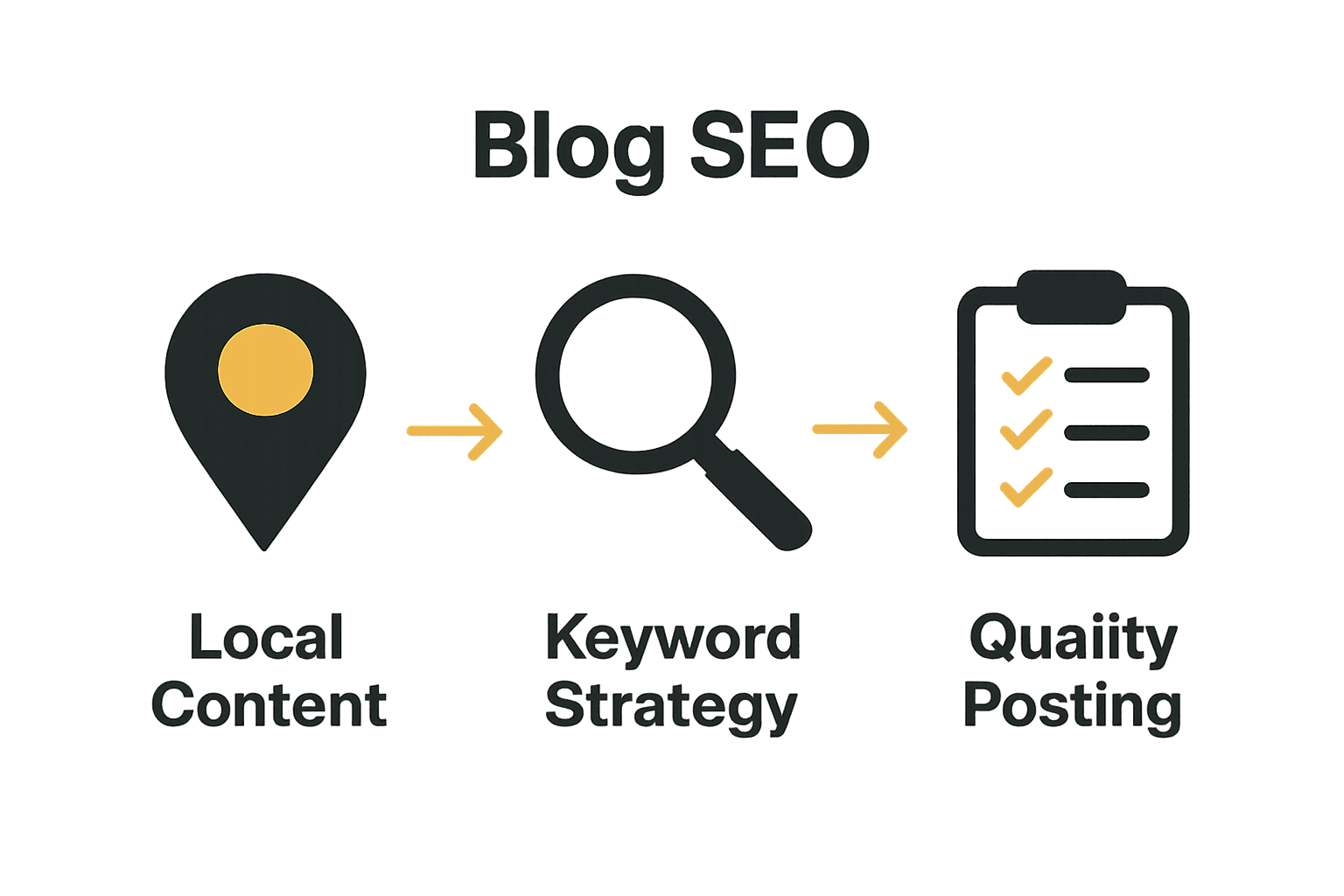
Local SEO represents a critical strategy for real estate professionals seeking to dominate neighborhood-specific search results. Keyword Strategy plays a pivotal role in crafting content that resonates with local audiences and search engine algorithms.
Research demonstrates that successful local SEO blogs go beyond generic property listings by creating hyper-targeted content that speaks directly to community interests. By developing articles that highlight neighborhood events, market trends, and local lifestyle insights, real estate professionals can position themselves as authoritative local experts who understand the nuanced dynamics of specific areas.
Key strategies for maximizing local SEO through blogging include:
- Writing detailed neighborhood profile articles
- Covering local real estate market trends
- Highlighting community events and developments
- Sharing insights about local schools and infrastructure
- Creating location-specific buying and selling guides
- Discussing upcoming local development projects
- Featuring interviews with community leaders
Through strategic, locally-focused content, real estate professionals can transform their blogs into powerful SEO tools that not only improve search rankings but also establish deep connections with potential clients in their specific geographic markets.
Common Blogging Mistakes to Avoid
Real estate professionals often stumble into predictable blogging pitfalls that can significantly undermine their digital marketing efforts. Blogging Consistency is crucial in avoiding these common traps that can derail an otherwise promising content strategy.
Research highlights several critical mistakes that can diminish a blog’s effectiveness and search engine performance. These missteps include inconsistent posting schedules, creating generic content that lacks local specificity, and prioritizing quantity over quality. Real estate bloggers frequently fail to understand that successful content requires a strategic approach that balances informative writing with targeted, audience-specific insights.
Key blogging mistakes to avoid include:
- Irregular or infrequent posting schedules
- Neglecting local market and neighborhood-specific content
- Using generic, non-targeted keywords
- Failing to proofread and edit content
- Ignoring audience engagement and comments
- Overlooking the importance of visual content
- Writing overly sales-focused articles
- Neglecting to update older blog posts
By recognizing and addressing these common pitfalls, real estate professionals can transform their blogs from ineffective digital noise into powerful, engaging platforms that attract, inform, and convert potential clients.
Unlock the Full Power of Real Estate Blogging for SEO Success
If you are struggling with inconsistent posting or generic content that fails to capture your local market, you are not alone. Role of Blogs in Real Estate SEO is critical for success.
As the article points out, real estate blogs thrive when they combine targeted neighborhood insights, market trend analysis, and buyer-focused guides. These are exactly the challenges Content Charlie helps you overcome with tailored, SEO-driven blog content designed to establish your credibility and boost your search rankings across your local areas.
Don’t let common blogging mistakes hold your real estate business back. Take action now to transform your website into a dynamic platform that attracts ready-to-act clients with focused local SEO strategies and compelling copywriting. Discover how our expert team crafts property descriptions, suburb guides, and continuous blog articles that build trust and drive leads. Visit Content Charlie and explore how local SEO & real estate copywriting can help your business stand out in search results and the minds of local buyers and sellers.
Frequently Asked Questions
What is the purpose of blogging in real estate SEO?
Blogging in real estate SEO serves to enhance digital visibility, engage potential clients, and establish professional credibility by providing valuable insights and information about the housing market and local neighborhoods.
How does blog content improve SEO for real estate websites?
Blog content improves SEO by incorporating targeted keywords, increasing website crawl frequency, creating internal linking structures, and generating fresh, relevant content that appeals to both search engines and users.
What types of content are most effective for real estate blogs?
Effective real estate blog content includes neighborhood profiles, market trend reports, homebuyer and seller guides, investment strategies, and community lifestyle features, each aimed at attracting different audience segments.
What common mistakes should be avoided when blogging for real estate SEO?
Common mistakes include inconsistent posting schedules, creating generic content, neglecting local specifics, using non-targeted keywords, and failing to engage with the audience. It’s important to focus on quality and relevance to maximize the blog’s effectiveness.
Recommended

Understanding Why Blogging Boosts SEO for Real Estate
SEO can feel overwhelming for real estate agents who want their websites to attract real clients. Most believe you have to master every algorithm and tech trick out there. We need to understand why blogging boosts seo.
Yet the surprising truth is that consistent blogging alone can make your website up to 4 times more effective at reaching qualified leads. That flips the script on what really drives online success.
Table of Contents
- The Basics Of Seo And Blogging
- How Blogging Improves Website Authority
- The Role Of Keywords And Content Strategy
- Engagement And Audience Connection Through Blogging
- Long-Term Benefits Of Consistent Blogging
Quick Summary
| Takeaway | Explanation |
|---|---|
| Create relevant content consistently | Regularly publishing blogs increases website visibility and attracts qualified leads. |
| Focus on strategic keyword integration | Use long-tail keywords tailored to specific client needs to enhance searchability. |
| Build website authority through quality | High-quality, informative content establishes trust and credibility with search engines and clients. |
| Engage with your audience genuinely | Personal insights and addressing client concerns help build a loyal readership and community trust. |
| Invest in long-term blogging | A consistent blogging strategy creates lasting digital resources that continue to attract traffic over time. |
The Basics of SEO and Blogging
Search Engine Optimization (SEO) represents a strategic approach that helps websites become more visible and attractive to search engines like Google.
For real estate professionals, blogging serves as a powerful mechanism to enhance online presence and attract potential clients through targeted content.
Google’s search documentation emphasizes that quality content helps search engines discover, crawl, and understand website information effectively.
Understanding SEO Fundamentals
At its core, SEO involves optimizing digital content to rank higher in search engine results pages (SERPs). For real estate agents, this means creating content that answers potential clients’ questions about property markets, neighborhoods, buying strategies, and local real estate trends.
The goal is not just attracting website visitors but drawing qualified leads who are genuinely interested in real estate services.
How Blogging Supports SEO Strategy
Blogs provide multiple advantages for SEO performance. They allow real estate professionals to:
- Generate fresh, relevant content consistently
- Target specific keywords related to local property markets
- Demonstrate professional expertise and market knowledge
- Create opportunities for internal and external linking
By publishing regular, high-quality content that addresses client interests and local real estate dynamics, agents can signal to search engines that their website is an authoritative and valuable resource. Learn more about content marketing strategies that can elevate your real estate business’s online visibility.
Successful SEO through blogging requires understanding audience needs, researching relevant keywords, and delivering informative content that provides genuine value to potential property buyers and sellers.
How Blogging Improves Website Authority
Website authority represents a critical metric determining how search engines perceive the credibility and relevance of a digital platform.
For real estate professionals, building this authority through strategic blogging can significantly enhance online visibility and attract potential clients. Moz’s Domain Authority research highlights that websites with consistent, high-quality content tend to rank higher in search engine results.
The Role of Content Quality and Consistency
Blogs serve as a powerful mechanism for establishing expertise and trustworthiness in the real estate market. By producing informative, original content that addresses specific client questions and concerns, agents can demonstrate deep understanding of local property landscapes.
Consistent publishing signals to search engines that a website is active, relevant, and committed to providing valuable insights.
Building Credibility Through Strategic Content
Website authority is not just about quantity but the strategic depth of content. Real estate professionals can enhance their digital credibility by:
- Creating in-depth neighborhood guides
- Analyzing local market trends
- Sharing expert insights on property investment
- Addressing common client questions and challenges
These approaches transform a blog from a simple webpage into a comprehensive resource that search engines recognize as authoritative.
Explore strategies for boosting Google rankings to further understand how strategic content can elevate your online presence.
By consistently delivering valuable, targeted content, real estate agents can systematically build website authority that attracts both search engine algorithms and potential clients seeking genuine expertise.
To clarify how strategic blogging impacts website authority in real estate, the table below breaks down the key characteristics of quality content versus consistency and explains how each contributes to higher search engine rankings.
| Characteristic | Impact on SEO | How It Builds Authority |
|---|---|---|
| Content Quality | Elevates site in search rankings | Signals expertise and trustworthiness |
| Content Consistency | Encourages regular site crawling by search engines | Shows site is active and relevant |
| In-depth Market Analysis | Targets client needs and search intent | Demonstrates knowledge of local trends |
| Addressing Client Questions | Attracts targeted traffic | Builds reputation as a resource |
| Originality | Reduces competition with duplicate content | Distinguishes the agent |
| s voice |

The Role of Keywords and Content Strategy
Keywords represent the critical bridge connecting potential real estate clients with relevant online content.
Developing a sophisticated content strategy that integrates targeted keywords naturally can transform a blog from a simple collection of posts into a powerful lead generation tool.
Moz’s SEO guide emphasizes that strategic keyword selection enables websites to appear precisely where potential clients are searching.
Understanding Keyword Relevance in Real Estate
For real estate professionals, keyword strategy goes beyond generic terms like “houses for sale.” Successful content marketing requires understanding the nuanced search behaviors of local property seekers.
This means identifying long-tail keywords that reflect specific client intentions, such as “three-bedroom homes in Brisbane waterfront” or “investment properties near Gold Coast beaches.”
Crafting a Strategic Content Approach
Effective keyword integration demands a comprehensive approach that considers multiple factors:
- Identifying local search patterns
- Matching keywords with specific client needs
- Creating content that genuinely answers user questions
- Balancing keyword density with natural, engaging writing
Real estate agents must think beyond simple keyword placement and focus on developing content that provides genuine value and directly addresses potential client queries. Learn more about content marketing strategies that can help refine your approach to digital visibility.
By understanding and implementing a sophisticated keyword strategy, real estate professionals can create content that not only ranks well in search results but also meaningfully connects with potential buyers and sellers seeking expert guidance.
Engagement and Audience Connection Through Blogging
Blogging transcends traditional marketing by creating meaningful connections between real estate professionals and potential clients. Authentic, valuable content transforms a website from a mere digital brochure into an interactive platform for community engagement.
Sprout Social’s research on social media engagement highlights how consistent, relevant content encourages deeper audience interactions.
Building Trust Through Personalized Content
Successful real estate blogs go beyond property listings by sharing insights that demonstrate genuine understanding of client needs. This approach involves crafting narratives that speak directly to potential buyers’ and sellers’ challenges, fears, and aspirations.
By addressing specific local market nuances, real estate agents can position themselves as trusted neighborhood experts rather than simply transactional service providers.
Strategies for Meaningful Audience Interaction
Engagement requires a multifaceted approach that encourages reader participation and builds community trust:
- Creating content that answers specific client questions
- Sharing personal insights about local neighborhood developments
- Providing actionable advice for property investors
- Responding promptly to comments and reader inquiries
Learn more about building writing connections to enhance your digital communication strategy. Real estate professionals who consistently deliver value through their blogs can transform casual website visitors into loyal followers and potential long-term clients, ultimately driving both SEO performance and business growth.
This table summarizes various approaches real estate professionals can use to foster engagement and build audience connection through blogging, highlighting the focus of each strategy and the main benefit it delivers.
| Engagement Strategy | Focus | Main Benefit |
|---|---|---|
| Answering Client Questions | Addressing specific local concerns | Builds trust and authority |
| Sharing Neighborhood Insights | Providing personal perspectives | Demonstrates local expertise |
| Offering Actionable Advice | Giving investment or buying tips | Positions agent as a problem-solver |
| Responding to Comments/Inquiries | Interactive communication | Encourages repeat visits and loyalty |
| Sharing Market Developments | Real-time updates and market trends | Keeps content fresh and relevant |
Long-Term Benefits of Consistent Blogging
Consistent blogging represents a strategic investment in digital marketing that compounds value over time for real estate professionals.
Unlike traditional advertising that provides temporary visibility, blog content creates a lasting digital footprint that continually attracts potential clients.
HubSpot research demonstrates that companies prioritizing blogging experience significantly higher return on investment through sustained web traffic and lead generation.
Compounding Content Value
Each blog post functions as a permanent asset in a real estate agent’s digital portfolio.
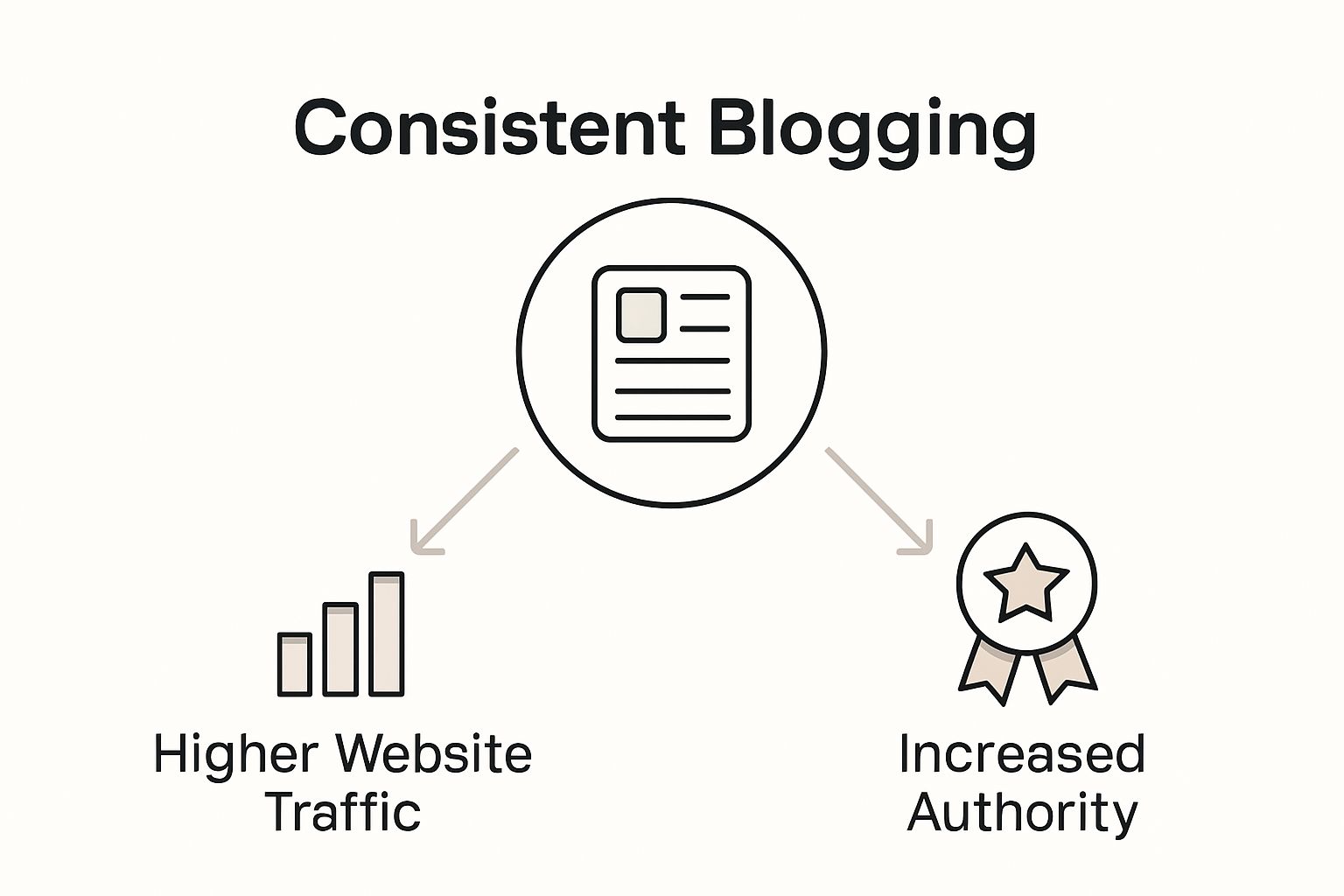 Evergreen content addressing timeless topics like first-time homebuyer guidance, neighborhood insights, or investment strategies continues generating organic traffic months and even years after initial publication.
This approach transforms blogs from ephemeral marketing materials into enduring resources that consistently showcase professional expertise.
Strategic Long-Term Positioning
Consistent blogging offers multiple strategic advantages for real estate professionals:
- Building a comprehensive digital knowledge base
- Establishing credibility as a local market expert
- Creating searchable content that attracts targeted leads
- Developing a repository of shareable professional insights
Explore strategies for professional branding to understand how consistent content creation elevates your digital presence.
By treating blogging as a long-term commitment rather than a sporadic marketing tactic, real estate agents can systematically build an authoritative online platform that attracts and retains potential client interest.
Ready to See Your Real Estate Brand Rise Above the Competition?
Feeling frustrated because your blog posts are not attracting serious home buyers or sellers? You invest time creating content but struggle to stand out in suburb-level searches.
As this article explains, consistent, SEO-focused blogging builds website authority, fuels Google rankings, and keeps your audience coming back for up-to-date real estate insights.
But crafting this kind of content takes expertise, strategy, and a deep understanding of what local clients are searching for.
At Content Charlie, we transform your real estate marketing with copywriting that gets you found by your ideal clients. Discover how our proven content marketing strategies and focus on local SEO turn your blog into a powerful lead magnet. Stop letting your competitors win those clicks. Reach out now to start building trust, capturing suburb searches, and growing your authority in every neighborhood you serve. Visit Content Charlie today and make your next move the one that dominates your market.
Frequently Asked Questions
How does blogging improve SEO for real estate websites?
Blogging improves SEO for real estate websites by generating fresh, relevant content that search engines prioritize. To enhance your SEO, publish at least one high-quality blog post each week that addresses local market trends or client questions.
What types of content should real estate blogs include to boost SEO?
Real estate blogs should include in-depth neighborhood guides, market analyses, and expert insights to engage potential clients. Aim to create content that directly addresses common client concerns, ensuring each piece has targeted keywords relevant to your audience.
How often should I publish blog posts to see SEO results?
To see noticeable improvements in SEO, aim to publish blog posts consistently, ideally once a week or every two weeks. Regular updates signal to search engines that your site is active, which can lead to higher rankings.
What are long-tail keywords, and why are they important for real estate blogging?
Long-tail keywords are specific phrases that potential clients use when searching online, like “investment properties near beaches.” Integrate these into your blog content to attract highly targeted traffic and meet the specific needs of your audience.
How can I measure the impact of my blogging on SEO performance?
You can measure the impact of blogging on SEO performance through metrics like organic traffic, keyword rankings, and engagement rates. Track these metrics monthly to evaluate the effectiveness of your blog content and adjust your strategy accordingly.
What actions can I take to ensure my blog content is valuable to clients?
To ensure your blog content is valuable, focus on addressing client questions and providing solutions based on local market insights. Engage with your audience by inviting comments and responding promptly to create a sense of community.
Recommended
- real estate marketing Archives – Content Charlie
- real estate SEO Archives – Content Charlie
- social media tips for real estate Archives – Content Charlie
- real estate social media strategy Archives – Content Charlie
- SEO for Real Estate Agencies: Simple Strategies to Grow Your Business
- Understanding SEO Best Practices for Your Business – My Blog