
- You are here:
- Home »
- content optimization
Tag Archives for " content optimization "

7 Powerful Real Estate Content Strategies for Local Agents
Over 90 percent of homebuyers start their property search online, putting digital strategies at the heart of real estate success. Standing out means more than just having listings—it requires skillful use of local SEO, eye catching visuals, and authentic client stories. By focusing on proven tactics that connect with local buyers, you can grow your reputation and attract the right clients in a crowded market.
Table of Contents
- 1. Identify Local SEO Keywords That Attract Homebuyers
- 2. Craft Suburb Guides to Build Trust and Visibility
- 3. Write Compelling Property Descriptions That Convert
- 4. Optimize Google Business Profile Content for Searches
- 5. Publish Consistent Blog Articles to Show Expertise
- 6. Leverage Client Testimonials for Local Credibility
- 7. Use Visual Content to Make Listings Stand Out
Quick Summary
| Takeaway | Explanation |
|---|---|
| 1. Focus on Local SEO Keywords | Identify specific search terms like neighborhood names to attract homebuyers actively searching online. |
| 2. Create Detailed Suburb Guides | Develop comprehensive guides about neighborhoods to establish trust and position yourself as a local expert. |
| 3. Write Engaging Property Descriptions | Use storytelling and emotional language in property descriptions to create connections with potential buyers. |
| 4. Optimize Google Business Profile | Fill out and regularly update your Google Business Profile to enhance your visibility in local searches. |
| 5. Publish Consistent Blog Content | Regularly post relevant blogs to showcase expertise and connect with potential clients in your market. |
1. Identify Local SEO Keywords That Attract Homebuyers
Successful real estate marketing starts with understanding what potential homebuyers are actually searching for online. Local SEO keywords are your secret weapon to connecting with ready buyers in specific neighborhoods and markets.
When researching keywords, think like a homebuyer searching for properties. Understanding why local SEO matters begins with mapping out precise location based search terms that reflect genuine buyer intent. According to research, location specific keywords like “homes for sale in [City]” can dramatically improve your search visibility.
Strategic Keyword Research Approach:
- Focus on neighborhood specific searches
- Include city and suburb names
- Incorporate property type descriptors
- Add transactional search terms
For instance, instead of generic terms like “real estate,” target phrases such as “3 bedroom homes in Broadbeach” or “waterfront properties Gold Coast.” These specific keywords signal exactly what potential buyers want and help search engines match your content with relevant searches.
To implement this strategy, use free tools like Google Keyword Planner or SEMrush to discover search volume and competition for local real estate keywords. Track which terms potential buyers use most frequently and integrate them naturally into your website content, blog posts, and property descriptions.
Remember that local keyword optimization is not about stuffing terms randomly. The goal is creating authentic, valuable content that genuinely answers homebuyers questions while strategically incorporating location based search terms.
2. Craft Suburb Guides to Build Trust and Visibility
Potential homebuyers are hungry for insider knowledge about neighborhoods where they might invest their future. Creating comprehensive suburb guides transforms you from a simple real estate agent into a local market expert.
Local neighborhood spotlights are powerful tools for establishing your credibility and attracting targeted traffic. According to research, writing detailed neighborhood breakdowns and answering local questions can significantly enhance your reputation within a geographical area.
Key Elements of Compelling Suburb Guides:
- Detailed neighbourhood demographic information
- Local amenities and infrastructure
- Property value trends
- School district ratings
- Community lifestyle insights
Your suburb guide should read like an insider’s manual for potential homebuyers. Go beyond basic statistics and create narrative rich content that helps people imagine living in the area. Discuss local coffee shops, upcoming development projects, community events, and unique neighborhood characteristics that make each suburb special.
To maximize impact, update these guides regularly with fresh market insights, seasonal real estate trends, and emerging local developments. This approach not only improves your SEO but positions you as the go to local real estate expert who truly understands the nuanced character of each neighborhood.
Remember that authentic, valuable content speaks directly to your audience’s curiosity and need for local understanding. Your suburb guides are more than marketing materials they are community resources that build genuine trust.
3. Write Compelling Property Descriptions That Convert
Your property description is more than just a list of features it is your digital sales pitch that can transform casual browsers into serious buyers. Crafting descriptions that spark imagination and emotional connection requires strategic storytelling.
Complete guide to copywriting in real estate reveals that successful property descriptions go beyond basic specifications. According to research, incorporating location specific keywords naturally within your content can significantly improve search engine rankings and attract potential clients.
Key Components of Magnetic Property Descriptions:
- Create a narrative that sells a lifestyle
- Highlight unique property features
- Use sensory and emotional language
- Include specific neighborhood context
- Optimize for local search keywords
Instead of writing dry statements like “3 bedroom house with garage,” paint a vivid picture. For example: “Imagine morning coffee on your sun drenched balcony overlooking Broadbeach parklands the perfect sanctuary for professionals seeking coastal tranquility.”
When writing descriptions, think about what makes a property special. Does it have a stunning view? Proximity to top schools? Recent renovations? These details transform generic listings into compelling stories that resonate with potential buyers.
Remember that great property descriptions are a blend of strategic SEO and emotional storytelling. Your goal is to help potential buyers visualize themselves living in the space not just reading about its technical specifications.
4. Optimize Google Business Profile Content for Searches
Your Google Business Profile is the digital front door to your real estate brand a powerful tool that can attract or repel potential clients within seconds. Mastering this platform is not just about filling out basic information it is about creating a compelling digital presence that stands out in local searches.
Google Business Profile optimization requires strategic thinking and consistent effort. According to research, regularly posting and adding high quality visual content can dramatically improve your visibility in Google Search and Maps.
Strategic Profile Optimization Tactics:
- Complete every profile section thoroughly
- Add professional headshots and team photos
- Include recent property listing images
- Update business hours and contact information
- Respond to all client reviews promptly
Think of your Google Business Profile as a 24/7 digital marketing representative. Professional photos showing your team, office environment, and recent successful property sales create trust and credibility. Potential clients want to see the human side of your real estate business.
Consistent updates are crucial. Share recent property achievements, local market insights, and community events. Each post increases your chances of appearing in local search results and demonstrates your active engagement with the local real estate market.
Remember that authenticity wins. Your profile should reflect your unique brand personality while providing clear, valuable information that helps potential clients understand why they should choose you as their real estate agent.
5. Publish Consistent Blog Articles to Show Expertise
Blogs are not just content they are your digital megaphone for establishing credibility and attracting potential clients. Consistent publishing transforms you from a simple real estate agent into a trusted local market expert.
Consistent blogging requires strategic planning and genuine insights. According to research, publishing local content like neighborhood guides and market updates helps build audience connection and demonstrates deep understanding of your real estate landscape.
Strategic Blog Content Approaches:
- Create hyper local market analysis
- Share seasonal real estate trends
- Offer neighborhood buying guides
- Highlight community development stories
- Answer common buyer questions
Your blog should feel like a conversation with potential clients. Instead of generic market reports, craft narratives that help readers visualize living in specific neighborhoods. For example, write articles like “Top 5 Family Friendly Suburbs in Gold Coast” or “What First Time Buyers Need to Know About Broadbeach Real Estate”.
Consistency matters more than perfection. Aim to publish 1 2 high quality articles monthly that provide genuine value. Track which topics generate the most engagement and double down on content that resonates with your audience.
Remember that your blog is a living portfolio showcasing your local expertise. Each article is an opportunity to build trust and position yourself as the go to real estate professional in your market.
6. Leverage Client Testimonials for Local Credibility
Testimonials are the secret weapon of successful real estate agents transforming satisfied clients into powerful marketing advocates. These personal stories can speak volumes about your expertise in ways no traditional advertisement ever could.
Real estate client engagement requires strategic approach to gathering and showcasing client experiences. According to research, proactively soliciting reviews and displaying positive testimonials can significantly build trust and credibility in your local market.
Strategic Testimonial Collection Tactics:
- Request feedback immediately after successful transactions
- Create multiple testimonial collection channels
- Feature diverse client stories
- Include specific transaction details
- Display testimonials across multiple platforms
When collecting testimonials, go beyond generic praise. Encourage clients to share specific details about their experience working with you. A testimonial like “John helped us find our dream home in Broadbeach within our budget” is far more compelling than “John is a great agent.”
Spread your testimonials strategically across your website, Google Business Profile, social media platforms and printed marketing materials. Video testimonials can be especially powerful providing authentic visual proof of your professional success.
Remember that potential clients want social proof. Your testimonials are not just reviews they are powerful narratives that demonstrate your ability to deliver exceptional real estate experiences.
7. Use Visual Content to Make Listings Stand Out
Visual storytelling transforms ordinary property listings into compelling narratives that capture potential buyers imagination. In a digital world saturated with real estate content, high quality visual assets are your secret weapon for standing out.
Types of real estate content every agent should use reveals the power of strategic visual marketing. According to research, incorporating videos like virtual tours and lifestyle showcases can significantly boost engagement and help potential clients connect emotionally with properties.
Powerful Visual Content Strategies:
- Produce professional property photography
- Create immersive video property tours
- Share lifestyle neighborhood context videos
- Design visually appealing market update graphics
- Highlight unique property features through visual storytelling
Think beyond standard listing photos. A walkthrough video showing morning light streaming through kitchen windows or a drone shot capturing a homes proximity to local parks can transform a simple listing into an experience. Professional photography that captures a propertys best angles tells a story far more effectively than text descriptions.
Consider creating diverse visual content that goes beyond individual listings. Market trend infographics, neighborhood lifestyle reels, and behind the scenes glimpses of your real estate process can build trust and showcase your expertise.
Remember that great visual content does more than display a property it invites potential buyers to imagine their future life in that space.
Below is a comprehensive table summarizing the strategies discussed in the article for enhancing real estate marketing using Local SEO, content creation, and client engagement.
| Strategy | Implementation | Expected Results |
|---|---|---|
| Local SEO Keyword Identification | Focus on neighborhood-specific searches, city names, property types, and transactional terms. Use tools like Google Keyword Planner. | Improved search visibility and increased webpage relevance for potential buyers. |
| Crafting Suburb Guides | Include demographics, amenities, property trends, and lifestyle insights. Regularly update guides. | Enhanced local credibility and attraction of targeted traffic. |
| Property Descriptions | Use storytelling, highlight unique features, and include sensory and emotional language. Optimize with local keywords. | Conversion of casual browsers to serious buyers. |
| Google Business Profile Optimization | Complete profile details, add high-quality images, update frequently, and respond to reviews. | Increased visibility in searches and stronger client engagement. |
| Consistent Blogging | Publish regular articles on local market analysis, trends, and buying guides. | Establishment as a local expert and stronger connection with potential clients. |
| Leveraging Client Testimonials | Collect detailed feedback, feature diverse stories, and display across platforms. | Increased trustworthiness and credibility in the local market. |
| Visual Content Usage | Incorporate professional photos, videos, and infographics. Highlight property features. | Enhanced listing appeal and emotional connection with potential buyers. |
Unlock the Full Potential of Your Local Real Estate Content
Struggling to stand out in a crowded market and connect with local homebuyers can be frustrating. This article highlights crucial strategies like targeted local SEO keywords, compelling suburb guides, and authentic property descriptions that resonate with buyers. If you want to overcome challenges such as low search visibility and weak buyer engagement, focusing on authentic content tailored to your neighborhood is key. Content Charlie specializes in creating SEO-driven real estate copy that ranks highly for specific locality searches and builds trust through valuable insights.
Elevate your listings and neighborhood expertise with our help. From crafting engaging suburb guides to writing magnetic property descriptions and optimizing your Google Business Profile content, we make sure your brand connects with ready-to-act buyers in your area. Don’t let your marketing fall flat when you can dominate your local market and become the trusted agent buyers choose.
Ready to transform your real estate content into a powerful client magnet now

Visit Content Charlie to discover how our tailored local SEO strategies and high-converting copywriting can put you ahead of competitors in neighborhoods like Broadbeach and beyond. Take the first step to getting found and closing more deals today.
Frequently Asked Questions
How can I identify local SEO keywords that attract homebuyers?
To identify local SEO keywords, focus on neighborhood-specific searches and include city names, property types, and transactional terms. Conduct keyword research using free tools to discover popular local search phrases and integrate them naturally into your website and listings.
What should I include in suburb guides to engage potential homebuyers?
Suburb guides should include detailed demographics, local amenities, property value trends, and community lifestyle insights. Create engaging content that helps buyers visualize life in the area to build trust and position yourself as a local expert.
How can I write compelling property descriptions that convert?
Write property descriptions that tell a story, highlighting unique features and using sensory language to evoke emotions. Aim to incorporate localized keywords and provide specific neighborhood context to enhance search visibility and buyer connection.
What are effective strategies for optimizing my Google Business Profile?
Optimize your Google Business Profile by completing all sections thoroughly, adding professional photos, and posting updates regularly. Engage with client reviews to improve visibility and showcase your real estate brand’s personality.
How often should I publish blog articles to establish expertise in my local market?
Aim to publish 1-2 high-quality blog articles each month to showcase your local knowledge and market insights. Consistency helps engage your audience and positions you as a trusted professional in your field.
How can I use visual content to enhance my property listings?
Util high-quality visuals such as professional photography and immersive video tours to create compelling property listings. Highlight unique features and the surrounding neighborhood through varied visual content, helping potential buyers imagine themselves in the space.
Recommended
- 7 Types of Real Estate Content Every Agent Should Use – Content Charlie
- 7 Best Real Estate Blog Ideas for Local Agents – Content Charlie
- 7 Essential Types of Real Estate Leads Agents Must Know – Content Charlie
- Why Use Blog Content: Essential Guide for Real Estate – Content Charlie
- SEO for Real Estate Agencies: Simple Strategies to Grow Your Business

Content Creation Process Guide for Real Estate SEO Success
Ok. Your now you need it but how to do Content Creation Process Guide for Real Estate SEO? Let me expand for you.
Did you know over 90 percent of home buyers now start their search online? Standing out in digital real estate has never been more vital. With so many listings and guides available, your content must be more than just informative. Developing a step by step strategy helps you reach the right people, build trust, and turn clicks into real clients by matching your expertise to what home seekers really need.
Quick Summary
| Key Point | Explanation |
|---|---|
| 1. Define clear content objectives | Establish specific goals to align your content strategy with audience needs and market authority. |
| 2. Conduct targeted keyword research | Identify and utilize local SEO keywords that resonate with your target audience’s search behavior. |
| 3. Create a strategic content calendar | Organize and schedule content based on local market trends to maintain engagement and relevance. |
| 4. Craft SEO-optimized, engaging content | Develop valuable content that integrates keywords while prioritizing reader experience and solutions. |
| 5. Regularly review and refine content | Conduct quarterly audits to ensure content remains accurate, relevant, and aligned with current market trends. |
Table of Contents
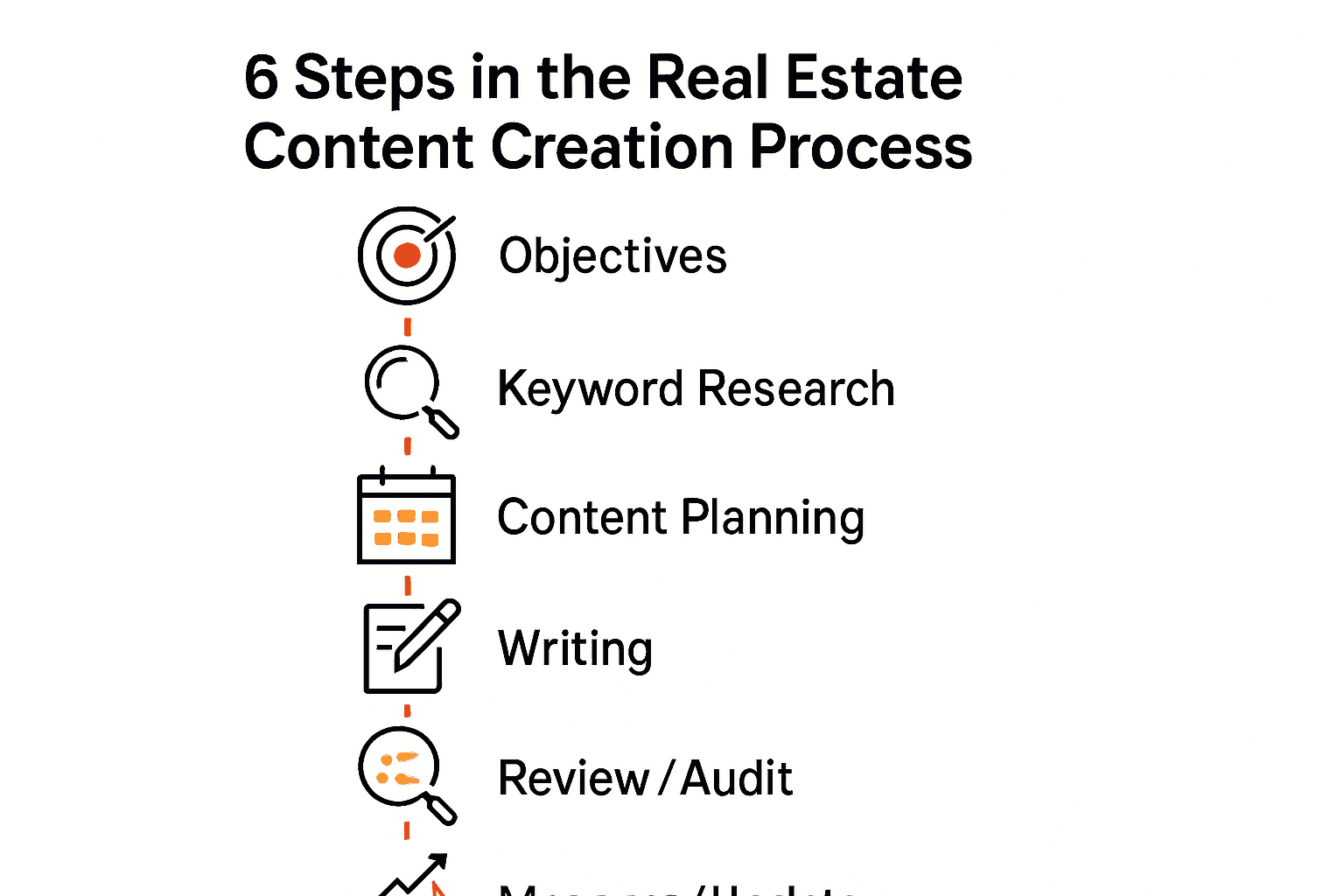
- Step 1: Define Content Objectives And Target Audience
- Step 2: Research Local Seo Keywords And Topics
- Step 3: Plan A Content Calendar For Property Niches
- Step 4: Craft Seo-Optimized Content With Conversion Focus
- Step 5: Review And Refine Content For Quality And Accuracy
- Step 6: Measure Performance And Update As Needed
Step 1: Define content objectives and target audience
Your Content Creation Process Guide for Real Estate SEO starts with crystal clear objectives and a deep understanding of who you are actually talking to. Think of this step like mapping out a journey before hitting the road. Without knowing your destination and the passengers, you will likely end up somewhere random and unsatisfied.
Start by asking yourself some fundamental questions. What do you want your content to achieve? For real estate professionals, this might mean generating qualified leads, establishing local market authority, or attracting specific buyer segments like first-time homeowners or property investors. According to research from Sell.do, effective content strategies align closely with Google’s E-E-A-T principles, which means demonstrating expertise, experience, authoritativeness, and trustworthiness.
To nail down your target audience, create detailed personas. Who are they? Young professionals seeking starter homes? Retirees looking to downsize? Investors hunting for development opportunities? Each group needs different messaging, search terms, and content approaches. Research their demographics, pain points, aspirations, and online behavior.
Pro Tip: Don’t just guess. Use real data from your past clients, local market reports, and analytics to build accurate audience personas.
Once you understand your objectives and audience, you are ready to craft content that speaks directly to their needs and search intentions. This targeted approach will help you create more relevant, engaging material that actually converts.
Up next? Keyword research that connects your objectives with your audience’s search behavior.
Step 2: Research local SEO keywords and topics
Now that you understand your content objectives and target audience, it is time to dig into the research that will make your real estate content discoverable. Local SEO keyword research is like being a detective who knows exactly where to look for hidden treasure. Learn more about why local SEO matters for real estate agents.
Start by thinking like your potential clients. What would they type into Google when searching for real estate services in your area? Content Creation Process Guide for Real Estate SEO must be a strategic part of your tinking.
These search terms might include neighborhood names, property types, buyer specific phrases like “first home buyer” or investor terms like “property investment opportunities”. Your goal is to uncover the exact language your target audience uses.
Use free tools to expand your keyword universe. Google Keyword Planner, SEMrush, and Ahrefs can reveal search volumes and related terms. Pay special attention to long tail keywords that are specific and less competitive. For instance instead of just “Brisbane property” you might target “affordable 2 bedroom apartments in West End Brisbane”.
Pro Tip: Local keywords are gold. Always include suburb names location descriptors and property specific terms that reflect how locals actually search.
Dont just collect keywords randomly. Group them strategically based on user intent. Some keywords indicate someone wanting to buy right now. Others suggest research mode. Understanding these nuances helps you create precisely targeted content that speaks directly to where a potential client is in their property journey.
Up next? Transforming those keywords into a content plan that attracts and converts your ideal real estate clients.
Step 3: Plan a content calendar for property niches
With your keywords researched and audience defined, it is time to map out a strategic content roadmap that keeps your real estate marketing consistently engaging. According to research, a 12-month content calendar synchronized with local real estate trends can dramatically improve your lead generation and audience engagement learn more about creating effective social media calendars.
Start by understanding the seasonal rhythm of your local property market. Spring might highlight new listings and garden home features. Summer could focus on waterfront properties or vacation investments. Autumn might explore family home relocations near school districts. Winter could cover investment strategies and year end property assessments.
Create content themes that align with these seasonal shifts. A young professional audience might want different content compared to retiree investors. Break down your calendar into quarterly focus areas. Each quarter should have a mix of educational content, market insights, neighborhood spotlights, and direct lead generation pieces.
Pro Tip: Plan 3-4 months ahead. This gives you breathing room to adjust for market changes while maintaining a consistent publishing schedule.
Organize your content ideas in a spreadsheet or project management tool.
 Track publication dates, content types, target keywords, and potential promotional channels. Remember that flexibility is key. While planning is crucial, be ready to pivot when unexpected market opportunities or local events arise.
Up next? CraftingContent Creation Process Guide for Real Estate SEO compelling content that transforms your strategic calendar into actual engaging real estate resources.
Step 4: Craft SEO-optimized content with conversion focus
With your content calendar ready, it is time to transform those strategic plans into compelling real estate content that both Google and potential clients will love. Content Creation Process Guide for Real Estate SEO is not just about keywords but creating genuinely helpful resources learn more about on page optimization strategies.
According to research, successful real estate content typically runs around 2000 words and focuses intensely on providing rich human-centered information. Your goal is to answer every possible question a potential buyer or seller might have. Think comprehensive neighborhood guides, deep-dive market analysis reports, and step by step tutorials that showcase your expertise.
Embrace strategic keyword placement. Weave your target keywords naturally into titles, headings, image alt tags and throughout the content. But here is the critical part avoid keyword stuffing. Your writing must sound conversational and authentic. Google rewards content that genuinely helps readers solve problems.
Pro Tip: Always prioritize reader experience over search engine tricks. Useful content that genuinely helps people will naturally rank better.
Include visual elements that support conversion. High quality property images, infographics showing market trends, and clear call to action buttons can dramatically increase engagement. Use internal links strategically to guide readers through your content ecosystem and showcase your comprehensive local real estate knowledge.
Up next? Implementing technical SEO elements that make your content discoverable and user friendly.
Step 5: Review and refine content for quality and accuracy
Content Creation Process Guide for Real Estate SEO. It is an ongoing process of refinement and improvement. According to research from real estate SEO experts, learn more about maintaining content quality with AI tools, regular content reviews are essential to staying relevant and competitive.
According to research from Sell.do, maintaining E-E-A-T (Experience, Expertise, Authoritativeness, and Trustworthiness) is critical in real estate content. This means quarterly SEO audits are not just recommended they are necessary. Focus on checking several key areas: performance metrics, content freshness, local relevancy, meta data accuracy, and internal linking strategy.
Start by reviewing your existing content through a critical lens. Are your neighborhood guides still accurate? Do your market trend articles reflect the current real estate landscape? Update statistics, refresh property information, and ensure all local references are current. Remove or update any outdated information that could mislead potential clients.
Pro Tip: Set calendar reminders for quarterly content reviews. Consistency is key in maintaining high quality SEO content.
Pay special attention to seasonal content. A summer property investment guide from two years ago might need significant updates to remain valuable. Check your analytics to see which pieces are still driving traffic and which might need a complete overhaul. Remember that Google rewards fresh, accurate, and genuinely helpful content.
Up next? Implementing a systematic approach to ongoing content management and optimization.
Step 6: Measure performance and update as needed
You have crafted and refined your real estate content. Now comes the critical part measuring what works and what needs improvement. According to research from LinkedIn, real estate SEO success demands continuous tracking and strategic refinement learn more about performance measurement tools.
Start by setting up comprehensive tracking in Google Analytics and Google Search Console. These tools will reveal crucial insights about your content performance. What keywords are driving traffic? Which articles are generating leads? Look beyond basic metrics. Analyze engagement rates, bounce rates, and time spent on page to understand how your audience truly interacts with your content.
Conduct quarterly performance audits. Compare your content against current market trends and competitor strategies. Are your keyword rankings improving? Are you capturing the right audience segments? Be prepared to pivot quickly. A neighborhood guide that worked six months ago might need complete reconstruction based on current market dynamics.
Pro Tip: Create a performance dashboard that tracks key metrics monthly. Consistency in monitoring helps you spot trends faster.
Dont just collect data. Transform insights into actionable content updates. If a particular property investment article is attracting significant traffic but low conversion rates, investigate why. Perhaps the call to action needs refinement or the content requires more specific local market insights. Treat your content as a living document that evolves with your audience needs.
Up next? Building a sustainable real estate content strategy that grows with your business.
Here’s a summary of each key step in a real estate content strategy:
| Step | Main Focus | Key Actions |
|---|---|---|
| 1. Define Objectives & Audience | Set goals Identify target groups |
Build personas Analyze data |
| 2. Keyword & Topic Research | Uncover search terms | Use tools (Google, SEMrush) Group by intent |
| 3. Content Calendar Planning | Schedule & theme content | Align with seasons Organize by audience |
| 4. SEO-Optimized Content | Write Engage & convert |
Use keywords Add visuals & CTAs |
| 5. Review & Refine | Quality assurance | Audit quarterly Update & optimize |
| 6. Measure & Update | Track performance | Analyze metrics Adjust strategy |
Struggling to Turn Real Estate Content Into Actual Leads?
If you have ever mapped out buyer personas, spent ages on keyword lists, or tried to keep your real estate blog fresh and still wondered why your content is not driving real results, you are not alone. Many real estate professionals get stuck bridging the gap between well-structured content strategies and the kind of suburb-specific copy that actually brings in qualified leads. The article you just read highlights common pain points, from scattered keyword research to the challenge of maintaining accurate local information, and the need to keep content relevant and authoritative for both Google and real buyers and sellers.
You do not have to navigate the content creation process alone. At Content Charlie, we help you transform every step of your real estate SEO strategy into a simple, results-driven system. Whether you want expert guidance on building a content calendar, writing suburb guides, or optimizing for local search, our team will save you hours while positioning you ahead of your competition. Move from theory to action—visit Content Charlie and let us help you create search-ready content that turns readers into new business. Ready to update your approach? Start with us now and give your content the edge it deserves.
Frequently Asked Questions
What are the key objectives I should define for my real estate content creation?
To ensure your content effectively supports your business, start by setting clear objectives like generating leads, establishing market authority, or attracting specific buyer segments. Assess your past performance data to refine these goals and align them with your target audience’s needs.
How do I conduct keyword research specifically for real estate SEO?
Begin by thinking like your potential clients and brainstorm relevant search terms they might use. Utilize tools to identify these keywords, focusing on long-tail phrases that reflect specific local and property-related queries.
What steps should I take to create a content calendar for my real estate marketing?
Map out a calendar by understanding the seasonal rhythms of your local property market and organizing content themes that resonate with your audience. Plan at least 3-4 months ahead to adapt to any market changes while ensuring a consistent publishing schedule.
How can I ensure my real estate content is SEO-optimized and engaging?
Incorporate strategic keyword placement throughout your content and avoid keyword stuffing to maintain a natural tone. Aim for comprehensive material that answers common questions and includes engaging visuals and clear calls to action to enhance user experience.
Why is it important to regularly review and update my real estate content?
Regularly reviewing your content ensures it remains accurate and aligned with current market trends, which is crucial for maintaining trust with your audience. Schedule quarterly audits to assess performance metrics and refresh outdated information, keeping your content valuable and relevant.
What metrics should I track to measure the performance of my real estate SEO content?
Focus on metrics like traffic from specific keywords, engagement rates, bounce rates, and conversion rates to gauge content effectiveness. Set up a performance dashboard and conduct quarterly reviews to adapt your strategy based on these insights.
Recommended
- Why Use Blog Content: Essential Guide for Real Estate – Content Charlie
- Role of Content in SEO: Everything You Need to Know – Content Charlie
- 7 Types of Real Estate Content Every Agent Should Use – Content Charlie
- consistent content creation Archives – Content Charlie
- SEO for Real Estate Agencies: Simple Strategies to Grow Your Business

Understanding Why Blogging Boosts SEO for Real Estate
SEO can feel overwhelming for real estate agents who want their websites to attract real clients. Most believe you have to master every algorithm and tech trick out there. We need to understand why blogging boosts seo.
Yet the surprising truth is that consistent blogging alone can make your website up to 4 times more effective at reaching qualified leads. That flips the script on what really drives online success.
Table of Contents
- The Basics Of Seo And Blogging
- How Blogging Improves Website Authority
- The Role Of Keywords And Content Strategy
- Engagement And Audience Connection Through Blogging
- Long-Term Benefits Of Consistent Blogging
Quick Summary
| Takeaway | Explanation |
|---|---|
| Create relevant content consistently | Regularly publishing blogs increases website visibility and attracts qualified leads. |
| Focus on strategic keyword integration | Use long-tail keywords tailored to specific client needs to enhance searchability. |
| Build website authority through quality | High-quality, informative content establishes trust and credibility with search engines and clients. |
| Engage with your audience genuinely | Personal insights and addressing client concerns help build a loyal readership and community trust. |
| Invest in long-term blogging | A consistent blogging strategy creates lasting digital resources that continue to attract traffic over time. |
The Basics of SEO and Blogging
Search Engine Optimization (SEO) represents a strategic approach that helps websites become more visible and attractive to search engines like Google.
For real estate professionals, blogging serves as a powerful mechanism to enhance online presence and attract potential clients through targeted content.
Google’s search documentation emphasizes that quality content helps search engines discover, crawl, and understand website information effectively.
Understanding SEO Fundamentals
At its core, SEO involves optimizing digital content to rank higher in search engine results pages (SERPs). For real estate agents, this means creating content that answers potential clients’ questions about property markets, neighborhoods, buying strategies, and local real estate trends.
The goal is not just attracting website visitors but drawing qualified leads who are genuinely interested in real estate services.
How Blogging Supports SEO Strategy
Blogs provide multiple advantages for SEO performance. They allow real estate professionals to:
- Generate fresh, relevant content consistently
- Target specific keywords related to local property markets
- Demonstrate professional expertise and market knowledge
- Create opportunities for internal and external linking
By publishing regular, high-quality content that addresses client interests and local real estate dynamics, agents can signal to search engines that their website is an authoritative and valuable resource. Learn more about content marketing strategies that can elevate your real estate business’s online visibility.
Successful SEO through blogging requires understanding audience needs, researching relevant keywords, and delivering informative content that provides genuine value to potential property buyers and sellers.
How Blogging Improves Website Authority
Website authority represents a critical metric determining how search engines perceive the credibility and relevance of a digital platform.
For real estate professionals, building this authority through strategic blogging can significantly enhance online visibility and attract potential clients. Moz’s Domain Authority research highlights that websites with consistent, high-quality content tend to rank higher in search engine results.
The Role of Content Quality and Consistency
Blogs serve as a powerful mechanism for establishing expertise and trustworthiness in the real estate market. By producing informative, original content that addresses specific client questions and concerns, agents can demonstrate deep understanding of local property landscapes.
Consistent publishing signals to search engines that a website is active, relevant, and committed to providing valuable insights.
Building Credibility Through Strategic Content
Website authority is not just about quantity but the strategic depth of content. Real estate professionals can enhance their digital credibility by:
- Creating in-depth neighborhood guides
- Analyzing local market trends
- Sharing expert insights on property investment
- Addressing common client questions and challenges
These approaches transform a blog from a simple webpage into a comprehensive resource that search engines recognize as authoritative.
Explore strategies for boosting Google rankings to further understand how strategic content can elevate your online presence.
By consistently delivering valuable, targeted content, real estate agents can systematically build website authority that attracts both search engine algorithms and potential clients seeking genuine expertise.
To clarify how strategic blogging impacts website authority in real estate, the table below breaks down the key characteristics of quality content versus consistency and explains how each contributes to higher search engine rankings.
| Characteristic | Impact on SEO | How It Builds Authority |
|---|---|---|
| Content Quality | Elevates site in search rankings | Signals expertise and trustworthiness |
| Content Consistency | Encourages regular site crawling by search engines | Shows site is active and relevant |
| In-depth Market Analysis | Targets client needs and search intent | Demonstrates knowledge of local trends |
| Addressing Client Questions | Attracts targeted traffic | Builds reputation as a resource |
| Originality | Reduces competition with duplicate content | Distinguishes the agent |
| s voice |

The Role of Keywords and Content Strategy
Keywords represent the critical bridge connecting potential real estate clients with relevant online content.
Developing a sophisticated content strategy that integrates targeted keywords naturally can transform a blog from a simple collection of posts into a powerful lead generation tool.
Moz’s SEO guide emphasizes that strategic keyword selection enables websites to appear precisely where potential clients are searching.
Understanding Keyword Relevance in Real Estate
For real estate professionals, keyword strategy goes beyond generic terms like “houses for sale.” Successful content marketing requires understanding the nuanced search behaviors of local property seekers.
This means identifying long-tail keywords that reflect specific client intentions, such as “three-bedroom homes in Brisbane waterfront” or “investment properties near Gold Coast beaches.”
Crafting a Strategic Content Approach
Effective keyword integration demands a comprehensive approach that considers multiple factors:
- Identifying local search patterns
- Matching keywords with specific client needs
- Creating content that genuinely answers user questions
- Balancing keyword density with natural, engaging writing
Real estate agents must think beyond simple keyword placement and focus on developing content that provides genuine value and directly addresses potential client queries. Learn more about content marketing strategies that can help refine your approach to digital visibility.
By understanding and implementing a sophisticated keyword strategy, real estate professionals can create content that not only ranks well in search results but also meaningfully connects with potential buyers and sellers seeking expert guidance.
Engagement and Audience Connection Through Blogging
Blogging transcends traditional marketing by creating meaningful connections between real estate professionals and potential clients. Authentic, valuable content transforms a website from a mere digital brochure into an interactive platform for community engagement.
Sprout Social’s research on social media engagement highlights how consistent, relevant content encourages deeper audience interactions.
Building Trust Through Personalized Content
Successful real estate blogs go beyond property listings by sharing insights that demonstrate genuine understanding of client needs. This approach involves crafting narratives that speak directly to potential buyers’ and sellers’ challenges, fears, and aspirations.
By addressing specific local market nuances, real estate agents can position themselves as trusted neighborhood experts rather than simply transactional service providers.
Strategies for Meaningful Audience Interaction
Engagement requires a multifaceted approach that encourages reader participation and builds community trust:
- Creating content that answers specific client questions
- Sharing personal insights about local neighborhood developments
- Providing actionable advice for property investors
- Responding promptly to comments and reader inquiries
Learn more about building writing connections to enhance your digital communication strategy. Real estate professionals who consistently deliver value through their blogs can transform casual website visitors into loyal followers and potential long-term clients, ultimately driving both SEO performance and business growth.
This table summarizes various approaches real estate professionals can use to foster engagement and build audience connection through blogging, highlighting the focus of each strategy and the main benefit it delivers.
| Engagement Strategy | Focus | Main Benefit |
|---|---|---|
| Answering Client Questions | Addressing specific local concerns | Builds trust and authority |
| Sharing Neighborhood Insights | Providing personal perspectives | Demonstrates local expertise |
| Offering Actionable Advice | Giving investment or buying tips | Positions agent as a problem-solver |
| Responding to Comments/Inquiries | Interactive communication | Encourages repeat visits and loyalty |
| Sharing Market Developments | Real-time updates and market trends | Keeps content fresh and relevant |
Long-Term Benefits of Consistent Blogging
Consistent blogging represents a strategic investment in digital marketing that compounds value over time for real estate professionals.
Unlike traditional advertising that provides temporary visibility, blog content creates a lasting digital footprint that continually attracts potential clients.
HubSpot research demonstrates that companies prioritizing blogging experience significantly higher return on investment through sustained web traffic and lead generation.
Compounding Content Value
Each blog post functions as a permanent asset in a real estate agent’s digital portfolio.
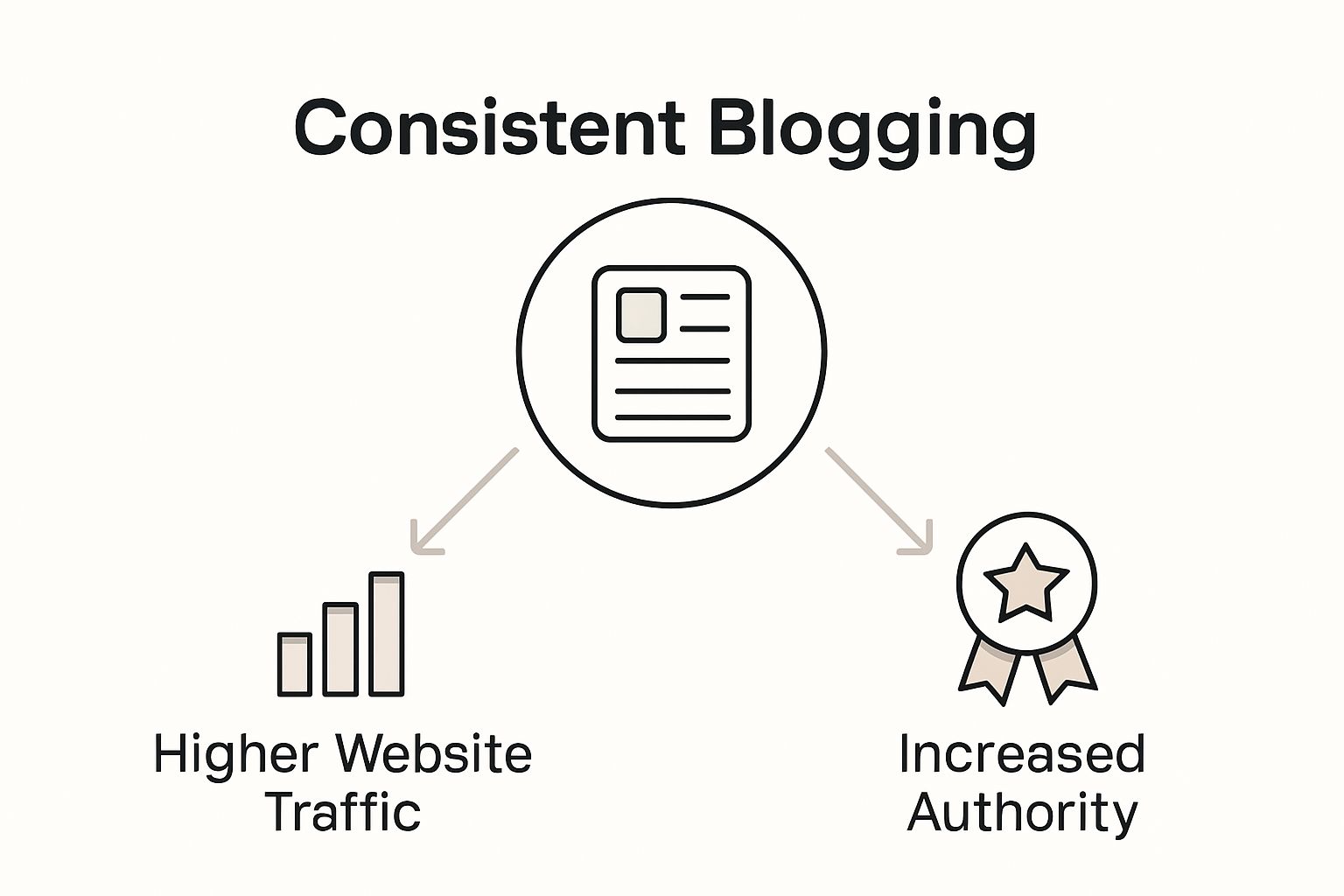 Evergreen content addressing timeless topics like first-time homebuyer guidance, neighborhood insights, or investment strategies continues generating organic traffic months and even years after initial publication.
This approach transforms blogs from ephemeral marketing materials into enduring resources that consistently showcase professional expertise.
Strategic Long-Term Positioning
Consistent blogging offers multiple strategic advantages for real estate professionals:
- Building a comprehensive digital knowledge base
- Establishing credibility as a local market expert
- Creating searchable content that attracts targeted leads
- Developing a repository of shareable professional insights
Explore strategies for professional branding to understand how consistent content creation elevates your digital presence.
By treating blogging as a long-term commitment rather than a sporadic marketing tactic, real estate agents can systematically build an authoritative online platform that attracts and retains potential client interest.
Ready to See Your Real Estate Brand Rise Above the Competition?
Feeling frustrated because your blog posts are not attracting serious home buyers or sellers? You invest time creating content but struggle to stand out in suburb-level searches.
As this article explains, consistent, SEO-focused blogging builds website authority, fuels Google rankings, and keeps your audience coming back for up-to-date real estate insights.
But crafting this kind of content takes expertise, strategy, and a deep understanding of what local clients are searching for.
At Content Charlie, we transform your real estate marketing with copywriting that gets you found by your ideal clients. Discover how our proven content marketing strategies and focus on local SEO turn your blog into a powerful lead magnet. Stop letting your competitors win those clicks. Reach out now to start building trust, capturing suburb searches, and growing your authority in every neighborhood you serve. Visit Content Charlie today and make your next move the one that dominates your market.
Frequently Asked Questions
How does blogging improve SEO for real estate websites?
Blogging improves SEO for real estate websites by generating fresh, relevant content that search engines prioritize. To enhance your SEO, publish at least one high-quality blog post each week that addresses local market trends or client questions.
What types of content should real estate blogs include to boost SEO?
Real estate blogs should include in-depth neighborhood guides, market analyses, and expert insights to engage potential clients. Aim to create content that directly addresses common client concerns, ensuring each piece has targeted keywords relevant to your audience.
How often should I publish blog posts to see SEO results?
To see noticeable improvements in SEO, aim to publish blog posts consistently, ideally once a week or every two weeks. Regular updates signal to search engines that your site is active, which can lead to higher rankings.
What are long-tail keywords, and why are they important for real estate blogging?
Long-tail keywords are specific phrases that potential clients use when searching online, like “investment properties near beaches.” Integrate these into your blog content to attract highly targeted traffic and meet the specific needs of your audience.
How can I measure the impact of my blogging on SEO performance?
You can measure the impact of blogging on SEO performance through metrics like organic traffic, keyword rankings, and engagement rates. Track these metrics monthly to evaluate the effectiveness of your blog content and adjust your strategy accordingly.
What actions can I take to ensure my blog content is valuable to clients?
To ensure your blog content is valuable, focus on addressing client questions and providing solutions based on local market insights. Engage with your audience by inviting comments and responding promptly to create a sense of community.
Recommended
- real estate marketing Archives – Content Charlie
- real estate SEO Archives – Content Charlie
- social media tips for real estate Archives – Content Charlie
- real estate social media strategy Archives – Content Charlie
- SEO for Real Estate Agencies: Simple Strategies to Grow Your Business
- Understanding SEO Best Practices for Your Business – My Blog

Understanding Real Estate SEO Metrics Explained
Real estate agents used to rely mostly on personal networks and open houses to woo buyers. Now everything happens online and a staggering 97 percent of home buyers start their search on the internet. Most people think it all comes down to having a flashy website or posting listings every day. But it turns out the real secret is hiding in your SEO metrics and these numbers can reveal exactly how to win the digital battle for new clients.
Table of Contents
- What Are Real Estate SEO Metrics?
- Why Real Estate SEO Metrics Matter For Agents
- Key Components Of Real Estate SEO Metrics
- How Real Estate SEO Metrics Inform Online Strategies
Quick Summary
| Takeaway | Explanation |
|---|---|
| Real estate SEO metrics enhance visibility | Measuring these metrics helps agents improve their online presence and attract more potential clients. |
| Track organic search rankings for success | Keeping an eye on search rankings for keywords is essential to ensure effective property listing visibility. |
| Focus on high-performing content | Identify which content attracts the most clients to optimize future marketing strategies. |
| Analyze geographical search behavior | Understanding where clients search helps tailor marketing efforts to specific locations effectively. |
| Allocate resources to top channels | Direct marketing budgets toward effective strategies based on performance data to maximize return on investment. |
What Are Real Estate SEO Metrics?
Real estate SEO metrics are quantitative measurements that help agents and marketers understand how their online content performs in search engine rankings and digital visibility. These specialized metrics go beyond traditional website analytics by providing targeted insights specific to real estate digital marketing strategies.
Understanding Core SEO Performance Indicators
At their fundamental level, real estate SEO metrics track how effectively your digital content attracts potential property buyers and sellers through search engines. Explore our guide on local SEO for real estate to understand the broader context of these performance indicators.
Key performance indicators in real estate SEO typically include:
- Organic Search Rankings: Your website’s position for specific property-related keywords
- Website Traffic Volume: Number of visitors arriving through search engines
- Click Through Rate (CTR): Percentage of searchers who click on your website link
- Bounce Rate: Percentage of visitors who leave your site quickly after arriving
Why Real Estate SEO Metrics Matter
Measuring these metrics provides critical intelligence about your digital marketing strategy. Moz’s SEO research demonstrates that understanding these metrics helps real estate professionals optimize their online presence and attract more potential clients.
By tracking these metrics, real estate agents can:
- Identify which content attracts the most potential clients
- Understand geographical search behavior
- Optimize website content for better search engine performance
- Make data driven decisions about digital marketing investments
Successful real estate professionals recognize that SEO metrics are not just numbers but strategic tools that illuminate the path to digital marketing excellence. They transform raw data into actionable insights that can significantly improve online visibility and client acquisition strategies.
Why Real Estate SEO Metrics Matter for Agents
Real estate SEO metrics transform raw data into strategic insights, enabling agents to navigate the complex digital landscape of property marketing with precision and effectiveness. Learn about our SEO strategies for real estate agents to understand how these metrics drive business growth.
Digital Visibility and Competitive Advantage
In a market where online presence determines client acquisition, SEO metrics provide agents with critical competitive intelligence. National Association of Realtors research reveals that over 97% of home buyers now use online resources during their property search, making digital visibility crucial.
Key competitive advantages of tracking SEO metrics include:
- Targeted Marketing: Understanding which keywords attract potential clients
- Performance Tracking: Measuring the effectiveness of digital marketing strategies
- Client Acquisition Optimization: Identifying most successful content and search channels
- Resource Allocation: Directing marketing investments toward high-performing strategies
Financial Impact and Business Growth
SEO metrics are not just technical measurements but direct indicators of potential revenue. By analyzing these metrics, real estate agents can:
- Reduce marketing expenditure by focusing on proven effective channels
- Increase conversion rates through targeted content strategy
- Build a robust online reputation that attracts high-quality leads
- Understand local market search behaviors and preferences
Successful real estate professionals recognize that SEO metrics provide more than analytics. They offer a roadmap for digital marketing success, transforming complex data into actionable strategies that drive business growth and client engagement.

Key Components of Real Estate SEO Metrics
Real estate SEO metrics encompass a complex ecosystem of performance indicators that provide comprehensive insights into digital marketing effectiveness. Learn more about our real estate SEO strategies to understand how these components work together.
Fundamental Performance Indicators
Organic search metrics form the foundation of real estate digital marketing analysis. Ahrefs SEO research highlights that these indicators reveal critical information about website visibility and user engagement.
Key fundamental performance indicators include:
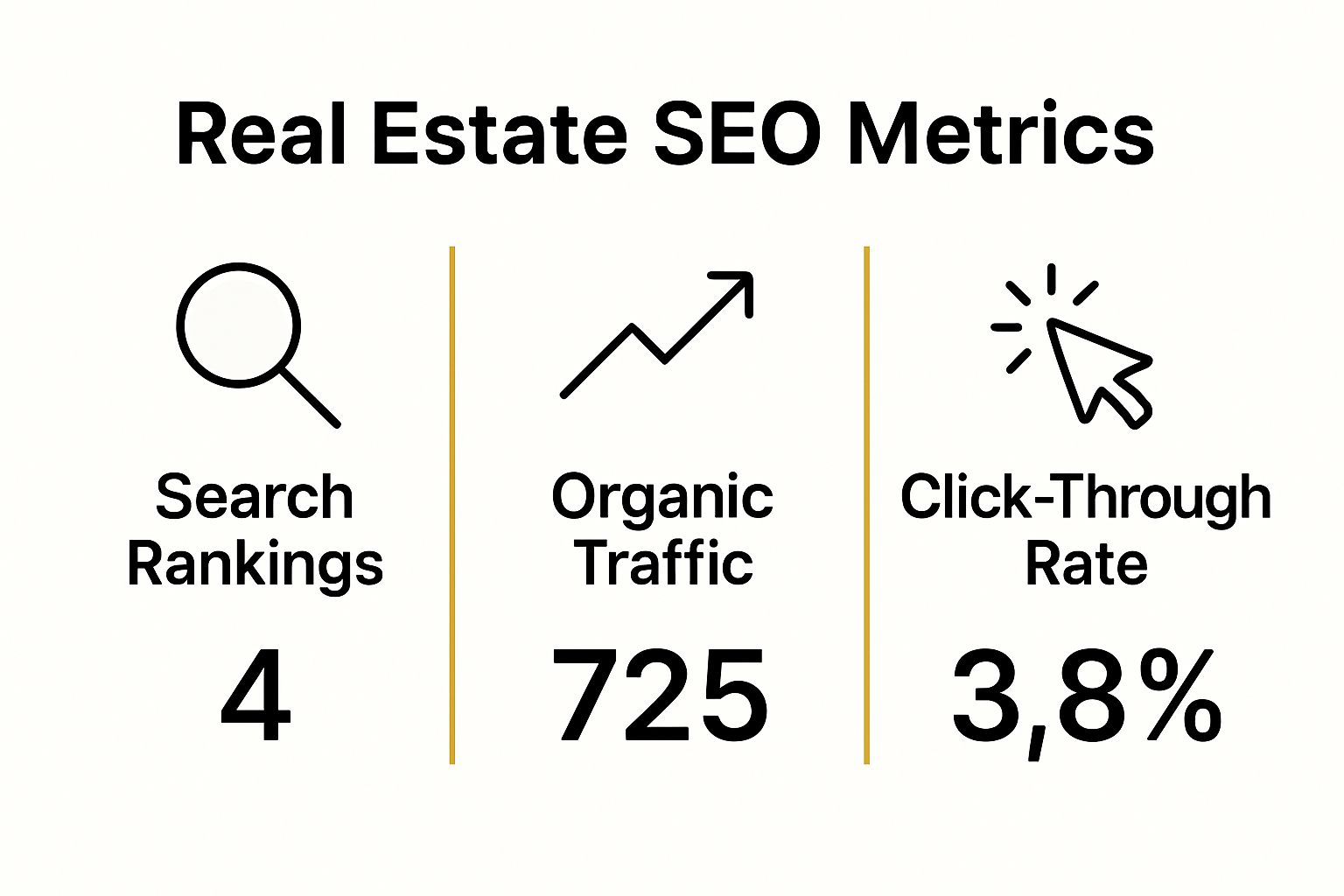
- Search Rankings: Position of property listings and content in search results
- Organic Traffic: Number of visitors arriving through search engines
- Click Through Rate (CTR): Percentage of searchers clicking on your website links
- Bounce Rate: Proportion of visitors leaving your site quickly
Advanced Analytical Components
Beyond basic metrics, sophisticated real estate SEO analysis requires deeper examination of user behavior and content performance. Advanced metrics help agents understand not just how many people visit their site, but how effectively those visits translate into potential client interactions.
Critical advanced metrics encompass:
- Conversion Rate: Percentage of website visitors who take desired actions
- Time on Site: Average duration visitors spend exploring property content
- Geographical Search Data: Understanding location based search patterns
- Mobile Performance: Website effectiveness across different device types
Successful real estate professionals recognize that these metrics are interconnected signals that provide a holistic view of digital marketing performance. By comprehensively analyzing these components, agents can develop targeted strategies that improve online visibility, attract qualified leads, and ultimately drive business growth.
To clarify the fundamental and advanced metrics used in real estate SEO, the following table summarizes each key component and its purpose.
| SEO Metric | Description |
|---|---|
| Organic Search Rankings | Position your website holds for property-related keywords |
| Website Traffic Volume | Number of visitors arriving via search engines |
| Click Through Rate (CTR) | Percentage of searchers who click on your website link |
| Bounce Rate | Percentage of visitors who leave quickly after arriving |
| Conversion Rate | Percentage of visitors taking a desired action |
| Time on Site | Average duration visitors spend exploring property content |
| Geographical Search Data | Information about where website traffic originates |
| Mobile Performance | Effectiveness of the website across different device types |
How Real Estate SEO Metrics Inform Online Strategies
Real estate SEO metrics transform raw data into strategic roadmaps for digital marketing success, enabling agents to make precision driven decisions about their online presence. Explore our guide to enhancing real estate online strategies to understand how metrics drive strategic planning.
Strategic Content Development
Content optimization emerges as a critical outcome of comprehensive SEO metric analysis. Google Search Central emphasizes that understanding user behavior through metrics allows agents to create more targeted, relevant content that resonates with potential clients.
Key strategic content development insights include:
- Identifying most engaging property topics
- Understanding user search intent
- Determining optimal content length and format
- Recognizing geographical search preferences
Targeted Marketing Resource Allocation
SEO metrics provide a sophisticated framework for intelligent marketing resource allocation. By analyzing performance data, real estate professionals can:
- Prioritize high performing marketing channels
- Redirect budget from underperforming strategies
- Develop hyper targeted audience segments
- Create personalized content experiences
Successful digital marketing in real estate requires continuous adaptation. SEO metrics offer real time feedback, allowing agents to pivot strategies quickly, ensuring their online presence remains dynamic, responsive, and aligned with evolving market demands and client expectations.
Ready to Turn Real Estate SEO Metrics Into Measurable Results?
Are you feeling overwhelmed by raw numbers and complex metrics, but hungry for real progress in your property marketing? The article explained how real estate SEO metrics reveal where your website attracts buyers and sellers, which content truly engages your local market, and how you can make smarter marketing decisions that move the needle.
At Content Charlie, we transform insights into action. Let us help you capture suburb-level searches and convert traffic into ready-to-act clients. Discover how our SEO-driven copywriting and tailored local strategies boost your digital visibility and generate leads that count.
Stop guessing and start growing. Visit Content Charlie now and see how better metrics lead to real results for your real estate business.
Frequently Asked Questions
What are the key real estate SEO metrics I should track?
To optimize your online presence, focus on key real estate SEO metrics such as organic search rankings, website traffic volume, click-through rate (CTR), and bounce rate. Start by monitoring these metrics regularly to gain insights into your digital marketing performance and identify areas for improvement.
How can I improve my website’s organic search rankings?
To enhance your organic search rankings, optimize your website content by incorporating relevant property keywords, improving page load speed, and ensuring mobile responsiveness. Regularly update your content and track changes over a 30–60 day period to gauge the impact of your efforts.
What role do SEO metrics play in client acquisition for real estate agents?
SEO metrics are essential for client acquisition as they help identify which content attracts potential clients and the effectiveness of your marketing strategies. Analyze data on visitor behavior and adjust your content to improve engagement and conversion rates.
How can I leverage geographical search data to improve my real estate SEO strategy?
To use geographical search data effectively, analyze where your website traffic comes from and tailor your content to local market interests. Implement targeted local keyword strategies and update your content based on findings to enhance local search visibility.
What actions can I take if my bounce rate is high?
If your bounce rate is high, focus on improving user experience by optimizing website loading times and providing engaging, relevant content that meets visitor expectations. Consider conducting an analysis of your top landing pages and making adjustments to encourage longer site engagement and lower the bounce rate.
Recommended
- real estate SEO Archives – Content Charlie
- SEO for realtors Archives – Content Charlie
- local SEO for real estate Archives – Content Charlie
- real estate agent visibility Archives – Content Charlie

Understanding Why Local SEO Matters for Real Estate
Local SEO is changing the way home buyers and sellers connect with real estate agents in their own neighborhoods. And get this. 46% of all Google searches now have local intent, which means nearly half of online house-hunters are searching for answers right where they live. Most agents still focus only on broad search terms, but the agents who win clients today are the ones who master hyperlocal visibility and become the top choice just down the street.
Table of Contents
- Defining Local Seo And Its Importance In Real Estate
- The Impact Of Local Search On Consumer Behavior
- How Local Seo Enhances Online Visibility For Agents
- Key Components Of Effective Local Seo Strategies
- Real-World Examples Of Local Seo Success In Real Estate
Quick Summary
| Takeaway | Explanation |
|---|---|
| Optimize Your Google Business Profile | Ensure your profile has accurate information to improve local visibility. |
| Focus on Hyperlocal Content Creation | Develop content tailored to specific neighborhoods to engage local clients effectively. |
| Leverage Online Reviews for Credibility | Encourage clients to leave positive reviews to build trust in your services. |
| Use Location-Specific Keywords | Incorporate local keywords to enhance search rankings in targeted areas. |
| Maintain Consistency Across Platforms | Keep business information uniform on all online platforms to boost local SEO success. |
Defining Local SEO and Its Importance in Real Estate
Local SEO represents a strategic digital marketing approach specifically designed to help businesses increase their visibility in geographically targeted search results. For real estate professionals, this means optimizing online presence to attract potential clients within specific neighborhoods, suburbs, or regional areas.
What Exactly is Local SEO?
Local SEO goes beyond traditional search engine optimization by focusing on location-specific search signals. In real estate, this translates to helping potential buyers and sellers find your services when searching for property-related information in their immediate geographic area. Local SEO for real estate involves multiple tactics designed to improve your visibility in local search results.
Key components of local SEO for real estate include:
- Optimizing Google Business Profile with accurate business information
- Creating location-specific content targeting particular suburbs or neighborhoods
- Building local citations and consistent business information across online platforms
- Generating location-based reviews from satisfied clients
Why Local SEO Matters for Real Estate Professionals
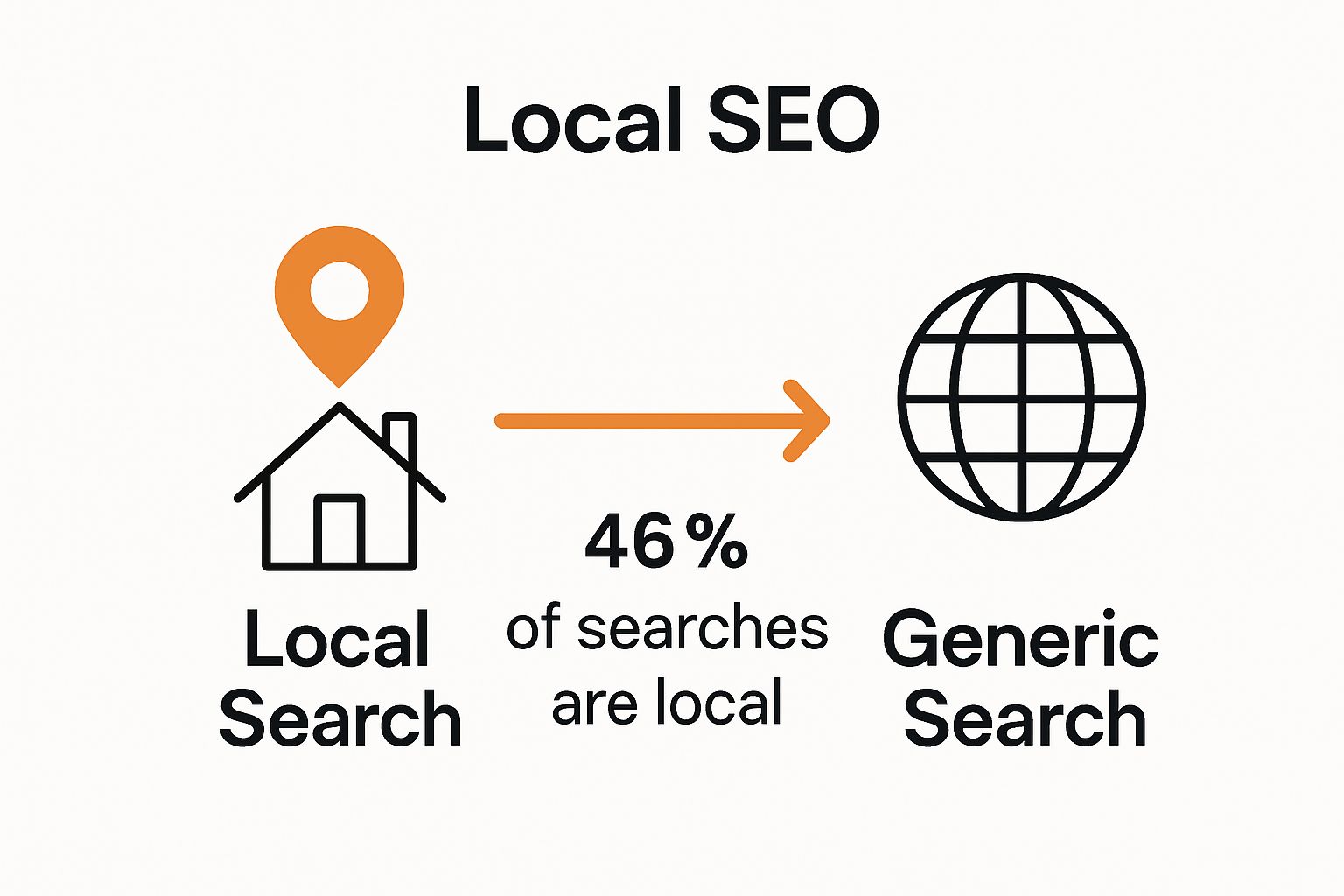
According to Google’s Local Search Ranking Factors Study, 46% of all Google searches have local intent, making local SEO critical for real estate agents seeking to capture targeted leads. By implementing strategic local SEO practices, agents can significantly improve their chances of appearing in “near me” searches and map pack results.
For real estate professionals, local SEO is not just about ranking higher in search results. It’s about establishing credibility, demonstrating local expertise, and connecting with potential clients who are actively searching for property services in specific areas. By focusing on hyperlocal optimization strategies, agents can differentiate themselves from competitors and become the go-to real estate expert in their target market.
The Impact of Local Search on Consumer Behavior
Local search has fundamentally transformed how consumers discover, evaluate, and interact with businesses, particularly in service-oriented industries like real estate. The digital landscape has shifted consumer expectations, making immediate, geographically relevant information a critical factor in decision-making processes.
Understanding Consumer Search Patterns
Modern consumers have become increasingly sophisticated in their search behaviors, preferring hyper-targeted results that provide precise, localized information. In real estate, this means potential buyers and sellers are not just searching for generic property listings, but seeking agents, market insights, and property details specific to their immediate neighborhood or suburb.
Key characteristics of local search consumer behavior include:
- Preference for immediate, location-specific results
- High reliance on mobile devices for quick information retrieval
- Strong emphasis on user-generated content and local reviews
- Expectation of personalized, contextually relevant search experiences
Trust and Credibility in Local Searches
According to research from the National Association of Realtors, 97% of homebuyers use the internet during their property search, demonstrating the profound impact of digital platforms on real estate consumer behavior. Local search results play a crucial role in establishing trust and credibility.
Consumers view businesses with strong local search presence as more legitimate and trustworthy. For real estate professionals, this means that appearing in local search results is not just about visibility, but about creating a perception of local expertise and reliability. By consistently delivering accurate, location-specific information, agents can build digital credibility that translates into real-world client relationships.
The evolution of local search has fundamentally reshaped how consumers make purchasing decisions, turning geographical relevance into a key differentiator in competitive markets like real estate.
This table highlights research-backed statistics and their implications for local SEO and real estate agents, helping illustrate the importance and impact of local search strategies.
| Statistic | Source | Significance for Real Estate Agents |
|---|---|---|
| 46% of Google searches have local intent | BrightLocal, Moz | Indicates nearly half of searchers want local information. |
| 97% of homebuyers use the internet to search | National Association of Realtors | Confirms the digital-first behavior of today’s clients. |
| 44% of local pack results get click-throughs | Moz | Highlights the value of optimizing for Google’s local map pack. |
| 87% of consumers read reviews for local business | BrightLocal | Underscores the role of reviews in consumer trust decisions. |
How Local SEO Enhances Online Visibility for Agents
Local SEO serves as a powerful digital strategy that transforms how real estate professionals attract and engage potential clients in an increasingly competitive online marketplace. By strategically optimizing digital presence, agents can significantly amplify their visibility and reach within specific geographic territories.
Strategic Digital Positioning
Effective local SEO enables real estate agents to position themselves precisely where potential clients are searching. This means appearing prominently in local search results, map listings, and location-based queries that directly target individuals seeking property services in specific suburbs or neighborhoods.
Key strategic advantages of local SEO for real estate agents include:
- Targeting hyperlocal search queries with precision
- Increasing organic visibility in geographic-specific searches
- Building credibility through location-based content and reviews
- Competing effectively against larger real estate agencies
Maximizing Digital Real Estate
Real estate agent visibility depends on understanding and leveraging digital platforms strategically. According to Moz’s Local Search Ranking Factors, Google’s local pack results receive approximately 44% of all click-through traffic, making local SEO optimization crucial for capturing potential client attention.
Successful local SEO implementation goes beyond simple keyword optimization. It requires a comprehensive approach that includes consistent business information across online platforms, generating location-specific content, managing online reviews, and creating a robust Google Business Profile that accurately represents an agent’s local expertise and service areas.
By mastering local SEO techniques, real estate professionals can transform their digital presence from passive online listings to dynamic, engaging platforms that actively attract and convert potential clients in their target markets.

Key Components of Effective Local SEO Strategies
Local SEO demands a multifaceted approach that goes beyond simple keyword optimization. Real estate professionals must develop a comprehensive strategy that integrates multiple digital marketing elements to establish strong local online presence and credibility.
Foundational Local SEO Elements
Successful local SEO strategies for real estate agents require precise, strategic implementation across multiple digital platforms. This means creating a cohesive online ecosystem that signals local expertise and geographic relevance to both search engines and potential clients.
Critical foundational elements include:
- Consistent business name, address, and phone number across all online platforms
- Comprehensive and accurate Google Business Profile optimization
- Location-specific website content highlighting neighborhood expertise
- Strategic use of local keywords reflecting specific suburban markets
Technical and Content Optimization
Local real estate marketing requires careful attention to technical details and content quality. According to Ahrefs’ Local SEO Guide, successful strategies integrate precise technical optimization with high-quality, location-specific content that demonstrates deep understanding of local property markets.
Real estate professionals must focus on creating rich, informative content that addresses specific local market conditions, neighborhood insights, and hyperlocal property trends. This approach not only improves search engine rankings but also establishes the agent as a trusted local expert who understands the nuanced dynamics of specific geographic areas.
By implementing a holistic local SEO strategy, real estate agents can transform their digital presence from generic online listings to powerful, targeted marketing platforms that directly connect with potential clients in their specific service areas.
To clarify the foundational elements and technical strategies essential for effective local SEO in real estate, the table below breaks down the core components and their descriptions.
| Local SEO Component | Description |
|---|---|
| Consistent Business Information | Ensure name, address, and phone number are the same across all online platforms. |
| Google Business Profile Optimization | Keep your Google Business Profile accurate and complete to enhance local search visibility. |
| Location-Specific Website Content | Develop content focused on specific neighborhoods or suburbs to demonstrate local expertise. |
| Strategic Use of Local Keywords | Incorporate geographic keywords relevant to your service area for better targeted search results. |
| High-Quality Local Content | Publish in-depth, informative articles reflecting local market conditions and trends. |
| Online Review Management | Actively generate and manage reviews from local clients to build trust and authority. |
Real-World Examples of Local SEO Success in Real Estate
Local SEO represents more than a theoretical concept for real estate professionals. It is a practical strategy that can dramatically transform digital marketing effectiveness, enabling agents to capture targeted leads and establish neighborhood expertise through strategic online positioning.
Hyperlocal Content Strategies
Successful local SEO implementation requires agents to develop content that speaks directly to specific community needs and interests. This means creating detailed, location-specific resources that demonstrate deep understanding of particular suburbs, market trends, and neighborhood dynamics.
Key characteristics of successful hyperlocal content include:
- Detailed neighborhood guides with insider perspectives
- Market analysis specific to individual suburbs or districts
- Local market trend reports with current property insights
- Localized case studies highlighting recent property transactions
Measurable Impact and Conversion Potential
Location-based hashtags can play a significant role in amplifying local visibility. According to BrightLocal’s Local Consumer Review Survey, 87% of consumers read online reviews for local businesses in 2022, underscoring the critical importance of generating localized, trustworthy digital content.
Real estate agents who successfully implement local SEO strategies can experience remarkable outcomes. By developing targeted content that addresses specific community needs, agents transform their digital presence from generic listings to powerful, hyper-relevant marketing platforms that directly connect with potential clients in their precise service areas.
Through strategic local SEO approaches, real estate professionals can effectively differentiate themselves in competitive markets, demonstrating not just property expertise, but genuine community understanding and connection.
Take Control of Local Search and Become the Go-To Real Estate Expert
Are you struggling to stand out in your local market? The article made it clear: real estate clients are looking for agents who not only show up in suburb-level searches but also demonstrate true neighborhood expertise. With buyers relying on hyperlocal searches and online reviews, missing out on local SEO for real estate means leaving valuable opportunities on the table. It is time to stop feeling invisible or overwhelmed by the competition. Let the pain of low visibility propel you toward a better solution.
Let Content Charlie transform your online presence. Gain immediate traction with suburb-specific content, property descriptions, and Google Business Profile optimization that puts you in front of motivated buyers and sellers. Visit Content Charlie today and discover how our copywriting and proven real estate agent visibility strategies can help you dominate your market. Book your free discovery call now and make sure you are the agent local clients remember.
Frequently Asked Questions
What is local SEO and why is it important for real estate?
Local SEO is a digital marketing strategy that helps real estate professionals optimize their online presence for geographically targeted searches. It is important because it increases visibility among potential clients actively searching for property services in their area. Focus on optimizing your Google Business Profile and creating location-specific content to enhance your local search presence.
How can I improve my local search rankings as a real estate agent?
To improve your local search rankings, ensure that your business name, address, and phone number are consistent across all online platforms. Additionally, optimize your website with local keywords and generate positive reviews from satisfied clients. Take these actions to see improvements in local search visibility within 60 days.
What role does online reviews play in local SEO for real estate?
Online reviews significantly impact local SEO as they enhance credibility and trust among potential clients. Actively encourage satisfied clients to leave reviews on your Google Business Profile and other platforms to boost your visibility and attract more leads. Aim to gather at least five to ten new reviews each month.
Why should I create location-specific content for my real estate website?
Creating location-specific content helps demonstrate your expertise in specific neighborhoods or suburbs, making your services more relevant to potential clients. This targeted approach improves your local search rankings and attracts clients looking for detailed information about their desired area. Develop at least one piece of location-focused content each month to maintain relevance.
How can local SEO help me stand out from larger real estate agencies?
Local SEO can help you differentiate yourself by highlighting your specialized knowledge of local markets and community needs. By focusing on hyperlocal optimization strategies and personalized content, you can build stronger connections with potential clients. Implement tailored marketing strategies to position yourself as the go-to local expert and increase client engagement in your target market.
What should I monitor to measure the success of my local SEO efforts?
To measure the success of your local SEO efforts, monitor key metrics such as website traffic from local searches, the number of leads generated, and your rankings in local search results. Tools like Google Analytics can help you track these metrics over time. Review your progress every month to adjust your strategies effectively.
Recommended
- local SEO for real estate Archives – Content Charlie
- Local SEO Archives – Content Charlie
- real estate SEO Archives – Content Charlie
- SEO for realtors Archives – Content Charlie