
- You are here:
- Home »
- content marketing
Tag Archives for " content marketing "

Understanding Why Blogging Boosts SEO for Real Estate
SEO can feel overwhelming for real estate agents who want their websites to attract real clients. Most believe you have to master every algorithm and tech trick out there. We need to understand why blogging boosts seo.
Yet the surprising truth is that consistent blogging alone can make your website up to 4 times more effective at reaching qualified leads. That flips the script on what really drives online success.
Table of Contents
- The Basics Of Seo And Blogging
- How Blogging Improves Website Authority
- The Role Of Keywords And Content Strategy
- Engagement And Audience Connection Through Blogging
- Long-Term Benefits Of Consistent Blogging
Quick Summary
| Takeaway | Explanation |
|---|---|
| Create relevant content consistently | Regularly publishing blogs increases website visibility and attracts qualified leads. |
| Focus on strategic keyword integration | Use long-tail keywords tailored to specific client needs to enhance searchability. |
| Build website authority through quality | High-quality, informative content establishes trust and credibility with search engines and clients. |
| Engage with your audience genuinely | Personal insights and addressing client concerns help build a loyal readership and community trust. |
| Invest in long-term blogging | A consistent blogging strategy creates lasting digital resources that continue to attract traffic over time. |
The Basics of SEO and Blogging
Search Engine Optimization (SEO) represents a strategic approach that helps websites become more visible and attractive to search engines like Google.
For real estate professionals, blogging serves as a powerful mechanism to enhance online presence and attract potential clients through targeted content.
Google’s search documentation emphasizes that quality content helps search engines discover, crawl, and understand website information effectively.
Understanding SEO Fundamentals
At its core, SEO involves optimizing digital content to rank higher in search engine results pages (SERPs). For real estate agents, this means creating content that answers potential clients’ questions about property markets, neighborhoods, buying strategies, and local real estate trends.
The goal is not just attracting website visitors but drawing qualified leads who are genuinely interested in real estate services.
How Blogging Supports SEO Strategy
Blogs provide multiple advantages for SEO performance. They allow real estate professionals to:
- Generate fresh, relevant content consistently
- Target specific keywords related to local property markets
- Demonstrate professional expertise and market knowledge
- Create opportunities for internal and external linking
By publishing regular, high-quality content that addresses client interests and local real estate dynamics, agents can signal to search engines that their website is an authoritative and valuable resource. Learn more about content marketing strategies that can elevate your real estate business’s online visibility.
Successful SEO through blogging requires understanding audience needs, researching relevant keywords, and delivering informative content that provides genuine value to potential property buyers and sellers.
How Blogging Improves Website Authority
Website authority represents a critical metric determining how search engines perceive the credibility and relevance of a digital platform.
For real estate professionals, building this authority through strategic blogging can significantly enhance online visibility and attract potential clients. Moz’s Domain Authority research highlights that websites with consistent, high-quality content tend to rank higher in search engine results.
The Role of Content Quality and Consistency
Blogs serve as a powerful mechanism for establishing expertise and trustworthiness in the real estate market. By producing informative, original content that addresses specific client questions and concerns, agents can demonstrate deep understanding of local property landscapes.
Consistent publishing signals to search engines that a website is active, relevant, and committed to providing valuable insights.
Building Credibility Through Strategic Content
Website authority is not just about quantity but the strategic depth of content. Real estate professionals can enhance their digital credibility by:
- Creating in-depth neighborhood guides
- Analyzing local market trends
- Sharing expert insights on property investment
- Addressing common client questions and challenges
These approaches transform a blog from a simple webpage into a comprehensive resource that search engines recognize as authoritative.
Explore strategies for boosting Google rankings to further understand how strategic content can elevate your online presence.
By consistently delivering valuable, targeted content, real estate agents can systematically build website authority that attracts both search engine algorithms and potential clients seeking genuine expertise.
To clarify how strategic blogging impacts website authority in real estate, the table below breaks down the key characteristics of quality content versus consistency and explains how each contributes to higher search engine rankings.
| Characteristic | Impact on SEO | How It Builds Authority |
|---|---|---|
| Content Quality | Elevates site in search rankings | Signals expertise and trustworthiness |
| Content Consistency | Encourages regular site crawling by search engines | Shows site is active and relevant |
| In-depth Market Analysis | Targets client needs and search intent | Demonstrates knowledge of local trends |
| Addressing Client Questions | Attracts targeted traffic | Builds reputation as a resource |
| Originality | Reduces competition with duplicate content | Distinguishes the agent |
| s voice |

The Role of Keywords and Content Strategy
Keywords represent the critical bridge connecting potential real estate clients with relevant online content.
Developing a sophisticated content strategy that integrates targeted keywords naturally can transform a blog from a simple collection of posts into a powerful lead generation tool.
Moz’s SEO guide emphasizes that strategic keyword selection enables websites to appear precisely where potential clients are searching.
Understanding Keyword Relevance in Real Estate
For real estate professionals, keyword strategy goes beyond generic terms like “houses for sale.” Successful content marketing requires understanding the nuanced search behaviors of local property seekers.
This means identifying long-tail keywords that reflect specific client intentions, such as “three-bedroom homes in Brisbane waterfront” or “investment properties near Gold Coast beaches.”
Crafting a Strategic Content Approach
Effective keyword integration demands a comprehensive approach that considers multiple factors:
- Identifying local search patterns
- Matching keywords with specific client needs
- Creating content that genuinely answers user questions
- Balancing keyword density with natural, engaging writing
Real estate agents must think beyond simple keyword placement and focus on developing content that provides genuine value and directly addresses potential client queries. Learn more about content marketing strategies that can help refine your approach to digital visibility.
By understanding and implementing a sophisticated keyword strategy, real estate professionals can create content that not only ranks well in search results but also meaningfully connects with potential buyers and sellers seeking expert guidance.
Engagement and Audience Connection Through Blogging
Blogging transcends traditional marketing by creating meaningful connections between real estate professionals and potential clients. Authentic, valuable content transforms a website from a mere digital brochure into an interactive platform for community engagement.
Sprout Social’s research on social media engagement highlights how consistent, relevant content encourages deeper audience interactions.
Building Trust Through Personalized Content
Successful real estate blogs go beyond property listings by sharing insights that demonstrate genuine understanding of client needs. This approach involves crafting narratives that speak directly to potential buyers’ and sellers’ challenges, fears, and aspirations.
By addressing specific local market nuances, real estate agents can position themselves as trusted neighborhood experts rather than simply transactional service providers.
Strategies for Meaningful Audience Interaction
Engagement requires a multifaceted approach that encourages reader participation and builds community trust:
- Creating content that answers specific client questions
- Sharing personal insights about local neighborhood developments
- Providing actionable advice for property investors
- Responding promptly to comments and reader inquiries
Learn more about building writing connections to enhance your digital communication strategy. Real estate professionals who consistently deliver value through their blogs can transform casual website visitors into loyal followers and potential long-term clients, ultimately driving both SEO performance and business growth.
This table summarizes various approaches real estate professionals can use to foster engagement and build audience connection through blogging, highlighting the focus of each strategy and the main benefit it delivers.
| Engagement Strategy | Focus | Main Benefit |
|---|---|---|
| Answering Client Questions | Addressing specific local concerns | Builds trust and authority |
| Sharing Neighborhood Insights | Providing personal perspectives | Demonstrates local expertise |
| Offering Actionable Advice | Giving investment or buying tips | Positions agent as a problem-solver |
| Responding to Comments/Inquiries | Interactive communication | Encourages repeat visits and loyalty |
| Sharing Market Developments | Real-time updates and market trends | Keeps content fresh and relevant |
Long-Term Benefits of Consistent Blogging
Consistent blogging represents a strategic investment in digital marketing that compounds value over time for real estate professionals.
Unlike traditional advertising that provides temporary visibility, blog content creates a lasting digital footprint that continually attracts potential clients.
HubSpot research demonstrates that companies prioritizing blogging experience significantly higher return on investment through sustained web traffic and lead generation.
Compounding Content Value
Each blog post functions as a permanent asset in a real estate agent’s digital portfolio.
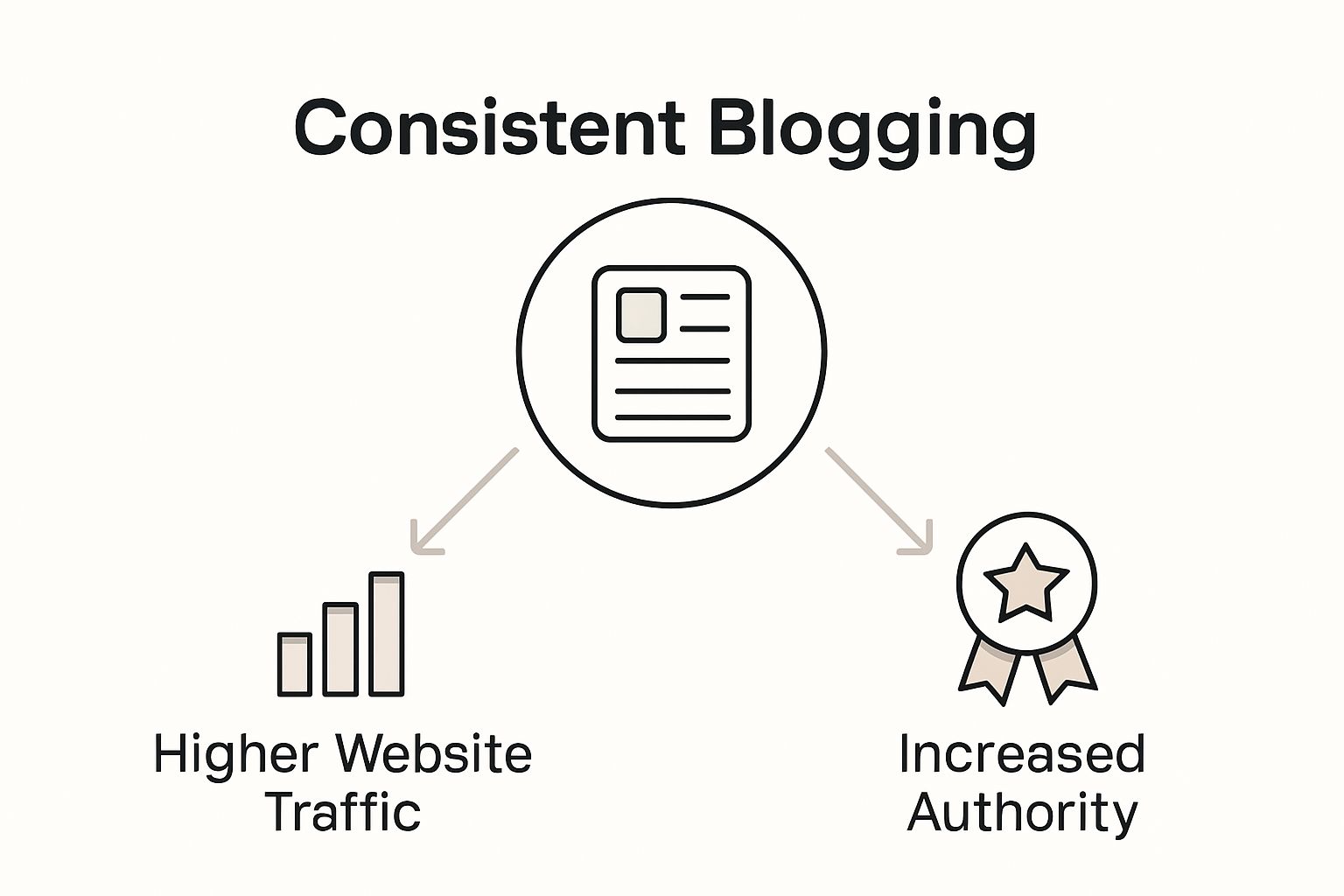 Evergreen content addressing timeless topics like first-time homebuyer guidance, neighborhood insights, or investment strategies continues generating organic traffic months and even years after initial publication.
This approach transforms blogs from ephemeral marketing materials into enduring resources that consistently showcase professional expertise.
Strategic Long-Term Positioning
Consistent blogging offers multiple strategic advantages for real estate professionals:
- Building a comprehensive digital knowledge base
- Establishing credibility as a local market expert
- Creating searchable content that attracts targeted leads
- Developing a repository of shareable professional insights
Explore strategies for professional branding to understand how consistent content creation elevates your digital presence.
By treating blogging as a long-term commitment rather than a sporadic marketing tactic, real estate agents can systematically build an authoritative online platform that attracts and retains potential client interest.
Ready to See Your Real Estate Brand Rise Above the Competition?
Feeling frustrated because your blog posts are not attracting serious home buyers or sellers? You invest time creating content but struggle to stand out in suburb-level searches.
As this article explains, consistent, SEO-focused blogging builds website authority, fuels Google rankings, and keeps your audience coming back for up-to-date real estate insights.
But crafting this kind of content takes expertise, strategy, and a deep understanding of what local clients are searching for.

At Content Charlie, we transform your real estate marketing with copywriting that gets you found by your ideal clients. Discover how our proven content marketing strategies and focus on local SEO turn your blog into a powerful lead magnet. Stop letting your competitors win those clicks. Reach out now to start building trust, capturing suburb searches, and growing your authority in every neighborhood you serve. Visit Content Charlie today and make your next move the one that dominates your market.
Frequently Asked Questions
How does blogging improve SEO for real estate websites?
Blogging improves SEO for real estate websites by generating fresh, relevant content that search engines prioritize. To enhance your SEO, publish at least one high-quality blog post each week that addresses local market trends or client questions.
What types of content should real estate blogs include to boost SEO?
Real estate blogs should include in-depth neighborhood guides, market analyses, and expert insights to engage potential clients. Aim to create content that directly addresses common client concerns, ensuring each piece has targeted keywords relevant to your audience.
How often should I publish blog posts to see SEO results?
To see noticeable improvements in SEO, aim to publish blog posts consistently, ideally once a week or every two weeks. Regular updates signal to search engines that your site is active, which can lead to higher rankings.
What are long-tail keywords, and why are they important for real estate blogging?
Long-tail keywords are specific phrases that potential clients use when searching online, like “investment properties near beaches.” Integrate these into your blog content to attract highly targeted traffic and meet the specific needs of your audience.
How can I measure the impact of my blogging on SEO performance?
You can measure the impact of blogging on SEO performance through metrics like organic traffic, keyword rankings, and engagement rates. Track these metrics monthly to evaluate the effectiveness of your blog content and adjust your strategy accordingly.
What actions can I take to ensure my blog content is valuable to clients?
To ensure your blog content is valuable, focus on addressing client questions and providing solutions based on local market insights. Engage with your audience by inviting comments and responding promptly to create a sense of community.
Recommended
- real estate marketing Archives – Content Charlie
- real estate SEO Archives – Content Charlie
- social media tips for real estate Archives – Content Charlie
- real estate social media strategy Archives – Content Charlie
- SEO for Real Estate Agencies: Simple Strategies to Grow Your Business
- Understanding SEO Best Practices for Your Business – My Blog

Understanding Why Local SEO Matters for Real Estate
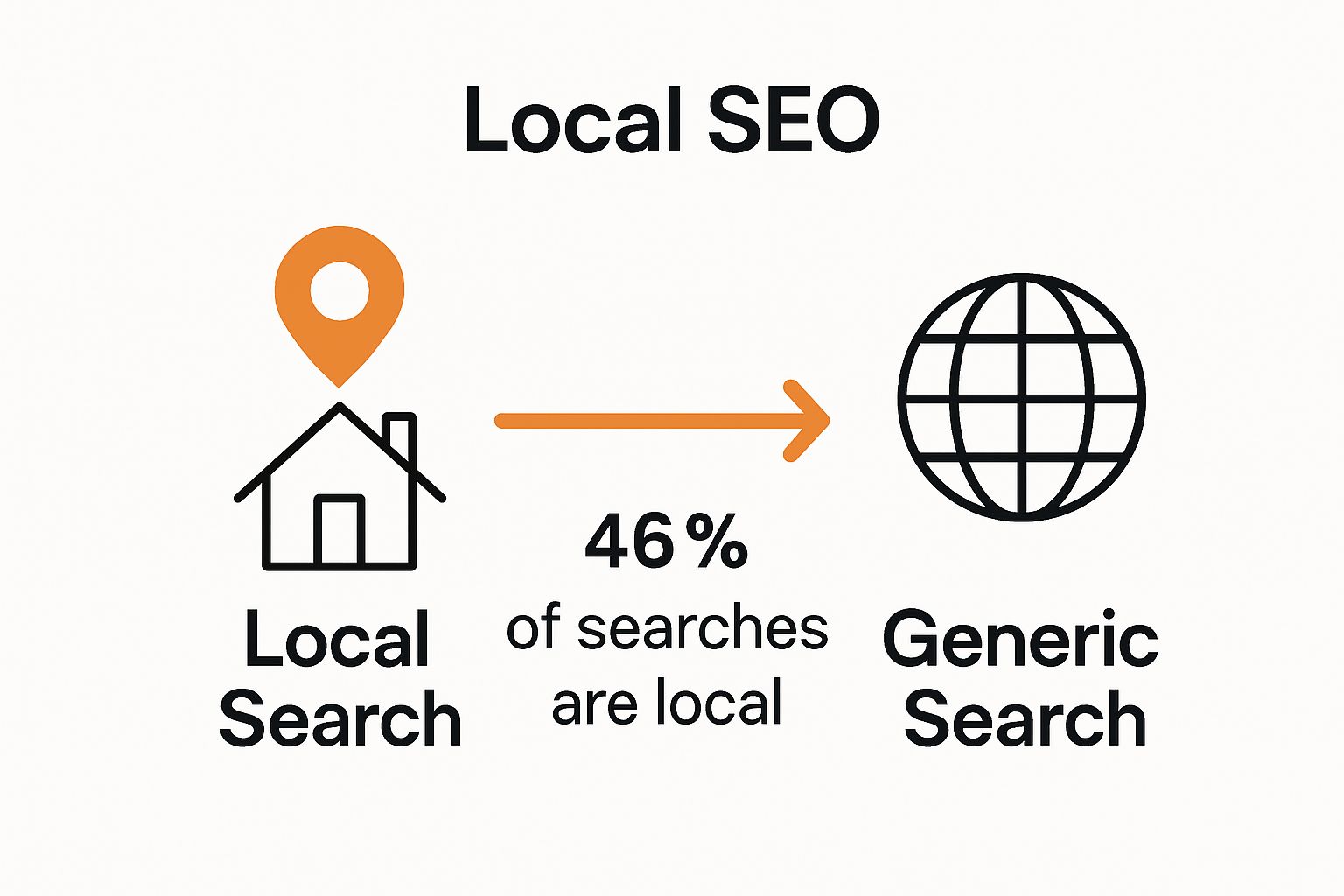
Local SEO is changing the way home buyers and sellers connect with real estate agents in their own neighborhoods. And get this. 46% of all Google searches now have local intent, which means nearly half of online house-hunters are searching for answers right where they live. Most agents still focus only on broad search terms, but the agents who win clients today are the ones who master hyperlocal visibility and become the top choice just down the street.
Table of Contents
- Defining Local Seo And Its Importance In Real Estate
- The Impact Of Local Search On Consumer Behavior
- How Local Seo Enhances Online Visibility For Agents
- Key Components Of Effective Local Seo Strategies
- Real-World Examples Of Local Seo Success In Real Estate
Quick Summary
| Takeaway | Explanation |
|---|---|
| Optimize Your Google Business Profile | Ensure your profile has accurate information to improve local visibility. |
| Focus on Hyperlocal Content Creation | Develop content tailored to specific neighborhoods to engage local clients effectively. |
| Leverage Online Reviews for Credibility | Encourage clients to leave positive reviews to build trust in your services. |
| Use Location-Specific Keywords | Incorporate local keywords to enhance search rankings in targeted areas. |
| Maintain Consistency Across Platforms | Keep business information uniform on all online platforms to boost local SEO success. |
Defining Local SEO and Its Importance in Real Estate
Local SEO represents a strategic digital marketing approach specifically designed to help businesses increase their visibility in geographically targeted search results. For real estate professionals, this means optimizing online presence to attract potential clients within specific neighborhoods, suburbs, or regional areas.
What Exactly is Local SEO?
Local SEO goes beyond traditional search engine optimization by focusing on location-specific search signals. In real estate, this translates to helping potential buyers and sellers find your services when searching for property-related information in their immediate geographic area. Local SEO for real estate involves multiple tactics designed to improve your visibility in local search results.
Key components of local SEO for real estate include:
- Optimizing Google Business Profile with accurate business information
- Creating location-specific content targeting particular suburbs or neighborhoods
- Building local citations and consistent business information across online platforms
- Generating location-based reviews from satisfied clients
Why Local SEO Matters for Real Estate Professionals
According to Google’s Local Search Ranking Factors Study, 46% of all Google searches have local intent, making local SEO critical for real estate agents seeking to capture targeted leads. By implementing strategic local SEO practices, agents can significantly improve their chances of appearing in “near me” searches and map pack results.
For real estate professionals, local SEO is not just about ranking higher in search results. It’s about establishing credibility, demonstrating local expertise, and connecting with potential clients who are actively searching for property services in specific areas. By focusing on hyperlocal optimization strategies, agents can differentiate themselves from competitors and become the go-to real estate expert in their target market.
The Impact of Local Search on Consumer Behavior
Local search has fundamentally transformed how consumers discover, evaluate, and interact with businesses, particularly in service-oriented industries like real estate. The digital landscape has shifted consumer expectations, making immediate, geographically relevant information a critical factor in decision-making processes.
Understanding Consumer Search Patterns
Modern consumers have become increasingly sophisticated in their search behaviors, preferring hyper-targeted results that provide precise, localized information. In real estate, this means potential buyers and sellers are not just searching for generic property listings, but seeking agents, market insights, and property details specific to their immediate neighborhood or suburb.
Key characteristics of local search consumer behavior include:
- Preference for immediate, location-specific results
- High reliance on mobile devices for quick information retrieval
- Strong emphasis on user-generated content and local reviews
- Expectation of personalized, contextually relevant search experiences
Trust and Credibility in Local Searches
According to research from the National Association of Realtors, 97% of homebuyers use the internet during their property search, demonstrating the profound impact of digital platforms on real estate consumer behavior. Local search results play a crucial role in establishing trust and credibility.
Consumers view businesses with strong local search presence as more legitimate and trustworthy. For real estate professionals, this means that appearing in local search results is not just about visibility, but about creating a perception of local expertise and reliability. By consistently delivering accurate, location-specific information, agents can build digital credibility that translates into real-world client relationships.
The evolution of local search has fundamentally reshaped how consumers make purchasing decisions, turning geographical relevance into a key differentiator in competitive markets like real estate.
This table highlights research-backed statistics and their implications for local SEO and real estate agents, helping illustrate the importance and impact of local search strategies.
| Statistic | Source | Significance for Real Estate Agents |
|---|---|---|
| 46% of Google searches have local intent | BrightLocal, Moz | Indicates nearly half of searchers want local information. |
| 97% of homebuyers use the internet to search | National Association of Realtors | Confirms the digital-first behavior of today’s clients. |
| 44% of local pack results get click-throughs | Moz | Highlights the value of optimizing for Google’s local map pack. |
| 87% of consumers read reviews for local business | BrightLocal | Underscores the role of reviews in consumer trust decisions. |
How Local SEO Enhances Online Visibility for Agents
Local SEO serves as a powerful digital strategy that transforms how real estate professionals attract and engage potential clients in an increasingly competitive online marketplace. By strategically optimizing digital presence, agents can significantly amplify their visibility and reach within specific geographic territories.
Strategic Digital Positioning
Effective local SEO enables real estate agents to position themselves precisely where potential clients are searching. This means appearing prominently in local search results, map listings, and location-based queries that directly target individuals seeking property services in specific suburbs or neighborhoods.
Key strategic advantages of local SEO for real estate agents include:
- Targeting hyperlocal search queries with precision
- Increasing organic visibility in geographic-specific searches
- Building credibility through location-based content and reviews
- Competing effectively against larger real estate agencies
Maximizing Digital Real Estate
Real estate agent visibility depends on understanding and leveraging digital platforms strategically. According to Moz’s Local Search Ranking Factors, Google’s local pack results receive approximately 44% of all click-through traffic, making local SEO optimization crucial for capturing potential client attention.
Successful local SEO implementation goes beyond simple keyword optimization. It requires a comprehensive approach that includes consistent business information across online platforms, generating location-specific content, managing online reviews, and creating a robust Google Business Profile that accurately represents an agent’s local expertise and service areas.
By mastering local SEO techniques, real estate professionals can transform their digital presence from passive online listings to dynamic, engaging platforms that actively attract and convert potential clients in their target markets.

Key Components of Effective Local SEO Strategies
Local SEO demands a multifaceted approach that goes beyond simple keyword optimization. Real estate professionals must develop a comprehensive strategy that integrates multiple digital marketing elements to establish strong local online presence and credibility.
Foundational Local SEO Elements
Successful local SEO strategies for real estate agents require precise, strategic implementation across multiple digital platforms. This means creating a cohesive online ecosystem that signals local expertise and geographic relevance to both search engines and potential clients.
Critical foundational elements include:
- Consistent business name, address, and phone number across all online platforms
- Comprehensive and accurate Google Business Profile optimization
- Location-specific website content highlighting neighborhood expertise
- Strategic use of local keywords reflecting specific suburban markets
Technical and Content Optimization
Local real estate marketing requires careful attention to technical details and content quality. According to Ahrefs’ Local SEO Guide, successful strategies integrate precise technical optimization with high-quality, location-specific content that demonstrates deep understanding of local property markets.
Real estate professionals must focus on creating rich, informative content that addresses specific local market conditions, neighborhood insights, and hyperlocal property trends. This approach not only improves search engine rankings but also establishes the agent as a trusted local expert who understands the nuanced dynamics of specific geographic areas.
By implementing a holistic local SEO strategy, real estate agents can transform their digital presence from generic online listings to powerful, targeted marketing platforms that directly connect with potential clients in their specific service areas.
To clarify the foundational elements and technical strategies essential for effective local SEO in real estate, the table below breaks down the core components and their descriptions.
| Local SEO Component | Description |
|---|---|
| Consistent Business Information | Ensure name, address, and phone number are the same across all online platforms. |
| Google Business Profile Optimization | Keep your Google Business Profile accurate and complete to enhance local search visibility. |
| Location-Specific Website Content | Develop content focused on specific neighborhoods or suburbs to demonstrate local expertise. |
| Strategic Use of Local Keywords | Incorporate geographic keywords relevant to your service area for better targeted search results. |
| High-Quality Local Content | Publish in-depth, informative articles reflecting local market conditions and trends. |
| Online Review Management | Actively generate and manage reviews from local clients to build trust and authority. |
Real-World Examples of Local SEO Success in Real Estate
Local SEO represents more than a theoretical concept for real estate professionals. It is a practical strategy that can dramatically transform digital marketing effectiveness, enabling agents to capture targeted leads and establish neighborhood expertise through strategic online positioning.
Hyperlocal Content Strategies
Successful local SEO implementation requires agents to develop content that speaks directly to specific community needs and interests. This means creating detailed, location-specific resources that demonstrate deep understanding of particular suburbs, market trends, and neighborhood dynamics.
Key characteristics of successful hyperlocal content include:
- Detailed neighborhood guides with insider perspectives
- Market analysis specific to individual suburbs or districts
- Local market trend reports with current property insights
- Localized case studies highlighting recent property transactions
Measurable Impact and Conversion Potential
Location-based hashtags can play a significant role in amplifying local visibility. According to BrightLocal’s Local Consumer Review Survey, 87% of consumers read online reviews for local businesses in 2022, underscoring the critical importance of generating localized, trustworthy digital content.
Real estate agents who successfully implement local SEO strategies can experience remarkable outcomes. By developing targeted content that addresses specific community needs, agents transform their digital presence from generic listings to powerful, hyper-relevant marketing platforms that directly connect with potential clients in their precise service areas.
Through strategic local SEO approaches, real estate professionals can effectively differentiate themselves in competitive markets, demonstrating not just property expertise, but genuine community understanding and connection.
Take Control of Local Search and Become the Go-To Real Estate Expert
Are you struggling to stand out in your local market? The article made it clear: real estate clients are looking for agents who not only show up in suburb-level searches but also demonstrate true neighborhood expertise. With buyers relying on hyperlocal searches and online reviews, missing out on local SEO for real estate means leaving valuable opportunities on the table. It is time to stop feeling invisible or overwhelmed by the competition. Let the pain of low visibility propel you toward a better solution.
Let Content Charlie transform your online presence. Gain immediate traction with suburb-specific content, property descriptions, and Google Business Profile optimization that puts you in front of motivated buyers and sellers. Visit Content Charlie today and discover how our copywriting and proven real estate agent visibility strategies can help you dominate your market. Book your free discovery call now and make sure you are the agent local clients remember.
Frequently Asked Questions
What is local SEO and why is it important for real estate?
Local SEO is a digital marketing strategy that helps real estate professionals optimize their online presence for geographically targeted searches. It is important because it increases visibility among potential clients actively searching for property services in their area. Focus on optimizing your Google Business Profile and creating location-specific content to enhance your local search presence.
How can I improve my local search rankings as a real estate agent?
To improve your local search rankings, ensure that your business name, address, and phone number are consistent across all online platforms. Additionally, optimize your website with local keywords and generate positive reviews from satisfied clients. Take these actions to see improvements in local search visibility within 60 days.
What role does online reviews play in local SEO for real estate?
Online reviews significantly impact local SEO as they enhance credibility and trust among potential clients. Actively encourage satisfied clients to leave reviews on your Google Business Profile and other platforms to boost your visibility and attract more leads. Aim to gather at least five to ten new reviews each month.
Why should I create location-specific content for my real estate website?
Creating location-specific content helps demonstrate your expertise in specific neighborhoods or suburbs, making your services more relevant to potential clients. This targeted approach improves your local search rankings and attracts clients looking for detailed information about their desired area. Develop at least one piece of location-focused content each month to maintain relevance.
How can local SEO help me stand out from larger real estate agencies?
Local SEO can help you differentiate yourself by highlighting your specialized knowledge of local markets and community needs. By focusing on hyperlocal optimization strategies and personalized content, you can build stronger connections with potential clients. Implement tailored marketing strategies to position yourself as the go-to local expert and increase client engagement in your target market.
What should I monitor to measure the success of my local SEO efforts?
To measure the success of your local SEO efforts, monitor key metrics such as website traffic from local searches, the number of leads generated, and your rankings in local search results. Tools like Google Analytics can help you track these metrics over time. Review your progress every month to adjust your strategies effectively.
Recommended
- local SEO for real estate Archives – Content Charlie
- Local SEO Archives – Content Charlie
- real estate SEO Archives – Content Charlie
- SEO for realtors Archives – Content Charlie

LinkedIn Ghostwriting Revealed
The Art of LinkedIn Ghostwriting: Elevate Your Profile Without Lifting a Pen
Are you looking to boost your presence on LinkedIn without spending hours agonizing over what to write in your posts? Welcome to the world of LinkedIn ghostwriting, where crafting compelling content is taken care of for you. In this article, we delve into the art of leveraging ghostwriting to elevate your profile effortlessly.
Whether you are a busy executive, an entrepreneur in need of a digital facelift, or a professional aiming to establish thought leadership, LinkedIn ghostwriting offers a seamless solution. By harnessing the power of strategic content creation, you can enhance engagement, attract new connections, and position yourself as an authority in your industry – all without lifting a pen.
Join us as we uncover the strategies and benefits of utilizing LinkedIn ghostwriting services to curate authentic and impactful content that resonates with your audience. Let’s explore how you can elevate your LinkedIn game and make a lasting impression in the digital realm.
Understanding LinkedIn Ghostwriting
LinkedIn ghostwriting is a specialized service where a professional writer crafts content on behalf of someone else, specifically for their LinkedIn profile and posts. This process involves not just writing, but deeply understanding the voice, goals, and industry of the individual being represented. The essence of ghostwriting is to create authentic content that resonates with the target audience while reflecting the writer’s values and expertise. As LinkedIn continues to be a powerful platform for networking and professional engagement, the demand for ghostwriting services has surged.
The primary aim of LinkedIn ghostwriting is to alleviate the burdens of content creation for busy professionals. Many individuals struggle to find the time to curate meaningful posts or even update their profiles. Ghostwriters step in to fill this gap, conducting interviews, gathering insights, and leveraging industry knowledge to produce engaging and relevant content. By doing so, they allow clients to maintain an active presence on LinkedIn without the stress of daily writing tasks.
Moreover, LinkedIn ghostwriting goes beyond mere content creation; it’s about strategy. A skilled ghostwriter not only writes well but understands the intricacies of LinkedIn’s algorithm and audience engagement. They craft posts that encourage interactions, from comments to shares, enhancing visibility and reach. This strategic approach ensures that the content serves a purpose—whether it’s to establish authority, generate leads, or foster connections within the industry.
Advantages of LinkedIn Ghostwriting
One of the most significant advantages of LinkedIn ghostwriting is the time-saving aspect. Busy professionals often juggle numerous responsibilities—meetings, projects, and personal commitments—that leave little room for content creation. Ghostwriting allows them to focus on their core tasks while still maintaining an active and engaging online presence. This not only minimizes stress but also maximizes productivity, enabling individuals to engage with their network without dedicating endless hours to writing.
In addition to saving time, ghostwriting brings a level of professionalism to LinkedIn profiles. Professional ghostwriters are well-versed in the nuances of language, tone, and style, ensuring that the content is polished and aligns with industry standards. This professional touch can significantly enhance the perception of an individual’s personal brand, making them stand out in a sea of self-published content. A well-crafted profile or post speaks volumes about a person’s attention to detail and commitment to quality.
Another critical advantage is the expertise that a ghostwriter brings to the table. Many ghostwriters specialize in specific industries or niches, allowing them to craft content that is not only engaging but also informative and relevant. This expertise means that the content resonates more effectively with the audience, leading to higher engagement rates. When an individual shares insights that are backed by research and experience, they are more likely to be perceived as thought leaders in their field, thereby attracting new connections and opportunities.
How LinkedIn Ghostwriting Can Enhance Your Profile
Enhancing your LinkedIn profile through ghostwriting can dramatically shift how you’re perceived in the professional realm. A well-structured profile that showcases your skills, experiences, and achievements can attract the attention of recruiters, potential clients, and industry peers. Ghostwriters specialize in highlighting your unique strengths and accomplishments in a way that makes them compelling and relatable. They know how to weave a narrative that not only tells your professional story but also aligns with your career aspirations.
Furthermore, ghostwriting can help incorporate strategic keywords into your profile, improving your visibility in LinkedIn searches. Many users overlook the importance of keywords, which play a crucial role in search engine optimization (SEO). A ghostwriter familiar with LinkedIn’s best practices can effectively integrate relevant keywords into your profile, making it easier for recruiters and connections to find you. This optimization can lead to increased profile views and connection requests, ultimately enhancing your professional network.
In addition to optimizing your profile, ghostwriters can craft posts that engage your audience and foster conversations. Regularly sharing insights and updates not only keeps your network informed but also showcases your expertise in your field. A ghostwriter can help develop a content calendar, ensuring that you share a mix of personal stories, industry news, and thought-provoking questions that encourage interaction. This consistent engagement strengthens your professional relationships and builds a community around your brand.
Crafting a Compelling LinkedIn Profile Through Ghostwriting
Creating a compelling LinkedIn profile through ghostwriting involves a strategic approach that incorporates storytelling, professional highlights, and a clear understanding of your career goals. Ghostwriters begin by conducting thorough interviews to gather information about your background, skills, and aspirations. This process is vital as it helps them capture your authentic voice and present it in a way that resonates with your target audience. The result is a profile that not only reflects your professional journey but also invites engagement from others.
One of the key elements in crafting a compelling profile is the summary section. A ghostwriter knows how to write an engaging summary that captures attention within the first few lines. This section should tell your story—who you are, what you do, and what you’re passionate about. Effective summaries often include specific accomplishments and measurable outcomes that demonstrate your value. By articulating these points, ghostwriters create a narrative that positions you as an expert and a thought leader in your domain.
Additionally, ghostwriters pay close attention to the skills and endorsements section of your LinkedIn profile. They help identify the most relevant skills that align with your career goals and ensure these are prominently featured. By highlighting these skills effectively, a ghostwriter can encourage connections to endorse you, which adds credibility to your profile. The overall presentation, including the use of visual elements like banners and profile photos, is also considered to ensure that your profile stands out and makes a lasting impression on viewers.
Maximizing Your LinkedIn Presence with Ghostwritten Content
Maximizing your LinkedIn presence with ghostwritten content involves more than just posting updates; it requires a strategic mix of content types and engagement tactics. Ghostwriters can develop a content strategy that includes a variety of formats such as articles, short posts, and multimedia content. This diversity keeps your audience engaged and encourages them to interact with your posts. For instance, incorporating videos or infographics can attract more views and shares compared to text-only posts.
Consistency is another crucial factor in building a strong LinkedIn presence. Ghostwriters can create a content calendar that outlines what to post and when, ensuring that you maintain a regular posting schedule. Consistency not only keeps you top-of-mind for your connections but also signals to LinkedIn’s algorithm that you are an active user, which can improve your visibility on the platform. Regular engagement with your audience through comments and messages can also foster deeper relationships and create opportunities for collaboration.
Moreover, ghostwriters can help you track engagement metrics to understand what types of content resonate most with your audience. By analyzing post performance, they can adjust the content strategy to focus on themes that generate the most interaction. This data-driven approach ensures that your LinkedIn presence evolves in alignment with your audience’s interests, ultimately maximizing your reach and impact. The insights gained from ongoing analysis can lead to more informed content creation and a more engaged network.
Dos and Don’ts of LinkedIn Ghostwriting
Navigating the world of LinkedIn ghostwriting requires an understanding of best practices and common pitfalls. One of the primary dos is to ensure clear communication between the client and the ghostwriter. Establishing a strong rapport and sharing specific goals helps the ghostwriter capture the right tone and message. Regular check-ins can facilitate feedback and adjustments, ensuring that the content meets expectations and aligns with the individual’s professional brand.
Another important aspect is to ensure authenticity in the content. While ghostwriting involves creating content on someone else’s behalf, it is essential to maintain the individual’s voice and perspective. The dos of ghostwriting include embracing authenticity and originality in every post. Readers can often tell when content feels disingenuous, so it’s vital for ghostwriters to capture the true essence of their clients. This authenticity fosters trust and encourages genuine engagement from the audience.
On the flip side, one of the key don’ts of LinkedIn ghostwriting is to avoid overly promotional content. While it’s tempting to use LinkedIn as a platform for self-promotion, excessive sales-oriented posts can alienate your audience. Instead, the focus should be on providing value, sharing insights, and fostering discussions. Another don’t is neglecting the importance of proofreading and editing. High-quality, error-free content is essential for maintaining professionalism and credibility on LinkedIn. Failing to adhere to these standards can detract from the overall impact of the content.
Tools and Resources for Effective LinkedIn Ghostwriting
Harnessing the right tools and resources can enhance the effectiveness of LinkedIn ghostwriting. One of the most valuable tools is content planning software, which helps organize and schedule posts. Tools like Hootsuite or Buffer allow ghostwriters to plan content in advance, ensuring a consistent posting schedule. These platforms also provide analytics features, enabling the measurement of engagement and reach across different posts.
Another essential resource is keyword research tools, which help identify trending topics and relevant keywords for LinkedIn content. Utilizing tools like SEMrush or Google Keyword Planner can guide ghostwriters in crafting posts that resonate with current industry discussions. This research ensures that the content remains relevant and increases the chances of being discovered by a wider audience.
Additionally, writing and editing tools can significantly enhance the quality of content. Software like Grammarly ensures that grammar and style are polished, while Hemingway Editor helps in simplifying complex sentences and enhancing readability. These tools can catch errors and improve the overall quality of the writing, which is crucial for maintaining professionalism on LinkedIn. By leveraging these resources, ghostwriters can create impactful content that elevates their clients’ profiles and enhances their online presence.
Hiring a Professional LinkedIn Ghostwriter
When it comes to hiring a professional LinkedIn ghostwriter, several factors should be considered to ensure a successful partnership. First and foremost, it’s important to review the ghostwriter’s portfolio and previous work. This gives insight into their writing style, expertise, and ability to craft engaging content tailored to specific industries. A writer who has experience in your field will understand the nuances and terminology, making it easier to communicate your message effectively.
Another crucial aspect is to discuss the scope of work and expectations upfront. Clear communication regarding goals, preferred content types, and the frequency of posts will set the foundation for a productive relationship. Additionally, establishing a feedback loop is essential. Regular check-ins and feedback sessions can help refine the content and ensure it aligns with your vision and brand.
Lastly, consider the ghostwriter’s approach to research and collaboration. A professional ghostwriter should be willing to conduct interviews and gather insights to create authentic content. They should also be open to collaboration, allowing you to provide input and suggestions. This partnership not only enhances the quality of the content but also ensures that it truly reflects your voice and professional identity.
Case Studies: Successful LinkedIn Profiles Transformed by Ghostwriting
Examining case studies of successful LinkedIn profiles transformed by ghostwriting can provide valuable insights into the potential impact of this service. For instance, a mid-level marketing manager seeking advancement in their career engaged a ghostwriter to revamp their profile. The ghostwriter conducted an in-depth interview, highlighting not only their accomplishments but also their aspirations and the unique value they brought to their organization. The result was a polished profile that attracted attention from recruiters, leading to multiple job offers within a few months.
Another compelling case study involves a small business owner looking to establish thought leadership in their industry. By collaborating with a ghostwriter, they were able to share insightful articles and engage with their audience through meaningful posts. The ghostwriter’s strategic content plan included a mix of industry insights, personal stories, and actionable tips, which resonated with their target market. As a result, the business owner gained significant visibility, leading to increased inquiries and collaborations.
Lastly, a tech executive utilized ghostwriting services to refine their LinkedIn presence during a career transition. The ghostwriter crafted a narrative that effectively communicated their expertise and adaptability, positioning them as a thought leader in the tech space. Through a series of well-timed posts and articles, the executive was able to expand their network and attract interest from potential employers, ultimately securing a leadership role in a reputable company.
Conclusion: Elevating Your LinkedIn Profile with Ghostwriting
In conclusion, the art of LinkedIn ghostwriting offers a powerful avenue for professionals to enhance their online presence without the strain of constant content creation. By leveraging the expertise of skilled ghostwriters, individuals can craft compelling profiles and posts that resonate with their audience, showcase their expertise, and foster genuine connections. The advantages of this service—from saving time to ensuring professional quality—make it an invaluable resource for busy executives, entrepreneurs, and aspiring thought leaders alike.
Moreover, the strategic approach to ghostwriting ensures that content is not only engaging but also optimized for visibility and engagement on LinkedIn. By understanding the nuances of the platform and the needs of their clients, ghostwriters can create tailored content that elevates personal brands and positions individuals as authorities in their respective fields.
As the digital landscape continues to evolve, investing in LinkedIn ghostwriting can be a game-changer for professionals seeking to establish a strong online presence. By embracing this innovative approach, you can unlock new opportunities, expand your network, and make a lasting impression in the professional world—all while maintaining your authenticity and voice. Embrace the art of LinkedIn ghostwriting, and watch your profile flourish in the competitive digital arena.

LinkedIn Ghostwriting Explained
What Is LinkedIn Ghostwriting?
Ghostwriting is often seen as a mysterious (and even complex) industry.
But, in reality, LinkedIn ghostwriting is simple.
Ghostwriters get paid to write for other people who have valuable knowledge to share:
- Creators
- Investors
- Entrepreneurs
- Business owners
More specifically, ghostwriting is where you write educational, thought-leadership style content.
This isn’t to “sell” customers on a product or service (after all, this is what copywriters are for).
A LinkedIn ghostwriter helps their client educate customers.
Which is not only more important than “copywriting” but the most universal service you could possibly provide.
Every single business would make more money if their customers were more educated on 2 things:
- The problem their business solves
- And the unique way they recommend solving it
But I like thinking about ghostwriting a layer deeper:
LinkedIn Ghostwriting is really a dividend you can earn on your knowledge.
All you’re doing is renting your existing skill to someone else—a person who doesn’t have the time to:
- Write for themselves
- Or learn HOW to write for themselves
And, as the ghostwriter, it’s your job to use your skill as a writer to scale their message online.
Now, how is LinkedIn ghostwriting different from freelance writing or copywriting?
Ah, glad you asked.
Here’s a brutal truth:
Freelance writers are seen as commodities.
- They charge by word or hour
- They write “anything” for “anyone”
- They are easily replaceable contractors
But LinkedIn Ghostwriters are one-person business owners who:
- Specialize in 1 service for 1 industry
- Strategize and plan with their clients
- Charge high-ticket prices for the outcomes they create
So, if you’re still calling yourself a “freelance writer” then stop.
Instead, start positioning yourself as a Premium Ghostwriter who is a one-person business owner:
And copywriters?
Well, they work on behalf of a company or brand.
They write assets like:
- Sales Letters
- Website copy
- Ecommerce product descriptions
And here’s another brutal truth:
When you call yourself a copywriter, that’s sort of like calling yourself a salesman; some people think that’s sleazy.
And you don’t want to call yourself that, do you?
Ghostwriters, on the other hand, write on behalf of an individual or person & help educate their customers or audience. And because they work closely with their clients, they build lifelong relationships with powerful industry leaders, creating job security for life.
There’s so much upside to using a LinkedIn Ghostwriting service.

Why Content Marketing Is Important
Why Content Marketing is Important? 7 Reasons To Start Now
Why is content marketing important? It lifts your brand, creates awareness for you and your company, drives traffic, generates leads and helps with sales. Let’s dive a little deeper with these 7 reasons.
Content Marketing is nowadays one of the most used terms in digital marketing. But Why Content Marketing is Important? Why every company should start creating content to promote their business?
If you’re not creating content for your business, you’re missing out on a huge opportunity. Content marketing can help you increase brand awareness, drive traffic to your wbsite, generate leads, and boost sales.
If you’re not convinced yet, keep reading. We’ll show you why content marketing is important and how content marketing can benefit your business in ways that other marketing strategies simply can’t.
In this article we will explain you the main reasons why Content Marketing is so important and how it can help your business to grow.
What is Content Marketing?
Content marketing is the process of creating and distributing valuable, relevant, and consistent content to attract and retain a clearly defined audience and, ultimately, to drive profitable customer action.
Besides, content marketing is not about selling. It’s about creating relationships. When you create content that’s valuable and relevant to your audience, they will keep coming back for more.
And when you build a relationship of trust with them, they’re more likely to do business with you when they’re ready to buy.
In addition to building trust, content marketing can also help you:
Increase brand awareness
One of the main benefits of content marketing is that it can help increase brand awareness. By creating valuable content that’s relevant to your audience, you can not only build trust with them, but also raise awareness for your brand.
This can lead to more customers discovering your business and hopefully doing business with you. Also it will help you rank higher on search engines, which can also lead to more traffic and customers.
Generate leads and sales
Another benefit of content marketing is that it can help generate leads and sales for your business. You can not only develop trust with your audience by producing useful information that is relevant to them, but you may also pique their interest in what you have to offer by producing it. If they’re interested in what you have to offer, they’re more likely to buy from you.
Besides the benefits mentioned above, content marketing can also help improve your website’s SEO, build relationships with other businesses and influencers, and establish you as an expert in your industry.
Drive traffic to your website
If you own a website and that is related to your business then content marketing can help increase traffic to your website. Quality content will attract people to visit your site which can lead to more customers and sales.
Also , the more content you have on your site, the higher you will rank on search engines, which can also lead to more traffic and customers.
Generate leads
Lead generation is the process of converting strangers into prospects and then prospects into customers. And content marketing can do just that by providing valuable information that is relevant to your audience. If they find your content useful, they’re more likely to become leads and eventually customers.
Boost sales
One of the main goals of any business is to make sales and content marketing can help you with that. Sales and content marketing go hand-in-hand because without sales, there would be no business and without content marketing, there would be no way to generate leads and sales.
Build trust with your target audience
Trust is the foundation of any relationship, especially the one between a business and its customers. You can help your target audience establish trust with you by providing them with useful and timely information using long-form content marketing.
If you deliver useful and relevant content to your readers, they are more likely to trust you. They’re also more likely to do business with you if they respect you.
Educate Your Target Audience
One of the best things you can do with content marketing is educate your target audience. Why is this important? Because the more they are aware of your goods or service, the more interested they will be in learning more about it.
Furthermore , by providing quality information, you can establish yourself as an expert in your industry. And when people see you as an expert, they’re more likely to trust you and do business with you.
So if you’re not already using content marketing to educate your target audience, we suggest you start today. It can really help boost your sales and bottom line.
So there you have it. These are just some of the reasons why content marketing is important. If you’re not already doing it, We suggest you start today. It can really help your business in a number of ways.
Why do businesses need a content strategy?
Businesses need a content strategy because it allows them to create relevant and engaging content for their target audience.
A content strategy also helps businesses to track their progress and see what is and isn’t working so that they can make necessary changes. You can also get a good idea of how your target audience is engaging with your content and what kind of content they prefer.
How often should businesses publish new content?
The question is depends on several factors such as the type of business, the size of their target audience, and how much content is already out there. A good rule of thumb is to aim for at least once a week, but more frequent publishing is usually better.
A simple question always expert asked Why is consistent publishing important? The answer is consistent publishing is important because it helps businesses build trust with their target audience.
When people see that you are regularly publishing new content, they are more likely to trust your business and become loyal customers.
Conclusion:
Why is content marketing important?
No matter the content marketing goals, all businesses can benefit from having a content strategy in place. Because content marketing requires ongoing effort, it’s important to consider how each piece of content will help you achieve your business goals while also connecting with your target audience.
Creating a content strategy helps ensure that your content is working as hard as it can to support your business.
So overall consideration, its easily said that content markting is important for any business that wants to not just survive, but also thrive in today’s digital world. I
t’s a field that is only going to become more and more popular as time goes on, so it’s crucial to get on board early and start reaping the benefits that content marketing can offer your business.