
- You are here:
- Home »
- contact forms
Tag Archives for " contact forms "

Lead Generation Workflow Real Estate: Step-by-Step Success
Lead Generation Workflow Real Estate is necessary for all real estate agents to understand.
Did you know that over 90 percent of home buyers begin their search online? In a crowded real estate market, getting high quality leads makes all the difference for agents who want lasting success. Understanding who your ideal client is and how to reach them not only shapes your strategy but also determines how much value you deliver. Discover the steps to turn curiosity into solid connections and grow your business.
Table of Contents
- Step 1: Define Your Ideal Client And Market Focus
- Step 2: Set Up Essential Lead Capture Channels
- Step 3: Develop Compelling Lead Magnets And Offers
- Step 4: Implement Automation For Lead Nurturing
- Step 5: Track Results And Optimise Your Workflow
Quick Summary
| Key Point | Explanation |
|---|---|
| 1. Define Your Ideal Client | Understand your target audience and their specific needs to tailor your marketing strategies effectively. |
| 2. Set Up Lead Capture Channels | Create multiple engagement points like a professional website and optimize Google Business Profile for better visibility. |
| 3. Develop Compelling Lead Magnets | Design valuable offers that address specific problems of your target market to increase lead capture rates. |
| 4. Implement Automated Lead Nurturing | Use segmented email campaigns to provide personalized communication, enhancing client engagement throughout their journey. |
| 5. Track Performance and Optimize | Regularly analyze KPIs to refine your lead generation strategies and improve overall effectiveness in conversions. |
Step 1: Define your ideal client and market focus
Successful real estate lead generation starts with knowing exactly who you want to serve. According to Dataconomy, building trust through targeted content marketing requires a crystal clear understanding of your target audience and locality.
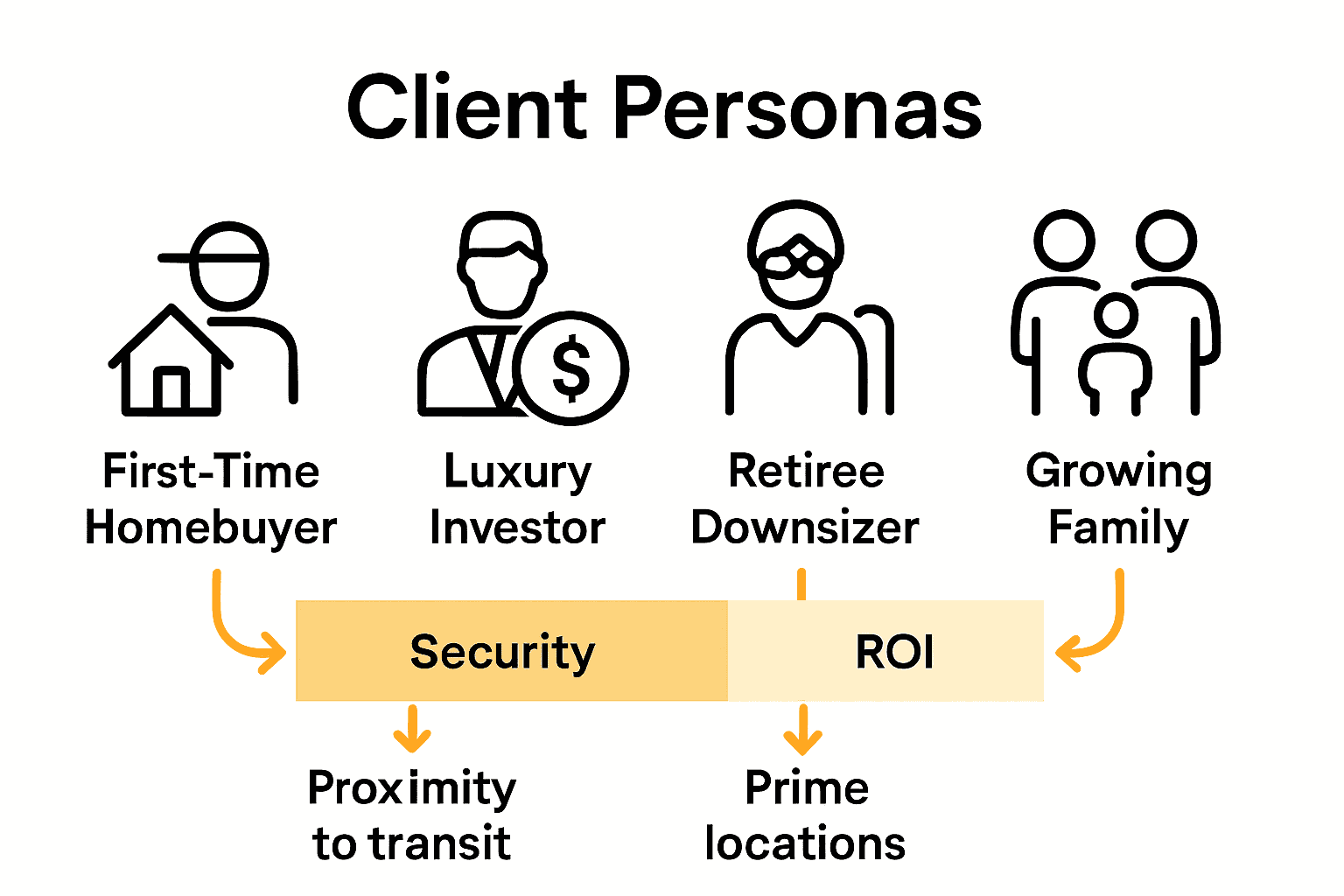
Begin by mapping out your specific market segment. Are you focusing on first time homebuyers in suburban areas? Luxury property investors? Retirees looking to downsize? Your target client profile determines everything from your marketing strategy to the properties you showcase.
Create a detailed client persona that goes beyond basic demographics. Think about their motivations, challenges, and aspirations. A young professional might prioritize proximity to public transport and modern amenities. A growing family will likely want school districts and spacious layouts. Understanding these nuanced preferences helps you craft more compelling communications.
Here’s a comparison of common real estate client personas and their unique needs:
| Client Persona | Key Motivations | Top Priorities |
|---|---|---|
| First-Time Homebuyer | Security Affordability |
Proximity to transit Modern amenities |
| Luxury Investor | ROI Status |
Prime locations Exclusive properties |
| Retiree Downsizer | Simplicity Accessibility |
Walkability Low maintenance |
| Growing Family | Space Stability |
Schools Safe neighborhoods |
Research your local market thoroughly. Examine recent sales data, neighborhood trends, and economic indicators. This helps you identify not just who your ideal clients are but where they are most likely to be searching for properties.
Pro Tip: Use local real estate data platforms and government statistics to build a comprehensive market understanding.
Once you have defined your ideal client, everything from your website copy to your social media content can be strategically tailored to speak directly to their needs and desires. Your marketing becomes more precise powerful and effective.
Ready to move to the next step? You will now develop a targeted content strategy that speaks directly to your defined market segment.
Step 2: Set up essential lead capture channels
Your lead generation strategy hinges on creating multiple touchpoints where potential clients can discover and engage with your real estate services. According to Dataconomy, successful real estate agents integrate diverse channels like CRM systems email platforms and social media to maximize lead capture opportunities.
Start by establishing a robust online presence through a professional website with clear contact forms. Your website should not just showcase properties but actively invite interaction. Implement strategic call to action buttons that make it easy for visitors to request more information schedule viewings or download market reports.
Expand your digital reach by optimizing your Google Business Profile. Inman highlights the importance of creating a searchable profile that appears in local searches. Include high quality property images comprehensive business information and encourage client reviews to boost your credibility.
Consider innovative capture methods beyond traditional websites. QR codes on property signage mailers or business cards can instantly connect potential clients to your landing pages. Create engaging YouTube videos about local property markets neighborhood guides and client testimonials that provide value while subtly capturing viewer contact details.
Pro Tip: Always offer something of genuine value in exchange for contact information such as a free market analysis report or exclusive property listing guide.
Develop a comprehensive CRM system that tracks interactions across all channels. This allows you to nurture leads systematically and personalize your communication based on their specific interests and interactions.
Ready for the next step? You will now learn how to craft compelling content that attracts and converts these captured leads into potential clients.
Step 3: Develop compelling lead magnets and offers
Lead magnets are your secret weapon for transforming casual website visitors into potential clients. According to LinkedIn, high converting lead magnets in real estate include homebuyer guides free property valuation PDFs and local moving resources that provide genuine value to potential clients.
Design your lead magnets with laser focus on solving specific problems your target market experiences. A first time homebuyer might appreciate a comprehensive guide walking them through the purchasing process. Investors could be drawn to a detailed market analysis report showcasing neighborhood property value trends. The key is creating content so useful that people willingly exchange their contact information to access it.
Inman suggests innovative approaches like QR code mailers linking to exclusive reports such as “7 Secrets That Make Owning a Home Easier” or unsolicited video comparative market analyses. These unexpected value offerings can dramatically increase your lead capture rates.
Consider multiple formats for your lead magnets digital PDFs video walkthroughs webinar recordings interactive property valuation tools. Diversifying your offerings increases the likelihood of attracting different types of potential clients with varying content preferences.
Pro Tip: Ensure your lead magnet directly relates to the specific needs of your ideal client persona you developed in the previous step.
Track the performance of each lead magnet.
 Some will resonate more strongly than others and understanding these nuances helps you refine your approach continuously.
Ready for the next step? You will now learn how to create a systematic follow up process that converts these captured leads into actual clients.
Step 4: Implement automation for lead nurturing
Automation transforms how real estate agents manage and engage potential clients. According to Fran Funnel, effective lead nurturing requires strategic drip email campaigns precisely segmented by buyer personas ensuring consistent personalized communication throughout the client journey.
Start by designing targeted email workflows for different client segments. First time homebuyers will need educational content about purchasing processes. Investors require market trend analyses and investment property insights. Retirees might appreciate neighborhood lifestyle guides. Your automation should feel like a personalized conversation not a generic broadcast.
Zavops highlights the importance of multichannel automation beyond traditional email. Consider integrating SMS marketing which boasts significantly higher open rates and implementing click to call features on your website for immediate engagement.
Create a logical sequence of touchpoints that gradually build trust. Your first email might offer the free guide they downloaded. Follow ups could include neighborhood market reports community event invitations or personalized property recommendations based on their initial interaction.
Pro Tip: Set up triggered emails that respond instantly to specific lead actions like downloading a resource or clicking a particular link.
Track engagement metrics closely. Which emails get opened? What content generates the most clicks? Use these insights to continuously refine your automation strategy making each interaction more compelling than the last.
Ready for the next step? You will now learn how to convert these nurtured leads into actual client meetings and property transactions.
Step 5: Track results and optimise your workflow
Data drives success in real estate lead generation. According to Dataconomy, integrating comprehensive CRM systems allows agents to monitor lead interactions across multiple channels enabling precise performance tracking and strategic optimization.
Start by establishing key performance indicators specific to your lead generation workflow. Conversion rates cost per lead engagement levels and client acquisition metrics will be your north star. Track how many website visitors transform into actual leads and what percentage of those leads convert into signed clients.
ShareLoApp recommends analyzing performance across diverse channels. Examine metrics from content marketing social media advertising virtual tours and blog engagement. Which platforms generate the most qualified leads? Where are you seeing the highest return on investment?
Implement monthly review sessions where you deep dive into your analytics. Look beyond surface level numbers and understand the story behind the data. Are certain lead magnets performing better than others? Do specific email sequences generate more responses? Your workflow should be a living document constantly refined by real world performance.
Pro Tip: Create a dashboard that consolidates all your key metrics making it easy to spot trends and make rapid strategic adjustments.
Remember that optimization is an ongoing process. What works today might change tomorrow. Stay curious experiment regularly and be willing to pivot your approach based on solid data insights.
Ready for the final step? You will now learn how to continuously improve and scale your real estate lead generation strategy.
Elevate Your Real Estate Lead Generation with Content Charlie
The challenge of crafting a precise lead generation workflow that truly connects with your ideal client can feel overwhelming. This article highlights how defining client personas, creating compelling lead magnets, and automating nurturing processes are essential steps. Yet, without the right content strategy focused on local SEO and persuasive copywriting, even the best workflows may fail to capture and convert leads effectively.
At Content Charlie, we understand that your success depends on being discovered by motivated buyers and sellers right in your neighborhood. Our expertise lies in producing targeted real estate copy, suburb guides, and Google Business Profile content that ranks on Google and speaks directly to your defined market segment. Combine your strategic workflow with our high-converting content solutions to build trust, boost engagement, and turn prospects into clients.

Don’t let your leads slip away due to unclear messaging or poor local visibility. Visit Content Charlie now to start transforming your real estate marketing strategy with SEO-driven copy that gets found and brings results. Explore our services to find out how suburb-specific content and consistent blog articles can complement your lead generation pipeline. Take the next step toward dominating your market today.
Frequently Asked Questions
How can I define my ideal client in real estate lead generation?
To define your ideal client, create a detailed client persona that includes their motivations, challenges, and aspirations. Start by identifying specific segments like first-time homebuyers or luxury investors to tailor your marketing strategy effectively.
What are effective lead capture channels for real estate agents?
Effective lead capture channels include a professional website with clear contact forms and optimized Google Business Profiles. Ensure your website invites interaction, such as scheduling viewings, and utilize social media platforms for broader reach.
What types of lead magnets should I create for my real estate business?
Create lead magnets that address specific problems faced by your target market, like homebuyer guides or market analysis reports. Aim to make these resources so valuable that potential clients are willing to exchange their contact information for access.
How can I implement automation to nurture my real estate leads?
Implement automation by setting up targeted email workflows based on client segments, ensuring that each email delivers personalized content. Design touchpoints that gradually build trust and track engagement metrics to refine your approach continuously.
What key performance indicators should I track in my lead generation workflow?
Key performance indicators to track include conversion rates, cost per lead, and engagement levels. Regularly analyze these metrics to identify areas for improvement and refine your workflow based on real-world performance.
How often should I review my lead generation strategy for optimal results?
Conduct monthly review sessions to analyze your lead generation performance and uncover trends. By frequently evaluating your strategy, you can make timely adjustments, potentially improving efficiency and results by up to 30%.
Get the book that explains it all How To Generate Leads
Recommended

Real Estate Website Essentials: Complete Guide for Agents
Having the right Real Estate Website Essentials will have you ahead of 99% of other real estate website, if you implement the steps below.
Nearly 97 percent of home buyers search online for properties before reaching out to an agent. Your real estate website is your strongest tool for attracting new clients and keeping your business visible. Building a platform that combines stunning visuals, seamless searches, and mobile-friendly design can set you apart in a crowded market, creating a smoother path from browsing to closed deals.
Key Takeaways
| Point | Details |
|---|---|
| Core Features | Effective real estate websites must include advanced property search tools, high-quality visual content, lead generation mechanisms, and trust signals to convert visitors into clients. |
| Local SEO Importance | Local SEO strategies are vital for enhancing visibility, involving consistent business citations, structured data markup, and geographic keyword targeting to attract potential clients within specific areas. |
| Lead Conversion Tools | Implementing technologies like IDX lead tracking, email drip campaigns, and behavior analytics can significantly improve lead capture and nurture strategies on real estate websites. |
| Accessibility Compliance | Ensuring websites meet digital accessibility standards is essential not only for legal compliance but also for fostering an inclusive experience for all potential clients. |
Table of Contents
- Defining Real Estate Website Essentials
- Core Features Every Real Estate Website Needs
- SEO Requirements For Local Real Estate Search
- Lead Generation And Conversion Strategies
- Legal Compliance And Accessibility Standards
- Common Website Mistakes To Avoid
Defining Real Estate Website Essentials
Your real estate website esentials are more than just a digital business card – it’s your 24/7 online sales representative that works harder than you ever could. According to AgentFire, successful agent websites combine professional visual branding with strategic digital tools that convert casual browsers into serious clients.
The core essentials of a powerful real estate website revolve around several critical features:
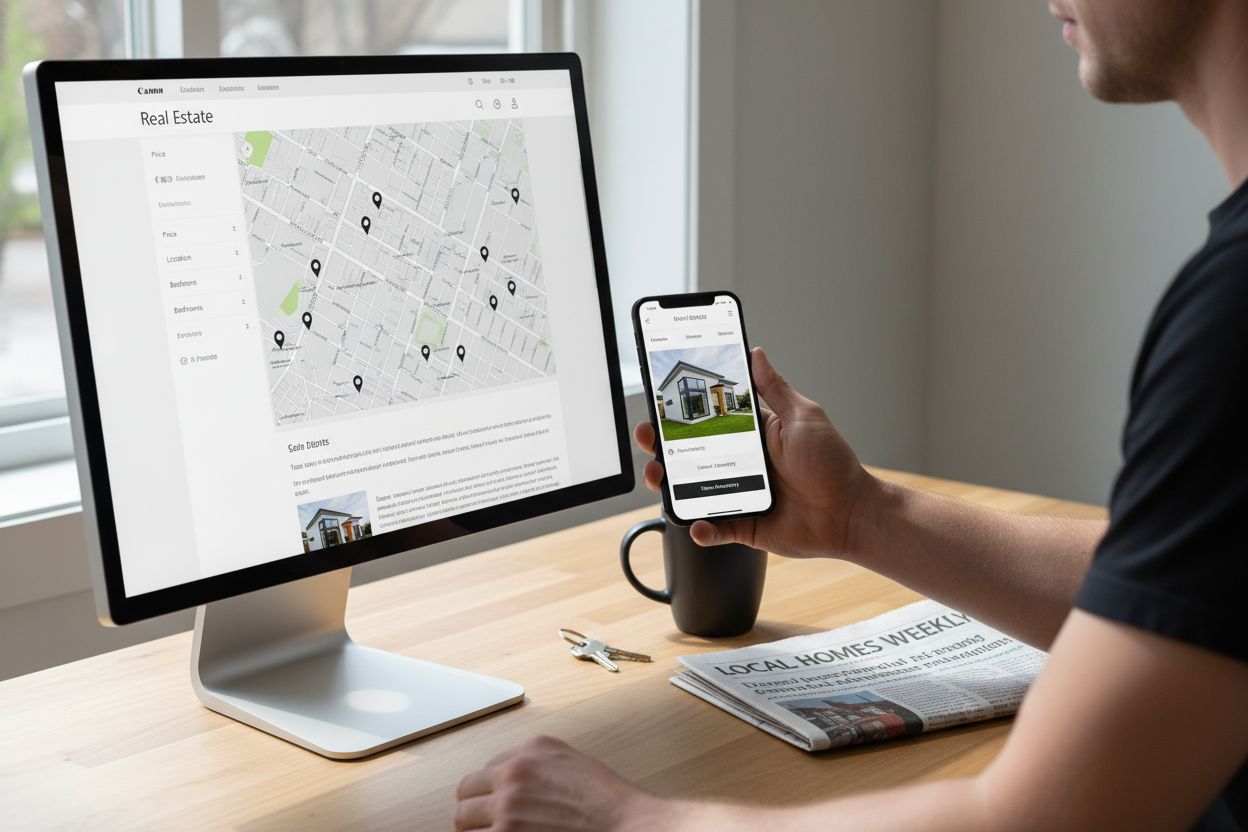
- Property Search Functionality: Advanced filters for location, price, and bedrooms
- Visual Content: High-quality property photos, virtual tours, neighborhood videos
- Lead Generation: Accessible contact forms, email capture mechanisms
- Trust Signals: Client testimonials, third-party reviews, professional credentials
Mobile performance isn’t just a bonus – it’s mandatory. According to PropertyEasy, your website must deliver a seamless experience across devices. This means lightning-fast loading times, stable layouts, and responsive design that adapts to smartphones, tablets, and desktops without losing visual appeal or functionality.
Beyond basic features, modern real estate websites leverage sophisticated tools like AI-powered content creation, visitor behavior analytics, and integrated CRM systems. These technologies transform your website from a passive information portal into an active lead-generation machine that works continuously to expand your client base and demonstrate your local market expertise.
Core Features Every Real Estate Website Needs
Building a high-performance real estate website requires more than just aesthetics – it demands strategic functionality that converts visitors into clients. According to AgentFire, successful websites blend professional design with advanced technological capabilities.
The foundational features every real estate website must include are:
- Advanced Property Search: Robust filtering by location, price, bedrooms, amenities
- Multimedia Showcase: High-resolution property images, 360-degree virtual tours
- Mobile Responsiveness: Seamless performance across smartphones, tablets, desktops
- Lead Capture Mechanisms: Strategic contact forms, email signup prompts
- Trust Signals: Client testimonials, professional credentials, third-party reviews
Conversion optimization goes beyond basic website elements. Modern websites integrate sophisticated tools like visitor behavior tracking, AI-powered content generation, and automated email drip campaigns. According to PropertyEasy, these technologies transform your digital presence from a static brochure into an active client acquisition engine.
The key is creating real estate website essentials that doesn’t just display properties, but provides an immersive, interactive experience that guides potential clients through their home-searching journey. This means fast loading times, intuitive navigation, compelling visual storytelling, and clear pathways to connect with you as a trusted local real estate professional.
Here’s a comparison of essential real estate website features:
| Feature | Purpose | Examples |
|---|---|---|
| Property Search | Helps users find suitable listings | Advanced filters Map view |
| Visual Content | Boosts engagement and trust | High-res photos Virtual tours |
| Lead Generation | Captures potential client info | Contact forms Email signups |
| Trust Signals | Builds credibility | Testimonials Third-party reviews |
| Mobile Responsiveness | Ensures seamless device experience | Fast load Responsive layout |
| Behavior Analytics | Tracks and improves site performance | Visitor heatmaps Funnel tracking |
SEO Requirements for Local Real Estate Search
Local SEO is the secret weapon that transforms your real estate website from invisible to irresistible in search results. Understanding why local SEO matters begins with recognizing that potential clients search for properties and agents within specific geographic boundaries.
According to Search Engine Journal, successful local SEO for real estate professionals hinges on several critical strategies:
- Consistent Business Citations: Accurate listings across Google Business Profile and local directories
- Structured Data Markup: Implementing schema for RealEstateAgent, Offer, and Residence categories
- Hyper-Local Content: Creating neighborhood-specific pages and property guides
- Geographic Keyword Targeting: Incorporating location-specific terms naturally
The most effective local SEO approach goes beyond basic optimization. According to LSEO, modern real estate agents must develop content clusters that target specific neighborhoods, leverage social media channels for content distribution, and actively seek backlinks from local influencers and publications.
Your ultimate goal is to become the go-to digital resource for local property information.
This means creating content that answers specific local buyer questions, showcasing your deep understanding of neighborhood dynamics, and ensuring your website speaks directly to the unique needs of potential clients in your specific market area.
Lead Generation and Conversion Strategies
Transforming website visitors into potential clients requires a strategic approach that goes beyond simple contact forms. Types of real estate leads vary, and your digital strategy must be sophisticated enough to capture and nurture each unique visitor’s interest.
According to AgentFire, advanced lead generation technologies now offer powerful tools for real estate professionals:
- IDX Lead Tracking: Monitor visitor interactions and property interests
- Email Drip Campaigns: Automated, personalized communication sequences
- CRM Integration: Seamless contact management and follow-up tracking
- AI Content Generation: Dynamic, targeted messaging based on user behavior
- Behavior Analytics: Heat mapping and funnel tracking to optimize conversion paths
Visitor trust is the cornerstone of successful lead conversion. As PropertyEasy highlights, this means prominently featuring compelling testimonials, high-quality property visuals, and virtual tours that demonstrate your professionalism and local market expertise.
The most effective websites create a frictionless journey from initial curiosity to client engagement.
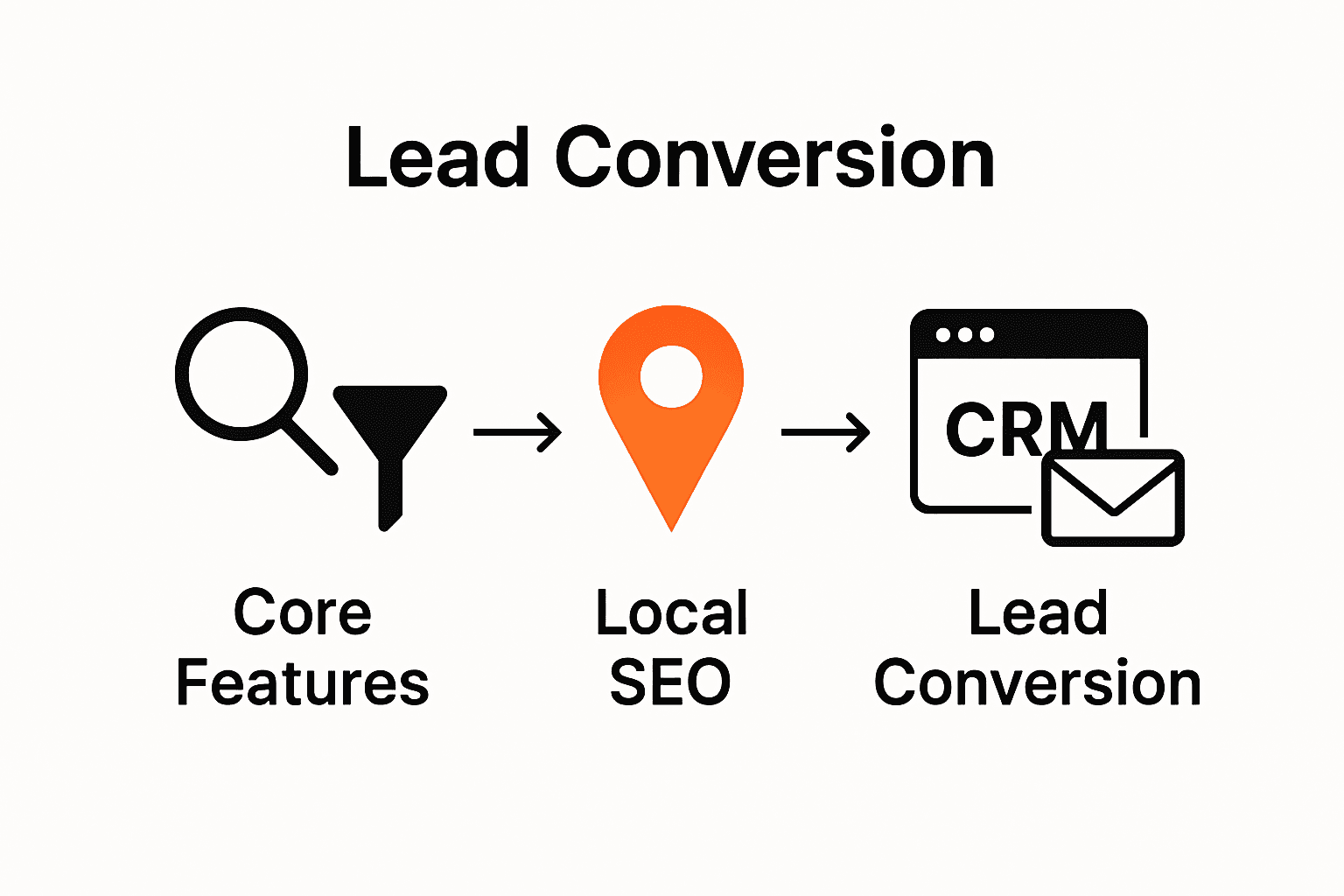 This means intuitive design, crystal-clear contact information, and strategic calls-to-action that guide potential clients exactly where they want to go – closer to finding their perfect property with your expert assistance.
Legal Compliance and Accessibility Standards
Digital accessibility is no longer optional for real estate websites – it’s a legal and ethical imperative. Ensuring your online platform is inclusive means creating an experience that welcomes every potential client, regardless of their physical abilities or technological constraints.
According to Wikipedia, the Web Content Accessibility Guidelines (WCAG) 2.2 provide a comprehensive framework for creating accessible digital experiences. These internationally recognized standards focus on four fundamental principles:
- Perceivable: Information must be presentable to users in ways they can perceive
- Operable: User interface and navigation must be functional for all users
- Understandable: Content and operation must be clear and comprehensible
- Robust: Content must be compatible with current and future assistive technologies
Real estate websites have unique challenges in meeting these standards. This means ensuring your property listings, contact forms, search functions, and multimedia content are fully navigable by screen readers, compatible with keyboard-only navigation, and designed with sufficient color contrast and text sizing.
Beyond technical compliance, accessible design demonstrates your commitment to inclusivity. It signals to potential clients that you value every individual’s experience, understand diverse user needs, and are committed to providing a welcoming, professional digital environment that respects and accommodates all users.
Common Website Mistakes to Avoid
Website design can make or break your real estate digital presence. One misstep could mean losing potential clients before they even understand what you offer. Lead generation ideas for real estate start with avoiding critical digital pitfalls that undermine your professional image.
According to Type North, the most common website mistakes that sabotage real estate professionals include:
- Mobile Unresponsiveness: Sites that don’t adapt to smartphone screens
- Cluttered Homepage: Overwhelming visitors with too much information
- Weak Calls-to-Action: Unclear or missing contact pathways
- Low-Quality Property Listings: Incomplete or unappealing property descriptions
- Slow Page Loading: Performance that frustrates potential clients
- Neglected Local SEO: Invisible in local property search results
Navigation complexity is another silent killer of user experience. Your website should feel intuitive, with clear menus, logical property search functions, and streamlined paths to contact you. Think of your website as a digital storefront – it should invite exploration, not create confusion.
The most successful real estate websites transform technical requirements into storytelling opportunities. This means creating a digital experience that’s not just functional, but engaging – where every pixel communicates your professionalism, local expertise, and commitment to helping clients find their dream property.
Ready to Transform Your Real Estate Website Into a Local Lead Magnet?
You read about the must-have features for a real estate website, but bringing those essentials to life is a challenge. Many agents struggle with weak property listings, missing trust signals, and a website that just does not show up when locals search for homes or advice. Without powerful copywriting and suburb-specific SEO, you risk falling behind competitors who connect with buyers and sellers right where they live.
At Content Charlie, we turn your knowledge into high-converting web pages, suburb guides, and blog posts that climb Google results. Our team specializes in conversion optimization and local SEO, giving your site mobile-first performance, powerful lead generation, and content that earns trust in your neighborhood. If you want to stand out as the top agent in your suburb, act now and let us create a real estate website that converts visitors into lifelong clients. Start growing your local visibility with Content Charlie today.
Frequently Asked Questions
What are the essential features of a real estate website?
The essential features of a real estate website include advanced property search functionality, high-quality visual content, lead generation tools, trust signals like testimonials, and mobile responsiveness to ensure accessibility across devices.
How can local SEO impact my real estate website’s visibility?
Local SEO helps improve your real estate website’s visibility by optimizing for specific geographic keywords, ensuring consistent business citations, and creating hyper-local content that resonates with local buyers, thereby attracting more relevant traffic to your site.
What strategies can I use for effective lead generation on my real estate website?
Effective lead generation strategies include implementing IDX lead tracking, using email drip campaigns for nurturing leads, integrating customer relationship management (CRM) systems, and deploying behavior analytics to understand visitor interactions and optimize conversions.
How can I ensure my real estate website is accessible to all users?
To ensure your real estate website is accessible, adhere to the Web Content Accessibility Guidelines (WCAG) by making information perceivable, operable, understandable, and robust, ensuring compatibility with assistive technologies and providing a user-friendly experience for individuals with disabilities.
Recommended
- 7 Types of Real Estate Content Every Agent Should Use – Content Charlie
- Greg Reed, Author at Content Charlie
- 7 Essential Social Media Tips for Agents – Content Charlie
- 7 Essential Types of Real Estate Leads Agents Must Know – Content Charlie
- SEO for Real Estate Agencies: Simple Strategies to Grow Your Business
- Website Design Guide for Builders: Create a Winning Website – ResponsiveWebsiteDesign