
- You are here:
- Home »
- audience targeting
Tag Archives for " audience targeting "

Complete Guide to Copywriting in Real Estate
Copywriting in Real Estate sounds hard; dificult even but now if you know how. Here’s the complet guide. Grab a coffee and take notes.
Did you know that homes with persuasive listing descriptions can sell for up to 6 percent more than those with standard copy? Words do more than fill space in real estate—they spark emotions and help buyers imagine their next chapter. Clear, intentional copywriting can change a simple listing into an invitation to dream, setting agents apart and driving stronger interest in every property featured.
Table of Contents
- Copywriting In Real Estate Defined And Debunked
- Types Of Real Estate Copywriting Services
- How Effective Copywriting Drives Sales And Visibility
- Seo Strategies For Local Real Estate Markets
- Common Copywriting Mistakes Real Estate Agents Make
Key Takeaways
| Point | Details |
|---|---|
| Emotional Connection | Real estate copywriting should create compelling narratives that connect emotionally with potential buyers to inspire action. |
| Targeted Strategies | Effective messaging tailored to specific audiences enhances engagement and drives property inquiries, especially in niche markets like luxury real estate. |
| SEO Importance | Implementing local SEO strategies, including keyword optimization and community content, is essential for increasing online visibility in regional real estate markets. |
| Common Pitfalls | Avoid generic descriptions and overuse of jargon; instead, craft personalized, active narratives that resonate with buyers’ aspirations and needs. |
Copywriting in Real Estate Defined and Debunked
Real estate copywriting is the strategic art of crafting persuasive written content designed to transform property listings from bland descriptions into compelling narratives that inspire potential buyers to take action. According to research from copywriting experts, this specialized form of writing goes far beyond simply listing property features – it’s about creating an emotional connection that highlights the lifestyle potential of a property.
Effective real estate copywriting focuses on three critical elements: showcasing the property’s unique value proposition, painting a vivid picture of potential living experiences, and strategically addressing the desires and pain points of target buyers. As industry research indicates, successful copy doesn’t just describe a property, but builds inquiry, elevates an agent’s brand, and transforms passive readers into motivated prospects.
The core objectives of real estate copywriting include:
- Capturing potential buyers’ imagination
- Highlighting location and lifestyle benefits
- Creating an emotional narrative around property features
- Driving meaningful engagement and property inquiries
At its heart, real estate copywriting is about storytelling. It transforms a simple square footage listing into an invitation to imagine a new life, connecting rational property details with the emotional journey of finding a perfect home. Learn more about effective copywriting strategies that can help real estate professionals craft compelling property narratives.
Types of Real Estate Copywriting Services
Real estate copywriting services are comprehensive content solutions designed to help professionals effectively market properties and build their brand. According to research from professional marketing sources, these services encompass a wide range of written materials that transform property information into compelling narratives that attract potential buyers and showcase property value.
Property Listing Descriptions represent the core of real estate copywriting, where each property gets a unique, engaging narrative that goes beyond basic details. As industry research indicates, these services extend far beyond simple descriptions and include:
Here’s a summary of the main types of real estate copywriting services:
| Service Type | Purpose | Example Content |
|---|---|---|
| Property Listing Descriptions | Highlight unique features Create emotional appeal |
Engaging property ads MLS listings |
| Website Content | Build brand credibility Enhance SEO |
Home pages About us sections |
| Blog Posts | Educate buyers Boost search rankings |
Market tips Neighborhood spotlights |
| Lead Generation Materials | Attract prospects Drive interest |
Neighborhood guides Downloadable checklists |
| Email Newsletters | Nurture client relationships Promote new listings |
Monthly updates Open house invites |
| Market Reports & White Papers | Establish expertise Build authority |
Trend analysis In-depth reports |
| Press Releases | Announce news Increase visibility |
Agency updates New property launches |
- Website content development
- Blog post creation
- Lead generation materials like neighborhood guides
- Email newsletter writing
- Market trend reports
- White papers
- Press releases
The strategic objective of these copywriting services is to create a comprehensive content ecosystem that positions real estate professionals as trusted local experts. By crafting targeted, informative, and emotionally resonant content, copywriters help agents communicate not just property features, but the lifestyle and potential each property represents.
 Explore our comprehensive guide on real estate copy strategies to understand how professional copywriting can transform your marketing approach.
How Effective Copywriting Drives Sales and Visibility
Effective real estate copywriting is a powerful catalyst for driving sales and increasing market visibility. According to strategic marketing research, compelling copy goes beyond mere property descriptions by emphasizing an agent’s qualifications, regional expertise, and personal connections – ultimately building trust and encouraging potential clients to engage.
The strategic approach to copywriting involves creating content that resonates with specific target audiences. Targeted messaging can significantly impact sales performance, particularly in specialized market segments. Industry insights reveal that luxury real estate copywriting, for instance, prioritizes exclusivity and sophistication, effectively appealing to high-end buyers and enhancing property visibility in competitive markets.
Key strategies for driving sales through copywriting include:
- Highlighting unique property features
- Creating emotional connections with potential buyers
- Demonstrating deep local market knowledge
- Presenting clear value propositions
- Building credibility through professional storytelling
By crafting narratives that transform static property listings into compelling stories, real estate professionals can differentiate themselves in a crowded marketplace.
Learn more about advanced sales copywriting techniques to elevate your real estate marketing approach and drive meaningful client engagement.
SEO Strategies for Local Real Estate Markets
Local real estate SEO is a critical strategy for agents looking to dominate their regional markets and attract potential buyers searching online. According to industry research, implementing targeted SEO strategies in copywriting can significantly improve search engine rankings by optimizing website content and blogs with relevant keywords that resonate with local searchers.
Local keyword optimization stands at the core of effective real estate SEO. Strategic marketing insights reveal that focusing on regional expertise and incorporating location-specific keywords can dramatically enhance online visibility, making it easier for potential clients to find agents specializing in their desired neighborhoods.
Key local SEO strategies for real estate professionals include:
- Developing neighborhood-specific content
- Using geo-targeted keywords in property descriptions
- Creating location-based landing pages
- Optimizing Google Business Profile listings
- Generating local backlinks from community websites
Discover comprehensive local SEO strategies that can transform your online presence and help you become the go-to real estate expert in your local market. By strategically crafting content that speaks directly to local buyers, you’ll not only improve your search rankings but also establish yourself as a trusted community resource.
Common Copywriting Mistakes Real Estate Agents Make
Language and style can make or break real estate copywriting effectiveness. According to professional writing research, many agents fall into the trap of using passive voice, overloading their copy with unnecessary adverbs and adjectives, and failing to leverage active, compelling verbs that truly engage potential buyers.
Another critical mistake is neglecting audience specificity. Industry insights reveal that failing to tailor copy to specific market segments – such as luxury buyers, first-time homeowners, or real estate investors – results in messaging that feels generic and fails to resonate with intended readers.
Common copywriting pitfalls for real estate agents include:
- Using generic, bland property descriptions
- Neglecting emotional storytelling
- Overusing technical jargon
- Ignoring local market nuances
- Writing from a seller’s perspective instead of a buyer’s
Explore real estate copy examples to understand how professional copywriting transforms mundane listings into compelling narratives that capture potential buyers’ imagination and drive meaningful engagement. The key is crafting copy that speaks directly to the reader’s dreams, aspirations, and lifestyle goals.
Unlock the Power of Real Estate Copywriting and Local SEO Today
The “Complete Guide to Copywriting in Real Estate” highlights common challenges agents face such as creating emotionally compelling narratives, targeting the right local buyers, and avoiding generic, uninspired property descriptions. If you want to break free from bland listings and build trust with readers who are ready to take action you need copy that connects on a deeper level and ranks in local search results.

At Content Charlie, we specialize in exactly that. Our real estate copywriting services craft high-converting property descriptions and suburb guides designed to capture imagination and engage your market. Combine that with our laser-focused local SEO strategies and you get content that makes your agency the first choice when buyers search in your area. Don’t let your listings get lost in the crowd. Visit us now to start transforming your real estate marketing with words that rank, engage, and sell.
Frequently Asked Questions
What is real estate copywriting?
Real estate copywriting is the strategic process of creating persuasive written content that transforms property listings into engaging narratives, highlighting not only the property’s features but also the lifestyle potential it offers to buyers.
Why is emotional storytelling important in real estate copywriting?
Emotional storytelling is crucial because it helps create a connection with potential buyers by illustrating how a property can fulfill their dreams and lifestyle aspirations, turning a simple listing into a compelling invitation.
How can effective copywriting increase property visibility and sales?
Effective copywriting enhances property visibility and drives sales by using targeted messaging that resonates with specific audiences, emphasizing unique property features, and demonstrating local market knowledge and credibility.
What common mistakes should agents avoid in real estate copywriting?
Agents should avoid using generic descriptions, neglecting emotional connections, overusing jargon, writing from a seller’s perspective, and failing to tailor their copy to specific buyer segments.
Recommended

Understanding Real Estate SEO Metrics Explained
Real estate agents used to rely mostly on personal networks and open houses to woo buyers. Now everything happens online and a staggering 97 percent of home buyers start their search on the internet. Most people think it all comes down to having a flashy website or posting listings every day. But it turns out the real secret is hiding in your SEO metrics and these numbers can reveal exactly how to win the digital battle for new clients.
Table of Contents
- What Are Real Estate SEO Metrics?
- Why Real Estate SEO Metrics Matter For Agents
- Key Components Of Real Estate SEO Metrics
- How Real Estate SEO Metrics Inform Online Strategies
Quick Summary
| Takeaway | Explanation |
|---|---|
| Real estate SEO metrics enhance visibility | Measuring these metrics helps agents improve their online presence and attract more potential clients. |
| Track organic search rankings for success | Keeping an eye on search rankings for keywords is essential to ensure effective property listing visibility. |
| Focus on high-performing content | Identify which content attracts the most clients to optimize future marketing strategies. |
| Analyze geographical search behavior | Understanding where clients search helps tailor marketing efforts to specific locations effectively. |
| Allocate resources to top channels | Direct marketing budgets toward effective strategies based on performance data to maximize return on investment. |
What Are Real Estate SEO Metrics?
Real estate SEO metrics are quantitative measurements that help agents and marketers understand how their online content performs in search engine rankings and digital visibility. These specialized metrics go beyond traditional website analytics by providing targeted insights specific to real estate digital marketing strategies.
Understanding Core SEO Performance Indicators
At their fundamental level, real estate SEO metrics track how effectively your digital content attracts potential property buyers and sellers through search engines. Explore our guide on local SEO for real estate to understand the broader context of these performance indicators.
Key performance indicators in real estate SEO typically include:
- Organic Search Rankings: Your website’s position for specific property-related keywords
- Website Traffic Volume: Number of visitors arriving through search engines
- Click Through Rate (CTR): Percentage of searchers who click on your website link
- Bounce Rate: Percentage of visitors who leave your site quickly after arriving
Why Real Estate SEO Metrics Matter
Measuring these metrics provides critical intelligence about your digital marketing strategy. Moz’s SEO research demonstrates that understanding these metrics helps real estate professionals optimize their online presence and attract more potential clients.
By tracking these metrics, real estate agents can:
- Identify which content attracts the most potential clients
- Understand geographical search behavior
- Optimize website content for better search engine performance
- Make data driven decisions about digital marketing investments
Successful real estate professionals recognize that SEO metrics are not just numbers but strategic tools that illuminate the path to digital marketing excellence. They transform raw data into actionable insights that can significantly improve online visibility and client acquisition strategies.
Why Real Estate SEO Metrics Matter for Agents
Real estate SEO metrics transform raw data into strategic insights, enabling agents to navigate the complex digital landscape of property marketing with precision and effectiveness. Learn about our SEO strategies for real estate agents to understand how these metrics drive business growth.
Digital Visibility and Competitive Advantage
In a market where online presence determines client acquisition, SEO metrics provide agents with critical competitive intelligence. National Association of Realtors research reveals that over 97% of home buyers now use online resources during their property search, making digital visibility crucial.
Key competitive advantages of tracking SEO metrics include:
- Targeted Marketing: Understanding which keywords attract potential clients
- Performance Tracking: Measuring the effectiveness of digital marketing strategies
- Client Acquisition Optimization: Identifying most successful content and search channels
- Resource Allocation: Directing marketing investments toward high-performing strategies
Financial Impact and Business Growth
SEO metrics are not just technical measurements but direct indicators of potential revenue. By analyzing these metrics, real estate agents can:
- Reduce marketing expenditure by focusing on proven effective channels
- Increase conversion rates through targeted content strategy
- Build a robust online reputation that attracts high-quality leads
- Understand local market search behaviors and preferences
Successful real estate professionals recognize that SEO metrics provide more than analytics. They offer a roadmap for digital marketing success, transforming complex data into actionable strategies that drive business growth and client engagement.

Key Components of Real Estate SEO Metrics
Real estate SEO metrics encompass a complex ecosystem of performance indicators that provide comprehensive insights into digital marketing effectiveness. Learn more about our real estate SEO strategies to understand how these components work together.
Fundamental Performance Indicators
Organic search metrics form the foundation of real estate digital marketing analysis. Ahrefs SEO research highlights that these indicators reveal critical information about website visibility and user engagement.
Key fundamental performance indicators include:
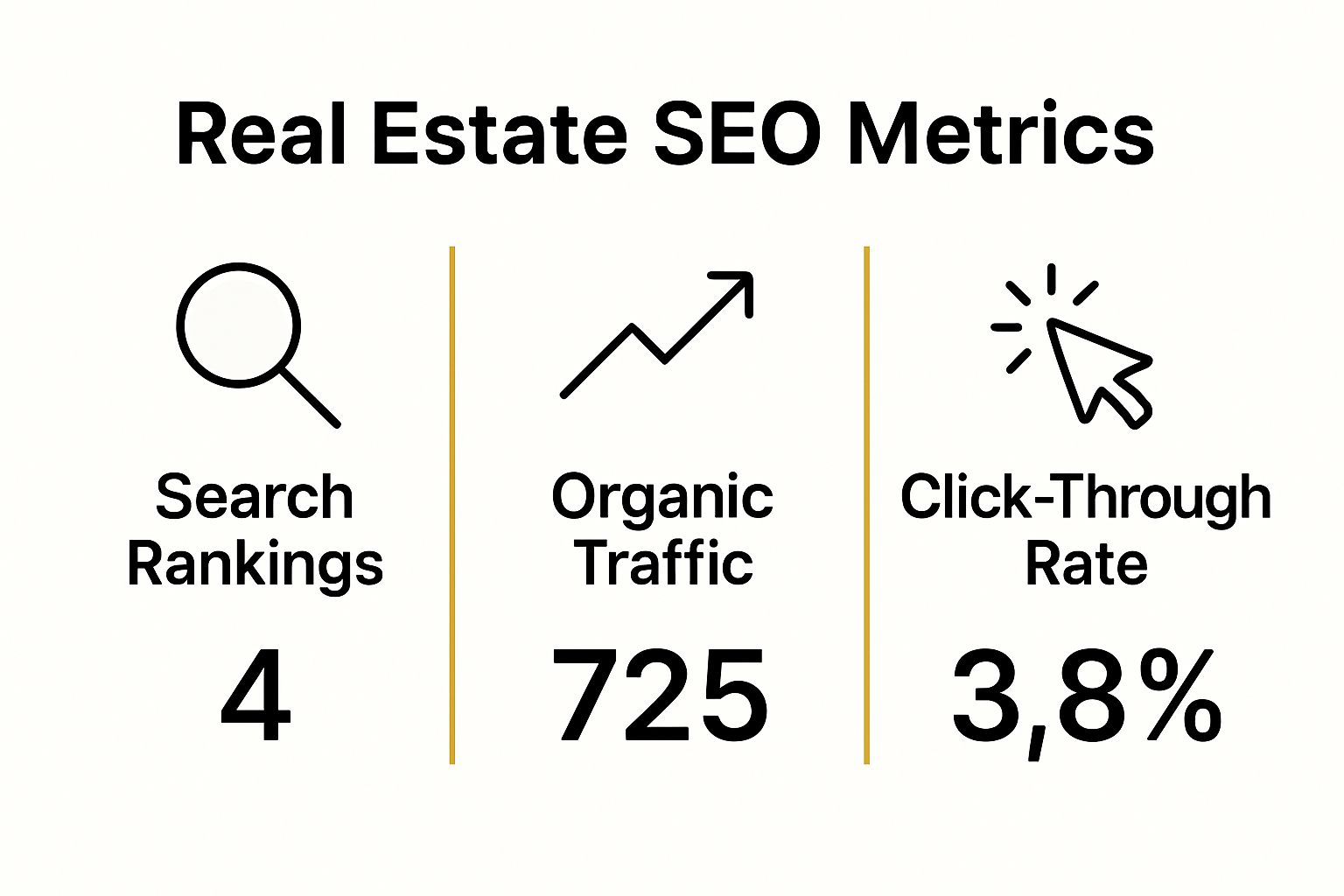
- Search Rankings: Position of property listings and content in search results
- Organic Traffic: Number of visitors arriving through search engines
- Click Through Rate (CTR): Percentage of searchers clicking on your website links
- Bounce Rate: Proportion of visitors leaving your site quickly
Advanced Analytical Components
Beyond basic metrics, sophisticated real estate SEO analysis requires deeper examination of user behavior and content performance. Advanced metrics help agents understand not just how many people visit their site, but how effectively those visits translate into potential client interactions.
Critical advanced metrics encompass:
- Conversion Rate: Percentage of website visitors who take desired actions
- Time on Site: Average duration visitors spend exploring property content
- Geographical Search Data: Understanding location based search patterns
- Mobile Performance: Website effectiveness across different device types
Successful real estate professionals recognize that these metrics are interconnected signals that provide a holistic view of digital marketing performance. By comprehensively analyzing these components, agents can develop targeted strategies that improve online visibility, attract qualified leads, and ultimately drive business growth.
To clarify the fundamental and advanced metrics used in real estate SEO, the following table summarizes each key component and its purpose.
| SEO Metric | Description |
|---|---|
| Organic Search Rankings | Position your website holds for property-related keywords |
| Website Traffic Volume | Number of visitors arriving via search engines |
| Click Through Rate (CTR) | Percentage of searchers who click on your website link |
| Bounce Rate | Percentage of visitors who leave quickly after arriving |
| Conversion Rate | Percentage of visitors taking a desired action |
| Time on Site | Average duration visitors spend exploring property content |
| Geographical Search Data | Information about where website traffic originates |
| Mobile Performance | Effectiveness of the website across different device types |
How Real Estate SEO Metrics Inform Online Strategies
Real estate SEO metrics transform raw data into strategic roadmaps for digital marketing success, enabling agents to make precision driven decisions about their online presence. Explore our guide to enhancing real estate online strategies to understand how metrics drive strategic planning.
Strategic Content Development
Content optimization emerges as a critical outcome of comprehensive SEO metric analysis. Google Search Central emphasizes that understanding user behavior through metrics allows agents to create more targeted, relevant content that resonates with potential clients.
Key strategic content development insights include:
- Identifying most engaging property topics
- Understanding user search intent
- Determining optimal content length and format
- Recognizing geographical search preferences
Targeted Marketing Resource Allocation
SEO metrics provide a sophisticated framework for intelligent marketing resource allocation. By analyzing performance data, real estate professionals can:
- Prioritize high performing marketing channels
- Redirect budget from underperforming strategies
- Develop hyper targeted audience segments
- Create personalized content experiences
Successful digital marketing in real estate requires continuous adaptation. SEO metrics offer real time feedback, allowing agents to pivot strategies quickly, ensuring their online presence remains dynamic, responsive, and aligned with evolving market demands and client expectations.
Ready to Turn Real Estate SEO Metrics Into Measurable Results?
Are you feeling overwhelmed by raw numbers and complex metrics, but hungry for real progress in your property marketing? The article explained how real estate SEO metrics reveal where your website attracts buyers and sellers, which content truly engages your local market, and how you can make smarter marketing decisions that move the needle.
At Content Charlie, we transform insights into action. Let us help you capture suburb-level searches and convert traffic into ready-to-act clients. Discover how our SEO-driven copywriting and tailored local strategies boost your digital visibility and generate leads that count.
Stop guessing and start growing. Visit Content Charlie now and see how better metrics lead to real results for your real estate business.
Frequently Asked Questions
What are the key real estate SEO metrics I should track?
To optimize your online presence, focus on key real estate SEO metrics such as organic search rankings, website traffic volume, click-through rate (CTR), and bounce rate. Start by monitoring these metrics regularly to gain insights into your digital marketing performance and identify areas for improvement.
How can I improve my website’s organic search rankings?
To enhance your organic search rankings, optimize your website content by incorporating relevant property keywords, improving page load speed, and ensuring mobile responsiveness. Regularly update your content and track changes over a 30–60 day period to gauge the impact of your efforts.
What role do SEO metrics play in client acquisition for real estate agents?
SEO metrics are essential for client acquisition as they help identify which content attracts potential clients and the effectiveness of your marketing strategies. Analyze data on visitor behavior and adjust your content to improve engagement and conversion rates.
How can I leverage geographical search data to improve my real estate SEO strategy?
To use geographical search data effectively, analyze where your website traffic comes from and tailor your content to local market interests. Implement targeted local keyword strategies and update your content based on findings to enhance local search visibility.
What actions can I take if my bounce rate is high?
If your bounce rate is high, focus on improving user experience by optimizing website loading times and providing engaging, relevant content that meets visitor expectations. Consider conducting an analysis of your top landing pages and making adjustments to encourage longer site engagement and lower the bounce rate.
Recommended
- real estate SEO Archives – Content Charlie
- SEO for realtors Archives – Content Charlie
- local SEO for real estate Archives – Content Charlie
- real estate agent visibility Archives – Content Charlie