
- You are here:
- Home »
- Real Estate
Category Archives for Real Estate

Real Estate Leads for New Agents
Your Quick-Start Guide to Building Your First Pipeline
So you’ve got your license. You’ve picked your brokerage. You’re ready to close deals and build your empire.
But here’s the thing nobody tells you in real estate school: your license doesn’t come with clients attached.
If you’re a new agent wondering where your first leads will come from, you’re not alone. Every successful agent started exactly where you are right now, staring at an empty pipeline and wondering how to fill it.
The good news? Building your first lead pipeline doesn’t require a massive marketing budget or years of experience. It requires strategy, consistency, and a willingness to show up.
Let’s break down exactly how to generate real estate leads for new agents, starting today.
1. Identifying Your Sphere of Influence (SOI)
Here’s a truth bomb: your most valuable leads are already in your phone.
Your Sphere of Influence (SOI) includes everyone you already know, friends, family, former colleagues, neighbours, your gym buddy, your kid’s soccer coach, and yes, even that person you chat with at the coffee shop every Tuesday.
Most new agents make the mistake of thinking they need to find strangers to work with. But research shows your sphere of influence is worth approximately $10,000 over time. These are people who already trust you. They just need to know you’re in the game.
Here’s your action plan:
- Build your list. Write down at least 100 people you know. Yes, 100. Include everyone: even people you haven’t spoken to in years.
- Make the announcement personal. Don’t just blast a generic social media post. Call or text each person individually. Let them know you’ve started your real estate career.
- Ask the magic question: “Who do you know that might be looking to buy or sell in the next 6-12 months?” This is far more effective than simply saying “send me referrals.”
- Follow up with handwritten notes. In a digital world, a handwritten thank-you card stands out and shows genuine appreciation.

Pro tip: Your SOI isn’t a one-time contact list. It’s a relationship you nurture over months and years. The agents who consistently stay in touch with their sphere are the ones who get referrals on repeat.
2. The Power of Hyper-Local Content (Becoming the Local Expert)
Want to know the fastest way to stand out as a new agent? Own your local area.
While other agents are competing for attention across an entire city, you can dominate a specific suburb, neighbourhood, or community. This is called becoming a hyper-local expert, and it’s one of the most powerful real estate lead generation ideas available to you.
Think about it: when someone’s looking to buy or sell in a specific area, they want an agent who knows that area inside and out. Not someone who covers 50 suburbs and treats each one the same.
Here’s how to become the local expert:
- Create neighbourhood-specific content. Write about local schools, parks, restaurants, upcoming developments, and market trends. Share what makes the area special.
- Know your numbers. Track recent sales, average days on market, and price trends for your target area. Be the person with the data.
- Show up in the community. Attend local events, join community groups, volunteer, or coach a youth sports team. People are 100 times more likely to work with an agent they recognise around town.
- Door knock with value. Create a one-page neighbourhood market update showing recent sales. Offer free home valuations. Focus on being helpful, not salesy.
When you consistently show up as the expert in one area, you build recognition and trust: two things that turn into leads over time.
3. Setting Up a High-Value Real Estate Newsletter Early
Here’s something most new agents wait too long to do: start an email newsletter.
Email marketing remains one of the highest ROI marketing channels available. And the best part? You can start building your list from day one: through open houses, community events, your SOI, and social media.
A newsletter keeps you top of mind with potential clients. It positions you as a knowledgeable professional. And when someone on your list is ready to buy or sell, guess who they’ll think of first?

What to include in your real estate newsletter:
- Monthly market updates. Share local stats and trends in plain English. Help people understand what’s happening in the market.
- Success stories. Highlight recent wins (with client permission). Social proof builds credibility.
- Seasonal tips. Think home maintenance checklists, staging advice, or first-time buyer guides.
- Personal notes. Let your personality shine through. People connect with people, not robots.
Pro tip: Don’t overthink it. Your newsletter doesn’t need to be long or fancy. Consistency beats perfection. Start with once a month and build from there.
4. Leveraging Social Proof and Digital Authority
In today’s market, your online presence is your first impression.
Before someone calls you, they’re Googling you. They’re checking your social media. They’re reading reviews. If they can’t find you: or worse, if what they find is forgettable: you’ve lost the lead before you even knew it existed.
Building digital authority as a new agent doesn’t mean you need to become a social media influencer. It means showing up consistently, sharing valuable content, and letting people see the real you.
Here’s how to build your digital presence:
- Optimise your Google Business Profile. Make sure you show up when people search for agents in your area.
- Be active on social media. Share market tips, behind-the-scenes moments, local highlights, and client wins. Be helpful and authentic.
- Collect reviews and testimonials. After every positive interaction: even if it’s a consultation that didn’t lead to a sale: ask for a review. Social proof compounds over time.
- Invest in a professional website. Your brokerage website isn’t enough. A personal site that showcases your expertise and local knowledge sets you apart.
| Digital Authority Element | Why It Matters |
|---|---|
| Google Business Profile | Shows up in local searches |
| Social media presence | Builds familiarity and trust |
| Client reviews | Provides social proof |
| Personal website | Establishes professional credibility |

The hard truth: Most agent websites are generic and forgettable. They look like everyone else’s. If you want to attract leads online, you need to stand out.
Your Website Isn’t Broken. It’s Forgettable. Fix It Now!
Putting It All Together: Your Lead Generation Game Plan
Real estate agent lead generation isn’t about finding one magic tactic. It’s about building a system that works consistently over time.
Here’s your quick-start checklist:
- ✅ Build and contact your SOI list (aim for 100+ people)
- ✅ Choose a local area to focus on and start creating hyper-local content
- ✅ Set up your email newsletter and commit to a monthly schedule
- ✅ Optimise your online presence (Google, social media, website)
- ✅ Ask for reviews after every positive interaction
- ✅ Show up consistently: daily lead generation activities compound
Remember: Most agents give up after one or two contacts. The ones who succeed are the ones who follow up consistently and play the long game.
Want high performing agents? DM me here
You’ve got this. Your first pipeline starts with your first action. Take it today.

Real Estate Leads Vs Social Media Followers
Real Estate Leads Vs Social Media Followers – which one can you actually banks on?
You’ve got 10,000 Instagram followers, your LinkedIn connections are growing daily, and your TikTok videos are getting decent engagement. But here’s the million-dollar question: How much commission have those followers actually put in your pocket this month?
If you’re like most real estate agents, the answer might be uncomfortably close to zero. While you’ve been obsessing over follower counts and engagement rates, your competition has been quietly building systems that convert social media attention into actual paychecks.
Let’s cut through the social media noise and examine what really pays your bills in real estate.
The Harsh Truth About Follower Counts
Followers don’t pay your mortgage. Closed deals do.
You can have 50,000 followers and still struggle to make rent, or you can have 500 highly engaged connections that generate six figures annually. The difference isn’t in the numbers: it’s in understanding what those numbers actually mean for your bottom line.
Research reveals that 90% of realtors get zero leads from social media despite spending countless hours creating content and chasing followers. Why? Because they’re playing the wrong game entirely.
In the Real Estate Leads Vs Social Media Followers scenario, Consider these two scenarios:
• Agent A: 15,000 Instagram followers, posts daily, high engagement, zero closed deals from social media this year
• Agent B: 2,500 carefully cultivated connections, strategic content, 12 deals closed directly from social media referrals
Agent B understands something crucial: quality trumps quantity every single time.

Why Leads Are Your Real Revenue Drivers
A lead represents someone with genuine interest in buying, selling, or working with you. A follower might just enjoy your home staging photos. Here’s the fundamental difference:
A lead has demonstrated intent. A follower has demonstrated attention.
Intent converts to commission checks. Attention might convert to likes.
The numbers back this up. According to industry surveys, social media generates more quality leads than any other tech tool when used strategically. But notice the key word: leads, not followers.
What Makes a Lead Valuable
Quality leads share these characteristics:
• Immediate or near-term buying/selling timeline
• Pre-qualified financial capacity
• Clear geographic focus in your market
• Demonstrated engagement with your expertise
• Contact information willingly provided
A follower who comments “Nice house!” on your listings might boost your ego, but a follower who messages you asking about market conditions in their neighborhood? That’s a lead worth pursuing.
The Hidden Power of Strategic Social Media Followers
Here’s where it gets interesting: Social media followers become incredibly valuable when you understand their conversion potential.
Research shows that 10-15% of people visible on your social media are moving within the next 12 months. Even more importantly, 100% of your social media connections have referral potential because everyone knows someone who’s thinking about buying or selling real estate.
This means your 2,000 followers could realistically generate:
• 200-300 potential direct clients (10-15% moving soon)
• 2,000 referral opportunities (100% referral potential)
• Ongoing brand awareness that keeps you top-of-mind
But here’s the catch: this only works if you’re treating your followers as potential business partners, not just an audience for your content.

The 5 Fatal Mistakes Killing Your Conversion Rate
Most agents sabotage their own social media ROI by making these critical errors:
1. Posting for Views Instead of Clients
You share beautiful property photos because they get likes, but you never explain why someone should work with you specifically. Vanity metrics feel good but don’t pay bills.
2. Sharing Facts Without Context
Posting “The market is hot!” tells your followers nothing actionable. Explaining “Here’s what this hot market means for your specific situation and timeline” positions you as their advisor.
3. Treating Social Media Like a Billboard
One-way broadcasting creates followers, not relationships. Two-way conversations create clients.
4. Ignoring the 80/20 Rule
Successful agents spend 80% of their social media effort on relationship building and 20% on promotion. Most agents flip this ratio and wonder why nobody calls.
5. No Clear Conversion Path
Your followers want to work with you, but you’ve made it impossible. No clear contact information, no obvious next steps, no compelling reason to choose you over their current agent.
The Strategic Approach: Converting Followers into Revenue
Smart agents treat social media followers as the top of their sales funnel, not the end goal. Here’s how to build a system that actually generates income:
Create Content That Demonstrates Expertise
Instead of posting random property photos, share content that showcases your knowledge:
• Market analysis specific to your area
• Behind-the-scenes insights from recent deals
• Solutions to common buyer/seller problems
• Predictions and trends affecting local real estate
Use Built-In Business Tools
Most platforms offer conversion tools that many agents ignore:
• Instagram lead forms and contact buttons
• LinkedIn message templates and connection requests
• Facebook business pages with clear calls-to-action
• TikTok business profiles with website links
Develop a Content Calendar That Nurtures Relationships
Plan content that moves followers through your funnel:
• Monday: Market updates and analysis
• Wednesday: Success stories and testimonials
• Friday: Behind-the-scenes and personal branding
• Weekend: Community events and local insights

The ROI Formula: Measuring What Actually Matters
Stop tracking vanity metrics and start measuring revenue-generating activities:
Metrics That Matter:
• Direct messages and inquiries generated
• Contact information captured through social media
• Referrals attributed to social media connections
• Closed deals with social media touchpoints
• Pipeline value from social media leads
Metrics That Don’t Matter (For Your Bank Account):
• Total follower count
• Post engagement rates
• Story views
• General website traffic from social media
Track this simple formula monthly: Social Media Time Invested ÷ Deals Closed from Social Media = Your True ROI per Hour
Building Your Lead Generation System
Transform your social media from a time-waster into a money-maker with this systematic approach:
Phase 1: Audit Your Current Approach (Week 1)
• Review your last 30 posts: How many included a clear call-to-action?
• Check your direct messages: How many inquiries did you receive and follow up on?
• Analyze your contact database: How many new contacts came from social media?
Phase 2: Optimize Your Profiles (Week 2)
• Professional headshots and branding across all platforms
• Clear bio explaining your expertise and service area
• Contact information prominently displayed
• Links to your website and listing pages
Phase 3: Content Strategy Implementation (Week 3-4)
• Create content pillars focused on expertise, not entertainment
• Develop templates for consistent posting
• Set up systems for responding to engagement quickly
• Create lead magnets (market reports, buyer guides) for contact capture
The Bottom Line: Quality Over Quantity Every Time
Real estate leads pay your bills. Social media followers are simply one tool for generating those leads.
The agents who succeed understand that social media is a lead generation channel, not a popularity contest. They focus on building relationships with potential clients and referral sources, not accumulating meaningless follower counts.
Your goal shouldn’t be to have the most followers in your market. Your goal should be to have the most engaged, valuable network that consistently generates opportunities for your business.
Stop chasing followers. Start building relationships. Your bank account will thank you.
The question isn’t whether you should focus on leads or followers: it’s whether you’re using your followers strategically to generate the leads that actually pay your bills. Master that distinction, and you’ll never worry about your next commission check again.

Role of Blogs in Real Estate SEO: Complete Guide
Role of Blogs in Real Estate SEO is crucial if you want to attract more customers. Let me explain.
Over 70 percent of home buyers now begin their search online, making a strong digital presence more important than ever for real estate professionals. Quality blogs do more than share property listings, they offer valuable insights into neighborhoods, market trends, and investment tips. By providing information that answers real questions from buyers and sellers, blogs help agents stand out, build authority, and create real connections with their community.
Table of Contents
- Defining Blogs In Real Estate SEO
- Types Of Real Estate Blog Content
- How Blog Articles Drive SEO Results
- Maximizing Local SEO With Blogging
- Common Blogging Mistakes To Avoid
Key Takeaways
| Point | Details |
|---|---|
| Empower Clients with Quality Content | Blogs should focus on providing valuable information on market trends, investment strategies, and local community insights to attract and retain potential clients. |
| Diversify Content for Engagement | Utilize various content types, such as neighborhood guides and market analyses, to appeal to different audience segments and enhance SEO. |
| Leverage Local SEO Strategies | Create hyper-targeted content relevant to local markets to improve search rankings and position as a neighborhood expert. |
| Avoid Common Blogging Pitfalls | Maintain consistent posting schedules and prioritize quality over quantity to enhance the blog’s effectiveness and digital presence. |
Defining Blogs in Real Estate SEO
Blogs in the real estate industry are strategic online platforms where agents and firms publish valuable content to enhance digital visibility and engage potential clients. According to research from Understanding Why Blogging Boosts SEO, these digital resources serve multiple critical functions beyond traditional marketing.
Role of Blogs in Real Estate SEO, blogs function as educational tools that provide authentic insights into housing markets, property investment strategies, and local neighborhood dynamics. Unlike spam blogs designed purely to manipulate search rankings, legitimate real estate blogs focus on delivering quality information that attracts and retains client interest. Research indicates these platforms help establish professional credibility and demonstrate an agent’s market expertise.
Key characteristics of effective real estate blogs include:
- Informative market trend analysis
- Localized property insights
- Neighborhood and community information
- Investment strategy guidance
- Transparent market commentary
By consistently publishing relevant, high-quality content, real estate professionals transform blogs from simple web pages into powerful SEO assets that improve search engine rankings and build meaningful connections with potential buyers and sellers.
Types of Real Estate Blog Content
Role of Blogs in Real Estate SEO content represents a strategic approach to digital marketing that goes far beyond simple property listings. Why Use Blog Content demonstrates that successful real estate blogs leverage diverse content types to engage potential clients and showcase professional expertise.
According to research, real estate blogs can effectively cover multiple content categories that appeal to different audience segments. These typically include neighborhood guides, market trend reports, homebuyer and seller tutorials, and hyperlocal insights. As sources indicate, the most compelling blogs blend informative content like current market conditions, neighborhood histories, and practical home buying/selling process explanations.
Key types of real estate blog content include:
Here’s a comparison of key real estate blog content types and their primary SEO benefits:
| Content Type | Example Topics | Main SEO Benefits |
|---|---|---|
| Neighborhood Profiles | Local amenities School districts Community features |
Increases local keyword usage Establishes area expertise |
| Market Trend Reports | Housing prices Economic updates Sales analysis |
Attracts investment-focused searches Shows market knowledge |
| Buyer/Seller Guides | Home buying steps First-time seller tips |
Targets high-intent queries Builds trust and authority |
| Investment Strategies | Rental ROI tips Property flips Tax guidance |
Draws in investors Targets niche keywords |
| Community/Lifestyle Features | Local events Restaurant spotlights Resident interviews |
Engages local readers Encourages sharing and backlinks |
- Neighbourhood profile articles
- Market trend and economic analysis reports
- First-time homebuyer guides
- Investment property strategy posts
- Local community and lifestyle features
- Property maintenance and home improvement tips
- Real estate myth debunking articles
By strategically diversifying content, real estate professionals can create engaging blogs that not only improve SEO rankings but also establish credibility, build trust, and demonstrate deep understanding of local real estate landscapes.

How Blog Articles Drive SEO Results
Blog articles are powerful engines for improving real estate website search engine rankings, functioning as strategic tools that signal relevance and expertise to search algorithms. Google SEO techniques highlight the critical role of consistent, high-quality content in enhancing online visibility and attracting potential clients.
According to research, regularly updated blog content provides multiple SEO benefits. These articles incorporate targeted keywords, directly address user queries, and establish the author’s industry authority. By creating content that speaks directly to potential buyers’ and sellers’ interests, real estate professionals can significantly improve their website’s organic search performance and lead generation potential.
Key SEO advantages of blog articles include:
- Increasing website crawl frequency
- Expanding keyword targeting opportunities
- Creating internal linking structures
- Generating fresh, relevant content
- Demonstrating local market expertise
- Improving website domain authority
- Attracting high-quality backlinks
By strategically developing blog content that combines local insights, market trends, and practical advice, real estate professionals can transform their websites from static listings into dynamic, search-engine-friendly platforms that consistently attract and engage potential clients.
Maximizing Local SEO With Blogging
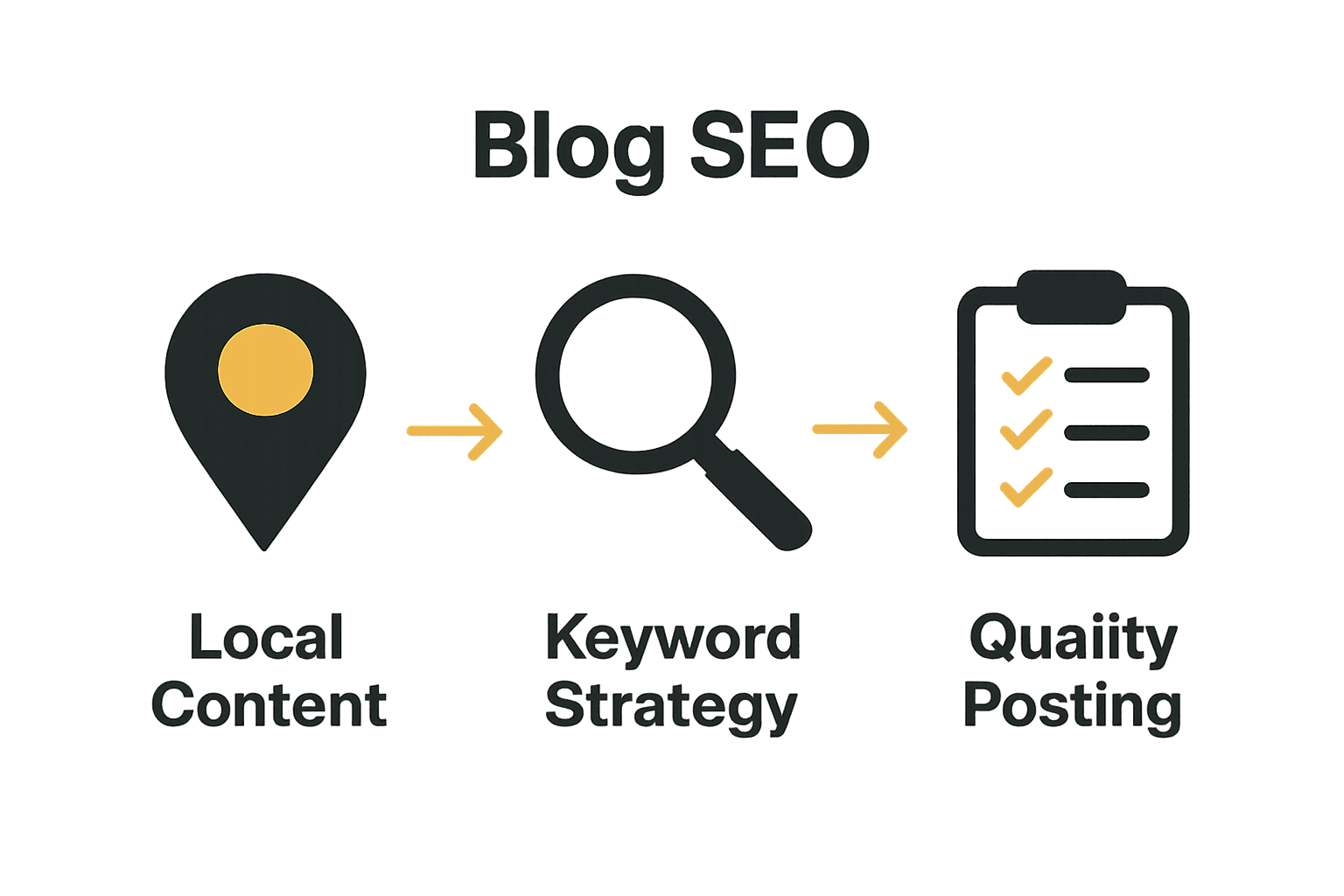
Local SEO represents a critical strategy for real estate professionals seeking to dominate neighborhood-specific search results. Keyword Strategy plays a pivotal role in crafting content that resonates with local audiences and search engine algorithms.
Research demonstrates that successful local SEO blogs go beyond generic property listings by creating hyper-targeted content that speaks directly to community interests. By developing articles that highlight neighborhood events, market trends, and local lifestyle insights, real estate professionals can position themselves as authoritative local experts who understand the nuanced dynamics of specific areas.
Key strategies for maximizing local SEO through blogging include:
- Writing detailed neighborhood profile articles
- Covering local real estate market trends
- Highlighting community events and developments
- Sharing insights about local schools and infrastructure
- Creating location-specific buying and selling guides
- Discussing upcoming local development projects
- Featuring interviews with community leaders
Through strategic, locally-focused content, real estate professionals can transform their blogs into powerful SEO tools that not only improve search rankings but also establish deep connections with potential clients in their specific geographic markets.
Common Blogging Mistakes to Avoid
Real estate professionals often stumble into predictable blogging pitfalls that can significantly undermine their digital marketing efforts. Blogging Consistency is crucial in avoiding these common traps that can derail an otherwise promising content strategy.
Research highlights several critical mistakes that can diminish a blog’s effectiveness and search engine performance. These missteps include inconsistent posting schedules, creating generic content that lacks local specificity, and prioritizing quantity over quality. Real estate bloggers frequently fail to understand that successful content requires a strategic approach that balances informative writing with targeted, audience-specific insights.
Key blogging mistakes to avoid include:
- Irregular or infrequent posting schedules
- Neglecting local market and neighborhood-specific content
- Using generic, non-targeted keywords
- Failing to proofread and edit content
- Ignoring audience engagement and comments
- Overlooking the importance of visual content
- Writing overly sales-focused articles
- Neglecting to update older blog posts
By recognizing and addressing these common pitfalls, real estate professionals can transform their blogs from ineffective digital noise into powerful, engaging platforms that attract, inform, and convert potential clients.
Unlock the Full Power of Real Estate Blogging for SEO Success
If you are struggling with inconsistent posting or generic content that fails to capture your local market, you are not alone. Role of Blogs in Real Estate SEO is critical for success.
As the article points out, real estate blogs thrive when they combine targeted neighborhood insights, market trend analysis, and buyer-focused guides. These are exactly the challenges Content Charlie helps you overcome with tailored, SEO-driven blog content designed to establish your credibility and boost your search rankings across your local areas.

Don’t let common blogging mistakes hold your real estate business back. Take action now to transform your website into a dynamic platform that attracts ready-to-act clients with focused local SEO strategies and compelling copywriting. Discover how our expert team crafts property descriptions, suburb guides, and continuous blog articles that build trust and drive leads. Visit Content Charlie and explore how local SEO & real estate copywriting can help your business stand out in search results and the minds of local buyers and sellers.
Frequently Asked Questions
What is the purpose of blogging in real estate SEO?
Blogging in real estate SEO serves to enhance digital visibility, engage potential clients, and establish professional credibility by providing valuable insights and information about the housing market and local neighborhoods.
How does blog content improve SEO for real estate websites?
Blog content improves SEO by incorporating targeted keywords, increasing website crawl frequency, creating internal linking structures, and generating fresh, relevant content that appeals to both search engines and users.
What types of content are most effective for real estate blogs?
Effective real estate blog content includes neighborhood profiles, market trend reports, homebuyer and seller guides, investment strategies, and community lifestyle features, each aimed at attracting different audience segments.
What common mistakes should be avoided when blogging for real estate SEO?
Common mistakes include inconsistent posting schedules, creating generic content, neglecting local specifics, using non-targeted keywords, and failing to engage with the audience. It’s important to focus on quality and relevance to maximize the blog’s effectiveness.
Recommended

Real Estate SEO Tips to Boost Local Rankings Fast
Real Estate SEO Tips to Boost Local Rankings Fast will get you at the top of search. But how do you do this. Let me explain below.
Did you know that over 95 percent of home buyers begin their search online? Competition for local property listings is fierce, and showing up in the right place at the right time makes all the difference. To reach serious buyers and stand out in your area, you need a real estate SEO approach tailored to your market. The right steps can help you connect with more clients and grow your business faster.
Quick Summary
| Key Point | Explanation |
|---|---|
| 1. Conduct Local Keyword Research | Identify location-specific long tail keywords to attract buyers. Use Google Keyword Planner for better targeting. |
| 2. Optimize Website Structure | Ensure a clear and logical site hierarchy for SEO. Structure listings by categories like location or property type to enhance user experience. |
| 3. Create Engaging Suburb Content | Develop detailed suburb guides that cover local features and narratives. Tailor content to answer potential buyers’ questions. |
| 4. Enhance Google Business Profile | Keep your profile updated with accurate information and engaging visuals. Regular content updates help improve local search visibility. |
| 5. Monitor and Adjust SEO Performance | Track key metrics using Google Analytics. Refine your strategies based on data to stay competitive in search rankings. |
Table of Contents
- Step 1: Research Local Keywords That Attract Buyers
- Step 2: Optimise Website Structure For Faster Results
- Step 3: Create High-Quality, Suburb-Focused Content
- Step 4: Enhance Google Business Profile For Local Impact
- Step 5: Monitor Performance And Refine SEO Strategies
Step 1: Research Local Keywords That Attract Buyers
Keyword research is your secret weapon for attracting potential home buyers through targeted local search results. You will learn how to uncover location specific search terms that connect directly with your target market.
Start by thinking like a local home buyer. What specific phrases would someone type when searching for property in your area? According to research from local audience targeting, creating content tailored to local audiences helps build search authority.
Use Google Keyword Planner and local real estate search tools to discover neighborhood specific long tail keywords. These are detailed phrases with lower search volume but higher buyer intent. For example instead of “homes for sale”, target “3 bedroom homes for sale in Broadbeach Waters” or “affordable family homes near Gold Coast schools”.
Dig into hyper local search terms that reflect real buyer motivations. Look for keywords combining location details with specific property characteristics:
- Neighborhood name + property type
- Local school district + home features
- Suburb name + buyer demographic (“first time buyer homes”)
Pro Tip: Local long tail keywords with specific details signal higher purchase intent and help you rank faster in search results.
Remember that local keyword research is an ongoing process. Update your keyword strategy regularly as neighborhood markets shift and new development trends emerge.
In the next step, you will learn how to strategically integrate these local keywords into your website content to boost your search rankings.
Step 2: Optimise Website Structure for Faster Results
Website structure is the foundation of your real estate SEO strategy. You will learn how to create a technical framework that helps search engines understand and rank your content quickly and effectively.
According to research from Search Engine Journal, conducting an SEO audit is critical for identifying areas of improvement in site structure. Start by examining your website’s core technical elements like XML sitemaps, robots.txt, page titles, headings, alt tags, and URL structures.
Focus on creating a logical and intuitive website hierarchy. Group your property listings and content into clear categories. For real estate websites, this might mean organizing by property type, location, price range, or buyer demographic. Ensure that each page is no more than three clicks away from your homepage.
Improving site performance is crucial for SEO success. As research from Promodo indicates, Core Web Vitals play a significant role in search rankings. Pay attention to:
- Largest Contentful Paint (LCP): Aim for load times under 2.5 seconds
- Interaction to Next Paint (INP): Ensure quick page responsiveness
- Cumulative Layout Shift (CLS): Maintain visual stability during page load
Pro Tip: Use Google PageSpeed Insights to diagnose and fix performance issues that could hurt your search rankings.
Check and fix broken links regularly. A seamless user experience signals to search engines that your website is well maintained and trustworthy. Use tools like Screaming Frog or Google Search Console to identify and resolve any link issues.

In the next step, you will learn how to create high quality content that complements your optimized website structure.
Step 3: Create High-Quality, Suburb-Focused Content
Creating suburb-focused content is your pathway to connecting with local home buyers and establishing your real estate expertise. You will learn how to craft compelling neighborhood content that attracts and engages your target audience.
Start by understanding the unique characteristics of each suburb you are targeting. Go beyond basic property listings and create in depth content that provides real value to potential buyers. Learn from the 7 types of real estate content every agent should use to diversify your approach.
Develop comprehensive suburb guides that showcase local amenities, school districts, community highlights, and property market trends. Think like a buyer and answer questions they would naturally ask. What makes this neighborhood special? What are the best local cafes? How are property values changing?
Incorporate storytelling into your content. Instead of just listing facts, create narratives that help potential buyers imagine living in the neighborhood. Share stories about local community events, recent development projects, or interesting historical facts about the area.
Your content should cover multiple formats to keep readers engaged:
- Neighborhood market reports
- Local school and infrastructure insights
- Community event calendars
- Property investment potential
- Local business and lifestyle highlights
Pro Tip: Use high quality local images and maps to make your content more visually appealing and informative.
Consistently update your content to reflect current market conditions and local changes.
This signals to search engines that your website provides current and relevant information.
In the next step, you will learn how to optimize your content for local search engine rankings.
Step 4: Enhance Google Business Profile for Local Impact
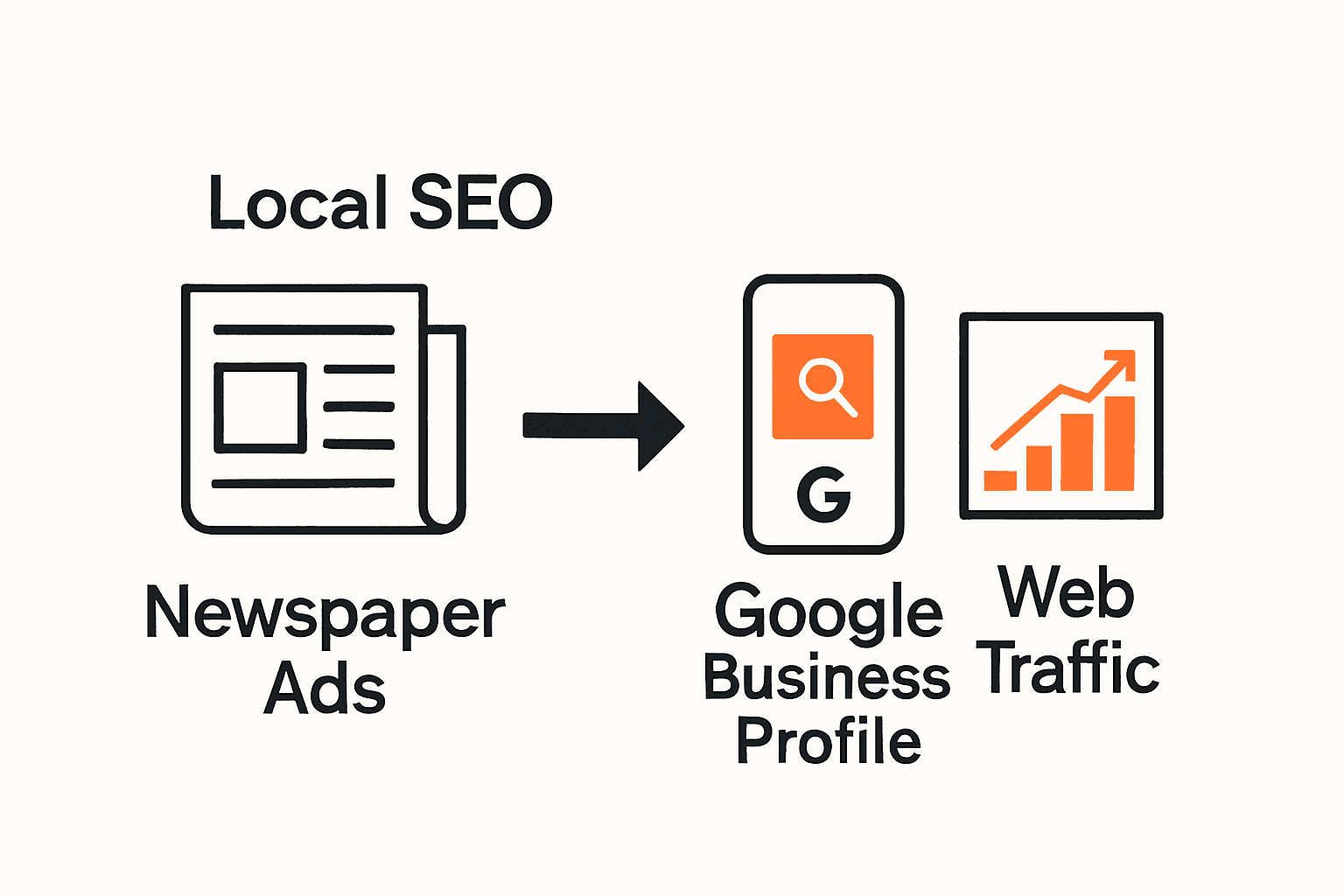
Your Google Business Profile is a powerful tool for attracting local real estate clients and improving your search visibility. You will learn how to optimize this critical digital asset to stand out in local search results.
According to research from TopOnSeek, optimizing your Google Business Profile requires careful attention to multiple elements. Start by ensuring your Google Business Profile optimization includes completely accurate NAPW details (Name, Address, Phone, Website).
Complete every section of your profile with precise and engaging information. Upload high quality professional photos of your real estate team, office, and recent property listings. Include virtual tour videos and images that showcase your local market expertise. The more comprehensive and visually appealing your profile, the more potential clients will trust your brand.
Regularly update your profile with fresh content. Post about recent property sales, market insights, community events, and local real estate trends. These updates signal to Google that your business is active and relevant.
Key elements to focus on include:
Here’s a comparison of key actions for optimizing your Google Business Profile:
| Profile Element | Best Practices | SEO Impact |
|---|---|---|
| NAPW Details | Use accurate business name Address matches website Correct phone and website |
Ensures local trust Improves ranking signals |
| Images & Videos | Upload professional photos Share virtual tour videos |
Boosts engagement Increases client trust |
| Business Category & Description | Choose most relevant category Craft detailed service description |
Better local visibility Attracts target audience |
| Reviews & Responses | Encourage client reviews Reply promptly and professionally |
Demonstrates credibility Builds reputation |
| Content Updates | Post local property news Share market trends Highlight community events |
Signals business activity Keeps profile relevant |
| Service Area Info | Specify neighborhoods List all serviced suburbs |
Targets right audience Improves search accuracy |
- Accurate business category
- Detailed service descriptions
- High resolution images
- Client reviews and responses
- Current contact information
- Local service area specifics
Pro Tip: Respond to all client reviews professionally and quickly to demonstrate excellent customer service.
Verify your business location and maintain consistent information across all online platforms.
 Inconsistent details can confuse potential clients and harm your local search rankings.
In the next step, you will learn advanced techniques for building local backlinks and increasing your online authority.
Step 5: Monitor Performance and Refine SEO Strategies
Constant monitoring and strategic refinement are the keys to maintaining strong local search rankings for your real estate business. You will learn how to track your SEO performance and make data driven improvements that keep you ahead of the competition.
Start by setting up comprehensive tracking using Google Analytics 4 and Search Console. Learn from the key performance indicators that matter most for real estate websites. According to research from Search Engine Journal, these tools help you understand critical metrics like website traffic, user behavior, and search ranking performance.
Focus on analyzing specific metrics that impact your real estate SEO strategy:
- Organic search traffic volume
- User engagement time
- Bounce rates for property listing pages
- Conversion rates from search to contact form submissions
- Top performing keywords and landing pages
- Mobile versus desktop user interactions
Conduct a monthly SEO audit to identify areas for improvement. Look for opportunities to enhance page speed, fix broken links, and optimize content based on user behavior patterns. Pay special attention to mobile friendliness and page load times.
Pro Tip: Set up custom dashboards in Google Analytics to track real estate specific metrics more efficiently.
Remember that SEO is an ongoing process. What works today might need adjustment tomorrow. Stay flexible and willing to experiment with new strategies based on your performance data.
In the final step, you will learn how to integrate these insights into a comprehensive local SEO approach for your real estate business.
Ready to Outrank Your Local Real Estate Rivals?
Struggling to turn neighborhood SEO tips into real results? Whether you feel stuck researching keywords that are not bringing buyers or frustrated by average Google rankings, you are not alone. This article showed that real estate agents need suburb-focused content, smart website structure, and a strong Google Business Profile to win local customers. But connecting all these steps can be complex and time-consuming.
Stop losing clients to competitors who appear first in local searches. At Content Charlie, we do the heavy lifting for you. Let us help you rank for targeted keywords, write suburb guides that attract the right buyers, and manage your SEO updates in line with the best practices covered here. Visit Content Charlie now and discover how easy it is to boost your local profile, capture more leads, and become the go-to real estate expert in your area. Start getting found by the customers who are searching for you today.
Frequently Asked Questions
How can I perform local keyword research for my real estate business?
Start by thinking like a home buyer and use tools to identify location-specific search terms that reflect buyer intent. Focus on long-tail keywords like “3 bedroom homes for sale in [Neighborhood]” to attract targeted traffic. Assess and adjust your keyword list regularly to match market trends.
What is the best website structure for improving real estate SEO?
A logical website structure is essential for SEO success. Group your property listings by type, location, and price range to ensure each page is easily accessible within three clicks from your homepage.
How can I create high-quality content to attract local home buyers?
Focus on developing comprehensive content that highlights suburb characteristics, local amenities, and market trends. Use engaging formats such as neighborhood guides and storytelling to connect with your audience. Update your content consistently to reflect current market conditions.
What elements should I include to optimize my Google Business Profile?
Ensure your profile has accurate NAPW details and engaging images of your team and properties. Regularly update your profile with posts about recent sales and local events to keep it active and relevant in search results.
How do I monitor my SEO performance and make improvements?
Set up tracking tools to analyze your website’s organic traffic, user engagement, and conversion rates. Conduct monthly audits to identify areas for enhancement, focusing on mobile friendliness and page speed to ensure optimal user experience.
What specific actions can I take to enhance my local search rankings in real estate?
Utilize long-tail keywords in your content, optimize your website structure, and improve your Google Business Profile. Additionally, create suburb-focused content and regularly assess your performance metrics to refine your strategies for better rankings.
Recommended

Real Estate Copywriting
12 Benefits Of Real Estate Copywriting Done By A Real Estate Agent
In the world of real estate marketing, where competition is fierce and the market is ever-evolving, the role of a real estate copywriter cannot be underestimated. These skilled writers are tasked with creating compelling, persuasive, and informative content that not only attracts potential buyers and sellers but also fosters trust and credibility for real estate professionals. However, a fundamental question arises: Should a real estate copywriter be knowledgeable about real estate? In this article, we will explore the importance of real estate knowledge for copywriters and how it can make a significant difference in their ability to craft successful campaigns.
Understanding the Real Estate Landscape
Real estate is a complex and multifaceted industry, characterized by its unique terminology, processes, and market trends. A real estate copywriter who lacks essential knowledge about the industry is like a ship without a compass, navigating turbulent waters blindly. Here are some compelling reasons why real estate knowledge is crucial for effective copywriting:
-
Speaking the Language of Real Estate
Real estate has its own jargon and terminology, which can be overwhelming to the uninitiated. Knowledgeable copywriters can effortlessly incorporate these terms into their content, making it more relatable and credible to their target audience.
Whether it’s explaining the difference between a condominium and a co-op or discussing the intricacies of a 1031 exchange, a copywriter with real estate expertise can do so with confidence and accuracy.
Language differs between countries as well. In Australia apartments are referred to as condos in the USA.
-
Creating Trust and Credibility
In the real estate world, trust is paramount. Homebuyers and sellers are making life-changing decisions, often involving substantial financial investments. They rely on the expertise and guidance of real estate professionals. When a copywriter understands the nuances of real estate, they can convey this expertise in their writing, establishing trust with readers. Credibility is earned when clients believe that the copywriter truly comprehends the industry and can provide valuable insights.
-
Addressing Market Trends
The real estate market is constantly changing, influenced by economic conditions, government policies, and consumer preferences. Copywriters who stay informed about these trends can create content that is timely and relevant. For example, a copywriter who is aware of the increasing demand for eco-friendly homes can incorporate this information into their content, demonstrating that they are in touch with current market dynamics.
-
Tailoring Content to the Target Audience
Successful real estate marketing relies on understanding the needs and aspirations of the target audience. A copywriter with real estate knowledge can better empathize with the desires of homebuyers or the challenges faced by sellers. This empathy enables them to create content that resonates with readers on a deeper level, making it more likely that the audience will take action.
-
Avoiding Costly Errors
Real estate transactions involve legal and financial complexities. A copywriter who is unaware of these intricacies might inadvertently provide inaccurate or misleading information. Such errors can have serious consequences for both clients and real estate professionals. Knowledgeable copywriters are less likely to make these costly mistakes, ensuring that their content remains reliable and trustworthy.
The Role of Research in Real Estate Copywriting
While having a solid foundation of real estate knowledge is essential, it’s important to note that copywriters don’t need to be real estate experts. Rather, they should be proficient in conducting research and staying up-to-date with industry developments. Here’s how research complements real estate knowledge:
-
In-Depth Property Research
To create persuasive property listings or descriptions, copywriters need to research the specific features, location, and history of a property. This includes details such as square footage, the number of bedrooms and bathrooms, neighborhood amenities, and any unique selling points. Accurate property information enhances the credibility of the listing and helps potential buyers make informed decisions.
-
Market Analysis
Copywriters should have the ability to analyze market data and trends to provide valuable insights to their clients. This may involve researching recent sales in a particular neighborhood, identifying price trends, or understanding the impact of market forces on property values. An understanding of market dynamics allows copywriters to craft content that addresses the concerns and interests of their audience.
-
Legal and Regulatory Knowledge
While copywriters are not legal experts, they should be aware of common legal and regulatory aspects of real estate transactions. This includes knowledge of disclosure requirements, fair housing laws, and other regulations that affect real estate marketing. Copy that respects these legal boundaries not only protects the interests of clients but also maintains the integrity of the real estate profession.
-
Local Expertise
Real estate is a highly localized industry, with market conditions varying from one region to another. Copywriters should be adept at researching and incorporating local information into their content. This might involve understanding the nuances of a specific neighborhood, school district ratings, or nearby amenities that appeal to potential buyers.
The Collaborative Approach: Copywriters and Real Estate Professionals
In many cases, the most successful real estate marketing campaigns are the result of collaboration between copywriters and real estate professionals. Here’s how these two roles can work together synergistically:
-
Leveraging the Expertise of Real Estate Professionals
Real estate agents and brokers bring invaluable expertise to the table, including in-depth knowledge of local markets, negotiation skills, and a deep understanding of the buying and selling process. Copywriters can tap into this expertise by conducting interviews with real estate professionals, gathering insights, and translating them into persuasive content. This collaboration ensures that the content is not only accurate but also captures the unique selling points of a property or the advantages of working with a particular agent.
-
Translating Expertise into Compelling Copy
While real estate professionals possess extensive knowledge, they may not always have the time or writing skills to create compelling marketing materials. This is where copywriters excel. They can take the information provided by real estate professionals and transform it into persuasive, engaging copy that resonates with the target audience. This collaborative approach maximizes the strengths of both parties.
-
Staying Informed Together
Real estate markets are dynamic and subject to change. Both copywriters and real estate professionals benefit from staying informed about the latest market trends, regulations, and consumer preferences. Regular communication and sharing of industry updates ensure that marketing materials remain current and relevant.
Case Study: The Impact of Real Estate Knowledge on Copywriting
To illustrate the significance of real estate knowledge in copywriting, let’s consider a hypothetical case study involving two different approaches to marketing a luxury penthouse apartment in a major city.
Case Study Scenario:
A luxury penthouse apartment with stunning city views is listed for sale. Two copywriters are tasked with creating marketing materials for the property:
Copywriter A has a deep understanding of real estate, including market trends, property features, and local amenities. They have also conducted research to gather data on recent sales in the building and similar properties in the area.
Copywriter B, on the other hand, lacks real estate knowledge and is relatively new to the industry. They rely solely on information provided by the real estate agent and do not conduct independent research.
Let’s compare the marketing materials created by both copywriters:
Marketing Material by Copywriter A (Knowledgeable Copywriter):
Headline: “Luxurious City Oasis: Pinnacle of Urban Living”
Body Copy: “Welcome to the epitome of urban luxury living! This exquisite penthouse offers a lifestyle like no other, with breathtaking city views that stretch as far as the eye can see. With 3,500 square feet of meticulously designed space, this penthouse redefines elegance and sophistication.
You’ll be captivated by the panoramic views of the city skyline, visible from every room in this stunning residence. Enjoy the convenience of a private elevator that takes you directly to your penthouse retreat.
Our research shows that similar properties in this building have appreciated by 10% in the last year, making this a prime investment opportunity. Don’t miss your chance to experience the ultimate in urban luxury – schedule your private tour today!”
Marketing Material by Copywriter B (Non-Knowledgeable Copywriter):
Headline: “Luxury Penthouse with City Views”
Body Copy: “Introducing a luxurious penthouse with incredible city views! This penthouse offers a unique living experience with its spacious layout and beautiful views.
The real estate agent has provided us with all the details you need to know. Please contact them for more information and to schedule a viewing.”
Analysis of the Case Study:
Copywriter A, with their deep real estate knowledge, has created marketing materials that are not only descriptive but also persuasive. They highlight the property’s unique features, mention its potential as an investment, and use terminology that resonates with potential buyers. This copywriter’s research on market trends adds credibility to the content and demonstrates a thorough understanding of the real estate industry.
Copywriter B, lacking real estate knowledge, provides basic information but fails to convey the property’s unique selling points effectively. The reliance on the real estate agent for information limits the depth and persuasiveness of the content.
In this case study, the marketing materials created by Copywriter A are more likely to attract potential buyers and generate interest in the property. Copywriter A’s real estate knowledge and research have allowed them to craft compelling content that showcases the property’s value.
Conclusion
In the world of real estate copywriting, knowledge is indeed power. While copywriters don’t need to be real estate experts, having a strong understanding of the industry’s fundamentals, along with the ability to conduct research, significantly enhances their effectiveness.
Real estate knowledge allows copywriters to speak the language of the industry, build trust and credibility, address market trends, tailor content to the target audience, and avoid costly errors.
Furthermore, collaboration between copywriters and real estate professionals can lead to marketing materials that truly shine.
Real estate professionals can provide valuable insights and information, while copywriters can translate that expertise into persuasive copy that captures the attention of potential buyers and sellers.
In a competitive real estate market, where every word matters, real estate knowledge empowers copywriters to create content that not only informs but also inspires action. Ultimately, the answer to the question, “Should a real estate copywriter be knowledgeable about real estate?” is a resounding yes. It is a key factor in achieving success in this dynamic and ever-evolving industry.
The Secret For Great Real Estate Copywriting
Engage a copywriter who was a former top selling real estate agent (see #1). They understand the mindset of a good agent and what a buyer or seller needs. Experience matters.

What Is A Cpywriter In An AI World [2023]
What Is A Cpywriter In An AI World 2023
Copywriting: the art of persuasion and the backbone of modern marketing. In this comprehensive article, delve into the world of copywriting, exploring what copywriters do, the demand for their expertise in Australia, required qualifications, the impact of AI, and how to break into the field as a freelance copywriter with no prior experience. We’ll also dive into specific roles within the industry, such as marketing copywriters, real estate copywriters, and social media copywriters.
What Does a Copywriter Do?
Crafting Persuasive Content:
A copywriter’s primary role is to craft compelling content that inspires action. From captivating headlines to persuasive product descriptions and engaging marketing campaigns, they strategically use words to influence readers.
Understanding the Target Audience:
Copywriters deeply understand their target audience. They conduct thorough market research, create buyer personas, and tailor their messaging to resonate with specific demographics and psychographics.
SEO Optimization:
In the digital age, copywriters collaborate with SEO experts to ensure their content ranks well on search engines. This involves thorough keyword research and seamlessly integrating relevant keywords into their writing.
Adapting to Various Mediums:
Copywriters adapt their writing styles to various mediums, including websites, social media, email marketing, print materials, and more. Each medium demands a different approach.
Storytelling:
Effective copywriting often involves storytelling. Copywriters create narratives that captivate readers, evoke emotions, and guide them towards desired actions, such as making a purchase.
A/B Testing:
To enhance the effectiveness of their copy, copywriters frequently conduct A/B testing. This involves creating variations of content to determine which performs better in terms of engagement and conversions.
Is Copywriting in Demand in Australia?
The Booming Digital Landscape:
With the rapid growth of e-commerce, online marketing, and content-driven strategies, the demand for skilled copywriters in Australia is soaring.
Diverse Industry Needs:
Copywriting is a versatile skill applicable to various sectors. From retail and finance to healthcare and technology, businesses across industries require compelling copy to effectively communicate with their target audiences.
SEO Emphasis:
As search engine optimization (SEO) becomes increasingly crucial, businesses seek copywriters who can create engaging content that also ranks well on search engines.
Content Marketing:
Content marketing is a prevailing strategy. Copywriters play a critical role in producing blog posts, articles, and other content that establishes industry authority and builds trust with consumers.
What Qualifications Do You Need to Become a Copywriter?
Strong Writing Skills:
Exceptional writing skills are essential. Copywriters must excel in grammar, spelling, punctuation, and style.
Marketing Knowledge:
Understanding marketing principles is crucial. Courses or degrees in marketing or advertising can provide an advantage.
Portfolio:
Building a diverse portfolio of writing samples showcasing your skills is vital. This demonstrates your ability to write for different industries and mediums.
Continuous Learning:
Copywriting is an ever-evolving field. Stay updated on industry trends, SEO best practices, and new writing techniques.
Networking:
Building relationships with industry professionals can unlock opportunities. Attend marketing events and join copywriting groups to expand your network.
Has AI Impacted the Role of Copywriters?
AI Writing Tools:
AI-driven writing tools have gained popularity, offering quick content generation. However, they cannot replace the creativity, nuance, and strategic thinking of a human copywriter.
Complementary Tools:
Many copywriters embrace AI as a complementary tool for tasks like generating ideas or improving SEO optimization.
Human Touch:
AI lacks the human touch needed for persuasive storytelling and understanding the emotional nuances of language, making copywriters irreplaceable.
How Can You Become a Freelance Copywriter with No Experience?
Build a Portfolio:
Start building a portfolio, even without paid experience. Write for personal blogs, volunteer, or create hypothetical projects to showcase your skills.
Offer Free Workshops or Consultations:
Initially, offer your services for free or at a discounted rate to build a client base and gain testimonials.
Freelance Platforms:
Join freelance platforms like Upwork, Fiverr, or Freelancer to find entry-level gigs.
Continuous Learning:
Invest in online courses, webinars, and resources to improve your skills and keep up with industry trends.
Networking:
Attend industry events, webinars, and join online communities to connect with experienced copywriters who can offer guidance and opportunities.
Unleash the power of words and embark on an exciting journey into the world of copywriting.
Discover Specific Copywriter Jobs
What does a Marketing Copywriter do?
Crafting Marketing Collateral:
Marketing copywriters create compelling content for brochures, advertisements, and newsletters to promote products or services.
Website Copy:
They produce engaging website content, product descriptions, and landing pages to convert visitors into customers.
Email Campaigns:
Marketing copywriters develop persuasive email campaigns to nurture leads and drive sales.
What is the role of a Copywriter for Real Estate?
Property Descriptions:
Real estate copywriters create captivating property descriptions that highlight the unique features and benefits of homes or commercial properties.
Listings:
They craft enticing listings for real estate websites and portals to attract potential buyers and renters.
Neighborhood Profiles:
Real estate copywriters often write informative neighborhood profiles, helping buyers understand the appeal of the local area.
Who is a Copywriter for Social Media?
Social Media Posts:
Social media copywriters create engaging posts, captions, and tweets to foster brand engagement and increase website traffic.
Ad Campaigns:
They develop targeted ad copy for paid social media campaigns that aim to convert specific demographics into customers.
Community Management:
Copywriters manage the brand voice and engage with followers by addressing inquiries and comments.
In conclusion
Copywriting is a powerful form of persuasion in today’s marketing landscape. Skilled copywriters are in high demand across various industries in Australia. Aspiring copywriters should focus on honing their writing skills, gaining marketing knowledge, and building a diverse portfolio.
While AI tools are emerging, they enhance human creativity rather than replace it. With dedication, continuous learning, and networking, it is possible to become a freelance copywriter even without prior experience. Whether it’s in marketing, real estate, or social media, copywriters play a crucial role in shaping brand narratives and driving customer engagement.

Client Expectations In Real Estate
Client Expectations in Real Estate: Balancing Desires, Realities, and the Role of Big-Brand Agencies
The real estate industry is a complex and dynamic field where client expectations play a pivotal role in shaping the buying and selling process. Buyers and sellers often come into the real estate market with specific desires and expectations, which can range from dream homes to lofty price targets. Real estate agents, tasked with bridging the gap between these aspirations and market realities, face a challenging balancing act. In this comprehensive 3000-word article, we will explore the intricacies of managing client expectations in real estate and examine how working with a big-brand agency, such as Century 21, can offer valuable resources to address these challenges effectively.
Section 1: The Dynamics of Client Expectations
1.1. The Varied Landscape of Client Expectations
Real estate clients are diverse, each with unique needs, goals, and expectations. Some buyers may envision their dream home with specific features, while sellers often hope for the highest possible sale price. It’s essential for real estate agents to understand and adapt to these varying expectations.
1.2. The Role of Emotion
Real estate transactions are inherently emotional, as they involve one of the most significant financial and personal decisions individuals make in their lives. Emotions can influence clients’ expectations and decision-making processes, making it crucial for agents to manage these feelings effectively.
Section 2: Balancing Desires and Market Realities
2.1. The Influence of Market Conditions
Real estate markets are subject to fluctuations influenced by factors like supply and demand, interest rates, and economic conditions. Agents must educate clients about market realities and how they can impact their expectations.
2.2. Setting Realistic Price Expectations
One of the most common challenges agents face is aligning sellers’ price expectations with the current market conditions. This section discusses strategies for helping sellers understand the value of their property and pricing it realistically.
2.3. Managing Buyer Wish Lists
Buyers often have extensive wish lists for their ideal homes, but these desires may clash with their budget or market availability. Agents must guide buyers to make informed choices and prioritize their needs.
Section 3: Handling Unrealistic Client Expectations
3.1. Identifying Unrealistic Expectations
Agents must recognize when clients’ expectations are unrealistic, which can lead to prolonged listings, frustrated buyers, or missed opportunities. This section outlines common signs of unrealistic expectations.
3.2. Communication and Transparency
Open and honest communication is key to managing unrealistic expectations. Agents should set clear boundaries, educate clients about market realities, and help them adjust their expectations without damaging the client-agent relationship.
3.3. Providing Alternative Solutions
When clients have unrealistic expectations, agents can explore alternative solutions, such as renovation, different neighborhoods, or investment properties. These options can align more closely with clients’ goals and budgets.
Section 4: The Benefits of Working with a Big-Brand Agency
4.1. Brand Recognition and Trust
Big-brand agencies like Century 21 carry significant brand recognition and trust within the industry. This can reassure clients and provide credibility, especially when discussing market realities and managing expectations.
4.2. Access to Market Data and Research
Big-brand agencies often invest in robust market research and data analysis. Agents can leverage these resources to provide clients with up-to-date information, helping them make informed decisions and manage expectations effectively.
4.3. A Network of Experts
Working with a big-brand agency means access to a vast network of experienced agents, mortgage brokers, and legal professionals. This network can be invaluable in finding creative solutions to address clients’ expectations.
4.4. Marketing and Exposure
Big-brand agencies typically have substantial marketing budgets and resources. Agents can use these resources to showcase properties effectively and attract buyers, mitigating clients’ unrealistic expectations about marketing results.
Conclusion
Managing client expectations in real estate is an art that involves balancing desires, market realities, and emotions. Real estate agents must navigate this delicate process to provide the best service while maintaining trust and transparency. Working with a big-brand agency like Century 21 offers agents access to essential resources and support, enhancing their ability to address clients’ expectations effectively. Ultimately, successful real estate professionals are those who can align client goals with market conditions, ensuring a smoother and more satisfying experience for all parties involved.

15 Proven Lead Generation Ideas for Real Estate Agents
15 Proven Lead Generation Ideas for Real Estate Professionals
In the ever-evolving world of real estate, lead generation is the lifeblood of success. The ability to attract and convert potential clients into loyal customers can make or break a real estate career. With the advent of digital marketing and the changing preferences of consumers, real estate professionals need to be innovative and strategic in their approach to lead generation.
In this comprehensive article, we will explore 15 proven lead generation ideas for real estate professionals. Whether you’re an experienced agent looking to expand your client base or a newcomer to the industry, these strategies will help you generate more leads, nurture them effectively, and ultimately grow your real estate business.
Why Real Estate Agents Need To Lead Generate
In the dynamic world of real estate, the role of a real estate agent is multi-faceted. Beyond just showing homes and facilitating transactions, successful agents must continually generate leads to sustain their business. Lead generation is the cornerstone of a thriving real estate career, and it’s not just a choice but a necessity. In this article, we’ll delve into the reasons why real estate agents need to lead generate.
- Constantly Changing Market Conditions: Real estate markets are subject to fluctuations influenced by various factors, including economic trends, interest rates, and local supply and demand. These fluctuations can significantly impact the number of active buyers and sellers in the market. By actively generating leads, agents can adapt to changing market conditions and ensure a steady pipeline of potential clients, even during challenging times.
- Maintaining a Competitive Edge: The real estate industry is highly competitive. With countless agents vying for the attention of potential clients, those who consistently generate leads stand out. Being proactive in lead generation allows agents to maintain a competitive edge, secure more listings, and increase their chances of closing deals.
- Building a Robust Client Base: A strong client base is the foundation of a successful real estate career. Lead generation is essential for expanding and diversifying your client base. By continuously attracting new leads, you can reduce your reliance on a small pool of repeat clients and referrals.
- Fostering Long-Term Success: Real estate is not just about short-term gains; it’s a long-term game. Agents who focus solely on existing clients and neglect lead generation may find their business stagnating or declining over time. To ensure long-term success and sustainability, agents must consistently invest in lead generation efforts.
- Navigating Seasonal Variations: Real estate markets often experience seasonal fluctuations. For example, spring and summer are typically busy seasons for home sales, while winter may see a slowdown. Effective lead generation strategies help agents adapt to these seasonal variations and maintain a steady flow of clients year-round.
- Expanding Referral Networks: A significant portion of real estate business comes from referrals. Lead generation not only involves finding new clients but also nurturing relationships with existing clients and colleagues who can refer potential buyers and sellers. A well-maintained referral network can be a valuable source of leads.
- Capitalizing on Emerging Trends: The real estate industry is continually evolving, with emerging trends and technologies shaping the way business is conducted. Agents who actively lead generate are more likely to stay informed about industry changes and adapt to new tools and strategies, giving them a competitive advantage.
- Maximizing Income Potential: Real estate agents often work on a commission basis, meaning their income is directly tied to the number of deals they close. Effective lead generation directly impacts an agent’s income potential. More leads translate into more opportunities to close deals and earn commissions.
- Providing Valuable Services: Lead generation is not just about self-interest; it’s also about helping potential clients achieve their real estate goals. By actively reaching out to potential buyers and sellers, agents provide valuable services to individuals looking for guidance in the complex world of real estate transactions.
- Meeting Personal Goals: Real estate agents have personal and financial goals they aim to achieve. Effective lead generation is the pathway to meeting these goals, whether it’s purchasing a home, funding education, or achieving financial security.
Here are 15 ways to lead generate in real estate
-
Leverage the Power of Your Network
Your existing network is a valuable source of potential leads. Tap into your personal and professional contacts, including friends, family, and past colleagues. Let them know you’re in real estate, and ask for referrals. Word-of-mouth recommendations can be incredibly effective.
-
Optimize Your Online Presence
Having a strong online presence is crucial in today’s digital age. Create an appealing and informative website showcasing your listings, expertise, and client testimonials. Ensure it’s mobile-friendly and optimized for search engines (SEO).
-
Content Marketing
Start a real estate blog on your website. Write informative, relevant, and engaging content that addresses common questions and concerns of homebuyers and sellers. Share your blog posts on social media platforms to attract organic traffic.
-
Social Media Marketing
Leverage social media platforms like Facebook, Instagram, LinkedIn, and Twitter to connect with potential clients. Share visually appealing posts about your listings, local real estate market trends, and helpful tips for buyers and sellers.
-
Email Marketing
Build an email list of leads and past clients. Send regular newsletters with valuable content, market updates, and exclusive listings. Email marketing is an effective way to nurture leads over time.
-
Online Advertising
Invest in online advertising platforms like Google Ads and Facebook Ads. Create targeted ad campaigns to reach potential buyers and sellers in your area. Use compelling ad copy and eye-catching visuals to grab attention.
-
Real Estate Lead Generation Websites
Consider subscribing to real estate lead generation websites like Zillow, Realtor.com, or Redfin. These platforms can help you access a steady stream of potential clients searching for properties online.
-
Host Webinars and Virtual Events
Offer webinars or virtual events on topics related to real estate, such as “First-Time Homebuyer’s Guide” or “Investing in Real Estate.” Promote these events through your website and social media channels to capture leads.
-
Open Houses
Open houses are not just for showcasing properties; they’re also opportunities to meet potential buyers and sellers. Collect contact information and follow up with attendees after the event.
-
Networking Events
Participate in local networking events, such as Chamber of Commerce meetings or real estate industry gatherings. Building relationships with fellow professionals can lead to referrals and partnerships.
-
Collaborate with Local Businesses
Establish partnerships with local businesses like mortgage brokers, contractors, and interior designers. These collaborations can lead to mutual referrals and expand your network.
-
Direct Mail Marketing
Send targeted direct mail campaigns to specific neighborhoods or demographics. Include eye-catching postcards or flyers showcasing your listings and services.
-
Online Reviews and Testimonials
Encourage satisfied clients to leave reviews on platforms like Google My Business, Yelp, and Zillow. Positive reviews build credibility and trust, attracting more leads.
-
Real Estate SEO
Invest in local SEO strategies to improve your website’s visibility in local search results. Optimize your Google My Business profile and use location-specific keywords to attract local leads.
-
Real Estate Lead Generation Tools
Utilize lead generation tools and software, such as CRM (Customer Relationship Management) systems, to manage and nurture leads effectively. These tools can automate follow-up processes and help you stay organized.
Conclusion
Successful lead generation in real estate requires a multi-faceted approach that combines traditional methods with modern digital strategies. By leveraging your network, optimizing your online presence, and utilizing various marketing channels, you can attract and convert leads effectively. Remember that lead generation is an ongoing process; nurturing relationships and providing value to potential clients are key to long-term success in the competitive real estate industry. With these 15 proven lead generation ideas, you’ll be well-equipped to grow your real estate business and thrive in any market.
BONUS
Want another 17 lead generation for real estate strategies? Get it FREE here or buy on Amazon

11 Market Fluctuation Issues For Gold Coast Agents Solved [2023]
11 Market Fluctuation Issues For Gold Coast Agents Solved [2023]
The glittering skyline, pristine beaches, and a lifestyle that many can only dream of; the Gold Coast in Queensland, Australia, is an alluring destination for both residents and tourists. This coastal paradise is also a hub for real estate, with its property market experiencing a mix of highs and lows, much like the waves that kiss its shores. Real estate agents on the Gold Coast often find themselves grappling with the ebb and flow of market fluctuations, and this article delves into the unique challenges they face. Moreover, it explores whether aligning with a big-brand real estate agency can provide a lifeline to smooth out these issues.
Understanding the Gold Coast Real Estate Market
Before delving into the problems faced by Gold Coast real estate agents, it’s essential to grasp the nature of the local property market. The Gold Coast market is characterized by its volatility, driven by factors such as:
- Tourism Influence: The city’s strong tourism sector, including attractions like Surfers Paradise and theme parks, influences property demand. Tourism-driven events can lead to peaks in short-term rentals, creating opportunities for investors.
- Economic Factors: Economic conditions, such as employment rates and income levels, play a significant role in property demand. Economic downturns can lead to decreased buyer confidence.
- Population Growth: Population growth, driven by both migration and internal movement, impacts housing demand and rental markets.
- Development Trends: The Gold Coast experiences periods of significant construction and development, leading to fluctuations in the supply of properties.
- External Factors: Events like global economic crises or natural disasters can have unforeseen effects on the local real estate market.
Challenges Faced by Gold Coast Real Estate Agents
Gold Coast real estate agents encounter several challenges related to market fluctuations:
- Inconsistent Income: The cyclical nature of the market can lead to inconsistent incomes for agents. In a booming market, agents may enjoy substantial commissions, but during downturns, they often struggle to close deals.
- High Competition: The Gold Coast boasts a substantial number of real estate agents, which can result in fierce competition for listings and buyers. In a saturated market, standing out becomes increasingly difficult.
- Market Timing: Successfully timing the market to maximize returns for clients can be challenging. Agents must decide when to buy or sell, and if their timing is off, it can result in financial losses for their clients.
- Economic Uncertainty: Economic fluctuations, both locally and globally, can create uncertainty among buyers and sellers. This uncertainty can lead to hesitancy in the real estate market.
- Seasonal Variations: The Gold Coast experiences seasonal fluctuations, with peak tourism periods influencing short-term rental markets. Agents must adapt their strategies to cater to these seasonal trends.
The Role of Big-Brand Real Estate Agencies
Big-brand real estate agencies, known for their global recognition and established reputations, have garnered attention as potential solutions to the challenges faced by Gold Coast agents. These agencies offer several advantages:
- Brand Recognition: The recognizable name of a big-brand agency can instill trust in clients. This trust can be especially beneficial when market conditions are uncertain.
- Marketing Resources: Large agencies often have substantial marketing budgets, allowing them to promote properties effectively and reach a broader audience. This can be particularly valuable in a competitive market.
- Training and Support: Big-brand agencies invest in comprehensive training programs and ongoing support for their agents. This equips agents with the skills and knowledge to adapt to changing market conditions.
- Network and Referrals: The extensive network of agents within a big-brand agency can lead to more referrals and collaborative opportunities, increasing an agent’s chances of closing deals.
- Stability and Resources: These agencies typically have financial stability and access to resources that smaller agencies may lack. This stability can provide agents with a safety net during challenging market periods.
Gold Coast Real Estate Agent Case Studies
To understand the impact of working with big-brand real estate agencies on navigating market fluctuations, let’s explore a couple of real-world case studies.
Case Study 1: The Independent Agent
Sarah, an independent real estate agent based in the Gold Coast, enjoys the freedom of running her own business but struggles with the unpredictability of market fluctuations. During a buyer’s market, her commissions shrink significantly, leading to financial stress and uncertainty about her future in the industry.
Seeking stability and support, Sarah decides to join a well-known big-brand real estate agency operating in the Gold Coast market. With the agency’s brand recognition, marketing resources, and extensive network, she starts to see improvements in her business. During the next market downturn, Sarah finds herself better equipped to weather the challenges, thanks to the stability and resources provided by the big-brand agency.
Case Study 2: The Agent Already with a Big-Brand Agency
Michael has been part of a big-brand real estate agency on the Gold Coast for several years. While he appreciates the brand’s reputation and resources, he still faces challenges during market fluctuations. In a highly competitive market, he often struggles to secure listings and maintain consistent commissions.
To overcome these challenges, Michael decides to leverage the resources of his big-brand agency even further during challenging market conditions. He actively engages in additional training opportunities and taps into the agency’s vast network to find potential buyers and sellers. By adapting his strategies and capitalizing on the agency’s support, he manages to maintain a steady income and reputation, even when the market is less favorable.
Conclusion
Navigating market fluctuations is an enduring challenge for Gold Coast real estate agents. While working with a big-brand real estate agency can offer various advantages, it’s essential to remember that success ultimately depends on the agent’s adaptability, skills, and willingness to leverage the resources available to them.
Big-brand agencies provide brand recognition, marketing resources, training, and a network that can help agents withstand market fluctuations. However, agents must actively engage with these benefits to maximize their impact. Additionally, some independent agents may prefer the freedom and autonomy of working on their terms, even if it means facing more significant challenges during market downturns.
In the end, the decision to work with a big-brand real estate agency should be based on a thorough assessment of an agent’s individual goals, strengths, and preferences. While such agencies can certainly help smooth out some of the issues caused by market fluctuations, success in the Gold Coast real estate industry ultimately comes down to the agent’s ability to adapt and thrive in any market conditions.
So which is the best big brand agency to consider? Click on the link to read more

Market Fluctuation Problems For Brisbane Real Estate Agents Solved
10 Market Fluctuation Issues Solved By Brisbane Real Estate Agents [2023]
The world of real estate is a dynamic and ever-changing landscape. Real estate agents often find themselves riding the waves of market fluctuations, facing both the highs of a seller’s market and the lows of a buyer’s market. These fluctuations can present significant challenges to real estate professionals, impacting their income, job security, and overall success in the industry. In this article, we will explore the problem of market fluctuations faced by real estate agents and investigate whether working with a big-brand real estate agency can provide a solution to help smooth out this issue.
Understanding Market Fluctuations
Market fluctuations are a natural part of the real estate industry, driven by various factors such as economic conditions, interest rates, demographics, and local supply and demand. Real estate agents, who act as intermediaries between buyers and sellers, are directly affected by these fluctuations.
In a seller’s market, where demand for properties exceeds supply, real estate agents may find it easier to sell homes quickly and at higher prices. Conversely, in a buyer’s market, where there is an abundance of properties and fewer buyers, agents may struggle to close deals and may need to lower prices to attract buyers. These market shifts can result in significant income variations for real estate professionals.
Challenges Faced by Brisbane Real Estate Agents
Real estate agents often encounter several challenges due to market fluctuations:
- Inconsistent Income: The unpredictability of market conditions can lead to inconsistent income for agents. During a seller’s market, they may earn substantial commissions, but in a buyer’s market, their earnings can plummet.
- Increased Competition: In a competitive market, agents must work harder to stand out and secure listings. When the market is flooded with properties, they may face difficulties finding buyers.
- Longer Sales Cycles: In a slow market, properties may take longer to sell, leading to extended sales cycles and reduced turnover for agents.
- Stress and Uncertainty: The constant ups and downs of the real estate market can create stress and uncertainty for agents, impacting their job satisfaction and overall well-being.
Big-Brand Real Estate Agencies: A Potential Solution?
Many real estate agents consider affiliating with big-brand real estate agencies in the hopes of mitigating the challenges posed by market fluctuations. These large, well-established firms often tout several advantages that may help agents weather market ups and downs:
- Brand Recognition: Big-brand agencies have established names and reputations in the industry, which can attract clients even during slower market periods. Clients may trust these agencies more, making it easier for agents to secure listings.
- Marketing Resources: Larger agencies typically have more substantial marketing budgets, enabling them to promote properties effectively and reach a wider audience. This can be especially beneficial when the market is competitive and requires creative marketing strategies.
- Training and Support: Big-brand agencies often offer comprehensive training programs and ongoing support for their agents. This can help agents adapt to changing market conditions and develop their skills to excel in any environment.
- Network and Referrals: A vast network of agents within a big-brand agency can lead to more referrals and collaborative opportunities, increasing an agent’s chances of closing deals in any market.
- Stability and Resources: These agencies typically have financial stability and access to resources that smaller agencies may lack. This stability can provide agents with a safety net during challenging market periods.
Case Studies: Real-World Experiences
To understand the impact of working with big-brand real estate agencies on navigating market fluctuations, let’s explore a couple of real-world case studies.
Case Study 1: The Independent Agent
Jane, an independent real estate agent, has been in the business for several years. She enjoys the flexibility of working independently but struggles when the market takes a downturn. During a particularly slow market phase, she experiences a significant drop in income, and her stress levels rise as she faces uncertainty about her future in the industry.
After much consideration, Jane decides to join a well-known big-brand real estate agency. With access to the agency’s marketing resources and a network of experienced agents, she begins to see improvements in her business. The agency’s reputation attracts more clients, and Jane benefits from ongoing training and support. During the next market downturn, she finds herself better equipped to weather the storm, thanks to the stability and resources provided by the big-brand agency.
This is something that won’t happen if Jane stays independent or joins another independent agency.
Case Study 2: The Agent Already with a Big-Brand Agency
John has been with a big-brand real estate agency for several years. While he appreciates the brand recognition and resources the agency provides, he still faces challenges during market fluctuations. When the market is booming, he enjoys significant success and commissions. However, during a buyer’s market, he struggles to secure listings and close deals.
John decides to leverage the resources of his big-brand agency even further during the challenging market conditions. He takes advantage of additional training opportunities and taps into the agency’s vast network to find potential buyers and sellers. By adapting his strategies and capitalizing on the agency’s support, he manages to maintain a steady income and reputation, even when the market is less favorable.
Century 21: A Legacy of Excellence in Real Estate
When it comes to real estate, the name Century 21 is synonymous with excellence, innovation, and a legacy that spans several decades. Founded in 1971 by Art Bartlett and Marsh Fisher in Orange County, California, Century 21 has grown to become one of the world’s most recognizable and respected real estate brands. With a commitment to providing top-notch service, empowering agents, and embracing technological advancements, Century 21 has played a pivotal role in shaping the modern real estate landscape.
The Birth of Century 21
Century 21 was founded on the principle of combining the local expertise of individual real estate agents with the strength of a global brand. The idea was to create a network of real estate professionals who could provide clients with unparalleled service, whether they were buying or selling property in their hometown or across the world.
From its inception, Century 21 focused on fostering a culture of excellence, professionalism, and continuous learning among its agents. This commitment to education and training quickly set the brand apart in the real estate industry.
Global Expansion and Market Presence
One of Century 21’s key strengths is its global reach. With thousands of offices in over 80 countries and territories, Century 21 boasts an extensive international network. This global presence has been a significant advantage for clients looking to buy or sell properties in foreign markets or for agents seeking cross-border opportunities.
The brand’s commitment to excellence has made it a trusted name for clients worldwide. The distinctive gold jacket worn by Century 21 agents has become a symbol of professionalism and expertise in real estate, and it’s a sight recognized in communities around the globe.
Technology and Innovation
Century 21 has consistently been at the forefront of technological innovation in the real estate industry. The brand has embraced advancements in digital marketing, data analytics, and customer relationship management tools to empower its agents and provide clients with a seamless and efficient experience.
In recent years, Century 21 has invested heavily in cutting-edge technology to streamline the homebuying and selling processes. These innovations include immersive virtual tours, augmented reality apps, and artificial intelligence-driven data analysis. Such tools not only make transactions more efficient but also enhance the overall customer experience.
Support and Training
One of the cornerstones of Century 21’s success has been its commitment to agent training and support. The brand offers comprehensive training programs designed to equip its agents with the knowledge and skills necessary to excel in the competitive real estate market. Whether it’s marketing strategies, negotiation skills, or the latest industry trends, Century 21 ensures that its agents are well-prepared to meet their clients’ needs.
Additionally, the brand provides ongoing support through mentoring programs, coaching, and a vast network of experienced professionals. This support system helps new agents build their careers and allows seasoned agents to stay ahead in a constantly evolving industry.
Community Involvement
Beyond its business success, Century 21 has a strong tradition of community involvement and philanthropy. Many local Century 21 offices are actively engaged in charitable activities and support causes that matter to their communities. This commitment to giving back reflects the brand’s values and its desire to make a positive impact beyond real estate transactions.
Century 21 has earned its reputation as a real estate powerhouse through a combination of innovation, a commitment to excellence, global reach, and a dedication to agent success. For decades, it has remained a trusted name for clients seeking expert guidance in buying or selling real estate. As the real estate industry continues to evolve, Century 21 stands ready to adapt and lead the way, ensuring that its legacy of excellence endures for generations to come.
Conclusion
Navigating market fluctuations is an enduring challenge for real estate agents. While working with a big-brand real estate agency can offer various advantages, it’s essential to remember that success ultimately depends on the agent’s adaptability, skills, and willingness to leverage the resources available to them.
Big-brand agencies provide brand recognition, marketing resources, training, and a network that can help agents withstand market fluctuations. However, agents must actively engage with these benefits to maximize their impact. Additionally, some independent agents may prefer the freedom and autonomy of working on their own terms, even if it means facing more significant challenges during market downturns.
In the end, the decision to work with a big-brand real estate agency should be based on a thorough assessment of an agent’s individual goals, strengths, and preferences. While such agencies can certainly help smooth out some of the issues caused by market fluctuations, success in the real estate industry ultimately comes down to the agent’s ability to adapt and thrive in any market conditions.