
- You are here:
- Home »
- Newsletters
Category Archives for Newsletters
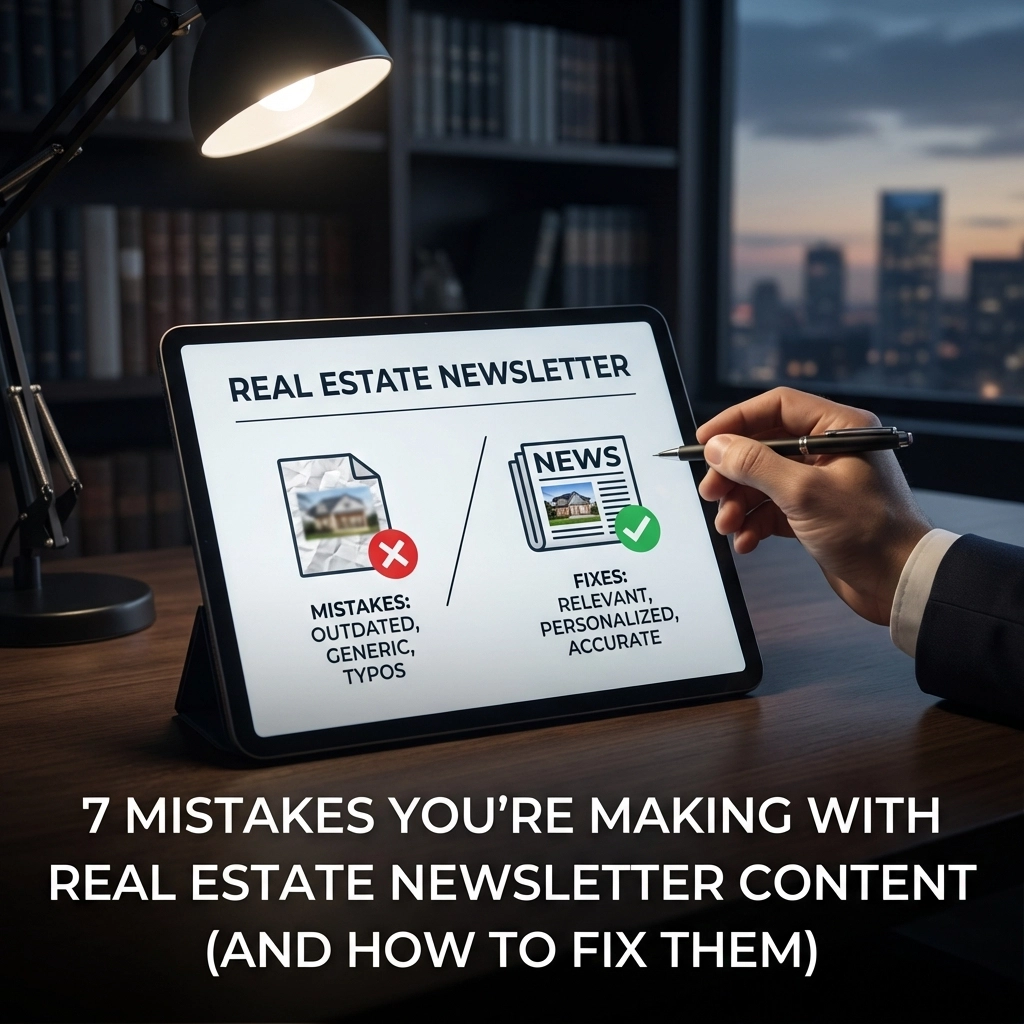
7 Real Estate Newsletter Content Mistakes To Avoid
You’re sending newsletters religiously, but your phone isn’t ringing. Your open rates are dismal, and your unsubscribe rate keeps climbing. Sound familiar? Hmm you are committing the deadly real estate newsletter content mistakes!
Here’s the hard truth: most real estate agents are sabotaging their own newsletter success without even realizing it. You’re not alone: studies show that 73% of real estate professionals struggle with email marketing effectiveness, despite newsletters being one of the highest ROI marketing channels available.
The good news? These mistakes are completely fixable once you know what to look for. Let’s dive into the seven most common newsletter blunders that are costing you leads, and more importantly, how to turn things around starting today.
Real Estate Newsletter Content Mistakes #1: Sending Newsletters Without a Clear Purpose
The Problem: You’re treating your newsletter like a digital junk drawer, stuffing it with random property updates, market stats, and whatever content you found online that week.
Every newsletter you send should answer this question: “What specific action do I want my readers to take after reading this?” Without a clear purpose, your newsletter becomes noise in an already crowded inbox.
The Fix:
• Define a single primary goal for each newsletter edition
• Choose from these proven purposes:
- Generate seller leads (neighborhood market reports)
- Attract buyer inquiries (new listing showcases)
- Nurture past clients (home maintenance tips)
- Position yourself as the local expert (community news + insights)
• Craft every section around supporting that primary goal
• Include only content that moves readers toward your desired action
Pro Tip: Create a content calendar mapping each newsletter to a specific business objective. January might focus on seller leads with market forecasts, while March targets buyers with spring inventory updates.
Mistake #2: Inconsistent Sending Schedules That Confuse Your Audience
The Problem: You send three newsletters in one week when you’re motivated, then disappear for two months when business gets busy.
Inconsistency kills trust and engagement. Your subscribers forget who you are, and worse, they move on to agents who stay consistently visible in their inbox.
The Fix:
• Choose a realistic frequency you can maintain long-term:
- Weekly: High engagement but requires significant content
- Bi-weekly: Sweet spot for most agents
- Monthly: Minimum viable frequency for staying relevant
• Set a specific day and time (e.g., “First Tuesday of every month at 10 AM”)
• Batch create content during slow periods to maintain consistency during busy times
• Use scheduling tools to automate delivery and maintain your rhythm
Reality Check: It’s better to send a quality monthly newsletter consistently than to send sporadic weekly ones that fizzle out after two months.
Mistake #3: Treating All Subscribers the Same Way
The Problem: You’re sending the same generic content to first-time homebuyers, luxury sellers, and past clients from 2018.
This one-size-fits-all approach creates irrelevant content that feels impersonal and drives unsubscribes. Different people need different information at different stages of their real estate journey.
The Fix:
• Segment your list by these key categories:
- Active buyers (currently searching)
- Potential sellers (showed interest but haven’t listed)
- Past clients (closed transactions 1+ years ago)
- Sphere of influence (friends, family, professional contacts)
- Geographic focus (specific neighborhoods or price ranges)
• Create targeted content streams:
- Buyers get market trends and new listings
- Sellers receive neighborhood sales data and staging tips
- Past clients get home maintenance advice and referral requests
• Use simple tagging systems in your email platform to automate segmentation

Mistake #4: Generic Branding That Makes You Forgettable
The Problem: Your newsletter looks like it came from “[email protected]” with stock photos and templated content that could be from any agent in any city.
Real estate is a relationship business. Generic newsletters build zero relationships and position you as just another interchangeable service provider.
The Fix:
• Send from your personal name and professional email address
• Include your professional headshot in every newsletter
• Write in your authentic voice: if you’re naturally funny, be funny; if you’re data-driven, lead with statistics
• Share local insights only you would know:
- Which coffee shop just opened on Main Street
- Why traffic patterns changed after the new school was built
- Personal observations from your recent neighborhood walks
• Include your unique value proposition in your signature and bio sections
Example: Instead of “Market Update for January,” try “Why I’m Telling My Seller Clients to List Now (And You Should Know This Too)”
Mistake #5: Mobile-Unfriendly Formatting That Drives Readers Away
The Problem: Your newsletter looks perfect on your desktop but turns into an unreadable mess on smartphones: where 68% of emails are actually opened.
Poor mobile formatting is an instant credibility killer. Readers will unsubscribe rather than squint at tiny text or struggle with broken layouts.
The Fix:
• Use single-column layouts that stack naturally on mobile devices
• Keep subject lines under 50 characters for full mobile display
• Make buttons at least 44 pixels tall for easy thumb tapping
• Test every newsletter on your own phone before sending
• Use larger fonts (minimum 14px for body text)
• Optimize images to load quickly on mobile connections
Mobile-First Checklist:
- ✓ Can you read everything without zooming?
- ✓ Are links and buttons easily tappable?
- ✓ Do images display properly and load quickly?
- ✓ Is the most important information visible without scrolling?

Mistake #6: Weak Subject Lines That Get Ignored
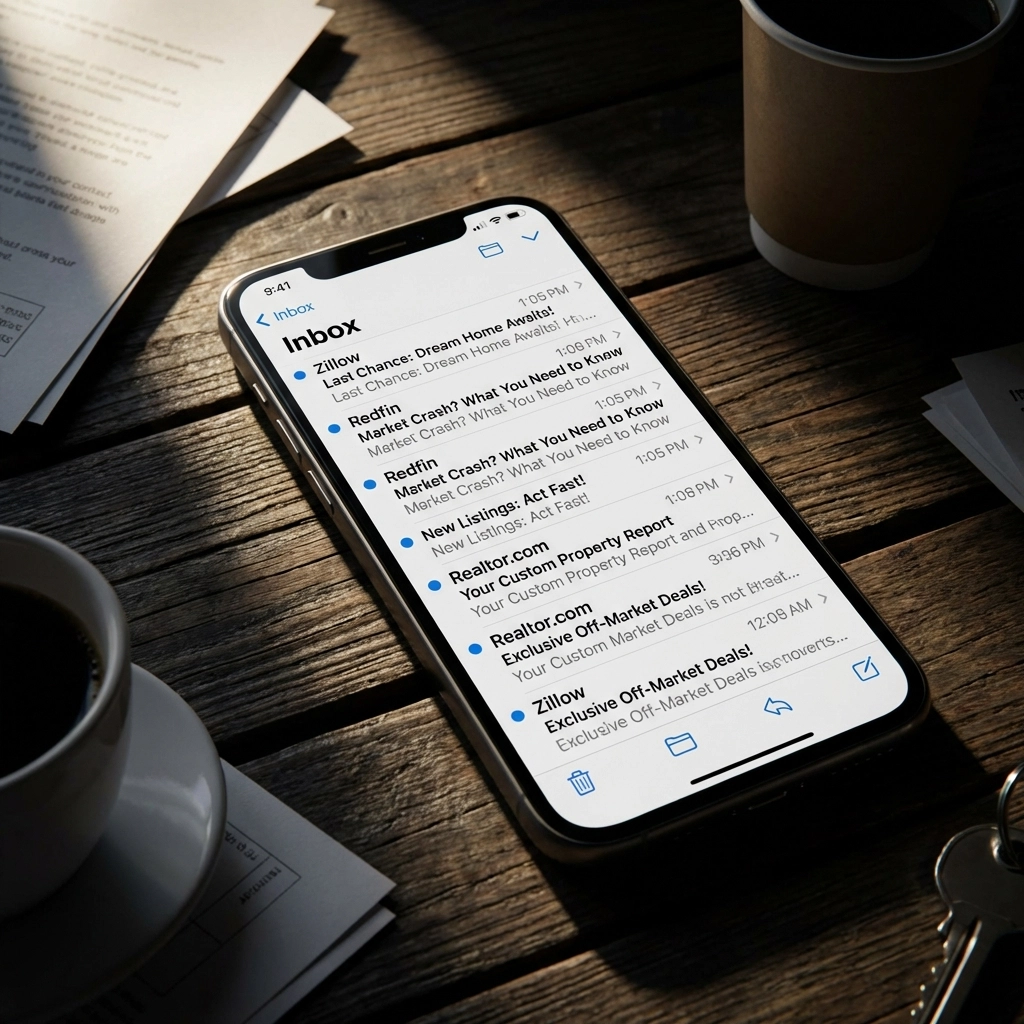
The Problem: You’re using boring, generic subject lines like “Monthly Newsletter” or “Market Update” that blend into the sea of promotional emails.
Your subject line is your only chance to grab attention in a crowded inbox. If it doesn’t spark curiosity or promise value, your newsletter dies before it’s even opened.
The Fix:
• Create urgency without being sleazy:
- “3 homes sold on your street this week”
- “Interest rates dropped: here’s what it means for you”
• Use numbers and specifics:
- “7 staging mistakes that cost sellers $30K”
- “How Sarah saved $15,000 on her home purchase”
• Ask compelling questions:
- “Is your home worth more than you think?”
- “Ready to sell before spring rush?”
• Preview text optimization: Write the first 35-50 characters of your newsletter to complement your subject line, as this appears in email previews
A/B Testing Tip: Try sending the same newsletter with two different subject lines to small segments, then use the winner for your full list.
Mistake #7: Confusing Calls-to-Action That Lead Nowhere
The Problem: Your newsletter either has no clear next step, or it’s buried under vague language like “Contact me for more information.”
Every newsletter should guide readers toward a specific action. Confused readers take no action, and leads slip away to competitors with clearer messaging.
The Fix:
• Include one primary call-to-action per newsletter that’s impossible to miss
• Make benefits crystal clear:
- Instead of: “Schedule a consultation”
- Try: “Get your free home value report (takes 2 minutes)”
• Test every link before sending: broken links kill conversions instantly
• Use action-oriented language:
- “Download your buyer’s guide”
- “See what your neighbor’s home sold for”
- “Get pre-approved in 24 hours”
• Create landing pages specific to your newsletter campaigns rather than sending everyone to your generic website
Link Strategy: Each newsletter should have one main call-to-action button/link, plus 2-3 secondary options for different reader interests.
Your Next Steps: Turning These Fixes Into Results
Now that you know what’s been sabotaging your newsletter success, here’s your action plan:
Week 1: Audit your last three newsletters against these seven mistakes
Week 2: Choose your primary fix (start with purpose and consistency)
Week 3: Segment your list and plan targeted content
Week 4: Implement mobile optimization and test on multiple devices
Remember: you don’t need to fix everything at once. Pick the mistake that resonates most with your current struggles and focus there first. Small improvements compound over time into significant results.
The agents who master newsletter marketing don’t just stay top-of-mind: they become the obvious choice when their subscribers are ready to buy or sell. Your inbox success starts with eliminating these seven mistakes, one fix at a time.
Ready to transform your newsletter from a lead-killer into a lead-generator? Start with mistake #1 and work your way through the list. Your future clients are waiting in their inboxes: make sure your newsletter gives them a reason to reach out.
Cold Calling Vs Real Estate Newsletter Marketing: Which Generates Better Leads for New Agents?
As a new real estate agent, you’re likely drowning in advice about lead generation. Every seasoned agent, broker, and marketing guru has their opinion on the “best” method to build your pipeline. Two strategies consistently emerge at the top of these conversations: traditional cold calling vs real estate newsletter marketing.
But here’s the million-dollar question: Which approach actually delivers better results for agents just starting out?
The answer isn’t as straightforward as you might think. Both methods have their merits, and the “winner” largely depends on your personality, budget, and long-term business goals. Let’s break down the real data, costs, and practical implications of each approach so you can make an informed decision for your real estate career.
The Cold Calling Reality Check: What the Numbers Actually Say
Cold calling remains one of the most debated prospecting methods in real estate. While some agents swear by it, others consider it outdated. Here’s what the research reveals about cold calling effectiveness:
The Success Rate Reality:
- Average cold calling success rate: 4.8%
- Agents making 20+ daily calls achieve 10-20% annual success rates
- Cold calling ranks as the second most effective prospecting technique at 57.1% (after referrals at 92.8%)
- 50% of real estate leads come from cold calling or direct mail marketing

The Persistence Factor:
Here’s where most new agents get discouraged: it typically takes around eight cold call attempts to reach a single prospect. This means for every person you actually speak with, you’ll likely encounter seven voicemails, hang-ups, or no-answers.
What Makes Cold Calling Work:
- Immediate interaction allows you to gauge interest and adapt your pitch in real-time
- Voice connection creates personal rapport: tone of voice accounts for 93% of cold call success
- Cost-effectiveness compared to paid advertising channels
- High follow-up success rate: 68% of real estate professionals report successful follow-ups after initial cold calls
Newsletter Marketing: The Long-Term Relationship Builder
While cold calling focuses on immediate connection, newsletter marketing takes a completely different approach. Instead of interrupting prospects, you’re providing value and building relationships over time.
The Newsletter Advantage:
- Permission-based marketing means prospects actually want to hear from you
- Scalability allows you to nurture hundreds of leads simultaneously
- Automation capabilities let you work while you sleep
- Content serves multiple purposes: newsletters can be repurposed for social media, blog posts, and client communications
The Trust-Building Factor:
Newsletter marketing excels at establishing expertise and maintaining top-of-mind awareness. When someone subscriptions to your newsletter, they’re essentially saying, “I’m interested in what you have to offer.” This makes the eventual sales conversation significantly easier.
Measurable Results:
Unlike cold calling, newsletter marketing provides detailed analytics:
- Open rates (industry average: 20-25% for real estate)
- Click-through rates
- Subscriber growth
- Conversion tracking from email to appointment

Cost Comparison: Which Method Fits Your Budget In Cold Calling Vs Real Estate Newsletter Marketing?
Cold Calling Costs:
- Phone service: $30-50/month for unlimited calling
- Lead lists: $0.10-0.50 per contact
- CRM system: $25-100/month
- Time investment: 2-4 hours daily for meaningful results
- Monthly total: $100-300
Newsletter Marketing Costs:
- Email platform: $20-100/month (depending on subscriber count)
- Design tools: $10-20/month
- Content creation: $200-500/month (if outsourced)
- Lead magnets: $50-200 for professional design
- Monthly total: $280-820
The Hidden Costs:
Cold calling’s biggest cost isn’t monetary: it’s emotional. The rejection rate can be mentally exhausting for new agents. Newsletter marketing requires consistent content creation, which can be time-consuming if you’re doing it yourself.
Time Investment: Immediate vs. Long-Term Payoff
Cold Calling Time Commitment:
- Daily requirement: 2-4 hours for effective results
- Immediate feedback: You’ll know within minutes if a prospect is interested
- Quick wins possible: Can schedule appointments the same day
- Skill development: 30-90 days to become proficient
Newsletter Marketing Timeline:
- Setup phase: 2-3 weeks to create systems and initial content
- Daily maintenance: 30-60 minutes for ongoing content and list management
- Results timeline: 3-6 months to see significant lead generation
- Compound effect: Results improve dramatically over time as your list grows

ROI Analysis: Which Strategy Delivers Better Returns?
Cold Calling ROI:
With a 4.8% average success rate and assuming you can make 50 calls daily:
- 50 calls × 4.8% = 2.4 interested prospects daily
- 2.4 prospects × 20 working days = 48 monthly prospects
- If 10% convert to listings/sales: 4.8 transactions monthly
Newsletter Marketing ROI:
Starting with 100 subscribers and growing by 50 monthly:
- Month 1: 100 subscribers
- Month 6: 350 subscribers
- Month 12: 700 subscribers
- With 2% monthly conversion rate: 14 leads by month 12
The Winner? Cold calling typically delivers faster initial results, while newsletter marketing provides better long-term ROI and scalability.
Personality Fit: Which Approach Matches Your Style?
Cold Calling Vs Real Estate Newsletter Marketing:
Cold Calling Success Traits:
- High resilience to rejection and criticism
- Strong verbal communication skills
- Persistence and consistency in daily activities
- Comfort with confrontation and objection handling
- Energy for high-activity prospecting
Newsletter Marketing Success Traits:
- Writing ability and content creation skills
- Strategic thinking for long-term relationship building
- Technical comfort with email platforms and analytics
- Patience for gradual result building
- Creative mindset for engaging content development
The Hybrid Approach: Why Successful Agents Use Both
The most successful new agents don’t choose between cold calling and newsletter marketing: they use both strategically:
Month 1-3: Cold Calling Focus
- Generate immediate leads and cash flow
- Build confidence through direct prospect interaction
- Develop market knowledge through conversations
- Create initial subscriber base for newsletters
Month 4+: Integrated Approach
- Continue selective cold calling for immediate needs
- Use newsletter marketing for long-term relationship building
- Convert cold calling prospects into newsletter subscribers
- Leverage newsletter content to warm up cold calling lists

Practical Implementation: Getting Started Today
If You Choose Cold Calling:
- Invest in quality lead lists from reputable sources
- Practice your scripts until they sound natural
- Track your numbers obsessively: calls made, contacts reached, appointments set
- Set daily activity goals and stick to them religiously
- Develop thick skin and celebration rituals for small wins
If You Choose Newsletter Marketing:
- Choose an email platform (Mailchimp, Constant Contact, or ConvertKit)
- Create a compelling lead magnet (market reports, buyer guides, neighborhood information)
- Develop content themes (market updates, home maintenance tips, local events)
- Set up automation sequences for new subscribers
- Promote your newsletter through social media and your website
The Bottom Line: What Works Best for New Agents?
For most new real estate agents, cold calling provides the fastest path to your first commission check. The immediate feedback and potential for same-day appointments make it ideal when you need quick cash flow.
However, newsletter marketing offers better long-term business building potential. Once established, it provides consistent lead flow with less daily effort and better profit margins.
The Smart Strategy: Start with cold calling for immediate results while simultaneously building your newsletter marketing system. As your newsletter gains traction and your financial pressure decreases, you can gradually shift more effort toward relationship marketing.
Remember, the best lead generation method is the one you’ll actually execute consistently. Choose the approach that matches your personality, budget, and immediate business needs: then commit to mastering it before adding complexity.
Your real estate success isn’t determined by choosing the “perfect” lead generation method. It’s built by consistently executing whatever method you choose with professional excellence and genuine care for your prospects’ needs.

7 Innovative Real Estate Newsletter Ideas for Agents
Real estate newsletter ideas are packed with tips and data but not every agent knows how to make them truly irresistible. Most send out general updates that subscribers barely skim. Yet when you reveal that properties with virtual tours get 87 percent more views than standard listings, it shows how one simple change can captivate your audience and turn routine emails into something everyone wants to open.
Table of Contents
- Highlight Current Market Trends And Insights
- Share Case Studies And Success Stories
- Provide Tips For Home Buyers And Sellers
- Feature Local Community News And Events
- Offer Seasonal Maintenance And Home Improvement Advice
- Include Interactive Content Like Polls Or Surveys
- Showcase Properties With Virtual Tours And Listings
Quick Summary
| Takeaway | Explanation |
|---|---|
| Share local market insights | Provide specific data about trends and prices to position yourself as a knowledgeable expert. |
| Include authentic case studies | Highlight success stories that showcase your expertise and build trust with potential clients. |
| Offer actionable tips for clients | Provide targeted advice to help buyers and sellers make informed decisions throughout the real estate process. |
| Highlight community news and events | Showcase local happenings to engage readers and demonstrate your connection to the community. |
| Incorporate interactive content | Use polls and surveys to engage subscribers, gather insights, and foster client relationships. |
1: Highlight Current Market Trends and Insights
Your real estate newsletter can become a powerful communication tool when you consistently share market trends and insights. By transforming complex market data into digestible, engaging content, you position yourself as a knowledgeable local expert that clients trust.
Translating raw market statistics into compelling narratives helps your audience understand the broader real estate landscape. When potential buyers and sellers receive timely, accurate market information directly from you, they perceive added value beyond traditional transactional relationships.
Our local SEO guide suggests creating content that resonates with your specific community’s real estate interests. This means going beyond generic national trends and focusing on hyperlocal market dynamics.
Effective market trend newsletters typically include key insights such as:
- Average home sale prices in specific neighborhoods
- Days on market for different property types
- Median listing prices compared to previous quarters
- Inventory levels and what they mean for buyers and sellers
To make your newsletter truly compelling, contextualize these statistics. Explain what falling inventory might mean for first-time homebuyers or how increasing median prices impact investment strategies. According to National Association of Realtors research, providing interpretation alongside raw data significantly increases reader engagement.
Remember that transparency builds trust. Be honest about market challenges and opportunities. Clients appreciate agents who provide balanced, nuanced perspectives rather than overly optimistic or pessimistic narratives.
Professional real estate newsletters transform complex market data into stories that help clients make informed decisions. By consistently delivering valuable insights, you demonstrate expertise and build long-term relationships that extend far beyond individual transactions.
2: Share Case Studies and Success Stories for Real Estate Newsletter Ideas
Real estate newsletters become infinitely more compelling when they showcase authentic client success stories. These narratives transform abstract marketing materials into powerful, relatable experiences that potential clients can connect with emotionally.
Successful case studies demonstrate your professional expertise while humanizing your brand. They provide concrete evidence of your problem-solving skills and commitment to client satisfaction. Our local SEO guide recommends crafting stories that highlight unique challenges and innovative solutions.
According to Nielsen Norman Group research, narratives with specific details are 22 times more memorable than plain facts. When constructing your case studies, focus on elements that showcase your professional approach:
- Client background and initial real estate challenges
- Strategic approach you implemented
- Measurable outcomes and client satisfaction
Consider anonymizing client details to protect privacy while maintaining the story’s authenticity. Effective case studies might highlight scenarios like helping first-time homebuyers secure their dream property, assisting investors in finding profitable opportunities, or guiding sellers through complex market transitions.
Your success stories should demonstrate tangible value. Numbers and specific outcomes matter. Did you help a client sell their home 20% faster than the local average? Did you negotiate a purchase price significantly below market value? These concrete details transform generic narratives into powerful testimonials.
Additionally, varied case studies can appeal to different client segments. A mix of stories involving different property types, buyer demographics, and transaction complexities shows your versatility and comprehensive market understanding.
Ultimately, well-crafted case studies in your newsletter do more than showcase past achievements. They build trust, illustrate your professional capabilities, and provide potential clients with a clear vision of the exceptional service you provide.
3: Provide Real Estate Newsletter Ideas Tips for Home Buyers and Sellers
Transforming your real estate newsletter into a valuable resource means offering practical, actionable advice that helps clients navigate complex property transactions. By sharing targeted tips for both buyers and sellers, you establish yourself as a trusted advisor who goes beyond traditional transactional services.
Our real estate marketing guide emphasizes the importance of providing clear, strategic guidance that addresses common pain points in the real estate process.
According to National Association of Realtors research, clients value agents who provide comprehensive education about the buying and selling landscape. Your newsletter can become an essential tool for demystifying complex real estate processes.
For home buyers, consider including tips such as:
- Understanding mortgage pre-approval before house hunting
- Budgeting for hidden costs beyond the purchase price
- Importance of home inspections and what to look for
For sellers, focus on strategies that maximize property value and streamline the selling process:
- Cost-effective home improvement projects
- Staging techniques that attract potential buyers
- Pricing strategies aligned with current market conditions
The most effective tips blend practical advice with local market insights. Discuss how neighborhood-specific trends might impact buying or selling strategies. For instance, highlight upcoming infrastructure projects, school district changes, or emerging local development that could influence property values.
Remember that educational content builds trust. By consistently providing valuable information, you position yourself as a knowledgeable professional who genuinely wants to help clients make informed decisions. Your newsletter becomes more than a marketing tool – it transforms into a valuable resource clients will eagerly anticipate and share with their networks.
4: Feature Local Community News and Events
Highlighting local community news and events transforms your real estate newsletter from a marketing tool into a valuable neighborhood resource. By showcasing the vibrant local landscape, you demonstrate deep community connection and provide subscribers with engaging, relevant content.
Our neighborhood spotlights guide suggests creating content that goes beyond traditional real estate information. Local events and news create meaningful context for potential buyers and sellers understanding the true essence of a neighborhood.
According to Nextdoor’s Community Impact Report, 87% of residents are more likely to engage with local businesses that demonstrate genuine community involvement. Your newsletter can become a critical communication bridge between real estate services and local community dynamics.
Consider featuring content such as:
- Upcoming community festivals and cultural events
- Local infrastructure and development projects
- School district updates and educational initiatives
Effective community news coverage requires a strategic approach. Highlight events that showcase the neighborhood’s unique character. Are there new restaurants opening? Community improvement projects? Local business success stories? These narratives provide potential buyers with insights beyond property listings.
Remember to balance information with storytelling. Include personal perspectives, interview local business owners, or share community achievements. This approach transforms your newsletter from a transactional document into a compelling neighborhood narrative.
By consistently delivering rich, locally focused content, you position yourself as more than a real estate agent. You become a community connector, trusted advisor, and local expert who understands the intricate dynamics that make a neighborhood truly special.
5: Offer Seasonal Maintenance and Home Improvement Advice in Real Estate Newsletter Ideas
Providing seasonal maintenance and home improvement advice in your real estate newsletter positions you as a proactive, knowledgeable resource for current and potential clients. These practical tips demonstrate your commitment to helping homeowners protect and enhance their property investments.
Our real estate marketing guide emphasizes the importance of delivering actionable, timely information that adds genuine value to your clients’ lives.
According to HomeAdvisor’s State of Home Spending report, homeowners spend an average of $7,560 annually on home maintenance and improvement projects. Your newsletter can help them make informed, strategic decisions about these investments.
Consider offering advice tailored to different seasons:
- Summer preparation tips like air conditioning maintenance
- Winter weatherproofing strategies to prevent home damage
- Spring landscaping recommendations for curb appeal
Key maintenance advice should address both preventative care and value-adding improvements. This might include cost-effective projects that can increase home value, such as:
- Minor kitchen updates
- Energy-efficient upgrades
- Landscaping improvements
Your maintenance advice should blend practical guidance with potential financial benefits. Explain how regular maintenance can prevent costly repairs and how strategic improvements can boost property value. For instance, discuss how a $500 investment in fresh paint might yield a significant return during a future sale.
By consistently providing expert maintenance insights, you transform your newsletter from a marketing tool into a valuable homeowner resource. Clients will appreciate receiving timely, actionable advice that helps them protect and improve their most significant asset. This approach builds trust, positions you as an authority, and keeps your audience engaged beyond traditional real estate transactions.
6: Include Interactive Content Like Polls or Surveys
Interactive content transforms your real estate newsletter from a passive communication tool into an engaging, two-way conversation. Polls and surveys invite subscribers to actively participate, providing valuable insights while simultaneously increasing reader engagement and connection.
Our email marketing strategies guide highlights the critical role of interactive elements in maintaining subscriber interest and improving overall communication effectiveness.
According to HubSpot’s Marketing Research, interactive content generates 2x more conversions compared to passive content. By incorporating strategic polls and surveys, you create opportunities for meaningful client interactions.
Consider implementing interactive elements that provide mutual benefits:
- Market sentiment polls about local real estate trends
- Neighborhood preference surveys
- Home improvement idea collections
Effective interactive content should be:
- Concise and easy to complete
- Relevant to your audience’s interests
- Visually appealing
Designing compelling interactive content requires understanding your audience’s motivations. Ask questions that reveal client preferences, challenges, and aspirations. For instance, a survey about preferred home features can provide insights into market demands while making subscribers feel valued.
The data collected through these interactive elements serves multiple purposes. Beyond engagement, you gain actionable market intelligence that can inform your service offerings, marketing strategies, and client communication approaches.
By regularly featuring interactive content, you demonstrate that your newsletter is not just about broadcasting information, but about creating a collaborative, responsive community where client perspectives are genuinely heard and respected.
7: Showcase Properties with Virtual Tours and Listings
Virtual tours and property listings have revolutionized how real estate agents present properties in their newsletters. Digital showcasing allows potential buyers to explore homes remotely, providing an immersive experience that traditional photography cannot match.
Our virtual tours guide emphasizes creating engaging, high-quality digital property presentations that capture potential buyers’ imaginations.
According to Matterport’s Real Estate Visualization Report, properties with virtual tours receive 87% more views compared to traditional listings, dramatically increasing potential buyer engagement.
When incorporating property showcases in your newsletter, consider these strategic approaches:
- High-resolution property images
- 360-degree virtual tour links
- Detailed property description highlighting unique features
Key elements that make property listings compelling include:
- Clear, professional photography
- Accurate, concise property descriptions
- Transparent pricing information
Digital property presentation requires more than just uploading images. Craft narratives that help potential buyers visualize living in the space. Describe not just the physical attributes, but the lifestyle each property offers. A modern kitchen isn’t just about appliances – it’s about family gatherings, culinary adventures, and creating memories.
Technology has transformed property marketing. By integrating sophisticated virtual tour technologies and thoughtful storytelling, your newsletter becomes a powerful tool that doesn’t just show properties, but sells compelling living experiences. Your goal is to help subscribers imagine themselves walking through these spaces, turning passive viewing into active interest.
Below is a comprehensive table summarizing the seven innovative real estate newsletter ideas for agents, including their key focus, main benefits, and practical implementation tips.
| Newsletter Idea | Key Focus | Main Benefit | Practical Example/Tip |
|---|---|---|---|
| Highlight Market Trends and Insights | Share neighborhood-specific data and analysis | Establish authority, build trust | Explain what statistics mean for buyers/sellers |
| Share Case Studies and Success Stories | Feature authentic client journeys and outcomes | Build credibility and emotional connection | Include measurable results and detailed narratives |
| Provide Tips for Home Buyers and Sellers | Offer actionable advice and local market strategies | Empower clients to make informed decisions | Give seasonal tips, explain processes for buyers and sellers |
| Feature Local Community News and Events | Cover events, development, and neighborhood updates | Engage audience; show community expertise | Highlight festivals, infrastructure projects, and spotlights |
| Offer Seasonal Maintenance and Improvement Advice | Advise on timely home care and value-boosting upgrades | Demonstrate proactivity, foster long-term relationships | Suggest cost-effective projects for different seasons |
| Include Interactive Content like Polls or Surveys | Engage readers with polls and gather feedback | Increase engagement, gain market insights | Ask about market sentiment or home feature preferences |
| Showcase Properties with Virtual Tours and Listings | Present listings using immersive digital experiences | Capture interest, increase views, stand out | Use 360-degree tours, quality images, lifestyle-focused descriptions |
Ready to Transform Your Real Estate Newsletter Ideas Into Game-Changing Marketing Tools?
Standing out in your local market is tough when every agent is fighting for attention. Does your newsletter truly offer value beyond basic listings? If you recognize yourself struggling to deliver market trends, engaging case studies or actionable homeowner tips as outlined in our article, it is time to level up. Imagine sending emails packed with hyperlocal insights, strong storytelling and expert-driven tips—making your brand the resource that buyers and sellers trust and remember. See how our real estate marketing strategies can help your content resonate with the local audience you want to reach.
Stop your email marketing from blending into the crowd. Let Content Charlie craft SEO-smart, trust-building newsletters and digital content that set you apart as the local expert. Visit Content Charlie now for proven solutions designed specifically for real estate. Book your free consult today—you deserve newsletters that get read, shared and drive results.
Frequently Asked Questions
How can I highlight current market trends in my real estate newsletter?
To highlight current market trends, focus on local statistics like average home sale prices and inventory levels. Break down these numbers in simple terms and explain their implications for buyers and sellers in your community.
What type of client success stories should I include in my newsletter?
Include diverse client success stories that demonstrate your problem-solving skills and professional expertise. Showcase detailed narratives about unique challenges you faced and the measurable outcomes of your efforts to resonate with potential clients.
What practical tips should I share for home buyers in my newsletter?
For home buyers, share actionable tips such as understanding mortgage pre-approval processes and budgeting for hidden costs. Provide information that helps them feel informed and prepared for their purchasing journey.
How can I feature local community news effectively in my newsletter?
Feature local community news by including updates on upcoming events and developments that highlight the neighborhood’s appeal. Focus on stories that connect potential buyers to the community, showcasing its character and unique features.
What seasonal maintenance tips can I offer to homeowners in my newsletter?
Offer seasonal maintenance tips that guide homeowners on tasks such as weatherproofing in winter or landscaping in spring. Provide clear, actionable steps that help them maintain their property and enhance its value over time.
How can I incorporate interactive content like polls in my real estate newsletter?
Incorporate polls by creating simple, relevant questions related to your audience’s interests, such as market trends or home preferences. This invites engagement and provides you with valuable insights from your subscribers.
Recommended
- email marketing tactics Archives – Content Charlie
- real estate email marketing Archives – Content Charlie
- real estate emails Archives – Content Charlie
- email marketing strategies Archives – Content Charlie
- SEO for Real Estate Agencies: Simple Strategies to Grow Your Business
- Why Use Independent Real Estate Agent for Luxury Homes – ULI & LISA Mallorca Property Blog