
- You are here:
- Home »
- A I
Category Archives for A I
Benefits of an AI Essay Generator
What are the benefits of an AI essay generator?
In the realm of essay writing, the emergence of Artificial Intelligence (AI) has transformed the landscape, offering innovative tools and technologies to enhance the overall writing experience. Among these, AI essay generators have gained prominence, providing writers with a powerful ally in the form of an automated writing assistant. As technology continues to evolve, it’s essential to explore the benefits that AI essay generators bring to the writing process, examining how they streamline tasks, improve writing quality, and contribute to heightened levels of productivity.
Streamlining the Writing Process
One of the primary advantages of using an AI essay generator is its ability to streamline the writing process. Traditional writing often involves multiple drafts, revisions, and hours of meticulous editing. AI writing tools, equipped with advanced algorithms and Natural Language Processing (NLP), enable writers to generate content efficiently. These tools like the CollegeEssay.org AI essay writer utilize algorithms to analyze text, providing automated editing suggestions that can significantly reduce the time spent on proofreading and refining the essay.
Additionally, an AI essay generator allows writers to focus on the creative aspects of their work rather than getting bogged down by grammar and syntax minutiae. By automating routine editing tasks, these tools free up valuable time for writers to explore and refine their writing style, resulting in more engaging and polished essays.
Enhancing Overall Writing Quality
The use of an AI essay writer tool contributes to the enhancement of overall writing quality. These advanced AI tools are designed to understand context, ensuring that the generated content is coherent and contextually relevant. The CollegeEssay.org AI essay writer, for instance, leverages NLP to analyze text and provide writers with automated editing suggestions that go beyond basic grammar checks. This capability allows writers to produce well-structured essays with improved clarity and coherence.
Moreover, AI essay generators can identify areas that need improvement and suggest changes, acting as a valuable writing assistant. The automated proofreading and editing functions help writers refine their work, addressing issues related to sentence structure, word choice, and overall readability. By harnessing the power of AI in this manner, writers can elevate their writing to a professional standard, meeting the expectations of academic or professional environments.
Increased Levels of Productivity
Another noteworthy benefit of using AI essay generators is the significant boost in productivity they offer. Traditional essay writing can be time-consuming, requiring extensive research, meticulous planning, and careful execution. AI writing tools, powered by advanced algorithms, expedite the writing process by providing instant suggestions, corrections, and even generating content based on predefined parameters.
The efficiency of AI essay generators becomes particularly evident when faced with tight deadlines or voluminous writing assignments. Writers can use these tools to quickly produce high-quality content, reducing the stress associated with time constraints. By leveraging the power of AI, students and professionals alike can meet their writing requirements with increased speed and efficiency, ultimately improving their overall productivity levels.
Customizing Essay Writing for Specific Needs
AI essay generators are versatile tools that cater to various writing needs, making them an invaluable asset for writers across different domains. Whether it’s academic writing, creative writing, or professional communication, these tools can adapt to specific writing styles and requirements. Users can input parameters such as tone, style, and structure, allowing the AI to generate content that aligns with their preferences.
The ability to customize writing for specific needs extends to the type of essays being written. AI essay generators can produce content for a wide range of essay formats, including argumentative, expository, persuasive, and more. This flexibility makes them an indispensable tool for students and professionals who need to navigate through different writing assignments with varying requirements.
Choosing the Right AI Essay Generators
As the demand for AI essay generators continues to grow, writers must consider various factors when selecting the right tool for their needs. The advantages of using AI writing tools vary depending on the specific features and capabilities of each tool. Some tools, like the CollegeEssay.org AI essay writer, focus on providing in-depth editing suggestions, while others may excel in content generation.
When choosing an AI essay generator, it’s crucial to assess its compatibility with individual writing preferences and requirements. Writers should consider factors such as the tool’s user interface, ease of customization, and the range of writing styles it can accommodate. Additionally, exploring user reviews and testimonials can offer insights into the real-world effectiveness of the tool.
Exploring the Pros and Cons of AI Essay Writer
While the benefits of using an AI essay generator are evident, it’s essential to consider both sides of the coin by exploring the pros and cons. Understanding the limitations of AI writing tools is crucial for making informed decisions about their usage.
Pros of AI Essay Generators:
- Efficiency: AI essay generators significantly expedite the writing process, allowing writers to produce content faster than traditional methods.
- Quality Improvement: Automated editing and proofreading functions contribute to improved writing quality, addressing issues beyond basic grammar checks.
- Customization: AI writing tools can be customized to align with specific writing styles, making them adaptable to various genres and formats.
- Productivity Boost: The time saved on routine editing tasks translates to increased productivity, particularly beneficial when facing tight deadlines.
Cons of AI Essay Generators:
- Lack of Creativity: While AI tools excel at efficiency and structure, they may lack the creativity and nuance that a human writer brings to the table.
- Dependency Concerns: Overreliance on AI essay generators may hinder the development of individual writing skills, as writers may become dependent on automated suggestions.
- Potential for Plagiarism: AI tools generate content based on patterns and data, raising concerns about unintentional plagiarism if not used responsibly.
- Limited Contextual Understanding: Despite advances in NLP, AI may struggle to fully grasp the nuances of context, leading to occasional inaccuracies in content generation.
Conclusion
In conclusion, the use of AI essay generators offers a plethora of benefits that can significantly enhance the writing process. From streamlining routine tasks to improving overall writing quality and increasing productivity, these tools have become indispensable for writers in various fields. As technology continues to advance, the integration of AI in the realm of essay writing is likely to evolve, providing even more sophisticated tools to cater to the diverse needs of writers.
However, it’s essential for writers to approach AI essay generators with a balanced perspective, acknowledging both their strengths and limitations. While these tools can undoubtedly provide valuable assistance, they should complement, not replace, the creative and critical thinking skills of the human writer. By leveraging the benefits of AI while maintaining a mindful approach, writers can harness the full potential of these tools to elevate their writing to new heights.
FAQ’s
What is AI Writing and benefits of using it?
AI Writing refers to the use of Artificial Intelligence (AI) technology in the writing process. This includes tools, applications, and assistants that leverage AI algorithms to enhance various aspects of writing, from generating content to proofreading.
How does AI Writing differ from traditional writing methods?
AI Writing streamlines the writing process by incorporating advanced algorithms and Natural Language Processing (NLP) to assist writers. It offers automated suggestions, content generation, and editing capabilities, providing an efficient alternative to traditional methods.
How does Artificial Intelligence contribute to essay writing?
Artificial Intelligence plays a crucial role in essay writing by powering tools that analyze text, understand context, and provide writers with valuable suggestions. These AI tools enhance the overall quality and efficiency of the writing process.
Can AI truly understand the intricacies of human writing styles?
While AI has made significant strides in understanding and mimicking human writing styles, it’s essential to note that there may be limitations. AI tools, such as writing assistants, can adapt to specific styles, but the creativity and nuance of a human writer remain unmatched.
What is an AI tool in the context of essay writing?
AI essay writing tool refers to software or applications that utilize Artificial Intelligence to assist writers. These tools encompass a range of functions, including content generation, outline writing, automated editing, and proofreading, to enhance the overall writing experience.
How can an AI tool improve the academic writing process?
An AI tool can improve the writing process by automating routine tasks, offering valuable suggestions, and enhancing the overall quality of written work. It acts as a supportive writing assistant, allowing writers to focus on creativity while ensuring grammatical correctness.

Is Using An AI Essay Generator Cheating
Is using an ai essay generator cheating?
In the ever-evolving landscape of education, the integration of technology has brought about transformative changes. One such technological leap that has sparked both curiosity and controversy is the use of Artificial Intelligence (AI) in essay writing. As we delve into the intricacies of this topic in the year 2023, it’s essential to address the myriad ways in which AI is reshaping academic landscapes and the ethical considerations that come with it.
The Rise of AI in Academic Writing
AI and Its Tools
Artificial Intelligence, often abbreviated as AI, has found its way into various facets of our lives. In the academic realm, the use of AI tools for essay writing is becoming increasingly prevalent. These tools leverage advanced algorithms and language models, such as ChatGPT, to generate human-like text, providing a novel approach to content creation.
The Controversy Surrounding AI-Generated Content
The use of AI to write essays has stirred debates on whether it constitutes cheating. Academic integrity, a cornerstone of education, is put to the test as students explore new avenues to streamline their workload. The question arises: is using an AI essay generator a legitimate tool or a shortcut that undermines the very essence of learning?
Academic Integrity in the Age of AI
Defining Academic Integrity Before delving into the specifics of AI in academic writing, it’s crucial to understand the concept of academic integrity. It encompasses the ethical principles and values that guide the educational process, emphasizing honesty, trust, and responsibility in scholarly pursuits.
Cheating to Use AI: A Moral Dilemma
When students turn to AI tools to write essays, the line between academic assistance and dishonesty blurs. The act of using AI for essay writing raises concerns about the authenticity of the work produced. Does relying on AI tools for writing assignments undermine the originality and creativity expected from students?
The Mechanics of AI in Essay Writing
AI as a Writing Tool
AI writing tools, equipped with powerful language models, offer a unique proposition. They can generate coherent and contextually relevant text, mimicking human writing styles. The use of AI to write essays introduces a paradigm shift in how students approach their assignments.
The Role of ChatGPT in AI-Generated Content
One prominent player in the realm of AI-generated content is ChatGPT, a language model developed by OpenAI. This state-of-the-art model has the ability to understand context, generate creative text, and respond to user inputs, making it a powerful tool for those seeking assistance in writing.
Academic Writing: Traditional vs. AI-Generated
The Misuse of AI in Academic Settings:While AI can be a valuable aid in the writing process, its misuse raises ethical concerns. When students utilize AI to complete their assignments without proper acknowledgment, it can be seen as a breach of academic integrity. The question then becomes whether using AI for academic purposes aligns with the principles of honest scholarship.
AI as a Catalyst for Academic Success:On the flip side, proponents argue that AI can be harnessed to enhance academic performance. These tools can assist students in brainstorming ideas, improving grammar and style, and even structuring their essays. When used ethically, AI writing tools can serve as companions in the learning journey.
The Thin Line Between Assistance and Cheating
Academic Integrity Detector: Navigating the Gray Area
In an era where technology facilitates both learning and deceit, academic integrity detectors like Turnitin have become essential. These tools are designed to identify instances of plagiarism and ensure that submitted work is the student’s original creation. The integration of AI in these detectors adds another layer of complexity to the ongoing debate.
The Dishonesty Dilemma
Determining whether using AI to write essays constitutes cheating depends on various factors. If a student relies solely on AI-generated content without contributing their intellectual effort, it raises ethical red flags. Academic institutions need to address this evolving landscape to maintain the sanctity of education.
The Educational Landscape in the AI Age
AI and Academic Institutions:As AI continues to reshape educational landscapes, institutions must adapt their policies to address the use of AI tools in academic writing. Clarity on what constitutes acceptable use of AI in assignments is essential to guide students and educators alike.
The Role of AI Developers:AI developers also bear responsibility in ensuring that their creations are used ethically. Implementing safeguards to prevent misuse and educating users on responsible AI utilization can contribute to maintaining the integrity of academic endeavors.
The Future of AI in Education
The constant evolution of AI models introduces new possibilities and challenges. As researchers and developers strive to create more advanced and nuanced AI writers, the ethical considerations surrounding their use in education will likely become even more intricate.
While AI offers unprecedented assistance in academic writing, it is crucial to strike a balance between leveraging technology and preserving the essence of human creativity. Writing tools should be viewed as aids that complement, not replace, the intellectual efforts of students.
Final Words on the Moral Compass of AI in Academic Writing
In the year 2023, the debate surrounding the use of AI in essay writing remains multifaceted. Whether AI is a revolutionary tool or a threat to academic integrity depends on how it is employed. As we tread the fine line between assistance and dishonesty, educators, students, and AI developers must collaborate to define clear guidelines that uphold the principles of ethical scholarship. The future of AI in education hinges on our ability to harness its potential responsibly, ensuring that it becomes a force for academic enrichment rather than a shortcut that erodes the foundations of learning.
FAQ’s
Q: Is using AI tools to write an essay considered cheating?
A: The answer depends on how AI is utilized. If students use AI as a tool to assist in their writing process, it may enhance their work. However, relying solely on AI to write students’ essays without contributing personal effort could be deemed a form of academic dishonesty.
Q: Can AI really write high-quality essays?
A: Yes, AI, especially generative AI models like ChatGPT, has the capability to produce coherent and contextually relevant text. However, the quality of the output depends on various factors, including the input provided and the ethical use of the technology.
Q: How does using artificial intelligence in academic writing violate academic integrity policies?
A: While AI itself is not inherently violative, its misuse can lead to breaches of academic integrity. If students use AI to write an essay without proper acknowledgment or contribution, it may be considered a violation of academic integrity policies set by educational institutions.
Q: Can teachers use computer programs or plagiarism detection software to identify AI-generated content?
A: Yes, teachers can employ plagiarism detection software, such as Turnitin, to help identify content created by AI. These tools are designed to highlight instances of plagiarism, ensuring that students submit their original work and adhere to academic integrity standards.
Q: Are there benefits to using AI writing tool, or does it only pose a risk of cheating?
A: AI tools can be beneficial when used ethically. They can assist students in brainstorming, improving grammar, and structuring essays. However, the risk of cheating arises when students rely solely on AI to write their assignments, bypassing critical thinking skills and violating academic integrity.
Q: How can educational institutions address the issue of students using generative AI to write essays?
A: Educational institutions can address the issue by providing clear guidelines on the acceptable use of AI tools. Incorporating discussions about academic integrity and responsible use of technology into curriculum and implementing plagiarism detection measures can help deter misuse.
What is an AI essay generator
What is an AI essay generator?
In the ever-evolving landscape of technology, artificial intelligence (AI) continues to redefine the way we approach various tasks. One such area witnessing a transformative revolution is essay writing. The advent of AI essay generators has ushered in a new era, where students, professionals, and writers alike can harness the power of algorithms to streamline and enhance the essay writing process. In this article, we delve into the realm of AI essay generators, exploring their functionalities, benefits, and addressing common queries about these cutting-edge tools.
The Evolution of Essay Writing: Enter AI Essay Writers
Essay writing has long been a fundamental skill, whether in academia, journalism, or professional settings. Traditionally, crafting an essay required a combination of creativity, critical thinking, and a deep understanding of the subject matter. However, the landscape is changing with the introduction of AI essay writers, which serve as advanced writing tools designed to assist individuals in generating high-quality essays.
What is an AI Essay Writer?
An AI essay writer is a sophisticated writing tool that employs artificial intelligence algorithms to assist users in creating well-structured and coherent essays. These tools are programmed to understand language nuances, contextual relevance, and writing styles, enabling them to generate content that closely resembles human-authored essays. The primary goal of an AI essay writer is to streamline the writing process, providing users with a powerful ally in their quest for well-crafted, plagiarism-free essays.
The Mechanics Behind Essay Generators
At the heart of AI essay generators lies a complex algorithmic framework. These algorithms analyze input data, which may include prompts, keywords, or even partial sentences provided by the user. The AI then processes this information to generate coherent and contextually relevant essay content. The sophistication of these algorithms allows the AI essay writer to mimic human thought processes, ensuring that the output is not only grammatically correct but also exhibits a logical flow of ideas.
AI Essay Writing Tool: A Writer’s Ally
AI essay writing tools are designed to be versatile, catering to a wide range of writing needs. Whether you’re a student working on an assignment, a professional crafting a report, or an individual seeking to express their thoughts through an essay, these tools offer a valuable resource. They can assist with brainstorming ideas, organizing content, and even refining writing styles, making them an indispensable companion for writers across various domains.
The Benefits of Using an AI Essay Writing Tool
- Efficiency and Time-Saving: One of the most significant advantages of AI essay writers is their ability to expedite the writing process. By automating tasks such as research, content organization, and even proofreading, these tools significantly reduce the time required to produce a well-crafted essay. This efficiency is particularly valuable for students and professionals facing tight deadlines.
- Enhanced Creativity: AI essay writing tools are not just about automating tasks; they also contribute to the creative process. By offering suggestions, generating ideas, and providing alternative perspectives, these tools can inspire users to think beyond their initial concepts. This collaborative approach between human creativity and artificial intelligence often results in essays that are more nuanced and thought-provoking.
- Plagiarism Prevention: When you write an essay with AI writer, it is most like;y plagiarism free. AI essay writers play a crucial role in addressing this issue by generating original content. Through their algorithmic prowess, these tools ensure that the output is not a verbatim reproduction of existing texts, providing users with confidence in the authenticity of their work.
Demystifying the Algorithmic Magic
The core functionality of AI essay generators hinges on their intricate algorithms. These algorithms are trained on vast datasets encompassing a diverse range of writing styles, topics, and linguistic nuances. Through machine learning, the AI learns to recognize patterns, understand context, and mimic the intricacies of human writing. As users interact with the tool, the algorithm refines its understanding, continuously improving its ability to generate high-quality essays.
The Future of AI Writing
As AI continues to advance, the capabilities of essay writing tools are poised to reach new heights. The integration of natural language processing, improved algorithms, and enhanced machine learning techniques will contribute to even more refined and contextually aware AI essay writers. The future holds the promise of further blurring the lines between human and AI-generated content, with writers benefiting from increasingly sophisticated tools that elevate the quality of their work.
Embracing the Freedom of Free Essays
The accessibility of AI essay generators extends to the realm of affordability, with many tools offering free essay generation services. While certain advanced features may be available through premium subscriptions, the basic functionality of these tools often allows users to generate high-quality essays without incurring any cost. This democratization of writing tools empowers individuals from various socioeconomic backgrounds to access resources that can enhance their writing capabilities.
Conclusion
In the rapidly evolving landscape of essay writing, AI essay generators stand as powerful allies, offering efficiency, creativity, and plagiarism prevention to users across diverse domains. As these tools continue to refine their algorithms and capabilities, the collaborative synergy between human writers and AI is likely to redefine the standards of excellence in essay composition. Embracing the future of AI writing entails understanding the capabilities of these tools, navigating ethical considerations, and leveraging the technological advancements that promise to reshape the way we approach the written word.
FAQs
Q1: What is an AI Essay Generator, and How Can I Utilize It to Write Essays?
A1: An AI essay generator is a powerful tool designed to assist you in the essay writing process. To use it effectively, start by providing prompts, keywords, or partial sentences. The tool’s advanced algorithms then analyze the input, generating coherent and contextually relevant essay content. It’s an intuitive process that significantly streamlines the writing experience.
Q2: Is There a Free AI Essay Writer Tool Available?
A2: Yes, many AI essay generators offer free essay writing services. By simply signing up, users can access basic functionalities to write essays without any cost. While some tools may provide advanced features through premium subscriptions, the essential capabilities remain accessible for free, democratizing access to writing assistance.
Q3: How Can I Elevate My Writing Experience with the Power of AI Writing Tools?
A3: To enhance your writing experience with AI tools, explore features such as essay typer, essay writer tool, and AI essay outliner. These tools assist in the writing process, offering suggestions, generating ideas, and providing an advanced AI writing assistant. By incorporating these tools into your workflow, you can create better essays, improve your writing, and achieve academic success.
Q4: Can an AI Essay Writer Help with Different Types of Essays?
A4: Absolutely. AI essay writers are versatile and can assist in creating various types of essays, including argumentative, informative, and more. The extensive database and neural network AI models enable the tool to come up with ideas and generate top-notch content tailored to different essay formats.
Q5: How Does the Free AI Essay Writer Ensure Quality Content and Prevent Plagiarism?
A5: The free AI essay writer employs advanced algorithms and a plagiarism checker to ensure the quality and authenticity of the content. By automatically generating high-quality essays, these tools help users avoid plagiarism pitfalls, providing unique and well-written content. This ensures that the essays created are not only informative but also original and free of plagiarism.
Q6: Can I Use an AI Essay Writer for Free Without Signing Up?
A6: While sign-up is often required to access certain features, many AI essay writers offer free services without requiring a sign-up. Users can start generating essays instantly, rephrasing or creating new paragraphs, and achieving top-quality results without the need for a formal sign-up process.
Q7: How Does an AI Essay Typer Assist with Complex Topics and Grammatical Accuracy?
A7: AI essay generators excel in handling complex topics by employing advanced algorithms. They ensure grammatical accuracy and coherence in the generated content, making them ideal for academic coursework and professional writing. The tool’s ability to analyze complex topics and provide relevant information significantly improves the overall quality of the essays created.

10 Best AI Image Upscalers In 2023
10 Best AI Image Upscalers In 2023 To Enhance Photo Quality
In the dynamic world of digital imagery, the quest for superior image quality continues to drive innovation. For those seeking to upscale their images with precision and finesse, AI image upscalers have become indispensable tools. These cutting-edge solutions leverage powerful AI algorithms and advanced technology to enhance low-resolution images, offering a seamless way to upscale your visuals without compromising on quality. In this article, we explore the 10 best AI image upscalers in 2023, each equipped with features that set them apart in the realm of image upscaling.
1. Gigapixel AI
Gigapixel AI stands out as a frontrunner in the AI upscaling landscape. With its powerful AI model, this upscaler tool can significantly improve image resolution, allowing users to upscale images to a remarkable level of detail. Whether it’s a single image or multiple images, Gigapixel AI’s capabilities make it an essential choice for photographers and digital artists.
2. Topaz Labs AI Gigapixel
As a part of the Topaz Labs suite, AI Gigapixel combines advanced AI technology with a user-friendly interface. This AI image enhancer delivers exceptional image upscaling results, allowing users to upscale their images without sacrificing quality. Its gigapixel AI capabilities ensure that the upscaled image retains clarity and sharpness.
3. Let’s Enhance
Let’s Enhance has become synonymous with hassle-free online image upscaling. Utilizing an intuitive online AI upscaling tool, users can easily upload low-resolution images and witness a significant improvement in image size and quality. The simplicity of this AI photo enhancer makes it accessible to both professionals and enthusiasts.
4. Waifu2x
For those seeking a free version of an AI upscaling tool, Waifu2x emerges as a popular choice. This online AI tool employs an advanced algorithm to upscale images, providing users with an efficient way to enhance images without compromising on quality. Its image processing capabilities ensure a smooth and effective upscaling experience.
5. ESRGAN (Enhanced Super-Resolution Generative Adversarial Networks)
ESRGAN takes image upscaling to the next level by utilizing a Generative Adversarial Network (GAN) to generate realistic and detailed images. This AI upscaling tool has gained recognition for its ability to upscale an image with unprecedented accuracy, making it a go-to choice for those who prioritize image quality.
6. Astra Image
Astra Image stands out as an AI image upscaler with a focus on image enlargement. This tool utilizes advanced AI algorithms to upscale images while preserving the finest details. Whether you’re working on a single image or looking to upscale multiple images, Astra Image provides a seamless solution for improving image resolution.
7. Vanceai Image Upscaler
Vance AI Image Enlarger combines the power of AI technology with a user-friendly online platform. Users can easily upload low-resolution images and witness a transformation in image quality. With its AI image upscaling capabilities, Vance AI Image Enlarger is a reliable choice for those looking to enhance images effortlessly.
8. Let’s Enhance 2.0
Let’s Enhance 2.0 takes online AI upscaling to new heights with its enhanced features. This upscaling tool allows users to upscale their images using an improved AI model, resulting in superior image quality. The option to upscale an image without compromising on clarity makes Let’s Enhance 2.0 a standout choice.
9. DVDFab Photo Enhancer AI
DVDFab Photo Enhancer AI brings AI image upscaling to the forefront of photo editing. This tool integrates seamlessly into the image enhancement process, offering users the ability to improve image resolution and upscale images with a few simple clicks. Its advanced AI algorithm ensures a significant enhancement in image quality.
10. AI Image Upscaler by Icons8
Icons8 enters the AI upscaling arena with a tool that focuses on simplicity and effectiveness. The AI Image Upscaler by Icons8 allows users to upload images online and witness a substantial improvement in image size and quality. This free version of an AI upscaling tool caters to a wide range of users seeking to enhance images without the need for extensive technical know-how.
Conclusion
In the ever-evolving landscape of digital imagery, the demand for superior image quality has fueled the development of advanced AI image upscaling tools. The 10 best image upscalers in 2023 presented in this article showcase the pinnacle of innovation, enabling users to upscale their images with precision and finesse.
Whether you’re a professional photographer, digital artist, or enthusiast, these tools offer a seamless way to enhance image quality without compromising on clarity. From the robust capabilities of Gigapixel AI to the user-friendly interface of Let’s Enhance, the options are diverse, catering to a wide range of users seeking to upscale their images using cutting-edge AI technology.
1. What are AI image upscalers, and how do they work?
AI image upscalers are tools that utilize advanced artificial intelligence algorithms to enhance the resolution and quality of images. These algorithms analyze and extrapolate details, allowing users to upscale their images with superior clarity and precision.
2. How can I upscale image using AI Image enlarger?
To upscale your image using AI, you can choose from various online tools such as Gigapixel AI, Topaz Labs AI Gigapixel, Let’s Enhance, and others. Simply upload your low-resolution image to the selected tool, and the AI algorithms will enhance its size and quality.
3. What is the significance of upscaling images with AI?
Upscaling images with AI ensures that the resulting image maintains or even improves its quality despite the increase in size. This is particularly valuable for photographers, artists, and anyone looking to enhance the visual appeal of their images without the typical loss of quality associated with traditional upscaling methods.
4. Are there any free AI image upscaling tools available?
Yes, there are free AI image upscaling tools like Waifu2x and AI Image Upscaler by Icons8. These tools provide an efficient way to enhance image quality without requiring a financial investment.
5. What makes a tool the best AI image upscaler?
The best AI image upscaler combines advanced AI algorithms with user-friendly interfaces, delivering exceptional upscaling results without sacrificing image quality. Factors such as clarity, precision, and ease of use contribute to the effectiveness of these tools.
6. Can AI image upscalers be used for bulk image upscaling?
Yes, many AI image upscalers, including Gigapixel AI and Let’s Enhance, support bulk image upscaling. This feature is particularly beneficial for users dealing with multiple images who seek a streamlined and efficient upscaling process.
7. How does deep image AI differ from traditional upscaling methods?
Deep image AI, as employed by tools like ESRGAN, goes beyond traditional upscaling by utilizing Generative Adversarial Networks (GANs) to generate realistic and detailed images. This approach results in unparalleled accuracy and a significant improvement in image quality compared to conventional methods.
8.How did you choose these best ai image upscalers?
The selection of the best AI image upscalers was based on advanced algorithms, high image quality, user-friendly interfaces, versatility for different image types, online accessibility, community recognition, innovation, and consistent performance across scenarios.

Benefits of an AI Image Upscaler
What are the benefits of an AI image upscaler? Upscale Images with AI
In the fast-paced world of technological innovation, AI image upscaling has emerged as a game-changer, redefining the way we perceive and interact with visual content. Leveraging the power of artificial intelligence, image upscaling goes beyond mere enlargement, offering a multitude of benefits that enhance image quality, resolution, and overall visual experience. Let’s delve into the advantages of this transformative technology, exploring the key terms that highlight its capabilities.
1. Preserving Image Quality: AI-Powered Upscaling
At the core of AI image upscaling is the ability to upscale images without losing quality. Unlike traditional methods, which often resulted in pixelation and loss of clarity, AI-powered upscaling tools utilize deep convolutional neural networks to intelligently predict and fill in missing details. This ensures that the upscaled image not only enlarges but also maintains or improves its original quality.
2. Enlarging Images Seamlessly: Online Image Upscaling
With the advent of online AI upscaling tools, the process of enlarging images has become incredibly user-friendly. Users can upload images with a simple click and witness the magic of AI technology enhancing their visuals within seconds. This online accessibility eliminates the need for complex software, making image upscaling a convenient and efficient process.
3. 4K-Ready Resolutions: 4x Upscaling Capability
As the demand for higher resolutions continues to rise, AI image upscaling meets the challenge with 4x upscaling capabilities. This means that users can elevate their standard-resolution images to match the stunning clarity of 4K displays. The result is a visual feast that captivates with sharpness and detail, all achieved without compromising the integrity of the original image.
4. Bulk Image Enhancement: Efficient and Time-Saving
For professionals dealing with a large volume of images, bulk image upscaling is a boon. AI technology allows for the simultaneous processing of multiple images, saving time and effort. This efficiency is particularly beneficial for photographers, content creators, and businesses looking to enhance and upscale their visual content at scale.
5. Deep Convolutional Neural Networks: The Brainpower Behind Upscaling
The use of deep convolutional neural networks (CNNs) sets AI image upscaling apart. These sophisticated networks analyze intricate patterns within an image, mimicking the human brain’s ability to process visual information. By understanding the complexities of image data, CNNs contribute to superior upscaling results, ensuring that the enhanced images are not only larger but also visually refined.
6. Versatility in Format: JPEG and JPG Compatibility
AI image upscalers are versatile, supporting various image formats such as JPEG and JPG. This flexibility ensures that users can upscale and enhance images regardless of the format in which they are saved. Whether it’s a JPEG from a digital camera or a JPG from a mobile device, AI upscaling technology accommodates diverse user preferences.
7. Ultimate Image Upscaler: Unmatched Performance
For users seeking the highest quality in image upscaling, the ultimate image upscaler is the go-to solution. These advanced tools combine cutting-edge AI algorithms with high processing speeds, delivering an unparalleled upscaling experience. The ultimate image upscaler caters to professionals and enthusiasts alike, providing a comprehensive solution for achieving top-tier upscaled images.
8. One-Click Simplicity: Effortless Enhancement
The beauty of AI image upscaling lies in its simplicity. With one-click upscaling, users can upload an image and witness the transformation without the need for complex settings or manual adjustments. This user-friendly approach ensures that individuals, regardless of technical expertise, can effortlessly enjoy the benefits of AI image upscaling.
9. Free Online Image Upscaler: Accessibility for All
Democratizing high-resolution imaging, many online platforms offer free AI image upscaling services. This accessibility ensures that individuals, from professional photographers to casual users, can harness the power of AI without any financial barriers. The availability of free online image upscalers expands the reach of this technology, making it a valuable resource for a diverse audience.
10. Saving Enhanced Images: Convenient Preservation
An integral aspect of the image upscaling process is the ability to save the enhanced image. AI upscalers typically offer options to save the upscaled version in various formats, maintaining the convenience and compatibility of the enhanced image with different platforms and devices. This feature ensures that users can effortlessly preserve and share their visually enhanced images.
How does an AI Image Upscaler Preserve Image Quality Without Losing Details?
AI image upscaling operates on advanced algorithms, notably deep convolutional neural networks (CNNs), which intelligently predict and fill in missing details during the upscaling process. This sophisticated technology ensures that the upscaled image not only enlarges but also maintains or even improves its original quality, avoiding common issues like pixelation and loss of clarity.
Can an AI Upscaler Truly Enhance Your Image in One Click?
Absolutely. The beauty of AI image upscaling lies in its user-friendly one-click simplicity. By leveraging advanced AI algorithms, users can effortlessly enhance their images with just a single click. This approach eliminates the need for complex settings or manual adjustments, making the enhancement process accessible to individuals of all technical expertise levels.
How Does an AI Image Enlarger Cater to Different Image Formats?
AI image upscalers are remarkably versatile, supporting various image formats such as JPEG and JPG. This flexibility ensures that users can upscale and enhance images, regardless of the format in which they are saved. Whether it’s a high-resolution JPEG from a digital camera or a compressed JPG from a mobile device, AI upscaling technology accommodates diverse user preferences.
Is it Possible to Use an AI Upscaling Tool for Bulk Image Enhancement?
Certainly. AI technology enables efficient and time-saving bulk image upscaling. This feature is particularly beneficial for professionals dealing with a large volume of images, such as photographers, content creators, and businesses. By allowing the simultaneous processing of multiple images, AI image upscalers enhance and upscale visual content at scale, saving valuable time and effort.

Do I need an AI image upscaler
Do I need an AI image upscaler?
Images play a vital role in our digital world, whether for personal or professional use. With the advancement of technology, the demand for high-resolution and superior-quality images has significantly increased. This is where AI image upscalers come into play, offering a promising solution to increase the image resolution. If you are pondering whether an AI image upscaler is necessary for your image enhancement needs, let’s delve into the details to help you make an informed decision.
What is an AI image upscaler and how does it work?
Before deciding on the need for an AI image upscaler, it’s essential to understand the technology behind it and how it effectively upscales images without compromising quality. AI image upscaler utilizes advanced artificial intelligence algorithms to enlarge and enhance images to a higher resolution without losing quality.
Understanding the technology behind AI image upscaler
The technology behind AI image upscaler involves complex AI algorithms that analyze and process image data to increase resolution and overall quality.
How does AI image upscaler upscale images without losing quality?
AI image upscalers use advanced techniques such as machine learning and neural networks to accurately predict and generate additional pixels, resulting in an upscaled image while preserving its original clarity and details.
Benefits of using an AI image upscaler for image enhancement
The utilization of AI image upscaler brings several benefits, including enhanced image quality, improved resolution, and the ability to upscale images up to 4x or even 8x, providing a high-resolution output with minimal loss of quality.
Why should I consider using an AI image upscaler?
Considering the impact of upscale images on visual content and the overall viewing experience, AI image upscaler offers compelling reasons for its utilization.
Enhancing image quality
By harnessing AI technology, an AI image upscaler can significantly enhance the overall quality and resolution of images, making them suitable for various applications, including printing, digital display, and online usage.
The impact of upscale images
Upscaled images contribute to an enhanced visual experience, allowing viewers to appreciate the finer details and textures within the image, thus making it more appealing and impactful.
How AI image upscaler improves the overall viewing experience?
With AI image upscaler, the overall viewing experience is elevated as the upscaled images exhibit improved sharpness, clarity, and depth, enhancing their visual appeal and engagement potential.
How to choose the right AI image upscaler for my needs?
When considering the integration of an AI image upscaler into your image enhancement workflow, it’s crucial to evaluate various factors and compare available tools to make an informed decision.
Factors to consider
Key factors to consider include the output quality, ease of use, processing speed, and the compatibility of the AI image upscaler with different image formats.
Comparison of different AI image upscalers
Online platforms offer various AI image upscaler tools with distinct features and capabilities. Conducting a comparative analysis enables you to identify the most suitable option for your specific image enhancement requirements.
Understanding the features and capabilities
Exploring the features and capabilities of different AI image upscaler options allows you to assess their suitability for specific image enhancement tasks, such as increasing image resolution and improving image quality.
What are the common misconceptions about using AI image upscalers?
Misconceptions surrounding AI image upscalers may hinder individuals from fully embracing their potential for image enhancement. It’s important to address these misconceptions and educate users about the benefits and limitations of AI image upscaling.
Debunking myths
Several misconceptions revolve around the impact of AI technology on image quality and the effectiveness of AI image upscalers in genuinely enhancing images without compromising their integrity.
Addressing concerns about its impacts
Educational efforts are essential to address concerns and misconceptions about the impact of AI technology on image quality, emphasizing the potential for significant enhancement without compromising the original integrity of the images.
Maximizing Image Quality: A Guide to Optimal Use of AI Image Upscaler for Enhancement
In the quest to enhance your visuals, leveraging the power of AI has become indispensable. Whether you want to enlarge images, upload them online, or achieve stunning 4K resolution, an AI-powered upscaling tool is your go-to solution. Here we will be focusing on techniques such as super-resolution, deep convolutional neural networks, and more.
1. Uploading Images with Ease
Embrace the convenience of online tools that allow you to upload an image effortlessly. Explore free online options that make the process user-friendly and accessible to all.
2. Enhancing Image Size and Resolution
Transform your visuals with an AI image enhancer that not only enlarges images but also increases their resolution significantly. This is particularly valuable when working with low-resolution images or when you want to upscale your images to 4K quality.
3. Utilizing AI-Powered Upscaling Technology
Take advantage of cutting-edge AI upscaling technology, employing deep convolutional neural networks to upscale and enhance your images. This technology ensures a superior result, even when dealing with bulk image upscaling.
4. Online Image Upscaler for Free
Discover the benefits of a free online image upscaler that enables you to upscale your images without any cost. This democratizes the use of AI for image enhancement, making it accessible to a broader audience.
5. Upgrading JPEGs and JPGs
Whether your images are in JPEG or JPG format, an AI photo enhancer can significantly improve their quality. Upload your images online for free and witness the transformation as the AI tool works its magic.
6. Upscale and Enhance Images in Real-Time
Experience the power of real-time image enhancement as you upscale your images online. Witness a remarkable increase in the image size and resolution with just a few clicks.
7. Achieving 8x Resolution Boost Online
For those seeking an unparalleled resolution boost, consider using an online AI image upscaler that can upscale your images by a factor of 8x. This is a game-changer for those who want to upscale their images dramatically.
8. Bulk Image Upscaling Made Simple
Streamline your workflow by exploring bulk image upscaling options. Save time and effort as the AI tool efficiently processes multiple images, ensuring a consistent enhancement across the board.
Final Words
In the realm of visual content, an AI image enlarger proves indispensable for those seeking superior quality. By uploading images online and utilizing free upscalers, users can effortlessly enhance resolution, upscale by 8x, and benefit from the prowess of advanced AI models. Dispelling myths, these tools don’t compromise but elevate images, offering a streamlined and user-friendly experience.
Whether it’s for professionals or enthusiasts, AI image upscalers democratize access to transformative technology, making image enhancement an accessible reality. Embrace the future—where images aren’t just uploaded; they’re enriched, refined, and brought to life through the lens of cutting-edge AI.
FAQs:
How can I upload the image and increase its resolution using AI online?
To upload and upscale photo online, simply choose a reputable AI upscaling platform. Upload your image, and the AI algorithms will efficiently increase the resolution, providing a superior visual output. This process is ideal for those seeking to enhance image quality with the convenience of online tools.
What is the significance of upscaling images by 8x online with AI technology?
Upscaling images by 8x online using AI technology is a revolutionary approach to dramatically enhance image size and resolution. This process utilizes advanced algorithms to predict and generate additional pixels, resulting in a remarkable 8x resolution boost. Ideal for those aiming for a significant improvement in image clarity and detail.
Can I upscale multiple images with AI?
Absolutely! Many AI image upscaling platforms offer the convenience of bulk image upscaling. Simply upload multiple images at once, and the AI tool will efficiently process them, ensuring a consistent enhancement across all images. This streamlined approach is perfect for users dealing with a large volume of images.
How does upscaling images online with AI impact the overall image quality?
Image upscaler makes it easy to enhance resolution of your images and photos. The advanced algorithms, such as deep convolutional neural networks, ensure that the images are upscaled without compromising their integrity. The result is an increased image size and resolution, providing enhanced clarity and detail for a superior viewing experience.

What does an AI image upscaler do
What does an AI image upscaler do?
In the realm of digital imagery, the pursuit of enhancing image quality and resolution has been an ongoing quest. With the advent of artificial intelligence (AI), particularly in the form of AI image upscalers, this pursuit has reached new heights. This article delves into the intricacies of AI image upscaling technology, exploring how it works, its applications, and the impact it has on the visual landscape.
Understanding AI Image Upscaler
An AI image upscaler is a cutting-edge technology designed to enlarge images while maintaining or even enhancing their quality. The process of upscaling involves increasing the resolution of an image, resulting in a higher pixel count and finer details. Traditional upscaling methods often lead to blurry and pixelated images, but AI image upscalers leverage the power of deep convolutional neural networks (CNNs) to overcome these limitations.
How an AI Image Upscaler Works?
The core mechanism of an AI image upscaler involves the use of deep learning models. These AI models are trained on vast datasets of high-resolution images to learn patterns, textures, and features. Once trained, the models can predict and generate high-quality details for low-resolution images. This process is often referred to as super-resolution, as it goes beyond simple upscaling and aims to create a visually superior image.
The Role of Deep Convolutional Neural Networks
Deep convolutional neural networks play a pivotal role in the success of AI image upscaling. These networks are designed to mimic the human visual system, identifying complex patterns and relationships within an image. As a result, when an image is fed into the AI upscaler, the neural network analyzes and reconstructs the image at a higher resolution, preserving crucial details that traditional upscaling methods might overlook.
Key Terms in AI Image Upscaling
- Upscaling and Enhance: AI image upscalers not only enlarge images but also enhance them by adding missing details and improving overall image quality.
- Super-resolution: The goal of AI image upscaling is to achieve super-resolution, producing images that surpass the quality of the original by predicting and adding intricate details.
- AI Image Enhancer: This term signifies the ability of AI image upscalers to enhance the visual appeal of images by employing advanced algorithms.
- 4K Upscaling Tool: AI image upscalers are capable of upscaling images to 4K resolution, providing a level of detail and clarity that was previously unattainable.
Applications of AI Image Upscaling
- Enhancing Low-Resolution Images: AI image upscalers are particularly useful for improving the quality of low-resolution images, making them suitable for a variety of applications.
- Bulk Image Upscaling: The ability to upscale images in bulk is a time-saving feature, especially for professionals dealing with large datasets of images.
- Online Image Upscaler: The availability of online tools allows users to upload images and perform upscaling without the need for specialized software, making it accessible to a broader audience.
- Free Online Image Upscaler: Many AI image upscalers are available for free online, democratizing access to advanced image enhancement technology.
- AI Photo Enhancer: Beyond upscaling, AI image technology can enhance various aspects of photos, including color correction, noise reduction, and sharpening.
Advantages of AI Image Upscaler
Quality Without Compromise:
AI image upscalers excel in preserving image quality, ensuring that the upscaled images retain their visual integrity.
Time-Efficiency:
The speed at which AI models can process and upscale images, often within seconds, makes them highly efficient for various applications.
User-Friendly:
With the availability of free online tools, users can easily upload and enhance their images without the need for extensive technical knowledge.
Versatility:
AI image upscalers can be applied to a wide range of images, from photographs to digital art, catering to the diverse needs of users.
Challenges and Considerations
While AI image upscalers offer remarkable capabilities, it’s important to acknowledge potential challenges. One such challenge is the reliance on training data, as the effectiveness of the upscaling model is heavily influenced by the quality and diversity of the datasets used for training. Additionally, the computational resources required for training and running deep neural networks can be substantial.
Conclusion
In conclusion, AI image upscalers represent a revolutionary leap in the field of image enhancement technology. With the power of deep learning and neural networks, these tools offer users the ability to upscale images without compromising quality, opening up new possibilities for visual content creation, photography, and digital art. As technology continues to advance, the realm of AI image upscaling is poised to reshape our perception of image resolution and quality, providing a glimpse into the future of visual innovation.
FAQ about Unleashing the Power of AI Image Upscaler
Q: How does AI technology upscale images without losing quality?
AI upscaling employs advanced algorithms to increase resolution seamlessly, ensuring your images are enhanced, not compromised.
Q: Can I use an AI image enlarger for free online?
Absolutely! Discover the ultimate image upscaler online for free, allowing you to enhance and enlarge your images effortlessly.
Q: What makes an AI upscaling tool advanced?
Advanced AI utilizes deep convolutional neural networks, enabling it to upscale images up to 8x without sacrificing quality.
Q: Is there an online AI image upscaler that supports JPG format?
Yes! Our innovative AI image upscaler supports JPG and various formats, ensuring flexibility in enhancing your images online.
Q: How can I upload an image and enhance it with an AI-powered tool?
Simple! Just upload the image, and our AI image upscaler will increase resolution, making your photos bigger and better—free to use!
Q: Can an AI image upscaler increase image resolution by more than 2x?
Absolutely! Our advanced AI technology can upscale images by up to 8x without compromising quality, ensuring a significant resolution boost.
Q:Is there a limit to the image size when using an AI image upscaler online?
No limits here! Upscale and enhance your images online for free, regardless of their original size—our AI tool handles it seamlessly.
Q: How does the AI image upscaler innovate the traditional notion of image size?
The upscaler is an innovative AI solution that not only increases resolution but also makes your images bigger without any loss in quality.
Q: Can I use an AI image upscaler to improve the resolution of photos taken with a standard camera?
Absolutely! Enhance your photos without losing quality by uploading them to our AI-powered online tool for a significant resolution boost.
Q: Does the AI image upscaler software support bulk image upscaling?
Yes, indeed! Our upscaler software is advanced AI technology, allowing you to enhance and upscale multiple images simultaneously for efficiency.
Q: How does AI-powered image upscaling contribute to improving image quality?
The advanced AI upscaling goes beyond just resolution; it improves image quality, making your images and photos visually superior without any compromise.
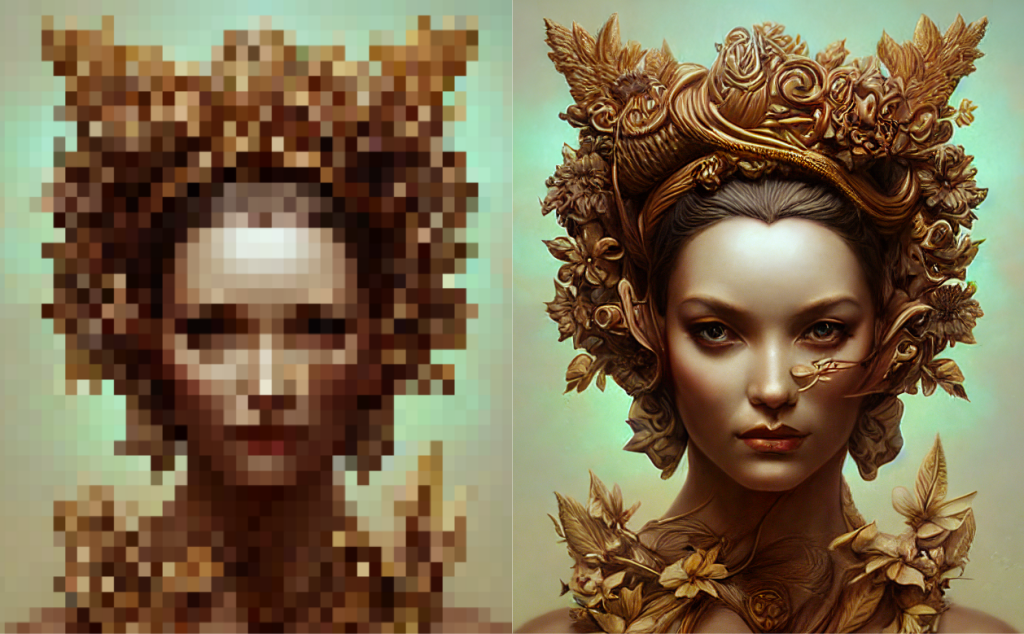
What is an AI image upscaler
What is an AI image upscaler?
In today’s digital age, high-quality images have become an essential part of our lives, whether it’s for personal memories, professional presentations, or creative pursuits. However, we often encounter images that are low in resolution, resulting in a loss of clarity and detail. This is where AI image upscalers come into play, promising to increase image resolution and quality without losing vital details. In this article, we will explore the world of AI image upscaling, discussing what it is, how it works, its applications, and its impact on various industries.
What is an AI Image Upscaler?
An AI image upscaler is a software or tool that utilizes artificial intelligence (AI) technology to enlarge images while preserving or enhancing their quality. The primary goal of AI image upscaling is to increase the image resolution without causing blurriness, loss of detail, or the dreaded pixelation. This is achieved by using advanced algorithms and deep learning techniques, making it a powerful tool for enhancing image quality.
How AI Image Upscalers Work
AI image upscalers function through a complex process involving deep learning and neural networks. These algorithms are trained on vast datasets of high and low-resolution images, allowing them to learn the patterns and structures of various objects within images. Here’s a simplified overview of how they work:
- Data Collection: AI upscalers require extensive datasets containing pairs of low-resolution images and their corresponding high-resolution versions. These datasets are used to train the AI models.
- Training the AI Model: Neural networks, particularly Convolutional Neural Networks (CNNs), are employed to train the AI model. During training, the model learns how to map low-resolution inputs to high-resolution outputs.
- Inference: Once trained, the AI model can take a low-resolution image as input and generate a high-resolution version by extrapolating details based on its training data.
- Upscaling Process: The AI upscaler upscales the image, filling in missing details, enhancing sharpness, and reducing noise. This process is often referred to as “super-resolution.”
- Output: The result is a high-resolution image that looks remarkably enhanced compared to the original, without losing quality.
Applications of AI Image Upscaling
AI image upscaling has found applications in various fields, thanks to its ability to improve image quality and resolution. Here are some of the prominent areas where AI image upscalers are making a difference:
Photography and Videography
In the world of photography and videography, AI image upscalers are used to enlarge and improve the quality of images and video frames. Professional photographers and videographers often employ AI image upscaling tools to enhance the sharpness and detail of their work. It can be particularly valuable when dealing with images captured in less than ideal conditions or with lower-end equipment.
Gaming
In the gaming industry, AI upscaling is utilized to enhance the graphics of video games. By upscaling lower-resolution textures and assets, game developers can create more visually stunning and immersive gaming experiences. This is especially crucial in modern gaming, where 4K resolution and high-quality graphics have become standard expectations.
Medical Imaging
Medical professionals rely on high-quality images for diagnostic purposes. AI image upscalers can help improve the resolution of medical images, such as X-rays, MRIs, and CT scans, allowing for better visualization of anatomical details and anomalies. This, in turn, aids in more accurate diagnoses and treatment planning.
Art Restoration
Art restoration and preservation involve restoring historical and damaged artworks to their original glory. AI image upscalers can be valuable tools for art conservators, allowing them to digitally enhance and enlarge artworks for analysis and restoration purposes.
Satellite and Aerial Imagery
In the field of remote sensing and Earth observation, AI image upscalers are used to enhance satellite and aerial imagery. This is essential for applications like land use monitoring, environmental assessment, and urban planning, where high-resolution images are critical.
The Impact of AI Image Upscaling on Image Quality
One of the key promises of AI image upscalers is the ability to increase image resolution without compromising quality. Traditional upscaling methods, such as bicubic interpolation, tend to produce blurry and pixelated results when enlarging images. AI image upscaling, on the other hand, leverages AI technology to generate images that are not only larger but also crisper, more detailed, and free from artifacts.
Here are the primary ways AI image upscalers enhance image quality:
Detail Enhancement
AI image upscalers excel at identifying and extrapolating intricate details within an image. Whether it’s the fine texture of a fabric, the small features on a face, or the subtle nuances of a landscape, AI-powered upscaling algorithms can bring out these details, resulting in a more lifelike and visually pleasing image.
Noise Reduction
Low-resolution images often suffer from noise, which can manifest as graininess or artifacts. AI upscalers are equipped to reduce noise, resulting in smoother and cleaner images. This is particularly beneficial for old or low-quality photographs.
Improved Sharpness
One of the critical aspects of image quality is sharpness. AI image upscalers enhance the sharpness of images, making edges and contours more distinct. This helps in creating a visually striking and professional appearance.
Artifact Minimization
Traditional upscaling methods may introduce artifacts like jagged edges, blockiness, or color distortions. AI upscaling tools are designed to minimize these artifacts, providing a more natural and visually pleasing image.
Color Restoration
Color can be lost or distorted when upscaling images. AI upscalers can accurately restore and enhance color information, resulting in images that closely match the original color scheme.
Using AI Image Upscalers
Using an AI image upscaler is generally a straightforward process, and many online tools and software applications are available to help you upscale images. Here’s a basic guide to upscale image online:
Choose an AI Image Upscaler
First, select an AI image upscaling tool or software that suits your needs. There are various options available online, some of which are free, while others require a subscription or a one-time purchase.
Upload Your Image
Once you’ve chosen a tool, upload image you want to upscale. Most image enhancer tools support popular image formats like JPEG and PNG. Some tools may also accept other formats.
Adjust Settings (If Available)
Depending on the tool, you may have the option to adjust various settings, such as the degree of upscaling, sharpening, and noise reduction. Experiment with these settings to achieve the desired result.
Process the Image
After uploading the image and configuring the settings, initiate the upscaling process. The AI upscaler will analyze your image and generate a higher-resolution version. The processing time may vary depending on the complexity of the image and the tool’s capabilities.
Download the Enhanced AI Photo
Once the upscaling process is complete, you can preview the enhanced image. If you’re satisfied with the result, you can then download the high-resolution version to your computer.
It’s essential to note that while AI image upscalers are powerful tools, the quality of the output can vary depending on the specific tool you choose and the quality of the input image. For the best results, it’s recommended to use original images with as much detail as possible.
AI Image Upscalers and Image Resolution
One of the primary reasons for using AI image upscalers is to increase resolution. Image resolution refers to the number of pixels in an image, typically expressed as width x height (e.g., 1920×1080 for Full HD). Higher resolution images contain more detail and are better suited for various applications, especially in the age of 4K displays and beyond.
AI image upscalers excel at increasing image resolution by generating additional pixels and details. However, it’s important to note that there are limitations to how much an image can be upscaled effectively. Pushing the limits of upscaling may result in diminishing returns, where the image quality does not improve significantly, and artifacts may become more prominent.
AI Image Upscaling and the Quest for 4K
The term “4K” is now a common buzzword in the world of displays and content consumption. It refers to a resolution of approximately 3840×2160 pixels (4 times the resolution of Full HD), and it is known for its exceptional clarity and detail. 4K content is widely available in the form of 4K TVs, monitors, and streaming services. AI image upscalers have played a significant role in making 4K content more accessible.
AI image upscalers can take lower-resolution content, whether it’s a video, an image, or a frame from a film, and upscale it to 4K resolution. While this does not create true 4K content (as that would require the original content to be captured at 4K resolution), it does provide a substantial improvement in image quality, making the content more enjoyable on 4K displays.
AI Image Upscaling vs. Traditional Image Enlarger
To appreciate the significance of AI image upscaling, it’s worth comparing it to traditional upscaling methods, such as bicubic interpolation. Traditional upscaling techniques are simple mathematical operations that fill in the gaps between pixels by averaging nearby pixels. While these methods can make images larger, they often result in a loss of image quality, including blurriness, pixelation, and a lack of fine details.
AI image upscaling, on the other hand, goes beyond basic mathematical operations. It utilizes deep learning and neural networks to analyze and understand the content of images. This enables AI upscalers to generate high-resolution images that are significantly more detailed and visually appealing than those produced by traditional upscaling methods.
FAQs
Q1: What is an AI image enlarger, and how does it enhance your image?
An AI image enlarger uses advanced AI algorithms and deep convolutional neural networks to upscale and enhance your images by increasing their size and resolution without quality loss.
Q2: Can I find a free online image upscaler to upscale and enhance my images for free?
Yes, there are many free online image upscalers available. Simply upload your image, use the AI tool to increase resolution, and improve image quality online for free.
Q3: How much can an AI image enhancer increase the image size and resolution?
Advanced AI image enhancers can upscale images by up to 8x their original size, allowing for significant improvements in image quality.
Q4: Are AI image upscalers capable of bulk image upscaling for multiple images quickly and easily?
Yes, AI image upscalers are designed to handle bulk image upscaling, making it convenient to enhance multiple images simultaneously without compromising quality.
Q5: How does the ultimate image upscaler work, and what makes it an innovative AI tool?
The ultimate image upscaler utilizes deep learning and AI-powered technology to upscale and enhance images within seconds. It is considered innovative due to its ability to maintain image quality and resolution.
Q6: Can an online AI image upscaler provide image super-resolution without compromising the image quality?
Yes, online AI image upscalers are capable of achieving image super-resolution by enhancing image quality while minimizing artifacts and preserving image details.
Q7: What are the advantages of using an online image upscaler with advanced AI upscaling technology?
Online image upscalers with advanced AI upscaling technology provide quality online image enhancement, enabling you to upscale and enhance images quickly and easily.
Q8: How does an AI image upscaler make it possible to upscale an image while preserving its quality?
An AI image upscaler uses deep learning to analyze and enhance images, maintaining their quality without compromising resolution or image size.
Q9: Are there free-to-use online image upscalers that can increase the resolution of images and photos without quality loss?
Yes, you can find free online image upscalers that increase the resolution of images without quality loss, providing a cost-effective solution for enhancing your photos.
Q10: What is the role of AI-powered image upscalers in enhancing images and photos within seconds?
AI-powered image upscalers play a pivotal role in enhancing images within seconds, thanks to their ability to quickly process and improve image quality with just one click.
Q11: How can online AI image upscalers improve the size and resolution of images quickly and easily?
Online AI image upscalers use advanced AI upscaling techniques to enhance image size and resolution quickly and easily, providing users with high-quality results.

Do I need an AI checker
Do I need an AI checker?
Artificial Intelligence (AI) has significantly revolutionized various aspects of our lives. As AI continues to advance, it has also delved into content creation, posing challenges in distinguishing between human-generated and AI-generated content. This article aims to explore the necessity of AI checkers in detecting AI-generated content, along with their impact on online presence and plagiarism checking.
What is an AI checker and why would I need it?
Understanding AI detection and its significance
An AI checker, also known as an AI detector, is a software tool that uses AI algorithms to identify content created by artificial intelligence. Given the increasing use of AI in content creation and the potential implications of AI-generated content, there is a growing need for reliable AI detection. It is crucial to distinguish between content written by a human and that generated by an AI language model.
Benefits of using AI content detectors
AI content detectors offer several benefits, including the ability to maintain the authenticity and quality of human-written content, identify AI-generated text, and ensure compliance with ethical content creation practices. By leveraging AI detectors, one can mitigate the risks associated with misleading or deceptive AI-generated content.
How does an AI checker work?
An AI checker functions by analyzing the linguistic patterns, semantic coherence, and syntactic structures of the content to identify indicators of AI generation. It utilizes AI algorithms to compare the text against known patterns and characteristics of AI-generated content, enabling it to flag potential instances of AI-written text.
How can AI content affect my online presence?
Impact of AI-generated content on search engines
AI-generated content can impact search engine rankings and visibility. Search engines prioritize original and valuable content, and the presence of AI-generated text can potentially hamper a website’s search engine performance. Therefore, it is essential to ensure that AI content is identified and mitigated to maintain the credibility and visibility of the online presence.
Avoiding negative consequences with reliable AI detection
By utilizing a reliable AI detection tool, businesses and content creators can prevent negative repercussions such as penalization by search engines, loss of credibility, and diminished user trust. Accurately identifying and managing AI-generated content is crucial for sustaining a positive online reputation.
Is an AI checker essential for detecting plagiarism in AI-generated text?

Importance of AI detection in plagiarism checking
AI detection plays a pivotal role in plagiarism checking, especially when dealing with AI-generated text. Plagiarism detection tools that incorporate AI algorithms are indispensable in discerning between original human-created content and AI-generated replicas.
Using AI checkers for identifying AI-generated plagiarism
AI checkers are specifically designed to identify instances of AI-generated plagiarism, ensuring that the originality of content is preserved and unethical copying is prevented. With the proliferation of AI writing tools like ChatGPT and other paraphrasing tools, the need for effective AI detection in plagiarism checking has become more pronounced.
Choosing the best AI detection tool for plagiarism checking
When selecting an AI detection tool for plagiarism checking, it is essential to consider its accuracy in distinguishing between human and AI-generated content. The capability to identify AI-generated text effectively, along with robust algorithmic support, is crucial for choosing the best AI detection tool for plagiarism detection.
Can AI checkers be beneficial for AI writing and content creation?
Enhancing content creation with AI content detectors
AI content detectors can enhance content creation by ensuring that the content is predominantly derived from human input, maintaining originality, and minimizing the presence of AI-generated text. This is particularly important for businesses and individuals who seek to establish genuine and unique content creation practices.
Leveraging AI checkers for generating high-quality AI content at scale
For organizations relying on AI for content creation, AI checkers provide the means to generate high-quality AI content at scale while ensuring that the content aligns with ethical standards and originality requirements. This facilitates the effective utilization of AI writing tools and language models for content generation.
Exploring the potential of AI writing detectors and generative AI
AI writing detectors open the door to exploring the potential of generative AI while maintaining control over the content’s authenticity and integrity. They enable a balanced approach to leveraging generative AI for content creation without compromising ethical considerations and the veracity of the content.
How to choose the best AI checker for detecting AI-generated content?
Key features to consider when selecting an AI detection tool
When choosing an AI detection tool, it is crucial to assess its ability to accurately identify AI-generated content across various mediums, including text and images. The tool should also demonstrate proficiency in distinguishing between human and AI-generated content with precision and reliability.
Comparing different AI checkers for detecting AI text and images
Comparing the functionalities and performance of different AI checkers provides insights into their capabilities in detecting AI-generated content. Assessing their effectiveness in identifying AI text and images, along with their adaptability to evolving AI algorithms, is vital in selecting the most suitable AI checker.
Utilizing AI content detectors for identifying AI content across various mediums
Effective AI content detectors should possess the versatility to detect AI content across diverse mediums, accommodating the evolving landscape of AI-generated content. Whether it is written text, visual content, or audio transcripts, the AI checker should be adept at identifying AI-generated material.
Conclusion
The evolving landscape of content creation, fueled by the advancements in Artificial Intelligence (AI), necessitates a thoughtful consideration of the role of AI checkers. These tools, also known as AI detectors, play a crucial role in maintaining the authenticity, quality, and ethical standards of written material in the face of increasing AI-generated content.
The need for AI checkers arises from the growing prevalence of AI in content creation, raising concerns about the potential impact on online presence and the challenges associated with detecting AI-generated text. These tools serve as a line of defense, distinguishing between content crafted by humans and that generated by AI language models.
FAQs

Q: Do I need an AI checker?
A: It depends on your specific needs. An AI checker, also known as an ai detector or plagiarism checker, can be useful for detecting ai writing or content that may have been written by an AI. If you want to ensure that your content is authentic and free from AI manipulation, using an AI detector may be beneficial.
Q: How does an AI detector work?
A: AI detectors work by analyzing the content and comparing it to a database of known AI-generated writing. They use advanced algorithms to identify patterns and characteristics that are common in AI-generated text, allowing them to flag potentially suspect content for further review.
Q: Can an AI checker detect content written by ChatGPT or similar AI tools?
A: Yes, many AI detectors are designed to identify content generated by popular AI writing tools such as ChatGPT. They continuously update their databases to recognize new AI writing patterns, ensuring that they can effectively detect content created using these tools.
Q: What is the best AI detector available?
A: There are several AI detectors on the market, each with its own strengths and capabilities. Some popular options include Winston AI, which is known for its accuracy and reliability, and other free AI detection tools that offer basic functionalities for users who are looking for a free to use solution.
Q: Can an AI detector also identify AI-generated images?
A: While AI detectors primarily focus on written content, some advanced tools are capable of detecting AI-generated images as well. These detectors use algorithms tailored for image analysis to distinguish between images created by AI and those created by humans.
Q: How can I avoid detection by an AI checker?
A: It’s important to note that some AI detectors are highly advanced and can detect even subtle signs of AI-generated content. To avoid detection, you may want to focus on creating authentic, human-generated content and use the tool in line with the university’s policies on AI writing, ensuring that any writing or content produced reflects proper authorship.
Q: Is there an undetectable AI writer or content creation tool?
A: While there may be claims of undetectable AI writing tools, the technology is constantly evolving, and AI detectors may adapt to detect even the most sophisticated AI-generated content. It’s essential to stay informed about the capabilities of AI detectors and understand that the landscape of AI detection is dynamic.
Q: Can an AI detector be used to compare different AI tools for content generation?
A: Yes, AI detectors can be utilized to compare the outputs of different AI writing tools. By using AI detectors in conjunction with various AI content creation tools, you can assess the strengths and weaknesses of each tool and make informed decisions about which tool best suits your needs.
Q: Are AI detectors accurate in distinguishing between AI-generated content and human writing?
A: Advanced AI detectors are continually improving their accuracy and can effectively differentiate between AI-generated content and content written by humans. However, it’s important to understand that the evolving nature of AI technology may impact the reliability of AI detectors over time.
Q: What are the potential implications of using AI detectors for content detection?
A: Employing AI detectors for content detection can help maintain the integrity of written work and combat plagiarism. However, it’s essential to consider the ethical and privacy implications associated with using AI detectors, especially in educational and professional settings. It’s important to adhere to university policies on AI writing and to use AI detectors responsibly and ethically.

What does an AI checker do
What does an AI checker do?
Artificial Intelligence (AI) checkers have revolutionized the way we assess content and ensure its authenticity. In my opinion it’s one of the most important tools; something Google demands you do or you’ll be penalised in the rankings
From detecting AI-generated text to identifying plagiarized content, AI checkers are powerful tools that can significantly enhance the quality and credibility of written material. In this article, we’ll explore the inner workings of AI content detectors, the future of AI writing and content detection, best practices for using AI detection tools, the key components of plagiarism checkers with AI detection, and the differences between AI and human-written content detection.
How does an AI content detector work?
An AI content detector operates through a complex process that involves the utilization of machine learning algorithms and extensive datasets. Understanding the detection process is crucial to comprehending the capabilities of such tools.
Understanding the detection process
The detection process of an AI content detector involves analyzing a piece of text and comparing it against a vast dataset to identify any patterns or characteristics indicative of content generated by AI. This involves examining language models and algorithmic structures to ascertain the likelihood of AI involvement in the creation of the content.
Utilizing machine learning algorithms
AI content detectors rely on machine learning algorithms to continuously improve their ability to discern between human-written and AI-generated text. These algorithms adapt and evolve based on the patterns and features they encounter, enhancing the accuracy and reliability of the detection tool.
Accuracy of the detection tool
The accuracy of AI content detectors is a critical factor in their effectiveness. Through ongoing refinement and training, these tools strive to achieve high levels of accuracy in identifying AI-generated content, contributing to their value in maintaining content authenticity.
What is the future of AI writing and content detection?
The future of AI writing and content detection is marked by the continued evolution of AI in content creation, the integration of AI in writing tools, and implications for detecting AI-generated content. These advancements have the potential to significantly shape the landscape of content creation and verification.
Evolution of AI in content creation
The integration of AI in content creation processes is expected to lead to enhanced efficiency and creativity. AI writers are increasingly being incorporated into various industries, contributing to the generation of diverse and high-quality content.
Integration of AI in writing tools
AI writing tools are becoming more prevalent, offering features that rely on AI algorithms to assist users in crafting compelling and error-free content. These tools work in conjunction with AI content detectors, further enhancing the capabilities of content verification.
Implications for detecting AI-generated content
As AI continues to advance, the task of detecting AI-generated content becomes increasingly challenging. AI detection tools need to adapt to the evolving nature of AI-generated content, emphasizing the need for continuous innovation and improvement.
How to use an AI detector for identifying AI-generated text?
Utilizing an AI detector for identifying AI-generated text involves adhering to best practices in the use of AI detection tools, evaluating their features, and ensuring the accuracy and reliability of the detection process.
Best practices in utilizing AI detection tools
When using AI detection tools, it is essential to follow best practices such as providing clear and comprehensive text samples for analysis, staying updated with the latest advancements in AI detection, and critically assessing the results obtained from the tool.
Features to look for in a checker tool
Effective AI detection tools exhibit features that enable thorough analysis and comparison of textual data, including robust language models, sophisticated algorithms, and the ability to adapt to emerging trends in AI-generated content.
Accuracy and reliability of AI text detection
The accuracy and reliability of AI text detection are paramount to its utility. Users must have confidence in the tool’s ability to accurately differentiate between AI-generated and human-written content, thereby enhancing trust in the authenticity of the content being assessed.
What are the key components of a plagiarism checker tool with AI detection?
The integration of AI in plagiarism detection has led to the development of advanced features that significantly augment the ability to identify plagiarized content, offering substantial benefits in content verification processes.
Integration of AI in plagiarism detection
AI has been integrated into plagiarism detection tools to enhance their capability to detect instances of content replication and manipulation, thereby providing a more thorough assessment of the originality of written material.
AI-powered features in detecting plagiarized content
AI-powered features play a pivotal role in detecting plagiarized content by employing intricate algorithms and pattern recognition techniques, thereby contributing to the identification of content that may have been generated by an AI language model.
Benefits of using AI in detecting plagiarism
Utilizing AI in detecting plagiarism offers benefits such as improved accuracy in identifying instances of content duplication, enhanced efficiency in content assessment, and the ability to keep pace with the evolving landscape of content replication methods.
How are AI tools different from human-written content detection?
AI tools for content detection differ from human-written content detection in various aspects, encompassing the comparison of their capabilities, advantages, limitations, and the role of natural language processing in AI detection.
Comparison of AI and Human Writing Detection
AI content detection tools possess the ability to swiftly analyze vast quantities of textual data, identify subtle patterns indicative of AI-generated content, and adapt to emerging trends. In contrast, human-written content detection may rely more heavily on human intuition and contextual understanding.
Advantages and limitations of AI content detection
The advantages of AI content detection include its ability to process and analyze large volumes of content with remarkable speed, but limitations may exist in discerning highly sophisticated AI-generated content that closely mimics human writing styles.
Understanding the role of natural language processing in AI detection
Natural language processing plays a critical role in AI content detection by enabling the analysis of linguistic nuances and patterns, contributing to the discernment of AI-generated content from human-written text through advanced language models and algorithms.
Conclusion
The advent of AI checkers represents a transformative force in the realm of content creation and verification. These powerful tools, equipped with advanced machine learning algorithms, play a pivotal role in distinguishing between human-written and AI-generated content. Through intricate pattern recognition and continuous learning, AI checkers contribute significantly to maintaining the authenticity, quality, and credibility of written material.
FAQs
Q: What is the function of an AI checker?
A: An AI checker is a tool that uses AI detectors to determine whether a piece of content was written by an AI, and to detect patterns and potential plagiarism.
Q: How do AI detectors work in an AI checker?
A: AI detectors work by using AI technology to analyze the content and detect patterns that are indicative of content generated by an AI model.
Q: How accurate is the detection work of an AI checker?
A: The detection accuracy of an AI checker is measured by its ability to accurately flag content that has been written by an AI, by using metrics such as perplexity to determine the likelihood of AI-generated content.
Q: What is the purpose of using AI detection in content creation?
A: In content creation, AI detection is used to identify content written by an AI and to ensure that it meets the required standards and originality.
Q: What are some popular AI detectors used in AI checkers?
A: Some popular AI detectors used in AI checkers include AI writing detectors, AI detector tools, and AI image detection tools, designed to detect AI-generated content in various forms of writing and media.
Q: Can an AI checker detect AI-generated images?
A: Yes, AI checkers can detect AI-generated images by using AI technology to analyze the characteristics and patterns within the images to determine their AI-generated nature.
Q: How does an AI checker determine if a piece of writing is written by an AI?
A: An AI checker determines if a piece of writing is written by an AI by analyzing the content and using AI technology to flag content that exhibits characteristics of being written by an AI model.
Q: What role does an AI checker play in detecting AI-generated content?
A: An AI checker plays a crucial role in detecting AI-generated content by identifying and flagging content that shows signs of being generated by an AI, such as language and pattern recognition.
Q: How can an AI checker be used to detect patterns and potential plagiarism in content?
A: An AI checker uses AI detection capabilities to identify patterns in content and potential instances of plagiarism, by comparing the content with known AI-generated patterns and existing content.
Q: Can content created by AI be flagged by an AI checker?
A: Yes, content created by AI can be flagged by an AI checker if it shows patterns and characteristics that are indicative of being generated by an AI model.