
- You are here:
- Home »
- Archive: December, 2025
Archive Monthly Archives: December 2025

The Proven Real Estate Newsletter Framework: How to Turn 10 Minutes Into 30 Days of Content
Picture this: It's Sunday evening, and you're staring at your computer screen, wondering what the heck you're going to send to your email list this week. Sound familiar?
If you're like 73% of real estate agents, you're spending 2-3 hours every week scrambling to create newsletter content. That's over 130 hours per year: time you could be spending with actual clients or, you know, having a life.
Here's the thing: successful real estate newsletters don't require you to reinvent the wheel every single week. What they need is a systematic approach that lets you batch-create content efficiently.
The framework I'm about to share has helped over 2,000 real estate professionals streamline their content creation process. Instead of spending hours each week, you'll invest just 10 minutes of planning to generate 30 days of engaging newsletter content.
The 4-Pillar Content Framework
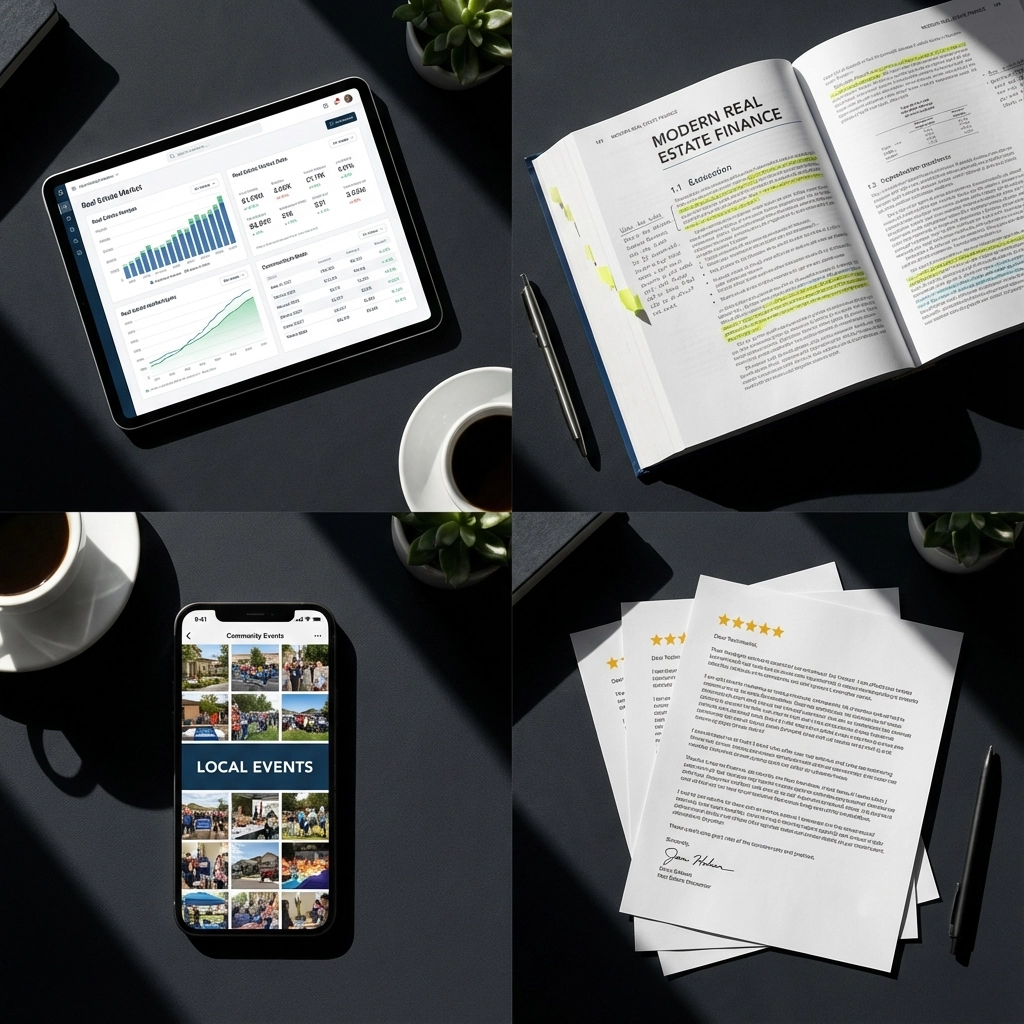
Your newsletter should consistently deliver value across four key areas. Think of these as the pillars supporting your entire content strategy:
Pillar 1: Market Intelligence (25% of your content)
- Local market statistics and trends
- Price movement analysis
- Inventory reports
- Seasonal market insights
Pillar 2: Educational Content (30% of your content)
- Home buying/selling tips
- Market process explanations
- Financial guidance
- Legal updates and changes
Pillar 3: Community Connection (25% of your content)
- Neighborhood spotlights
- Local business features
- Community events and news
- Resident success stories
Pillar 4: Social Proof (20% of your content)
- Recent sales and listings
- Client testimonials
- Before/after property transformations
- Market success stories
The 10-Minute Planning Session
Here's where the magic happens. Set aside 10 minutes once per month for this strategic planning session. You'll emerge with a complete content calendar that practically writes itself.
Step 1: Gather Your Data Sources (3 minutes)
Create a simple spreadsheet with these columns:
- Week of [Date]
- Market Data Source
- Educational Topic
- Community Focus
- Social Proof Element
Pro tip: Bookmark these essential data sources before your planning session:
- Your local MLS statistics dashboard
- City council meeting minutes and announcements
- Local newspaper event calendars
- Your CRM for recent transactions and testimonials
Step 2: Plot Your Monthly Market Story (4 minutes)
Every month tells a market story. Your job is to identify that narrative and break it into weekly chapters.
Example for March 2025:
- Week 1: "Spring Market Awakening – Inventory Surge Begins"
- Week 2: "Buyer Competition Heats Up – Multiple Offer Strategies"
- Week 3: "New Construction Spotlight – Emerging Neighborhoods"
- Week 4: "Interest Rate Impact – What Buyers Need to Know Now"
This overarching narrative gives your newsletter consistency and helps readers follow a logical progression throughout the month.
Step 3: Assign Content Buckets (2 minutes)
Now you'll quickly assign each pillar to specific weeks based on your market story:
| Week | Market Intelligence | Educational | Community | Social Proof |
|---|---|---|---|---|
| 1 | Spring inventory stats | First-time buyer tips | New restaurant opening | 3 March closings |
| 2 | Multiple offer trends | Bidding strategy guide | School district news | Testimonial video |
| 3 | New construction data | Construction loan basics | Neighborhood profile | Development photos |
| 4 | Rate impact analysis | Refinancing options | Community event preview | Success story feature |
Step 4: Create Your Content Templates (1 minute)
The final step is the secret sauce. You're not writing full articles: you're creating content templates that can be quickly populated with current information.

The Template Library That Does the Heavy Lifting
Instead of starting from scratch each week, you'll have proven templates that just need fresh data plugged in. Here are the five most effective templates:
Template 1: Market Snapshot
Opening: "This week in [Your City], the real estate market showed [trend/change]…"
Data section: 3-4 key statistics with brief explanations
Implication: What this means for buyers/sellers
Call-to-action: "Want to see how this affects your home value? Reply for a free analysis."
Template 2: Educational Deep-Dive
Hook: Start with a common misconception or frequently asked question
Explanation: Break down the process into 3-5 simple steps
Example: Real-world scenario or case study
Takeaway: One key action item for readers
Template 3: Community Spotlight
Introduction: Why you're featuring this topic/place/person
Details: 3-4 specific highlights or benefits
Connection: How this relates to local real estate
Engagement: Question or poll to encourage responses
Template 4: Success Story Format
Challenge: The original problem or goal
Process: How you helped navigate the situation
Result: Specific outcome achieved
Lesson: What other clients can learn from this experience
Template 5: Quick Tips Roundup
Theme: Seasonal or timely focus
Tips: 5-7 actionable pieces of advice
Resources: Links to helpful tools or additional information
Follow-up: Offer for personalized guidance
Advanced Automation Strategies
Once you've mastered the basic framework, these automation techniques will save you even more time:
Content Recycling System: Track your most-engaged-with content and schedule it for re-sharing 6 months later with updated data. High-performing educational content especially has excellent replay value.
Seasonal Content Banking: Create evergreen content for predictable seasonal topics (spring cleaning tips, holiday moving advice, tax season implications) that you can automatically deploy each year.
Data Integration Tools: Set up automatic pulls from your MLS, local government websites, and Google Alerts for your target neighborhoods. This creates a steady stream of fresh material without manual research.
Reader Response Triggers: Develop template responses for common reader questions and comments. This lets you quickly engage without crafting responses from scratch.

Common Framework Pitfalls (And How to Avoid Them)
Even with a solid framework, agents often stumble in these areas:
Mistake #1: Over-automation
While templates save time, your newsletter shouldn't feel robotic. Always include at least one personal observation or current event connection in each edition.
Mistake #2: Ignoring Local Context
National real estate trends are useful, but your readers care most about their immediate area. Always filter broader insights through your local market lens.
Mistake #3: Inconsistent Publishing
A framework only works if you stick to it. Set up calendar reminders and batch your writing sessions rather than scrambling each week.
Mistake #4: Skipping the Personal Touch
Include brief personal updates or insights in each newsletter. Readers subscribe to you, not just market information.
Measuring Your Framework's Success
Track these metrics to ensure your streamlined approach is working:
- Open rates: Should improve with consistent, valuable content
- Click-through rates: Monitor which content types generate the most engagement
- Reply rates: Personal responses indicate strong reader connection
- Referral generation: Quality newsletters typically increase word-of-mouth referrals by 15-20%

Scaling Your Content System
Once your framework is humming along, consider these expansion strategies:
Multi-Format Adaptation: Turn your newsletter content into social media posts, video scripts, and blog articles. One piece of research can fuel multiple content channels.
Client Segmentation: Create variations of your templates for different audience segments (first-time buyers, luxury clients, investors, etc.).
Team Delegation: If you work with assistants or team members, your templates make it easy to delegate content creation while maintaining your voice and quality standards.
Seasonal Specialization: Develop deeper template variations for your area's peak buying seasons, allowing for more targeted, relevant content when it matters most.
The reality is that successful real estate newsletters aren't about creative genius: they're about consistent value delivery. This framework gives you the structure to provide that value without the time drain.
Your 10-minute monthly planning session becomes the foundation for weeks of engaging, relevant content that keeps you top-of-mind with past, current, and future clients. The framework handles the strategy; you just add the current data and personal insights that make it uniquely yours.
Stop spending your Sunday evenings in content creation panic mode. Invest those 10 minutes once per month, and watch your newsletter become a powerful, efficient lead generation machine that practically runs itself.

Real Estate Leads for New Agents: Fix These 7 Mistakes
Starting your real estate career feels like drinking from a fire hose. You’re juggling contracts, learning the market, and trying to build a client base from scratch. Real Estate Leads for New Agents is critical but here’s the harsh truth: 95% of new agents fail within their first five years, and the biggest reason isn’t lack of market knowledge: it’s poor lead generation.
If you’re struggling to fill your pipeline or wondering why your phone isn’t ringing, you’re probably making one (or several) of these critical mistakes. The good news? Each mistake has a quick fix that can transform your business within weeks.
Let’s dive into the seven deadliest lead generation mistakes new agents make: and exactly how to fix them.
Mistake #1: Treating Lead Generation as Optional
The Problem: Many new agents spend 80% of their time on everything except lead generation. They perfect their listing presentations, organize their CRM, and attend every training session: but neglect the one activity that actually brings in business.
Why This Kills Your Business: Without consistent lead generation, you’re essentially running a business with no customers. You might close a deal or two from referrals, but you’ll never build sustainable income.
The Quick Fix:
• Block 2-3 hours daily for prospecting activities – Treat this time as non-negotiable as showing up to a listing appointment
• Track your daily prospecting numbers – Set goals for calls made, emails sent, or social media interactions
• Start with just 20 calls per day – This manageable number builds the habit without overwhelming you
• Use the “No Prospecting, No Breakfast” rule – Don’t eat breakfast until you’ve completed your prospecting block

Mistake #2: Chasing Leads Instead of Attracting Them
The Problem: Real Estate Leads for New Agents often approach prospects like hunters tracking prey: sliding into DMs, cold-calling with generic scripts, or knocking on doors with pushy sales pitches. This positions you as just another salesperson instead of a trusted advisor.
Why This Fails: People have built-in radar for desperation. When you chase leads aggressively, prospects immediately put up their defenses because they sense you need the sale more than they need your help.
The Quick Fix:
• Become the local market expert – Share weekly market updates, neighborhood insights, and recent sales data
• Create valuable content consistently – Post helpful tips about buying/selling, not just your listings
• Use social proof strategically – Share client success stories and testimonials regularly
• Position yourself as the advisor – Ask questions about their goals before pitching your services
• Build a personal brand – People buy from people they know, like, and trust
Pro Tip: Instead of asking “Are you thinking about buying or selling?” try “What’s your biggest concern about the current market?” This opens conversations without triggering sales resistance.
Mistake #3: Over-Relying on Friends and Family
The Problem: Your warm network gives you an initial boost, but it has finite boundaries. Agents who plateau at 5-10 deals annually typically never learned to generate business beyond their immediate relationships.
Why This Limits Growth: Your friends and family circle might support you with one or two transactions, but they can’t sustain a thriving business. Plus, mixing business with personal relationships can create awkward situations.
The Quick Fix:
• Expand your network systematically – Join local business groups, attend community events, and volunteer for causes you care about
• Use existing clients to meet new people – Ask satisfied clients to introduce you to their friends, neighbors, and coworkers
• Target specific neighborhoods – Become the go-to agent for 2-3 specific areas rather than trying to cover the entire city
• Leverage online platforms – Use Facebook groups, LinkedIn, and Instagram to connect with potential clients beyond your immediate circle
• Create a referral system – Develop relationships with mortgage brokers, home inspectors, and contractors who can send business your way
Mistake #4: Responding Too Slowly to Inquiries
The Problem: In today’s digital world, leads contact multiple agents simultaneously on platforms like Zillow, Realtor.com, and Facebook. If you’re not responding within minutes, you’re likely already out of the running. That would be a Real Estate Leads for New Agents mistake.
Why Speed Matters: Studies show that leads contacted within 5 minutes are 21 times more likely to convert than those contacted after 30 minutes. Your competition isn’t sleeping: they’re responding faster than you.
The Quick Fix:
• Set up instant notifications – Enable push notifications for all lead sources on your phone
• Use auto-responders – Send immediate acknowledgment emails with your contact information
• Create response templates – Have pre-written texts and emails ready to customize quickly
• Designate specific response hours – If you can’t respond 24/7, set clear expectations about when leads will hear back
• Use a CRM with automation – Tools like Follow Up Boss or Chime can help you respond faster

Response Time Benchmarks:
• Online inquiries: Under 5 minutes
• Phone calls: Same day
• Social media messages: Within 1 hour
• Email inquiries: Within 2 hours
Mistake #5: Generic, Inconsistent Follow-Up
The Problem: Most agents follow up once or twice with generic “just checking in” messages, then give up. Others send the same templated email to every lead regardless of their specific situation or timeline.
Why This Wastes Opportunities: 80% of sales require 5-12 follow-up attempts, but most agents quit after 2-3 contacts. Generic messages also show prospects that you’re not paying attention to their specific needs.
The Quick Fix:
• Create a 6-8 touch follow-up sequence – Use a mix of calls, texts, emails, and handwritten notes
• Personalize every message – Reference their specific property interests, timeline, or concerns
• Add value with each contact – Share relevant market data, new listings, or helpful resources
• Segment leads by temperature – Hot leads need daily follow-up; warm leads need weekly contact; cold leads get monthly touches
• Use different contact methods – Some people prefer texts, others email: test what works for each lead
Sample Follow-Up Sequence:
• Day 1: Phone call + personalized email
• Day 3: Text with relevant listing or market update
• Week 2: Email with neighborhood market report
• Week 4: Handwritten note with local market insights
• Month 2: Phone call to check in on timeline
• Month 3: Email with new inventory updates
Mistake #6: Leading with Sales Pitches Instead of Value
The Problem: New agents often jump straight into “I can help you buy or sell” mode without understanding the prospect’s situation or providing any upfront value. This approach triggers immediate sales resistance.
Why This Backfires: Modern consumers are bombarded with sales messages. They’ve learned to ignore anything that sounds like a pitch. Instead, they respond to agents who demonstrate expertise and helpfulness before asking for business.
The Quick Fix:f
• Lead with market insights – Start conversations by sharing relevant local market trends
• Become a resource first – Offer helpful information before asking about their plans
• Ask diagnostic questions – Understand their situation before proposing solutions
• Share success stories – Use case studies that relate to their specific circumstances
• Provide free consultations – Offer no-pressure market evaluations or buyer consultations

Value-First Scripts:
• Instead of: “Are you looking to buy or sell?”
• Try: “I noticed you were looking at homes in [neighborhood]. I’ve sold 15 properties there this year and can share some insights about what’s happening in that market.”
Mistake #7: Using Only One Contact Method
The Problem: Many agents try calling three times, can’t reach the prospect, and abandon the lead. They don’t realize that people have different communication preferences and might prefer text, email, or social media messages.
Why This Misses Opportunities: Only 2% of sales happen on the first contact, and different people prefer different communication channels. By limiting yourself to one method, you’re missing chances to connect.
The Quick Fix:
• Try multiple channels – Phone, text, email, social media messages, handwritten notes
• Pay attention to response patterns – If they always respond to texts but never answer calls, use more texts
• Respect their preferred method – Don’t force phone conversations if they prefer email
• Use social media strategically – Connect on Facebook or Instagram to stay top-of-mind
• Send physical mail occasionally – Handwritten notes stand out in a digital world
Multi-Channel Contact Strategy:
• Week 1: Phone call, email, text
• Week 2: Social media connection, follow-up email
• Week 3: Handwritten note, phone call
• Month 2: Email with market update, text check-in
Turning These Fixes Into Your Lead Generation System
The difference between struggling agents and successful ones isn’t talent or market conditions: it’s having systems that consistently generate and nurture leads. Here’s how to implement these fixes:
Week 1-2: Focus on response time and consistency
Week 3-4: Develop your value-first messaging
Month 2: Create multi-channel follow-up sequences
Month 3: Build your personal brand and expertise positioning
Remember, consistency beats intensity. It’s better to make 20 calls daily for a month than to make 100 calls one day and none for the next week.
The agents who thrive in this business aren’t necessarily the smartest or most charismatic: they’re the ones who consistently apply these fundamentals while their competition makes the same mistakes over and over.
Which of these mistakes are you making? Pick one fix and implement it this week. Your future self (and your bank account) will thank you.

Real Estate Leads Vs Social Media Followers
Real Estate Leads Vs Social Media Followers – which one can you actually banks on?
You’ve got 10,000 Instagram followers, your LinkedIn connections are growing daily, and your TikTok videos are getting decent engagement. But here’s the million-dollar question: How much commission have those followers actually put in your pocket this month?
If you’re like most real estate agents, the answer might be uncomfortably close to zero. While you’ve been obsessing over follower counts and engagement rates, your competition has been quietly building systems that convert social media attention into actual paychecks.
Let’s cut through the social media noise and examine what really pays your bills in real estate.
The Harsh Truth About Follower Counts
Followers don’t pay your mortgage. Closed deals do.
You can have 50,000 followers and still struggle to make rent, or you can have 500 highly engaged connections that generate six figures annually. The difference isn’t in the numbers: it’s in understanding what those numbers actually mean for your bottom line.
Research reveals that 90% of realtors get zero leads from social media despite spending countless hours creating content and chasing followers. Why? Because they’re playing the wrong game entirely.
In the Real Estate Leads Vs Social Media Followers scenario, Consider these two scenarios:
• Agent A: 15,000 Instagram followers, posts daily, high engagement, zero closed deals from social media this year
• Agent B: 2,500 carefully cultivated connections, strategic content, 12 deals closed directly from social media referrals
Agent B understands something crucial: quality trumps quantity every single time.

Why Leads Are Your Real Revenue Drivers
A lead represents someone with genuine interest in buying, selling, or working with you. A follower might just enjoy your home staging photos. Here’s the fundamental difference:
A lead has demonstrated intent. A follower has demonstrated attention.
Intent converts to commission checks. Attention might convert to likes.
The numbers back this up. According to industry surveys, social media generates more quality leads than any other tech tool when used strategically. But notice the key word: leads, not followers.
What Makes a Lead Valuable
Quality leads share these characteristics:
• Immediate or near-term buying/selling timeline
• Pre-qualified financial capacity
• Clear geographic focus in your market
• Demonstrated engagement with your expertise
• Contact information willingly provided
A follower who comments “Nice house!” on your listings might boost your ego, but a follower who messages you asking about market conditions in their neighborhood? That’s a lead worth pursuing.
The Hidden Power of Strategic Social Media Followers
Here’s where it gets interesting: Social media followers become incredibly valuable when you understand their conversion potential.
Research shows that 10-15% of people visible on your social media are moving within the next 12 months. Even more importantly, 100% of your social media connections have referral potential because everyone knows someone who’s thinking about buying or selling real estate.
This means your 2,000 followers could realistically generate:
• 200-300 potential direct clients (10-15% moving soon)
• 2,000 referral opportunities (100% referral potential)
• Ongoing brand awareness that keeps you top-of-mind
But here’s the catch: this only works if you’re treating your followers as potential business partners, not just an audience for your content.

The 5 Fatal Mistakes Killing Your Conversion Rate
Most agents sabotage their own social media ROI by making these critical errors:
1. Posting for Views Instead of Clients
You share beautiful property photos because they get likes, but you never explain why someone should work with you specifically. Vanity metrics feel good but don’t pay bills.
2. Sharing Facts Without Context
Posting “The market is hot!” tells your followers nothing actionable. Explaining “Here’s what this hot market means for your specific situation and timeline” positions you as their advisor.
3. Treating Social Media Like a Billboard
One-way broadcasting creates followers, not relationships. Two-way conversations create clients.
4. Ignoring the 80/20 Rule
Successful agents spend 80% of their social media effort on relationship building and 20% on promotion. Most agents flip this ratio and wonder why nobody calls.
5. No Clear Conversion Path
Your followers want to work with you, but you’ve made it impossible. No clear contact information, no obvious next steps, no compelling reason to choose you over their current agent.
The Strategic Approach: Converting Followers into Revenue
Smart agents treat social media followers as the top of their sales funnel, not the end goal. Here’s how to build a system that actually generates income:
Create Content That Demonstrates Expertise
Instead of posting random property photos, share content that showcases your knowledge:
• Market analysis specific to your area
• Behind-the-scenes insights from recent deals
• Solutions to common buyer/seller problems
• Predictions and trends affecting local real estate
Use Built-In Business Tools
Most platforms offer conversion tools that many agents ignore:
• Instagram lead forms and contact buttons
• LinkedIn message templates and connection requests
• Facebook business pages with clear calls-to-action
• TikTok business profiles with website links
Develop a Content Calendar That Nurtures Relationships
Plan content that moves followers through your funnel:
• Monday: Market updates and analysis
• Wednesday: Success stories and testimonials
• Friday: Behind-the-scenes and personal branding
• Weekend: Community events and local insights

The ROI Formula: Measuring What Actually Matters
Stop tracking vanity metrics and start measuring revenue-generating activities:
Metrics That Matter:
• Direct messages and inquiries generated
• Contact information captured through social media
• Referrals attributed to social media connections
• Closed deals with social media touchpoints
• Pipeline value from social media leads
Metrics That Don’t Matter (For Your Bank Account):
• Total follower count
• Post engagement rates
• Story views
• General website traffic from social media
Track this simple formula monthly: Social Media Time Invested ÷ Deals Closed from Social Media = Your True ROI per Hour
Building Your Lead Generation System
Transform your social media from a time-waster into a money-maker with this systematic approach:
Phase 1: Audit Your Current Approach (Week 1)
• Review your last 30 posts: How many included a clear call-to-action?
• Check your direct messages: How many inquiries did you receive and follow up on?
• Analyze your contact database: How many new contacts came from social media?
Phase 2: Optimize Your Profiles (Week 2)
• Professional headshots and branding across all platforms
• Clear bio explaining your expertise and service area
• Contact information prominently displayed
• Links to your website and listing pages
Phase 3: Content Strategy Implementation (Week 3-4)
• Create content pillars focused on expertise, not entertainment
• Develop templates for consistent posting
• Set up systems for responding to engagement quickly
• Create lead magnets (market reports, buyer guides) for contact capture
The Bottom Line: Quality Over Quantity Every Time
Real estate leads pay your bills. Social media followers are simply one tool for generating those leads.
The agents who succeed understand that social media is a lead generation channel, not a popularity contest. They focus on building relationships with potential clients and referral sources, not accumulating meaningless follower counts.
Your goal shouldn’t be to have the most followers in your market. Your goal should be to have the most engaged, valuable network that consistently generates opportunities for your business.
Stop chasing followers. Start building relationships. Your bank account will thank you.
The question isn’t whether you should focus on leads or followers: it’s whether you’re using your followers strategically to generate the leads that actually pay your bills. Master that distinction, and you’ll never worry about your next commission check again.